Tagged: william
Party Resolutions
We,
The Third Wave Anti-Masonic Party
of
The United States of America
Do hereby adopt these
RESOLUTIONS
of
The First Wave Anti-Masonic Party
of
The United States,
1831
The Proceedings of the Second United States Anti-Masonic Convention, Held at Baltimore, September, 1831: […] Boston: Stereotyped at the Boston Type and Stereotype Foundry: 1832 (Forgotten Books Edition, page 61).
September 28, 5 o’clock, P.M.
Met, pursuant to adjournment.
Mr. WARD, from the committee, reported resolutions, which were twice read. Messrs. FULLER, FOOTE, and HOPKINS, of New York, HALLETT, of Rhode Island, and STEVENS, of Pennsylvania, severally addressed the Convention in their support, and the resolutions were unanimously adopted:—
1st
Resolved, That the existence of secret and affiliated societies his hostile to one of the principal defenses of liberty,—free discussion,—and can subserve no purpose of utility in a free government.
2nd
Resolved, That we, as American citizens, will adopt the counsel given us by the illustrious Washington, “That all combinations and associations, under whatever plausible character, with the real design to direct, control, counteract, or awe the regular deliberation and action of the constituted authorities, are destructive of the fundamental principle of liberty, and of fatal tendency.”
3rd
Resolved, That the organization of the anti-masonic party is founded upon the most satisfactory and undeniable evidence, that the masonic institution is dangerous to the liberties, and subversive to the laws of the country.
4th
Resolved, That where evils of this nature are founds existing in a free government, holding, by means of a secret combination, a majority of the civil, judicial, and military offices in the country, there are but two modes of redressing the grievance—either by revolution, or by an appeal to the ballot boxes.
5th
Resolved, That the anti-masonic party, in choosing the latter remedy, have taken up the peaceful and legitimate weapons of freemen, and that they ought never to lay them down in this cause, until the liberty of the press, the liberty of speech, equal rights, and an entire overthrow of masonic usurpations, are fully and completely achieved.
6th
Resolved, That the direct object of freemasonry is to benefit the few, at the expense of the many, by creating a privileged class, in the midst of a community entitled to enjoy equal rights and privileges.
7th
Resolved, That we esteem it the plain duty of the members of that institution, as citizens of our common country, either collectively to abolish it, or individually to abandon it.
8th
Resolved, That we have witnessed with pleasure, the efforts on the part of some of the masonic fraternity to produce a voluntary abandonment of the order. While we regard these efforts as the manifestation of homage to public opinion, we should rejoice in their success, inasmuch as it would produce a more speedy accomplishment of the great object which the anti-masonic party, with singleness of purpose, are striving to effect.
9th
Resolved, That discussion, persuasion, and argument, in connection with the exercise of the right of suffrage, is a correct and speedy mode of diffusing information upon the subject of freemasonry, and is the best method to ensure the entire destruction of the institution.
10th
Resolved, That the oaths and obligations imposed upon persons when admitted to masonic lodges and chapters, deserve the unqualified reprobation and abhorrence of every Christian, and every friend of morality and justice.
11th
Resolved, That these oaths, being illegally administered, and designed to subserve fraudulent purposes, ought not to be regarded as binding in conscience, morality, or honor; but the higher obligations of religion and civil society require them to be explicitly renounced by every good citizen.
12th
Resolved, That the gigantic conspiracy in New York, against the life of William Morgan, was the natural result of the oaths and obligations of masonry, understood and acted upon according to their plain and obvious meaning.
13th
Resolved, That there is sufficient proof that the perpetrators of the abduction and murder of William Morgan, have, in several instances, been shielded from the punishment due their crimes, by the Grand Lodge and Grand Chapter of New York, and by subordinate lodges and chapters, according to their masonic obligations, whereby those lodges and chapters have countenanced those outrages, and become accomplices in their guilt.
14th
Resolved, That those masons who became acquainted with and concealed the facts relative to the abduction of Capt. William Morgan, are accessary to that horrid transaction.
15th
Resolved, That, in applying the right of suffrage to effect the suppression of freemasonry, we not only exercise a right which is unalienably secured to us, but discharge a duty of the highest obligation, in thus endeavoring to abate a great political evil.
16th
Resolved, That there can be no proscription, where every freeman has a right—and exercises that right—to vote for a candidate of his own choice.
17th
Resolved, That anti-masonry has for its object the destruction of freemasonry; for its means, public opinion, manifested through the exercise of the elective franchise; that it acts upon the great principles of liberty, which made us a free people, and relies upon them to ensure the attainment of its high purpose.
18th
Resolved, That an actual adherence, by freemasons, to the principles contained in the obligations of the order, is inconsistent with paramount duties, which they owe to the state, and is a disqualification for offices of public trust.
19th
Resolved, That we find, in the unexampled growth of the anti-masonic party, the diffusion and prevalence of its principles, the continued approbation bestowed upon them by the enlightened and wise men of the nation, abundant cause for encouragement, and the perseverance with increased zeal and unabated determination, until the institution of freemasonry shall be overthrown or abandoned.
20th
Resolved, That much depends upon a thorough ORGANIZATION of each STATE and TERRITORY, of each CITY, TOWN, TOWNSHIP and VILLAGE, by active and vigilant committees, for the purpose of diffusing information on the subject of masonry and anti-masonry, over our whole country, and that the voice of patriotism calls upon all good citizens to organize and unite themselves with such committees accordingly.
From, Address of the National Anti-Masonic Convention, To the People of the United States.
On the Republic
(page 69)
“A republic acknowledges the rights of all, and seeks to avail itself of the wisdom and power of all, to promote their common welfare. Its theory is perfect. It is founded upon the proper basis, pursues the proper end, and employs the proper means. And by the principles of elective representation and accountability, it may be so extended as ultimately to combine all nations—if not into one family—into a friendly association of several peaceful, prosperous and numerous families. If right, duty, wisdom, and power can contribute to the real exaltation and happiness of man; and if government can combine and apply them most comprehensively and beneficially to the regulation of human conduct, then republicanism offers a more majestic and reverend image of substantial glory than can otherwise result from the labors, and sufferings, and virtues of our race. It is a practical scheme of universal benevolence, sure to be approved. embraced, and sustained, by all men, in proportion to the just prevalence, in their minds, of intelligence, truth, and philanthropy. Such a government is the one under which it is our privilege to live.”
On the Individual
(page 79)
“Individual rights are, separately considered, of immeasurable and indefinable worth. They partake of the infinitude of moral existence and responsibility. As contemplated by our government, a single individual, and one as much as another, is an august being, entitled to inviolable reverence, and bearing upon him the badges of a most majestic origin, and the stamp of most transcendent destinations. His safety, his liberty, his life, his improvement, his happiness, it designs, at all times and places, faithfully to protect, by the application of all its delegated means. The law is the beneficial instrument of this protection, and should be appreciated, by every reflecting man, as the sacred, living, and most venerable expression of the national mind and will. Break this, and the nation has but one right left which it can peaceably enforce—the right of suffrage.”
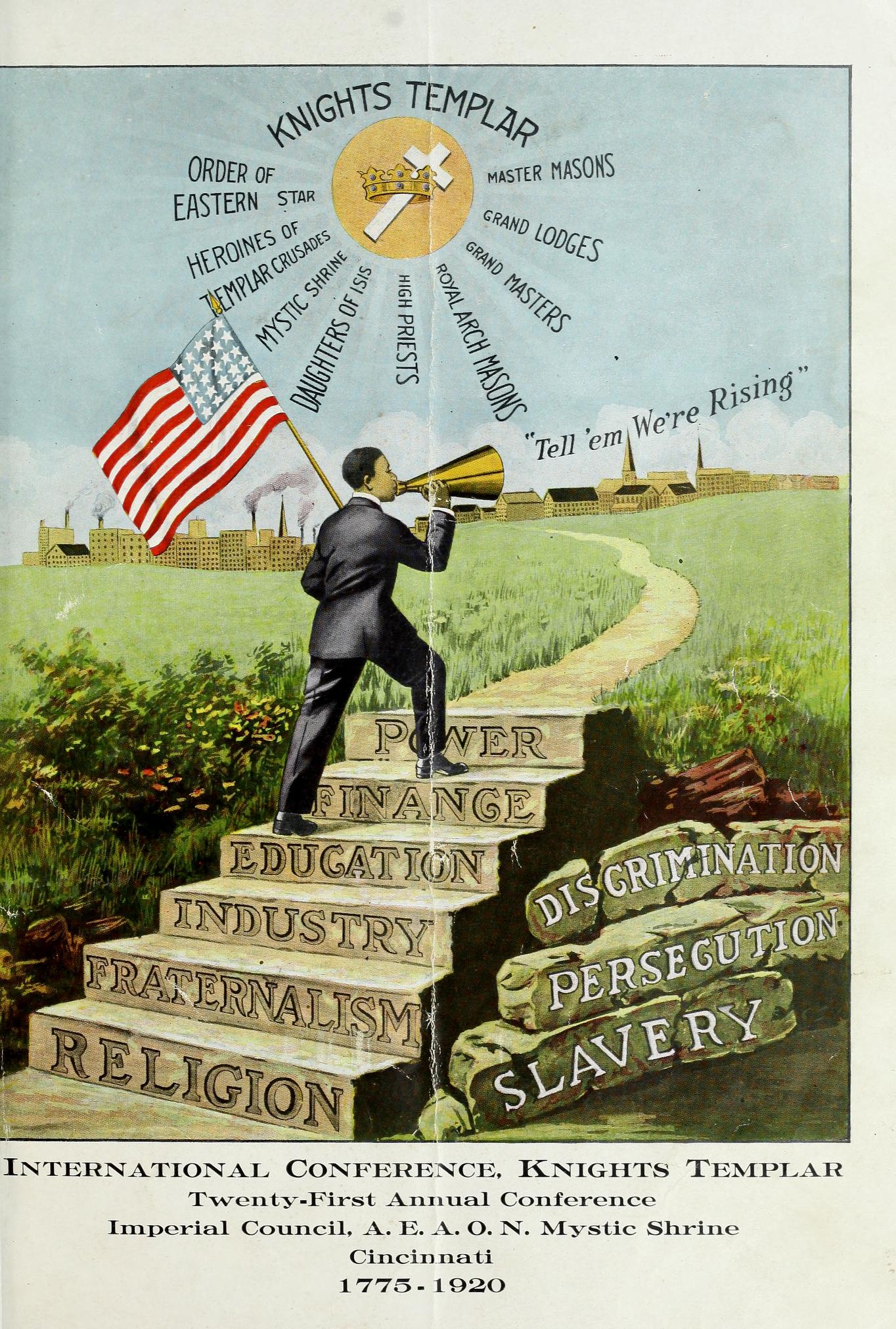
On Prince Hall
(page 81)
“There is a bearing of freemasonry, not yet embraced in this address, which is replete with the most distressing apprehensions. There is located, in Boston, a masonic body, denominated the African Grand Lodge, which dates its origin before the American revolution, and derived its existence from a Scottish duke. This body acknowledges no allegiance to any of the associations of American masonry. Its authority is co-extensive with our Union. It has already granted many charters to African lodges. We are afraid to intimate their location, to look in upon their proceedings, to count their inmates, or to specify their resources.”
On Suffrage
(page 83)
“Voting for our public servants is the highest exercise of sovereign power known in our land. It is the paramount, distinctive privilege of freemen. In countries where only a small minority of the people are authorized to vote, if oppressive measures are adopted by their rules, they must either submit or fight. In countries where all the citizens are authorized to vote, if they are oppressed, they can throw off the oppression by their votes. And if the frowns of power, or the calumnies of malefactors, have force to dissuade them from using their votes to throw it off, they are fit for slaves, and can be only slaves. The highest functionaries of the general and state governments are amenable to the people for the proper discharge of their duties. But a freeman, when he votes for a candidate, exercises the right of selecting, among those who are eligible, subject to no authority under heaven. For his choice he is accountable only to his conscience and his God. And why should he not, in the most sovereign act he can perform, do himself the great justice of giving expression to the honest conviction of his soul? If, baving the will, he cannot do it, he is a slave. If, having the power, he will not do it, he is corrupt.”
 Supreme Exchange