Tagged: industries
Minute of Public Service 3
IN THE NAME OF YAHUAH THE MOST GRACIOUS MOST MERCIFUL
DECENTRALIZED AUTONOMOUS ORGANIZATION
DEPARTMENT OF PEACE AND FRIENDSHIP
FROM THE DESK OF
THE PUBLIC FRIEND
Antarah, ObNS
3RD MINUTE OF PUBLIC SERVICE | LAST MODIFIED 24/7/16/12:33 AM 24/7/16/10:01 PM 24/7/17/10:33 AM 24.07.18.04:09PM 24.07.19.10:00AM 24.07.22.03:05PM
TO ALL TO WHOM THESE PRESENTS COME, SEND GREETINGS AND PEACE:—
The Ecclesiastical Polity,
or, ‘Collegiate Government’,
of the New Testament Kingdom
Congregational Church de la Croix Noire
(a) The ‘Chamber of Instruction’ is within the Beth Midrash, and the ‘Hall of Assembly’ is within the Beth Knesset, and these are so many houses in the bicameral polity ‘body’ of the people assembled of the decentralized autonomous organization in that locality. The Knesset is the upper house and the Midrash is the lower house.
(b) The ‘New Testament Kingdom’ is a feudal trust relationship settled under Roman imperial law by God Himself, by and through his Vicar in Christ, Land Holder and Lord of the Earth Living Forever, by and through the Holy Roman Emperor Constantine the Great, and subsequently assigned, in part, to the Bishop of Rome at the Vatican City. The remainder of the birthright dominion of the people over the Kingdom of Earth is administered in trust for the benefit of all humanity by the anointed society of friends ministering in the following of the High Priest of Melchizedek, the Lamb, being as he is the King, living forever.
(c) It is, therefore, not for purely religious and dogmatic reasons, but for purely civil and legal reasons, that we invoke that name of the Trustee appointed by God Almighty to administer our trust which is known in our jurisdiction ‘nome’, being that of the Roman Empire, by and through its successors the kings of Europe, by and through their successors the republic of nations: KRST YHSVH — IESUS CHRISTUS — the King who will reign from Jerusalem.
(d) There is only one supreme Being ‘Entity’ who created Heaven and Earth of its own matter. All who are born of woman are beneficiaries of its creation, which continues forever. The body of the people of this Creator ‘the Church’ is one, holy, universal and apostolic, with KRST THE KING at its head.
(e) While visiting the Lieutenant Governor of New York after my great uncle’s funeral in Orange, New Jersey, I met with my very good friend Richard of Brooklyn, who told me that that day (yesterday), July 14th, was the real New Year’s Day, in which our ancestors observed the heliacal rising of Sirius and the inundation of Hapi.
(f) Frank Lloyd Wright is hereby canonized a Saint of God by the order of missionary oblates of the New Syllabus program for his efforts in defining a unique American-vernacular architecture. To this unique class belong the noble and worthy personages of Saint Nat Turner, Saint John Coltrane, and Saint Alice Coltrane.
(g) Systembilt Industries, IBCO, FLF-DAO, is hereby chartered as an entity of a religious nature dedicated to continue Saint Frank’s mission to produce sound, beautiful, and affordable housing for every American family by deploying American System-Built Homes around every Mission Fulfillment Center. Usonian Automatic blocks assembled into American System-Built Homes are a block-chain as Mindsoft consoles configured in a DAO fueled by Performance Cubed are a block-chain.
(h) The whole foregoing entity and being are hereby styled:
New Kingdom Congregational Meeting;
1st New Kingdom Congregational Church,
Congregation Beth Midrash Beth Knesset,
of the International Black Cross, FLF-DAO,
nondenominational interfaith ministry,
Antarah, ObNS, Friend presiding,
‘Head of Meeting‘
SECTION (h) DIRECTIVE [click to expand]
Floating the Mission by Sale of Labor on a Daily Basis
Occupation: Day Labor Trader
Lines of Labor Traded: instruction, meeting, investigation, worship, instruments, administration, guardian, custodian, building arts
‘Banking’ Hours: 10AM-3PM, 1st Day to Friday
(h)(1) These lines of service (LOS) are to be considered an extension of peace and good will between friends, the mutual appreciation of which will inure to their mutual benefit. By this is meant an offering, feoffment, or oblation of humanitarian aid, of which a tithe is paid to the Lord of the fee, MALIKI ZADDIK YHSVH XRST, which translates roughly to ‘Equitable Lord Jesus Christ’, the surety of our God-granted trust ‘birthright’. The balance of the charge shall be stored in its capacity and shall not be held for profit by a particular party, but therefrom discharged to the ground (‘the people’).
(h)(2) Therefore it is said regarding the Firm League of Friendship, “Faith is Complete Trust and Firm Belief” applied over a matter of time ‘f(x)=y’, which belief, sincerely held, cannot be converted into a crime. Trust refers to the covenant between God and humanity. Faith refers to the full confidence and mutual assurance exchanged between the parties in the trust relationship. Belief refers to the firmness of faith as held in the hearts and minds of the friends who practice it. This is the MAIN function of the Decentralized Autonomous Intelligence System (DAIS) of the CORPS of Mindsoft.
(h)(3) Toward developing and sustaining a ‘book of business’, service providers ‘servers’ shall make contact with prospective buyers ‘clients’ to whom to offer their services every morning between 8:00AM and 9:00AM, either in person ‘at market’ or via electronic communications. Such clients may or may not be friends, but servers should remain squarely within their equitable God-given sui jurisdiction when ‘trading with the enemy’. No originating sale of labor to be performed on the instant day shall take place after 3:00PM that day; sales consummated after such time shall be performed, fulfilled, and delivered on the next or another future day. Consols may be issued for redemption of future services without originating sales. An ideal contract engagement is one in which a friend-benefactor pays the day rate for the server to perform the mission obligations for the benefit of the friendly public.
American Systembilt Industries
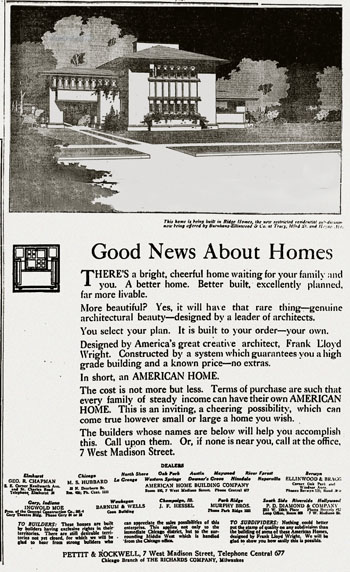
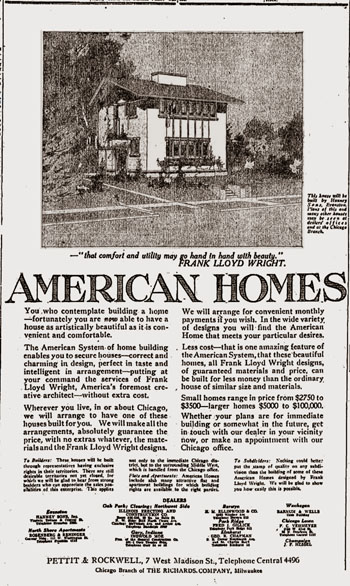
(i) Systembilt Industries shall construct homes in the Wrightian ‘Usonian Automatic‘ vernacular, which is, by this outfit’s estimation, the precursor to the Brutalist vernacular, which is erroneously said to be founded in the United Kingdom in the 1950s, and has since been nearly exclusively devoted to federal government architecture. Whereas the Brutalist is an exaggeration of scale and mass in proportion to the softening panes glass — or a more forgiving human sensibility — the Usonian is intentionally designed for the consumption and appreciation of the human and their family — the American family at that — using a uniquely modular and horizontal American vernacular. Due to the modular and affordable nature of the prefabricated building materials which would be shipped ready-to-assemble to the buyer, Frank Lloyd Wright innovated the construction method AMERICAN SYSTEM-BUILT HOMES. Using the internationally conscious appellation of ‘Usonian’ for ‘United States of North America’ or ‘USONA’, Mr. Wright provides at the turn of the century a vision of USONIA in which every family can own a firm and beautiful AMERICAN HOME at a fixed and reasonable cost.
(j) The planned community of Usonian Automatic homes by Systembilt Industries shall comprise the network of private homes of Friends in the Firm League of Friendship of the decentralized autonomous and International Black Cross Organization. The cultural centers of these communities shall be planned around the Mission Fulfillment Centers which are the meeting tents of the congregation.
(k) References.
(1) Usonian Automatic
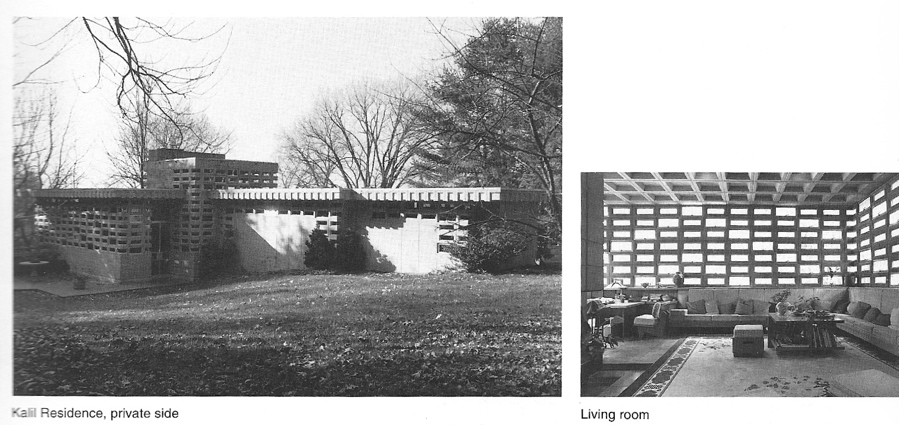
(2) Kalil House
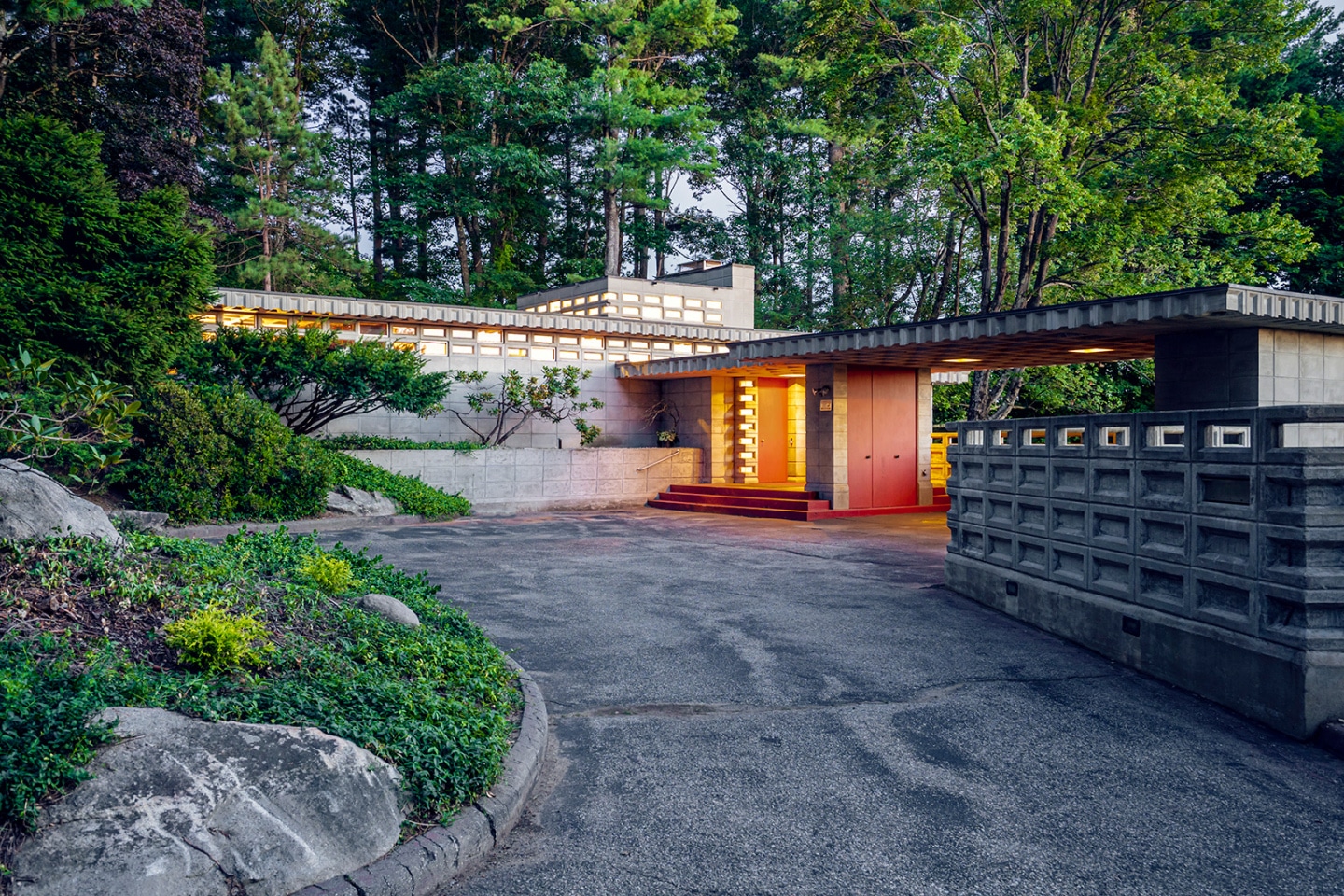
(3) Turkel House

(4) Tonkens House
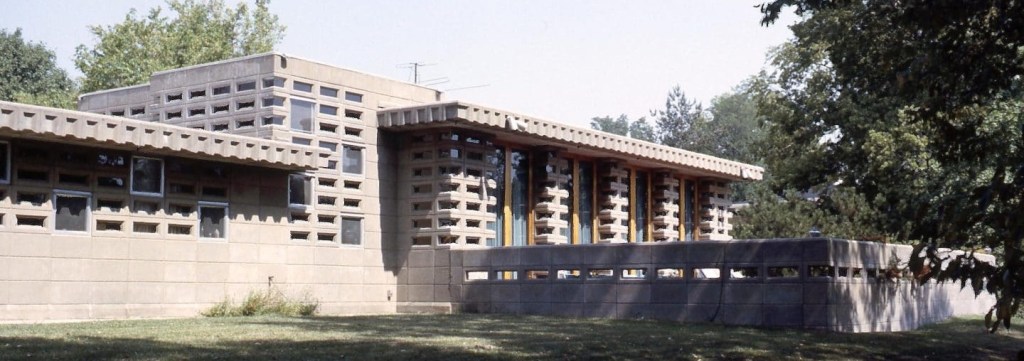

(5) Automatic Blocks
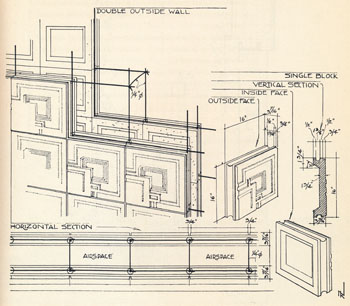
The textile block system — the root form of automatic blocks — is a unique structural building method created by Frank Lloyd Wright in the early 1920s. While the details changed over time, the basic concept involves patterned concrete blocks reinforced by steel rods, created by pouring concrete mixture into molds, thus enabling the repetition of form. The blocks are then stacked to build walls. Wright’s textile block houses are:
- Ennis House
- Robert and Rae Levin House (check also the other Michigan – Galesburg and Parkwin/Kalamazoo – houses at List of Frank Lloyd Wright works)
- Millard House
- Samuel Freeman House
- Storer House (Los Angeles)
- Westhope, located in Tulsa, Oklahoma, Wright’s only Textile Block house outside of California.[1]

(6) American System-Built Homes
The American System-Built Homes in Milwaukee, Wisconsin:
Frank Lloyd Wright’s earliest system of low-cost housing© 2005 Michael Lilek, All rights reserved
Master of the Small House
Copyright 2004-2005, Michael Lilek, All rights reserved.
Over a career spanning seven decades, Frank Lloyd Wright took special interest in creating architect-designed homes for moderate and low-income families. In the January 1938 issue of Architectural Forum, he commented, “[I] would rather solve the small house problem than build anything else I can think of…” Indeed, among Wright’s greatest masterpieces are several small homes designed for clients who could afford little. Many of these residences owe their existence to some form of client labor (do-it-yourself), ingenious cost-cutting or salvaging. Each magically shelters it occupants in beautiful spaces, connects them to nature, and allows them to feel more alive.
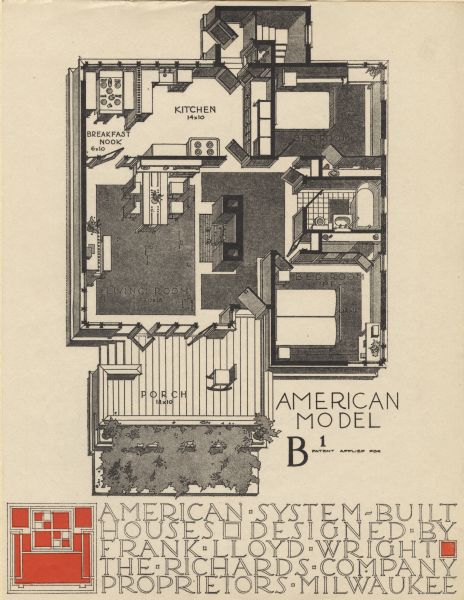
American System-Built Homes
In a 1901 speech entitled, “The Art and Craft of the Machine,” Wright outlined his vision of affordable housing. He asserted that the home would have to go to the factory, instead of the skilled labor coming to the building site. Between 1915 and 1917 Wright designed a series of standardized “system-built” homes, known today as the American System-Built Homes. By system-built, he did not mean pre-fabrication off-site, but rather a system that involved cutting the lumber and other materials in a mill or factory, then bringing them to the site for assembly. This system would save material waste and a substantial fraction of the wages paid to skilled tradesmen. Wright produced more than 900 working drawings and sketches of various designs for the system. Six examples were constructed, still standing, on West Burnham Street and Layton Boulevard in Milwaukee, Wisconsin. Other examples were constructed on scattered sites throughout the Midwest with a few yet to be discovered.
Arthur L. Richards, Developer
By 1911, companies connected to Arthur L. Richards had engaged Frank Lloyd Wright to design several projects, including an unbuilt hotel in Madison and the Hotel Geneva in Lake Geneva, Wisconsin (1912, demolished). By November 1916, Richards entered into an agreement with Wright to promote the American System-Built Homes. The contract covered all parts of the United States, Canada and Europe. It called for the Richards Company “…to furnish, as far as possible, all materials entering into the construction of the buildings and to at least furnish the plans, drawings, specifications and details and lumber, millwork, exterior plaster material, paints, stains, glazing, hardware trimmings and electric lighting fixtures for said buildings.” Richards was to recruit a distribution channel of builders and developers from around the country. He appears to have focused his efforts in the Chicago area and a few other Midwestern cities.
The agreement between Wright and Richards anticipated that the American System-Built Homes project would be wildly successful. Unfortunately, the entry of the United States into World War I on April 6, 1917, diverted building materials to wartime needs. Housing starts ground to a halt. Wright also began extensive travels between America and Japan at this time, related to the Imperial Hotel commission. Wright became unhappy with his relationship with Richards, leading to a lawsuit in August of 1917. Central to Wright’s claim was the non-payment of royalties and fees. Wright won a judgment against Richards in February of 1918. Although the business relationship ended after a few years, Wright and Richards rekindled their friendship decades later and exchanged cordial letters and visits.

 Supreme Exchange