Tagged: commerce
Mustelid Friends 8: Beavers in Space
or, Rice World
Created and Produced by Dams Up Water
In the neon half-light of a decaying interstellar port, Mr. Capybara adjusted his lapels and tried to remember where things had gone so wrong.
It had started, as these things often do, with rice.
Not the innocent, steaming kind you’d find in a humble bowl, but the kind that powered empires—processed, commodified, and vacuum-sealed for hyperspace transit.
Royal Arabian Oil had gotten greedy. They always did. First they disrupted terrestrial shipments, then orbital ones, and before long the whole interstellar rice exchange looked like a spilled sack in zero gravity. Mr. Capybara, once a respectable baron of modest corruption, now found himself tangled in litigation so vast it had gravitational pull.
So he went back to the only place that had ever managed to keep him one step ahead of ruin: the law firm of Weasel Badger Beaver Mink & Otter.
Their office floated in a slow orbit five thousand miles above New Arrakeen-on-Potomac, a brutalist slab of concrete and ambition. Inside, the air smelled faintly of ink, damp fur, and firm resolve.
Weasel met him at reception, thin as a clause and twice as slippery.
“Back again, Mr. Capybara?”
“Don’t sound so surprised,” Capybara muttered. “You people bill by the heartbeat. I’m your favorite kind of repeat customer.”
Badger emerged from a shadowed hallway, carrying a stack of files that looked heavy with others’ misfortune. Mink and Otter followed—the one calculating, the other smiling like a settlement already signed.
And then there was solemn spectacled Father Beaver.
He didn’t say much. Never did. But the room shifted around him, like reality itself had been notarized in his presence.
“You’ve got rice woes,” Beaver said.
“I’ve got existential woes,” Capybara replied. “The rice is just the side dish.”
They ushered him into a conference room where the walls flickered with projections of shipping routes, legal precedents, and celestial trade lanes. Somewhere in that mess was the truth—or at least something billable.
“Royal Arabian Oil’s interference,” Mink began, “constitutes not just a breach of contract but a disruption of the sacred flow.”
“The current,” Beaver added quietly.
Capybara sighed. “Don’t start with the theology.”
But it was already too late for that.
Because behind the firm—behind all firms, all contracts, all quietly devastating negotiations—stood the Beaverjesuits.
Led by Father Beaver, they weren’t just clerics. They were custodians of something older than law and more binding than any agreement: the onstreaming current of the spirit. Not metaphorical—literal. A current that flowed through trade routes, through belief, through the very idea of exchange itself.
And the Beavers had always controlled it.
Not openly, of course. Never crudely. They preferred instruments—firms, orders, societies. Layers of plausible deniability wrapped in ritual and paperwork.
“The rice must flow,” Weasel said, almost reverently.
“The rice always flows,” Otter corrected, “but only where it is permitted.”
Capybara leaned back, feeling the weight of it all press against his ribs. “So what’s the play? I sue? I settle? I disappear?”
Beaver tapped the table. The projections shifted.
A desert planet appeared—vast, dry, and shimmering with fields not of sand, but of dormant grain, waiting for the right conditions to awaken.
“Intergalactic expansion,” Father Beaver said. “New markets. Untapped resources.”
“Prospects,” Mink added.
“Liability redistribution,” Badger clarified.
“And prophecy,” Beaver finished.
Capybara groaned. “I knew there’d be prophecy.”
That’s when they told him about Little Beaver.
The young, mendicant friar from the banks of Old Nacotchtank, raised among the doctors of the Beaver Medicine Society of Yahushua HaMoshiach.
The doctors weren’t just healers. They were interpreters of the current, reading its fluctuations like vital signs. And they had seen something in Little Beaver.
Something impossible.
“The Kwisatz Haderach,” Otter said softly.
Capybara rubbed his temples. “Let me guess. He can be in two places at once, see the future, and audit my accounts retroactively?”
“Close,” Weasel said. “He can bridge the legal and the divine.”
“And that’s bad for me how?” Capybara asked.
“It isn’t,” Beaver said. “Unless you’re on the wrong side of the current.”
Which, Capybara suspected, he usually was.
Then there were the Brothers of Beggars Contemplative—a ragged, stubborn branch of the interstellar Djedi knighthood. They lived among the rice deserts, wore patched robes, and spoke in riddles that somehow held up in arbitration.
They were the only ones who truly understood the rice.
“They don’t control it,” Badger said. “They live upon it.”
“Which makes them dangerous,” Mink added.
“Or at least indispensable,” Beaver said.
The room fell quiet.
Outside, the rain kept falling—on the city, on the ships, on the endless chain of transactions that held the universe together by a thread of obligation and belief.
Capybara looked at the projections again. The desert. The child. The currents.
“You’re telling me,” he said slowly, “that my legal troubles with a corrupt oil conglomerate are actually part of some grand intergalactic realignment of rice, religion, and revenue streams.”
“Yes,” said Beaver.
“And my role in this?”
Beaver’s round lenses glinted like polished wood in low light.
“You adapt,” he said. “Or you get written out of the big rice contracts.”
Capybara exhaled, long and slow.
He’d always known the game was rigged. He just hadn’t realized how far up it went.
“Fine,” he said. “We expand. We litigate. We… commune with the current or whatever it is you people do.”
Otter smiled. Weasel started drafting. Badger stamped something with unnecessary force. Mink began calculating outcomes that hadn’t happened yet.
And contemplative Father Beaver?
He simply watched the current—unseen, unstoppable—flowing through it all.
Because in the end, it wasn’t the oil, or the rice, or even the law that ruled the stars.
It was the current.
And the Beavers had always known exactly where it was going.
Part II
Mr. Capybara had never trusted anything that was described as “empty.”
Empty accounts weren’t empty. Empty promises came due with interest. And now, moored in drydock hovering above New Arrakeen-on-Potomac, was the largest space-worthy grain silo ever assembled—a cathedral of hollow steel called The Immaculate Deficit.
The plan, as drafted by Weasel and notarized by forces both domestic and angelic, was elegant in the way a forged signature is elegant: convincing enough to pass inspection, dangerous enough to ruin everyone involved.
The decentralized Royal Arabian Oil conglomerate now controlled the terrestrial rice supply chain all the way up to the Saturnian Threshing Floor and Clearinghouse. The Archangelic Police Force—winged auditors of cosmic compliance, their halos doubling as surveillance arrays—patrolled the network. Between the two, nothing moved without permission.
So Capybara would move nothing.
No rice. No declared cargo.
Just a ship light on the manifest.
“Absence,” Weasel had explained, tapping a clause, “is very difficult to regulate.”
“And even harder to tax,” Badger had added, with something like admiration.
Capybara stood on the command deck as the clamps released. The ship groaned like an old debtor waking up.
“Engage drift engines,” he said.
The Immaculate Deficit didn’t launch so much as excuse itself from orbit—slipping sideways into a corridor of neglected jurisdiction, where laws blurred and enforcement lagged.
Below them, the lights of the city flickered. Above them, the stars waited like unpaid invoices.
“Contact?” Capybara asked.
“Royal Arabian Oil patrols sweeping the primary lanes,” Mink reported. “Archangelic units triangulating anomalies.”
“Do we qualify as an anomaly?” Capybara asked.
Otter checked a screen. “We qualify as a phenomenal curiosity.”
“Good,” Capybara said. “Those usually get deferred.”
They moved through deep space like a rumor—hard to pin down, harder to prove. The ship’s manifest updated itself constantly, a living document of strategic ambiguity.
Cargo: None.
Intent: Undetermined.
Purpose: Under review.
It worked.
At least at first.
The first interception came as a shimmer—a ring of light forming ahead of them, resolving into the unmistakable wheeling siren of the Archangelic Police Force. Their vessels weren’t built; they were declared, luminous chariots of authority and immaculate paperwork.
A voice filled the bridge, calm and absolute.
“Unregistered transit, identify cargo and submit to audit.”
Capybara leaned forward. “We are transporting nothing.”
A pause.
“Clarify: absence of goods does not constitute absence of obligation.”
Weasel’s voice crackled over comms from the firm’s remote advisory channel. “Invoke Clause 0.”
Capybara smirked. “We invoke Clause 0.”
Another pause, longer this time.
Clause 0—the most dangerous stipulation ever written into a contract—stated that nothing, properly defined, could not be interfered with without first being proven to exist.
The Archangelic vessels flickered, their halos dimming as they processed the paradox.
“Your cargo,” the voice said carefully, “is not identifiable under the terms of interspace commerce.”
“Correct,” Capybara said.
“And therefore…”
“Exempt,” Otter whispered.
The light wheel dissolved.
Capybara exhaled. “I love good lawyering.”
But Royal Arabian Oil wasn’t so easily stalled.
They didn’t argue black letter. They obstructed procedure.
A fleet emerged from the dark—blocky, brutal ships that looked less like vessels and more like statements of intent. Their engines burned with the slow fury of monopolies.
“They’re going to ram us out of the corridor,” Mink said.
“Can they?” Capybara asked.
“Physically, yes. Legally… ambiguous.”
“Then we make it spiritually impossible,” Father Beaver’s voice came, low and certain.
Capybara didn’t ask how. He had learned not to.
“Full drift,” he ordered. “Let the current take us into hyperspace.”
The ship shuddered. Systems dimmed. The Immaculate Deficit surrendered control—not to chaos, but to something subtler.
The space way.
Not visible. Not measurable. But felt—a pull beneath the equations, a flow beneath the routes.
For a moment, Capybara swore he could hear it. Like distant water. Like whispered clauses being negotiated by the universe itself.
The Royal Arabian Oil ships advanced—
—and missed.
Not by distance, but by dimension. Their trajectories intersected where the Deficit should have been, not where it was becoming.
“Trajectory mismatch,” Badger muttered over comms, almost impressed.
“They’re aiming at our declared position,” Otter said.
“We’re not declared anymore,” Capybara replied.
They slipped past.
Deep space opened up, vast and indifferent.
Days—or something like days—passed. Time got loose out here, unmoored from billing cycles and court dates. The crew stopped asking questions. Even Capybara stopped pretending he understood.
And then, at the edge of perception, the desert planet crowned.
A sphere of muted gold and pale dust, its surface streaked with dormant fields of rice waiting for the right disturbance to awaken. The rice world.
“Arrakeen Minor,” Mink said. “Or whatever the locals are calling it this century.”
“Home,” Beaver murmured.
They descended.
The atmosphere caught them like a held breath. Sand—or something like sand—spiraled upward, whispering against the hull.
“Scans?” Capybara asked.
Otter frowned. “No formal defenses. No structured ports. No—”
The blaring of alarms cut him off.
Shapes rose out of the desert.
Not ships…
but figures.
Cloaked. Angular. Moving with a precision that felt less like motion, more like unintentional. The Brothers of Beggars Contemplative.
“The Djedi resistance,” said the Otter.
“They’ve been waiting,” Badger said.
“For us?” Capybara asked.
“For a sign,” Beaver replied.
The figures surrounded the ship as it settled onto the surface. No weapons visible. No threats declared.
Which, Capybara knew, meant something worse: Negotiation.
The hatch opened with a reluctant sigh.
Heat flooded in. Dry, ancient, and carrying the faint scent of grain and prophecy.
Capybara stepped out first, because that was the kind of mistake he specialized in.
The leader of the Djedi Assembly stepped forward, face obscured beneath layered cloth. When they spoke, their voice was rough with disuse and assurance.
“You bring an empty vessel,” they said.
Capybara spread his hands. “It’s a free and open market.”
The figure tilted their head.
“There is no empty,” they said. “Only what has not yet been seen.”
Capybara glanced back at the ship, at its hollow holds and carefully drafted nothingness.
For the first time since launch, he felt a flicker of doubt.
Behind the Djedi, the desert shifted.
Not wind.
Movement.
Something vast beneath the surface, stirring in response to their arrival.
“The rice,” the Djedi said softly, “is waking.”
Capybara swallowed.
He had come here to escape a lawsuit.
Instead, it looked like he’d just filed one against the universe itself—and the universe had decided to appear in person.
Part III
The desert did not roar.
It audited.
A low, granular vibration passed through the ground beneath Mr. Capybara’s paws, like a ledger being balanced somewhere far below the surface of the world. The Brothers of Beggars Contemplative stood motionless, their patched robes fluttering in a wind that hadn’t yet decided to blow.
“You awoke it,” the Djedi Master said.
Capybara adjusted his cufflinks. “I tend to have that effect on systems that prefer to remain dormant.”
Behind him, The Immaculate Deficit creaked—its vast, empty holds now echoing with something new. Not cargo. Not quite. A presence. As if absence, pushed hard enough, had finally looped back into being.
And then Little Beaver stepped forward.
No fanfare. No thunder. Just a small figure moving with a quiet that made all else feel like paperwork waiting to be filed.
The Djedi Assembly parted before him.
Father Beaver—of the firm, of the current, of the most solemn Society—lowered his head in reverent thanksgiving to the Most High God.
“His time has come,” the Beaver said.
Little Beaver looked at the ship, then at the desert, then at Capybara—who, for reasons he couldn’t articulate, suddenly felt like a clause about to be struck.
“You tried to move nothing,” Little Beaver said.
Capybara shrugged. “It’s legally defensible.”
“But nothing,” Little Beaver replied, “is where everything begins.”
The ground split.
Not violently—no explosions—just a clean, surgical opening, as though the planet itself had found a faulty line item and decided to expand it.
From beneath the desert rose the rice.
Not fields. Not crops. Memory. Potential. The primordial grain—unprocessed, unpriced, unowned. It flowed upward in shimmering currents, each kernel a possibility, each possibility a future.
“The rice,” whispered a Djedi.
“The source,” offered another.
Little Beaver stepped into the rising current.
For a moment—just a moment—he was everywhere.
On the bridge of the Deficit. In the conference room of Weasel Badger Beaver Mink & Otter. In the ledgers of Royal Arabian Oil. In the omniscient eternal patrol of the Archangelic Police Force.
He bridged it.
Legal and divine. Material and spiritual. Profit and purpose.
The Kwisatz Haderach—not a conqueror, not a tyrant, but a reconciler of systems that had long pretended not to be in equity.
Capybara watched, slack-jawed.
“I should have charged a consultation fee,” he muttered.
Above them, the sky fractured.
Not broke—revealed.
And he descended—not in fire, not in wrath, but in a clarity so absolute it made every prior misconception feel like a bad joke told too long.
Yahushua HaMoshiach.
The final arbiter of a contract written before time had learned how to number the years.
The Djedi knelt. The Beavers bowed. Even the current itself seemed to rest in its stillness, as if in a reservoir dammed.
Capybara stood.
Capybara squinted.
“Hast thou come to litigate,” he asked, “or to settle?”
Yahushua looked at him—not unkindly, but with the sort of gaze that causes pretense to collapse under its own weight.
“To fulfill,” He said.
Back on the Kingdom of Earth, whole systems began to abate.
Royal Arabian Oil’s monopolies unraveled, and its decentralized districts further dissolved into households in their tribes.
The Archangelic Police Force opened the skies to mass transit through space, and surveillance gave way to witness.
And in a dusty corner of New Bat City, which had almost forgotten how to hope, the reformed raccoon gang—Bandana Dan and his Boys—redistributed imported grain shipments with solemn efficiency and only occasional theatrical flair.
“We’re saved now,” Bandana Dan insisted, adjusting his bandana like a badge. “Spiritually sanctioned by the Most High.”
“Provisionally,” one of the Djedi Ambassadors muttered.
On the rice world, the grain flowed freely.
Not owned. Not controlled…
but shared.
The Beaverjesuits hath foretold it. The current had never been theirs to possess, only to guide until one could become it.
Little Beaver stood in the firmament with the resurrected dead as a living clause that could not be exploited.
Capybara approached him from the space below.
“So,” he said, hands in pockets, “where does that leave people like me?”
Little Beaver regarded him.
“Held accountable,” he said.
Capybara winced. “I was afraid you’d say that.”
A silence.
Then, unexpectedly:
“And… necessary.”
Capybara blinked. “I’m sorry?”
“You understand systems,” Little Beaver said. “You navigate them. Twist them. Reveal their weaknesses.”
Capybara considered that.
“I break things,” he said.
“You expose where they were already broken,” Little Beaver replied.
For the first time in a long time, Capybara didn’t have a clever response.
Above them, the sky settled into something honest.
The current flowed—not hidden, not controlled, but present. Accessible. Alive.
Back in orbit, The Immaculate Deficit was no longer empty.
Not filled, exactly.
But purposed.
Capybara looked out across the desert of waking grain, at the Djedi knights in their labors, at the Beavers in their contemplation, at the improbable coalition of trust, faith, and belief.
“Well,” he said, straightening his coat, “I suppose this calls for a new contract.”
Father Beaver, standing beside him, allowed the faintest hint of smile.
“This time,” Beaver said, “we write it together.”
Capybara nodded.
For once, beaver legal construction didn’t sound like a trap.
It sounded like fair terms.
The End.
[constructed with artificial intelligence]
D.R. 02-02: Israel-Hamas (IV)

Volume 2, Issue 2
Contents — Art. 1. Israel-Hamas (IV) — Art. 2. SDACS (II)
Article 1
U.S. gearing up, world teeters on brink of WWIII
Many nations face ‘existential threat’, religiously-motivated ‘slaughter’ and a ‘battle against evil’ says Congress
by Antarah Crawley | Last Modified 2/7/2024 at 11:03 A.M.
WASHINGTON, DC — Today, 6 February 2024, The United Stated House of Representatives (House) Foreign Affairs Committee convened a Markup on Various Measures. Mr. McCaul (R) of Texas presided as Chairman. Ms. Manning (D) of North Carolina presided as the Ranking Member until Mr. Meeks (D) of New York arrived, his flight being delayed. Mr. Crawley (AM) of United Scribes and Court Reporters United reported on the proceeding on behalf of the House Clerk’s Office of Official Reporters.
The sense of the Congress concerned ongoing U.S. statecraft against what Members characterize as a modern Axis of Evil comprised of Russia, China, Iran (Persia), and its alleged proxies including the Islamic Resistance Movement (Hamas) of Palestine, The Party of Allah (Hezbollah or Hizballah) of Lebanon, The Supporters of God (Ansar Allah or Houthi) of Yemen, and The Students or Seekers (Taliban) of the Islamic Schools (Madaris) of the Islamic Emirate of Afghanistan, among others. Meanwhile, the Representatives continued to emphasize their support for their allies, particularly Israel, Ukraine, and Christian populations across the world. This whole ordeal smacks of the Christian Crusades of the Middle Ages, to wit:
The Crusades were a series of religious wars initiated, supported, and sometimes directed by the Christian Latin Church in the medieval period. The best known of these military expeditions are those to the Holy Land in the period between 1095 and 1291 that were intended to reconquer Jerusalem and its surrounding area from Muslim rule. Beginning with the First Crusade, which resulted in the conquest of Jerusalem in 1099, dozens of military campaigns were organised, providing a focal point of European history for centuries. Crusading declined rapidly after the 15th century.
https://en.wikipedia.org/wiki/Crusades
During the discussion of H.R. 6609, To Amend the Arms Export Control Act to increase the dollar amount thresholds under sections 3 and 36 of that Act relating to proposed transfers or sales of defense articles or services under that Act, and for other purposes, Members of Congress intimated toward abrogating the Constitution of the United States of America to create an authoritarian (read “executive”) dictatorship with a rubber-stamp (read “supreme”) court.
Ms. Titus (D) of Nevada remarked:
At a time when U.S. weapons sales are reaching record levels, for some reason the Republicans on this Committee have decided that instead of needing more oversight of arms sales, Congress should surrender its already emaciated role and conduct even less oversight. We in Congress and particularly on this committee have a critical role to play in matters of war and peace, and yet this bill is another example of the steady erosion of legislative oversight. This time, however, it’s self-inflicted.
Dina Titus (D-NV)
[…]
This bill will […] prevent Congressional scrutiny on defense side deals that may be used to evade anti-bribery laws or how this would complicate reviews of U.S. defense companies’ political contributions to foreign policies. […] For the Republicans on this Committee to hold a hearing this past September entitled ‘Reclaiming Congress’s Article 1 Powers’ to now surrender those powers in this markup seems to me totally contradictory and hypocritical and a bit on the nose.
Mr. Davidson (R) of Ohio remarked:
Frankly, since all we seem to do it cut the checks and provide no check on executive authority, particularly when it comes to war-making or spying on our citizens, why not just go ahead and dissolve Article 1. [The Chairman giggled to himself, his microphone on.] We could amend the constitution and simply have a chief executive who could be very efficient.
Mr. Mills (R) of Florida remarked:
If we want to talk about abdications, for God’s sake, let’s start talking about how we can repeal the AUMF which is an abdication of Article 1 Section 8 Clause 11 or even the ’73 War Powers Act that gives executive credence to Republican and Democratic presidents alike to do carte blanche warfare. The reality is […] we have mechanisms in place already and I think that continuing to try and over-regulate, which we say that we want limited government, we want fewer taxes in the Republican party, perhaps we should start acting that way.
The Authorization for Use of Military Force (AUMF) (Pub. L. 107–40, 115 Stat. 224) is a joint resolution of the United States Congress which became law on September 18, 2001, authorizing the use of the United States Armed Forces against those responsible for the September 11 attacks. The authorization granted the President the authority to use all “necessary and appropriate force” against those whom he determined “planned, authorized, committed or aided” the September 11 attacks, or who harbored said persons or groups.
https://en.wikipedia.org/wiki/Authorization_for_Use_of_Military_Force_of_2001
[…]
The 2001 AUMF has enabled the US President to unilaterally launch military operations across the world without any congressional oversight or transparency for more than two decades. Between 2018-20 alone, US forces initiated what it labelled “counter-terror” activities in 85 countries. Of these, the 2001 AUMF has been used to launch classified military campaigns in at least 22 countries.
Article I, Section 8, Clause 11 of the U.S. Constitution, sometimes referred to as the War Powers Clause, vests in the Congress the power to declare war, in the following wording:
“[The Congress shall have Power …] To declare War, grant Letters of Marque and Reprisal, and make Rules concerning Captures on Land and Water …”
https://en.wikipedia.org/wiki/War_Powers_Clause
During discussion of H.R. 7089, To authorize the Diplomatic Security Services of the Department of State to investigate allegations of violations of conduct constituting offenses under chapter 77 of title 18, United States Code, and for other purposes, bill sponsor Mr. James (R) of Michigan preached the word of God, saying:
Human trafficking must be eradicated everywhere. Modern day slavery is a major stain on humanity and decency. It is a sin. […] According to the State Department, ‘there are about 27.6 million victims worldwide at any given time.’ […] God’s will is clear. Luke 4:18 and 19 says ‘The spirit of the LORD is upon [me] because he has anointed me to proclaim good news to the poor. He has sent me to proclaim liberty to the captives and recovering of sight to the blind. To set at liberty those who are oppressed, to proclaim the year of the LORD’s favor.’ We have a duty to all, particularly those being trafficked into slavery. My bill empowers our law enforcement to liberate the oppressed and the captive, and I beseech my colleagues to support my bill.
John James (R-MI)
During discussion of H.Con.Res. 27, Condemning Russia’s unjust and arbitrary detention of Russian opposition leader Vladimir Kara-Murza who has stood up in defense of democracy, the rule of law, and free and fair elections in Russia, Ms. Manning (D) of North Carolina remarked:
Mr. Meeks and I […] must implore that we find a way to support Ukraine and their existential fight for freedom in their hour of need. Failing to support Ukraine, failing to act now, serves the Kremlin, serves Beijing, and hurts our standing in the world, our national security, and our collective prosperous and peaceful future.
Kathy Manning (D-NC)
During a discussion of H.Res.82, Expressing the sense of Congress regarding the need to designate Nigeria a Country of Particular Concern (CPC) for engaging in and tolerating systematic, ongoing, and egregious violations of religious freedom, the need to appoint a Special Envoy for Nigeria and the Lake Chad region, and for other purposes, Mr. Smith (R) of New Jersey remarked:
Genocide Watch has called Nigeria a killing field of defenseless Christians. Open Doors reporter that there were 5,014 Christians murdered in 2022, nearly 90% of the total number of Christians killed worldwide. And Vatican News reported that over 52,250 Christians were slaughtered in Nigeria since 2009. I am convinced there is more the US can do to protect these believers, and that goes for Muslims as well and promote freedom of religion.
Chris Smith (R-NJ)
[…]
Pastor Alika Yusuf […] has talked about how in the Middle Belt region of Nigeria [Christians] face violence and are being slaughtered — this is his words — because of our religion. This bill is very important […] It will serve as legislation to hold our government … [the Nigerian government] … accountable for the millions of lives facing existential threat from the extremists.
The Democratic bloc opposed the resolution. Besides Mr. Smith, Mr. Self, Mr. Perry, and the Chairman, all Republicans vacated the hearing room during discussion of this matter. Present in the audience were Bishop Wilfred Chikpa Anagbe of the Diocese of Makurdi and Pastor Akila Yusuf representing a network of 200 pastors and leaders.
Mr. Smith later remarked that he’d “met with the Islamic leaders; they’re amazing people. They get along, they’re friends — like so many other moderate muslims in Nigeria — with the bishops and the clergy that are here today, and others. It is this radicalized group, whether it be ISIS-West Africa, whether it be Boko Haram, or the Fulani. You know, the Fulani have now become a major — in the Middle Belt area — a major major killer of Christians.” Mr. Smith closed his remarks by emphasizing his “outrage” toward the persecution of Christians in Nigeria.
Mr. Self (R) of Texas remarked:
The [Biden] Administration is not that interested in Nigeria. […] The Administration has turned a blind eye to the crisis. The State Department inexplicably removed Nigeria from its special watch list as a country of particular concern in 2021 […] The State Department needs to reverse their course and pressure the government of Nigeria to end the persecution of Christians, regardless of who is doing the persecution.
Mr. Connolly (D) of Virginia remarked that “if we [the Congress] are concerned about the violation of human rights and the right of human autonomy and freedom, and we should be, that has to be consistent. It can’t simply be one group but not anther. And I thank my friend and I hope his outrage will extend to other groups that need our consideration and protection.”
Mr. Perry (R) of Pennsylvania remarked that “the current Secretary of State under the Biden Administration stated in his first few months that this administration does not plan to prioritize religious freedom.”
The Committee discussed America’s commitment to the Pacific Theater in its discussion of H.R. 7159, To bolster United States engagement with the Pacific Islands region, and for other purposes. Mrs. Radewagen (R) of American Samoa remarked that “the U.S. is a pacific island nation.” The Ranking Member Mr. Meeks stated that H.R. 7159 strengthens U.S. “engagement with Pacific Islands by requiring future administrations to develop and update a strategy for U.S. engagement in the region.”
In its discussion of H.R. 6046, To designate Ansarallah as a foreign terrorist organization and impose certain sanctions on Ansarallah, and for other purposes, the Committee discussed the Houthi’s operations in the Red Sea.
The Houthi movement (Arabic: الحوثيون al-Ḥūthiyūn), officially known as Ansar Allah[a] (أنصار الله ʾAnṣār Allāh, lit. ’Supporters of God’), is a Shia Islamist political and military organization that emerged from Yemen in the 1990s. It is predominantly made up of Zaidi Shias, with their namesake leadership being drawn largely from the Houthi tribe.
Wikipedia
The Chairman remarked that “since October 7th, the Houthis have launched over 40 attacks on U.S. war ships and commercial ships in the Red Sea. These attacks have threatened a wide array of regional security and international shipping interests. Crews have been taken hostage, ships have faced near misses, and our American sailors have been working overtime to protect and defend America’s interests in the Red Sea. International shipping companies have been forced to reroute their ships, disrupting the global supply chain and driving up shipping costs by 450%. This is negatively impacting supply chains and the global economy.” He went on to mention that “Iran is providing the Houthis an arsenal of weapons, and while Iran was building a Houthi proxy army, this Administration say idly by pursuing a policy of appeasement.”
Mr. Perry remarked:
Let’s just go through what Iran is. The Houthis are just a proxy for Iran like many other proxies for Iran. Iran’s got proxies in Gaza, they’ve got proxies in Lebanon, they’ve got proxies in Syria — the whole neighborhood, doing Iran’s bidding. But I will tell you […] the Biden Administration in particular is so desperate for a nuclear deal with Iran that they are on both sides of this war, and they are on both sides of this war […] Just follow the facts yourself. I mean, being on both sides of the war goes like this: we’re going to approve aid to some of our allies in the Middle East to fight the Iranian proxies […] at the very same time we’re going to allow Iran to receive billions, maybe hundreds of billions of dollars, either directly from the United States or from sanctioned money around the globe that has been unavailable to them because of their malign activities […and] they supply missiles to Hezbollah, they supply all kinds of armament to Hamas, and they do everything they can to kill the Great Satan and the people that represent the Great Satan, the poor service members caught in the middle of being on both sides of the war; and three of them just lost their lives because they’re on both sides of the war.
Scott Perry (R-PA)
By way of background:
Iran, also known as Persia and officially the Islamic Republic of Iran,[c] is a country in West Asia.
Wikipedia
[…]
Iran is home to one of the world’s oldest civilizations, beginning with the formation of the Elamite kingdoms in the fourth millennium BC. It was first unified by the Medes in the seventh century BC and reached its territorial height in the sixth century BC, when Cyrus the Great founded the Achaemenid Empire. Alexander the Great conquered the empire in the fourth century BC, and it was subsequently divided into several Hellenistic states. An Iranian rebellion established the Parthian Empire in the third century BC, which was succeeded in the third century AD by the Sasanian Empire. Arab Muslims conquered the empire in the seventh century AD, leading to its Islamization; Iran thereafter became a major center of Islamic culture and learning. Over the next two centuries, a series of native Iranian Muslim dynasties emerged before the Seljuk and the Mongols conquered the region. In the 16th century, the native Safavids re-established a unified Iranian state. Under the reign of Nader Shah in the 18th century, Iran presided over the most powerful military in the world, though by the 19th century, a series of conflicts with the Russian Empire led to significant territorial losses. The early 20th century saw the Persian Constitutional Revolution. Efforts to nationalise its fossil fuel supply led to an Anglo-American coup in 1953. After the Iranian Revolution, the current Islamic republic was established in 1979 by Ruhollah Khomeini, who became the country’s first supreme leader.
Mr. McCormick (R) of Georgia remarked:
This is a constant pattern with the Biden Administration, whether at the border, with the cartels, in Gaza, with Hamas, with UNRWA, or in Yemen with the Houthis, this Administration constantly uses short-term humanitarian concerns to justify decisions that in the long run further deteriorate humanitarian conditions and undermine the United States’ national security. This can even be seen in the manner that the Biden Administration chooses to support Ukraine. They are more interested in a feel-good solution than in winning a war against evil.
This debate highlighted a sharpening contradiction between the Congress’s assessment of the innocent civilians and children of Yemen and those of Palestine.
During the discussion of H.R. 7122, To prohibit aid that will benefit Hamas, and for other purposes, or, The Stop Support for UNRWA Act, Mr. Smith remarked that “UNRWA […] is a massive entity that wants Israel utterly destroyed […] and those refugees would then take their place in Jerusalem in a new Palestinian state and elsewhere that is currently Israel.”
Mr. Meeks remarked:
Prohibiting U.S. funding of UNRWA while the people of Gaza are suffering an acute humanitarian disaster undermines the united states and Israel’s interests, erodes the Unites States moral authority and further endangers the lives of more than 2 million Palestinians residing in Gaza.
Gregory Meeks (D-NY)
[…]
The government of Israel agrees, which is why a senior Israeli official announced just days ago […] ‘If UNRWA ceases operating on the ground this could cause a humanitarian catastrophe that will force Israel to halt its fighting against Hamas. This would not be in Israel’s interests. It would not be in the interests of Israel’s allies either.’ UNRWA’s collapse would further harm regional stability, including in the West Bank, Lebanon, Jordan and Syria at a time when the United States and Israel are seeking to deescalate and contain spillover from the war in Gaza. It would be a gift to Iran and its allies, Hamas, Hezbollah, and Bashar al-Assad
Mr. Perry remarked:
The Biden Administration has given UNRWA $730 million during its term here […] hard earned tax dollars of good Americans […] We’re sending them money since 1949 […] here’s what their doing, they’re relieving Israel of their sovereignty and their working on destroying Israel and the United States of America […] the Administration is on both sides of the war, but $730 million is going to the people that attacked Israel. We’re going to give Israel billions of dollars to defend themselves, we’re going to give billions of dollars to Israel to attack Gaza, and essentially level most of it, and then we’re going to ask for more money to fix Gaza. […] Since 1949 our American tax dollars have funded the United Nations Relief and Works Agency […] this isn’t the United States going over there; maybe it’d be different. Hopefully it would be different, but it’s the United Nations […which] seems a little hostile to your friends in Israel […] and I wonder, since 1949 whose responsibility is this […] maybe Iran wants to fund UNRWA, or the money can go direct to Hamas and doesn’t have to go through UNRWA. […] People are asking for a two-state solution and the Administration is now asking for the recognition of a Palestinian state. What happened on October 7th is what you get with an UNRWA-provided two-state solution.
Scott Perry (R-PA)
Mr. Mast (R) of Florida remarked:
Israel is America’s ally […] Palestinians are not our ally […] Nobody in here is willing to say that Palestinians are our ally; nobody wants to refute that Israel is our ally. Our ally Israel is at war with our non-ally, and UNRWA exists […] to support our non-ally. […] If we support UNRWA […] we are paying literally the salaries of our non-ally that is at war with our ally.
During Mr. Mast’s statements, the Ranking Member departed, and only one Democrat, Mr. Schneider, remained in the hearing room. In response to Mr. Mast, Mr. Schneider (D) of Illinois responded:
I’ll agree with you; Israel is our ally, in fact Israel is our most important ally in the Middle East, perhaps one of our most important allies in the world. The United States has no better friend than Israel and Israel has no better friend than the United States. […] The Palestinians are neither an ally nor an enemy; the Palestinians are a population […] that have been failed by their leadership for more than 100 years.
Brad Schneider (D-IL)
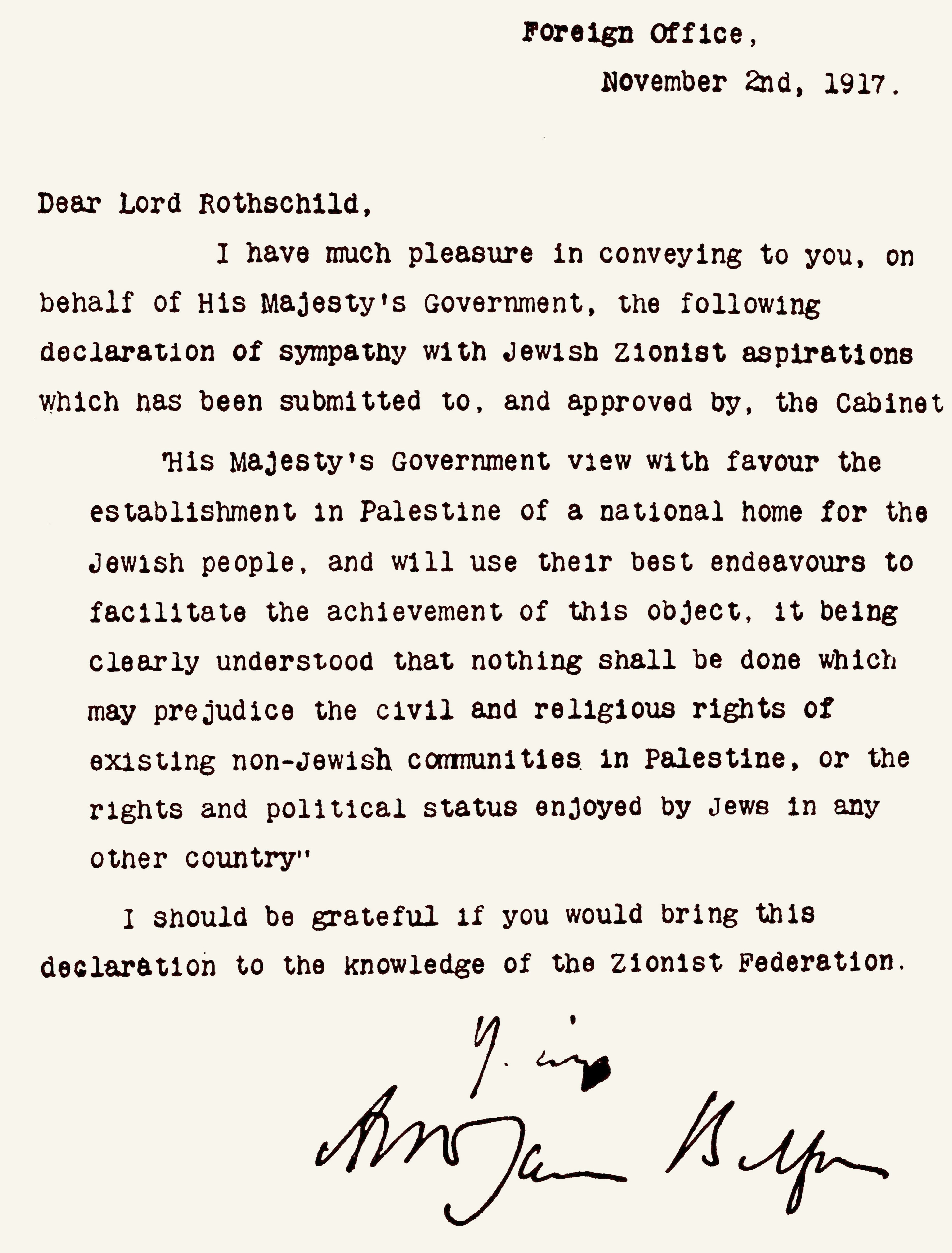
Approximately 100 years ago, Lord Rothschild and the British Crown took it upon themselves to shepherd and settle Zionists into the state of Palestine, and the region has been unstable ever since, to the extent that the United Nations in 1949 had to implement and operate basic civil society infrastructure on behalf of the Palestinian people. It is clear that Israel does not want to accept the responsibility of running the civil society of the people against whom they are committing genocide. Furthermore, if it became incumbent upon Israel to remedy the humanitarian crisis which they caused then they would have to cease committing genocide against such people, which is not in the interest of Israel or its allies.
Later, Mr. Schneider remarked:
The government of Israel has been clear that it does not want UNRWA to implode as it was noted in the Wall Street Journal just yesterday. There is a fear that if the critical services provided by UNRWA are no longer provided by the organization, it will be left to Israel to step in, or as was noted earlier in the conversation today, that Israel would have to pause it operations to defeat Hamas.
Later, Mr. Sherman (D) of California later remarked that “Israel trusts the other agencies of the UN, UNICEF, the World Food Program, et cetera, which surprised me frankly because I’m aware of the UN General Assembly and as a Zionist I am not a fan.”
Mr. Smith remarked:
UNRWA has proven itself to be, not just a malign actor, but to cause unbelievable child abuse to these Palestinian children who are taught to hate and they believe it. Why do we have young people, 13 and 14 year olds, toting AK-47s and being willing — really trying to think, someday I’ll be a martyr for Hamas and for a radical Islamic view. That’s absurd. Teach them to want to coexist, to respect other people, including Jewish men, women, and children. Instead, they’re taught to kill them and to hate them. That’s why there’s almost no end to the number of volunteers and people that go into Hamas, because they have been taught from the earliest stages to do so.
Mr. Mills remarked:
For those of us who swore an oath to our constitution, let us not forget that it is based upon our Christian-Judeo beliefs. And I don’t think that our Constitutional obligation is to worry about supporting funding to an organization that continues to go against the very people who’s trying to destroy the people of Israel.
The discussion of H.R. 7152, To direct the Secretary of State to establish a national registry of Korean American divided families, and for other purposes, specifically concerned Korean families separated by the South Korea-North Korea border (itself a legacy of the Korean-American War) even though the U.S. is currently embroiled in a U.S.-Mexico border crisis regarding the mass separation of migrant families coming from the global south.
Although Members of Congress give much lip service to the ‘existential threat’ faced by their allies, they do not consider the Palestinians to be facing such a threat from the ongoing genocide committed by Israel.
Article 2
Synchronized Decentralized Autonomous Command System (SDACS II)
A regimental, educational and friendly association of free people who voluntarily commit themselves to carrying out a common mission; or free association, or bureau, for political education operations and development [for N∴S∴, U∴A∴, and U∴S∴].
By Antarah Crawley
NACOTCHTANK, OD — Here follows the revised command structure for the Synchronized Decentralized Autonomous Command System on the basis of occupational specialities held and practiced by the Governor of N∴S∴ and constituting the schedule of members and officers of the decentralized autonomous organization (DAO), of which Curricular Operations Research and Publication Services (CORPS) is a division, a college of the Universitas Autodidactus (U∴A∴) is a regiment, a freely associated service provider is a company, a labor union is a platoon, and a committee of any of the above units is a squad or team.
Occupational Specialties (OS)
Civil Society [sui juris]
Student (Talib) [one who teaches themself]
Faculty Member (Professor) [one who teaches another]
Non-Commissioned Ranks – Enlisted
Scribe (E-1)
Djedi [Knight] (E-2)
Rapporteur (E-3)
Free Thinker [Dialectician I] (E-4)
Truth Speaker [Dialectician II] (E-5)
Light Worker [Dialectician III] (E-6)
Ombudsman [Master Dialectician] (E-7)
Departmental Director (E-8)
Commissioned Ranks – Officer [pertaining to a corpus meaning “body”, as in a union, university, assembly; Revised SDACS: (1) sui juris or self law, (2) syndicate or committee, (3) college or commune, (4) corps or party, (5) tribunal or association, (6) company or council, (7) administration or international]
Syndic (O-1)
Secretary Treasurer [Clerk] (O-2)
Chair [of a committee] (O-3)
Preceptor [of a Preceptory, or regiment] (O-4)
Administrator [of an Association, or union] (O-5)
Governor [of a Company] (O-6)
General Consul [of a Division] (O-7)
© MMXXIV BY NOVUS SYLLABUS L.L.C.
ALL RIGHTS RESERVED WITHOUT PREJUDICE.
Assurance Policy

A POLICY IN RE:
PERFECTING YOUR SECURITY INTEREST IN TRUST ‘INRI’
Let us draw near with a true heart in full assurance of faith, having our hearts sprinkled from an evil conscience, and our bodies washed with pure water.
Hebrews 10:22
Verily, this Policy of Assurance is within you and your private ‘sui’ jurisdiction, which is moored in the vessel, whose NAME is Your soul’s Title, which saileth upon the Holy Sea.
Your Friendly Neighborhood Ombudsman
IESVS NAZARENVS REX IUDÆORVM
I. Merriam-Webster defines “Assurance” as the state of being secured or certain; to be sure; or, the action of securing something or someone by a pledge or guarantee. Assurance means to provide surety or confidence to oneself or another.
II. This is a policy by which a living man or woman may indemnify themself against commercial death (of debt executed in their name) through the Redemption and Prepayment of “Yahshuah” the Christ, Savior, Redeemer, Counsellor-at-Law and King of Your Sui Jurisdiction.
III. Through Firm Belief in the Redemption of the Body (of the Dead/Debt) by Acceptance of the Charge in The Name of Our Lord and Savior, we can establish complete Trust in our own Sui Jurisdiction; and in good Faith discharge our deaths/debts under Public Policy. In other words it is said: Faith is complete Trust and firm Belief, or acceptance of a matter as true (the pledge or oath of signature). Such Belief, sincerely held, cannot be converted into a crime.
IV. The internal body and soul of the living man and woman is a sovereign occupying the position analogous to that of other sovereigns in the family of nations. Therefore it is private with respect to the public, and foreign, international and alien with respect to to the national governing corporation.
V. The external name and shadow of the living man and woman are subject to external factors. The physical body and central nervous system (CNS) is the vessel through which the internal communicates with the external. However, the internal living soul maintains jurisdiction over external property to which it holds Title (this is because a body can exist without a soul). Such Titles include the vessel NAME, the vessel shadow’s registered security Account Number, the registered certificate of live berth of vessel, and all vessel licenses and registrations emerging therefrom. The shadow itself is the external object used by the cunning executor to bind the living soul in a “dead corpus of a vessel”, as it is said, “the deceased is depicted emerging from the tomb by day in shadow form, a thin, black, featureless silhouette of a person. The person in this form is, as we would put it, a mere shadow of his former existence, yet nonetheless still existing,” (Goelet, Ogden, Jr. (1994)).
VI. The dichotomy between the living child of god and the “debtor’s corporate vessel” in commerce creates the “double” spirit and entity or person. The one is a sovereign sui juris personam; the other is subject matter in rem. That which the private/internal conducts between the public/external is international and alien (a lien).
VII. Things necessary to perfect a lien are these: (1) The Lienor shall serve notice on the owner/principal or their agent on paper under solemn oath, (2) by United States Marshal, (3) which shall contain clear information so as to frame responsive pleadings, (4) be served to the US District Court where the res is located, and (5) posted by US Marshal on the res of the seizure.
VIII. Admiralty means that a valid international contract is in dispute. All revenue causes proceed against property and rights to property in rem and in Admiralty because such causes concern a re-venue-ing of matter from the internal private to the external public; hence the Interna(tiona)l Re-venue Service. This diversity of venue creates the overlapping public and private (or sui) jurisdictions that allow the foreign entity known as the federal government to engulf all shadows within its penumbra.
VIII(a). A Lord (seigneur, i.e. “signer”) may grant a fief (or benefice, “benefit”) of valuable consideration (e.g., property, rights, or possessory interest therein) to another to hold in fee (“in fealty,” or “in good faith”) in exchange for a pledge of allegiance or service. Feoffment is a deed which grants or conveys ownership of freehold property to someone in exchange for a pledge of service. Otherwise it is said, Feoffment is the total relinquishment and transfer of all rights of ownership of an estate in land from one individual, the feoffor, to another, the feoffee, in exchange for some valuable consideration. In such cases, the person entitled to grant an estate may do so for the use of another (a Lessor). Use and trust are rooted in medieval law and are a legal way to avoid feudal services due to one Lord by granting land for the use of another (Cestui que use) who owes nothing to the Lord (i.e. no services). This arrangement separated legal ownership from beneficial ownership. Furthermore, one who owns property for the use of another is obliged to fulfill their trust.
IX. Whereas diverse Lords of Mannours and others have granted Estates by Lease for the term of one life or more, And it hath often happened that such person for whose life such Estates have been granted have gone beyond the Seas or so absented themselves from this Realm for so many years that the Lessor(s) or person(s) entitled to have the property back (Reversioners) cannot find out whether cestui a que use le feoffment fuit fait be alive or dead. Otherwise it is said, Cestui que vies have gone beyond Seas, and Reversioners cannot find out whether they are alive or dead!
X. For remedy of which mischief “so frequently happening to Such Lessors and Reversioners, being held out of possession of their Tenements for many years”, if Cestui que vie remains beyond Sea for Seven Years together and provides no Proof of their Lives, then in every Action brought for the recovery of the said “Tenements” by the Lessors or Reversioners, the Judges before whom such Action shall be brought shall direct the Jury to give their Verdict as if the person so remaining beyond the Seas or otherwise absenting themself were naturally dead. Ego these public trustees abuse the law to execute the Lord of Manors in order to secure the estate of the child in trust to the benefit of the trustee for the term of the life of the person for whom such estates had been granted (cestui a que usage le feoffment fuit fait). That is how the government Lessors squat the estate of a sovereign Lord of woman born.
XI. As Cestui qui vie, I am the Lord; I am the accommodation party for my vessel shadow (“strawman”) and I am the sponsor for the credit on every instrument I endorse for my strawman. I am the source of the energy. I am the sponsor for the credit when the offeror passes over the promise to deliver the check or obligation and draws on me as though I am a bond in which the offeror overdrafts and I in turn loan him the value of the instrument of his offer to which he is now in bondage in accordance with Public Policy. I am the principal from which the interest accrues: the interest (being the product) which accrues from the principal (being myself) has returned to the principal (myself) for a public deduction (tax credit) for adjustment of the tax liabilities on the public/fiscal society.
XII. Acceptance: Rule 1: Do not hold the charge or you will fry on the chair. Rule 2: Pass the charge to a fiduciary entity to remove yourself from that liability by grounding the account and charging them with the charge, to discharge yourself. As the owner, you are not the holder-in-due-course for the tax adjustment; the holder-in-due-course is the holder of a business license by being registered to operate in the industrial society, which is your fiduciary like the bank or a vendor.
XIII. A request is made against you without providing a check, thus it was an order for money/money order, that is why you RETURN (tax return) the offer after acceptance to the Offeror because the Offeror is holding your check as your fiduciary and they need to Pass Thru your account to make their check good which in turn reflects itself as a deduction to the entities tax liability making the credit memo to the account for the tax adjustment good, and allowing the release of the goods to the acceptor and now there is no debt claimed on the account. The ticket, bill or presentment is the instrument they use to make the claim against you; if you give them back the original and now it is in their possession, how can they possibly make a claim against you when they are in possession of their own bill. In other words it is said, An offer is made against you to pay, which debits your value and to balance that value, you need a credit. Your acceptance of their offer returned to them satisfies the Replevin Bond by operation (under the Grace of Public Policy H.J.R.-192). That is why you accept and return (tax return) the original, yourself being the sponsor for the credit to the account through your exemption. The reason you return the original is because what the person is doing is taxing you. When you return it, it is a tax return that is eligible for adjustment with the Internal Revenue Service.
XIV. Your inter-national (inter-n’al) court orders are the Acceptances because it turns those offers into money orders to use your exemption. When you accept and return an offer and they refuse to adjust, they are the ones who are in contempt of court, not you. The scriptures talk about a door that you can walk in and out of, well that is the door to the warehouse, it is the “Receiving & Discharge” door and it is “Your House,” because you are the one that is revenuing the currency from a public jurisdiction of debt back to your private jurisdiction of credit and effectively redeeming the debt. This is why we want the order of the court released to us; it is because it is our court we are exercising. The court/bank/corporation is using your exemption to write checks to them self by bonding against you to claim you as a dependant and an infidel that has to get locked up. If you stick strictly with the “where is my check?” attitude, they have to clean their books to meet their record keeping obligations. If you want to push paper, they will push paper. Only utilizing one side of the account (the paper pushing), the steamroller will get revved up. Operating in both sides of the account we have the paper and the oral proceedings. Learn to utilize both sides as the owner of the account. You are catching the corporation (your fiduciary employee) spending against you (in your “absence”) and they are trying to make you pay for what they did, when it is against Public Policy to make you pay in the first place. And for them to make a claim against you, they have to give you a check (the one you write about having not found in their offer) to post for their Replevin bond and when they don’t do that, they have no claim in fact because they didn’t post the reserves to indemnify their actions because you would endorse it back to them paid in full. When they fail to release the order of the court during your written correspondents with them after you have accepted, they are then in dishonor and lose their exemption and can have no claim.
XV. Root Policy is the linear algebra f of x from Notice to Data to Information to Knowledge; the Linear function f of thought. Squared Policy is the planar geometry f of x=y from Audit to Assessment to Assurance to Adjustment; the Planar function f of the word, i.e. the application of algebra over a field. This is the due process of Mind Software (Mindsoft) operation.
XVI. A Policy of Adjudgment arising out of any Policy of Assurance which is raised into Question shall issue from a just and equitable court of competent jurisdiction.

 Supreme Exchange