Tagged: student
D.R. 02-02: Israel-Hamas (IV)

Volume 2, Issue 2
Contents — Art. 1. Israel-Hamas (IV) — Art. 2. SDACS (II)
Article 1
U.S. gearing up, world teeters on brink of WWIII
Many nations face ‘existential threat’, religiously-motivated ‘slaughter’ and a ‘battle against evil’ says Congress
by Antarah Crawley | Last Modified 2/7/2024 at 11:03 A.M.
WASHINGTON, DC — Today, 6 February 2024, The United Stated House of Representatives (House) Foreign Affairs Committee convened a Markup on Various Measures. Mr. McCaul (R) of Texas presided as Chairman. Ms. Manning (D) of North Carolina presided as the Ranking Member until Mr. Meeks (D) of New York arrived, his flight being delayed. Mr. Crawley (AM) of United Scribes and Court Reporters United reported on the proceeding on behalf of the House Clerk’s Office of Official Reporters.
The sense of the Congress concerned ongoing U.S. statecraft against what Members characterize as a modern Axis of Evil comprised of Russia, China, Iran (Persia), and its alleged proxies including the Islamic Resistance Movement (Hamas) of Palestine, The Party of Allah (Hezbollah or Hizballah) of Lebanon, The Supporters of God (Ansar Allah or Houthi) of Yemen, and The Students or Seekers (Taliban) of the Islamic Schools (Madaris) of the Islamic Emirate of Afghanistan, among others. Meanwhile, the Representatives continued to emphasize their support for their allies, particularly Israel, Ukraine, and Christian populations across the world. This whole ordeal smacks of the Christian Crusades of the Middle Ages, to wit:
The Crusades were a series of religious wars initiated, supported, and sometimes directed by the Christian Latin Church in the medieval period. The best known of these military expeditions are those to the Holy Land in the period between 1095 and 1291 that were intended to reconquer Jerusalem and its surrounding area from Muslim rule. Beginning with the First Crusade, which resulted in the conquest of Jerusalem in 1099, dozens of military campaigns were organised, providing a focal point of European history for centuries. Crusading declined rapidly after the 15th century.
https://en.wikipedia.org/wiki/Crusades
During the discussion of H.R. 6609, To Amend the Arms Export Control Act to increase the dollar amount thresholds under sections 3 and 36 of that Act relating to proposed transfers or sales of defense articles or services under that Act, and for other purposes, Members of Congress intimated toward abrogating the Constitution of the United States of America to create an authoritarian (read “executive”) dictatorship with a rubber-stamp (read “supreme”) court.
Ms. Titus (D) of Nevada remarked:
At a time when U.S. weapons sales are reaching record levels, for some reason the Republicans on this Committee have decided that instead of needing more oversight of arms sales, Congress should surrender its already emaciated role and conduct even less oversight. We in Congress and particularly on this committee have a critical role to play in matters of war and peace, and yet this bill is another example of the steady erosion of legislative oversight. This time, however, it’s self-inflicted.
Dina Titus (D-NV)
[…]
This bill will […] prevent Congressional scrutiny on defense side deals that may be used to evade anti-bribery laws or how this would complicate reviews of U.S. defense companies’ political contributions to foreign policies. […] For the Republicans on this Committee to hold a hearing this past September entitled ‘Reclaiming Congress’s Article 1 Powers’ to now surrender those powers in this markup seems to me totally contradictory and hypocritical and a bit on the nose.
Mr. Davidson (R) of Ohio remarked:
Frankly, since all we seem to do it cut the checks and provide no check on executive authority, particularly when it comes to war-making or spying on our citizens, why not just go ahead and dissolve Article 1. [The Chairman giggled to himself, his microphone on.] We could amend the constitution and simply have a chief executive who could be very efficient.
Mr. Mills (R) of Florida remarked:
If we want to talk about abdications, for God’s sake, let’s start talking about how we can repeal the AUMF which is an abdication of Article 1 Section 8 Clause 11 or even the ’73 War Powers Act that gives executive credence to Republican and Democratic presidents alike to do carte blanche warfare. The reality is […] we have mechanisms in place already and I think that continuing to try and over-regulate, which we say that we want limited government, we want fewer taxes in the Republican party, perhaps we should start acting that way.
The Authorization for Use of Military Force (AUMF) (Pub. L. 107–40, 115 Stat. 224) is a joint resolution of the United States Congress which became law on September 18, 2001, authorizing the use of the United States Armed Forces against those responsible for the September 11 attacks. The authorization granted the President the authority to use all “necessary and appropriate force” against those whom he determined “planned, authorized, committed or aided” the September 11 attacks, or who harbored said persons or groups.
https://en.wikipedia.org/wiki/Authorization_for_Use_of_Military_Force_of_2001
[…]
The 2001 AUMF has enabled the US President to unilaterally launch military operations across the world without any congressional oversight or transparency for more than two decades. Between 2018-20 alone, US forces initiated what it labelled “counter-terror” activities in 85 countries. Of these, the 2001 AUMF has been used to launch classified military campaigns in at least 22 countries.
Article I, Section 8, Clause 11 of the U.S. Constitution, sometimes referred to as the War Powers Clause, vests in the Congress the power to declare war, in the following wording:
“[The Congress shall have Power …] To declare War, grant Letters of Marque and Reprisal, and make Rules concerning Captures on Land and Water …”
https://en.wikipedia.org/wiki/War_Powers_Clause
During discussion of H.R. 7089, To authorize the Diplomatic Security Services of the Department of State to investigate allegations of violations of conduct constituting offenses under chapter 77 of title 18, United States Code, and for other purposes, bill sponsor Mr. James (R) of Michigan preached the word of God, saying:
Human trafficking must be eradicated everywhere. Modern day slavery is a major stain on humanity and decency. It is a sin. […] According to the State Department, ‘there are about 27.6 million victims worldwide at any given time.’ […] God’s will is clear. Luke 4:18 and 19 says ‘The spirit of the LORD is upon [me] because he has anointed me to proclaim good news to the poor. He has sent me to proclaim liberty to the captives and recovering of sight to the blind. To set at liberty those who are oppressed, to proclaim the year of the LORD’s favor.’ We have a duty to all, particularly those being trafficked into slavery. My bill empowers our law enforcement to liberate the oppressed and the captive, and I beseech my colleagues to support my bill.
John James (R-MI)
During discussion of H.Con.Res. 27, Condemning Russia’s unjust and arbitrary detention of Russian opposition leader Vladimir Kara-Murza who has stood up in defense of democracy, the rule of law, and free and fair elections in Russia, Ms. Manning (D) of North Carolina remarked:
Mr. Meeks and I […] must implore that we find a way to support Ukraine and their existential fight for freedom in their hour of need. Failing to support Ukraine, failing to act now, serves the Kremlin, serves Beijing, and hurts our standing in the world, our national security, and our collective prosperous and peaceful future.
Kathy Manning (D-NC)
During a discussion of H.Res.82, Expressing the sense of Congress regarding the need to designate Nigeria a Country of Particular Concern (CPC) for engaging in and tolerating systematic, ongoing, and egregious violations of religious freedom, the need to appoint a Special Envoy for Nigeria and the Lake Chad region, and for other purposes, Mr. Smith (R) of New Jersey remarked:
Genocide Watch has called Nigeria a killing field of defenseless Christians. Open Doors reporter that there were 5,014 Christians murdered in 2022, nearly 90% of the total number of Christians killed worldwide. And Vatican News reported that over 52,250 Christians were slaughtered in Nigeria since 2009. I am convinced there is more the US can do to protect these believers, and that goes for Muslims as well and promote freedom of religion.
Chris Smith (R-NJ)
[…]
Pastor Alika Yusuf […] has talked about how in the Middle Belt region of Nigeria [Christians] face violence and are being slaughtered — this is his words — because of our religion. This bill is very important […] It will serve as legislation to hold our government … [the Nigerian government] … accountable for the millions of lives facing existential threat from the extremists.
The Democratic bloc opposed the resolution. Besides Mr. Smith, Mr. Self, Mr. Perry, and the Chairman, all Republicans vacated the hearing room during discussion of this matter. Present in the audience were Bishop Wilfred Chikpa Anagbe of the Diocese of Makurdi and Pastor Akila Yusuf representing a network of 200 pastors and leaders.
Mr. Smith later remarked that he’d “met with the Islamic leaders; they’re amazing people. They get along, they’re friends — like so many other moderate muslims in Nigeria — with the bishops and the clergy that are here today, and others. It is this radicalized group, whether it be ISIS-West Africa, whether it be Boko Haram, or the Fulani. You know, the Fulani have now become a major — in the Middle Belt area — a major major killer of Christians.” Mr. Smith closed his remarks by emphasizing his “outrage” toward the persecution of Christians in Nigeria.
Mr. Self (R) of Texas remarked:
The [Biden] Administration is not that interested in Nigeria. […] The Administration has turned a blind eye to the crisis. The State Department inexplicably removed Nigeria from its special watch list as a country of particular concern in 2021 […] The State Department needs to reverse their course and pressure the government of Nigeria to end the persecution of Christians, regardless of who is doing the persecution.
Mr. Connolly (D) of Virginia remarked that “if we [the Congress] are concerned about the violation of human rights and the right of human autonomy and freedom, and we should be, that has to be consistent. It can’t simply be one group but not anther. And I thank my friend and I hope his outrage will extend to other groups that need our consideration and protection.”
Mr. Perry (R) of Pennsylvania remarked that “the current Secretary of State under the Biden Administration stated in his first few months that this administration does not plan to prioritize religious freedom.”
The Committee discussed America’s commitment to the Pacific Theater in its discussion of H.R. 7159, To bolster United States engagement with the Pacific Islands region, and for other purposes. Mrs. Radewagen (R) of American Samoa remarked that “the U.S. is a pacific island nation.” The Ranking Member Mr. Meeks stated that H.R. 7159 strengthens U.S. “engagement with Pacific Islands by requiring future administrations to develop and update a strategy for U.S. engagement in the region.”
In its discussion of H.R. 6046, To designate Ansarallah as a foreign terrorist organization and impose certain sanctions on Ansarallah, and for other purposes, the Committee discussed the Houthi’s operations in the Red Sea.
The Houthi movement (Arabic: الحوثيون al-Ḥūthiyūn), officially known as Ansar Allah[a] (أنصار الله ʾAnṣār Allāh, lit. ’Supporters of God’), is a Shia Islamist political and military organization that emerged from Yemen in the 1990s. It is predominantly made up of Zaidi Shias, with their namesake leadership being drawn largely from the Houthi tribe.
Wikipedia
The Chairman remarked that “since October 7th, the Houthis have launched over 40 attacks on U.S. war ships and commercial ships in the Red Sea. These attacks have threatened a wide array of regional security and international shipping interests. Crews have been taken hostage, ships have faced near misses, and our American sailors have been working overtime to protect and defend America’s interests in the Red Sea. International shipping companies have been forced to reroute their ships, disrupting the global supply chain and driving up shipping costs by 450%. This is negatively impacting supply chains and the global economy.” He went on to mention that “Iran is providing the Houthis an arsenal of weapons, and while Iran was building a Houthi proxy army, this Administration say idly by pursuing a policy of appeasement.”
Mr. Perry remarked:
Let’s just go through what Iran is. The Houthis are just a proxy for Iran like many other proxies for Iran. Iran’s got proxies in Gaza, they’ve got proxies in Lebanon, they’ve got proxies in Syria — the whole neighborhood, doing Iran’s bidding. But I will tell you […] the Biden Administration in particular is so desperate for a nuclear deal with Iran that they are on both sides of this war, and they are on both sides of this war […] Just follow the facts yourself. I mean, being on both sides of the war goes like this: we’re going to approve aid to some of our allies in the Middle East to fight the Iranian proxies […] at the very same time we’re going to allow Iran to receive billions, maybe hundreds of billions of dollars, either directly from the United States or from sanctioned money around the globe that has been unavailable to them because of their malign activities […and] they supply missiles to Hezbollah, they supply all kinds of armament to Hamas, and they do everything they can to kill the Great Satan and the people that represent the Great Satan, the poor service members caught in the middle of being on both sides of the war; and three of them just lost their lives because they’re on both sides of the war.
Scott Perry (R-PA)
By way of background:
Iran, also known as Persia and officially the Islamic Republic of Iran,[c] is a country in West Asia.
Wikipedia
[…]
Iran is home to one of the world’s oldest civilizations, beginning with the formation of the Elamite kingdoms in the fourth millennium BC. It was first unified by the Medes in the seventh century BC and reached its territorial height in the sixth century BC, when Cyrus the Great founded the Achaemenid Empire. Alexander the Great conquered the empire in the fourth century BC, and it was subsequently divided into several Hellenistic states. An Iranian rebellion established the Parthian Empire in the third century BC, which was succeeded in the third century AD by the Sasanian Empire. Arab Muslims conquered the empire in the seventh century AD, leading to its Islamization; Iran thereafter became a major center of Islamic culture and learning. Over the next two centuries, a series of native Iranian Muslim dynasties emerged before the Seljuk and the Mongols conquered the region. In the 16th century, the native Safavids re-established a unified Iranian state. Under the reign of Nader Shah in the 18th century, Iran presided over the most powerful military in the world, though by the 19th century, a series of conflicts with the Russian Empire led to significant territorial losses. The early 20th century saw the Persian Constitutional Revolution. Efforts to nationalise its fossil fuel supply led to an Anglo-American coup in 1953. After the Iranian Revolution, the current Islamic republic was established in 1979 by Ruhollah Khomeini, who became the country’s first supreme leader.
Mr. McCormick (R) of Georgia remarked:
This is a constant pattern with the Biden Administration, whether at the border, with the cartels, in Gaza, with Hamas, with UNRWA, or in Yemen with the Houthis, this Administration constantly uses short-term humanitarian concerns to justify decisions that in the long run further deteriorate humanitarian conditions and undermine the United States’ national security. This can even be seen in the manner that the Biden Administration chooses to support Ukraine. They are more interested in a feel-good solution than in winning a war against evil.
This debate highlighted a sharpening contradiction between the Congress’s assessment of the innocent civilians and children of Yemen and those of Palestine.
During the discussion of H.R. 7122, To prohibit aid that will benefit Hamas, and for other purposes, or, The Stop Support for UNRWA Act, Mr. Smith remarked that “UNRWA […] is a massive entity that wants Israel utterly destroyed […] and those refugees would then take their place in Jerusalem in a new Palestinian state and elsewhere that is currently Israel.”
Mr. Meeks remarked:
Prohibiting U.S. funding of UNRWA while the people of Gaza are suffering an acute humanitarian disaster undermines the united states and Israel’s interests, erodes the Unites States moral authority and further endangers the lives of more than 2 million Palestinians residing in Gaza.
Gregory Meeks (D-NY)
[…]
The government of Israel agrees, which is why a senior Israeli official announced just days ago […] ‘If UNRWA ceases operating on the ground this could cause a humanitarian catastrophe that will force Israel to halt its fighting against Hamas. This would not be in Israel’s interests. It would not be in the interests of Israel’s allies either.’ UNRWA’s collapse would further harm regional stability, including in the West Bank, Lebanon, Jordan and Syria at a time when the United States and Israel are seeking to deescalate and contain spillover from the war in Gaza. It would be a gift to Iran and its allies, Hamas, Hezbollah, and Bashar al-Assad
Mr. Perry remarked:
The Biden Administration has given UNRWA $730 million during its term here […] hard earned tax dollars of good Americans […] We’re sending them money since 1949 […] here’s what their doing, they’re relieving Israel of their sovereignty and their working on destroying Israel and the United States of America […] the Administration is on both sides of the war, but $730 million is going to the people that attacked Israel. We’re going to give Israel billions of dollars to defend themselves, we’re going to give billions of dollars to Israel to attack Gaza, and essentially level most of it, and then we’re going to ask for more money to fix Gaza. […] Since 1949 our American tax dollars have funded the United Nations Relief and Works Agency […] this isn’t the United States going over there; maybe it’d be different. Hopefully it would be different, but it’s the United Nations […which] seems a little hostile to your friends in Israel […] and I wonder, since 1949 whose responsibility is this […] maybe Iran wants to fund UNRWA, or the money can go direct to Hamas and doesn’t have to go through UNRWA. […] People are asking for a two-state solution and the Administration is now asking for the recognition of a Palestinian state. What happened on October 7th is what you get with an UNRWA-provided two-state solution.
Scott Perry (R-PA)
Mr. Mast (R) of Florida remarked:
Israel is America’s ally […] Palestinians are not our ally […] Nobody in here is willing to say that Palestinians are our ally; nobody wants to refute that Israel is our ally. Our ally Israel is at war with our non-ally, and UNRWA exists […] to support our non-ally. […] If we support UNRWA […] we are paying literally the salaries of our non-ally that is at war with our ally.
During Mr. Mast’s statements, the Ranking Member departed, and only one Democrat, Mr. Schneider, remained in the hearing room. In response to Mr. Mast, Mr. Schneider (D) of Illinois responded:
I’ll agree with you; Israel is our ally, in fact Israel is our most important ally in the Middle East, perhaps one of our most important allies in the world. The United States has no better friend than Israel and Israel has no better friend than the United States. […] The Palestinians are neither an ally nor an enemy; the Palestinians are a population […] that have been failed by their leadership for more than 100 years.
Brad Schneider (D-IL)
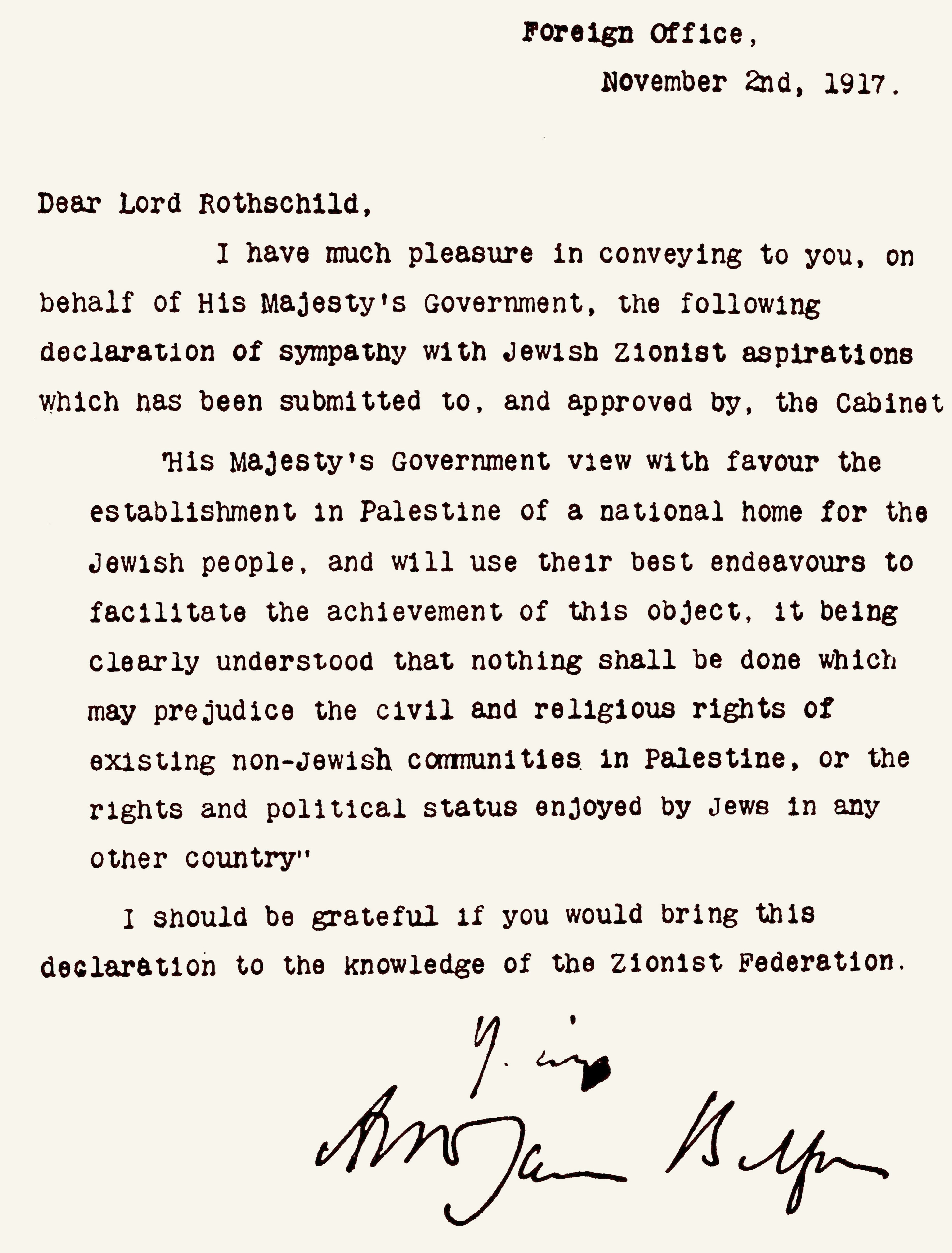
Approximately 100 years ago, Lord Rothschild and the British Crown took it upon themselves to shepherd and settle Zionists into the state of Palestine, and the region has been unstable ever since, to the extent that the United Nations in 1949 had to implement and operate basic civil society infrastructure on behalf of the Palestinian people. It is clear that Israel does not want to accept the responsibility of running the civil society of the people against whom they are committing genocide. Furthermore, if it became incumbent upon Israel to remedy the humanitarian crisis which they caused then they would have to cease committing genocide against such people, which is not in the interest of Israel or its allies.
Later, Mr. Schneider remarked:
The government of Israel has been clear that it does not want UNRWA to implode as it was noted in the Wall Street Journal just yesterday. There is a fear that if the critical services provided by UNRWA are no longer provided by the organization, it will be left to Israel to step in, or as was noted earlier in the conversation today, that Israel would have to pause it operations to defeat Hamas.
Later, Mr. Sherman (D) of California later remarked that “Israel trusts the other agencies of the UN, UNICEF, the World Food Program, et cetera, which surprised me frankly because I’m aware of the UN General Assembly and as a Zionist I am not a fan.”
Mr. Smith remarked:
UNRWA has proven itself to be, not just a malign actor, but to cause unbelievable child abuse to these Palestinian children who are taught to hate and they believe it. Why do we have young people, 13 and 14 year olds, toting AK-47s and being willing — really trying to think, someday I’ll be a martyr for Hamas and for a radical Islamic view. That’s absurd. Teach them to want to coexist, to respect other people, including Jewish men, women, and children. Instead, they’re taught to kill them and to hate them. That’s why there’s almost no end to the number of volunteers and people that go into Hamas, because they have been taught from the earliest stages to do so.
Mr. Mills remarked:
For those of us who swore an oath to our constitution, let us not forget that it is based upon our Christian-Judeo beliefs. And I don’t think that our Constitutional obligation is to worry about supporting funding to an organization that continues to go against the very people who’s trying to destroy the people of Israel.
The discussion of H.R. 7152, To direct the Secretary of State to establish a national registry of Korean American divided families, and for other purposes, specifically concerned Korean families separated by the South Korea-North Korea border (itself a legacy of the Korean-American War) even though the U.S. is currently embroiled in a U.S.-Mexico border crisis regarding the mass separation of migrant families coming from the global south.
Although Members of Congress give much lip service to the ‘existential threat’ faced by their allies, they do not consider the Palestinians to be facing such a threat from the ongoing genocide committed by Israel.
Article 2
Synchronized Decentralized Autonomous Command System (SDACS II)
A regimental, educational and friendly association of free people who voluntarily commit themselves to carrying out a common mission; or free association, or bureau, for political education operations and development [for N∴S∴, U∴A∴, and U∴S∴].
By Antarah Crawley
NACOTCHTANK, OD — Here follows the revised command structure for the Synchronized Decentralized Autonomous Command System on the basis of occupational specialities held and practiced by the Governor of N∴S∴ and constituting the schedule of members and officers of the decentralized autonomous organization (DAO), of which Curricular Operations Research and Publication Services (CORPS) is a division, a college of the Universitas Autodidactus (U∴A∴) is a regiment, a freely associated service provider is a company, a labor union is a platoon, and a committee of any of the above units is a squad or team.
Occupational Specialties (OS)
Civil Society [sui juris]
Student (Talib) [one who teaches themself]
Faculty Member (Professor) [one who teaches another]
Non-Commissioned Ranks – Enlisted
Scribe (E-1)
Djedi [Knight] (E-2)
Rapporteur (E-3)
Free Thinker [Dialectician I] (E-4)
Truth Speaker [Dialectician II] (E-5)
Light Worker [Dialectician III] (E-6)
Ombudsman [Master Dialectician] (E-7)
Departmental Director (E-8)
Commissioned Ranks – Officer [pertaining to a corpus meaning “body”, as in a union, university, assembly; Revised SDACS: (1) sui juris or self law, (2) syndicate or committee, (3) college or commune, (4) corps or party, (5) tribunal or association, (6) company or council, (7) administration or international]
Syndic (O-1)
Secretary Treasurer [Clerk] (O-2)
Chair [of a committee] (O-3)
Preceptor [of a Preceptory, or regiment] (O-4)
Administrator [of an Association, or union] (O-5)
Governor [of a Company] (O-6)
General Consul [of a Division] (O-7)
© MMXXIV BY NOVUS SYLLABUS L.L.C.
ALL RIGHTS RESERVED WITHOUT PREJUDICE.
UA:\>_

WELCOME
To the “Self-Teaching University”
of the Decentralized Autonomous Organization (DAO),
House of Studies, 153d CORPS
Political Bureau of Education
Novus Syllabus Seclorum
(“New Syllabus of the Age”)
CONTENTS
Courses 1-12: [Legacy System]
Course 13: Islam II
Course 14: Thoth Club

Course 13:
Islam II
Module A
On 4 November 2023, I, Antarah, Founder of Novus Syllabus Seclorum, Governor of NOVUS SYLLABUS L.L.C., and Grand Preceptor of the Universitas Autodidactus of the decentralized autonomous organization (DAO) of the conscious and God-fearing people of the world, by the grace of God, had the pleasure of meeting Ms. Azra Kulic, a Bosnian muslim woman living in Michigan, U.S.A., who thereupon instructed me in certain information, offered unto me an English-language copy of the interpretation of the Noble Quran, a thin book entitled A Brief Illustrated Guide to Understanding Islam, and her own research essay entitled The Most Essential Research. I said unto her, with great excitement, that our meeting was verily an inaugural gathering of the UA International. Thereafter Ms. Kulic has continued to send me information and inspired me to study Islam, thereby becoming my Preceptor in these matters. Verily, I bore witness to the fact that there is no one worthy of worship but God (Allah) and that Muhammad (PBUH) is His servant and Messenger (Shadadah).
أَشْهَدُ أَنْ لَا إِلَٰهَ إِلَّا ٱللَّٰهُ وَأَشْهَدُ أَنَّ مُحَمَّدًا رَسُولُ ٱللَّٰهِ
ašhadu ʾan lā ʾilāha ʾilla -llāhu, wa-ʾašhadu ʾanna muḥammadan rasūlu -llāh
“I bear witness that there is no deity but God, and I bear witness that Muhammad is the Messenger of God.”
Some of the information she has sent me is presented below for the benefit of the Student of the UA.
Azra Kulic Media Spots
Aired 2/4-2/18/2024 on Grand Rapids
cable access television (GRTV)
Additional Resources:
Curated by Azra Kulic
Course 14:
Thoth Club Book Club
Module A
COMES NOW the Most Excellent Student Preceptor, Jona Monet W., an original member of the New Syllabus Mystery School (NSMS) of Washington, D.C.*, and to present a course of self-instruction in the nature of a book club. Talib Jona says, “My goal is to nation build, but to do that, we have to raise our consciousness, and a lot of times it means unlearning what we thought we knew.” She also announces, “I will go live at 11:11pm Wednesdays + Sundays as often as possible.”
The first reading of Thoth Club as of 1 January 2024 is As A Man Thinketh by James Allen.
*To wit:
See, Curriculum:\>Title 24:\>N.S.C.\CHAPTER 49. BLOCK 8: NEW SYLLABUS MYSTERY SCHOOL: DC LOCAL CHAPTER (2017) New Syllabus Mail - New Syllabus Mystery School: DC Local Chapter (Email chain dated Sun, Mar 5, 2017 at 8:37 PM)
[...]
 1. Charter. This email is to confirm that We chartered the Washington, D.C. Local Chapter of the New Syllabus Mystery School on 5 March 2017 at about 4:30pm.
 2. Founding Members of DC Local. Those who were present to pass the motion were M... W..., K... "N..." R..., R... H..., Jona Monet, N... "S..." B..., and M... K..., as Signed 3/1 and 3/5 in the Feb 2017 Signatory Record. These members as well as NS Director A... C... comprise the Body-politic of the Local DC-NSMS.
 3. Chartering Committee. M... W... and K... "N..." R... coordinated the committee, which, after deliberation of all members, consigned to engage in the business of organizing the conscious young black community ("Kham-Unity") under the Organizational name of the New Syllabus, which Organization until then had been solely directed in DC by [myself] A... C....
[...]
Explore more resources with U∴A∴:\>_


Supreme Exchange
Information
Navigate the Universitas Autodidactus Collegium N∴S∴
Curricular Operations Research & Publication Services
Provided by the Governor and Company of:

Free Association
‘Ecrasez l’infâme’
The Nature and Role of the Press and the Spreading of Public Ideas during the Initial Decline of the Old Regime in 1789, Together with Some Parallels Drawn into the Modern Period.
By Antarah Crawley | GWU ENGL 3481W | Spring 2012
Contents — I. Introduction: Drawing Parallels—Bringing the “Voltaire-figure” into the Modern Period — II. Classical Interpretations of the French Revolution and its Reactions: An Inevitable Consequence of Social Discrepancies? — III. The Significance of the Press: An Unprecedented Surge of Dialogue Between All Class Levels — IV. Repression Reenacted: Instances of repressed scholarship on the French Revolution under new Oppressive French Regimes and Abroad; What is the significance?
I. Drawing Parallels—Bringing the “Voltaire-figure” into the Modern Period
This is a time in which trends in world leadership are moving into an ominously monopoly-minded direction. Industrial and financial consolidation to the end of optimizing profit for those at the top of the corporate food chain, together with reckless investing and trading in the financial sector, is a reality that had led to near disaster—the 2008 recession. Such reckless habits of the American aristocratic class—that class that controls the means of production (footnote: what would be land in 1780s France)—has indeed sparked revolt from the lower classes, ineffective insofar as it has been. But the culture of dissent is present, just as it was in 1788 as the bourgeoisie began to find fault with King Louis XIV’s handling of the economy. We have in our society the broodings for a coup de tat of the industrial and financial superpowers that sway Americans’ lives. If the government cannot adhere to the wishes of the classes that serve as it’s support base—the small businessmen and entrepreneurs, or the modern bourgeoisie, as well as the large working class population—and break its ties with such entities, then as we can see from history, and overthrow of the symbolic corporate-monarchy is eminent.
Below this paper examines how the French Revolution unfolded and what factors contributed to its initial success, at the same time as it draws parallels between the events of 1789 and the current trends in the United States of America. With social media being a particularly effective and influential method of disseminating ideas in our modern society, it compels me to delve into the question of how the media of the 18th Century—the printed press and periodicals—affected popular opinion and reactions to the monarchy. Such answers may help us find similar trends in our own society of acute discrepancy between those that have power, both political and economic, and those who do not have it. And furthermore, 1789 is a perfect bookmark with which to compliment the modern period that I speak of here, 2012, because historians widely assert that the French Revolution ushered in the modern era with the creation of a “truly universal civilization…proclaiming the fundamental and inviolable rights of all people.”
It is the case, however, that the modern concept of politics, on which this country was based, is being eroded by government partiality towards big-business—we seem to be relapsing into a monarchal society. In this time of quasi-revolt, as Occupiers remove themselves from the system of economic and political abuse by the Haves, we should find value in looking to the ways in which 18th Century revolutionary figures confronted the monarchy and the aristocracy. What was the role of popular periodicals during the late 1780s, and can their impact be translated into modern trends like Facebook? What was the role of the Enlightenment—the elite, learned class—in influencing the popular revolt, if there were any influence there at all? How must a revolutionary, indifferent of his political opposition and bent only on self-improvement and social awareness—a “Voltaire-figure”—go about using the written word to combat an oppressive regime? What, if anything, can the history of the French Revolution teach us?
II. Classical Interpretations of the French Revolution and its Reactions: An Inevitable Consequence of Social Discrepancies?
The overarching significance of the French Revolution among historians had long been focused on its social consequences. In his introduction to the volumized collection of papers compiled for the annual conference on Studies on Voltaire and The Eighteenth Century (SVEC), Harvey Chisick patronizes the Classical, or Social, Interpretation of the French Revolution by saying, “[The Revolution’s] significance consists principally in the socio-economic disjuncture represented by the middle class or bourgeoisie overcoming the aristocracy and attaining the political power to which it’s economic strength entitled it. This process took hundreds of years and was accomplished only when the bourgeoisie was strong enough to make good its demands by force.” Such an interpretation of the Revolution had been championed by authoritative historians on the subject such as Georges Lefebvre. In his 1939 now-classic The Coming of the French Revolution, he maintains a rigid and illogical model of French society as the basis for the dissent of the bourgeoisie and the result of 1789:
At the end of the eighteenth century the social structure of France was aristocratic. It showed traces of having originated at a time when land was almost the only form of wealth, and when possessors of land were the masters of those who needed it to work and live. …The king had been able gradually to deprive the lords of their political power and subject nobles and clergy to his authority. But he left them the first place in the social hierarchy. Still restless at being merely his ‘subjects,’ they remained privileged persons.
Presently, however, a new class was emerging in prominence in France, whose wealth, in contrast, was based on mobile commerce. Called the bourgeoisie (or the Third Estate, inferior to the clergy and aristocracy in the three orders of old French law, but not too far removed from them), it proved useful to the monarchy by supplying it with money and competent officials, and through the increasing importance of commerce, industry and finance and the eighteenth century it became more important in the national economy. By the late 18th Century the bourgeoisie was beginning to usurp the aristocracy and clergy in terms of real economic power even though the latter retained its supreme legal and social status. Feeling as though it deserved more political power based on its economic contribution to the state, the bourgeoisie became discontent with the state. The Revolution of 1789 thus balanced the power of bourgeoisie with its real economic influence and eroded the prominence of the aristocracy. Thus, as Lefebvre states, “In France the Third Estate liberated itself.” But it’s not that simple, the author interrupts. Although Lefebvre separates the four stages of the revolution, characterized by the social classes involved, the respective measures of executing the Revolution were intertwined and made way for each other, all culminating in a victory for the bourgeoisie in which the regime of economic individualism and commercial freedom prevailed over the working class:
The privileged groups [the clergy and aristocracy] did have the necessary means [for forcing the king’s hand in appealing to the economic condition of the nation]… The first act of the Revolution, in 1788, consisted in a triumph of the aristocracy, which, taking advantage of the government crisis, hoped to reassert itself and win back the political authority of which the Capetian dynasty had despoiled it. But, after having paralyzed the royal power which upheld its own social preeminence, the aristocracy opened the way to the bourgeois revolution, then to the popular revolution in the cities and finally to the revolution of the peasants—and found itself buried under the ruins of the Old Regime.
Chisick comments that the Classical Interpretation situates the French Revolution in France’s historical time as an “inevitable consequence of a long social and economic revolution,…following from scientific laws.” This would make the neither the press nor ideology a subject of interest. But it seems that bourgeois dissatisfaction would not have miraculously resulted in an organized revolt upon the state, an act of terrorism, as it were. Disseminated ideology must have had a place in rallying the organization of the greater Third Estate. And since Chisick is editing a collection entitled “The Press in the French Revolution,” his acknowledgment of the Classical Interpretation must ultimately be to set up a retort to it. While this Marxist-esque Classical interpretation went unchallenged throughout much of the history of the Revolution’s study, through Jaures and Mathiez to Lefebvre and Soboul, general acceptance of this formulation began to wane after the 1960s.
What then arose was a Revisionist Criticism of the Classical Interpretation of the French Revolution. The first body of criticism stemmed from Alfred Cobban and George Taylor’s conclusion that capitalism in France was not present enough or influential enough on the Bourgeoisie to be a motive for revolution. Furthermore, Taylor asserts that the nobility shared in equal part with the Bourgeoisie the most innovative and large-scale forms of economic activity. So, in contrast with the Classical Interpretation that the Third Estate rallied to establish themselves as the social superior to the aristocracy, the Revolution was “essentially a political revolution with social consequences and not a social revolution with political consequences.”
“Conceptualizing the Revolution in political and cultural terms,” says Chisick, “also has broader implications.” Revisionist historians, in contrast to Classical historians who focus on the social discrepancies in the French upper classes, emphasize government incompetence and botched reforms which led to a virtual power vacuum and the emergence of public opinion as a powerful new political force.
Let us take a step back here and examine this interpretation within the context of our society: The American public had expressed dissentient views on the government as being incompetence under President Bush with the trouble resulting from the finance bubble / housing bubble that burst in 2008. Although we were hopeful of President Obama, many sectors of the right and well as some of his critical constituents have expressed their feelings of his incompetence when it came to listening to the American public and ending a several hundred-billion dollars war in the Middle East (and furthermore, of their general dissatisfaction with the Congress who seems to favor large corporations over the working/entrepreneurial class and the Supreme Court who allows immigration regulations and women’s reproductive rights to suffer). This brooding dissent has led to the organization of different protest rallies like Occupy and other virtual dissenting communities through new social media platforms like Facebook and Twitter. The greater public, who call themselves the 99% in certain circles, are in a way equivalent to the Borgeoisie and the Popular/Peasant population of 1780’s France. Although they may not own the means of production (what would be the land in 18th C France) they feel that their political voice deserves more attention from the Congress and lawmakers, who currently only appear to be favoring the voices of large corporations like Monsanto, as opposed to the family farmer. Essentially, a corporation like Monsanto, who’s C-level administrators embody the 1%, is a stale form of political influence and legal exemption. Chevron has been dumping toxic oil-waste into the Ecuadorean Amazon and surrounding forests since the 1980s, yet the government had yet to take a serious action against the company until 2011 when a Federal Appeals Court allowed damages against Chevron for the Ecuador oil spill. In our present secular society, multi-million and -billion dollar corporations represent the clergy who benefited from “none of the ordinary direct taxes but instead…on its own authority a ‘free donation’ to the king”; the aristocrats are represented by those C-level administrators and shareholders who control these large companies which hold the market and lives of working and entrepreneurial Americans in their palm. The political power of the 1% in the minds of Occupiers and greater dissenters is disproportionate to their contribution to the greater good of American people. The question that arises at this point in our history is whether these present trends will develop into “long and silent social developments” that will erupt into another Western political revolution—and whether or not it will be successful!
Chisick summarizes the difference between the Classical and Revisionist interpretations with this:
The revisionist emphasis on politics and culture…tends to ascribe to the ‘people’ or working population a more marginal place in the Revolution. If politics, for example, are defined in terms of parliamentary assemblies, then the people will play only a small role in them. If culture is defined in terms of literacy, then a large population of the lower class will be eliminated from consideration altogether, and the rest will assume a passive role as an audience or public to which writes and publicists appeal.
What Chisick and The Press in the French Revolution focus on is not so much the marginalized place of the people in politics, but the new role, after 1789, of the people as a body through which writers, elite or otherwise, appeal radical ideas through printed media. Such a significant role in the common population could have only been accessed though the Revisionist Critique—thus arises the importance of the Press.
III. The Significance of the Press: An Unprecedented Surge of Dialogue Between All Class Levels
With public opinion being a new principle authority and a central component of politics in new Revisionist Interpretation, the role of the press and its shaping and influence of opinion takes on new importance during the coming of the Revolution. Yet even before 1789, the press was a tool that the monarchy knew it had to control, lest it lead to unwanted ideas spreading around the kingdom.
Daniel Roche in Revolution in Print explains the great extent to which the monarchy sought to control print media:
There was no freedom of the press under the Old Regime because from the earliest days of its power the Crown established surveillance of printers and booksellers and a mechanism for controlling the dissemination of ideas…. The royal power intervened at both ends of the chain that links creative writers to their public: readers and other authors. Before publication became a skillful exercise in censorship, applied through a policy of selective privilege that involved the prepublication inspection of manuscripts for content and the rewarding of publishers who, in return for their cooperation with the established order, enjoyed the advantages of a monopoly. After publication, control was further applied by police.
Such extreme and thorough action taken by the absolutist state indicated its keen awareness of the importance of the printed word. They saw it as the principle vehicle of radical knowledge and thought that it indeed would turn out to be in 1789.
Of course, no system of repression is one-hundred percent effective. The royal government was never able to wholly prevent the circulation of forbidden books, anti-monarchist pamphlets, and the writings, songs and satires that made up an entire body of printed criticism. This body, interestingly, was deemed by the monarchy to a dangerous dissemination of “philosophical” works, “philosophy” being all works deemed “dangerous” or “bad” (which may enlighten us to the monarchy’s unstable relationship with the Enlightenment figures, especially Voltaire). The Old Regime enacted every feasible method of control over print media that it could, including the practical monopolization of the system in 1699 when abbé Bignon became Director of The Book Trade. The role of the Office of the Book Trade was to examine all works destined for legal publication and to maintain that all such books be registered with the state. Under the direction of C.-M. Lamoignon de Malesherbes from 1750 to 1763, censorship defined the forbidden zones of literature as God, king, and morality. One can only imagine where that puts Enlightenment figures like Voltaire in the eyes of the government when such a “philosophical” a tale as Candide was published in 1759. Given, Voltaire did not admit his authorship until 1768 when he was not even within reach of the Office of the Book Trade and the monarchy. But notwithstanding that fact, neither the 1759 ban on the book by Paris officials or its ambiguous authorship deterred it from becoming one of the fastest selling books in history, selling twenty thousand to thirty thousand copies by the end of the year in over twenty editions. So it can be said that there are notable examples of books that slipped through the cracks of the censors, but all in all, between 1660 and 1680, the beginnings of an increasingly close supervision of printed matter and the employment of “hard-nosed” Firemen arose and persisted until 1789.
After 1789, the most immediate and dramatic change in the way public opinion came to be formed and expressed was in complete freedom of the press. With the elimination of the machinery of State regulation of publishing and the sudden collapse of censorship in the Spring and Summer of 1789, Chisick writes, “writers and publishers found themselves free of the constraints that the monarchy had imposed upon print media almost from their inception. Books, pamphlets and periodicals could now be published without obligatory prior examination by a censor and without the publisher having to apply for a privilege or to ascertain that he was not infringing upon someone else’s legally established monopoly.” What resulted of this was an emergence of new career opportunities in writing, publishing and journalism, wherein more personal and more partisan expression could appeal directly to the public. Chisick writes that, “The periodical press that now emerged was far more political in content and far more engaged than was its counterpart of the old regime,” which was primarily devoted to the arts, sciences, and literature. In addition to the content of print media, its format also changed; journals treating art, plays, et cetera needn’t appear more regularly than every one or two weeks, however the new political papers that began to appear in 1788 had a popular readership to satisfy who were avid for the latest political news, and these papers came to be regularized in dailies in 1790 and 1791.
Continuing with the trouble-making habits that they used even before 1789, the Enlightenment figures also played an important role in post-censored France. What resulted of the absence of authoritarian filtering was a surge of political and social dialogue through print. The function of censorship had been to “impose an officially sanctioned consensus on public discussion, or, formulated negatively, to prevent the expression of opinions that deviated too widely from what the authorities defined as the accepted norm.” After the fall of the state—which was the filter of public discussion—political dialogue flourished, primarily through the work of Enlightenment figures. Chisick writes:
The literature of the Enlightenment was overwhelmingly a literature of dialogue. Its world of discourse, its political theory, social criticism, literature and popularization, was open and aimed at persuasion. Characteristically, even Voltaire’s cry of ‘Ecrasez l’infâme’ [‘Crush the infamous thing’] was moderated in practice, and the philosophe sought less the destruction of his ecclesiastical foes that that they moderate and modernize their beliefs and actions.
Often, the aim and influence of Enlightenment literature was painted in a less-than-humane light. Such writing was aimed at what the Enlightenment figures believed to be the realm of possible social and political reform—and such parameters often limited them to the learned classes. With respect to the audiences for which periodicals like the Ami du roi and the Journal de la Montagne were intended it cannot be denied that, both being descended from the Enlightenment, they were addressed to a cultural elite. But to be fair, the elite bourgeoisie was the class which was most concerned the goings-on of the years that immediately followed 1789, thus the Enlightenment writers would have felt it imperative to appeal to them first and foremost. In any case, no matter the Enlightenment’s targeted appeal group, a larger-scope popular press emerged after 1789 that sought to make a direct and regular political appeal to the people. For example, the more radical Ami du peuple and Pére Duchesne sought to speak directly to the working population. Jeremy Popkin even acknowledges the purpose of an anonymous Belgian journalist in launching the Esprit des gazettes in 1786 as being a reaction to the segmentation of the press market and a reaction to the “elite press.” Such “elite” papers were considered the “concerned papers, the knowledgeable papers, the serious papers…the papers which serious people and opinion leaders in all countries take seriously,” similar to The New York Times today. However, with the surge of uncensored popular publications in 1789, it proved exceptionally difficult for a stable elite press to survive. It nevertheless persisted that an exception to the rule existed, and the Dutch-based Gazette de Leyde, a French-language newspaper and one widely considered to be the most important serious news journal at the time reached the height of its fame at the outbreak of the French Revolution. It may have been the case that its being published outside of the control of the monarchy and its taking serious political issues of the day allowed it to transition well into the popular culture of revolutionary France, in which “sophisticated readers” liked to think of themselves as “students of events, rather than as mere consumers of information.”
So in general, there was a mixture of “elitist” and popular publication circulating through France after the Revolution began, and all of them were open-minded and political in nature with having to be constrained by a monarchy. Chisick defends the elitist publications stemming from the Enlightenment; even though they were not targeted at the public in terms of language, he says, “The Enlightenment may have been élitist, but it was humane, progressive, pragmatic and…committed to an open mode of discourse that worked on the principles of a free exchange of ideas, rational persuasion, and consensus.” In essence, the Enlightenment encompassed the spirit of the free press.
Here, I would like to take one more step back. By the transitive power, the dialectic, free-spirited passion of the Enlightenment also encompasses the essence of the Internet, or what John Man would say is the fourth turning-point in human contact in the last 5,000 years, after the explosion of the printing press in Europe. Using this model of long-term political revolutions paired with innovative information movements, can we say that the modern political trends referred to above, paired with the widespread use of Facebook, Twitter and blogs for personal and political expression will evolve into some greater social revolution? Widespread use of social media could favor either the greater population or the Silicon Valley companies that control the means of disseminating the information. Either way, a change will erupt in the way all people conduce commerce, relationships, and protest. In fact, it may have already happened, with Amazon.com in control of commerce, Facebook.com in control of interpersonal relationships, social awareness and business promotion, Google.com in control of information dissemination, and the Apple Corporation in control of the method of accessing it all: the smart phone. What social media looks like on the outside is the power of dialogue and commentary in the hands of every individual person, but what we may actually have is a monarchy of the big four companies upon our entire civilization.
Be it internet-based social media or the physical spread of pamphlets in 1780s France, the spread of ideas sparks dialogue and makes people question the powers that govern them. The Old Regime recognized that and that’s why they so painstakingly censored the media. But the Enlightenment figures also recognized that and used it to the advantage of the people. Yes, they targeted their publications toward the elite, but could you blame them for trying to appeal to a more learned audience. Perhaps the “elitism” of Enlightenment periodicals actually helped to lend some authority to their positions. Surely no one takes every Facebook campaign seriously—that’s because so many people of such little intelligence use it. It may be the case that the modern person needs to filter what they read and believe through an Enlightened lens before they comment on current issues.
IV. Repression Reenacted: Instances of repressed scholarship on the French Revolution under new Oppressive French Regimes and Abroad; What is the significance?
What becomes clear after moderate research into the French Revolution is that even after 1799, books about the Revolution have been repressed by government who find the very notion of political dissent dangerous. Even authoritative writers on the topic who we revere today were repressed upon their initial publication. R. R. Palmer, the translator of Lefebvre’s The Coming of the French Revolution comments on the books history from its first publication in 1939: “The French Republic collapsed before the assault of Hitlerite Germany, and was succeeded by the Vichy regime that governed France until the liberation in 1945. No sympathetic understanding of the French Revolution was desired by the authorities of Vichy France… The Vichy government therefore suppressed [The Coming of the French Revolution] and ordered some 8,000 copied burned, so that it virtually remained unknown to its own country until reprinted there in 1970, after the author’s death.”
Gaetano Salvemini’s highly revered book also underwent similar treatment. “[The French Revolution] has come to be regarded as a classic in its field,” says I. M. Rawson in his Translator’s Note. “It may seem strange that a work so well known on the continent [of Europe] should not have been made available to English readers long ago. The explanation lies in part in the fact that the author, an exile for over twenty years from his own country [of Italy] and actively engaged in the struggle against Fascism, as well as in writing a number of works on modern politics, had no time to give his study of the great Revolution a further revision in the light of recent historical research, and was unwilling to allow it to appear in English before this had been done.”
What we see here are Voltaire-figures who, even after the iron claw of the Old Regime had long fallen, still combated oppression and political injustice with that same passion. Like Voltaire, who was imprisoned in the Bastille twice and was constantly in fear of being jailed when he dared set foot in Paris, Salvemini contested the Fascist regime and honorably suffered more it. That is the kind of spirit I hope may come of this brooding internal political struggle in America. Perhaps the melting pot isn’t hot enough yet.
 Supreme Exchange