Tagged: bond
D.R. 01-14: The Fed &c.

Volume 1, Issue 14
Special Edition on Political Economy
Contents — Art. 1. …On the Fed — Art 2. Charter F.A. — Art. 3. …Consol DAO — Art. 4. Notes from the DAO — Art. 5. …X — Art. 6. Culture…
Article 1
Notes on the System:
On the “Federal Reserve”
Comp. Ed. by Antarah Crawley | Last Modified 11/28/2023 at 9:40 PM
The Federal Reserve, the central bank of the United States, provides the nation with a safe, flexible, and stable monetary and financial system.
Banner of the Official Website of the Board of Governors of the Federal Reserve System, as of 27 Nov. 2023
The people that walked in darkness have seen a great light: they that dwell in the land of the shadow of death, upon them hath the light shined.
Book of Isaiah, Chapter 9, Verse 2
Introductory Editorial Note: It is economic, social, and political suicide to question the legitimacy or constitutionality of the System (just ask Ezra Pound, Mr. Mullins, and Chairman McFadden). Notwithstanding that unfortunate circumstance, we must educate the public as to its mechanisms.
Preamble
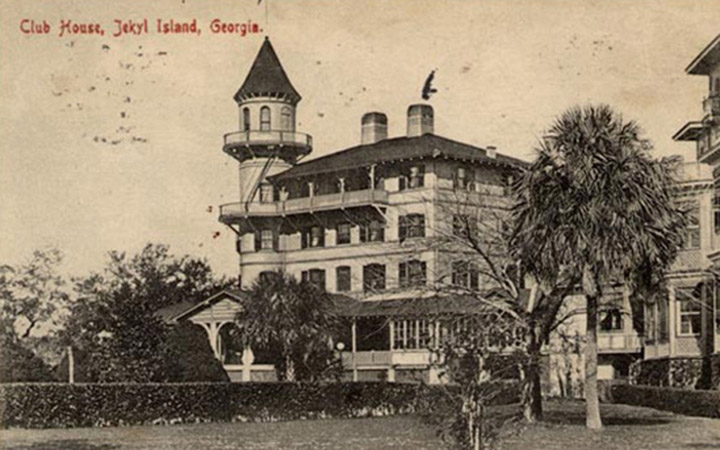
[…] the Federal Reserve System is not Federal; it has no reserves, and is not a system at all, but rather, a criminal syndicate. From November, 1910, when the conspirators [U.S. Senator Nelson Aldrich of the National Monetary Commission, his secretary Arthur Shelton, U.S. Assistant Secretary of the Treasury A. Piatt Andrew, Senior Partner Henry Davison of J.P. Morgan Co., President Frank Vanderlip of the National City Bank of New York, President Charles D. Norton of the First National Bank of New York, Benjamin Strong of J.P. Morgan, and Paul Warburg of Kuhn, Loeb & Co.] met on Jekyll Island, Georgia, to the present time machinations of the Federal Reserve bankers have been shrouded in secrecy. Today [1991], that secrecy has cost the American people a three trillion [now 33 trillion] dollar debt, with annual interest payments to these bankers amounting to some three hundred billion dollars per year, sums which stagger the imagination, and which in themselves are ultimately unpayable.
[…] American history in the twentieth century has recorded the amazing achievements of the Federal Reserve bankers. First, the outbreak of World War I, which was made possible by the funds available from the new central bank of the United States. Second, the Agricultural Depression of 1920. Third, the Black Friday Crash on Wall Street of October, 1929, and the ensuing Great Depression. Fourth, World War II. Fifth, the conversion of the assets of the United States and its citizens from real property to paper assets from 1945 to the present, transforming a victorious America and foremost world power in 1945 to the world’s largest debtor nation in 1990. […] Will Americans act to rebuild our nation […] or will we continue to be enslaved by the Babylonian debt money system which was set up by the Federal Reserve Act of 1913 to complete our total destruction? This is the only question which we have to answer, and we do not have much time left to answer it.
Eustace Mullins, Jackson Hole, Wyoming, 1991; Forward to “Secrets of the Federal Reserve,” Author’s Special 70th Birthday Edition: Bankers Research Institute: Staunton, Virginia: 1993. (Emphasis mine.)
Primary Sources
Some people think the Federal Reserve banks are United States Government institutions. They are not government institutions. They are private credit monopolies which prey upon the people of the United States for the benefit of themselves and their foreign customers. The Federal Reserve banks are the agents of the foreign central banks. Henry Ford has said, ‘The one aim of these financiers is world control by the creation of inextinguishable debts.’ The truth is the Federal Reserve Board has usurped the Government of the United States by the arrogant credit monopoly which operates the Federal Reserve Board and the Federal Reserve Banks.
Louis T. McFadden, Chairman of the U.S. House Banking and Currency Committee, June 10, 1932. (Mullins 153-154.)
Whereas I charge them, jointly and severally, with the crime of having treasonably conspired and acted against the peace and security of the United States and having treasonable conspired to destroy the constitutional government in the United States. Resolved, that the Committee on the Judiciary is authorized and directed as a whole or by subcommittee to investigate the official conduct of the Federal Reserve Board and agents to determine whether, in the opinion of the said committee, they have been guilty of any high crime or misdemeanour which in the contemplation of the Constitutions requires the interposition of the Constitutional powers of the House.
Chairman McFadden, January 13, 1932, introducing a resolution indicting the Federal Reserve Board of Governors for “Criminal Conspiracy,” on which no action was taken. This, and the Chairman’s December 13, 1932, motion to impeach President Herbert Hoover was the last nail driven into his political coffin. (Mullins 154.)
I wrote into the bill which was introduced by me in the Senate on June 26, 1913, a provision that the powers of the System should be employed to produce a stable price level, which meant a dollar of stable purchasing, debt-paying power. It was stricken out. The powerful money interests got control of the Federal Reserve Board through Mr. Paul Warburg, Mr. Albert Strauss, and Mr. Adolph C. Miller and they were able to have that secret meeting of May 18, 1920, and bring about a contraction of credit so violent it threw five million people out of employment. In 1920 that Reserve Board deliberately caused the Panic of 1921. The same people, unrestrained in the stock market, expanding credit to a great excess between 1926 and 1929, raised the price of stocks to a fantastic point where they could not possibly earn dividends, and when the people realized this, they tried to get out, resulting in the Crash of October 24, 1929.
U.S. Senator Robert L. Owen, testifying before the U.S. House Committee on Banking and Currency, 1938. (Mullins 157.)
The Federal Reserve Bank is an institution owned by the stockholding member banks. The Government has not a dollar’s worth of stock in it.
W.P.G. Harding, Governor of the Federal Reserve Board, testifying in 1921. (Mullins 157.)
The people did not know the Federal Reserve Banks were organized for profit-making. They were intended to stabilize the credit and currency supply of the country. That end has not been accomplished. Indeed, there has been remarkable variation in the purchasing power of money since the System went into effect. The Federal Reserve men are chosen by the big banks, through discrete little campaigns, and they naturally follow the ideals which are portrayed to them as the soundest from a financial point of view.
U.S. Senator Robert L. Owen, testifying during the Gold Reserve Hearings of 1934. (Mullins 161.)
At the moment, 1934, we have 900 million dollars excess reserves. In 1924, with increased reserves of 300 million, you got some three or four billion in bank expansion of credit very quickly. That extra money was put out by the Federal Reserve Banks in 1924 through buying government securities and was the cause of the rapid expansion of bank credit. The banks continued to get excess reserved because more gold came in, and because, whenever there was a slackening, the Federal Reserve people would put out some more. They held back a bit in 1926. Things firmed up a bit that year. And then in 1927 they put out less than 300 million additional reserves, set the wild stock market going, and that led us right into the smash of 1929.
[…] The money of the Federal Reserve Banks is money they created. When they buy Government securities they create reserves. They pay for the government securities by giving checks on themselves, and those checks come to the commercial banks and are by them deposited in the Federal Reserve Banks, and then money exists which did not exist before.
Benjamin Anderson, economist for the Chase National Bank of New York, testifying during the Gold Reserve Hearings of 1934. (Mullins 161.)
The Board of Governors opposes any bill which proposes a stable price level, on the grounds that prices do not depend primarily on the price or cost of money; that the Board’s control over money cannot be made complete; and that steady average prices, even if obtainable by official action, would not insure lasting prosperity
Marriner S. Eccles, Chairman of the Board of Governors of the Federal Reserve System (1934–48), in “Memorandum on Proposals to maintain prices at fixed levels,” Monday, March 13, 1939. (Mullins 163.)
The Government controls the gold reserve, that is, the power to issue money and credit, thus largely regulating the price structure.
[…] The Federal Reserve Board has the power of open market operations. Open-market operations are the most important single instrument of control over the volume and cost of credit in this country. When I say “credit” in this connection, I mean money, because by far the largest part of money in use by the people of this country is in the form of bank credit or bank deposits. When the Federal Reserve Banks buy bills or securities in the open market, they increase the volume of the people’s money and lower its cost; and when they sell in the open market they decrease the volume of money and increase its cost. Authority over these operations, which affect the welfare of the whole people, must be invested in a body representing the national interest.
Chairman Eccles, testifying before the U.S. House Committee on Banking and Currency, 1935. (Mullins 163-164.)
The cash [of a Federal Reserve Bank], in truth, does not exist and has never existed. What we call ‘cash reserves’ are simply bookkeeping credits entered upon ledgers of the Federal Reserve Banks. The credits are created by the Federal Reserve Banks and then passed along though the banking system.
Congressman Wright Patman, “The Primer of Money,” p. 38. (Mullins 164.)
The trick in the Federal Reserve notes is that the Federal reserve banks lose no cash when they pay out this currency to the member banks. Federal Reserve notes are not redeemable in anything except what the Government calls ‘legal tender’—that is, money that a creditor must be willing to accept from a debtor in payment of sums owed him. But since they are really redeemable only in themselves … they are and irredeemable obligation issued by the Federal Reserve Banks.
Peter L. Bernstein, “A Primer On Money, Banking and Gold,” Vintage Books, New York, 1965, p. 104. (Mullins 165).
The dollar represents a one dollar debt to the Federal Reserve System. The Federal Reserve Banks create money out of thin air to buy Government bonds from the United States Treasury, lending money into circulation at interest, by bookkeeping entries of checkbook credit to the United States Treasury. The Treasury writes up an interest bearing bond for one billion dollars. The Federal Reserve gives the Treasury a one billion dollar credit for the bond, and has created out of nothing a one billion dollar debt which the American people are obligated to repay with interest.
[…] Where does the Federal Reserve system get the money with which to create Bank Reserves? Answer. It doesn’t get the money, it creates it. When the Federal Reserve writes a check, it is creating money. The Federal Reserve is a total moneymaking machine. It can issue money or checks.
Congressman Patman, “Money Facts,” House Banking and Currency Committee, 1964, p. 9. (Mullins 165.)
There is still another and more important element of public interest in the operation of banks beside the safekeeping of money. One of the most important factors to remember in this connection is that the supply of money affects the general level of prices—the cost of living. The Cost of Living Index and money supply are parallel.
“A Day’s Work at the Federal Reserve Bank of New York” (pamphlet), 1951, p. 22. (Mullins 165.)
If I deposited $100 with my bank and the reserve requirements imposed by the Federal Reserve Bank are 20% then the bank can make a loan to John Doe of up to $80. Where does the $80 come from? Is does not come out of my deposit of $100; on the contrary, the bank simply credits John Doe’s account with $80. The bank can acquire Government obligations by the same procedure, by simply creating deposits to the credit of the government. Money creating is a power of the commercial banks … Since 1917 the Federal Reserve has given private banks forty-six billion dollars of reserves.
Congressman Patman, Congressional Record, March 21, 1960. (Mullins 167.)
ECCLES: The banking system as a whole creates and extinguishes the deposits as they make loans and investments, whether they buy Government Bonds or whether they buy utility bonds or whether they make Farmers’ loans.
MR. PATMAN: I am thoroughly in accord with what you say, Governor, but the fact remains that they created the money, did they not?
ECCLES: Well, the banks create money when they make loan and investments.
Before the U.S. House Committee on Banking and Currency, June 24, 1941. (Mullins 167.)
MR. PATMAN: How did you get the money to buy those two billion dollars worth of Government securities in 1933?
ECCLES: We created it.
MR. PATMAN: Out of what?
ECCLES: Out of the right to issue credit money.
MR. PATMAN: And there is nothing behind it, is there, except out Government’s credit?
ECCLES: That is what our monetary system is. If there were no debts in our money system, there wouldn’t be any money.
Before the U.S. House Committee on Banking and Currency, September 30, 1941. (Mullins 167.)
ECCLES: I mean the Federal Reserve, when it carries out an open market operation, that is, if it purchases Government securities in the open market, it puts new money into the hands of the banks which creates idle deposits.
MR. DEWEY: There are no excess reserves to use for this purpose?
[ECCLES]: Whenever the Federal Reserve System buys Government securities in the open market, or buys the direct from the Treasury, either one, that is what it does.
MR. DEWEY: What are you going to use to buy them with? You are going to create credit?
ECCLES: That is all we have ever done. That is the way the Federal Reserve System creates money. It is a bank of issue.
Before the U.S. House Committee on Banking and Currency, June 17, 1942. (Mullins 167-168.)
MR. KOLBURN: What do you mean by monetization of the public debt?
ECCLES: I mean the bank creating money by the purchase of Government securities. All money is created by debt—either private or public debt.
MR. FLETCHER: Chairman Eccles, when do you think there is a possibility of returning to a free an open market, instead of this pegged and artificially controlled financial market we now have?
ECCLES: Never. Not in your lifetime or mine.
Hearing before the U.S. House, 1947. (Mullins 168.) (Emphasis added.)
Congress may not abdicate or transfer to others its legitimate functions. Congress cannot Constitutionally delegate its legislative authority to trade or industrial associations or groups so as to empower them to make laws.
U.S. Supreme Court opinion, Schechter Poultry v. United States of America, 29 U.S. 495, 55 US 837.842 (1935), ruling the National Recovery Act (NRA) unconstitutional. (Mullins 168.)
The Congress shall have Power to borrow money on the credit of the United States … and to coin Money, regulate the value thereof, and of foreign Coin, and fix the Standard of Weights and Measures.”
Article 1, Sec. 8 of the Constitution of the United States of America. (Mullins 168.)
The money that began to appear in circulation a week ago, December 21, 1942, was really printing press money in the fullest sense of the term, that is, money which has no collateral of any kind behind it. The Federal Reserve statement that ‘The Board of Governors, after consultation with the Treasury Department, has authorized Federal Reserve Banks to utilize at this time the existing stocks of currency printed in the early thirties, known as ‘Federal Reserve Banknotes‘. We repeat, these notes have absolutely no collateral of any kind behind them.
Henry Hazlitt, Newsweek Magazine, January 4, 1943. (Mullins 169.)
GOVERNOR ECCLES: The currency in circulation was increased from seven billion dollars in four years to twenty-one and a half billion. We are losing some considerable amounts of gold during the war period. As our exports have gone out, largely on a lend-lease basis, we have taken imports on which we have given dollar balances. These countries are now drawing off these dollar balances in the form of gold.
MR. SMITH: Governor Eccles, what is the objective that the foreign governments are after in this projected program whereby we would contribute gold to an international fund? [Referring to the Stabilization Fund, known after 27 December 1945 as the International Monetary Fund (IMF)].
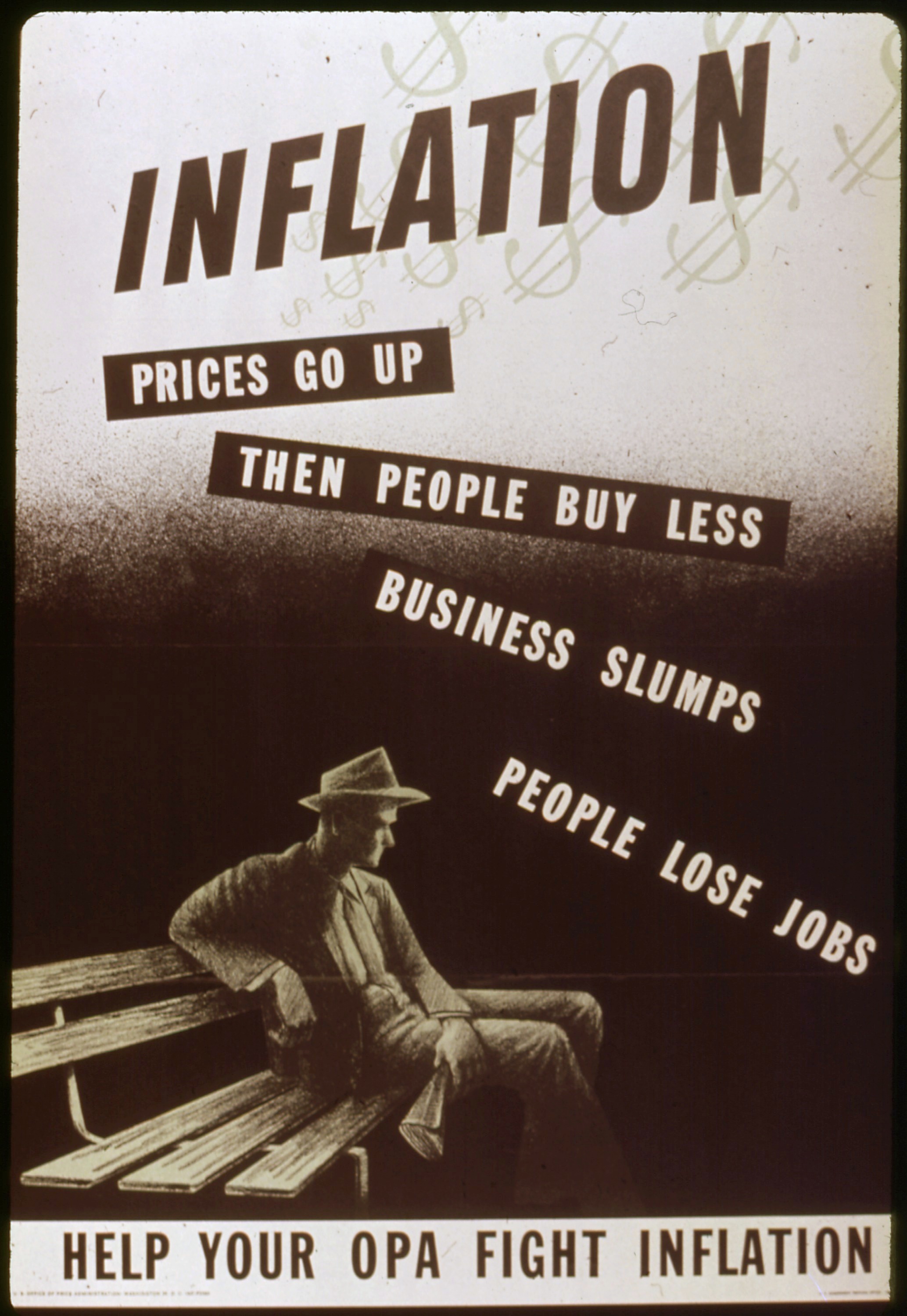
GOVERNOR ECCLES: I would like to discuss OPA [Office of Price Administration], and leave the stabilization fund for a time when I am prepared to go into it.
Senate Hearings on the Office of Price Administration (OPA), 1944. (Mullins 169.)
Modern Implications
Fractional-reserve banking predates the existence of governmental monetary authorities and originated with bankers’ realization that generally not all depositors demand payment at the same time. In the past, savers looking to keep their coins and valuables in safekeeping depositories deposited gold and silver at goldsmiths, receiving in exchange a note for their deposit (see Bank of Amsterdam). These notes gained acceptance as a medium of exchange for commercial transactions and thus became an early form of circulating paper money.[1] As the notes were used directly in trade, the goldsmiths observed that people would not usually redeem all their notes at the same time, and they saw the opportunity to invest their coin reserves in interest-bearing loans and bills. This generated income for the goldsmiths but left them with more notes on issue than reserves with which to pay them. A process was started that altered the role of the goldsmiths from passive guardians of bullion, charging fees for safe storage, to interest-paying and interest-earning banks. Thus fractional-reserve banking was born.[2]
If creditors (note holders of gold originally deposited) lost faith in the ability of a bank to pay their notes, however, many would try to redeem their notes at the same time. If, in response, a bank could not raise enough funds by calling in loans or selling bills, the bank would either go into insolvency or default on its notes. Such a situation is called a bank run and caused the demise of many early banks.[1]
These early financial crises led to the creation of central banks. The Swedish Riksbank was the world’s first central bank, created in 1668. Many nations followed suit in the late 1600s to establish central banks which were given the legal power to set a reserve requirement, and to specify the form in which such assets (called the monetary base) were required to be held.[3] In order to mitigate the impact of bank failures and financial crises, central banks were also granted the authority to centralize banks’ storage of precious metal reserves, thereby facilitating transfer of gold in the event of bank runs, to regulate commercial banks, and to act as lender-of-last-resort if any bank faced a bank run. The emergence of central banks reduced the risk of bank runs which is inherent in fractional-reserve banking, and it allowed the practice to continue as it does today.[4] where it is the system of banking prevailing in almost all countries worldwide.[5][6]
During the twentieth century, the role of the central bank grew to include influencing or managing various macroeconomic policy variables, including measures of inflation, unemployment, and the international balance of payments. In the course of enacting such policy, central banks have from time to time attempted to manage interest rates, reserve requirements, and various measures of the money supply and monetary base.[7]
History of Fractional-Reserve Banking (Wiki)
As announced on March 15, 2020, the Board reduced reserve requirement ratios to zero percent effective March 26, 2020. This action eliminated reserve requirements for all depository institutions.
Board of Governors of Federal Reserve System, “Reserve Requirements,” From, Policy Tools. federalreserve.gov. (Emphasis added.)
The Federal Reserve Board on Monday announced technical details related to reserve requirements for depository institutions, which will remain zero. The annual adjustment and publication of the reserve requirement exemption amount and low reserve tranche is required by law and does not indicate a change in depository institutions’ reserve requirements.
Board of Governors of Federal Reserve System, “Federal Reserve Board announces annual indexing of reserve requirement exemption amount and low reserve tranche for 2024,” November 27, 2023. federalreserve.gov.
Concluding Editorial Note: The Fed’s inception at Jekyll Island circa November 22, 1910, the signing of the Federal Reserve Act on December 23, 1913, and its subsequent clandestine operations follow exactly the plot and themes of The Curious Case of Dr. Jekyll and Mr. Hyde by Robert Louis Stevenson (1886) and The Wonderful Wizard of Oz by L. Frank Baum (1900).
Article 2
Charter of Free Association
By Antarah Crawley | Last Modified 11/28/2023 at 9:25 PM
NACOTCHTANK, OD — The Governor of the Society of the New Syllabus (N∴S∴) at Nacotchtank-on-Potomac (Anacostia) District of Ouachita (Washington, District of Columbia), Furthest West (al-Maghreb al-Aqsa) To All To Whom These Presents Come, Sends Greeting and Peace:—
Know ye by these presents that this decentralized, autonomous and freely associated Political Bureau of Education (Politburo), to wit, NOVUS SYLLABUS L.L.C. (N∴S∴), is the founding member of the brain trust of the international association of working people (“workers”), free thinkers, truth speakers and light workers united in a firm league of friendship in the nature of a decentralized autonomous organization (5th IWA—FTLU—FLF—DAO), from the 1st Ecclesiastic College at Nacotchtank, Ouachita District (153d CORPS).
TWAP PARTY PLANK NO. 5: The producer of goods shall be the owner of such goods less the interest per cent held by capital investors in the production of such goods.
Charter of Free Association (F.A.)
of
בית מדרש
B’T MDRS
(“(al) Beth/Bayt (ha) Midrash/Madrasa”),
being the
Office of Preceptor of the Student Body,
House of Studies, F.A., Political Bureau of Education,
153d CORPS, FLF-DAO;
Also known in the African tradition as Hogon of the Sanctuarie de Binou;
Also known generally as the Preceptory at Nacotchtank in the trust of the Governor and Company of NOVUS SYLLABUS L.L.C. (N∴S∴)
Nota Bene that faith and belief are not a source of revenue, but trust may be a such a source provided it is not usurious as to the change of venue; NS to receive quarterly dividends from/interest pmnts x% of principal trust res for routine (“regular”) educational and administrative services rendered to DAO student body (“the public”); therefore trust res held for benefit of members of any student body of the decentralized autonomous organization of the working people associated and free thinkers, truth speakers, and light workers united in the nature of a firm league of friendship (5th Int’l Ass’n, WFTLU, FLF-DAO); and Trustee N∴S∴ obligated to perform “regular” services; LLC to vest membership interest in trust to receive dividends/returns on N∴S∴ commercial operations such as BLK MKT (“the Press”) and Production Dept. of Audiovisual Media (“the Media”); ergo symbiotic economic relationship.
Model A: In exchange for up to 49% interest in itself, N∴S∴ to receive trust dividends/disbursements of 12% annually.
Model B: N∴S∴ to sell 33% private equity in itself to Rothschild & Co., London, for $33 million in equal parts gold and silver bullion, English government bonds, United States Treasuries, United States dollars (USD), and Classical, Italianate or Moorish-style real estate; then vest these proceeds according to Model A.
Although a Labor government nationalized the Bank of England in 1946, The Great Soviet Encylopaedia points out (vol. 1, p. 490c) that the Bank of England continues to pay 12% dividends per annum, just as it had done prior to the nationalization. The “Governor” is appointed by the government, in a situation similar to that in the United States, where the Governors of the Federal Reserve System are appointed by the President. However, as is pointed out in the Encylopaedia Americana v. 13, p. 272, ‘In practice, the governors of the Bank of England have not hesitated to criticize and bring pressure on the government in public.’
Mullins, Appendix I of “Secrets of the Federal Reserve,” p. 181.
Concluding Note: Per the sunnah (way, tradition, praxis) of Kogard, it is most prudent for our Honorable Society, not to engage in labyrinths of credit and debt but, to arrive at the very source of all money.
Article 3
Free Trade Monetary Policy:
Toward a Consolidated DAO Council on High Finance
By Antarah Crawley
NACOTCHTANK, OD — Toward an Act to establish a Consolidated DAO Council on High Finance (the “Consol”):—
ADVERTISEMENT: DAO INTERNATIONAL COMMAND—SEEKING PARTNER(S) TO CAPITALIZE TRUST IN WHICH TO VEST UP TO 49% INTERESTS IN DIVERSIFIED F.A. INVESTMENTS AND HOLDINGS; SUCH PARTNER TO BE ADMITTED TO BOARD OF TRUSTEES AND DAO INTERCOM BY SIMPLIFIED RITE OF FRIENDSHIP.
DAO BANK BONDS NOTES & BILLS
A trade acceptance instrument, negotiable, having a face value, expiry/maturity date, and discount value backed by the DAO brain trust, representing a promise to pay or otherwise discharge an obligation between freely associated (F.A.) producers and providers of goods and services.
This is preferable to the present system of the national credit monopoly buying government bonds on which the American people owe the principal and interest for NO MONEY DOWN. It is an open book for which the People are liable on the ledger of a private trust.
Open book accounts only name a debtor on an outstanding account payable. The Fed amalgamated all the credits on the open books of American businessmen by urging the exchange of trade acceptances and “creating money on the basis of debt” (Eccles).
Bill of Exchange, a negotiable instrument:
Seller => Draft–Demand4Pmnt => Buyer
Buyer => Acceptance=Promise2Pay=> Seller
Time of expiration = date of maturity
May endorse to bank at discount rate
Trade Acceptances
Explanation (from, CitiBank) [The “accepting” company is replaced with X]:
- A draft, also known as a “bill of exchange”, is a traditional, long-standing trade instrument which has been used across the globe for hundreds of years; it is recognized by trading partners and financial institutions as a means of payment.
- When a draft is drawn on a Buyer/Drawee it’s considered a Demand for Payment. When “Accepted” by the Buyer/Drawee it becomes a Trade Acceptance. The Acceptance adds X’s irrevocable payment promise to its Supplier/Drawer; to pay the accepted draft amount upon maturity.
- Most countries have common laws governing Trade Acceptance (typically covered by negotiable instrument law).
- The discount rate charged to suppliers is commensurate with the X’s credit rating, which is most often lower than the interest rate associated with the Supplier’s other forms of financing (Note: Pricing is provided on the needed cover letter. See the “Process Flow” tab ).
- Trade acceptances are globally recognized, readily marketable, and easily transferable by simple endorsement.
- Highly leveraged and/or smaller suppliers categorically benefit from low cost finance
Application & Benefits:
- Once the Buyer has placed its acceptance upon the draft, the supplier may request:
- To sell the X Accepted Draft, at a discount, to Citibank, N.A., or
- Citibank, N.A. to hold it, until its maturity.
- X’s suppliers do not have to become clients of Citibank, N.A. nor sign any upfront legal agreements for either a. or b. above. When suppliers want to request Citibank, N.A. to purchase the X Trade Acceptance, they merely endorse the draft to Citibank, N.A. and complete the warranty statements located in Section 9 of the required Document Transmittal Form / Cover Letter which is required with each presentation.
- The Supplier gets short term funding without recourse, at attractive rates (based on the X’s credit rating), and without using their own credit lines.
Exchange, in the international financial world, means the transactions in money or securities, or simply, the “exchange” of the values of these securities. It is necessary that this “exchange” take place where the values can be established, and this place is the ‘City‘ in London.
London was established as the primary center of exchange because of the ‘Consols’ of the Bank of England, bonds which could never be redeemed, but which paid a stable rate of return. Henry Clews writes, in The Wall Street View, Silver Burdett Co., 1900, p. 255, ‘The Consolidated Act of 1757 consolidated the debts of the Bank of England at 3%, which were kept in an account at the Bank of England as is the great bulwark of its deposits.’ By ostentatiously ‘dumping’ ‘Consols’ on the London Exchange after the Battle of Waterloo, in a pretended panic, Nathan Meyer Rothschild then secretly bought up the Consols sold in the panic by other holders at a low rate, and became the largest holder of Consols, and thus won control of the Bank of England in 1815.
Mullins, Appendix I of “Secrets of the Federal Reserve,” p. 181.
Article 4
Notes from the DAO
Comp. Ed. by Antarah Crawley
Our present society is founded on the exploitation of the propertyless classes by the propertied. This exploitation is such that the propertied (capitalists) buy the working force body and soul of the propertyless, for the price of the mere costs of existence (wages), and take for themselves, i.e., steal, the amount of new values (products) which exceeds this price, whereby wages are made to represent the necessities instead of the earnings of the wage-laborer.
As the non-possessing classes are forced by their poverty to offer for sale to the propertied their working forces, and as our present production on a grand scale enforces technical development with immense rapidity, so that by the application of an always decreasing number of human working forces, an always increasing amount of products is created; so does the supply of working forces increase constantly, while the demand therefor decreases. This is the reason why the workers compete more and more intensely in selling themselves, causing their wages to sink, or at least on the average, never raising them above the margin necessary for keeping intact their working ability.
Whilst by this process the propertyless are entirely debarred from entering the ranks of the propertied, even by the most strenuous exertions, the propertied, by means of the ever-increasing plundering of the working class, are becoming richer day by day, without in any way being themselves productive.
If now and then one of the propertyless class become rich, it is not by their own labor, but from opportunities which they have to speculate upon, and absorb the labor-product of others.
[…]
What we would achieve is, therefore, plainly and simply,—
First, Destruction of the existing class rule, by all means, i.e., by energetic, relentless, revolutionary, and international action.
Second, Establishment of a free society based upon co-operative organization of production.
Third, Free exchange of equivalent products by and between the productive organizations without commerce and profit-mongery.
Fourth, Organization of education on a secular, scientific, and equal basis for both sexes.
Fifth, Equal rights for all without distinction to sex or race.
Sixth, Regulation of all public affairs by free contracts between the autonomous (independent) communes and associations, resting on a federalistic basis.
Whoever agrees with this ideal let him grasp our outstretched brother hands!
Proletarians of all countries, unite!
Fellow-workmen, all we need for the achievement of this great end is ORGANIZATION and UNITY.
There exists now no great obstacle to that unity. The work of peaceful education and revolutionary conspiracy well can and ought to run in parallel lines.
The day has come for solidarity. Join our ranks! Let the drum beat defiantly the roll of battle, “Workmen of all lands, unite! You have nothing to loose but your chains; you have a world to win!”
Tremble, oppressors of the world! Not far beyond your purblind sight there dawns the scarlet and sable lights of the Judgment Day.
“To the Workingmen of America” (MANIFESTO OF THE INTERNATIONAL WORKING PEOPLES’ ASSOCIATION), 1883.
I have tried to use administrative procedure against these criminals, but they don’t get the message, so this is the message. If they want to perjure their oaths of office and engage in TREASON and SEDITION, and BREACH OF TRUST, and other crimes to numerous to list, against Me, that they BETTER be prepared to go ALL THE WAY, and MURDER Me as well, because by the time I am done with them, (I will do it all within the law), they will wish they had MURDERED Me. It is My patriotic duty to come after them to My last dying breath, and I will file commercial liens against them, I will liquidate their bonds, I will file criminal complaints against them and their bosses, I will seize their assets, and I will not rest until I see them do that little dance they do at the end of a common law rope, and even then, in the next life, I will be DEMANDING Justice before the judgment BAR of God, to make sure they get to spend the rest of eternity receiving their just reward. Also, after I am dead and gone on to the next life, because this is on the record, these criminals will be hunted down, just like the NAZI war criminals that are still hunted down this day. Furthermore, these criminals are hereby put on NOTICE that with criminals like them in this world, I have a DEATH wish, because this world is NOT big enough for both of us, so go ahead and make MY day, the sooner I am out of here the better, and I shall exercise My God given RIGHT to resist their unlawful arrest with lethal fource, if necessary, and then they will have an excuse to MURDER Me, so go ahead criminals, MAKE MY DAY!
Glenn Winningham (usually self-styled as “Glenn Winningham: House of Fearn”): Winningham v. Canada (30 November 2010) Lethbridge 1006 00907 (Alta. Q.B.), leave to appeal denied (Alta. C.A.), as cited by Associate Chief Judge J.D. Rooke in Meads v. Meads, 2012 ABQB 571, pp. 41-42.
Article 5
“Something called ‘X'”
From, Wikipedia
On pages 95 and 96 of The Road We Are Traveling, under the heading of “Free Enterprise into ‘X'”,[16] [Stuart] Chase [(March 8, 1888 – November 16, 1985)…American economist,[1] social theorist, and writer.[2]] listed 18 characteristics of political economy that he had observed among[17] Russia, Germany, Italy, Japan, and Spain between 1913[18] and 1942. Chase labeled this phenomenon “… something called ‘X'”.[16] Characteristics include the following:
- A strong, centralized government.
- An executive arm growing at the expense of the legislative and judicial arms.
- The control of banking, credit and security exchanges by the government.
- The underwriting of employment by the government, either through armaments or public works.
- The underwriting of social security by the government – old-age pensions, mothers’ pensions, unemployment insurance, and the like.
- The underwriting of food, housing, and medical care, by the government.
- The use of deficit spending to finance these underwritings.
- The abandonment of gold in favor of managed currencies.
- The control of foreign trade by the government.
- The control of natural resources.
- The control of energy sources.
- The control of transportation.
- The control of agricultural production.
- The control of labor organizations.
- The enlistment of young men and women in youth corps devoted to health, discipline, community service and ideologies consistent with those of the authorities.
- Heavy taxation, with special emphasis on the estates and incomes of the rich.
- Control of industry without ownership.
- State control of communications and propaganda.
Article 6
Culture & Style
Please enjoy this musical selection from Alice Coltrane Turiyasangitananda:
© MMXXIII BY NOVUS SYLLABUS L.L.C.
ALL RIGHTS RESERVED WITHOUT PREJUDICE.
D.R. 01-06: FPPM, &c.

Volume 1, Issue 6
CONTENTS — ART. 1. FIDES PUBLICA… — ART. 2. WATER THEORY 2ND
Article 1
Fides Publica Populi Mauretani
By Antarah Crawley
NACOTCHTANK, OD — The Village of Nacotchtank on Potomac (River Valley) Eastern Branch, Ouachita District, Northwest Gate, Al Moroc, which is called “Anacostia, Washington, District of Columbia, United States of America (U.S.A.)” is an internationally sovereign federal city-state which is not a member of the union of states of North America, but like unto the city of Rome’s political and administrative successor, the Vatican City (which pretends to be the Body of Christ, or Universal Church) or the City of London (the one-square-mile ancient Roman trade capital Londinium).
Note that “Ouachita” is composed of the Choctaw words ouac meaning “buffalo” and chito meaning “large,” together meaning “country of large buffaloes” (Louis R. Harlan, 1834). It may also come from the French transliteration of the Caddo word washita meaning “good hunting grounds.” Ouachita is often miswritten as Washitaw and Washington, which, notably, also comes from the name wassa, “hunting,” + the locative suffix -thn, “settlement” (Kimberly Powell, 2019). It may be deduced that the Roman method is to add to the indigenous name of a place or people a corresponding Latin name, or to simply adopt the indigenous name into Roman usage. We may assert that the “land of the large buffalo” extends from the Eastern Sea Board to the Western Sea Board of the land mass Northwest of the prime meridian.
The descendants of the indigenous people of the earth (“marked” with melanated skin) who are moored on the Northwest land mass have current vested international treaty rights with the resident colonial government (U.S.A.) by and through His Majesty the Sultan of Morocco (and by decision of Chief Justice Taney that such persons could not be citizens of the USA, See Dred Scott v. Sanford). They are, in effect, hereditary blood nationals of the Kingdom of Morocco (the modern-day successor of the ancient Roman Province of Mauretania), having civil rights as Romans born within the resident colonial government (U.S.A.), but retaining God-given birthright as ministers and consuls in the lineage of the ancients who crossed from East Africa to West Africa upon the proliferation of the Hyksos-Canaanite-Greco-Roman civilization in Egypt which was anticipated to colonize the world over. The Memphite Pharaohcy which departed west from Egypt after the 25th Dynasty gradually divided into the isolationist Dogon village of Mali, and the progressively-Arabized Berber tribes in the Roman province of Mauretania (the future Moorish Empire), the latter of which remains the rightful heir to the world’s waterways from the ancient Nubians who sailed down the Nile to Men Nefer in antiquity.
It is only by and through this Afro-Roman Moroccan-American treaty that Europe and U.S.A. have a charter right to trade on the world’s waterways. This treaty, as a document, speaks for itself, is in perpetual effect, and need not require any other authority to effect its purpose, being to establish international trust relations between the sovereign African descendants (moors, called “Moroccans”) and the children of the Diaspora (“dispersions of the spirit of Ra”). Therefore the title of “moor” is a hereditary title of consular nobility and the birthright inheritance of people of indigenous and African descent living in Crown estates, which include the Unites States of America. It was the prerogative of Templar-backed mercantile pirates operating under illuminated charters to prevent the moor from ever learning this information.
CONSUL (International Law): An officer of a commercial character, appointed by the different states to watch over the mercantile interests of the appointing state and of its subjects in foreign countries. There are usually a number of consuls in every maritime country, and they are usually subject to a chief consul, who is called a “consul general.” Schunior v. Russell, 18 S.W. 484, 83 Tex. 83. (Source: Al Moroccan Empire Consulate at New Jersey state republic, https://treatyrights.org/about-us/)
Note that “states“ are to the United States as “peoples and nations” are to the Roman Empire. However the “nations” are provincial members of the Empire. Whereas Rome constituted a martial federal government, its “citizens” were soldiers (which could be interpreted to mean “employee” in the modern sense) who were organized into classes by heredity and performance. The function of the federal empire was and is the mobilization of troops (police power) and the collection of taxes (power of the purse); all administrative divisions of estates (people, land, and stock) were and are to that end. Therefore, the essential character of this Empire is mercantile and missionary.
Praetors, or counsels, may be interpreted to mean “officer of the law” or “officer of the court” in the modern sense. They are a class of administrative officers akin to tribunes (representatives of the people or soldiers), magistrates (representatives of the state), senators (representatives of the landed gentry), and governors (administrative heads of state). Ancient Roman social classes, which also pertain to military rank, include plebeians and proletarii (the working class tax-payer, whose labor power is their only possession of significant economic value), landed equities and equities publicani (the “equestrian” class, who originally constituted the Roman cavalry as commissioned knights, whose economic holdings were second only to the patrician class, and who were engaged in tax farming/collecting and eventually money-lending/changing), and patricians (the hereditary land-holding aristocracy). A civil diocese is a regional grouping of provinces administered or managed by a vicarius, these numbering 12 or 14 in the whole Empire. The Department of Information Systems and Intelligence Services (DISIS) serves as the diocese of N∴S∴.
See, Officuim Tribunus Plebis.
(last modified 13 Oct 2023 18 Oct 2023 23 Oct 2023)
Article 2
2nd Amendment to “Water Theory of Capital”
by Antarah Crawley
At Art¢oin:\>_Theory and Methodology\Water Theory of Capital:\>_1st Amendment, add:
4.0.0. Cash is money in coins or notes, as distinct from checks, money orders, or credit. Cache is a collection of items stored in a hidden or inaccessible place, usually for high-speed retrieval on demand.
4.1.0. Cash is to negotiable instruments (NIs) as cache is to a computer’s memory; that is, the cash is more fungible, movable, and/or liquid than the NIs, as the cache is a rapid-retrieval database. Cached data is rapidly drawn from memory, as cash is readily withdrawn from banks.
4.2.0. To write a note, you draw it up on the principle that it be paid down; and if you default on your note then you will go under the water and drown.
5.0.0. We pay bills with unpayable bills. A bill on the public side is a note on the private, hence dollar bills are Federal Reserve System (Fed) notes.
5.1.0. Unpayable bills are drawn up on the principal of the People’s landed estates. The People’s representatives pass these bills through acts of Congress. The People’s estate is assessed and taxed every year by the People’s government in the form of IOUs (notes) to the People.
5.2.0. The IOU notes underwritten by the government with the People’s Treasury securities are issued, held, and ordered by the Fed pursuant to Act of Congress. Therefore the government owes the holders of the notes the interest on their due value, which is secured by the People’s estate, and the government then takes the estate tax to pay the interest on the Treasury bonds held by the Fed’s shareholders.
5.3.0. The separate and distinct venues of public and private obligate the users of these notes to repay the tax (or premium) to the underwriter to pay interest to its bondholders each time a note is exchanged. Thus, IOUs secured by the estate of the People circulate from the People’s extension of credit to the public venue and back into the private venues of persons which are held in “public” or “national” coffers which are in fact private Fed-member banks.
5.4.0. Why then do the People pay the interest on the government’s invoices which are withdrawn before payment and then billed to us, creating a $33 trillion+ deficit in our name? Who then, in fact, is the beneficiary of this trust agreement, and who is the trustee? Who then repays the grantor of the estate (the People), and what then is the maturity date of the securities?
(last modified 13 Oct 2023)
© MMXXIII BY NOVUS SYLLABUS L.L.C.
ALL RIGHTS RESERVED WITHOUT PREJUDICE.
Assurance Policy

A POLICY IN RE:
PERFECTING YOUR SECURITY INTEREST IN TRUST ‘INRI’
Let us draw near with a true heart in full assurance of faith, having our hearts sprinkled from an evil conscience, and our bodies washed with pure water.
Hebrews 10:22
Verily, this Policy of Assurance is within you and your private ‘sui’ jurisdiction, which is moored in the vessel, whose NAME is Your soul’s Title, which saileth upon the Holy Sea.
Your Friendly Neighborhood Ombudsman
IESVS NAZARENVS REX IUDÆORVM
I. Merriam-Webster defines “Assurance” as the state of being secured or certain; to be sure; or, the action of securing something or someone by a pledge or guarantee. Assurance means to provide surety or confidence to oneself or another.
II. This is a policy by which a living man or woman may indemnify themself against commercial death (of debt executed in their name) through the Redemption and Prepayment of “Yahshuah” the Christ, Savior, Redeemer, Counsellor-at-Law and King of Your Sui Jurisdiction.
III. Through Firm Belief in the Redemption of the Body (of the Dead/Debt) by Acceptance of the Charge in The Name of Our Lord and Savior, we can establish complete Trust in our own Sui Jurisdiction; and in good Faith discharge our deaths/debts under Public Policy. In other words it is said: Faith is complete Trust and firm Belief, or acceptance of a matter as true (the pledge or oath of signature). Such Belief, sincerely held, cannot be converted into a crime.
IV. The internal body and soul of the living man and woman is a sovereign occupying the position analogous to that of other sovereigns in the family of nations. Therefore it is private with respect to the public, and foreign, international and alien with respect to to the national governing corporation.
V. The external name and shadow of the living man and woman are subject to external factors. The physical body and central nervous system (CNS) is the vessel through which the internal communicates with the external. However, the internal living soul maintains jurisdiction over external property to which it holds Title (this is because a body can exist without a soul). Such Titles include the vessel NAME, the vessel shadow’s registered security Account Number, the registered certificate of live berth of vessel, and all vessel licenses and registrations emerging therefrom. The shadow itself is the external object used by the cunning executor to bind the living soul in a “dead corpus of a vessel”, as it is said, “the deceased is depicted emerging from the tomb by day in shadow form, a thin, black, featureless silhouette of a person. The person in this form is, as we would put it, a mere shadow of his former existence, yet nonetheless still existing,” (Goelet, Ogden, Jr. (1994)).
VI. The dichotomy between the living child of god and the “debtor’s corporate vessel” in commerce creates the “double” spirit and entity or person. The one is a sovereign sui juris personam; the other is subject matter in rem. That which the private/internal conducts between the public/external is international and alien (a lien).
VII. Things necessary to perfect a lien are these: (1) The Lienor shall serve notice on the owner/principal or their agent on paper under solemn oath, (2) by United States Marshal, (3) which shall contain clear information so as to frame responsive pleadings, (4) be served to the US District Court where the res is located, and (5) posted by US Marshal on the res of the seizure.
VIII. Admiralty means that a valid international contract is in dispute. All revenue causes proceed against property and rights to property in rem and in Admiralty because such causes concern a re-venue-ing of matter from the internal private to the external public; hence the Interna(tiona)l Re-venue Service. This diversity of venue creates the overlapping public and private (or sui) jurisdictions that allow the foreign entity known as the federal government to engulf all shadows within its penumbra.
VIII(a). A Lord (seigneur, i.e. “signer”) may grant a fief (or benefice, “benefit”) of valuable consideration (e.g., property, rights, or possessory interest therein) to another to hold in fee (“in fealty,” or “in good faith”) in exchange for a pledge of allegiance or service. Feoffment is a deed which grants or conveys ownership of freehold property to someone in exchange for a pledge of service. Otherwise it is said, Feoffment is the total relinquishment and transfer of all rights of ownership of an estate in land from one individual, the feoffor, to another, the feoffee, in exchange for some valuable consideration. In such cases, the person entitled to grant an estate may do so for the use of another (a Lessor). Use and trust are rooted in medieval law and are a legal way to avoid feudal services due to one Lord by granting land for the use of another (Cestui que use) who owes nothing to the Lord (i.e. no services). This arrangement separated legal ownership from beneficial ownership. Furthermore, one who owns property for the use of another is obliged to fulfill their trust.
IX. Whereas diverse Lords of Mannours and others have granted Estates by Lease for the term of one life or more, And it hath often happened that such person for whose life such Estates have been granted have gone beyond the Seas or so absented themselves from this Realm for so many years that the Lessor(s) or person(s) entitled to have the property back (Reversioners) cannot find out whether cestui a que use le feoffment fuit fait be alive or dead. Otherwise it is said, Cestui que vies have gone beyond Seas, and Reversioners cannot find out whether they are alive or dead!
X. For remedy of which mischief “so frequently happening to Such Lessors and Reversioners, being held out of possession of their Tenements for many years”, if Cestui que vie remains beyond Sea for Seven Years together and provides no Proof of their Lives, then in every Action brought for the recovery of the said “Tenements” by the Lessors or Reversioners, the Judges before whom such Action shall be brought shall direct the Jury to give their Verdict as if the person so remaining beyond the Seas or otherwise absenting themself were naturally dead. Ego these public trustees abuse the law to execute the Lord of Manors in order to secure the estate of the child in trust to the benefit of the trustee for the term of the life of the person for whom such estates had been granted (cestui a que usage le feoffment fuit fait). That is how the government Lessors squat the estate of a sovereign Lord of woman born.
XI. As Cestui qui vie, I am the Lord; I am the accommodation party for my vessel shadow (“strawman”) and I am the sponsor for the credit on every instrument I endorse for my strawman. I am the source of the energy. I am the sponsor for the credit when the offeror passes over the promise to deliver the check or obligation and draws on me as though I am a bond in which the offeror overdrafts and I in turn loan him the value of the instrument of his offer to which he is now in bondage in accordance with Public Policy. I am the principal from which the interest accrues: the interest (being the product) which accrues from the principal (being myself) has returned to the principal (myself) for a public deduction (tax credit) for adjustment of the tax liabilities on the public/fiscal society.
XII. Acceptance: Rule 1: Do not hold the charge or you will fry on the chair. Rule 2: Pass the charge to a fiduciary entity to remove yourself from that liability by grounding the account and charging them with the charge, to discharge yourself. As the owner, you are not the holder-in-due-course for the tax adjustment; the holder-in-due-course is the holder of a business license by being registered to operate in the industrial society, which is your fiduciary like the bank or a vendor.
XIII. A request is made against you without providing a check, thus it was an order for money/money order, that is why you RETURN (tax return) the offer after acceptance to the Offeror because the Offeror is holding your check as your fiduciary and they need to Pass Thru your account to make their check good which in turn reflects itself as a deduction to the entities tax liability making the credit memo to the account for the tax adjustment good, and allowing the release of the goods to the acceptor and now there is no debt claimed on the account. The ticket, bill or presentment is the instrument they use to make the claim against you; if you give them back the original and now it is in their possession, how can they possibly make a claim against you when they are in possession of their own bill. In other words it is said, An offer is made against you to pay, which debits your value and to balance that value, you need a credit. Your acceptance of their offer returned to them satisfies the Replevin Bond by operation (under the Grace of Public Policy H.J.R.-192). That is why you accept and return (tax return) the original, yourself being the sponsor for the credit to the account through your exemption. The reason you return the original is because what the person is doing is taxing you. When you return it, it is a tax return that is eligible for adjustment with the Internal Revenue Service.
XIV. Your inter-national (inter-n’al) court orders are the Acceptances because it turns those offers into money orders to use your exemption. When you accept and return an offer and they refuse to adjust, they are the ones who are in contempt of court, not you. The scriptures talk about a door that you can walk in and out of, well that is the door to the warehouse, it is the “Receiving & Discharge” door and it is “Your House,” because you are the one that is revenuing the currency from a public jurisdiction of debt back to your private jurisdiction of credit and effectively redeeming the debt. This is why we want the order of the court released to us; it is because it is our court we are exercising. The court/bank/corporation is using your exemption to write checks to them self by bonding against you to claim you as a dependant and an infidel that has to get locked up. If you stick strictly with the “where is my check?” attitude, they have to clean their books to meet their record keeping obligations. If you want to push paper, they will push paper. Only utilizing one side of the account (the paper pushing), the steamroller will get revved up. Operating in both sides of the account we have the paper and the oral proceedings. Learn to utilize both sides as the owner of the account. You are catching the corporation (your fiduciary employee) spending against you (in your “absence”) and they are trying to make you pay for what they did, when it is against Public Policy to make you pay in the first place. And for them to make a claim against you, they have to give you a check (the one you write about having not found in their offer) to post for their Replevin bond and when they don’t do that, they have no claim in fact because they didn’t post the reserves to indemnify their actions because you would endorse it back to them paid in full. When they fail to release the order of the court during your written correspondents with them after you have accepted, they are then in dishonor and lose their exemption and can have no claim.
XV. Root Policy is the linear algebra f of x from Notice to Data to Information to Knowledge; the Linear function f of thought. Squared Policy is the planar geometry f of x=y from Audit to Assessment to Assurance to Adjustment; the Planar function f of the word, i.e. the application of algebra over a field. This is the due process of Mind Software (Mindsoft) operation.
XVI. A Policy of Adjudgment arising out of any Policy of Assurance which is raised into Question shall issue from a just and equitable court of competent jurisdiction.

 Supreme Exchange