Tagged: culture
D:\Coda
[retrieved from temporal location M:\Dec 20, 2013 at 10:15 PM]
A thirty-six-mile straightaway between two cities … what’d they used to call those? a highway.
The black, cracked concrete absorbs all one-hundred-ten degrees of heat and humidity bearing down on the time-scorched earth, exacerbating the stench of garbage and carcass discarded over the past few years. Mounds of black trashbags filled with Gaia-knows-what (banana peels, industrial waste, limbs arrested by rigor mortis … ?) cause what few motor vehicles still in operation to swerve violently every ten feet in the manner of Elmer Fudd or some other ridiculous cartoon.
Ah! here comes one now.
A black sedan of unknown make rockets around the bend at ninety-miles-an-hour screaming as black rubber melts off its tires. It hits several mounds of garbage, causing gallons of pink biotoxic sludge to engulf its crumpled frame. The windshield wipers start running as the car swerves toward the shoulder of the road and pulls back just in time. When the window is thoroughly cleared, the sunroof opens and a man of about twenty years with black mussed hair and eyes covered in large black goggles pokes his naked torso through the ceiling. He is passed a large black garbage bag from below and hurls it behind the speeding car, impact causing the bag to explode and leave food by-products, grease, and paper flailing back in the wind. He is passed another bag and discards it in the same manner. A third, fourth, and fifth bag follow. The load is large because it has been a week and a half since the neighborhoods garbage was taken out. The man recedes back into the car; the sunroof closes. The sedan makes a sharp left, tumbling over the depressed, dusty medium, kicking up a bellowing mushroom cloud in its wake, makes its way onto the opposite side of the road and accelerates back the way it came.
The sedan sped toward its end in the city of the Third Province of Shaolin with the fury of a runaway train destined for derailment. Within its compartments sat the High Chief and Osiris, with his Highness as the wheel making devilish jerks of the vehicle to avoid a nasty collision with the garbage mounds which they had, most likely, lain there weeks or months in the past. The passenger windows were rolled all the way up and smoke from a woolie lingered with apathetic regard toward the furious winds speeding past the outside of the vehicle. High Chief bore with his foot all two-hundred-twenty pounds of his mass upon the accelerator. He took two hits of the blunt and passed it to Osiris, the bare bodied boy.
Osiris took the roach, too small to wholly embrace, and tucked it between the edge of his thumb and index finger, raised it to his dry, black lips, and inhaled. He let out a wheeze of a cough and his flat, untoned abdomen contracted abruptly, causing him to drop the roach.
–Fuckboy, said High Chief, in a voice that groaned.
–Fuck it, God, shit was cashed, knamsayin, no loss. Fuck it, where we goin’, God?
–Back to the Island to go the fuck to sleep, God, a nigga chashed, knamsayin.
–Word life, God.
They were silent for a while then, until Osiris asked, –Yo, Chief, hol’ up, hol’ up, where my Killer tape at, God? You dun had it since last fuckin’ week, where the fuck is my tape at?
–Yo, son, I ain’t got that piece, son.
–How you ain’t got my shit when I let you hold it, man?
–Yo, niggas came over to have forties and blunts, kid, the shit just came up missin’.
–Come on, man, that don’t got nothin’ to do with my shit, man, come on, man, go head with that shit, man.
–Come on, man, I’ll buy you four more fuckin’ Killer tapes, man.
–Fuck that shit, God. Just then, a face call came in over Osiris’s stolen phone. When he answered, an associate known as the Golden Arms appeared on the screen. He said, out of breath, –Yo, yo, God, word is bond, yo, Shameek just got bust in his head two times, God.
–Word?
–Word life, God. You know Shameek from fuckin’ 212, God? The nigga just got bucked. Nigga’s in a black Land, God, word is bond. Came through, God, from outta nowhere, God. Word is bond, I’m coming to get my culture-cypher, God. And they just … word is bond, crazy shots just went the fuck off, God. The nigga layin’ there like a fuckin’ newborn fuckin’ baby, God.
–Word? Is he dead, asked Osiris.
–Is he fuckin’ dead? Fuck you mean is he fuckin’ dead, God? What the fuck kinda question is that? Fuck you think? The nigga layin’ there with his fuckin’ … all types of fuckin’ blood coming out his fuckin’…
–Fuck, God.
–Yo God, what’s up, God? It’s the God, God, word is bond. Yo, what’s up? I’m ready to fuckin’ lay. I’m ready to get busy, God, what’s up?
Osiris said, –Yo, go do what we gotta do.
High Chief then turned his head toward the screen in Osiris’s hand. –We out or what, man?
–It’s the God, God, fuck that, man, said the Golden Arms.
–You sayin’ we out? asked High Chief.
–Yeah, God, let’s get the fuck, son!
The line went dead. –You heard the God, said Osiris, –Let’s buck.
–Word, God … oh, oh, hol’ up, God, said High Chief looking out of his side window at a fixed-gear biker rocketing down the opposite side of the highway. The biker turned his head momentarily and then quickened his pace.
–Oh, fuck, God, hell nahh, said High Chief, –Fuckin Skeletons be fuckin up. His Highness made a sharp left, rumbling over the median again, and drove back toward the biker. The sedan accelerated past one-hundred-miles-per-hour and approached the biker who, as they neared him with the stark-white “W” painted on the hood of their stolen car, appeared to descend into fear and madness.
–We got this nigga, said High Chief, and he rammed into the biker who, upon impact, was hurled into the shoulder of the road, propelled backward like a ragdoll, his limp body kicking up a dust storm like a mere bag of garbage…
Naturally, no one of good character lived in cities anymore, although it was arguable that none ever did. Five decades after this event, an inquiring mind could find the upper crust of society, not in any real-world location, but in cyberspace.
Vigilantes having been condemned to live out their remaining days on the polluted surface of the earth, all people of culture were stored underground, and the highest form of art was now executed in code.
[See D:]
…In the night, from fixed-gear bikes, the chant rang out, and was heard round the world–
“We have a body in decay;
We have a mind in disarray;
Off with the head,
The rest may stay,
So hands may mold with fresher clay,
And feet may walk a better way
Toward a new and brighter day.”
(The ramifications of this campaign naturally progressed toward a more violent state than intended…)
Machine had a row of chain links, wrenches, pliers, and such, lined up real meticulously on the small metal table to the side like he was the dentist from hell or something. Guy on the operating table, so to speak, was a real goon of a fellow. Went by the name of Osiris. I didn’t like him, but I sure as shit felt sorry for him, cause Machine had few if any of what the kids call morals. I mean, there was don’t go against the crew, don’t fall off your bike … but on a personal level, it was a free-for-all among us Skeletons.
They call us the Skeletons because of our bikes—bare bones steel. No breaks, no gears, no grips, all rip. Fixed gear to the death, we’re known to say. The chain-rings of our bikes are built larger by Machine, so there can be more teeth. It makes it hard to shove off, but with a higher ratio we can sustain sixty-seven-mile-per-hour speeds on the straightaway. Lack of breaks makes it impossible for us to stop at speeds like that. We like it that way.
Anyway, our friend Osiris was looking a bit pale. Hell, if I didn’t know the effect old Machine tended to have on folk, I’d-a thought I was looking at a ghost. Our captive had the complexion of bone.
Or location, furthermore, was not the kind of place that would have made Osiris feel at home. We were in the basement of the old City Bike warehouse in the Southeast Quadrant. That’s Federal City, if you don’t know.
This old place had only one light in operation. It had started flickering a month prior. When it goes out, we’d have to find another location for HQ—cause it’s hard to get bulbs in these times.
But for the time it was nice and perfect, about 7,500 square feet of blood-splattered concrete, with metal gates as tall as the 50-foot ceilings all rusted and whiny; they section off the rooms nicely.
All of our bikes were lined up along the far wall next to the elevator that used to service the bike warehouse when it was still in operation. The bikes also used to belong to the warehouse, but we stripped ’em, and they’re ours now. They’re our livelihoods. And listen, these weren’t loud, obnoxious, growl-growl, spewing smoke, asshole bikes. These required no oil, not that we had any. Like I said, our bikes are why we’re called the Skeletons. We’d take our bikes to the strip, this forty-mile stretch between Federal City and the Third Province of Shaolin, which has been known as Baltimore, once upon a time. We were notorious on those roads, but the 36 Chambers were notorious, too. You know of the 36, a.k.a the Three-Six Mafia, a.k.a the Anarchists, a.k.a the Regime, a.k.a the Nine-Deuce, a.k.a the Nine Chambers, a.k.a the Shaolin Shadowboxers, a.k.a the Wu Tang Clan. You know them.
Word on the street was that a couple of the top generals were breaking away from the order in First Province of Shaolin in Old New York to start up HQ in Federal City and Former Baltimore. We needed answers. Lucky for us, we saw Dirt McGirt, a.k.a Osiris, cranking his pussy carbon frame down the strip, so we picked him up.
Now we had to get him to talk. That was Machine’s specialty—I mean besides building and welding and shit. He had this theory—you could say it was one of his few morals. He used to read all those Daredevil comics, you see, and he believed that if you lost one of your senses, then your other senses grew stronger. So if the dude Osiris didn’t have much of a capacity to talk now, then maybe he’d have to lose one of his other sense to enhance that capability, knamsayin, God. Machine always started with touch. He had those pliers by his side ready to pull off a couple of fingernails. After that, if the guy wouldn’t talk, he had a spoon there for sight. But Machine didn’t even get through the first fingernail before Osiris broke:
–Aight, God, aight, aight.
Machine looked up. I could see that he was a little disappointed. Before he could decide if Osiris needed further instigation, the bossman Frankie the Break came out of the dark corner beside Machine. He was called “the Break” because he was the only person in the whole crew—hell, in the whole fucking city—who could skid to an immediate stop on Machine’s chain-ring. He was a big fellow—big, not fat—and covered in tattoos like a mosaic, head-to-toe. His big bald head had a tattoo of a chain-ring on it, too. He was the by-goddest hardcore guy I knew. That’s why he was boss.
–Get away from him, Mac, said Frankie the Break. Then he said to me, –Hey, “Fixed Gear” Charlie, crank that chair up.
Yeah, that’s what they call me: “Fixed Gear” Charlie Bones.
I uncrossed my arms and went over and cranked the lever at the bottom of the chair, lifting the back up so that Osiris could see Frankie face-to-face. He was all tied up, so he couldn’t really do it himself. Frankie the break had a wooden chair with him. He spun it ’round and sat down in it reversed, resting his arms on the chair-back. In his hand he was shaking, as if he had a nervous tick, a spare crankset. He had the machinery gripped tightly in his hand and the chain-ring moving around like a stationary hand-saw. After a while he said, quite casually,
–You the one they call Osiris? He pulled out some cigarettes.
Osiris nodded, ‘fraid-like.
Frankie held out the softpack to him but Osiris shook his head. Frankie shrugged and lit his jack with some matches he had. After he had taken a puff, –You from the land of Shaolin, I hear. First Province.
Osiris nodded.
Frankie took a drag and exhaled slow. –And I hear you’re a prominent member of the group they call the Wu Tang Clan, and affiliated Killa Bee assassins.
Osiris did nothing.
–In fact, you’re one of the top dogs. A member of … the 36 Chambers of Death.
Osiris remained still, save a twitch in his eye.
–I was just thinking that you could tell us … what the fuck y’all are doing in Federal City, Skeleton turf. And, while you’re at it, maybe you could tell us why six of my guys are, well, six feet under.
Osiris said nothing. His eye continued to twitch.
–You look like you’ve got something in your eye, Frankie exhaled. –Machine can help you with that. Machine …
Machine came back over with his spoon and straddled Osiris as he was strapped in the chair, then Osiris started shouting like the devil was biting his ass.
–Aight, God, aight, I’ll talk.
Machine dismounted him, again disappointed. –Good boy, said Frankie the Break.
Osiris took a deep breath. He closed his eyes, then he started:
–Look, God, I grew up on the crime side, the Empire Times side, where stayin’ alive was no jive. I had second-hands, my mom’s bounced on old man, so then we moved to Shaolin Land. A young youth, rockin’ the gold tooth, ‘Lo goose; the only way I began to G-off was drug loot. So yeah it started like this, son, rollin’ with this one, and that one, pullin’ out gats for fun. But it was just a dream for the teen that was a fiend. I started smokin’ woolies at sixteen. Runnin’ up in gates and doin’ hits for high stakes, making my way on fire escapes. No question, I would speed for cracks and weed. The combination made my eyes bleed. No question I would flow off to try to get the dough all, stickin’ up white boys on ball courts. Shiiid, my life got no better. Same damn ‘Lo sweater. Times was rough and tough like leather. Figured out I went the wrong route. So I got with a sick-tight clique and went all out. Catchin’ keys from across seas, rollin’ in MPVs, every week we made 40 Gs. Yo, nigga, respect mine, or anger the TEC-9: Ch-chick-BLOW, move from the gate now.
–Well what the fuck made you wanna move down here to the Fed, God? asked Frankie
–‘Cause, god, you know, cash rules everything around me. Shit’s flowin’ in the Fed, knamsayin. Shid, you know; you the one that fuckin made it. Aye, don’t get salty, my nigga it’s the game, it’s the stuggle. Niggas out’chea starvin’ and shit. C.R.E.A.M—Get the money.
–Dollar, dollar bills, God.
–Aye, yo, Frankie, nigga, I hope you know, doe, the Clan’s watchin’ you, God. We got eyes all across these Fifty Provinces. The fuckin’ Chambers ’bout to rush up in yo shit, God. Ain’t no escape, my nigga. Kill me, my nigga, and a swarm of fuckin’ beez gone run up in this piece God, murda the whole island.
Frankie the Break took a deep breath and flicked his jack. He stood up. –Well, then, he said, –If what you say is true, the Shaolin and the Wu-Tang could be dangerous … Do you think your Wu-Tang sword can defeat me?
Then Frankie the Break reared his big hand back with the chain-ring and careened all fifty metal teeth into Osiris’s head.
We all stood around in slight awe. After some time, I said, to ease the tension, –Survey says, your dead.
No body laughed.
Machine wiped his hand down his face and said to the bossman, –You know you just started a war, right?
Frankie the Break lit another cigarette and said, –Bring the motherfucking ruckus.
(But, if there was hope to be had for the human race, it was in the Recluses, and it was in revering the only true sense of reality humanity would have known for a hundred centuries …)
[See D:]
Ninety years later, the earth did flood, and the atmosphere suffocated all the remaining organisms. It had been written by a prophet that the waters would freeze in an ice age, and the old earth would be uncovered as rock formations made up of compressed concrete, brick, steel, rubber, PVC, glass, and other structures which would be interpreted by later scientists to have been formed as naturally as the Himalayan mountain range or the Bisti Badlands (but that would not happen for another several millennia, when the next cycle of evolution yielded the inevitable human brain. It was essentially a fact now that the evolution of a species as superior as man would harken the end of the earth in the Coda-Gaia by building a great machine, one far beyond the logo-computational capacities of man—but without the morale—which would yield negative ecological returns on its efficient and ever-speeding progress.) Until, then, however, the world would hibernate and life would sleep, as would love, sex, womb, mother, birth, infancy, youth, adulthood, maturity, and death, in their absence leaving infinite. In the coda, Gaia wept herself to sleep.
Vandalism: from the Margins
“Vandalism” is a word invented by its victims. It names damage done by outsiders to things the center considers sacred: monuments, images, narratives of order. In late Rome, the Vandals and Goths were not merely destroyers of marble; they were destroyers of Roman self-certainty. To call them vandals was to collapse political threat, cultural difference, and aesthetic offense into a single moral judgment. The word survives because empires do.
The fall of the Roman Empire is often imagined as a barbarian eruption against civilization, but this is a retrospective fantasy. The Goths were already inside Rome—serving in its armies, speaking its languages, converting to its Christianity. Their “vandalism” was less an annihilation than a reallocation: power, land, legitimacy moved away from an exhausted center. What fell was not civilization, but monopoly.
This is where Augustine enters the picture. A Berber African from the imperial periphery, he rose to become Doctor of the Universal Church while never quite ceasing to be marked as other—by accent, by origin, by the faint suspicion that holiness should sound Roman. The City of God itself is a strange text of imperial afterlife: a Christian theology written to explain why Rome’s gods failed, and why Rome itself did not matter as much as it thought. Augustine did not smash statues; he dissolved them conceptually. His was a vandalism of meaning.
Christianity, in its early centuries, functioned as a culture-jamming operation against pagan imperial spectacle. The cross replaced the eagle; martyr stories replaced triumphal processions. Paganism, meanwhile, became the name for everything local, plural, and insufficiently universal. Yet Christianity, once enthroned, quickly learned to protect images rather than interrupt them. Vandalism, like prophecy, became heresy once institutionalized.
Fast forward to the contemporary United States and its military-industrial hegemony: an empire of logistics, branding, and managed perception. Here vandalism reappears not primarily as physical destruction but as semiotic interference. The adbuster and the culture jammer do not topple statues; they détourn billboards, parody logos, and interrupt the smooth flow of consumer militarism. Their “damage” is to narrative coherence.
Street art and nonviolent direct action operate in this Gothic register: inside the empire but not of it. Like the Goths in Rome, they speak the dominant language fluently enough to break it. They reveal the fragility of what presents itself as inevitable. A modified advertisement is unsettling because it exposes how much power resided in the unmodified one.
Is the adbuster the adjuster of the social ledger? Perhaps—but only temporarily. Empire’s ledger is vast, and its accountants are patient. Still, adjustments matter. Vandalism, in this sense, is not chaos but critique enacted at the level of surfaces. It asks: who authorized this image? who benefits from its intactness? what happens if we refuse to look correctly?
Augustine understood this paradox. “Like all men of Rome I have been a proconsul, like all men a slave.” Borges’s line captures the imperial condition perfectly: to rule is also to be ruled by the structure that grants authority. The culture jammer inherits this insight. They are inside the system they oppose, fluent in its aesthetics, constrained by its reach. Their vandalism is an admission of captivity and a test of freedom.
What connects Goth, Pagan, Christian, and adbuster is not theology or ideology but position: each names a force that destabilizes an imperial claim to universality. Vandalism is what the center calls that destabilization when it cannot absorb it. Sometimes the empire falls. More often, it adapts. But the scratch on the surface remains—a reminder that no image is final, and no order is immune to reinterpretation.
[composed with artificial intelligence]
D.R. 01-14: The Fed &c.

Volume 1, Issue 14
Special Edition on Political Economy
Contents — Art. 1. …On the Fed — Art 2. Charter F.A. — Art. 3. …Consol DAO — Art. 4. Notes from the DAO — Art. 5. …X — Art. 6. Culture…
Article 1
Notes on the System:
On the “Federal Reserve”
Comp. Ed. by Antarah Crawley | Last Modified 11/28/2023 at 9:40 PM
The Federal Reserve, the central bank of the United States, provides the nation with a safe, flexible, and stable monetary and financial system.
Banner of the Official Website of the Board of Governors of the Federal Reserve System, as of 27 Nov. 2023
The people that walked in darkness have seen a great light: they that dwell in the land of the shadow of death, upon them hath the light shined.
Book of Isaiah, Chapter 9, Verse 2
Introductory Editorial Note: It is economic, social, and political suicide to question the legitimacy or constitutionality of the System (just ask Ezra Pound, Mr. Mullins, and Chairman McFadden). Notwithstanding that unfortunate circumstance, we must educate the public as to its mechanisms.
Preamble
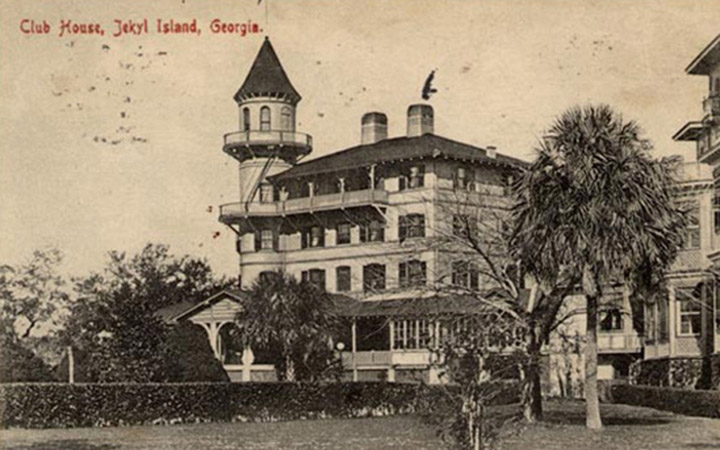
[…] the Federal Reserve System is not Federal; it has no reserves, and is not a system at all, but rather, a criminal syndicate. From November, 1910, when the conspirators [U.S. Senator Nelson Aldrich of the National Monetary Commission, his secretary Arthur Shelton, U.S. Assistant Secretary of the Treasury A. Piatt Andrew, Senior Partner Henry Davison of J.P. Morgan Co., President Frank Vanderlip of the National City Bank of New York, President Charles D. Norton of the First National Bank of New York, Benjamin Strong of J.P. Morgan, and Paul Warburg of Kuhn, Loeb & Co.] met on Jekyll Island, Georgia, to the present time machinations of the Federal Reserve bankers have been shrouded in secrecy. Today [1991], that secrecy has cost the American people a three trillion [now 33 trillion] dollar debt, with annual interest payments to these bankers amounting to some three hundred billion dollars per year, sums which stagger the imagination, and which in themselves are ultimately unpayable.
[…] American history in the twentieth century has recorded the amazing achievements of the Federal Reserve bankers. First, the outbreak of World War I, which was made possible by the funds available from the new central bank of the United States. Second, the Agricultural Depression of 1920. Third, the Black Friday Crash on Wall Street of October, 1929, and the ensuing Great Depression. Fourth, World War II. Fifth, the conversion of the assets of the United States and its citizens from real property to paper assets from 1945 to the present, transforming a victorious America and foremost world power in 1945 to the world’s largest debtor nation in 1990. […] Will Americans act to rebuild our nation […] or will we continue to be enslaved by the Babylonian debt money system which was set up by the Federal Reserve Act of 1913 to complete our total destruction? This is the only question which we have to answer, and we do not have much time left to answer it.
Eustace Mullins, Jackson Hole, Wyoming, 1991; Forward to “Secrets of the Federal Reserve,” Author’s Special 70th Birthday Edition: Bankers Research Institute: Staunton, Virginia: 1993. (Emphasis mine.)
Primary Sources
Some people think the Federal Reserve banks are United States Government institutions. They are not government institutions. They are private credit monopolies which prey upon the people of the United States for the benefit of themselves and their foreign customers. The Federal Reserve banks are the agents of the foreign central banks. Henry Ford has said, ‘The one aim of these financiers is world control by the creation of inextinguishable debts.’ The truth is the Federal Reserve Board has usurped the Government of the United States by the arrogant credit monopoly which operates the Federal Reserve Board and the Federal Reserve Banks.
Louis T. McFadden, Chairman of the U.S. House Banking and Currency Committee, June 10, 1932. (Mullins 153-154.)
Whereas I charge them, jointly and severally, with the crime of having treasonably conspired and acted against the peace and security of the United States and having treasonable conspired to destroy the constitutional government in the United States. Resolved, that the Committee on the Judiciary is authorized and directed as a whole or by subcommittee to investigate the official conduct of the Federal Reserve Board and agents to determine whether, in the opinion of the said committee, they have been guilty of any high crime or misdemeanour which in the contemplation of the Constitutions requires the interposition of the Constitutional powers of the House.
Chairman McFadden, January 13, 1932, introducing a resolution indicting the Federal Reserve Board of Governors for “Criminal Conspiracy,” on which no action was taken. This, and the Chairman’s December 13, 1932, motion to impeach President Herbert Hoover was the last nail driven into his political coffin. (Mullins 154.)
I wrote into the bill which was introduced by me in the Senate on June 26, 1913, a provision that the powers of the System should be employed to produce a stable price level, which meant a dollar of stable purchasing, debt-paying power. It was stricken out. The powerful money interests got control of the Federal Reserve Board through Mr. Paul Warburg, Mr. Albert Strauss, and Mr. Adolph C. Miller and they were able to have that secret meeting of May 18, 1920, and bring about a contraction of credit so violent it threw five million people out of employment. In 1920 that Reserve Board deliberately caused the Panic of 1921. The same people, unrestrained in the stock market, expanding credit to a great excess between 1926 and 1929, raised the price of stocks to a fantastic point where they could not possibly earn dividends, and when the people realized this, they tried to get out, resulting in the Crash of October 24, 1929.
U.S. Senator Robert L. Owen, testifying before the U.S. House Committee on Banking and Currency, 1938. (Mullins 157.)
The Federal Reserve Bank is an institution owned by the stockholding member banks. The Government has not a dollar’s worth of stock in it.
W.P.G. Harding, Governor of the Federal Reserve Board, testifying in 1921. (Mullins 157.)
The people did not know the Federal Reserve Banks were organized for profit-making. They were intended to stabilize the credit and currency supply of the country. That end has not been accomplished. Indeed, there has been remarkable variation in the purchasing power of money since the System went into effect. The Federal Reserve men are chosen by the big banks, through discrete little campaigns, and they naturally follow the ideals which are portrayed to them as the soundest from a financial point of view.
U.S. Senator Robert L. Owen, testifying during the Gold Reserve Hearings of 1934. (Mullins 161.)
At the moment, 1934, we have 900 million dollars excess reserves. In 1924, with increased reserves of 300 million, you got some three or four billion in bank expansion of credit very quickly. That extra money was put out by the Federal Reserve Banks in 1924 through buying government securities and was the cause of the rapid expansion of bank credit. The banks continued to get excess reserved because more gold came in, and because, whenever there was a slackening, the Federal Reserve people would put out some more. They held back a bit in 1926. Things firmed up a bit that year. And then in 1927 they put out less than 300 million additional reserves, set the wild stock market going, and that led us right into the smash of 1929.
[…] The money of the Federal Reserve Banks is money they created. When they buy Government securities they create reserves. They pay for the government securities by giving checks on themselves, and those checks come to the commercial banks and are by them deposited in the Federal Reserve Banks, and then money exists which did not exist before.
Benjamin Anderson, economist for the Chase National Bank of New York, testifying during the Gold Reserve Hearings of 1934. (Mullins 161.)
The Board of Governors opposes any bill which proposes a stable price level, on the grounds that prices do not depend primarily on the price or cost of money; that the Board’s control over money cannot be made complete; and that steady average prices, even if obtainable by official action, would not insure lasting prosperity
Marriner S. Eccles, Chairman of the Board of Governors of the Federal Reserve System (1934–48), in “Memorandum on Proposals to maintain prices at fixed levels,” Monday, March 13, 1939. (Mullins 163.)
The Government controls the gold reserve, that is, the power to issue money and credit, thus largely regulating the price structure.
[…] The Federal Reserve Board has the power of open market operations. Open-market operations are the most important single instrument of control over the volume and cost of credit in this country. When I say “credit” in this connection, I mean money, because by far the largest part of money in use by the people of this country is in the form of bank credit or bank deposits. When the Federal Reserve Banks buy bills or securities in the open market, they increase the volume of the people’s money and lower its cost; and when they sell in the open market they decrease the volume of money and increase its cost. Authority over these operations, which affect the welfare of the whole people, must be invested in a body representing the national interest.
Chairman Eccles, testifying before the U.S. House Committee on Banking and Currency, 1935. (Mullins 163-164.)
The cash [of a Federal Reserve Bank], in truth, does not exist and has never existed. What we call ‘cash reserves’ are simply bookkeeping credits entered upon ledgers of the Federal Reserve Banks. The credits are created by the Federal Reserve Banks and then passed along though the banking system.
Congressman Wright Patman, “The Primer of Money,” p. 38. (Mullins 164.)
The trick in the Federal Reserve notes is that the Federal reserve banks lose no cash when they pay out this currency to the member banks. Federal Reserve notes are not redeemable in anything except what the Government calls ‘legal tender’—that is, money that a creditor must be willing to accept from a debtor in payment of sums owed him. But since they are really redeemable only in themselves … they are and irredeemable obligation issued by the Federal Reserve Banks.
Peter L. Bernstein, “A Primer On Money, Banking and Gold,” Vintage Books, New York, 1965, p. 104. (Mullins 165).
The dollar represents a one dollar debt to the Federal Reserve System. The Federal Reserve Banks create money out of thin air to buy Government bonds from the United States Treasury, lending money into circulation at interest, by bookkeeping entries of checkbook credit to the United States Treasury. The Treasury writes up an interest bearing bond for one billion dollars. The Federal Reserve gives the Treasury a one billion dollar credit for the bond, and has created out of nothing a one billion dollar debt which the American people are obligated to repay with interest.
[…] Where does the Federal Reserve system get the money with which to create Bank Reserves? Answer. It doesn’t get the money, it creates it. When the Federal Reserve writes a check, it is creating money. The Federal Reserve is a total moneymaking machine. It can issue money or checks.
Congressman Patman, “Money Facts,” House Banking and Currency Committee, 1964, p. 9. (Mullins 165.)
There is still another and more important element of public interest in the operation of banks beside the safekeeping of money. One of the most important factors to remember in this connection is that the supply of money affects the general level of prices—the cost of living. The Cost of Living Index and money supply are parallel.
“A Day’s Work at the Federal Reserve Bank of New York” (pamphlet), 1951, p. 22. (Mullins 165.)
If I deposited $100 with my bank and the reserve requirements imposed by the Federal Reserve Bank are 20% then the bank can make a loan to John Doe of up to $80. Where does the $80 come from? Is does not come out of my deposit of $100; on the contrary, the bank simply credits John Doe’s account with $80. The bank can acquire Government obligations by the same procedure, by simply creating deposits to the credit of the government. Money creating is a power of the commercial banks … Since 1917 the Federal Reserve has given private banks forty-six billion dollars of reserves.
Congressman Patman, Congressional Record, March 21, 1960. (Mullins 167.)
ECCLES: The banking system as a whole creates and extinguishes the deposits as they make loans and investments, whether they buy Government Bonds or whether they buy utility bonds or whether they make Farmers’ loans.
MR. PATMAN: I am thoroughly in accord with what you say, Governor, but the fact remains that they created the money, did they not?
ECCLES: Well, the banks create money when they make loan and investments.
Before the U.S. House Committee on Banking and Currency, June 24, 1941. (Mullins 167.)
MR. PATMAN: How did you get the money to buy those two billion dollars worth of Government securities in 1933?
ECCLES: We created it.
MR. PATMAN: Out of what?
ECCLES: Out of the right to issue credit money.
MR. PATMAN: And there is nothing behind it, is there, except out Government’s credit?
ECCLES: That is what our monetary system is. If there were no debts in our money system, there wouldn’t be any money.
Before the U.S. House Committee on Banking and Currency, September 30, 1941. (Mullins 167.)
ECCLES: I mean the Federal Reserve, when it carries out an open market operation, that is, if it purchases Government securities in the open market, it puts new money into the hands of the banks which creates idle deposits.
MR. DEWEY: There are no excess reserves to use for this purpose?
[ECCLES]: Whenever the Federal Reserve System buys Government securities in the open market, or buys the direct from the Treasury, either one, that is what it does.
MR. DEWEY: What are you going to use to buy them with? You are going to create credit?
ECCLES: That is all we have ever done. That is the way the Federal Reserve System creates money. It is a bank of issue.
Before the U.S. House Committee on Banking and Currency, June 17, 1942. (Mullins 167-168.)
MR. KOLBURN: What do you mean by monetization of the public debt?
ECCLES: I mean the bank creating money by the purchase of Government securities. All money is created by debt—either private or public debt.
MR. FLETCHER: Chairman Eccles, when do you think there is a possibility of returning to a free an open market, instead of this pegged and artificially controlled financial market we now have?
ECCLES: Never. Not in your lifetime or mine.
Hearing before the U.S. House, 1947. (Mullins 168.) (Emphasis added.)
Congress may not abdicate or transfer to others its legitimate functions. Congress cannot Constitutionally delegate its legislative authority to trade or industrial associations or groups so as to empower them to make laws.
U.S. Supreme Court opinion, Schechter Poultry v. United States of America, 29 U.S. 495, 55 US 837.842 (1935), ruling the National Recovery Act (NRA) unconstitutional. (Mullins 168.)
The Congress shall have Power to borrow money on the credit of the United States … and to coin Money, regulate the value thereof, and of foreign Coin, and fix the Standard of Weights and Measures.”
Article 1, Sec. 8 of the Constitution of the United States of America. (Mullins 168.)
The money that began to appear in circulation a week ago, December 21, 1942, was really printing press money in the fullest sense of the term, that is, money which has no collateral of any kind behind it. The Federal Reserve statement that ‘The Board of Governors, after consultation with the Treasury Department, has authorized Federal Reserve Banks to utilize at this time the existing stocks of currency printed in the early thirties, known as ‘Federal Reserve Banknotes‘. We repeat, these notes have absolutely no collateral of any kind behind them.
Henry Hazlitt, Newsweek Magazine, January 4, 1943. (Mullins 169.)
GOVERNOR ECCLES: The currency in circulation was increased from seven billion dollars in four years to twenty-one and a half billion. We are losing some considerable amounts of gold during the war period. As our exports have gone out, largely on a lend-lease basis, we have taken imports on which we have given dollar balances. These countries are now drawing off these dollar balances in the form of gold.
MR. SMITH: Governor Eccles, what is the objective that the foreign governments are after in this projected program whereby we would contribute gold to an international fund? [Referring to the Stabilization Fund, known after 27 December 1945 as the International Monetary Fund (IMF)].
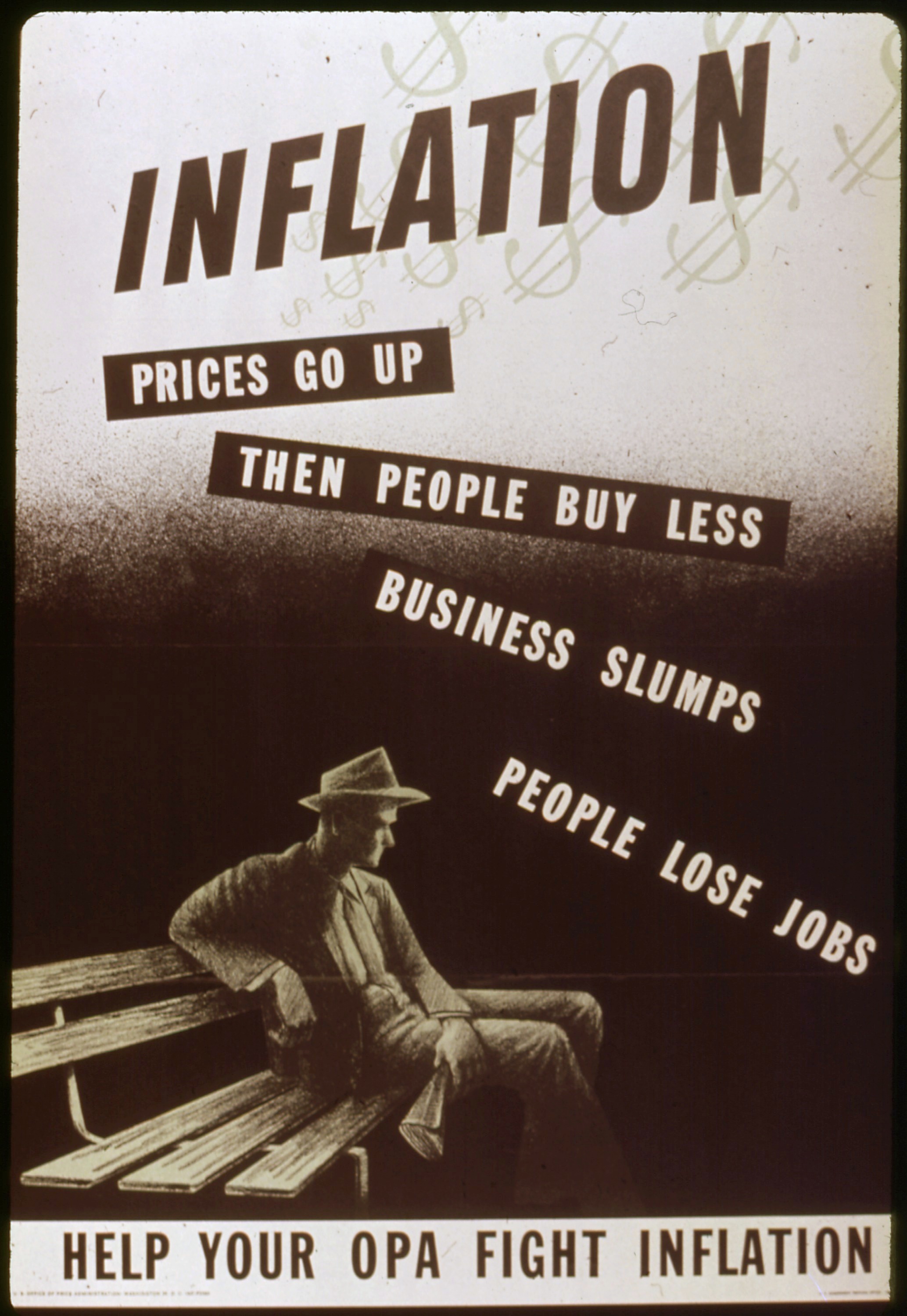
GOVERNOR ECCLES: I would like to discuss OPA [Office of Price Administration], and leave the stabilization fund for a time when I am prepared to go into it.
Senate Hearings on the Office of Price Administration (OPA), 1944. (Mullins 169.)
Modern Implications
Fractional-reserve banking predates the existence of governmental monetary authorities and originated with bankers’ realization that generally not all depositors demand payment at the same time. In the past, savers looking to keep their coins and valuables in safekeeping depositories deposited gold and silver at goldsmiths, receiving in exchange a note for their deposit (see Bank of Amsterdam). These notes gained acceptance as a medium of exchange for commercial transactions and thus became an early form of circulating paper money.[1] As the notes were used directly in trade, the goldsmiths observed that people would not usually redeem all their notes at the same time, and they saw the opportunity to invest their coin reserves in interest-bearing loans and bills. This generated income for the goldsmiths but left them with more notes on issue than reserves with which to pay them. A process was started that altered the role of the goldsmiths from passive guardians of bullion, charging fees for safe storage, to interest-paying and interest-earning banks. Thus fractional-reserve banking was born.[2]
If creditors (note holders of gold originally deposited) lost faith in the ability of a bank to pay their notes, however, many would try to redeem their notes at the same time. If, in response, a bank could not raise enough funds by calling in loans or selling bills, the bank would either go into insolvency or default on its notes. Such a situation is called a bank run and caused the demise of many early banks.[1]
These early financial crises led to the creation of central banks. The Swedish Riksbank was the world’s first central bank, created in 1668. Many nations followed suit in the late 1600s to establish central banks which were given the legal power to set a reserve requirement, and to specify the form in which such assets (called the monetary base) were required to be held.[3] In order to mitigate the impact of bank failures and financial crises, central banks were also granted the authority to centralize banks’ storage of precious metal reserves, thereby facilitating transfer of gold in the event of bank runs, to regulate commercial banks, and to act as lender-of-last-resort if any bank faced a bank run. The emergence of central banks reduced the risk of bank runs which is inherent in fractional-reserve banking, and it allowed the practice to continue as it does today.[4] where it is the system of banking prevailing in almost all countries worldwide.[5][6]
During the twentieth century, the role of the central bank grew to include influencing or managing various macroeconomic policy variables, including measures of inflation, unemployment, and the international balance of payments. In the course of enacting such policy, central banks have from time to time attempted to manage interest rates, reserve requirements, and various measures of the money supply and monetary base.[7]
History of Fractional-Reserve Banking (Wiki)
As announced on March 15, 2020, the Board reduced reserve requirement ratios to zero percent effective March 26, 2020. This action eliminated reserve requirements for all depository institutions.
Board of Governors of Federal Reserve System, “Reserve Requirements,” From, Policy Tools. federalreserve.gov. (Emphasis added.)
The Federal Reserve Board on Monday announced technical details related to reserve requirements for depository institutions, which will remain zero. The annual adjustment and publication of the reserve requirement exemption amount and low reserve tranche is required by law and does not indicate a change in depository institutions’ reserve requirements.
Board of Governors of Federal Reserve System, “Federal Reserve Board announces annual indexing of reserve requirement exemption amount and low reserve tranche for 2024,” November 27, 2023. federalreserve.gov.
Concluding Editorial Note: The Fed’s inception at Jekyll Island circa November 22, 1910, the signing of the Federal Reserve Act on December 23, 1913, and its subsequent clandestine operations follow exactly the plot and themes of The Curious Case of Dr. Jekyll and Mr. Hyde by Robert Louis Stevenson (1886) and The Wonderful Wizard of Oz by L. Frank Baum (1900).
Article 2
Charter of Free Association
By Antarah Crawley | Last Modified 11/28/2023 at 9:25 PM
NACOTCHTANK, OD — The Governor of the Society of the New Syllabus (N∴S∴) at Nacotchtank-on-Potomac (Anacostia) District of Ouachita (Washington, District of Columbia), Furthest West (al-Maghreb al-Aqsa) To All To Whom These Presents Come, Sends Greeting and Peace:—
Know ye by these presents that this decentralized, autonomous and freely associated Political Bureau of Education (Politburo), to wit, NOVUS SYLLABUS L.L.C. (N∴S∴), is the founding member of the brain trust of the international association of working people (“workers”), free thinkers, truth speakers and light workers united in a firm league of friendship in the nature of a decentralized autonomous organization (5th IWA—FTLU—FLF—DAO), from the 1st Ecclesiastic College at Nacotchtank, Ouachita District (153d CORPS).
TWAP PARTY PLANK NO. 5: The producer of goods shall be the owner of such goods less the interest per cent held by capital investors in the production of such goods.
Charter of Free Association (F.A.)
of
בית מדרש
B’T MDRS
(“(al) Beth/Bayt (ha) Midrash/Madrasa”),
being the
Office of Preceptor of the Student Body,
House of Studies, F.A., Political Bureau of Education,
153d CORPS, FLF-DAO;
Also known in the African tradition as Hogon of the Sanctuarie de Binou;
Also known generally as the Preceptory at Nacotchtank in the trust of the Governor and Company of NOVUS SYLLABUS L.L.C. (N∴S∴)
Nota Bene that faith and belief are not a source of revenue, but trust may be a such a source provided it is not usurious as to the change of venue; NS to receive quarterly dividends from/interest pmnts x% of principal trust res for routine (“regular”) educational and administrative services rendered to DAO student body (“the public”); therefore trust res held for benefit of members of any student body of the decentralized autonomous organization of the working people associated and free thinkers, truth speakers, and light workers united in the nature of a firm league of friendship (5th Int’l Ass’n, WFTLU, FLF-DAO); and Trustee N∴S∴ obligated to perform “regular” services; LLC to vest membership interest in trust to receive dividends/returns on N∴S∴ commercial operations such as BLK MKT (“the Press”) and Production Dept. of Audiovisual Media (“the Media”); ergo symbiotic economic relationship.
Model A: In exchange for up to 49% interest in itself, N∴S∴ to receive trust dividends/disbursements of 12% annually.
Model B: N∴S∴ to sell 33% private equity in itself to Rothschild & Co., London, for $33 million in equal parts gold and silver bullion, English government bonds, United States Treasuries, United States dollars (USD), and Classical, Italianate or Moorish-style real estate; then vest these proceeds according to Model A.
Although a Labor government nationalized the Bank of England in 1946, The Great Soviet Encylopaedia points out (vol. 1, p. 490c) that the Bank of England continues to pay 12% dividends per annum, just as it had done prior to the nationalization. The “Governor” is appointed by the government, in a situation similar to that in the United States, where the Governors of the Federal Reserve System are appointed by the President. However, as is pointed out in the Encylopaedia Americana v. 13, p. 272, ‘In practice, the governors of the Bank of England have not hesitated to criticize and bring pressure on the government in public.’
Mullins, Appendix I of “Secrets of the Federal Reserve,” p. 181.
Concluding Note: Per the sunnah (way, tradition, praxis) of Kogard, it is most prudent for our Honorable Society, not to engage in labyrinths of credit and debt but, to arrive at the very source of all money.
Article 3
Free Trade Monetary Policy:
Toward a Consolidated DAO Council on High Finance
By Antarah Crawley
NACOTCHTANK, OD — Toward an Act to establish a Consolidated DAO Council on High Finance (the “Consol”):—
ADVERTISEMENT: DAO INTERNATIONAL COMMAND—SEEKING PARTNER(S) TO CAPITALIZE TRUST IN WHICH TO VEST UP TO 49% INTERESTS IN DIVERSIFIED F.A. INVESTMENTS AND HOLDINGS; SUCH PARTNER TO BE ADMITTED TO BOARD OF TRUSTEES AND DAO INTERCOM BY SIMPLIFIED RITE OF FRIENDSHIP.
DAO BANK BONDS NOTES & BILLS
A trade acceptance instrument, negotiable, having a face value, expiry/maturity date, and discount value backed by the DAO brain trust, representing a promise to pay or otherwise discharge an obligation between freely associated (F.A.) producers and providers of goods and services.
This is preferable to the present system of the national credit monopoly buying government bonds on which the American people owe the principal and interest for NO MONEY DOWN. It is an open book for which the People are liable on the ledger of a private trust.
Open book accounts only name a debtor on an outstanding account payable. The Fed amalgamated all the credits on the open books of American businessmen by urging the exchange of trade acceptances and “creating money on the basis of debt” (Eccles).
Bill of Exchange, a negotiable instrument:
Seller => Draft–Demand4Pmnt => Buyer
Buyer => Acceptance=Promise2Pay=> Seller
Time of expiration = date of maturity
May endorse to bank at discount rate
Trade Acceptances
Explanation (from, CitiBank) [The “accepting” company is replaced with X]:
- A draft, also known as a “bill of exchange”, is a traditional, long-standing trade instrument which has been used across the globe for hundreds of years; it is recognized by trading partners and financial institutions as a means of payment.
- When a draft is drawn on a Buyer/Drawee it’s considered a Demand for Payment. When “Accepted” by the Buyer/Drawee it becomes a Trade Acceptance. The Acceptance adds X’s irrevocable payment promise to its Supplier/Drawer; to pay the accepted draft amount upon maturity.
- Most countries have common laws governing Trade Acceptance (typically covered by negotiable instrument law).
- The discount rate charged to suppliers is commensurate with the X’s credit rating, which is most often lower than the interest rate associated with the Supplier’s other forms of financing (Note: Pricing is provided on the needed cover letter. See the “Process Flow” tab ).
- Trade acceptances are globally recognized, readily marketable, and easily transferable by simple endorsement.
- Highly leveraged and/or smaller suppliers categorically benefit from low cost finance
Application & Benefits:
- Once the Buyer has placed its acceptance upon the draft, the supplier may request:
- To sell the X Accepted Draft, at a discount, to Citibank, N.A., or
- Citibank, N.A. to hold it, until its maturity.
- X’s suppliers do not have to become clients of Citibank, N.A. nor sign any upfront legal agreements for either a. or b. above. When suppliers want to request Citibank, N.A. to purchase the X Trade Acceptance, they merely endorse the draft to Citibank, N.A. and complete the warranty statements located in Section 9 of the required Document Transmittal Form / Cover Letter which is required with each presentation.
- The Supplier gets short term funding without recourse, at attractive rates (based on the X’s credit rating), and without using their own credit lines.
Exchange, in the international financial world, means the transactions in money or securities, or simply, the “exchange” of the values of these securities. It is necessary that this “exchange” take place where the values can be established, and this place is the ‘City‘ in London.
London was established as the primary center of exchange because of the ‘Consols’ of the Bank of England, bonds which could never be redeemed, but which paid a stable rate of return. Henry Clews writes, in The Wall Street View, Silver Burdett Co., 1900, p. 255, ‘The Consolidated Act of 1757 consolidated the debts of the Bank of England at 3%, which were kept in an account at the Bank of England as is the great bulwark of its deposits.’ By ostentatiously ‘dumping’ ‘Consols’ on the London Exchange after the Battle of Waterloo, in a pretended panic, Nathan Meyer Rothschild then secretly bought up the Consols sold in the panic by other holders at a low rate, and became the largest holder of Consols, and thus won control of the Bank of England in 1815.
Mullins, Appendix I of “Secrets of the Federal Reserve,” p. 181.
Article 4
Notes from the DAO
Comp. Ed. by Antarah Crawley
Our present society is founded on the exploitation of the propertyless classes by the propertied. This exploitation is such that the propertied (capitalists) buy the working force body and soul of the propertyless, for the price of the mere costs of existence (wages), and take for themselves, i.e., steal, the amount of new values (products) which exceeds this price, whereby wages are made to represent the necessities instead of the earnings of the wage-laborer.
As the non-possessing classes are forced by their poverty to offer for sale to the propertied their working forces, and as our present production on a grand scale enforces technical development with immense rapidity, so that by the application of an always decreasing number of human working forces, an always increasing amount of products is created; so does the supply of working forces increase constantly, while the demand therefor decreases. This is the reason why the workers compete more and more intensely in selling themselves, causing their wages to sink, or at least on the average, never raising them above the margin necessary for keeping intact their working ability.
Whilst by this process the propertyless are entirely debarred from entering the ranks of the propertied, even by the most strenuous exertions, the propertied, by means of the ever-increasing plundering of the working class, are becoming richer day by day, without in any way being themselves productive.
If now and then one of the propertyless class become rich, it is not by their own labor, but from opportunities which they have to speculate upon, and absorb the labor-product of others.
[…]
What we would achieve is, therefore, plainly and simply,—
First, Destruction of the existing class rule, by all means, i.e., by energetic, relentless, revolutionary, and international action.
Second, Establishment of a free society based upon co-operative organization of production.
Third, Free exchange of equivalent products by and between the productive organizations without commerce and profit-mongery.
Fourth, Organization of education on a secular, scientific, and equal basis for both sexes.
Fifth, Equal rights for all without distinction to sex or race.
Sixth, Regulation of all public affairs by free contracts between the autonomous (independent) communes and associations, resting on a federalistic basis.
Whoever agrees with this ideal let him grasp our outstretched brother hands!
Proletarians of all countries, unite!
Fellow-workmen, all we need for the achievement of this great end is ORGANIZATION and UNITY.
There exists now no great obstacle to that unity. The work of peaceful education and revolutionary conspiracy well can and ought to run in parallel lines.
The day has come for solidarity. Join our ranks! Let the drum beat defiantly the roll of battle, “Workmen of all lands, unite! You have nothing to loose but your chains; you have a world to win!”
Tremble, oppressors of the world! Not far beyond your purblind sight there dawns the scarlet and sable lights of the Judgment Day.
“To the Workingmen of America” (MANIFESTO OF THE INTERNATIONAL WORKING PEOPLES’ ASSOCIATION), 1883.
I have tried to use administrative procedure against these criminals, but they don’t get the message, so this is the message. If they want to perjure their oaths of office and engage in TREASON and SEDITION, and BREACH OF TRUST, and other crimes to numerous to list, against Me, that they BETTER be prepared to go ALL THE WAY, and MURDER Me as well, because by the time I am done with them, (I will do it all within the law), they will wish they had MURDERED Me. It is My patriotic duty to come after them to My last dying breath, and I will file commercial liens against them, I will liquidate their bonds, I will file criminal complaints against them and their bosses, I will seize their assets, and I will not rest until I see them do that little dance they do at the end of a common law rope, and even then, in the next life, I will be DEMANDING Justice before the judgment BAR of God, to make sure they get to spend the rest of eternity receiving their just reward. Also, after I am dead and gone on to the next life, because this is on the record, these criminals will be hunted down, just like the NAZI war criminals that are still hunted down this day. Furthermore, these criminals are hereby put on NOTICE that with criminals like them in this world, I have a DEATH wish, because this world is NOT big enough for both of us, so go ahead and make MY day, the sooner I am out of here the better, and I shall exercise My God given RIGHT to resist their unlawful arrest with lethal fource, if necessary, and then they will have an excuse to MURDER Me, so go ahead criminals, MAKE MY DAY!
Glenn Winningham (usually self-styled as “Glenn Winningham: House of Fearn”): Winningham v. Canada (30 November 2010) Lethbridge 1006 00907 (Alta. Q.B.), leave to appeal denied (Alta. C.A.), as cited by Associate Chief Judge J.D. Rooke in Meads v. Meads, 2012 ABQB 571, pp. 41-42.
Article 5
“Something called ‘X'”
From, Wikipedia
On pages 95 and 96 of The Road We Are Traveling, under the heading of “Free Enterprise into ‘X'”,[16] [Stuart] Chase [(March 8, 1888 – November 16, 1985)…American economist,[1] social theorist, and writer.[2]] listed 18 characteristics of political economy that he had observed among[17] Russia, Germany, Italy, Japan, and Spain between 1913[18] and 1942. Chase labeled this phenomenon “… something called ‘X'”.[16] Characteristics include the following:
- A strong, centralized government.
- An executive arm growing at the expense of the legislative and judicial arms.
- The control of banking, credit and security exchanges by the government.
- The underwriting of employment by the government, either through armaments or public works.
- The underwriting of social security by the government – old-age pensions, mothers’ pensions, unemployment insurance, and the like.
- The underwriting of food, housing, and medical care, by the government.
- The use of deficit spending to finance these underwritings.
- The abandonment of gold in favor of managed currencies.
- The control of foreign trade by the government.
- The control of natural resources.
- The control of energy sources.
- The control of transportation.
- The control of agricultural production.
- The control of labor organizations.
- The enlistment of young men and women in youth corps devoted to health, discipline, community service and ideologies consistent with those of the authorities.
- Heavy taxation, with special emphasis on the estates and incomes of the rich.
- Control of industry without ownership.
- State control of communications and propaganda.
Article 6
Culture & Style
Please enjoy this musical selection from Alice Coltrane Turiyasangitananda:
© MMXXIII BY NOVUS SYLLABUS L.L.C.
ALL RIGHTS RESERVED WITHOUT PREJUDICE.
“WAKE UP, MR. WEST”: The Return of the Rap-Pagan, Part I
[Paragraphs marked * were written c. January 2014 and slightly revised]
[Note: this essay contains racial language used for socio-analytical purposes. The NS identifies only one Human race and does not discriminate or condemn any individual solely for their personal, cultural, or religious practices. The NS does not, however, condone the thematically-exploitative historical practices of certain homogenous groups.]
Hip-hop music was once the voice of the urban Afrakan of the Diaspora (Black people), spoken by poor righteous teachers to inform us of our circumstances. In the era of Rakim, Tribe, Wu-Tang, and other 5%ers, Hip-Hop preached the pagan sun-gospel and the resurrection of the black body from the Wilderness of the North American ghettos.
Hip-hop was so effective at its initial mission to “wake up” the Black people that the Powers-That-Be, who were invested in keeping the Black population ignorant and depraved, thereupon infiltrated the ranks of our culture, poisoned our message, and created the genre of “Rap.” Rap was promoted by the Powers-That-Be into becoming the dominant mode of entertainment for Black youth. As such, it has been seeded with those same vices which our old-head teachers said would keep us subservient to the system: drug abuse, misogyny, glorification of violence, and the pursuit of empty riches.
This is not the first time that the Powers-That-Be have infiltrated the ranks of natural Culture. It happened over 2000 years ago in Lower Kemet, and it has been happening for the past 1000 years all over the indigenous world. In Ancient Kemet, the Powers-That-Be [Greece, Rome, Hyksos-Semites] conquered, stole, and corrupted the pagan science of nature into the abrahamic mystery religions. Hence, without intending any anti-Semitism, it is appropriate to call the originators of modern Hip-Hop culture Rap-Pagans, and the parasitic trap-rappers and cronies of the music industry, Rap-Jews.
Kanye West, a talented young producer who appeared on the scene at the end of the 90s just as the Rap-Jews were beginning to take over, presents an interesting model of a music artist in an age where the Black consciousness is torn between cultural piety and cultural exploitation. It is as if Kanye had begun his career wanting to reclaim Kemet for his people, but he was ultimately consumed by Babylon. In Part II of this essay, we will see how Kendrick Lamar, proud King Kunta Kinte, represents the alternative, true, inner Kanye West, the Kanye who succeeded in beating the system, instead of getting beat by it.
*Mr. West’s most recent album, Yeezus, which many lament and many praise, is not all boast. I believe that Mr. West is the divine prophet of the rap music industry, the chosen son of our god Gil Scott-Heron, and he has come to die for all the sins of his fellow Rap-Jews, who are mired in the vices above described.
*We may separate Mr. West’s career into Old and New Testaments, on opposite sides of the dramatic upset in his style between Graduation and 808s and Heartbreak. Graduation having been released in September of 2007, and his mother having died in November of that year, we may credit Mr. West’s emotional shift to that event which he has said proved to yield a devastating affect in his life.
*College Dropout, Late Registration, and Graduation—the Old Testament of Kanye West—exemplify his affinity for classic soul samples, the guilt he sustained from not completing college and letting his mother down, and his struggle to find his place in the rap world.
*In the Old Testament, we find verses from Talib Kweli, Common, Mos Def (the rapper currently known as Yasiin Bey), Lupe Fiasco, and other Rap-Pagans of this era, to an extent and quality that we find lacking in the latter period of Mr. West. We find West acknowledging and often lamenting the reality that he sees his people so mired in—how the institutions of white America passed down drugs, guns, and disease to break a people intent on trying to pull themselves up (see “Crack Music”)—as well as grappling with his image and his internal struggle between desiring the flashy luxurious toys that the Rap-Jew covets and being an upstanding role model for a younger generation (i.e., providing an image of the black male that is not steeped in lust-driven, gang-oriented, rags-to-crack-to-riches ideology). This internal conflict is epitomized in College Dropout, but also well-evoked in Late Registration:
How we stop the Black Panthers?
Ronald Reagan cooked up an answer.
You hear that? What Gil Scott was “Heron”
When our heroes and heroines got hooked on heroine.
Crack raised the murder rate in D.C. and Maryland;
We invested in that, it’s like we got Merrill lynched.
And we’ve been hanging from the same tree ever since.
Sometimes I feel like music is the only medicine,
So we cook it, cut it, measure it, bag it, sell it,
The fiends cop it, nowadays they can’t tell if
That’s that good shit, we ain’t sure, man;
Put the CD on your tongue, yeah that’s pure, man.
This that crack music, nigga,
That real black music, nigga.
From the place where the father’s gone, the mothers is hardly home
And the Madigons lock us up in the Audy Home [a Chicago-area juvenile prison];
How the Mexicans say, We just tryin’ to party, holmes;
They wanna pack us all in a box like styrofoam.
Who gave Saddam anthrax?
George Bush got the answers.
Back in the hood it’s a different type of chemical–
Arm & Hammer baking soda raised their own quota
Right when our soldiers ran for the stove ’cause,
‘Cause … dreams of being Hova
Went from being a broke man to being a dopeman
To being the president, look there’s hope, man;
This that inspiration for the Moes and the Folks, man,
Shorty come and see his momma straight overdosin’
… And this is the soundtrack;
This the type of music that you make when you round that.
Our father, give us this day our daily bread,
Before the feds give us these days and take our daily bread.
See I done all this ol’ bullshit,
And to atone, I throw a lil’ somethin’ somethin’ on the pulpit.
We took that shit, measured it, and then cooked that shit,
And what we gave back was crack music.
And now we ooze it through they nooks and crannies,
So our mommas ain’t got to be their cooks and nannies,
And we gon’ repo everything they ever took from granny.
Now the former slaves trade hooks for Garmmys.
This dark diction has become America’s addiction.
Those who ain’t even black use it.
We gon’ keep baggin’ up this here crack music.
*I reproduced “Crack Music” from Late Registration here in its entirety because I think it’s the most revealing of West’s Old Testament songs. Even when he is making a song in the spirit of the Rap-Jew, elaborating upon past drug-work and showing how one made it “out the ghetto” because of that occupation, he is being pointedly ironic. He is representing this type of degenerative rap as crack in and of itself. Music that glorifies the drug-life is poison for the people who have to experience this reality every day, and yet rappers continue to glorify this occupation at the behest of parasitic music industry executives who think that this image is what will sell records. Mr. West is pointing out that the Black community’s drug problems were and are imposed upon them by the Powers-That-Be in order to break them, in the same way that “crack music” is imposed upon young Black ears in order to keep those youths in a position where they will be swiftly cast off into the prison industrial complex and be out of America’s white hair. The way in which chemical warfare was executed in the Iraq War was the same way it was executed in the urban centers of America.
*Mr. West is trying to say that being a dopeman is no longer something that Black youths in city slums have to take as their given future; they have further options, and the later election of President Barack Obama in 2008 was a well-timed reinforcement to this sentiment. Despite the ironic ending to this song, Mr. West aims to instil hope in his listeners, or at least an awareness of the system in which they find themselves at the bottom. There are other options, he says; Black youths don’t have to look up to Hova (Jay-Z) as one of their sole role models because rap and professional sports are not the only options for black youth … which brings me to my next point.
*In this era we see Mr. West revere Jay-Z as a Yahweh figure, a mentor, even though Ye laments that the superstar did not give him much of a thought during the early part of his career (exemplified in “Last Call” on College Dropout, “Diamonds from Sierra Leone” on Late Registration, and “Big Brother” on Graduation). That would change in the New Testament, however, when Mr. West would inflate his ego in order to prove himself to be a contender for Jay-Z’s throne as the Greatest Rapper on Earth Alive Today and the Greatest Of All Time (the GREAT GOAT).
*At the end of the Old Testament, we see the death of the Graduation Bear, that figure which served as a logo and branding marker for Mr. West’s early career; that image makes its last appearance on the cover of Graduation, signifying a moving-away from the college motif (i.e., the “student” persona) and a rebirth in musical spirit (i.e., the development of the “master” persona).
*808s and Heartbreak, My Beautiful Dark Twisted Fantasy, Cruel Summer and Watch the Throne (for our purposes), and Yeezus, signify the New Testament as it stands presently. [This paragraph was written prior to the release of Life of Pablo.]
*808s introduced us to the new sound of Mr. West—autotune and synthesizers as opposed to soul samples and MIDIs. This likely occurred as a result of the recent death of Mr. West’s mother and his inability to express his deepest feelings through rapping alone. Fans were, of course, skeptical at first, but whenever Mr. West sets a trend, it catches on. After its release, autotune became a staple in radio-rap music.
*My Beautiful Dark Twisted Fantasy, arguably Mr. West’s magnum opus, solidified his place as a tier-one musician—not only as a rapper—but as a bona fide composer, a musical genius of our time to rival Bob Dylan in his, and Mozart before him. But we see no more of the pagan consciousness of Mos Def and Talib Kweli. West adopts a whole new entourage—Rick Ross, Kid Cudi, Pusha T, Bon Iver, Nicki Minaj, Big Sean, old Wu-Tang members, and his idol—though not for long—Jay-Z himself.
*In MBDTF, Kanye proved himself to be the equal of Jay-Z, if it were not the case that Mr. Carter was already falling off in terms of his lyricism.
*In Watch the Throne, a War in Heaven that Milton would have applauded, Mr. West effectively toppled Jay-Z from the GREAT throne: he kills his god.
*Prior to MBDTF and into the aftermath of the battle for the Throne, Mr. West surrounded himself with a following of rappers—the G.O.O.D Music crew—as his disciples, and released countless megahits, further solidifying his position as rap’s new father figure.
*Through it all, however, Mr. West never lost the awareness of his Blackness and the role he was expected to play by white America and the parasitic Rap-Jew music industry. Although he is aware of the internal conflict, he seems at loss to correct it, to harken back to a time of Kemet, a time of Zion. He appears, in the mid-New Testament, to be consumed by and assimilated into Babylon:
Inter-century anthems based off inner-city tantrums
Based off the way we was branded,
Face it, Jerome gets more time than Brandon,
And at the airport they check all through my bags
And tell me that it’s random.
…
I treat the cash the way the government treats AIDS:
I won’t be satisfied till all my niggas get it (get it?)
…
As long as I’m in Polo smiling they think they got me,
But they’d try to crack me if they could ever see a black me.
I thought I chose a field where they couldn’t sack me
If a nigga ain’t shootin’ a jump shot runnin’ a tack meet …
(“Gorgeous”)
You know white people, get money don’t spend it,
Or maybe they: get money, buy a business;
I’d rather buy eighty gold chains and go [ignorant]!
I know Spike Lee gone kill me but let me finish …
(“Clique”)
*Finally, Mr. West reveals himself as rap’s Jesus in the album of near-the-same name, released just earlier this year [2013]. It is profound and accomplished in its lyricism, arrangement, production, and intent. The sample of Nina Simone’s “Strange Fruit” in “Blood on the Leaves” alone speaks volumes. Many have said that Mr. West simplified and vulgarized his previously-verbose lyricism on this record, but I think he is simply more controlled and as outspoken as ever:
My momma was raised in the era when
Clean water was only served to the fair of skin.
Doin’ clothes you would have thought I had help
But they wasn’t satisfied unless I picked the cotton myself.
You see it’s broke-nigga racism, that’s that “Don’t touch anything in the store”
And it’s rich-nigga racism, that’s that “Come in please buy more.”
What’you want, a Bentley? Fur coat? A diamond ring?
All you black want all the same things.
(“New Slaves”)
*If these are not the sentiments, the biting satire and scathing truths, of a deeply-conflicted and internally split Black man, then call me Lena Dunham. Because Mr. West is able to express such blunt and directed remarks on a record that will reach tens of millions of American ears, we must acknowledge that he is an artist in control of the message he wishes to spread, that he is learning about himself even as he is telling us about ourselves, and that we as a country are most definitely no longer in the 20th Century.
Given the above analysis [which was written 3 years ago], it remains that during this late-New Testament period Mr. West was slowly loosing control of his Self. It seems now that the maximal inflation of West’s ego during the Yeezus era was bound to be trailed by a decline into near-insanity. Furthermore, the Rap-Jew in Mr. West seems to have gotten the best of his Rap-Pagan at this time, and whether or not the Kardashians, MK Ultra, and the Entertainment-Propaganda Industrial Complex had a whole lot to do with it is anyone’s theory. But I think that the man had simply lost his way, forgot who he was in the midst of fame, had begun praying to mystery gods, and had begun to maintain self-destructive practice.
This analysis of Kanye West illustrates two things for the purpose of our essay’s theme, the return of the Rap-Pagan. The first point is that while the Rap-Jew has reigned on the radio from ~2000AD-present, Mr. West has staged a front-guard against the forces of ignorance which seek to destroy the consciousness of the Black people. Secondly, while this may be the case, he has ultimately [at this time] failed to carry through the mission himself, and his position in the conscious Black community is nullified until he divorces Kim Kardashian.
While the Gospel of Kanye West may or may not be over and done with, the advance-guard of the Rap-Pagans may be just beginning. I tell you—when I heard Kendrick Lamar’s Section.80 in 2011, and the future King Kunta rattled off Rigamortis—I tell you—the Trumpence of Revelations sounded and I discovered that the body undergoing the rigor mortis referred to in the song’s title was the dying body of the Rap-Jew Conspiracy and the white supremacy national complex. I think that Kendrick will reclaim Kemet for the People, if they don’t do him like Pac first!
Stay tuned for the next installment to hear about the significance of staying “Humble” in:
KING KHEM: The Return of the Rap-Pagan, Part II.

