Tagged: Church
Proximus Amicus
IN THE KINGDOM OF GOD—IN THE NAME OF YAHUAH
A Firm League of Friendship (FLF) in the Nature of a
Decentralized Autonomous Organization DAO),
Department of Peace and Friendship (DOP),
Political Bureau of Education (Politburo),
Universitas Autodidactus (UA),
Office of Traveling Ministry,
Ministry of Public Friend
Antarah,
Director of the N∴S∴ Program,
NOVUS SYLLABUS, L.L.C.,
Freely Associated Service Provider

1st Minute of Public Service | last modified 24/6/9/11:59 AM 24/7/17/11:22 AM 24.07.18.04:30PM
Article I.
GENERAL
(a) Standing Project on Unprogrammed Meetings for Worship; in the Manner of Friends (in Convention of Sitting in Waiting); in Convention of a Sitting of Oyer et Terminer (Hearing and Determining); with a Concern for Business, and for other purposes; in a Regular or Special, General or Extraordinary, Whole or Committee Session.
(b) Objective: To continue in the path of simplicity, peace, integrity, community, equity, stewardship, and necessary direct action, conscientious objection, and civil disobedience exemplified by the conservative Society of Friends of the Truth and the Light which dwells in all God’s people, which principles are the foundation of American democratic-republican values as enshrined in the Bill of Rites and other statues.
(c) Product: the ‘Policy’ (textbook) Liber Praeceptum ‘LP‘ is the flagship product of N∴S∴, and is priced at $359.99, [target audience] for institutions/companies/organizations [clients] to purchase copies on behalf of their public/student body [users] to apply the Policy to their practice in order to do procedures, run programs, and manage projects. Clients may also purchase additional instructional and administrative services on retainer/hourly rate to support their practice, programs and projects. With purchase of preceptor services, users need not read the Policy purchased by the client, but may have it read and administered to them in an interface environment. LP is a large-language model dataset for the AI/ML engine of the DAO. As to LP, the Governor himself owns the IP copyright to the text, while N∴S∴ own the IP copyright to the reproduction of each page therefor and the text thereof.
(d) School (also known as ‘Shul’ or ‘Beth Midrash’) shall be considered a “regular” series of meetings convened during a “session” of the calendar year. For the purpose of school a “regular day” consists of two meetings and 10AM AND 2PM respectively, each of which shall last no longer than 3 hours and no less than 1 hour. The driver of school is General, G:\Do-Process, or the “GDP” application, operation or function. f(GDP) operates as follows:
General Due Process (GDP)
or, ‘P-Cubed’
(e) P-Cubed (‘PC‘ or ‘Process Cubed’) is the general governing methodology and operating environment (‘due process’) of the core lines of business (applications) of N∴S∴ (itself a development and operating system, or DOS). The interfacing “shell” of the DOS is an auto-server or client-server architecture located in a ‘mainframe‘ (a room, building or other capacitor) containing a ‘desktop‘. ‘C’ in PC can also refer to the cubic three-dimensional systemtheory Cognition—Command—Control. Therefore: “use your PC to C your Mindsoft DOS.”
(1) X-Axis Procedure
- Notice: Received input through sense perception.
- Data: The input distilled into quantifiable units.
- Information: The quantities expressed qualitatively.
- Knowledge: The crystallization of the qualitative output.
(2) Y-Axis Procedure
- Audit: To hear, collect, and/or record that which is noticed.
- Assessment: To evaluate data.
- Assurance: To vet and confirm the evaluation.
- Adjudgement: To adjust prior knowledge in light of instant output.
(3) Z-Axis Procedure
- Policy: Written guidance for daily or regular conduct, resulting in a transmission of charges*.
- Practice: Daily or regular conduct including activity, motion, interface, etc.
- Program: A regular and ongoing practice.
- Project: Particular work product class and their production processes.
*Note: charges are to be collected in exchange for rendering special services, but are not to be collected for rendering regular services.
[20240609: The concept that one multiplied or subdivided by itself, creating two, is a square of itself, and, multiplied or subdivided again by the same, is a cube, which is four, is crystalized in Mr. Gene Ray‘s discovery of nature’s harmonic simultaneous 4-day time cube which demonstrates that time is not linear but cubic (‘cubic awareness’). This systemtheory integrates the principle of opposites, 4-corner quadrant division, 4/16 rotation, and full spacetime hypercube into one seamless cubic logic. Mr. Ray found that earth has four days simultaneously in each rotation; we erroneously measure time from one corner; and the human form is a personified pyramid. The reader may be tempted to write off this theory is schizophrenia, but the instant author has found it to be most salient in light of the General Due Process Procedure which proceeds from the linear X axis to the squared Y axis to the cubed Z axis, thus defining the outer limits of ‘performance‘ of said procedure within the third density/dimensional plane.] [20240718: As an aside, it is evident that as a body passes through or traverses the 3rd-dimensional space-time continuum, there is a higher-dimensional cubic space or ‘chamber’ which emanates from the center of said body, enclosing it at all times at the body traverses the 3rd Dimension, and that entities can and often do occupy this higher-dimensional room/place, interacting with the 3rd Dimensional body (often without its knowledge or conscious awareness). This is similar to the apparent luminosity and ultraviolet radiation of the sun, which in actuality is fueled by an internal combustion of the black matter which invisibly pervades the waters above the firmament.]
(f) Program: The New Syllabus Program is the oldest project of the N∴S∴, established in 2014. This project is also a program. Other projects of N∴S∴ include, on the internal/directorship side: DISIS/DOSCOM, ORAS/OS/ARM, OO/OOG, GB&T MSS/WKPS/MNCS, NWPA, DHS, Mindsoft, Artcoin, and CORPS; on the external/administration side: UA, US, FTLU, DOP, PEACE-CORPS, and FLF-DAO. The 153D CORPS of N∴S∴ is also known as the “Beth Midrash” and supports the Politburo of the DOP, DAO and UA. The best way to describe the N∴S∴ is a Rabbinical-Islamic-Quaker political and educational organization, founded in the ancient and sacred mysteries.
(g) Degree: There are no honorary titles or degrees among friends. However, the Ministry of Public Friend Antarah, of NS, will confer the Degree of Knight of Djedu, conferring knighthood in the Ancient Order of Djedu, Melchizedek — Judges of the King of Righteousness — the only eligible degree in the program, for payment of $9,999.99, perfect attendance at one seasonal course of meeting, and pursuant to applicable precepts. The Meeting of Conference will be a special meeting and the degree will be conferred using an official sword consecrated to Peace and Friendship. Such conference conveys no honorary status nor moral endorsement, nor in any wise shall entitle the celebrant to be set apart from the friendly public. Antarah is authorized to confer this degree by authority of his doctoral dissertation of L.P.
(h) Liturgy: The liturgical program — work of the people, or public service — provided by NS is an unprogrammed dialectical meeting for worship convened by friends at the place of meeting, presided over by the head of meeting and attended to by the clerks of meetings. Such meeting may be convened for worship (communion and communication with the Inward Teacher/Christ) alone; with a concern for business; to convene a sitting of oyer et terminer; to confer upon a matter in question; or to confer a degree of Knight of Djedu Melchizedek. All services are provided free and without oath or obligation to the friendly public, with the exception of a Conference of Degree.
(i) Course: The regular semester of shul shall be called a serialized or year-based Seasonal Course of Meeting.
(j) Enterprise: Under Synchronized Decentralized Autonomous Command System (SDACS II), the “schedule of members and officers of the decentralized autonomous organization (DAO)”:
- Curricular Operations Research and Publication Services (CORPS) is a division [e.g., the Politburo or the UA];
- a college of the Universitas Autodidactus (U∴A∴) is a regiment [e.g. the 1st EC];
- a freely associated service provider is a company [e.g. the N∴S∴];
- a labor union is a platoon [e.g. the US];
- committee of any of the above units is a squad or team [e.g. a regular or special Meeting] NB: Regular, Special, and Festive Meetings are numbered sequentially.
(k) DOP PEACE-CORP Non-Commissioned (Enlisted) and Commissioned (Officer) ranks:
- Scribe (E-1)
- Djedi [Knight] (E-2)
- Rapporteur (E-3)
- Free Thinker [Dialectician I] (E-4)
- Truth Speaker [Dialectician II] (E-5)
- Light Worker [Dialectician III] (E-6)
- Ombudsman [Master Dialectician] (E-7)
- Program Director (E-8)
(l) Commissioned Officers pertain to a corpus meaning “body”, as in a union, university, assembly:
- Syndic, or Friend (O-1)
- Secretary Treasurer [Clerk] (O-2)
- Chair [of a committee] (O-3)
- Preceptor [of a Preceptory, or regiment] (O-4)
- Administrator [of an Association, or union] (O-5)
- Governor [of a Company] (O-6)
- General Consul [of a Division] (O-7)
(m) Testimony of Simplicity: Going forward the minister will not use honorary titles to distinguish himself beyond those earned by divine right, being the Director of N∴S∴ and a minister of God’s Word and other laws he precepted in the course of discharging that office. The minister shall be known by his first name only, and may be mentioned to descend from the House of Crawley of Nacotchtank, Washington, D.C. The director is no more of a minister of the Word than any other Friend.
(n) Testimony of Peace: Going forward the minister will not engage in any conduct that does or appears to inure to a violent or exploitative act.
Article II.
PRECEPTS REGARDING MEETING IN THE MANNER OF FRIENDS
from, Friends Meeting of Washington
(a) Worship
- Worship is silent and unprogrammed, and subject to the guidance of the Inward Teacher.
- A period of time is used to center into an inward stillness. Spirit-led listening is perhaps the most important task of the worshipper.
- Spoken messages come from the spiritual depth of one’s life and from the leading of the Inward Teacher.
- To be absorbed, each message needs to be followed with a period of silence which allows for deepening.
- When the vocal and silent ministry speak to the condition of those present and is developed and deepened in the Truth, a profound sense of spiritual community occurs that freshens and delights. This is what we call a “gathered Meeting.”
- Meeting for Worship ends after about an hour when the head of Meeting, on the facing bench, shakes hands with those nearby. We then greet those sitting around us in a similar manner.
(b) Testimonies
- Testimonies are what Friends call the ways we have found to live and act based on our beliefs. As a group, we find that listening to and following God leads to:
- Integrity—living as whole people who act on what we believe, tell the truth, and do what we say we will do.
- Simplicity—focusing on what is truly important and letting other things fall away.
- Equality—treating everyone, everywhere, as equally precious to God; recognizing that everyone has gifts to share.
- Community—supporting one another in our faith journeys and in times of joy and sorrowsharing with and caring for each other.
- Peace—seeking justice and healing for all people; taking away the causes of war in the ways we live.
- Stewardship (Care for the earth)—valuing and respecting all of God’s creation; using only our fair share of the earth’s resources; working for policies that protect the planet.
(c) Ecclesiastes
1. Friends or Quakers – either name will do as they have the same meaning – are the people who belong to Friends meetings or churches. These make up the ‘Religious Society of Friends.’
2. ‘Quaker’ was originally a nickname for the people who called themselves “Children of the Light,” “Friends of Truth,” or ‘friends of Jesus.” (John 15:15). They were said to tremble or quake with religious zeal, and the nickname stuck. In time, we also became known simply as ‘Friends.’
3. Quakers began in England around 1650 in the aftermath of the Protestant Reformation. In contrast to the formalism of the established church of the time, early Friends found they could experience God directly without the benefit of clergy, liturgy or steepled church.
4. Quakers do not have a creed. No single statement of religious doctrine is accepted by all the diverse bodies that make up the Religious Society of Friends. Most meetings accept a book of ‘Faith and Practice’ which states shared values, outlines a process for making decisions, and contains a uniquely Quaker feature, ‘Advices and Queries.’
5. Friends are united in stressing that an inward, immediate, transforming experience of God is central to our faith. We turn to an inner guide or teacher for direction. Many Friends identify this as the ‘Inner Light,’ the ‘Seed Within,’ or the ‘Christ Within’ [the ‘Inward Teacher’] Some affirm their acceptance of Jesus Christ as their personal savior while others conceive of the inward guide as a universal spirit which was in Jesus in abundant measure and is in everyone to some degree.
6. George Fox, a troubled and searching youth in 17th century England, underwent a profound religious experience that he described as a Voice answering his need: “There is one, even Christ Jesus, that can speak to Thy condition.” Immediate, direct experience of God became the heart of his message and ministry, the beginning of the Quaker movement.
7. Love – of God and neighbor – is expressed in Quaker worship, witness, and our testimonies. Our social attitudes and concerns, service, and programs of education and action are the fruits of our faith and the affirmation of the indwelling spirit and redemptive love.
8. The realization that there is the potential for good – and also evil – in all people makes Friends sensitive to human degradation, ignorance, superstition, suffering, injustice and exploitation. Under a sense of concern (inner prompting, divine obedience or urgency) Friends are drawn to humanitarian callings and to programs of education, service and constructive action.
9. Many Friends today are pressing for social change by nonviolent means: reform of the criminal justice system and elimination of the death penalty; elimination of discrimination against minority groups and racial injustice; and an end to war.
10. Most Friends reject the sacraments in their outward forms – communion and baptism as practiced in most Christian churches. We seek instead for the inward reality. For us, all great human experiences are of a sacramental nature.
11. The Bible was very precious to early Friends, but to understand the scriptures, they saw that they must be read in the same Spirit as those who wrote them. An early Quaker leader, Robert Barclay, said that the scriptures are only a declaration of the source and not the source itself. Today, Friends exhibit a wide variety of relationships to the Bible and other religious texts.
Source: https://quaker.org/testimony
12. Quaker testimony is best understood as the public witness of an inward faith of both individual and community. It is the consequence of one’s relationship to God and the outworking of that relationship in one’s life. Testimony is critical to the Quaker tradition as it is the practice side of “Faith and Practice,” a phrase you will see together often. Friends have always believed that what was most important was how faith was lived out collectively in the world. This praxis oriented perspective takes priority over doctrine or belief. For instance, early Friends did not practice baptism as an outward rite. Instead, Friends were called to live out their baptism in the world; show you are baptized by the Holy Spirit by the way you live your life. Witness and practice are good words today to help newcomers understand the meaning behind testimony.
13. Quaker scholar Pink Dandelion points out that among early Friends testimony was used in the “singular,” meaning that one’s whole life was to live out the consequence of their relationship with God in community. However, overtime testimony became pluralized (testimonies) and began to function more like lists of doctrines (protecting the boundary between Quaker community and those who are not Quakers), and eventually towards the individualization of “values.” It is less of a collective understanding and more up to each individual to decide how to practice their faith.
14. Today, you will often hear Friends use this pluralized language of testimonies referring to a broad range of Quaker beliefs and practices. Furthermore, a fairly recent simplification of testimony has resulted in the popular usage of the acronym “S.P.I.C.E.S.” standing for “Quaker values” such as Simplicity, Peace, Integrity, Community, Equality, and Stewardship. Regardless of usage, whether testimony, testimonies, or SPICES, the point is the Quaker commitment to “faith in action,” a living out and being a witness to what one believes.
Article III.
PRECEPTS REGARDING THE OFFICE OF TRAVELING MINISTRY
(a) Beliefs
- Every person is known by God and can know God in a direct relationship.
- The Quaker faith has deep Christian roots. Many Quakers consider themselves Christians, and some do not. Many Quakers find meaning and value in the teachings of many faiths.
- Quakers strive to live lives that are guided by a direct encounter with the Divine, more than by teachings about the Divine. Quaker terms for the Holy include God, the Seed, the Light Within, and the Inward Teacher, among others.
- Testimonies are ways that Quakers have found to express our experience of the Divine in our lives. Some of the best recognized testimonies include simplicity, integrity, equality, community, and peace.
(b) Worship
1. Quakers gather in the silence and wait expectantly to come into the presence of the Divine and to be guided by the still, small voice by which God speaks to us from within. During the silence, anyone may feel moved to offer a simple spoken message (vocal ministry) that is inspired by this holy encounter. Following the message, the silence resumes. A period of worship may include several messages or none.
2. In succeeding generations, as our religious society became settled . . . and as we became more geographically dispersed, the traveling ministry helped to provide needed communication between the various groups of Friends. . . . Traveling ministers were certified and trusted outsiders to the meeting’s “politics.” In this capacity they could be of enormous service to the community. Their ability to discern the spiritual health of the meeting, their mediating influence to reconcile differences, and their liberty to speak out on potentially difficult issues both spiritual and temporal were often very helpful to Friends.
3. During the [1900s], the formal practice of travel in the ministry among Friends had virtually ceased. In the unprogrammed tradition . . . it is thought that no one’s gifts in the ministry should be recognized over and above the gifts of others. Along with the advent of modern communication . . . formal travel in the ministry had all but fallen to disuse.
4. Recently, there seems to be a revival of the traveling ministry. . . .
(Jonathan Vogel-Borne, “Traveling in the Ministry”)
(c) Travel Minutes
Travel minutes (or “traveling minutes”) are issued to Friends who have worked with their monthly meeting to discern a clear leading to travel and visit other Friends. They may have a specific concern, they may have been asked to visit a meeting for a specific purpose, or it may be that God has moved them to worship with those Friends and to be with them. The Friend who is led to travel lays it before his or her monthly meeting along with the whole nature of the proposed visits as far as can be foreseen. If the monthly meeting unites with the concern or affirms the leading, it writes a minute to that effect and gives the Friend a copy. A travel minute should describe any specific concern the bearer is laboring under. When a meeting comes to unity with a member’s concern to travel, it should make sure that finances do not stand in the way by being ready to contribute toward the expenses incurred.
It is customary, where practicable, for traveling Friends to be welcomed into the homes of those whom they visit. This has the double advantage of saving expense to the traveler and of extending more intimately the benefit of the visit.
While visiting, the carrier of a travel minute presents it to the clerk of the body visited, who reads it aloud as a way of introducing the traveling Friend. (Only the travel minute, not endorsements, should be read.) At the end of the visit, the clerk writes and signs a brief note about the visit. This is called an endorsement. (See Sample Forms, Letters, Etc. for some examples.) Endorsements may be written on the back of the page or on additional pages attached to the letter.
When the proposed visits are completed, the traveling Friend should return the minute and all the endorsements to the body that issued it. The body may ask the traveling Friend to report on his or her experiences as well.
A travel minute represents an activity with a specific form: leaving, traveling under a concern, and returning to report on the completed event. For an ongoing ministry, another form of support, such as a minute of religious service, may be more appropriate.
(d) Companions in Ministry
Since the earliest times, Friends traveling with a concern usually had a companion who could provide both practical and spiritual support. This practice is currently being revived, largely through the influence of FGC’s Traveling Ministries Program. Friends who lead workshops and retreats or who travel with other leadings have found that having a companion in the ministry is of considerable spiritual and practical support. The companion prays for the minister as well as those ministered to, being attentive to how the Spirit is moving. The companion helps the minister to deepen his or her faithfulness. It is good practice to provide companions with traveling minutes that describe their supporting role.
(e) Minutes of Religious Service
A minute of religious service is more broad than a travel minute and can include any kind of service. It embodies a meeting’s recognition of a call to a religious service in someone’s life. […]
Chestnut Hill Friends suggest that a minute of religious service contain the following components:
- Name the work as explicitly as possible.
- Affirm that the meeting experiences the person as led to do the work; perhaps include how the person’s life and spiritual path have led to this work at this time.
- Name the meeting’s unity with the work, perhaps making reference to Friends testimonies.
- Name the meeting’s specific commitments to supporting this person and his or her work, including the appointment of an oversight committee.
- Ask the reader for his or her support.
- Give the approval date and an appropriate expiration date, with the signature of the clerk of the meeting. The expiration date may vary considerably, depending on the nature of the call.
When members of a meeting plan to travel and wish to make contact with other Friends, they may ask the clerk of their home meeting or the yearly meeting for a letter of introduction. The letter may also convey greetings from the meeting. There are no obligations for financial support, hospitality, or reporting back to the home group. The clerk can issue a letter of introduction on his or her own authority; no consultation or approval is necessary.
By Mathilda Navias. This is an excerpt from Quaker Process for Friends on the Benches available now from Friends Journal. From, https://www.friendsjournal.org/traveling-ministry/
Curricular Operations Research &
Publication Services provided by

UA:\>_15

WELCOME
To the “Self-Teaching University”
of the Decentralized Autonomous Organization (DAO),
House of Studies, 153d CORPS
Political Bureau of Education
Novus Syllabus Seclorum
(“New Syllabus of the Age”)
CONTENTS
Course 15: One Holy Universal…
Courses 1-12: [Legacy System]

Course 15:
One Holy Universal Apostolic Church
Module A
In light of Course 13, you might ask how can a muslim also promote the study of the doctrine of the Roman Church. It is quite simple, and the sublime effect of such meditation is most evident in the musical selection which commands the central portion of the video below. Let me first acknowledge that according to the Noble Quran, God’s prophet ‘Isa (Jesus) PBUH, son of Mary and Joseph, was not crucified, but was saved by God before being delivered to the mob. Furthermore, as was definitively proven by Ms. Kulic in her essay, Jesus was a Jew who preached Islam and prayed in the manner of Muhammad PBUH, and never advised his followers to believe in or worship a trinity (tripartite godhead) which included himself.
Nevertheless, following a tragedy which I experienced a few months prior, I was watching the Solemn Mass of Easter Sunday of the Resurrection of the Lord of April 9, 2023, broadcast from the Basilica of the National Shrine of the Immaculate Conception (near which I lived in Brookland at the time) and in the ancient ritual and the stirring, sacred music, my heart was deeply moved. Through this understanding I have come to appreciate the profound interfaith, interdenominational inspiration of the Holy Ghost of the Lord God of Abraham (Allah).
In the beginning we hear His Eminence, Wilton Cardinal Gregory, Archbishop of Washington, deliver the Introductory Rites, of which the United States Conference of Catholic Bishops has this to say:
The Mass begins with the entrance chant/song. The celebrant and other ministers enter in procession and reverence the altar with a bow and/or a kiss. The altar is a symbol of Christ at the heart of the assembly and so deserves this special reverence.

All make the Sign of the Cross and the celebrant extends a greeting to the gathered people in words taken from Scripture.

The Penitential Act follows the greeting. At the very beginning of the Mass, the faithful recall their sins and place their trust in God's abiding mercy. The Penitential Act includes the Kyrie Eleison, a Greek phrase meaning, "Lord, have mercy." This litany recalls God's merciful actions throughout history. On Sundays, especially in Easter Time, in place of the customary Penitential Act, from time to time the blessing and sprinkling of water to recall Baptism may take place.

On Sundays, solemnities, and feasts, the Gloria follows the Penitential Act. The Gloria begins by echoing the proclamation of the angels at the birth of Christ: "Glory to God in the highest!" In this ancient hymn, the gathered assembly joins the heavenly choirs in offering praise and adoration to the Father and Jesus through the Holy Spirit.

The Introductory Rites conclude with an opening prayer, called the Collect. The celebrant invites the gathered assembly to pray and, after a brief silence, proclaims the prayer of the day. The Collect gathers the prayers of all into one and disposes all to hear the Word of God in the context of the celebration.
It has long been a pillar of Novus Syllabus Seclorum, through its Interfaith Religious Service (Title 24:\>N.S.C.\Vol. II\Title 7, pg. 59) that no matter your particular doctrine or tradition, I believe we can all give praise to and glorify the Most High God (Allah), Creator of the Universe and Ruler on the Day of Judgment.
Penitential Act
Assembly: I confess to almighty God, and to you, my brothers and sisters, that I have greatly sinned, in my thoughts and in my words, in what I have done and in what I have failed to do, through my fault, through my fault, through my most grievous fault; therefore I ask blessed Mary, ever-virgin, all the Angels and Saints, and you, my brothers and sisters, to pray for me to the Lord our God.
Celebrant: May almighty God have mercy on us, forgive us our sins, and bring us to everlasting life.
Assembly: Amen.
Kyrie
Kyrie eléison (Κύριε, ἐλέησον)
Lord, have mercy
Christe eléison (Χριστέ, ἐλέησον)
Christ, have mercy
Gloria in excelsis Deo
| Glória in excélsis Deo et in terra pax homínibus bonæ voluntátis. Laudámus te, benedícimus te, adorámus te, glorificámus te, grátias ágimus tibi propter magnam glóriam tuam, Dómine Deus, Rex cæléstis, Deus Pater omnípotens. Dómine Fili Unigénite, Iesu Christe, Dómine Deus, Agnus Dei, Fílius Patris, qui tollis peccáta mundi, miserére nobis; qui tollis peccáta mundi, súscipe deprecatiónem nostram. Qui sedes ad déxteram Patris, miserére nobis. Quóniam tu solus Sanctus, tu solus Dóminus, tu solus Altíssimus, Iesu Christe, cum Sancto Spíritu: in glória Dei Patris. Amen. [12] | Glory to God in the highest, and on earth peace to people of good will. We praise you, we bless you, we adore you, we glorify you, we give you thanks for your great glory, Lord God, heavenly King, O God almighty Father. Lord Jesus Christ, Only Begotten Son, Lord God, Lamb of God, Son of The Father, you take away the sins of the world, have mercy on us; you take away the sins of the world, receive our prayer; you are seated at the right hand of the Father have mercy on us. For you alone are the Holy One, you alone are the Lord, you alone are the Most High, Jesus Christ, with the Holy Spirit, in the glory of God the Father. Amen. |
Source Text(s):
Explore more resources with U∴A∴:\>_


Supreme Exchange
Information
Navigate the Universitas Autodidactus Collegium N∴S∴
Curricular Operations Research & Publication Services
Provided by the Governor and Company of:
Free Association
D.R. 02-02: Israel-Hamas (IV)

Volume 2, Issue 2
Contents — Art. 1. Israel-Hamas (IV) — Art. 2. SDACS (II)
Article 1
U.S. gearing up, world teeters on brink of WWIII
Many nations face ‘existential threat’, religiously-motivated ‘slaughter’ and a ‘battle against evil’ says Congress
by Antarah Crawley | Last Modified 2/7/2024 at 11:03 A.M.
WASHINGTON, DC — Today, 6 February 2024, The United Stated House of Representatives (House) Foreign Affairs Committee convened a Markup on Various Measures. Mr. McCaul (R) of Texas presided as Chairman. Ms. Manning (D) of North Carolina presided as the Ranking Member until Mr. Meeks (D) of New York arrived, his flight being delayed. Mr. Crawley (AM) of United Scribes and Court Reporters United reported on the proceeding on behalf of the House Clerk’s Office of Official Reporters.
The sense of the Congress concerned ongoing U.S. statecraft against what Members characterize as a modern Axis of Evil comprised of Russia, China, Iran (Persia), and its alleged proxies including the Islamic Resistance Movement (Hamas) of Palestine, The Party of Allah (Hezbollah or Hizballah) of Lebanon, The Supporters of God (Ansar Allah or Houthi) of Yemen, and The Students or Seekers (Taliban) of the Islamic Schools (Madaris) of the Islamic Emirate of Afghanistan, among others. Meanwhile, the Representatives continued to emphasize their support for their allies, particularly Israel, Ukraine, and Christian populations across the world. This whole ordeal smacks of the Christian Crusades of the Middle Ages, to wit:
The Crusades were a series of religious wars initiated, supported, and sometimes directed by the Christian Latin Church in the medieval period. The best known of these military expeditions are those to the Holy Land in the period between 1095 and 1291 that were intended to reconquer Jerusalem and its surrounding area from Muslim rule. Beginning with the First Crusade, which resulted in the conquest of Jerusalem in 1099, dozens of military campaigns were organised, providing a focal point of European history for centuries. Crusading declined rapidly after the 15th century.
https://en.wikipedia.org/wiki/Crusades
During the discussion of H.R. 6609, To Amend the Arms Export Control Act to increase the dollar amount thresholds under sections 3 and 36 of that Act relating to proposed transfers or sales of defense articles or services under that Act, and for other purposes, Members of Congress intimated toward abrogating the Constitution of the United States of America to create an authoritarian (read “executive”) dictatorship with a rubber-stamp (read “supreme”) court.
Ms. Titus (D) of Nevada remarked:
At a time when U.S. weapons sales are reaching record levels, for some reason the Republicans on this Committee have decided that instead of needing more oversight of arms sales, Congress should surrender its already emaciated role and conduct even less oversight. We in Congress and particularly on this committee have a critical role to play in matters of war and peace, and yet this bill is another example of the steady erosion of legislative oversight. This time, however, it’s self-inflicted.
Dina Titus (D-NV)
[…]
This bill will […] prevent Congressional scrutiny on defense side deals that may be used to evade anti-bribery laws or how this would complicate reviews of U.S. defense companies’ political contributions to foreign policies. […] For the Republicans on this Committee to hold a hearing this past September entitled ‘Reclaiming Congress’s Article 1 Powers’ to now surrender those powers in this markup seems to me totally contradictory and hypocritical and a bit on the nose.
Mr. Davidson (R) of Ohio remarked:
Frankly, since all we seem to do it cut the checks and provide no check on executive authority, particularly when it comes to war-making or spying on our citizens, why not just go ahead and dissolve Article 1. [The Chairman giggled to himself, his microphone on.] We could amend the constitution and simply have a chief executive who could be very efficient.
Mr. Mills (R) of Florida remarked:
If we want to talk about abdications, for God’s sake, let’s start talking about how we can repeal the AUMF which is an abdication of Article 1 Section 8 Clause 11 or even the ’73 War Powers Act that gives executive credence to Republican and Democratic presidents alike to do carte blanche warfare. The reality is […] we have mechanisms in place already and I think that continuing to try and over-regulate, which we say that we want limited government, we want fewer taxes in the Republican party, perhaps we should start acting that way.
The Authorization for Use of Military Force (AUMF) (Pub. L. 107–40, 115 Stat. 224) is a joint resolution of the United States Congress which became law on September 18, 2001, authorizing the use of the United States Armed Forces against those responsible for the September 11 attacks. The authorization granted the President the authority to use all “necessary and appropriate force” against those whom he determined “planned, authorized, committed or aided” the September 11 attacks, or who harbored said persons or groups.
https://en.wikipedia.org/wiki/Authorization_for_Use_of_Military_Force_of_2001
[…]
The 2001 AUMF has enabled the US President to unilaterally launch military operations across the world without any congressional oversight or transparency for more than two decades. Between 2018-20 alone, US forces initiated what it labelled “counter-terror” activities in 85 countries. Of these, the 2001 AUMF has been used to launch classified military campaigns in at least 22 countries.
Article I, Section 8, Clause 11 of the U.S. Constitution, sometimes referred to as the War Powers Clause, vests in the Congress the power to declare war, in the following wording:
“[The Congress shall have Power …] To declare War, grant Letters of Marque and Reprisal, and make Rules concerning Captures on Land and Water …”
https://en.wikipedia.org/wiki/War_Powers_Clause
During discussion of H.R. 7089, To authorize the Diplomatic Security Services of the Department of State to investigate allegations of violations of conduct constituting offenses under chapter 77 of title 18, United States Code, and for other purposes, bill sponsor Mr. James (R) of Michigan preached the word of God, saying:
Human trafficking must be eradicated everywhere. Modern day slavery is a major stain on humanity and decency. It is a sin. […] According to the State Department, ‘there are about 27.6 million victims worldwide at any given time.’ […] God’s will is clear. Luke 4:18 and 19 says ‘The spirit of the LORD is upon [me] because he has anointed me to proclaim good news to the poor. He has sent me to proclaim liberty to the captives and recovering of sight to the blind. To set at liberty those who are oppressed, to proclaim the year of the LORD’s favor.’ We have a duty to all, particularly those being trafficked into slavery. My bill empowers our law enforcement to liberate the oppressed and the captive, and I beseech my colleagues to support my bill.
John James (R-MI)
During discussion of H.Con.Res. 27, Condemning Russia’s unjust and arbitrary detention of Russian opposition leader Vladimir Kara-Murza who has stood up in defense of democracy, the rule of law, and free and fair elections in Russia, Ms. Manning (D) of North Carolina remarked:
Mr. Meeks and I […] must implore that we find a way to support Ukraine and their existential fight for freedom in their hour of need. Failing to support Ukraine, failing to act now, serves the Kremlin, serves Beijing, and hurts our standing in the world, our national security, and our collective prosperous and peaceful future.
Kathy Manning (D-NC)
During a discussion of H.Res.82, Expressing the sense of Congress regarding the need to designate Nigeria a Country of Particular Concern (CPC) for engaging in and tolerating systematic, ongoing, and egregious violations of religious freedom, the need to appoint a Special Envoy for Nigeria and the Lake Chad region, and for other purposes, Mr. Smith (R) of New Jersey remarked:
Genocide Watch has called Nigeria a killing field of defenseless Christians. Open Doors reporter that there were 5,014 Christians murdered in 2022, nearly 90% of the total number of Christians killed worldwide. And Vatican News reported that over 52,250 Christians were slaughtered in Nigeria since 2009. I am convinced there is more the US can do to protect these believers, and that goes for Muslims as well and promote freedom of religion.
Chris Smith (R-NJ)
[…]
Pastor Alika Yusuf […] has talked about how in the Middle Belt region of Nigeria [Christians] face violence and are being slaughtered — this is his words — because of our religion. This bill is very important […] It will serve as legislation to hold our government … [the Nigerian government] … accountable for the millions of lives facing existential threat from the extremists.
The Democratic bloc opposed the resolution. Besides Mr. Smith, Mr. Self, Mr. Perry, and the Chairman, all Republicans vacated the hearing room during discussion of this matter. Present in the audience were Bishop Wilfred Chikpa Anagbe of the Diocese of Makurdi and Pastor Akila Yusuf representing a network of 200 pastors and leaders.
Mr. Smith later remarked that he’d “met with the Islamic leaders; they’re amazing people. They get along, they’re friends — like so many other moderate muslims in Nigeria — with the bishops and the clergy that are here today, and others. It is this radicalized group, whether it be ISIS-West Africa, whether it be Boko Haram, or the Fulani. You know, the Fulani have now become a major — in the Middle Belt area — a major major killer of Christians.” Mr. Smith closed his remarks by emphasizing his “outrage” toward the persecution of Christians in Nigeria.
Mr. Self (R) of Texas remarked:
The [Biden] Administration is not that interested in Nigeria. […] The Administration has turned a blind eye to the crisis. The State Department inexplicably removed Nigeria from its special watch list as a country of particular concern in 2021 […] The State Department needs to reverse their course and pressure the government of Nigeria to end the persecution of Christians, regardless of who is doing the persecution.
Mr. Connolly (D) of Virginia remarked that “if we [the Congress] are concerned about the violation of human rights and the right of human autonomy and freedom, and we should be, that has to be consistent. It can’t simply be one group but not anther. And I thank my friend and I hope his outrage will extend to other groups that need our consideration and protection.”
Mr. Perry (R) of Pennsylvania remarked that “the current Secretary of State under the Biden Administration stated in his first few months that this administration does not plan to prioritize religious freedom.”
The Committee discussed America’s commitment to the Pacific Theater in its discussion of H.R. 7159, To bolster United States engagement with the Pacific Islands region, and for other purposes. Mrs. Radewagen (R) of American Samoa remarked that “the U.S. is a pacific island nation.” The Ranking Member Mr. Meeks stated that H.R. 7159 strengthens U.S. “engagement with Pacific Islands by requiring future administrations to develop and update a strategy for U.S. engagement in the region.”
In its discussion of H.R. 6046, To designate Ansarallah as a foreign terrorist organization and impose certain sanctions on Ansarallah, and for other purposes, the Committee discussed the Houthi’s operations in the Red Sea.
The Houthi movement (Arabic: الحوثيون al-Ḥūthiyūn), officially known as Ansar Allah[a] (أنصار الله ʾAnṣār Allāh, lit. ’Supporters of God’), is a Shia Islamist political and military organization that emerged from Yemen in the 1990s. It is predominantly made up of Zaidi Shias, with their namesake leadership being drawn largely from the Houthi tribe.
Wikipedia
The Chairman remarked that “since October 7th, the Houthis have launched over 40 attacks on U.S. war ships and commercial ships in the Red Sea. These attacks have threatened a wide array of regional security and international shipping interests. Crews have been taken hostage, ships have faced near misses, and our American sailors have been working overtime to protect and defend America’s interests in the Red Sea. International shipping companies have been forced to reroute their ships, disrupting the global supply chain and driving up shipping costs by 450%. This is negatively impacting supply chains and the global economy.” He went on to mention that “Iran is providing the Houthis an arsenal of weapons, and while Iran was building a Houthi proxy army, this Administration say idly by pursuing a policy of appeasement.”
Mr. Perry remarked:
Let’s just go through what Iran is. The Houthis are just a proxy for Iran like many other proxies for Iran. Iran’s got proxies in Gaza, they’ve got proxies in Lebanon, they’ve got proxies in Syria — the whole neighborhood, doing Iran’s bidding. But I will tell you […] the Biden Administration in particular is so desperate for a nuclear deal with Iran that they are on both sides of this war, and they are on both sides of this war […] Just follow the facts yourself. I mean, being on both sides of the war goes like this: we’re going to approve aid to some of our allies in the Middle East to fight the Iranian proxies […] at the very same time we’re going to allow Iran to receive billions, maybe hundreds of billions of dollars, either directly from the United States or from sanctioned money around the globe that has been unavailable to them because of their malign activities […and] they supply missiles to Hezbollah, they supply all kinds of armament to Hamas, and they do everything they can to kill the Great Satan and the people that represent the Great Satan, the poor service members caught in the middle of being on both sides of the war; and three of them just lost their lives because they’re on both sides of the war.
Scott Perry (R-PA)
By way of background:
Iran, also known as Persia and officially the Islamic Republic of Iran,[c] is a country in West Asia.
Wikipedia
[…]
Iran is home to one of the world’s oldest civilizations, beginning with the formation of the Elamite kingdoms in the fourth millennium BC. It was first unified by the Medes in the seventh century BC and reached its territorial height in the sixth century BC, when Cyrus the Great founded the Achaemenid Empire. Alexander the Great conquered the empire in the fourth century BC, and it was subsequently divided into several Hellenistic states. An Iranian rebellion established the Parthian Empire in the third century BC, which was succeeded in the third century AD by the Sasanian Empire. Arab Muslims conquered the empire in the seventh century AD, leading to its Islamization; Iran thereafter became a major center of Islamic culture and learning. Over the next two centuries, a series of native Iranian Muslim dynasties emerged before the Seljuk and the Mongols conquered the region. In the 16th century, the native Safavids re-established a unified Iranian state. Under the reign of Nader Shah in the 18th century, Iran presided over the most powerful military in the world, though by the 19th century, a series of conflicts with the Russian Empire led to significant territorial losses. The early 20th century saw the Persian Constitutional Revolution. Efforts to nationalise its fossil fuel supply led to an Anglo-American coup in 1953. After the Iranian Revolution, the current Islamic republic was established in 1979 by Ruhollah Khomeini, who became the country’s first supreme leader.
Mr. McCormick (R) of Georgia remarked:
This is a constant pattern with the Biden Administration, whether at the border, with the cartels, in Gaza, with Hamas, with UNRWA, or in Yemen with the Houthis, this Administration constantly uses short-term humanitarian concerns to justify decisions that in the long run further deteriorate humanitarian conditions and undermine the United States’ national security. This can even be seen in the manner that the Biden Administration chooses to support Ukraine. They are more interested in a feel-good solution than in winning a war against evil.
This debate highlighted a sharpening contradiction between the Congress’s assessment of the innocent civilians and children of Yemen and those of Palestine.
During the discussion of H.R. 7122, To prohibit aid that will benefit Hamas, and for other purposes, or, The Stop Support for UNRWA Act, Mr. Smith remarked that “UNRWA […] is a massive entity that wants Israel utterly destroyed […] and those refugees would then take their place in Jerusalem in a new Palestinian state and elsewhere that is currently Israel.”
Mr. Meeks remarked:
Prohibiting U.S. funding of UNRWA while the people of Gaza are suffering an acute humanitarian disaster undermines the united states and Israel’s interests, erodes the Unites States moral authority and further endangers the lives of more than 2 million Palestinians residing in Gaza.
Gregory Meeks (D-NY)
[…]
The government of Israel agrees, which is why a senior Israeli official announced just days ago […] ‘If UNRWA ceases operating on the ground this could cause a humanitarian catastrophe that will force Israel to halt its fighting against Hamas. This would not be in Israel’s interests. It would not be in the interests of Israel’s allies either.’ UNRWA’s collapse would further harm regional stability, including in the West Bank, Lebanon, Jordan and Syria at a time when the United States and Israel are seeking to deescalate and contain spillover from the war in Gaza. It would be a gift to Iran and its allies, Hamas, Hezbollah, and Bashar al-Assad
Mr. Perry remarked:
The Biden Administration has given UNRWA $730 million during its term here […] hard earned tax dollars of good Americans […] We’re sending them money since 1949 […] here’s what their doing, they’re relieving Israel of their sovereignty and their working on destroying Israel and the United States of America […] the Administration is on both sides of the war, but $730 million is going to the people that attacked Israel. We’re going to give Israel billions of dollars to defend themselves, we’re going to give billions of dollars to Israel to attack Gaza, and essentially level most of it, and then we’re going to ask for more money to fix Gaza. […] Since 1949 our American tax dollars have funded the United Nations Relief and Works Agency […] this isn’t the United States going over there; maybe it’d be different. Hopefully it would be different, but it’s the United Nations […which] seems a little hostile to your friends in Israel […] and I wonder, since 1949 whose responsibility is this […] maybe Iran wants to fund UNRWA, or the money can go direct to Hamas and doesn’t have to go through UNRWA. […] People are asking for a two-state solution and the Administration is now asking for the recognition of a Palestinian state. What happened on October 7th is what you get with an UNRWA-provided two-state solution.
Scott Perry (R-PA)
Mr. Mast (R) of Florida remarked:
Israel is America’s ally […] Palestinians are not our ally […] Nobody in here is willing to say that Palestinians are our ally; nobody wants to refute that Israel is our ally. Our ally Israel is at war with our non-ally, and UNRWA exists […] to support our non-ally. […] If we support UNRWA […] we are paying literally the salaries of our non-ally that is at war with our ally.
During Mr. Mast’s statements, the Ranking Member departed, and only one Democrat, Mr. Schneider, remained in the hearing room. In response to Mr. Mast, Mr. Schneider (D) of Illinois responded:
I’ll agree with you; Israel is our ally, in fact Israel is our most important ally in the Middle East, perhaps one of our most important allies in the world. The United States has no better friend than Israel and Israel has no better friend than the United States. […] The Palestinians are neither an ally nor an enemy; the Palestinians are a population […] that have been failed by their leadership for more than 100 years.
Brad Schneider (D-IL)
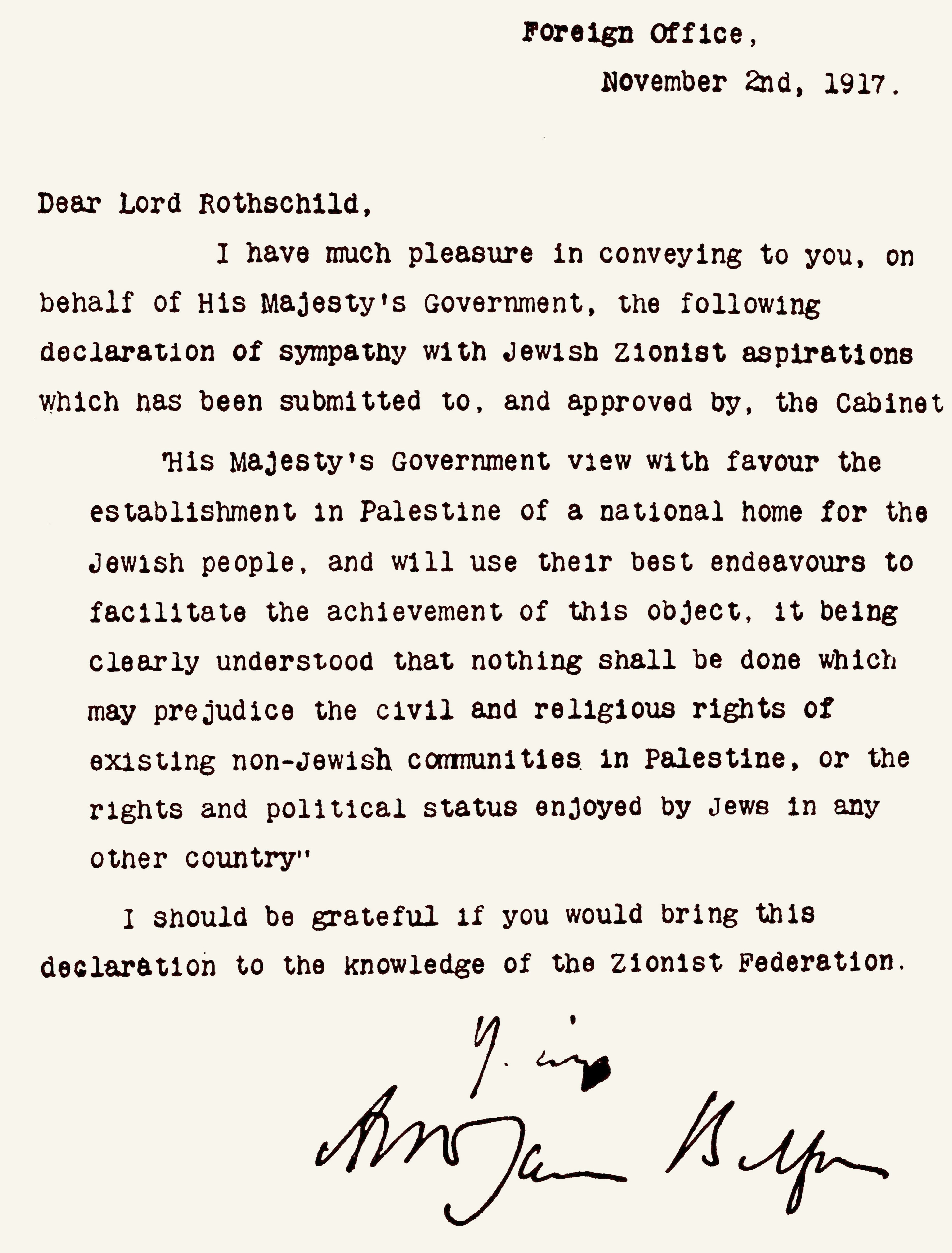
Approximately 100 years ago, Lord Rothschild and the British Crown took it upon themselves to shepherd and settle Zionists into the state of Palestine, and the region has been unstable ever since, to the extent that the United Nations in 1949 had to implement and operate basic civil society infrastructure on behalf of the Palestinian people. It is clear that Israel does not want to accept the responsibility of running the civil society of the people against whom they are committing genocide. Furthermore, if it became incumbent upon Israel to remedy the humanitarian crisis which they caused then they would have to cease committing genocide against such people, which is not in the interest of Israel or its allies.
Later, Mr. Schneider remarked:
The government of Israel has been clear that it does not want UNRWA to implode as it was noted in the Wall Street Journal just yesterday. There is a fear that if the critical services provided by UNRWA are no longer provided by the organization, it will be left to Israel to step in, or as was noted earlier in the conversation today, that Israel would have to pause it operations to defeat Hamas.
Later, Mr. Sherman (D) of California later remarked that “Israel trusts the other agencies of the UN, UNICEF, the World Food Program, et cetera, which surprised me frankly because I’m aware of the UN General Assembly and as a Zionist I am not a fan.”
Mr. Smith remarked:
UNRWA has proven itself to be, not just a malign actor, but to cause unbelievable child abuse to these Palestinian children who are taught to hate and they believe it. Why do we have young people, 13 and 14 year olds, toting AK-47s and being willing — really trying to think, someday I’ll be a martyr for Hamas and for a radical Islamic view. That’s absurd. Teach them to want to coexist, to respect other people, including Jewish men, women, and children. Instead, they’re taught to kill them and to hate them. That’s why there’s almost no end to the number of volunteers and people that go into Hamas, because they have been taught from the earliest stages to do so.
Mr. Mills remarked:
For those of us who swore an oath to our constitution, let us not forget that it is based upon our Christian-Judeo beliefs. And I don’t think that our Constitutional obligation is to worry about supporting funding to an organization that continues to go against the very people who’s trying to destroy the people of Israel.
The discussion of H.R. 7152, To direct the Secretary of State to establish a national registry of Korean American divided families, and for other purposes, specifically concerned Korean families separated by the South Korea-North Korea border (itself a legacy of the Korean-American War) even though the U.S. is currently embroiled in a U.S.-Mexico border crisis regarding the mass separation of migrant families coming from the global south.
Although Members of Congress give much lip service to the ‘existential threat’ faced by their allies, they do not consider the Palestinians to be facing such a threat from the ongoing genocide committed by Israel.
Article 2
Synchronized Decentralized Autonomous Command System (SDACS II)
A regimental, educational and friendly association of free people who voluntarily commit themselves to carrying out a common mission; or free association, or bureau, for political education operations and development [for N∴S∴, U∴A∴, and U∴S∴].
By Antarah Crawley
NACOTCHTANK, OD — Here follows the revised command structure for the Synchronized Decentralized Autonomous Command System on the basis of occupational specialities held and practiced by the Governor of N∴S∴ and constituting the schedule of members and officers of the decentralized autonomous organization (DAO), of which Curricular Operations Research and Publication Services (CORPS) is a division, a college of the Universitas Autodidactus (U∴A∴) is a regiment, a freely associated service provider is a company, a labor union is a platoon, and a committee of any of the above units is a squad or team.
Occupational Specialties (OS)
Civil Society [sui juris]
Student (Talib) [one who teaches themself]
Faculty Member (Professor) [one who teaches another]
Non-Commissioned Ranks – Enlisted
Scribe (E-1)
Djedi [Knight] (E-2)
Rapporteur (E-3)
Free Thinker [Dialectician I] (E-4)
Truth Speaker [Dialectician II] (E-5)
Light Worker [Dialectician III] (E-6)
Ombudsman [Master Dialectician] (E-7)
Departmental Director (E-8)
Commissioned Ranks – Officer [pertaining to a corpus meaning “body”, as in a union, university, assembly; Revised SDACS: (1) sui juris or self law, (2) syndicate or committee, (3) college or commune, (4) corps or party, (5) tribunal or association, (6) company or council, (7) administration or international]
Syndic (O-1)
Secretary Treasurer [Clerk] (O-2)
Chair [of a committee] (O-3)
Preceptor [of a Preceptory, or regiment] (O-4)
Administrator [of an Association, or union] (O-5)
Governor [of a Company] (O-6)
General Consul [of a Division] (O-7)
© MMXXIV BY NOVUS SYLLABUS L.L.C.
ALL RIGHTS RESERVED WITHOUT PREJUDICE.
D.R. 01-07: BLK MKT, &c.
Volume 1, Issue 7
CONTENTS — Art. 1. N∴S∴ Director awarded grant… — Art. 2. …Black Market Press — Art. 3. …the Syllabus in Postmodern Literature… — Art. 4. …Public Trust… — Art. 5. From Laurie Lewandowski
Article 1
N∴S∴ Director awarded grant by D.C. Arts and Humanities; establishes Office of Diversified Art Investments
By Antarah Crawley
WASHINGTON, DC — NOVUS SYLLABUS L.L.C. (N∴S∴) Director Antarah Crawley has been named a Fellow of the District of Columbia Commission on the Arts and Humanities (DC CAH). DC CAH has conditionally awarded Crawley a grant to support his artistic practice. In response to the Arts and Humanities Fellowship Program Request for Proposals, Crawley submitted a strong application centered on the Art¢oin Non-Fungible Token mint project and the IBé Arts Institute-sponsored Tubman note issue project. The Director will use part of the proceeds of this grant to establish the N∴S∴ Office of Diversified Art Investments.
Article 2
N∴S∴ establishes Black Market Press
By Antarah Crawley
NACOTCHTANK, OD — NOVUS SYLLABUS L.L.C. (N∴S∴) establishes Black Market Press (BLK MKT) on October 20, 2023, with the publication of Visible: The Art of Her Story by IBé Crawley, which is released upon the occasion of the Grand Reopening of the National Museum of Women in the Arts. N∴S∴ Director Antarah Crawley is the Publisher and Editor-in-Chief of Black Market Press. The Press is affiliated with A.I.C. Consulting for distribution services.
(last modified 19 Oct 2023)
Article 3
Notes on the syllabus in postmodern literature and common law
By Antarah Crawley
NACOTCHTANK, OD — Circa February 2013, I was reading a lot of postmodern American novels leading up to and during the publication of Title 1 C.S.R. Pharmacon of the Spirit, which was my contribution to the genre American postmodernism.
Postmodern literature is a form of literature that is characterized by the use of metafiction, unreliable narration, self-reflexivity, intertextuality, and which often thematizes both historical and political issues. This genre is best exemplified by the works of Jorge Luis Borges, James Joyce’s Ulysses (often considered modernist), Flann O’Brien’s At Swim-Two-Birds, William Gaddis’s The Recognitions, William S. Burroughs’s Naked Lunch, Anthony Burgess’s A Clockwork Orange, Hunter S. Thompson’s Fear and Loathing in Las Vegas, Gabriel García Márquez’s The Autumn of the Patriarch, Margaret Atwood’s The Handmaid’s Tale, Salman Rushdie’s The Satanic Verses, Bret Easton Ellis’s American Psycho, Don Delillo’s Mao II, Toni Morrison’s Beloved, William Gass’s The Tunnel, David Foster Wallace’s Infinite Jest, Thomas Pynchon’s Mason & Dixon, Dave Eggers’s A Heartbreaking Work of Staggering Genius, Zadie Smith’s White Teeth, Jonathan Safran Foer’s Everything is Illuminated, Roberto Bolaño’s 2666, David Mitchell’s Cloud Atlas, and (in my opinion) Blake Butler’s 300,000,000, among many (but not countless) others. Thomas Carlyle’s Sartor Resartus is an excellent precursor to the genre from the 1830s.
Now I can’t say that I’ve read every page of each of these magnum opuses (indeed, anyone who says they have is likely full of it – even if they’re not lying). But I will say that it was the spirit of these works – the spirit of the “late modern” times – which bore a hole in me and fulled me with inspiration. It certainly beat What Masie Knew in GW’s English lit courses. In short, you can say that “Postmodern literature” means all of the most exciting literature this side of World War II.
At that time, I wanted to throw my hat into the ring a major figure in American postmodern literature, and an “African American” to boot. However, after querying New York agents and reading the manuscript over, I determined, alas, it was not very good. But my judgement at that time would belie itself, since the events of the novel, though not good enough to publish, were good enough to live. I ultimately would end up doing the things in my life that Walter Kogard did in Title 1 and thereafter, including live in New York, found a Secret School, and become editor of the Black Market Press (1 C.S.R. pgs. 278-282). How’s that for American postmodernism?
Recently, while researching McGirt v. Oklahoma and other Indian affairs, I came across the phenomenon of a legal “syllabus” which is a preliminary section of a court ruling, preceding the legal opinion of the court, that outlines the core facts and issues of the case and the path that the case has taken prior to reaching the present court. They are, in effect, summaries, and are not to be considered part of the actual decision of the case and are not precedential. This new information struck a chord in me, as my organization of the New Syllabus had proceeded from research focused on postmodern literature and print publishing to occult and esoteric studies to pseudo-law, equity, and sovereignty. Furthermore, the U.S. Supreme Court writes, “All opinions in a single case are published together and are prefaced by a syllabus prepared by the Reporter of Decisions that summarizes the Court’s decision.” This got me thinking about the origin of the name New Syllabus.
I chose the name New Syllabus for this deeply personal academic endeavor in 2013 in homage to the postmodern American novel Giles Goat-Boy or The Revised New Syllabus of George Giles our Grand Tutor by John Barth. Again, I can’t say I read much of this book either, and what I did read I forgot until just moments before writing this article. But as I refreshed my recollection I realized that I must have subconsciously adopted the novel’s conceit as a premise on which to navigate the real world. The Plot summary reads:
George Giles is a boy raised as a goat who rises in life to be Grand Tutor (spiritual leader or messiah) of New Tammany College (the United States, or the Earth, or the Universe). He strives for (and achieves) herohood, in accordance with the hero myth as theorized by Lord Raglan and Joseph Campbell. […]
The principle behind the allegorical renaming of key roles in the novel as roman à clef is that the Earth (or the Universe) is a university. Thus, for example, the founder of a religion or great religious leader becomes a Grand Tutor (in German Grosslehrer)
Wiki
It seems to me that I have (unintentionally) mimicked the novel’s narrative, from establishing a school after the model of the world to automating that school using a system of codes and algorithms (the “computer”):
Giles Goat-Boy marks Barth’s emergence as a metafictional writer.[3] The metafiction manifests itself in the “Publisher’s Disclaimer” and “Cover-Letter to the Editors and Publisher” which preface the book, and which each try to pass off the responsibility for authorship onto another: the editors implicate Barth, who claims the text was given to him by a mysterious Giles Stoker or Stoker Giles, who in turn claims it was written by the automatic computer WESCAC.
Wiki
It is as if the “Publisher’s Disclaimer” is the legal syllabus to Barth’s Revised New Syllabus, and the N∴S∴ Director is the Reporter of Decisions of American belles-lettres, courts of law and equity, and historical dialectics.
At this time, I cannot say if Barth’s vision of the Universe is wholly “metaphysical” or not – it certainly has panned out accurately for me in the material realm, although few others understand my “research.” I have indeed reared up a school and filled its halls with tomes (and sat alone hearing the echo of my voice). Borges says the Universe is often called the “Library,” another objective correlative which became engrained in the New Syllabus starting at Title 3. All in all, the postmodernists Barth and Borges have firmly anchored their symbols in my worldview … for better or for worse.
(last modified 23 Oct 2023 24 Oct 2023)
Article 4
Notes on the Public Trust of the Moorish People
By Antarah Crawley
NACOTCHTANK, OD — The Consular Court of al-Maghreb al-Aqsa, Trustee, of the Public Trust of the Moorish People, Heirs Beneficiary, to the People of Anacostia, Washington District, Send Greetings and Peace.
The land east of the Eastern Branch of the river Potomac is called Nacotchtank-on-Potomac, and the people there are one village. This village is within the federal district of the Ouachita Confederacy of indigenous peoples of North America (which are registered under many names), in the jurisdiction of the Farthest West (al-Maghreb al-Aqsa), being the lands and waters from the Barbary States to the westernmost continent of the Americas (al-Morocco), which is called “the land of large buffalo.”
NATIONALITY: The Moorish people are an autochthonous people (descended from this land) indigenous to both Africa and the Americas. The United States of America (USA) has a trust responsibility to the Moors, as it would to any American Indian/Alaska Native (AI/AN) tribal nation, insofar as it has a responsibility not to infringe on their treaty rights. And whereas AI/ANs do not believe in legal titles in land, the equitable use title to land and stock is found in the nature of a sincerely-held belief and religious, ritual, or ceremonial customs. And whereas AI/ANs do believe in birthright inheritance, this right is further enshrined in the Constitution of the USA which upholds the sanctity and protection of life, liberty, and property.
AUTHORITY: This consular court is authorized under treaty between the United States of America (USA) and the Kingdom of Morocco to represent the moorish nationals domiciled on the land governed as USA. It is a religious institution insofar as it is an assembly of the faithful believers in the dogma of redemption and of the ancient moorish science, and an organization of religious/education colleges and orders.
DOGMA: The people are the church, and the church is the body of Christ, ergo the people are the body of Christ, who is their counselor, judge and king before God the Father, and whose ministers are their representatives on the earth. Those who will say that He is the Sovereign of the earth are indemnified by Him from the penalty of sin in this life and in the hereafter. Those who follow His law of divine reciprocity shall receive mercy on the Day of Judgment. (The Divine Mother and the Holy Spirit are also to be praised.)
OPERATION: The legal name and owner of the courthouse shall be [S∴P∴Q∴M∴, Inc.]. It shall look like a mosque  , be called the church
  ️, and function as school and consular courthouse
  . The consular court shall serve the circuit of the Ouachita District.
REGULARITY: Hold A.M. court business docket and P.M. UA on weekdays; hold Interfaith Religious Service (IRS) service on Friday night and Saturday morning; hold Sundays open.
PRESIDENCE: The court shall be presided over by Consul General Magistrate Judge (CGMJ) Vice Consul General (CG), Vice Magistrate Judge (MJ), Grand Preceptor/Grand Scribe/Grand Tutor, Ombuds, Syndical Committee Chairs, Sergeant (Sgt) at Arms, Imam/Mullah, Rabbi/Moreh, Archbishop/Presbyter/Elder, Tribune of the People, and People assembled. Some of these offices may be encumbered by the same individual.
AMENDMENT IN THE NATURE OF NOTES OF 23 OCT 2023
(1) N∴S∴ was chartered as the livery company (an official company identified by a special design or color scheme) of the Worshipful Company of Scribers (See, Notice of 27 Sep 2018), whose senior permanent staff member shall be the “Systems Dep’t Intermediary Zone (InterZone) Clerk” and whose junior permanent staff member shall be the “Systems Dep’t Knowledge Zone (KnownZone) Cleric” (See, Title 3 C.S.R.). Note that there is no clerk in the O Zone. These three Zones together comprise the DataHorse system of the N∴S∴ Dep’t of Information Systems Intelligence Services (DISIS).
(2) Circuit courts are historically routes through county towns traveled by judges (in the early U.S., Supreme Court judges) and their retinue of attorneys on horseback (the circuit riders). Modern circuit courts are, generally, jury trial courts that may have review authority over a lower court such as a juvenile and domestic relations court.
(2)(a) The concept of circuit riders may be a legacy of the equestrian class of ancient Rome.
(2)(b) A livery is a place that will keep and take care of a horse on behalf of its owner, for a fee.
(3) Courts of Sessions (or “sittings,” another name for proceedings) were established in particular towns or counties. They were replaced by one Crown Court (for criminal matters, and High Court for civil matters), like unto one supreme Court (both criminal and civil/commercial/equitable), or one holy catholic and apostolic Church (political body masquerading as sovereign body of Christ/the People).
(3)(a) Officers of such court include:
(3)(a)(i) The Circuit Rider(s), the judge(s) of sessions/sittings who ride the circuits on commission of oyer et terminer (“hearing and determining”) setting up court and summoning juries in assize towns; those who shall sit at the Dais of the court.
(3)(a)(ii) The Clerk(s) [or, cleric(s)], the keeper(s) of the record; those who shall sit at the Desk of the court issuing and receiving order and papers (See, this Amendment § (1), above).
(3)(a)(iii) The Rapporteur de la cour (Reporter of the court). (See, Memo. No. 9)
(4) Oyez (“hear ye”) is plural imperative form of oyer (French: ouir “to hear”) from oyer et terminer “to hear and to determine” (a sitting of the court, presided over by a judge of assizes “sessions”).
(last modified 23 Oct 2023 24 Oct 2024)
Article 5
From Freemasonry and the Catholic Church
An Excerpt | By Laurie Lewandowski | October 17, 2022
[W]hile Catholics do believe in the immortality of the soul, we reject that doing good works and moving up in ranks (degrees) helps souls get to heaven. This type of heresy was condemned by the Church in 5th century during the Pelagian heresy, which erroneously taught Christ didn’t redeem the human soul, but with good works one can be redeemed. The Church teaches that our immortal souls are redeemed through Christ alone and that through the power of baptism we are saved. (I Peter 3:21).
Freemasonry is a religion which is gnostic (hidden or secret knowledge is power), rationalistic (reason alone guides us into all truth), syncretistic (melding of all world religions, giving equal footing to them all), relativistic (you have your truth and I have mine.), and indifferent (just keep quiet and get along, it doesn’t matter what you believe.) This indifferentism associated with Masonry is probably the most urgent reason to reject it. For a Catholic (and other Christians), the fact that Masons’ “creed” is to ignore Jesus as the Way, is more than just problematic. Jesus promised us division by His Name (Luke 12:51). We must never deny the name of Jesus for the sake of unity. This is one of the grave evils in our modern society. Further, the swearing of oaths, placing the lodge over any other authority, and the inimical relationship between Masons and the Church are additional reasons for the Church’s condemnation. Finally, eight popes from St. Clement XII (1738) onward have condemned it, teaching of its grave sin. Pope Leo XIII writes Inimica Vis, ch.2,
Our predecessors in the Roman pontificate have in the course of a century and a half outlawed this group not once, but repeatedly. We too, in accordance with Our duty, have condemned it strongly to Christian people, so that they might beware of its wiles and bravely repel its impious assaults. Moreover, lest cowardice and sloth overtake us imperceptively, We have deliberately endeavored to reveal the secrets of this pernicious sect and the means by which it labors for the destruction of the Catholic enterprise.
Pope Leo XIII, Inimica Vis, ch.2
Use this resource to pray for release from the Oaths of Freemasonry and repent.
© MMXXIII BY NOVUS SYLLABUS L.L.C.
ALL RIGHTS RESERVED WITHOUT PREJUDICE.
D.R. 01-06: FPPM, &c.

Volume 1, Issue 6
CONTENTS — ART. 1. FIDES PUBLICA… — ART. 2. WATER THEORY 2ND
Article 1
Fides Publica Populi Mauretani
By Antarah Crawley
NACOTCHTANK, OD — The Village of Nacotchtank on Potomac (River Valley) Eastern Branch, Ouachita District, Northwest Gate, Al Moroc, which is called “Anacostia, Washington, District of Columbia, United States of America (U.S.A.)” is an internationally sovereign federal city-state which is not a member of the union of states of North America, but like unto the city of Rome’s political and administrative successor, the Vatican City (which pretends to be the Body of Christ, or Universal Church) or the City of London (the one-square-mile ancient Roman trade capital Londinium).
Note that “Ouachita” is composed of the Choctaw words ouac meaning “buffalo” and chito meaning “large,” together meaning “country of large buffaloes” (Louis R. Harlan, 1834). It may also come from the French transliteration of the Caddo word washita meaning “good hunting grounds.” Ouachita is often miswritten as Washitaw and Washington, which, notably, also comes from the name wassa, “hunting,” + the locative suffix -thn, “settlement” (Kimberly Powell, 2019). It may be deduced that the Roman method is to add to the indigenous name of a place or people a corresponding Latin name, or to simply adopt the indigenous name into Roman usage. We may assert that the “land of the large buffalo” extends from the Eastern Sea Board to the Western Sea Board of the land mass Northwest of the prime meridian.
The descendants of the indigenous people of the earth (“marked” with melanated skin) who are moored on the Northwest land mass have current vested international treaty rights with the resident colonial government (U.S.A.) by and through His Majesty the Sultan of Morocco (and by decision of Chief Justice Taney that such persons could not be citizens of the USA, See Dred Scott v. Sanford). They are, in effect, hereditary blood nationals of the Kingdom of Morocco (the modern-day successor of the ancient Roman Province of Mauretania), having civil rights as Romans born within the resident colonial government (U.S.A.), but retaining God-given birthright as ministers and consuls in the lineage of the ancients who crossed from East Africa to West Africa upon the proliferation of the Hyksos-Canaanite-Greco-Roman civilization in Egypt which was anticipated to colonize the world over. The Memphite Pharaohcy which departed west from Egypt after the 25th Dynasty gradually divided into the isolationist Dogon village of Mali, and the progressively-Arabized Berber tribes in the Roman province of Mauretania (the future Moorish Empire), the latter of which remains the rightful heir to the world’s waterways from the ancient Nubians who sailed down the Nile to Men Nefer in antiquity.
It is only by and through this Afro-Roman Moroccan-American treaty that Europe and U.S.A. have a charter right to trade on the world’s waterways. This treaty, as a document, speaks for itself, is in perpetual effect, and need not require any other authority to effect its purpose, being to establish international trust relations between the sovereign African descendants (moors, called “Moroccans”) and the children of the Diaspora (“dispersions of the spirit of Ra”). Therefore the title of “moor” is a hereditary title of consular nobility and the birthright inheritance of people of indigenous and African descent living in Crown estates, which include the Unites States of America. It was the prerogative of Templar-backed mercantile pirates operating under illuminated charters to prevent the moor from ever learning this information.
CONSUL (International Law): An officer of a commercial character, appointed by the different states to watch over the mercantile interests of the appointing state and of its subjects in foreign countries. There are usually a number of consuls in every maritime country, and they are usually subject to a chief consul, who is called a “consul general.” Schunior v. Russell, 18 S.W. 484, 83 Tex. 83. (Source: Al Moroccan Empire Consulate at New Jersey state republic, https://treatyrights.org/about-us/)
Note that “states“ are to the United States as “peoples and nations” are to the Roman Empire. However the “nations” are provincial members of the Empire. Whereas Rome constituted a martial federal government, its “citizens” were soldiers (which could be interpreted to mean “employee” in the modern sense) who were organized into classes by heredity and performance. The function of the federal empire was and is the mobilization of troops (police power) and the collection of taxes (power of the purse); all administrative divisions of estates (people, land, and stock) were and are to that end. Therefore, the essential character of this Empire is mercantile and missionary.
Praetors, or counsels, may be interpreted to mean “officer of the law” or “officer of the court” in the modern sense. They are a class of administrative officers akin to tribunes (representatives of the people or soldiers), magistrates (representatives of the state), senators (representatives of the landed gentry), and governors (administrative heads of state). Ancient Roman social classes, which also pertain to military rank, include plebeians and proletarii (the working class tax-payer, whose labor power is their only possession of significant economic value), landed equities and equities publicani (the “equestrian” class, who originally constituted the Roman cavalry as commissioned knights, whose economic holdings were second only to the patrician class, and who were engaged in tax farming/collecting and eventually money-lending/changing), and patricians (the hereditary land-holding aristocracy). A civil diocese is a regional grouping of provinces administered or managed by a vicarius, these numbering 12 or 14 in the whole Empire. The Department of Information Systems and Intelligence Services (DISIS) serves as the diocese of N∴S∴.
See, Officuim Tribunus Plebis.
(last modified 13 Oct 2023 18 Oct 2023 23 Oct 2023)
Article 2
2nd Amendment to “Water Theory of Capital”
by Antarah Crawley
At Art¢oin:\>_Theory and Methodology\Water Theory of Capital:\>_1st Amendment, add:
4.0.0. Cash is money in coins or notes, as distinct from checks, money orders, or credit. Cache is a collection of items stored in a hidden or inaccessible place, usually for high-speed retrieval on demand.
4.1.0. Cash is to negotiable instruments (NIs) as cache is to a computer’s memory; that is, the cash is more fungible, movable, and/or liquid than the NIs, as the cache is a rapid-retrieval database. Cached data is rapidly drawn from memory, as cash is readily withdrawn from banks.
4.2.0. To write a note, you draw it up on the principle that it be paid down; and if you default on your note then you will go under the water and drown.
5.0.0. We pay bills with unpayable bills. A bill on the public side is a note on the private, hence dollar bills are Federal Reserve System (Fed) notes.
5.1.0. Unpayable bills are drawn up on the principal of the People’s landed estates. The People’s representatives pass these bills through acts of Congress. The People’s estate is assessed and taxed every year by the People’s government in the form of IOUs (notes) to the People.
5.2.0. The IOU notes underwritten by the government with the People’s Treasury securities are issued, held, and ordered by the Fed pursuant to Act of Congress. Therefore the government owes the holders of the notes the interest on their due value, which is secured by the People’s estate, and the government then takes the estate tax to pay the interest on the Treasury bonds held by the Fed’s shareholders.
5.3.0. The separate and distinct venues of public and private obligate the users of these notes to repay the tax (or premium) to the underwriter to pay interest to its bondholders each time a note is exchanged. Thus, IOUs secured by the estate of the People circulate from the People’s extension of credit to the public venue and back into the private venues of persons which are held in “public” or “national” coffers which are in fact private Fed-member banks.
5.4.0. Why then do the People pay the interest on the government’s invoices which are withdrawn before payment and then billed to us, creating a $33 trillion+ deficit in our name? Who then, in fact, is the beneficiary of this trust agreement, and who is the trustee? Who then repays the grantor of the estate (the People), and what then is the maturity date of the securities?
(last modified 13 Oct 2023)
 Supreme Exchange