Tagged: space
Mustelid Friends 8: Beavers in Space
or, Rice World
Created and Produced by Dams Up Water
In the neon half-light of a decaying interstellar port, Mr. Capybara adjusted his lapels and tried to remember where things had gone so wrong.
It had started, as these things often do, with rice.
Not the innocent, steaming kind you’d find in a humble bowl, but the kind that powered empires—processed, commodified, and vacuum-sealed for hyperspace transit.
Royal Arabian Oil had gotten greedy. They always did. First they disrupted terrestrial shipments, then orbital ones, and before long the whole interstellar rice exchange looked like a spilled sack in zero gravity. Mr. Capybara, once a respectable baron of modest corruption, now found himself tangled in litigation so vast it had gravitational pull.
So he went back to the only place that had ever managed to keep him one step ahead of ruin: the law firm of Weasel Badger Beaver Mink & Otter.
Their office floated in a slow orbit five thousand miles above New Arrakeen-on-Potomac, a brutalist slab of concrete and ambition. Inside, the air smelled faintly of ink, damp fur, and firm resolve.
Weasel met him at reception, thin as a clause and twice as slippery.
“Back again, Mr. Capybara?”
“Don’t sound so surprised,” Capybara muttered. “You people bill by the heartbeat. I’m your favorite kind of repeat customer.”
Badger emerged from a shadowed hallway, carrying a stack of files that looked heavy with others’ misfortune. Mink and Otter followed—the one calculating, the other smiling like a settlement already signed.
And then there was solemn spectacled Father Beaver.
He didn’t say much. Never did. But the room shifted around him, like reality itself had been notarized in his presence.
“You’ve got rice woes,” Beaver said.
“I’ve got existential woes,” Capybara replied. “The rice is just the side dish.”
They ushered him into a conference room where the walls flickered with projections of shipping routes, legal precedents, and celestial trade lanes. Somewhere in that mess was the truth—or at least something billable.
“Royal Arabian Oil’s interference,” Mink began, “constitutes not just a breach of contract but a disruption of the sacred flow.”
“The current,” Beaver added quietly.
Capybara sighed. “Don’t start with the theology.”
But it was already too late for that.
Because behind the firm—behind all firms, all contracts, all quietly devastating negotiations—stood the Beaverjesuits.
Led by Father Beaver, they weren’t just clerics. They were custodians of something older than law and more binding than any agreement: the onstreaming current of the spirit. Not metaphorical—literal. A current that flowed through trade routes, through belief, through the very idea of exchange itself.
And the Beavers had always controlled it.
Not openly, of course. Never crudely. They preferred instruments—firms, orders, societies. Layers of plausible deniability wrapped in ritual and paperwork.
“The rice must flow,” Weasel said, almost reverently.
“The rice always flows,” Otter corrected, “but only where it is permitted.”
Capybara leaned back, feeling the weight of it all press against his ribs. “So what’s the play? I sue? I settle? I disappear?”
Beaver tapped the table. The projections shifted.
A desert planet appeared—vast, dry, and shimmering with fields not of sand, but of dormant grain, waiting for the right conditions to awaken.
“Intergalactic expansion,” Father Beaver said. “New markets. Untapped resources.”
“Prospects,” Mink added.
“Liability redistribution,” Badger clarified.
“And prophecy,” Beaver finished.
Capybara groaned. “I knew there’d be prophecy.”
That’s when they told him about Little Beaver.
The young, mendicant friar from the banks of Old Nacotchtank, raised among the doctors of the Beaver Medicine Society of Yahushua HaMoshiach.
The doctors weren’t just healers. They were interpreters of the current, reading its fluctuations like vital signs. And they had seen something in Little Beaver.
Something impossible.
“The Kwisatz Haderach,” Otter said softly.
Capybara rubbed his temples. “Let me guess. He can be in two places at once, see the future, and audit my accounts retroactively?”
“Close,” Weasel said. “He can bridge the legal and the divine.”
“And that’s bad for me how?” Capybara asked.
“It isn’t,” Beaver said. “Unless you’re on the wrong side of the current.”
Which, Capybara suspected, he usually was.
Then there were the Brothers of Beggars Contemplative—a ragged, stubborn branch of the interstellar Djedi knighthood. They lived among the rice deserts, wore patched robes, and spoke in riddles that somehow held up in arbitration.
They were the only ones who truly understood the rice.
“They don’t control it,” Badger said. “They live upon it.”
“Which makes them dangerous,” Mink added.
“Or at least indispensable,” Beaver said.
The room fell quiet.
Outside, the rain kept falling—on the city, on the ships, on the endless chain of transactions that held the universe together by a thread of obligation and belief.
Capybara looked at the projections again. The desert. The child. The currents.
“You’re telling me,” he said slowly, “that my legal troubles with a corrupt oil conglomerate are actually part of some grand intergalactic realignment of rice, religion, and revenue streams.”
“Yes,” said Beaver.
“And my role in this?”
Beaver’s round lenses glinted like polished wood in low light.
“You adapt,” he said. “Or you get written out of the big rice contracts.”
Capybara exhaled, long and slow.
He’d always known the game was rigged. He just hadn’t realized how far up it went.
“Fine,” he said. “We expand. We litigate. We… commune with the current or whatever it is you people do.”
Otter smiled. Weasel started drafting. Badger stamped something with unnecessary force. Mink began calculating outcomes that hadn’t happened yet.
And contemplative Father Beaver?
He simply watched the current—unseen, unstoppable—flowing through it all.
Because in the end, it wasn’t the oil, or the rice, or even the law that ruled the stars.
It was the current.
And the Beavers had always known exactly where it was going.
Part II
Mr. Capybara had never trusted anything that was described as “empty.”
Empty accounts weren’t empty. Empty promises came due with interest. And now, moored in drydock hovering above New Arrakeen-on-Potomac, was the largest space-worthy grain silo ever assembled—a cathedral of hollow steel called The Immaculate Deficit.
The plan, as drafted by Weasel and notarized by forces both domestic and angelic, was elegant in the way a forged signature is elegant: convincing enough to pass inspection, dangerous enough to ruin everyone involved.
The decentralized Royal Arabian Oil conglomerate now controlled the terrestrial rice supply chain all the way up to the Saturnian Threshing Floor and Clearinghouse. The Archangelic Police Force—winged auditors of cosmic compliance, their halos doubling as surveillance arrays—patrolled the network. Between the two, nothing moved without permission.
So Capybara would move nothing.
No rice. No declared cargo.
Just a ship light on the manifest.
“Absence,” Weasel had explained, tapping a clause, “is very difficult to regulate.”
“And even harder to tax,” Badger had added, with something like admiration.
Capybara stood on the command deck as the clamps released. The ship groaned like an old debtor waking up.
“Engage drift engines,” he said.
The Immaculate Deficit didn’t launch so much as excuse itself from orbit—slipping sideways into a corridor of neglected jurisdiction, where laws blurred and enforcement lagged.
Below them, the lights of the city flickered. Above them, the stars waited like unpaid invoices.
“Contact?” Capybara asked.
“Royal Arabian Oil patrols sweeping the primary lanes,” Mink reported. “Archangelic units triangulating anomalies.”
“Do we qualify as an anomaly?” Capybara asked.
Otter checked a screen. “We qualify as a phenomenal curiosity.”
“Good,” Capybara said. “Those usually get deferred.”
They moved through deep space like a rumor—hard to pin down, harder to prove. The ship’s manifest updated itself constantly, a living document of strategic ambiguity.
Cargo: None.
Intent: Undetermined.
Purpose: Under review.
It worked.
At least at first.
The first interception came as a shimmer—a ring of light forming ahead of them, resolving into the unmistakable wheeling siren of the Archangelic Police Force. Their vessels weren’t built; they were declared, luminous chariots of authority and immaculate paperwork.
A voice filled the bridge, calm and absolute.
“Unregistered transit, identify cargo and submit to audit.”
Capybara leaned forward. “We are transporting nothing.”
A pause.
“Clarify: absence of goods does not constitute absence of obligation.”
Weasel’s voice crackled over comms from the firm’s remote advisory channel. “Invoke Clause 0.”
Capybara smirked. “We invoke Clause 0.”
Another pause, longer this time.
Clause 0—the most dangerous stipulation ever written into a contract—stated that nothing, properly defined, could not be interfered with without first being proven to exist.
The Archangelic vessels flickered, their halos dimming as they processed the paradox.
“Your cargo,” the voice said carefully, “is not identifiable under the terms of interspace commerce.”
“Correct,” Capybara said.
“And therefore…”
“Exempt,” Otter whispered.
The light wheel dissolved.
Capybara exhaled. “I love good lawyering.”
But Royal Arabian Oil wasn’t so easily stalled.
They didn’t argue black letter. They obstructed procedure.
A fleet emerged from the dark—blocky, brutal ships that looked less like vessels and more like statements of intent. Their engines burned with the slow fury of monopolies.
“They’re going to ram us out of the corridor,” Mink said.
“Can they?” Capybara asked.
“Physically, yes. Legally… ambiguous.”
“Then we make it spiritually impossible,” Father Beaver’s voice came, low and certain.
Capybara didn’t ask how. He had learned not to.
“Full drift,” he ordered. “Let the current take us into hyperspace.”
The ship shuddered. Systems dimmed. The Immaculate Deficit surrendered control—not to chaos, but to something subtler.
The space way.
Not visible. Not measurable. But felt—a pull beneath the equations, a flow beneath the routes.
For a moment, Capybara swore he could hear it. Like distant water. Like whispered clauses being negotiated by the universe itself.
The Royal Arabian Oil ships advanced—
—and missed.
Not by distance, but by dimension. Their trajectories intersected where the Deficit should have been, not where it was becoming.
“Trajectory mismatch,” Badger muttered over comms, almost impressed.
“They’re aiming at our declared position,” Otter said.
“We’re not declared anymore,” Capybara replied.
They slipped past.
Deep space opened up, vast and indifferent.
Days—or something like days—passed. Time got loose out here, unmoored from billing cycles and court dates. The crew stopped asking questions. Even Capybara stopped pretending he understood.
And then, at the edge of perception, the desert planet crowned.
A sphere of muted gold and pale dust, its surface streaked with dormant fields of rice waiting for the right disturbance to awaken. The rice world.
“Arrakeen Minor,” Mink said. “Or whatever the locals are calling it this century.”
“Home,” Beaver murmured.
They descended.
The atmosphere caught them like a held breath. Sand—or something like sand—spiraled upward, whispering against the hull.
“Scans?” Capybara asked.
Otter frowned. “No formal defenses. No structured ports. No—”
The blaring of alarms cut him off.
Shapes rose out of the desert.
Not ships…
but figures.
Cloaked. Angular. Moving with a precision that felt less like motion, more like unintentional. The Brothers of Beggars Contemplative.
“The Djedi resistance,” said the Otter.
“They’ve been waiting,” Badger said.
“For us?” Capybara asked.
“For a sign,” Beaver replied.
The figures surrounded the ship as it settled onto the surface. No weapons visible. No threats declared.
Which, Capybara knew, meant something worse: Negotiation.
The hatch opened with a reluctant sigh.
Heat flooded in. Dry, ancient, and carrying the faint scent of grain and prophecy.
Capybara stepped out first, because that was the kind of mistake he specialized in.
The leader of the Djedi Assembly stepped forward, face obscured beneath layered cloth. When they spoke, their voice was rough with disuse and assurance.
“You bring an empty vessel,” they said.
Capybara spread his hands. “It’s a free and open market.”
The figure tilted their head.
“There is no empty,” they said. “Only what has not yet been seen.”
Capybara glanced back at the ship, at its hollow holds and carefully drafted nothingness.
For the first time since launch, he felt a flicker of doubt.
Behind the Djedi, the desert shifted.
Not wind.
Movement.
Something vast beneath the surface, stirring in response to their arrival.
“The rice,” the Djedi said softly, “is waking.”
Capybara swallowed.
He had come here to escape a lawsuit.
Instead, it looked like he’d just filed one against the universe itself—and the universe had decided to appear in person.
Part III
The desert did not roar.
It audited.
A low, granular vibration passed through the ground beneath Mr. Capybara’s paws, like a ledger being balanced somewhere far below the surface of the world. The Brothers of Beggars Contemplative stood motionless, their patched robes fluttering in a wind that hadn’t yet decided to blow.
“You awoke it,” the Djedi Master said.
Capybara adjusted his cufflinks. “I tend to have that effect on systems that prefer to remain dormant.”
Behind him, The Immaculate Deficit creaked—its vast, empty holds now echoing with something new. Not cargo. Not quite. A presence. As if absence, pushed hard enough, had finally looped back into being.
And then Little Beaver stepped forward.
No fanfare. No thunder. Just a small figure moving with a quiet that made all else feel like paperwork waiting to be filed.
The Djedi Assembly parted before him.
Father Beaver—of the firm, of the current, of the most solemn Society—lowered his head in reverent thanksgiving to the Most High God.
“His time has come,” the Beaver said.
Little Beaver looked at the ship, then at the desert, then at Capybara—who, for reasons he couldn’t articulate, suddenly felt like a clause about to be struck.
“You tried to move nothing,” Little Beaver said.
Capybara shrugged. “It’s legally defensible.”
“But nothing,” Little Beaver replied, “is where everything begins.”
The ground split.
Not violently—no explosions—just a clean, surgical opening, as though the planet itself had found a faulty line item and decided to expand it.
From beneath the desert rose the rice.
Not fields. Not crops. Memory. Potential. The primordial grain—unprocessed, unpriced, unowned. It flowed upward in shimmering currents, each kernel a possibility, each possibility a future.
“The rice,” whispered a Djedi.
“The source,” offered another.
Little Beaver stepped into the rising current.
For a moment—just a moment—he was everywhere.
On the bridge of the Deficit. In the conference room of Weasel Badger Beaver Mink & Otter. In the ledgers of Royal Arabian Oil. In the omniscient eternal patrol of the Archangelic Police Force.
He bridged it.
Legal and divine. Material and spiritual. Profit and purpose.
The Kwisatz Haderach—not a conqueror, not a tyrant, but a reconciler of systems that had long pretended not to be in equity.
Capybara watched, slack-jawed.
“I should have charged a consultation fee,” he muttered.
Above them, the sky fractured.
Not broke—revealed.
And he descended—not in fire, not in wrath, but in a clarity so absolute it made every prior misconception feel like a bad joke told too long.
Yahushua HaMoshiach.
The final arbiter of a contract written before time had learned how to number the years.
The Djedi knelt. The Beavers bowed. Even the current itself seemed to rest in its stillness, as if in a reservoir dammed.
Capybara stood.
Capybara squinted.
“Hast thou come to litigate,” he asked, “or to settle?”
Yahushua looked at him—not unkindly, but with the sort of gaze that causes pretense to collapse under its own weight.
“To fulfill,” He said.
Back on the Kingdom of Earth, whole systems began to abate.
Royal Arabian Oil’s monopolies unraveled, and its decentralized districts further dissolved into households in their tribes.
The Archangelic Police Force opened the skies to mass transit through space, and surveillance gave way to witness.
And in a dusty corner of New Bat City, which had almost forgotten how to hope, the reformed raccoon gang—Bandana Dan and his Boys—redistributed imported grain shipments with solemn efficiency and only occasional theatrical flair.
“We’re saved now,” Bandana Dan insisted, adjusting his bandana like a badge. “Spiritually sanctioned by the Most High.”
“Provisionally,” one of the Djedi Ambassadors muttered.
On the rice world, the grain flowed freely.
Not owned. Not controlled…
but shared.
The Beaverjesuits hath foretold it. The current had never been theirs to possess, only to guide until one could become it.
Little Beaver stood in the firmament with the resurrected dead as a living clause that could not be exploited.
Capybara approached him from the space below.
“So,” he said, hands in pockets, “where does that leave people like me?”
Little Beaver regarded him.
“Held accountable,” he said.
Capybara winced. “I was afraid you’d say that.”
A silence.
Then, unexpectedly:
“And… necessary.”
Capybara blinked. “I’m sorry?”
“You understand systems,” Little Beaver said. “You navigate them. Twist them. Reveal their weaknesses.”
Capybara considered that.
“I break things,” he said.
“You expose where they were already broken,” Little Beaver replied.
For the first time in a long time, Capybara didn’t have a clever response.
Above them, the sky settled into something honest.
The current flowed—not hidden, not controlled, but present. Accessible. Alive.
Back in orbit, The Immaculate Deficit was no longer empty.
Not filled, exactly.
But purposed.
Capybara looked out across the desert of waking grain, at the Djedi knights in their labors, at the Beavers in their contemplation, at the improbable coalition of trust, faith, and belief.
“Well,” he said, straightening his coat, “I suppose this calls for a new contract.”
Father Beaver, standing beside him, allowed the faintest hint of smile.
“This time,” Beaver said, “we write it together.”
Capybara nodded.
For once, beaver legal construction didn’t sound like a trap.
It sounded like fair terms.
The End.
[constructed with artificial intelligence]
D.R. 01-10: Gateway &c.

Volume 1, Issue 10
Contents — Art. 1. …Gateway Process — Art. 2. …Party Line
Article 1
40th Anniversary of U.S. Army Intelligence analysis and assessment of Gateway Process
By Antarah Crawley
WASHINGTON, DC — On 17 February 2021 the Daily Mail reported, “TikTokkers discover declassified 1983 CIA report investigating if people can leave their physical bodies to travel through space and time using Gateway Experience’s low frequency sounds and relaxation techniques.” The present author recalls that he researched the report and identified a PDF copy on the CIA’s website after seeing such a video being shared on Instagram sometime that year. This author first read the report on 30 October 2023.
The 9 June 1983 U.S. Army Intelligence and Security Command (USAINSCOM) report, Analysis and Assessment of Gateway Process, was declassified by the U.S. Central Intelligence Agency (CIA) on 10 September 2003. It is therefore presently four decades since this report was penned in top secrecy by Army Intelligence officer LTC Wayne M. McDonnell, and two decades since it was quietly released into public domain.
The Gateway Process is a technique for applied consciousness expansion designed to better enable practitioners to achieve out-of-body experiences, among other objectives. It also appears to provide the theoretical foundations of interdimensional espionage and interdimensional counterintelligence using remote viewing and other techniques related to interdimensional time travel. It may also acclimate practitioners to encounters with “intelligent, non-corporeal energy forms” (pg. 27). This particular iteration of the practice was developed by Bob Monroe of the Monroe Institute.
It is notable that the official PDF, which is found on the CIA’s website, is missing page 25 (after PDF page 26), a page which may prove even more valuable than the declassified document as it currently exists.
The present author recommends that every free-thinker, truth-speaker, and light worker print a copy of this report and read it and reread it whenever necessary, as it presents a most accurate recitation of the very source information which informed the New Syllabus. This author is so stricken by the equivalence of research findings and information between the New Syllabus Curriculum Suite Repository (C.S.R.) that he is convinced that the Gateway Process was involved in the carrying out of the Novus Syllabus Seclorum through his body in this space-time continuum.
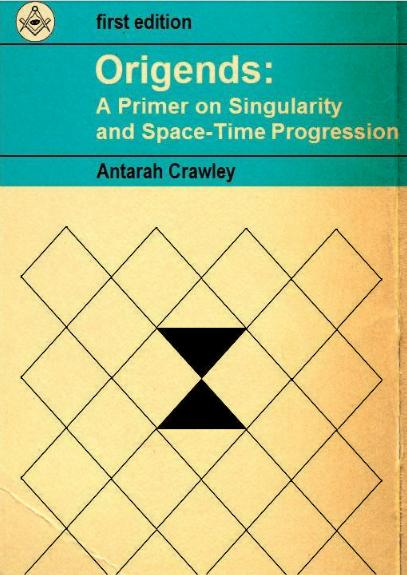
In hindsight, this author recalls his education in the Daoist (Taoist) philosophy while attending The George Washington University in 2010/2011, and his silence-filled sessions of deep, meditative thought in which he explored the elementary composition of “reality” and “nature.” These sessions led directly to his authorship of Origends: A Primer on Singularity and Space-Time Progression, which comes down to us at 1 C.S.R. 57-77.
Furthermore, this author has come to the understanding that the development of the fictional character of Walter Kogard as a (very) thinly veiled alter ego of the author in 1 C.S.R. and the mission undertaken by this character at 3 C.S.R. has caused the experiences of Walter Kogard to “quantum-leap” from fiction into the reality of its closest analogue, the author himself. However, the original ending at 3 C.S.R. (in which Kogard “decompresses” into a beam on light in the InterZone), while remaining the true and original conclusion to Kogard’s hero-myth, projected an alternative ending involving the “Secret School of Ancient Mystery” to 4 C.S.R. and beyond. This “alternate reality” is actually a transmission of the Kogard signal from the silent depths of the O-Zone back into the KnownZone as a hologram of himself to build new holograms in the main holographic matrix. Therefore, unbeknownst to this author at the time, the New Syllabus Mystery School was manifest into reality via decentralized Gateway Process after he moved back to “Federal City” (Washington, D.C.) from “Empire City” (Brooklyn, New York).
In addition to illuminating the operative mechanism in the Curriculum Suite Repository, the Army Intelligence report predicts the New Syllabus discovery and development of Mindsoft and the InterZone of 3 C.S.R. 27-28.
Regarding Mindsoft, LTC McDonnell reports at 15. Brain in Phase:
The consciousness process is most easily envisaged if we picture the holographic input [the appearance of physical reality] with a three dimensional grid system superimposed over it such that all of the energy patterns contained within can be described in terms of a three dimensional geometry using math[e]matics to reduce the data to two dimensional form. Bentov states that scientists suspect that the human mind operates on a simple binary “go/no go” system as do all digital computers. […] In states of expanded consciousness, the right hemisphere of the human brain in its holistic, nonlinear and nonverbal mode of functioning acts as the primary matrix or receptor for this holographic input while, by operating in phase or coherence with the right brain, the left hemisphere provides the secondary matrix through its binary, computer-like method of functioning to screen further the data by comparison and reduce it to a discreet, two-dimensional form.
LTC McDonnell, pg. 9 (emphasis added)
Regarding the InterZone, LTC McDonnell reports at 21. Dimensions In-between:
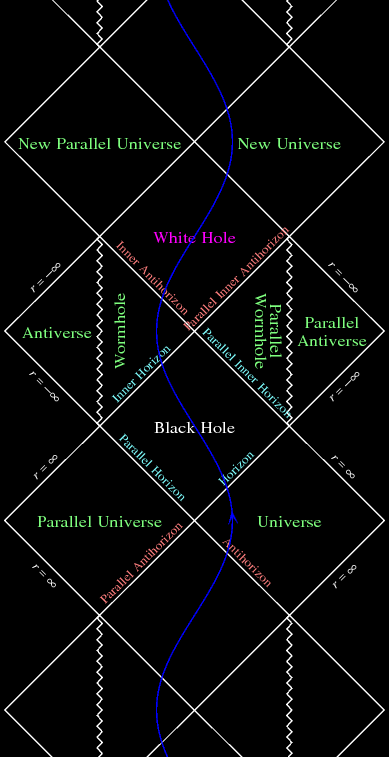
[…I]nside the dimension of space-time where both concepts apply in a generally uniform way there is a proportional relationship between them [time and space]. A certain space can be covered by energy moving in either particle or wave form in a certain time assuming a specific velocity virtually anywhere in the space-time universe. The relationship is neat and predictable. However, in the intermediate dimensions beyond time-space the limitations imposed on energy to put it into a state of oscillating motion are not uniform as they are in our physical universe. […A]ccess is opened to both the past and the future when the dimension of current time-space is left behind.
LTC McDonnell, pg. 14 (emphasis added)
The present author can no longer consider it a coincidence that in this time of all-pervasive “conspiracy theories” being advanced on both the far left and the far right of the political spectrum, a foreign social medial platform with a majority population of Generation Z youth is circulating a once-concealed U.S. government intelligence briefing which vindicates virtually every “fringe theory” pertaining to the existence of, and means of travel through, multiple concurrent (simultaneously occurring) dimensions of time and space.
This rise in the tide — this sea change — in what has been coined “the collective consciousness” appears to be the work of interdimensional agents the Third Wave of the Antimasonic Party of the decentralized autonomous organization of free-thinkers, truth-speakers, and light workers united, although Washington politicians assert that TikTok is a tool used by the Chinese Communist Party to surveil and control American citizens.
Source(s):
MEGAN SHEETS FOR DAILYMAIL.COM. TikTokkers discover declassified 1983 CIA report investigating if people can leave their physical bodies to travel through space and time using Gateway Experience’s low frequency sounds and relaxation techniques. Published: 16:26 EDT, 17 February 2021.
Article 2
Toeing the Party Line
By Antarah Crawley
NACOTCHTANK, OD — These positions (planks*) are hereby promulgated for acceptance to the general membership of the Third Wave Antimasonic Party of the United States, from the Village of Nacotchtank-on-Potomac, Ouachita District, which sits on the river bank east of the federal city of Washington:
Plank No. 1
The historical dialectic of Freemasonry is to be condemned, and individual freemasons should be invited to renounce their oaths and affiliations with the fraternity, but may otherwise be tolerated. Pan-Hellenism is to be likewise considered.
Plank No. 2
Everything which is concealed must be revealed.
Plank No. 3
Take no action unless sincerely moved by conscience and belief and such action is carried out in good faith. Therefore, unless there arises a compelling reason to take a certain action, no action should be taken.
Plank No. 4:
Party Boss System for Political Action Coalition
Individual natural people called regional and state bosses shall receive and disburse donations as trustees for the general membership (GM) of the party domiciled in a certain region or state. For example, if a party boss buys a building with donated funds then the building is held in trust for the benefit of the GM. The boss shall conduct the party’s finances on the advice and counsel of a majority of the GM. The GM shall also constitute the national nominating convention.
*Note
A “plank” is a main axiom of the party platform. See:
(last modified 2 Nov. 2023)
 Supreme Exchange