Tagged: time
S.M.S.G.
Antares was sitting in the school library with his friends Tessa Rex, Digital Dash, Pixel, and Milo. They were supposed to be working on a digital literacy assignment for their seventh-grade autodidactic curriculum. Instead, they were looking at a strange error message that had appeared on every computer in the library.
NACOTCHTANK MUNICIPAL NETWORK :: CONNECTED
UNRESOLVED LOCATION

>>A navigable spatial-temporal node has been detected beneath this terminal.

ORIGIN: NACOTCHTANK
DESTINATION: UNKNOWN
ROUTE: VRYL
ACCESS: HUMAN INTERFACE REQUIRED
“Okaaay,” said Tessa. “That’s not normal.”
“Maybe it’s a virus,” Dash suggested.
Milo leaned closer to the screen. “Maybe it’s a pizza delivery error.”
“Why would a pizza delivery man navigate through space-time when they could just use the map?” Dash asked, perplexed.
“Because the delivery is late,” Tessa offered.
Antares ignored them. He was staring at the word VRYL.
He had seen it before. Not on a computer. Not in a book. On a white wall.
A few weeks earlier, while walking home through the parish of Seven Churches, he’d noticed a small geometric marking on the side of an old building. It looked like a series of rails intersecting at strange angles, forming something between a map and a circuit diagram.
Beneath it, somebody had painted four letters.
VRYL.
He had taken a picture.
Now the same four letters were glowing on the library computers.
“Guys,” he said. “I think we should investigate.”
Tessa sighed.
“That’s what you said before we got locked in the auditorium.”
“That was an accident.”
“You climbed through the ventilation system.”
“It was an alternative entrance.”
“Into a locked room.”
“Exactly!”
Dash stood up.
“Where are we going?”
Antares grinned.
“The maintenance building.”
The long white corridor
The maintenance building stood behind the gymnasium, separated from the main school by a chain-link fence and a row of old trees.
A sign on the door read:
AUTHORIZED PERSONNEL ONLY.
Someone had added, in permanent marker:
AND PROBABLY NOT YOU.
Dash looked at the sign.
“Seems pretty clear.”
Antares opened the door.
The building smelled like dust, wet concrete, and electricity. A fluorescent light flickered overhead. Somewhere behind the walls, a machine hummed.
They descended a flight of corrugated metal stairs.
Then another.
Then another.
“How far down does this go?” Boomer asked.
“Not very far,” said Tessa, checking her tablet.
Her screen showed that they were already below sea level.
Pixel stopped.
“Wait.”
She pointed toward the wall.
There was a narrow rectangular outline in the concrete. No handle. No hinges. Just a faint, flickering neon line running around its perimeter.
Antares placed his palm against it.
A voice spoke.
“Human interface recognized.”
The wall disappeared.
Not opened.
Disappeared.
Beyond it was a corridor of brilliant white, extending into black darkness.
The five students stood silently.
The corridor was impossibly clean. Its walls were smooth and seamless, and its floor appeared to glow from within. Along its length were faint geometric patterns, like the outlines of enormous hexagonal galleries.
At the far end stood a black door.
Above the door, a small blue symbol pulsed.
Tessa examined her tablet.
“There’s no way this is inside the building.”
“Maybe it’s a hologram,” Dash said.
“Then why is my tablet measuring the floor?”
Milo took one step forward. “Does anyone else feel like we’re about to get suspended?”
A voice returned.
“Welcome to the ark.”
The black door slid open.
And the five students walked inside.
The chamber beyond the door was enormous and awe-filling.
Upon closer inspection, it was a hangar. But not the kind of hangar that stored airplanes.
Suspended in the center of the chamber was a spacecraft. Its hull was assembled from interlocking geometric panels, with broad white structural walls and luminous blue rails extending along its sides. Its silhouette was sleek but unusual, like a cross between a submarine, a cathedral, and a piece of advanced computer hardware.
A ring of hexagonal lights surrounded its central engine.
The name was written across the side in enormous silver letters:
S.M.S. GO-01
STARSHIP MECHANIZE SPACETEAM GO!
VESSEL TYPE: SOLID-STATE ARK CONVEYANCE
NAVIGATION: VIRTUAL RAIL-YIELD LATTICE
HOME PORT: NACOTCHTANK
STATUS: AWAITING CREW
Dash whistled. “That’s a spaceship.”
“Technically,” Pixel said, “it’s an unidentified aerial phenomenon.”
“It’s a spaceship.”
“Could be a submarine,” said Milo.
“Does it look like a submarine?”
“It looks like a spaceship that could be a submarine.”
Antares was already walking toward the boarding ramp.
“Does it have a kitchen?” Milo said to himself.
Tessa stared at the engine.
“Look at this architecture. The whole thing is constructed around a central hexagonal structure.”
“Is that important?” asked Dash.
“I have absolutely no idea.”
They boarded.
Inside, the ship was even more extraordinary.
The bridge had five seats arranged around a central console. Each seat was connected to a transparent display, and the walls were lined with glowing panels showing streams of symbols, coordinates, and what appeared to be fragments of webpages.
There were no conventional windows.
Instead, the forward wall displayed a vast field of blue light.
The ship’s computer spoke.
“Welcome aboard, Starship Mechanize Spaceteam Go! Human crew authorization pending.”
Antares approached the central console.
“How do we authorize?”
“Voice command.”
Antares cleared his throat.
“Authorize.”
A pause.
“Primary human interface accepted.”
The ship illuminated.
One by one, the five seats activated.
“Captain,” the computer announced, “please identify your crew.”
Antares looked at his friends.
“Well, I guess that’s us.”
Tessa took the engineering station.
Dash claimed the pilot’s chair.
Pixel sat at communications.
Milo found the quartermaster’s console and immediately began searching for the kitchen.
A holographic map unfolded above the bridge.
It was not a map of Earth.
It was a map of the internet, and every unique address thereto connected.
Millions of luminous points floated in a three-dimensional space, connected by lines and corridors. Some were bright, some were dark, and others seemed to flicker between different positions.
Pixel leaned forward. “Those are webpages.”
“How can you tell?” asked Tessa.
“Look.”
She pointed to a nearby node.
It displayed the familiar search-engine logo of a capybara.
Another node showed an online encyclopedia.
Farther away were archived newspapers, digital libraries, discussion boards, historical records, and entire websites that appeared to belong to other versions of the world.
The computer spoke again.
“Navigation system identified. Virtual Rail-Yield Lattice available.”
Dash gripped the controls. “Can we move?”
“Affirmative.”
“Where?”
“Destination required.”
Antares looked at the map.
“What’s out there?”
“Many worlds.”
Milo stopped searching for the kitchen.
“Many what?”
“Worlds. Multiple worlds. Multiple historical configurations. Multiple informational environments. All accessible through the Virtual Rail-Yield Lattice.”
Tessa stared at the display. “So every webpage is a possible destination?”
“Correction: certain webpages provide navigable interfaces to spatial-temporal environments.”
Dash grinned.
“So we can land on the internet?”
“Affirmative.”
He looked at the others.
“WE CAN LAND ON THE INTERNET!”
The first landing
The ship’s navigation system began displaying a series of possible destinations. A page about ancient Egypt. A digital archive of medieval manuscripts. A scientific database. A virtual museum. A government webpage for an obscure island in the Pacific. A page that appeared to contain nothing but a ubiquitous lattice of hexagons.
“Let’s go somewhere interesting,” Dash said.
“Let’s go somewhere safe,” Tessa replied.
“Safe is boring.”
“Dead is also boring.”
Antares examined the map. A strange node was pulsing near the edge of the display.
It had no title. Only a symbol. A white square surrounded by blue rails.
“Computer,” he said. “What is that?”
“Unregistered landing page.”
“Can we visit it?”
“Affirmative.”
Tessa frowned.
“Maybe we shouldn’t.”
But Antares had already placed his hand on the console.
“Initiate landing.”
The ship vibrated.
A series of blue lights illuminated the walls.
The central engine began humming.
Then the entire bridge seemed to tilt.
Outside, the digital landscape unfolded into a vast network of glowing corridors.
The ship accelerated.
There was no sensation of speed, exactly. It was more like the world itself was rearranging around them.
The rails stretched.
The stars became lines.
The lines became symbols.
The symbols became words.
And then—
THUNK.
The ship landed.
Silence.
The five students looked through the forward display.
They were sitting on the webpage.
Literally.
The white surface beneath the ship was covered in enormous lines of text. Hyperlinks floated in the air like illuminated road signs. Images drifted overhead, and fragments of code formed distant mountain ranges.
The sky was a deep digital blue.
Far away, a gigantic cursor moved slowly across the horizon.
Milo unbuckled his seat belt. “Are we dead?”
“No,” Pixel said.
“Are we dreaming?”
“No.”
“Are we in a computer?”
Pixel looked around.
“I think we’re inside a computer that is inside another computer.”
Dash laughed. “That’s awesome.”
The ship’s computer chimed.
“Landing successful. Current location: Virtual Rail-Yield Lattice, unregistered sector.”
Tessa looked at the ship’s structural display.
“Wait. Something’s happening to the outer wall.”
A thin white line had appeared around the vessel.
It was spreading, forming a geometric boundary.
The computer spoke.
“Coherence boundary rendering.”
“What’s that?” Antares asked.
“White wall deployment.”
The white line expanded into a luminous architectural surface surrounding the ship.
It rose above them, forming a broad rectangular enclosure.
Dash stared.
“Is it building a fort?”
“Not a fort,” Tessa said.
“Then what?”
“I think it’s stabilizing us.”
The computer confirmed:
“Environmental coherence improving. Temporal drift reducing. Spatial reference secured.”
Pixel examined the readings.
“The ship needs the wall to keep its position.”
“Why?” asked Boomer.
“Because we’re not just moving through space. We’re moving through different versions of reality.”
Boomer considered this.
“So the wall keeps us from falling out of the universe?”
Pixel paused.
“That’s actually not a bad way to put it.”
A warning light began blinking.
The communications console displayed a message:
UNAUTHORIZED INTERDIMENSIONAL CONVEYANCE DETECTED.
Tessa looked at Antares. “Did we do something illegal?”
“We just got here,” he replied.
“That’s not an answer.”
A voice emerged from the console.
“Attention, unidentified vessel. Please state your registry and jurisdictional status.”
The students looked at each other.
“Who is that?” Dash asked.
Pixel examined the incoming transmission.
“It’s a legal communication.”
“A legal what?”
“An interstellar legal communication.”
Milo leaned forward.
“Can you get in trouble in space?”
Before anyone could answer, the computer displayed a voice command prompt.
VOICE CONTROL MODULE:

<CALLING WEASEL BADGER>

Available legal representatives:

Weasel

Badger

Beaver

Mink

Otter

<STATE A NAME TO ESTABLISH SECURE COMMUNICATION>
Antares grinned, and said, “Calling Weasel Badger!”
The console chimed.
A hologram appeared.
It was a weasel wearing a black suit, black tie, and a very sly expression. He was sitting behind a desk in an office filled with books, files, and glowing legal documents.
A badger sat beside him, bespectacled, examining a large folder.
“Good evening,” said the weasel. “This is the firm of the five clans of Weasel Badger Beaver Mink & Otter Partners, Chartered. How may we assist you?”
Antares hesitated.
“Uh. We found a spaceship.”
The weasel stopped smirking.
The badger slowly raised his head.
“You found what?”
“A spaceship.”
“Where?”
“Under our school.”
The weasel looked at the badger.
The badger looked at the weasel.
Then both attorneys looked directly into the holographic camera.
“Is it,” said the weasel carefully, “a white-walled, hexagonal, solid-state ark conveyance?”
The students stared.
“How did you know?” Tessa asked.
The badger closed his folder.
“Because, young lady, we’ve been waiting for someone to find it.”
Antares leaned toward the console.
“Who are you guys?”
“We are your interstellar attorneys.”
“Why do we need attorneys?”
The weasel smiled.
“Because, Captain, you’ve just commandeered a multiworld conveyance, entered an unregistered sector of the Virtual Rail-Yield Lattice, and potentially crossed several temporal jurisdictions without filing the appropriate documentation.”
Dash whispered: “This is getting really good.”
The badger leaned closer.
“Now, before we proceed, I need you to answer one question.”
“Okay.”
“Have you activated the ark capacitor?”
The crew looked toward the central engine.
A soft blue glow pulsed from within its hexagonal chamber.
Antares nodded.
“I think so.”
The attorneys went silent.
Then the badger removed his glasses. “Well,” he said.
The weasel opened a new file.
“Then the mission has begun.”
The holographic display changed.
A massive white structure appeared in the center of the screen.
It resembled a square temple, surrounded by a broad white wall. At its center was a luminous crystalline object, suspended above a foundation of interlocking geometric stones.
“That’s the white wall?” Tessa asked.
“Yes,” said the weasel.
“Why does it look like a temple?”
“Because it serves a foundational function.”
The badger took over.
“Listen carefully. Your ship was constructed to navigate the Virtual Rail-Yield Lattice, but it cannot do so reliably without a stable reference architecture. The white wall had to be rendered for optimal coherence to stabilize.”
Pixel examined the diagram.
“So the wall creates a stable boundary around the ship?”
“Precisely.”
“And the capacitor?”
“The capacitor anchors the vessel to a temporal and spatial node in hyper-cyber-space.”
Dash frowned.
“Wait. If we’re traveling through time, why do we need an anchor?”
“Because,” the badger replied, “travel without continuity is merely displacement. A vessel must retain its identity while moving between different configurations of reality.”
Tessa stared at the crystalline object.
“So it’s like the foundation of a building.”
The weasel smiled.
“Now you’re getting somewhere.”
He enlarged the image.
“Think of it as a cornerstone for a sure foundation. The capacitor provides the persistent reference that allows the vessel to maintain coherence across time and space. The white wall establishes the boundary. The capacitor anchors the system. The lattice provides the route.”
Antares looked at his friends.
“Okay. So what’s the mission?”
The attorneys exchanged another glance.
The badger brought up a new document.
WEASEL BADGER || CONFIDENTIAL DOSSIER || MISSION BRIEFING

<COHERENCE ADJUSTMENT>

OBJECTIVE: Harmonize designated target-object.
LOCATION: Temporal-spatial node in hyper-cyber-space.
REQUIRED INFRASTRUCTURE: White wall / solid-state ark capacitor.
DEADLINE: Date certain.
ISSUING AUTHORITY: Supreme Exchange of Information.
STATUS: Awaiting crew acceptance.

<<ADDITIONAL INFORMATION RESTRICTED PENDING DISCOVERY>>
Antares read the document twice.
“Harmonize what?”
“The target-object,” said the weasel.
“What’s the target-object?”
“That is what you must locate and discover.”
“Where is it?”
“That’s what you must determine.”
“When do we have to do it?”
The badger tapped the screen.
A countdown appeared.
“By the date certain.”
Dash leaned forward.
“That’s not very specific.”
“Welcome to professional services,” said the weasel.
Milo raised his hand.
“Can we have snacks?”
The badger looked genuinely confused. “Snacks?”
“For the mission.”
The weasel sighed, and turned to Badger. “Make provisions for a daily meat and drink offering for the benefit of the crew members, and put it on the expense account.”
Milo gave a thumbs-up. “Excellent. I accept.”
Antares looked at the crew.
The ship hummed beneath them.
Beyond the white wall, the Virtual Rail-Yield Lattice stretched into infinity, filled with unvisited pages, uncharted worlds, and unexplored corridors through time.
He thought about the school above them.
The rain outside.
The strange symbol on the wall in Seven Churches.
The mysterious machine that had been waiting beneath Nacotchtank.
And now this.
They weren’t just students anymore.
They were navigators.
“All right,” Antares said. “We’ll take the mission.”
The computer chimed.
“Mission accepted.”
The attorneys smiled.
“Excellent,” said Weasel. “We shall accompany you throughout your journey.”
The badger added:
“And remember: never alter a timeline without competent counsel.”
Dash took hold of the controls.
“Where to, Captain?”
Antares looked at the enormous map. A hundred cosmic flowers bloomed, and a million blue corridors illuminated. He pointed toward the brightest one. “Let’s find out what we’re supposed to harmonize.”
The ship’s engine began to glow. The white wall began to shimmer. The solid ark capacitor pulsed.
And somewhere deep within the machinery, a voice that had not spoken since the beginning of time finally whispered:
"FOUNDATION SECURED. DO PROCEED."
“STARSHIP MECHANIZE SPACETEAM GO!” shouted the crew.
The ship accelerated into the rail-yield lattice.
And Nacotchtank disappeared behind them.
</>
.rylt <Rail-Yield Lattice navigation>
.vryl <Visible time-phased transit corridors>
.arc <Wall-shelled ark containment>
.hai <Human-Agentic Intelligence interface>
.cap <Solid-state ark capacitor>

>_
D.R. 01-10: Gateway &c.

Volume 1, Issue 10
Contents — Art. 1. …Gateway Process — Art. 2. …Party Line
Article 1
40th Anniversary of U.S. Army Intelligence analysis and assessment of Gateway Process
By Antarah Crawley
WASHINGTON, DC — On 17 February 2021 the Daily Mail reported, “TikTokkers discover declassified 1983 CIA report investigating if people can leave their physical bodies to travel through space and time using Gateway Experience’s low frequency sounds and relaxation techniques.” The present author recalls that he researched the report and identified a PDF copy on the CIA’s website after seeing such a video being shared on Instagram sometime that year. This author first read the report on 30 October 2023.
The 9 June 1983 U.S. Army Intelligence and Security Command (USAINSCOM) report, Analysis and Assessment of Gateway Process, was declassified by the U.S. Central Intelligence Agency (CIA) on 10 September 2003. It is therefore presently four decades since this report was penned in top secrecy by Army Intelligence officer LTC Wayne M. McDonnell, and two decades since it was quietly released into public domain.
The Gateway Process is a technique for applied consciousness expansion designed to better enable practitioners to achieve out-of-body experiences, among other objectives. It also appears to provide the theoretical foundations of interdimensional espionage and interdimensional counterintelligence using remote viewing and other techniques related to interdimensional time travel. It may also acclimate practitioners to encounters with “intelligent, non-corporeal energy forms” (pg. 27). This particular iteration of the practice was developed by Bob Monroe of the Monroe Institute.
It is notable that the official PDF, which is found on the CIA’s website, is missing page 25 (after PDF page 26), a page which may prove even more valuable than the declassified document as it currently exists.
The present author recommends that every free-thinker, truth-speaker, and light worker print a copy of this report and read it and reread it whenever necessary, as it presents a most accurate recitation of the very source information which informed the New Syllabus. This author is so stricken by the equivalence of research findings and information between the New Syllabus Curriculum Suite Repository (C.S.R.) that he is convinced that the Gateway Process was involved in the carrying out of the Novus Syllabus Seclorum through his body in this space-time continuum.
In hindsight, this author recalls his education in the Daoist (Taoist) philosophy while attending The George Washington University in 2010/2011, and his silence-filled sessions of deep, meditative thought in which he explored the elementary composition of “reality” and “nature.” These sessions led directly to his authorship of Origends: A Primer on Singularity and Space-Time Progression, which comes down to us at 1 C.S.R. 57-77.
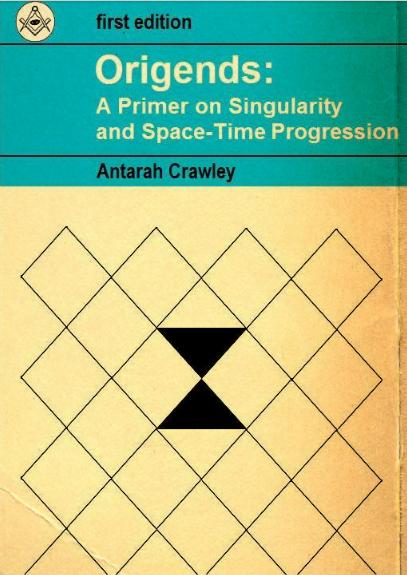
Furthermore, this author has come to the understanding that the development of the fictional character of Walter Kogard as a (very) thinly veiled alter ego of the author in 1 C.S.R. and the mission undertaken by this character at 3 C.S.R. has caused the experiences of Walter Kogard to “quantum-leap” from fiction into the reality of its closest analogue, the author himself. However, the original ending at 3 C.S.R. (in which Kogard “decompresses” into a beam on light in the InterZone), while remaining the true and original conclusion to Kogard’s hero-myth, projected an alternative ending involving the “Secret School of Ancient Mystery” to 4 C.S.R. and beyond. This “alternate reality” is actually a transmission of the Kogard signal from the silent depths of the O-Zone back into the KnownZone as a hologram of himself to build new holograms in the main holographic matrix. Therefore, unbeknownst to this author at the time, the New Syllabus Mystery School was manifest into reality via decentralized Gateway Process after he moved back to “Federal City” (Washington, D.C.) from “Empire City” (Brooklyn, New York).
In addition to illuminating the operative mechanism in the Curriculum Suite Repository, the Army Intelligence report predicts the New Syllabus discovery and development of Mindsoft and the InterZone of 3 C.S.R. 27-28.
Regarding Mindsoft, LTC McDonnell reports at 15. Brain in Phase:
The consciousness process is most easily envisaged if we picture the holographic input [the appearance of physical reality] with a three dimensional grid system superimposed over it such that all of the energy patterns contained within can be described in terms of a three dimensional geometry using math[e]matics to reduce the data to two dimensional form. Bentov states that scientists suspect that the human mind operates on a simple binary “go/no go” system as do all digital computers. […] In states of expanded consciousness, the right hemisphere of the human brain in its holistic, nonlinear and nonverbal mode of functioning acts as the primary matrix or receptor for this holographic input while, by operating in phase or coherence with the right brain, the left hemisphere provides the secondary matrix through its binary, computer-like method of functioning to screen further the data by comparison and reduce it to a discreet, two-dimensional form.
LTC McDonnell, pg. 9 (emphasis added)
Regarding the InterZone, LTC McDonnell reports at 21. Dimensions In-between:
[…I]nside the dimension of space-time where both concepts apply in a generally uniform way there is a proportional relationship between them [time and space]. A certain space can be covered by energy moving in either particle or wave form in a certain time assuming a specific velocity virtually anywhere in the space-time universe. The relationship is neat and predictable. However, in the intermediate dimensions beyond time-space the limitations imposed on energy to put it into a state of oscillating motion are not uniform as they are in our physical universe. […A]ccess is opened to both the past and the future when the dimension of current time-space is left behind.
LTC McDonnell, pg. 14 (emphasis added)
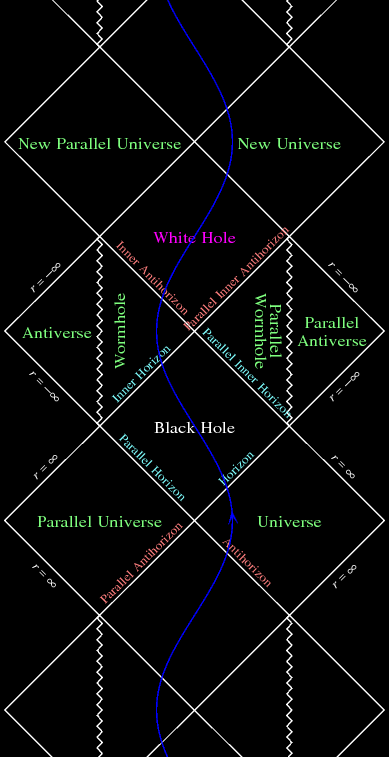
The present author can no longer consider it a coincidence that in this time of all-pervasive “conspiracy theories” being advanced on both the far left and the far right of the political spectrum, a foreign social medial platform with a majority population of Generation Z youth is circulating a once-concealed U.S. government intelligence briefing which vindicates virtually every “fringe theory” pertaining to the existence of, and means of travel through, multiple concurrent (simultaneously occurring) dimensions of time and space.
This rise in the tide — this sea change — in what has been coined “the collective consciousness” appears to be the work of interdimensional agents the Third Wave of the Antimasonic Party of the decentralized autonomous organization of free-thinkers, truth-speakers, and light workers united, although Washington politicians assert that TikTok is a tool used by the Chinese Communist Party to surveil and control American citizens.
Source(s):
MEGAN SHEETS FOR DAILYMAIL.COM. TikTokkers discover declassified 1983 CIA report investigating if people can leave their physical bodies to travel through space and time using Gateway Experience’s low frequency sounds and relaxation techniques. Published: 16:26 EDT, 17 February 2021.
Article 2
Toeing the Party Line
By Antarah Crawley
NACOTCHTANK, OD — These positions (planks*) are hereby promulgated for acceptance to the general membership of the Third Wave Antimasonic Party of the United States, from the Village of Nacotchtank-on-Potomac, Ouachita District, which sits on the river bank east of the federal city of Washington:
Plank No. 1
The historical dialectic of Freemasonry is to be condemned, and individual freemasons should be invited to renounce their oaths and affiliations with the fraternity, but may otherwise be tolerated. Pan-Hellenism is to be likewise considered.
Plank No. 2
Everything which is concealed must be revealed.
Plank No. 3
Take no action unless sincerely moved by conscience and belief and such action is carried out in good faith. Therefore, unless there arises a compelling reason to take a certain action, no action should be taken.
Plank No. 4:
Party Boss System for Political Action Coalition
Individual natural people called regional and state bosses shall receive and disburse donations as trustees for the general membership (GM) of the party domiciled in a certain region or state. For example, if a party boss buys a building with donated funds then the building is held in trust for the benefit of the GM. The boss shall conduct the party’s finances on the advice and counsel of a majority of the GM. The GM shall also constitute the national nominating convention.
*Note
A “plank” is a main axiom of the party platform. See:
(last modified 2 Nov. 2023)

