Category: Mind Software
Art¢oin:\>_Blockchain
PLEASE READ: HERE BEGINS THE VERIFIED RECORD OF $ARTCOIN NON-FUNGIBLE TOKEN (NFT) REAL STOCK ($) AND SHARE HOLDINGS (¢) (HEREAFTER JOINTLY AND SEVERALLY KNOWN AS THE “WORK”). THIS CONTRACT SHALL BIND THE BUYERS AND SELLERS OF THE WORK AND SHALL RUN WITH EVERY INDIVIDUAL WORK OF $ARTCOIN. ALL PRICES SUBJECT TO CHANGE.
| Column 1 | Column 2 | Column 3 | Column 4 | Column 5 | Column 6 | Column 7 |
|---|---|---|---|---|---|---|
| Number | Name | Material | Diameter | Dimension | List Price | Holding |
| 1 | MERIPTAH | CU | 1-1/2″ | 18 GA. | ₿1.0 /=$/ETH | 100% A. D. |
| 2 | TENNEN | CU | 3/4″ | 18 GA. | U. | D. |
| 3 | TENNEN | CU | 3/4″ | 18 GA. | U. | D. |
| 4 | YAHWEH | CU | 1-1/2″ | 18 GA. | $150 | 3/3/21 – S. TO @KONSHENSTHEMC |
| 5 | TENNEN | CU | 3/4″ | 18 GA. | U. | 7/17/21 – B. TO @CSRMXT |
| 6 | TENNEN | CU | 3/4″ | 18 GA. | U. | D. |
| 7 | TENNEN | CU | 3/4″ | 18 GA. | U. | D. |
| 8 | TENNEN | CU | 3/4″ | 18 GA. | U. | D. |
| 9 | SERQUET | CU | 1-1/4″ | 8 GA. | ₿0.01 /=$/ETH | 100% A. D. |
| 10 | TIYE | CU | 1-1/2″ | 8 GA. | ₿0.02 /=$/ETH | D. |
| 11 | YAHWEH-XAVIA | CU | 1-1/4″ | 8 GA. | ₿0.01 /=$/ETH | 100% A. D. |
| 12 | SERQUET | CU | 1-1/4″ | 8 GA. | ₿0.01 /=$/ETH | 100% A. D. |
| 13 | PTAH-TENNEN | CU | 1-1/2″ | 8 GA. | $200 | 11/5/21 – S. TO A. WOODLAND |
| 14 | MOSES | CU | 1-1/4″ | 8 GA. | U. | 10/5/21 – B. TO I. B. CRAWLEY |
| 15 | TIYE-TENNEN | CU | 1-1/2″ | 8 GA. | $200 | 11/5/21 – S. TO A. WOODLAND |
| 16 | YOD-TETRAGRAMMATON | CU | 1-1/4″ | 8 GA. | $150 (V.) | 8/9/21 – S. TO @CSRMXT |
| 17 | AUSET-NEKHBET | CU | 1-1/2″ | 8 GA. | U. | B. TO W. S. FRANKLIN |
| 18 | PTAH-TENNEN | CU | 1-1/2″ | 8 GA. | U. | B. TO A. A. CRAWLEY |
| 19 | NEKHBET | CU | 1-1/4″ | 10 GA. | ₿0.01 /=$/ETH | 100% A. |
| 20 | WADJET | CU | 1-1/4″ | 10 GA. | ₿0.02 /=$/ETH | 100% A. |
| 21 | YAHWEH | CU | 1-1/4″ | 10 GA. | ₿0.01 /=$/ETH | 100% A. |
| 22 | YAHWEH | CU | 1-1/4″ | 10 GA. | U. | 4/8/21 – B. TO A. I. CRAWLEY |
| 23 | DHTI | CU | 1-1/4″ | 10 GA. | $200 | 11/5/21 – S. TO A. WOODLAND |
| 24 | DHTI | CU | 1-1/4″ | 10 GA. | U. | D. |
| 25 | GEB | CU | 1-1/4″ | 10 GA. | U. | D. |
| 26 | MOSES | CU | 1-1/4″ | 10 GA. | $350 | 4/6/21 – S. TO @MALAESOTERIC |
| 27 | HERU | CU | 1-1/4″ | 10 GA. | U. | D. |
| 28 | FREEDOM-DOUGLASS | CU | 1-1/2″ | 10 GA. | U. | 5/10/21 – B. TO I. B. CRAWLEY |
| 29 | FREEDOM-DOUGLASS | CU | 1-1/2″ | 10 GA. | $350 | 7/17/21 – S. TO @CSRMXT |
| 30 | FREEDOM-MOSES | CU | 1-1/2″ | 10 GA. | $200 | 7/5/21 – S. TO @CSRMXT |
| 31 | JAQUES 1 | CU | 1-1/2″ | 10 GA. | ₿0.01 /=$/ETH | 100% A. D. |
| 32 | JAQUES 1 | CU | 1-1/2″ | 10 GA. | ₿0.05 /=$/ETH | 100% A. D. |
| 33 | O.E.S. TYKE | CU | 1-1/2″ | 10 GA. | U. | 5/10/21 – B. TO J. FRANKLIN |
| 34 | 1957 CRAWLEY | CU | 1-1/2″ | 10 GA. | U. | 4/24/21 – B. TO A. G. CRAWLEY |
| 35 | BARON-SANMJI-MANMAN-BRIJIT | CU | 1-1/2″ | 10 GA. | View Listing | 100% A. |
| 36 | FREI MAUREREI | CU | 1-1/2″ | 10 GA. | ₿0.05 /=$/ETH | 100% A. D. |
| 37 | AKHENATON | CU | 1-1/2″ | 3 MM (1 OZ.) | ₿0.05 /=$/ETH | 100% A. D. |
| 38 | FREEDOM-DOUGLASS | CU | 1-1/2″ | 3 MM (1 OZ.) | View Listing | 100% A. |
| 39 | SILVER FALCON | AG (999) | 1-1/2″ | 1 OZ. | ₿0.1 /=$/ETH | 100% A. D. |
| 40 | QADOSH ELYHWH-COLTRANE | CU | 1-1/2″ | 3 MM (1 OZ.) | ₿0.1 /=$/ETH | 100% A. D. |
| 41 | ALL PRAISE-COLTRANE | AG (999) | 1-1/2″ | 3 MM (1 OZ.) | ₿1.0 /=$/ETH | 100% A. D. |
| 42 | SIC SEMPER | AG(999) | 1-1/2″ | 1 OZ. | $200 | 7/5/21 – S. TO @CSRMXT |
| 43 | FREEDOM-MOSES | AG (999) | 1-1/2″ | 1 OZ. | ₿1.0 /=$/ETH | 100% A. D. |
| 44 | ANYAH-AUSET | CU | 1-1/4″ | 10 GA. | U. | U. |
| 45 | SILVER FALCON-RFK STADIUM | AG (999) | 1-1/2″ | 1 OZ. | ₿1.0 /=$/ETH | 100% A. D. |
| 46 | ONE PTAH | AG (999) | ~1 | >1 OZ. | — | — |
BINDING AGREEMENT For Transfer of Non-Fungible Token (NFT) $ART coin (“Art¢oin”) from Scribe Antarah A. Crawley (the “Artist”) to Collector and/or from Collector to Collector. The Artist (the “party of the first part”) and the Collector (the “party of the second part” and/or the “party of the first part” in the case of a third-party sale or transfer) shall be bound by the covenants contained herein. All covenants contained herein do attach and run with the Work and shall be binding upon all transferees. Buyers shall remit all payments to $AntarahCrawley or 0x9030514aA808E54144308270D8F1f2c9c85b9d93 (ETH); D6YCKKYaHk6QQz2PnHq2HumgbLMNMPkMXF (DOGE); bc1qvtkuyvkp4wx55uypfn2ufu9jtcne5mxz0ylk96 (BTC) or another designated account receivable.
WHEREAS The Work is being sold to Collector and Collector is willing to purchase the Work, subject to mutual obligations, covenants, and conditions herein; and WHEREAS Collector and Artist recognize that the value of the Work, unlike that of any ordinary chattel, is and will be affected by each and every other work of art the Artist has created and will hereafter create; and WHEREAS the parties expect the value of the Work to increase hereafter; and WHEREAS Collector and Artist recognize that it is fitting and proper that Artist participate in any appreciated value which may thus be created in the Work; and NOW, THEREFORE, in consideration of the foregoing premises and the mutual covenants hereinafter set forth and other valuable considerations the parties hereto agree as follows:
PURCHASE AND SALE. ARTICLE 1. The Collector is purchasing the Work subject to all the covenants herein set forth for the price of, or at the agreed valuation for the purposes of this agreement of, [LIST PRICE] per [#]/100 share(s), where 1 $ART coin = 100 shares of $ART coin NFT stock.
FUTURE TRANSFERS. ARTICLE 2. Collector covenants that in the event Collector shall hereafter sell, give, grant, barter, exchange, assign, transfer, convey or alienate the Work in any manner whatsoever or if the Work shall pass by inheritance or bequest or by operation of law, or if the Work shall be destroyed and insurance proceeds paid therefor, Collector or Collector’s personal representative shall: (a) file a current TRANSFER AGREEMENT AND RECORD in the form and containing the information set forth and called for in the specimen hereunto annexed and made a part hereof, completed and dated, and subscribed by Collector or Collector’s personal representative and Collector’s transferee, with the Artist at the address set forth above (or the Artist’s designated representative) within thirty days of such transfer, distribution, or payment of insurance proceeds, and shall (b) pay a sum equal to eighteen percent (18%) of the Appreciated Value (as hereinafter defined), if any, occasioned by such transfer or distribution or payment of insurance proceeds to the Artist at the address set forth above (or the Artist’s designated representative) within thirty days of such transfer, distribution, or payment of insurance proceeds.
PRICE/VALUE. ARTICLE 3. The “price or value” to be entered on a TRANSFER AGREEMENT AND RECORD shall be: (a) the actual selling price if the Work is sold for money; or (b) the money value of the consideration if the Work is bartered or exchanged for a valuable consideration; or (c) the fair market value of the Work if it is transferred in any other manner.
APPRECIATED VALUE. ARTICLE 4. “Appreciated Value” of the Work, for the purposes of this Agreement, shall be the increase, if any, in the value or price of the Work set forth in a current duly executed and filed TRANSFER AGREEMENT AND RECORD over the price or value set forth in the last prior duly executed and filed TRANSFER AGREEMENT AND RECORD, or, if there be no prior duly executed and filed TRANSFER AGREEMENT AND RECORD, over the price or value set forth in ARTICLE ONE herein. (a) In the event a current duly executed TRANSFER AGREEMENT AND RECORD is not timely filed as required by ARTICLE TWO herein, Appreciated Value shall nonetheless be computed as if such current TRANSFER AGREEMENT AND RECORD had been duly executed and filed, with a price or value set forth therein equal to the actual market value of the Work at the time of the current transfer or at the time of the discovery of such transfer.
TRANSFEREES TO RATIFY AGREEMENT. ARTICLE 5. Collector hereby covenants not to hereafter, sell, give, grant, barter, exchange, assign, transfer, convey or alienate the Work in any manner whatsoever or permit the Work to pass by inheritance or bequest or by operation of law to any person without procuring such transferee’s ratification and affirmation of all the terms of this Agreement and transferee’s agreement to be bound hereby and to perform and fulfill all the Collector’s covenants set forth herein, said ratification, affirmation and agreement to be evidenced by such transferee’s subscription of a current duly completed and filed TRANSFER AGREEMENT AND RECORD.
TRANSFEREES BOUND. ARTICLE 6. In the event the Work shall hereafter be transferred or otherwise alienated from Collector or Collector’s estate in any manner whatsoever, any transferee taking the Work with notice of this Agreement shall in every respect be bound and liable to perform and fulfill each and every covenant herein as if such transferee had duly made and subscribed a properly executed TRANSFER AGREEMENT AND RECORD in accordance with ARTICLE TWO and ARTICLE FIVE herein at the time the Work was transferred to him or her.
EXPIRATION. ARTICLE 7. This agreement and the covenants herein shall be binding upon the parties, their heirs, legatees, executors, administrators, assigns, transferees and all other successors in interest and the Collector’s covenants do attach and run with the Work and shall be binding to and until years after the deaths of Artist and Artist’s surviving spouse, if any.
WAIVERS NOT CONTINUING. ARTICLE 8. Any waiver by either party of any provision of this Agreement, or of any right hereunder, shall not be deemed a continuing waiver and shall not prevent or estop such party from thereafter enforcing such provision or right, and the failure of either party to insist in any one or more instances upon the strict performance of any of the terms or provisions of this Agreement by the other party shall not be construed as a waiver or relinquishment for the future of any such terms or provisions, but the same shall continue in full force and effect.
AMENDMENT IN WRITING. ARTICLE 9. This Agreement shall not be subject to amendment, modification, or termination, except in writing signed by both parties.
ATTORNEYS’ FEES. ARTICLE 10. In the event that either party shall hereafter bring any action upon any default in performance or observance of any covenant herein, the party aggrieved may recover reasonable attorneys’ fees in addition to whatever remedies may be available to him or her.
VENUE. ARTICLE 11. This agreement shall be governed by and construed in accordance with the laws of a venue of competent jurisdiction which may be in any region in which the parties reside and shall be binding upon and inure to the benefit of the respective executors, administrators, successors and assigns of the parties.
Block Verified by Scribe Antarah A. Crawley Meriptah 15 July 2021.
Art¢oin:\>_Theory and Methodology
Preamble
Each real Art¢oin (¢) is a serialized Non-Fungible Token (NFT) representing one hundred (100) shares in the art work-product of the Scribe Antarah Crawley (the “Artist”). Each share of each real Art¢oin is also called a Non-Fungible Token (NFT) or “token”. These tokens may be bought and sold on an exchange or on the free market just like any trading unit, whether it be art, gold, or Bitcoin. Acquisition of Art¢oin NFT shares represents acquisition of stock (or “shares”) in the entity (or “company”) constituted by the art work-product of the Artist, Scribe Antarah Crawley.
Appreciation in the value of the total volume of art work-product in circulation and on deposit represents an appreciation in the market value of the Company of the Artist, and shall inure to the benefit of its shareholders. One in possession of a share, or token, of the Company shall be de facto shareholder, however, each and every token should be exchanged under an “Agreement of Original Transfer of Work of Art” (or “contract”) establishing the rightful collector (or shareholder) together with a description and sale price of the subject art work, in pursuance of sound bookkeeping.
Value in Artwork
Art is work product that is valued for its unique qualities of scarcity and desirability. Such qualities are derived from many factors, including the person of the artist, the execution of the artist, the intention of the artist, the attention of the artist, the subject matter content of the work, the medium of the work, the lifetime of the work, and the effect upon the viewer, among many other factors. For these reasons, art made of materials worth literally nothing can fetch millions in exchange on the free market. In fact, digital non-material NFTs have sold for as much as $69 million at auction. Therefore art is a great asset that can hold and appreciate value like gold. Therefore it is a form of “hard money”.
Water Theory of Capital
1.0. There is a vast “sea” of value, represented by fluctuating wave-particles called “currency”.
1.1. When value flows freely in a “current” (through a market), then it is “liquid”. But when is it held up in an asset or other liability, then it is not liquid, because it cannot flow freely.
1.2. To get liquid currency from the “sea” to the “shore” where people use it to “work the fields” there must be river “banks” that conduct the liquid current “downstream”. Banks facilitate a capillary system whereby the value of the sea flows to the inland.
1.3. People irrigate new streams of income all the time. One must first identify a source of water, which is the market from which they will draw liquid. Then they must use tools to irrigate a stream to flow from the market to their place of business. These tools are means of production, with the resulting channel being the work-product which conducts the liquid currency to them. (It is worth noting that most institutional banks sit on naturally occurring rivers and bodies of water and are designed to be gatekeepers, or dams, to liquidity.)
2.0. An enterprise of any kind must float upon the sea of capital; for if it does not float, then it will become underwater.
2.1. This is to say that water a ship floats upon is good credit, but water that has gotten into the ship is bad debt that can sink the ship.
2.2. How shall the enterprise remain afloat? It is by and through good “leadership” and “stewardship” and “ownership” and “membership” as well as a firm league of “friendship”.
2.3. What, then, shall convey this company of ships down the river stream of income? It is by and through the ships’ “sales”.
The Liquidation and Circulation of Artwork
Considering the real and potential value of the art market, two important questions arise:
How can artists build liquidity into their work?
How can artists become art market makers?
Our Solution: back each unique work of art with something of intrinsic value in a form that can be readily circulated. The artist can increase the liquidity of their work by rendering their work in easy-to-trade units, or “trade units”, of art work. Of what should these units be made? We find that copper and other metals like silver and gold are much more liquid and valuable than canvas. The Artist can multiply the value of this base material by the work that the Artist inscribes upon it. The Artist can produce x art works per day, each one being a uniquely wrought and serialized unit of work: a non-fungible, or irreplaceable, token (an “NFT”). The craft production of NFTs organically controls the issuance and supply of such NFTs. With every sale, the value of the Artist’s work may appreciate. Smart contracts served via blockchain may enable artists to be paid dividends and royalties on all future transactions of the NFT. Thereby the Artist might become the market makers of certain art submarkets.
Blockchain Contracting
The contract for the transfer of a work of art may be decentralized from any physical location and operationalized without the physical meeting of the parties.
The contract itself may be a publicly available, pro-forma text which may be completed and submitted anywhere there is internet access. The contract binds the Collector to the Artist under clearly established terms for present and future transactions on the unique NFT artwork.
A Company of the Artist
By extension of such a blanket agreement executed between all parties in every sale, the parties establish a de facto company of the Artist in which all Collectors are shareholders holding company shares (the NFTs) that fluctuate according to the principles of the free market.
(Last modified 13 Apr. 21; 4 May 21; 10 May 21; 21 Sep 23)
The Memphite Creed
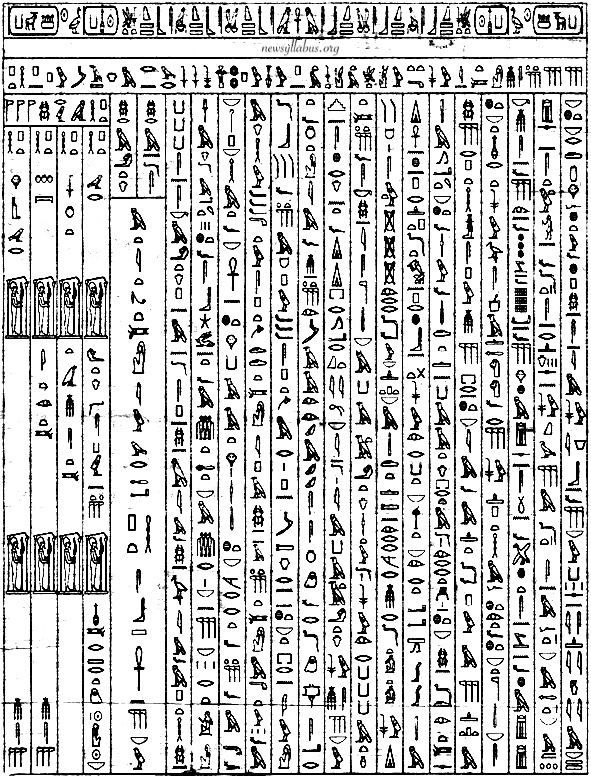
Qadosh Adonai Sebayot
Toward the profession of wisdom, to profess a love of wisdom, because wisdom is that which gives knowledge to practice, use of good judgment and upstanding righteousness;
To love wisdom is to do that which is good for the sake of its goodness, which is, to discern good from its opposite, to partake of the good and forsake the evil;
To know and commune with the divine living nature animating all matter in the universe;
Toward an objective, materialist language that does not multiply words, and which provides for every natural phenomenon a proper name;
Adoration to those of the School of Men Nefer, from whose wisdom all doctrine proceeds, for they first established this wisdom at the Nome of the White Wall, the place in which the north and south are united, the life of the Two Lands, enduring and beautiful.
Adoration to our Noble and Beloved Ancestors, who preserved this wisdom at Men Nefer, and at many nomes, and under many names*, that it would be neither lost nor wholly corrupted to those who had ears to hear and eyes to see, that it should be a testament of the antiquity of our learned society, and a witness to the glory of God the Material Universe, by whom all that was made was made, forever, world without end. Amen.
*Including our native Khemennu, Iunu, Waset, Djedu, Ipet-Isut, Akhenaton, Axum, Carthage, Timbuktu, Bantu-Kongo, Ife-Yoruba, Dogon, Akan, Barbary, Fez, Al’Maghreb Al’Aqsa, Olmexica, and beyond.
Instruction to the Aspirant to the School of Men Nefer
Behold, how good and how pleasant it is when friends assemble together in union. It is like when Heru and Set settled their conflict and united the Two Lands in the name of Tenen. The Two Lands of the North and South were united, as above, so below. Then our Ancestors ministered in the following of Heru who united the bicameral house of Ptah at the place of Men Nefer, the Life of the Two Lands, in which the North and South were united. Long ruled our Beloved Ancestors, United in the House of Ptah. Then they received their disciples into the Temple to learn them in the Ancient Doctrine. Whosoever may enter the Temple [of Self Knowledge], let them declare their innocence, that we may bear witness to their virtue, and judge them fit to study, according to their deeds.
[Place the right hand to the heart, and make a right angle with the left arm; place the feet together, then step the left foot forward] Hetep Ankh Udjab Seneb di maa’kheru Ma’at di.ef peret heru medu: Ur Ma’at Ur Ma’at. I have come now to speak, truly, bearing witness to my heart, that I have followed in the straight path in the practice of Ma’at, for I have Seven Virtues as valuable as fine jewels, which mark my character, and I will say them unto you:
[Place the left hand in the right hand and say] Friendship means to dwell together in union and extend a helping hand to those in need.
[Drop the left hand to the side and place the right hand over the heart and say] Love means to treat others as oneself; to extend good will toward all humanity.
[Place the right hand over the eyes and say] Truth means that which accords to reality; to vouchsafe your trust in the divine process of nature. [Now drop the right hand to the side and assume the tantric position of Adoration, extending the hands equidistantly, and recite:]
Ink ii em Hetep, I am one Who Comes In Peace, for Continentia (Temperance) means to exercise restraint; self-control, self-mastery; soundness of mind.
Ink Djedi, I am one Who Is Established, for Fortitudo (Fortitude) means to exercise courage and strength.
Ink Udjat Useer, I am one Who Seeth Clearly, for Prudentia (Prudence) means to exercise discernment; wisdom; Sophia; sapientia.
Ink Maa’khru, I am one Who Speaketh Truly, for Iustitia (Justice) means to exercise equity and righteousness; or that which concords with the law.
[Now bring the hands together over the heart and say] Wherefore, before thou, [O Honorable Scribe], I hereby swear to duly guard the Practice of Ma’at, and to do Ma’at on Earth, as it is in Heaven, in nomine Pater Noster Ptah Notjeru. Amen.
The Oath of Ma’at, to be sworn by the Aspirant before a scribe or other learned and pious officiator of the School of Men Nefer anywhere in the World. Axe.
Wherefore, Comrades, let us profess the doctrine of “Memphis” this day. Let us first proceed to the matter of Heru and Set, being the Mystery Drama on the origin of conflict and unity. Next let us turn to the Greater Mystery on the Work of Creation.
IN RE: HERU v. SET
A Proclamation
of the Unification of the North and South, the Two Lands, and their opposing parties, by Ptah Tjenen, the State Netjer, at Memphis, paraphrased from the Stone of Nesutbity Shabaka, by Scribe Antarah for a modern understanding in the West; toward an authority on the origin of Civil Government.
In the 25th Dynasty of Kemet (which is known as Ancient Egypt), Our Most Noble and Worshipful Ancestor His Majesty the King Shabaka found a text of his ancestors eaten with worms so that it was nearly illegible. Therefore His Majesty caused the text to be copied anew so that it became better than it had been before, in order that his name might endure as a work done by the son of Ra for his father Ptah Tjenen, and his monument last in the House of his father Ptah throughout eternity, so that he might live forever:
This is Ptah who is proclaimed by the great name Tjenen, who united this land of the South as King of Upper Egypt and this land of the Delta as King of Lower Kemet, and who indeed begat Atum who gave birth to Pesedjet (the Nine Netjeru).
After Atum begat Shu and Tefnut, Shu and Tefnut begat Geb and Nut who begat Ausar and Auset, and Set and Nebthet. Ausar was given his inheritance and he was installed as king of the Two Lands of Upper and Lower Kemet. But his brother Set contended against him, and caused him to drown the water. Aset and Nebthet looked out and witnessed his drowning. And Heru said to Aset and Nebthet,”Hurry, grasp him.” Aset and Nebthet said to Asar, “We come, we take you hence,” and they brought him to land. He entered the secret portals in the glory of the Lords of Eternity, in the steps of him who rises in the horizon, on the ways of Re at the Great Throne. He entered the palace and joined the gods of Tjenen Ptah, Lord of Years. Thus Asar came into the earth at the Royal Fortress, to the North of this land to which he had come.
Geb spoke to Djiahudi. Geb spoke to Aset. Aset caused Heru and Set to come and she said unto them, “Make peace. Life will be pleasant for you when the Two Lands are United.” Being that Heru and Set could not settle their dispute, they appealed their case to Djadjat (a tribunal).
Geb commanded Pesedjet to assemble before him. He judged between Heru and Set and he settled their litigation. Geb said to Set, ‘Go to the place where you were born,’ in Upper Kemet. And Geb said to Heru, ‘Go to the place where your father was drowned,’ in Lower Kemet.
Thus Geb installed Set as King of Upper Kemet in the South, at the place where he was born, in Su. And Geb made Heru King of Lower Kemet in the Delta, at the place where his father was drowned, which is the “Division-of-the-Two-Lands”.
And Geb said to Heru and Set, ‘I have separated you into Lower and Upper Kemet.’ Thus Heru stood over one region, and Set stood over one region. They made peace over the Two Lands at Ayan (opposite Cairo). That was the division of the Two Lands.
Then it seemed wrong to Geb that the portion of Heru was like the portion of Set (for Set has been rebuked for drowning his brother Asar). So Geb gave Heru his inheritance, for he is the son of his firstborn son. And Geb said to Pesedjet, “I have appointed Heru, the firstborn. To Him alone, the inheritance. To this heir, Heru, my inheritance.”
The reed of Upper Kemet and papyrus of Lower Kemet were placed in the double door of the House of Ptah, and Heru and Set were pacified and united. They fraternized so as to cease their disputes wherever they existed, being united in the House of Ptah, The ‘Balance of the Two Lands’ in which Upper and Lower Kemet were weighed.
And Heru stood over the land as the uniter of this land, proclaimed in the great name of Ptah, South-of-his-Wall, Lord of Eternity. Then sprouted the two crowns upon his head. He is Heru who arose as King of Upper and Lower Kemet, who united the Two Lands in the Nome of the White Wall, the place in which the Two Lands were united, at the City of Memphis, which our ancestors called Inebu Hedj Ankh Tawi Djed Swut Men Nefer.
The granary of Tjenen is the Great Throne of Memphis that gladdens the hearts of the gods who are in the House of Ptah, the mistress of all living things, through which the sustenance of the Two Lands is provided, owing to the fact that Asar was drowned in its waters. Then his son Heru arose as King of Upper Kemet, and as King of Lower Kemet, in the embrace of his father Asar and of the netjeru in front of him and behind him.
INSTRUCTION TO THE INITIATE
Behold, how good and how pleasant it is when friends assemble together in union. It is like when and settled their conflict and united the Heru Set Two Lands in the name of Tjenen, the great name of , who united this land of the South as King of Upper Kemet and this land of the Delta as King of Lower Kemet, and who indeed begat who Atum gave birth to (the Nine ).
[Place the right hand to the heart, and make a right angle with the left arm; place the feet together, then step the left foot forward] Hetep Ankh Udjab Seneb di maa’kheru Ma’at di.ef peret heru medu: Ur Ma’at Ur Ma’at. I have come now to speak, truly, bearing witness to my heart, that I have followed in the straight path in the practice of Ma’at, for I have Seven Virtues as valuable as fine jewels, which mark my character, and I will say them unto you:
[Place the left hand in the right hand and say] Friendship means to dwell together in union and extend a helping hand to those in need.
[Drop the left hand to the side and place the right hand over the heart and say] Love means to treat others as oneself, and to extend good will toward all humanity.
[Place the right hand over the eyes and say] Truth means that which accords to reality, and to vouchsafe your trust in the divine process of nature. [Now drop the right hand to the side and assume the tantric position of Adoration, extending the hands equidistantly, and recite:]
Ink ii em Hetep, I am one Who Comes In Peace, for Continentia (Temperance) means to exercise restraint; self-control, self-mastery, and soundness of mind.
Ink Djedi, I am one Who Is Established, for Fortitudo (Fortitude) means to exercise courage and strength.
Ink Udjat Useer, I am one Who Seeth Clearly, for Prudentia (Prudence) means to exercise discernment; wisdom; sophia (sapientia).
Ink Maa’khru, I am one Who Speaketh Truly, for Iustitia (Justice) means to exercise equity and righteousness; or that which concords with the law.
[Now bring the hands together over the heart and say] Wherefore, before thou, [O Honorable Scribe], I hereby swear to duly guard the Practice of Ma’at, and to do Ma’at on Earth, as it is in Heaven, in nomine Ptah NotjeruAmen
NOTES
In the Doctrine of Men Nefer, the gravitational, electromagnetic, strong and weak nuclear forces correspond to Amunanunet, Nunnunet, Kukkuket and Huhhuet in Khemennu, respectively. These forces are gathered by Ptah to produce Atum, that is, the Atom, via the word of Djiahudi. Atum then begets nine ensuing qualities which include the four states of matter (Shu Tefnut Geb Nut), the four principles of life (Asar Aset Set Nebthet), and the one divine living energy that tethers them (Ra-Heru) together in Pesedjet. This is the complete doctrine of our ancestors which was established at Men Nefer.
For a complete exegesis on the work of Ptah at Creation, see New Syllabus’s eSyllabus for Men Nefer Doctrine.
Human Programming
HUMAN CAPITAL RESOURCE DEVELOPMENT
What is the most valuable commodity in a capitalist system? Human labor. What is the most valuable asset in a capitalist system? Land and real estate? Wrong. It’s Human Intelligence. Why? Because it controls human labor. Therefore we aim to capitalize on the development of the human’s most valuable resource: intelligence.
What does Human Capital Development mean to us? It means: Develop Thought Control Program/Monitor or CP/M. In other words, you must develop self control to program and monitor your thoughts. How do we apply this method in practice? We actively program the mind software to develop and operate self DOS > control CTRL or C:\>_. The CTRL function enables you to state and execute commands CMD at the main root level.
Thought is a function of sense perception and cognitive behavior. We apply this cognitive function to facilitate human self development and improve a variety of soft skills and competencies including ethical, philosophical, social, political, and cultural consciousness. Competency development builds the capacity to act effectively and probe the facts to arrive at the truth of any matter in question. This method and practice is built upon a foundation of universal archetypes MAAT represented in the language MDU of nature NTR.
CULTURAL SOCIAL AND POLITICAL PROGRAMMING
We specialize in treating people affected by Black Identity Complex, which is one of the manifestations of Colored Person Syndrome Disorder, also known as Colored Person Stress Disorder or CPSD. CPSD manifests in people who are affected by a color of law, meaning the subjective and inequitable treatment of people with a certain complexion.
“Black” and “white” are colorable terms that purport to represent a person’s complexion, but do not. In fact, they represent a person’s social, economic and legal status. Therefore, our diagnosis finds that those who perceive themselves to be “black” lack objective knowledge of themself. This perception affects their socio-economic performance and leads to a Black Identity Crisis which perpetuates the perception of inequitable treatment. In our clinical practice we seek to resolve the psychological contradictions posed by colorable terminology and empower people living with CPSD by providing them access to information about themself. Our prognosis is to know yourself, and you will no longer be lacking in society.
People’s Philosophy Program
Sapientia No. 2

POLICY BUREAU SAPIENTIAL DOCUMENT NO. 002 – JULY 24, 2020
A BILL
To establish the historical continuity of light and liberty among colored people.
Be it adjudged by the Policy Bureau of the People’s Body Politic, That Freimaurerei, or free masonry, is the practice of design-build construction in earth, wood, and stone by a body politic of free and willing laborers. The first stone masons were led by the state vizier (high chancellor), the Overseer of the Work of Ra at Awnu (Heliopolis), Imhotep (He Comes In Peace), at the building of the Mer (pyramid) of Nesutbity (King) Djoser at Saqqarah in 2670-2650 B.C. (3rd Dynasty). These civil servants were employed in the work of the state (per ah).
SEC. 2. The term “mer”, represented by a triangle or pyramid-shaped metu neter, signifies the place of light and love, or, physically, a place where energy coagulates into a “spiritual fire”. It is said that the ancient builders of earth and stone mounds, or “meru”, were themselves called “mer” or “maur”, from whence the national epithet “Ta-meri”, land of love and light.
SEC. 3. It is known that the people of this black fertile land (Kemet), which is upon the Flesh of the Ka of Ra (Afu Ra Ka), came up from Napata (Nubia) which is in the place of the origin of Hapi (the Nile River). On the annual inundation of Hapi, the river fertilizes the soil of the black land to bring forth an abundant harvest, a tenth of which is offered to the Netjeru (Nature) in thanksgiving of the harvest cycle. The people came up from the “South”, which is the North insofar as the origin of the waters of creation, from whence issued the Netjeru, from whence issued humanity, on the Unification of the 36 nomes of the North and South at the First Dynasty under Nesutbity Menes (Narmer) circa 3150 B.C..
SEC. 4. Upon the destruction of Ta-meri, also known as Kemet, in 330 B.C., whence Alexander, Aristotle, and the Macedonian-Greek Imperium began the rape and pillage of the land and culture which would be “Egypt”, the nobility of Nubian-descendant natives migrated to the West of Africa, then sailed aloft to the Far West, also known as Al’Maghreb Al’Aqsa, to Al’Morocco (or Al’Mecca, or Olmexica) or Al’Merika, meaning “the land of the Ka of Meri” — America.
SEC. 5. It is known that between Nubia and America the Noble Meri, or Mauri, settled and peopled Ethiopia, Canaan (Palestine and Phoenicia), India, Australia, Eurasia; Tartary, Mongolia, Manchuria, Brittany Ireland Scotland Normandy Germany and Iberia. The Mauri begot people throughout these lands.
SEC. 6. There were, also, pale-skinned cave people who had lived in these lands according to strange custom, and, due to their isolation from the climate of “love”, regressed genetically from the dominant humanity. Thus when the dominant Meri contacted them again, they were wont for Maurish learning. Therefore, again, out of “love”, the Mari learned the northern pupils in institutions which came to be known as schools and lodges.
SEC. 7. The schools graduated nobler pale-skin people, who became a nobility unto themselves, and assumed a divine right of kingship like unto the ancient Pharaonic model propounded by the Mauri. Of the noble Mauri there was a class of very stable and established masters known as Djedi, from which root, “djed”, cometh the sign of the column. Yet others were a high priestly class called the Djyahudists, or Priests of Djahudi, from which cometh the appellation of that nation who all bare witness to the Lord, Yahudi. The students of these teachers, naturally, assumed their names.
SEC. 8. It is said that, since the beginning of these pale-skinned people, they were predisposed to war against the dominant humanity by their disposition of father Yaqob, or Jacob, also known as James, a brother of original humanity, who went astray for wont of power sometime before the Unification of the North and South. Yaqob progenated a league of nations and sent these children to the north where they incubated their bickering isolationist tendencies and recessive genetics for millennia, until they were sufficiently pathological enough to begin their assault on humanity in the first Intermediary Period of Kemet, thus beginning the World War which has not waned to this day.
SEC. 9. The warring and isolationist disposition of these pale northerners caused them to, over time, exploit the knowledge passed to them by the Mauri in order to — again — conquer the Mauri and rape their land, bodies, and culture, as was and is the trend of patriarchal hunter-gathering-herding societies of the European type. (Such a philosophy is summarized in the Judaic impetus for “dominion.” This is in contrast to the Moro-Kemetic philosophy of the union of opposing forces, or “smai-tawi.”) The wisdom got from the sack of the Greek and, later, Roman colonization of Kemet was largely lost at the fall of that Empire when the Arab/Ottomans predominated over the Holy Land, thus entering Europe into the “Dark Ages” until traveling Mauri make intellectual contact with them. These pale-skins then emerge from these “Dark Ages” with a newfound knowledge and sense of superiority.
SEC. 10. Ferdinand and Isabela claim to successfully expel the Mauri from Europe in 1492, thus symbolically beginning the great offense against the Maurish lands, peoples, and cultures from the East (Asia and Africa) to the West (the Americas). This sustained offense is called the Maafa. The Maafa was carried out by and through the kidnapping, bonding, and trade of Mauri and the exploitation of their natural resources in both Africa and the Americas (because these are the two major continents to which Mauri are the native and autochthonous populations).
SEC. 11. In the course of this war waged by Yaqob and his pale skinned minions, it was imperative to dispossessed the Mauri of their nobility in order to reduce them to chattel material for trade. This was done by the invention of the Aryan Model of Hellenophily by Karl Otfried Muller at the University of Gottingen in Germany in the 1820s. In contrast to the Ancient Model, which logically asserted that the Greek culture arose as a result of colonization (c. 1500 B.C.) by Egyptians and Phoenicians who had civilized the native inhabitants, the Aryan Model proposed, with baseless audacity, that there was not any continuity between “Egypt” and “Greece”.
SEC. 12. This basic assertion severs the lineage all colored people claim to the development of Greek philosophy and thought, which itself forms the sole foundation of Western European academic supremacy. Without the outpouring of essentially Ancient African thought into the Cradel of Western Civilization, the pale people can assert that all the colored people of the world new ignorant as monkeys and apt to be slaved.
SEC. 13. Whereas the Germans, in all their sophistication, (in addition to stealing and recapitulating ancient smai-tawian philosophy into Greek, Kantian, Hegelian and Marxist Dialectic) were the scholastic ruffians to deal the deathblow to King Kham-ur Ausar, Hiram Abiff, it is in the German language that we may perceive the linkage between the people whom the sun loved (Mauri, copper-colored people) and the ancient mound-builders of the world: a free people … a working people … a self-made people: A Maurerischen People.
SEC. 14. It behooves all colored people to study the philosophy which has served as the foundation of such essentially scholastic and ethical societies as the Freemasons, Oddfellows, and Rosicruicians, keeping in mind the perversity of their legion, because it was our Maurerische ancestors who first propounded it.
SEC. 15. In conclusion, true liberty is the freedom to roam and feely engage one’s body in labor in exchange for gainful wages. Let all those having competence and ability to do work come in and go out of the state house (per ah) in performance thereof according to all of the forms of their desire; for Love is the Law, Love under Will, to do Ma’at on Earth, as it is in Heaven. Amen.
Sapientia No. 1
POLICY BUREAU SAPIENTIAL DOCUMENT No. 001. JULY 19, 2020.
A BILL
To establish a moral and ethical philosophy.
Be it adjudged by the Policy Bureau of the People’s Body Politic, How good and how pleasant it is for friends to dwell together in union, when each extends a hand, embracing love and light, and speak truly of things on earth and in the hereafter; to visit the sick, relieve the distressed, bury the dead, and teach the youth. How odd it is in a world of wrong to do what is right. Therefore, the self-made man is said to be his own past master.
SEC. 2. Regarding the Constitution of the Self, these are the elements constituting the self, and their meanings:
- Soma: body; physic;
- Nous: reason; logos, intellect; conscious mind;
- Psyche: soul; heart; unconscious (ie the parts of the self of which the self is not conscious).
SEC. 3. The means, or method, by which the self applies abstract knowledge to practice is as follows:
Dialectic: (a) the process of making known what is unknown; (b) a philosophical method describing the discursive-rational-intuitive process by which oneself individualizes itself, which is to say, becomes aware of, or able to recognize, itself as an entity of and apart from its environs (mere animals being integrally a part of their environs without the self-awareness to chose otherwise). [See, SEC. 6]
SEC. 4. It is said, Great is Justice (Wr Maat); that is to say, of paramount importance is the concept of order, universal balance (harmony), cosmic regulation (of force-in-opposition), justice (justness), truth (materiality), truth-in-justice (equity), rectitude and moral uprightness (righteousness and good standing). Ma’at brings peace (hetep) and condemns crime (djayit) and evil (djut), for whosoever breaks the law (hepu) is punished (khsf). Surely that law is that which is articulated in truth (maa kheru). This is to say, the concept of Ma’at applies on:
- The universal level, in which it expresses the harmony of the elements and bodies as clearly established, each in its right place as an ordered whole;
- The political level, in which it expresses the pursuit of justice, equity, truth, and rightness in the dispensation of the law; and
- The individual level, in which it expresses the rules for living in concert with moral principles of balance, harmony, and the golden rule, for the most accomplished, useful and appropriate human actions are circumscribed in the cosmological order.
SEC. 5. Regarding the Rules of Ma’at which apply to the individual, There are Seven Ethical Virtues, marks of Noble character, rich in Value as fine Jewels. The first three are ecclesiastical (See, 1 Corinthians 13:13) and the last four are cardinal (See, Niomachean Ethic of Aristotle and Republic of Plato Book IV, 426–435, etc.). They are:
- Friendship, and Charity: to dwell together in union and extend a helping hand to those in need. Sign: hand in hand.
- Love, and Hope: to treat others as oneself; to maintain hope in humanity. Sign: heart in hand.
- Truth, and Faith: that which accords to reality; faith means to vouchsafe your trust in the process of divine nature. Sign: hand over eyes.
- Temperance, or continentia: to exercise restraint; self control, self mastery; soundness of mind. Sign: hotep (peace offering) [Ii em Htp, Who Comes In Peace]; and
- Fortitude, or fortitudo: to exercise courage and strength. Sign: djed (stabilizing column) [Djedi, Who Is Established].
- Prudence, or prudentia: to exercise discernment; wisdom; Sophia; sapientia. Sign: wudjat (eye of providence) [Useer, Who Seeth Clearly]; and
- Justice, or iustitia: to exercise equity and righteousness; or that which concords with the law. Sign: ma’at (ostrich plume) [Maa’khru, Who Speaketh Truth].
SEC. 6. Regarding the Ethical Virtues of Maat, and their application in practice, the “dianoetic virtue” of critical thought entails development and progress as a result of some kind of learning process. This is to say, virtue can be taught as a subject of instruction. A teacher may focus the students attention by using proverbs and maxims. This moral system constitutes a scholarly discipline. It is a pedagogy of teaching, complete with a methodology for learning, that is, for processing information.
dianoetic (ˌdaɪənəʊˈɛtɪk)
adj
- (Philosophy) of or relating to thought, esp to discursive reasoning rather than intuition.
- relating to the operation of the mind through logical rather than intuitive thought processes; intellectual activity.
- proceeding to a conclusion by reason or argument rather than intuition; (synonym) discursive.
- (Philosophy) the rational investigation of questions about existence and knowledge and ethics.
- (logical) capable of or reflecting the capability for correct and valid reasoning; “a logical mind”.
[from Greek dianoētikos, from dianoia the thinking process, an opinion, from dia- + noein to think]
SEC. 7. A method (tep-heseb) is an abstract model of the correct procedure to be performed with regard to any matter in question, which is to say, the best example for demonstrating a logical process, or any other intellectual procedure, with exactitude. The method takes into account the best, correct procedure. Method involves the right way. It is said that thoughtful speech teaches the ignorant about knowledge, science, and the method of eloquence (tches seba khem er rehk tep-heseb en medet neferet). A synonym is algorithm; or knowledge in practice. Furthermore it is said, stick to the facts; do not exaggerate. In the last analysis, what prevails is Ma’at. Only the will of almighty God, ruler of the universe, comes to pass. The wishes of human beings do not always come true. Therefore man proposes, and God disposes. The disposition of any matter of nature is with God; but it is wise to control oneself by moderating ones heart.
SEC. 8. The body of god (netjer), whose members are all gods (netjeru), is like the body of the king (nesubity), whose members are an assembly of the bodies assembled therein. Now when the King — life prosperity and health (ankh wudja seneb) be upon him — assembles towns into districts and districts into nomes and nomes of the south with those of the north into one federation, its is like the great god who created himself out of the one who preceded him (Nun), and fashioned for himself his own members. The self-created god (kheper djesef) dwells in and over the divine nature (pautiu netjeru), as the sovereign king dwells in and over the state (per ah), his many members governing his many domains. It is said, the prime minister (tchaty, djedi) in the pharaonic (per ah) administrative establishment summons his children in order to teach them virtue. This love facilitates the dissemination of moral and spiritual instruction, whose mission is to do Ma’at on earth as it is in heaven.
SEC. 9. Let them go in and come out of the Land of the Blessed Dead (Duat) and join the Venerable Deified Ancestors (Aakhu) who ensure that the living practice Ma’at; and let the king come forth from the East and go into the Hall of the 42 Ma’at Deities which is presided over by Osiris (Wasir), Lord of the Two Ma’at Qualities, and let him be vindicated true of voice (maa kheru) by that Tribunal on the Day of his Judgment, to be found pure and at one with Osiris; he will Come In Peace (ii em hetep) and he will join that God at the Head of the Company of the Beloved Ancestors in the Blessed and Beautiful West (Amenti).
(9 modification(s))
A Public Offering
FOR SALE
Products and services to provide a methodology to conduct an inquiry into any matter raised into question.
Be it offered for sale to the public by the New Syllabus organization, Products and services to provide a methodology to conduct an inquiry into any matter raised into question, which methodology may include the use of such methods as: (a) the examination of witnesses and evidence, (b) the investigation of subject matters, (c) the inspection of material conditions, (d) the production of discovery, finding of facts, and drawing of conclusions, (e) the analysis of cognitive behavior, and (f) the reporting of such process, procedures, and results. These methods may be cited as “Lines of Service”.
SEC. 2. These methods are disclosed in the New Syllabus Policy Bureau Guidance Documents 001A and 002 (“policy”) and are interpreted and executed by an information processing server (“IPS”). The use of policy to perform services is a product which may be cited as “Mindsoftware as a Service” (“MaaS”).
SEC. 3. These methods may be employed or contracted by offices of counsel, labor relations and equal employment opportunity, inspector general, audit assurance and assessment, business process management, human resources and human capital development, among many more!
SEC. 4. We are so confident that we are the best to conduct our inquiry methods and procedures that we will disclose the abstract of our practice as follows:
- If you bear witness to something, then you observe a matter proceeding.
- If a matter is proceeding and you notice nothing questionable about it, then your knowledge regarding the matter is sufficient.
- If a matter is proceeding and you notice something questionable about it, then:
- Stop based on reasonable articulable suspicion (to believe there is a matter in question).
- Arrest based on probable cause (that there is a nexus between the subject matter and the questionable activity).
- Convict based on preponderance of evidence (articulated beyond a reasonable doubt).
- Sentence based on precedent.
SEC. 5. We believe that knowledge is power; and that by having this abstract of our products and services readily available, you will be more informed about what we do and therefore more likely to take advantage of our offerings.
SEC. 6. This language may be cited as the “Public Offering 001 of July 15, 2020”.
(1 modification(s))
Mindsoft SILVER

 Supreme Exchange