Category: Media
Nacotchtank lands recognized by DC government
By Antarah Crawley
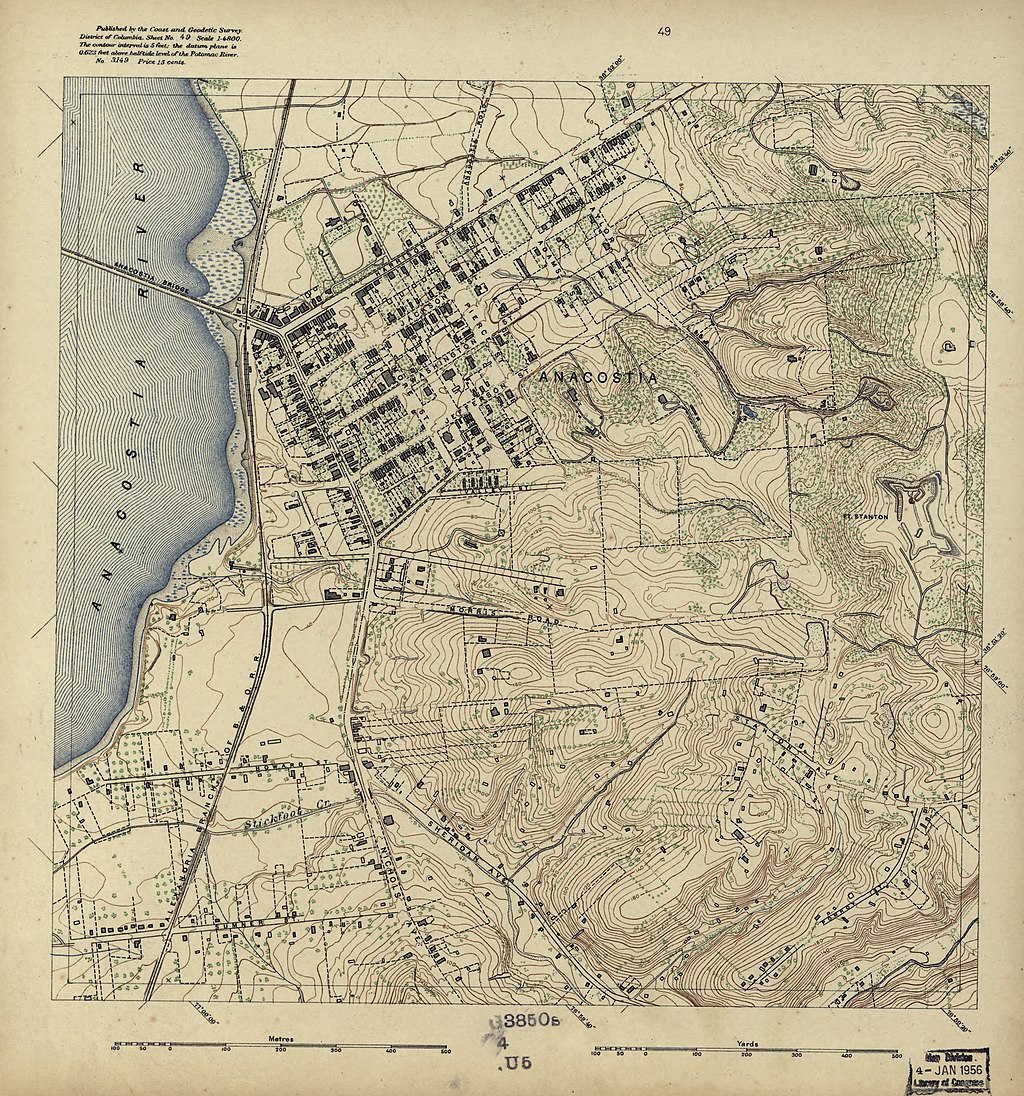
WASHINGTON, DC — On Thursday, October 26, 2023, the District of Columbia (DC) Commission on the Arts and Humanities (CAH) held a regularly scheduled open public meeting via Webex which streamed via YouTube. The “October Full Commission Meeting” agenda which was circulated prior to the meeting included a certain item business:
“2. LAND ACKNOWLEDGEMENT | Recognizing the ancestral homelands of the Nacotchtank and Piscataway Peoples.”
As to this item of business, DC CAH Chairperson Reggie Van Lee remarked:
Every community owes its existence and vitality to generations from around the world who contributed their hopes, dreams, and energy to making the history that led to this moment. Some were brought here against their will, some were drawn to leave their distant homes in hope of a better life, and some have lived on this land for more generations than can be counted. Truth and acknowledgement are critical to building mutual respect and connection across all barriers of heritage and difference.
We begin this effort to acknowledge what has been buried by honoring the truth: we stand on the ancestral lands of the Nacotchtank and the Piscataway People[s]. We pay respect to their elders past and present. Please take a moment to consider the many legacies of violence, displacement, migration, and settlement that bring us together here today, and please join us in uncovering such truths in any and all public events and to use such truths to guide the legacy of this arts commission.
Reggie Van Lee, Chair, DC CAH
The laudable remarks of Chair Van Lee resonate like a monolithic bell from a mountaintop monastery throughout the diocese of N∴S∴ — they sound like they could have been written by the Director himself. Furthermore, the Director does not think it a coincidence that just earlier this month — right before the declaration of the Nacotchtank estate in Fides Publica Populi Mauretani (FPPM) — he was honored with a grant and Fellowship from this selfsame government agency.
The Director thinks it highly probable that ever since the deposit of Title 23 C.S.R. General Policy into the Library of the United Grand Lodge of England in September of 2018, the allies of the international masonic conspiracy have been monitoring the party of the N∴S∴ (which at that time was called the Moorish National Socialist Party); and perhaps they are attempting to incorporate the positions of the Third Wave Antimasonic Party platform in order to prevent a split in the Democratic party come 2024.
The Nacotchtank People, by and through its trustee N∴S∴, established the Public Trust of the Moorish People of Nacotchtank Village, Ouachita District, through the registered notice of 12 October 2023.
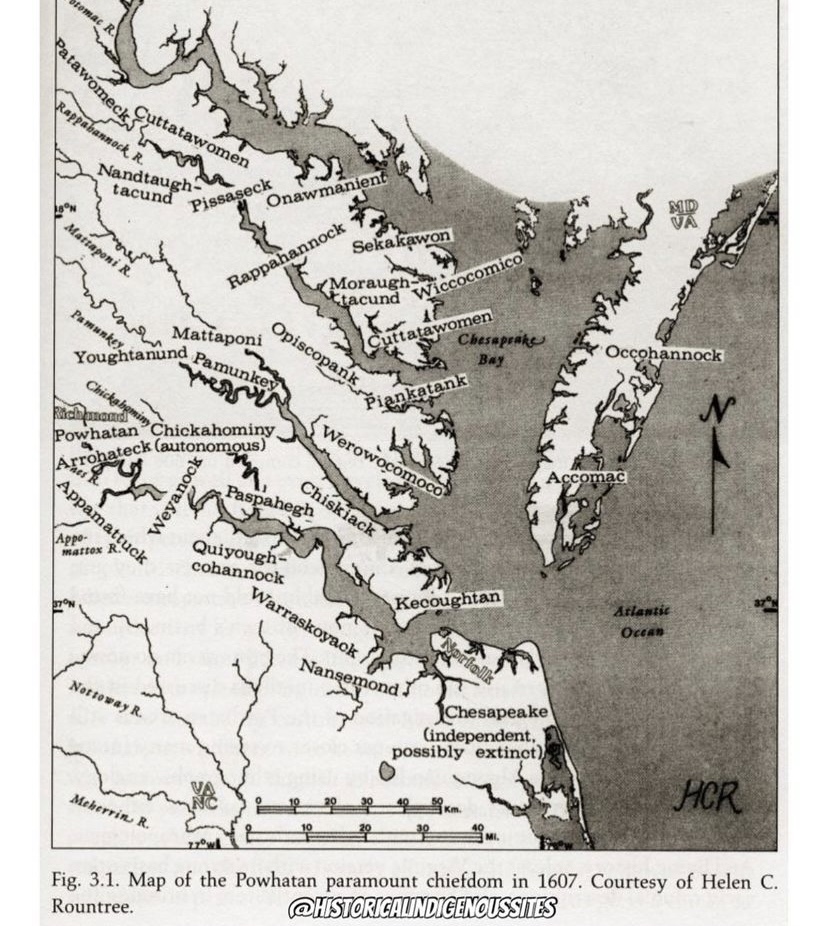
In other news, earlier that same day, the Third Wave Antimasonic Party Boss for Ouachita District, Antarah Crawley, met with President Joe Biden, Vice President Kamala Harris, and the Presidential Advisory Commission on Advancing Educational Equity, Excellence, and Economic Opportunity for Black Americans of the White House Initiative on Advancing Educational Equity, Excellence, and Economic Opportunity for Black Americans on the occasion of the swearing-in of the Commission by the Vice President in the Indian Treaty Room (former Navy Dep’t Library and most expensive room by sq. ft.) of the Eisenhower Executive Office Building.
Later that day, the Ouachita Party Boss attended a virtual “Free Masterclass” on Exclusive Equity Jurisprudence presented by Amyr Samah El of Matisse Academy which came on at 7:00 p.m. via Zoom. It was a very well-attended and informative session and the chat room was active with discussion (including much promotion of newsyllabus.org, the UA, and the TWAP). During the session, Party Boss Crawley declared the Matisse Academy a collegium of the Universitas Autodidactus, and Amyr Samah El the Preceptor of said collegium.
D.R. 01-09: TWAP

Volume 1, Issue 9
N∴S∴ establishes third wave of the Antimasonic Party in the United States
by Antarah Crawley
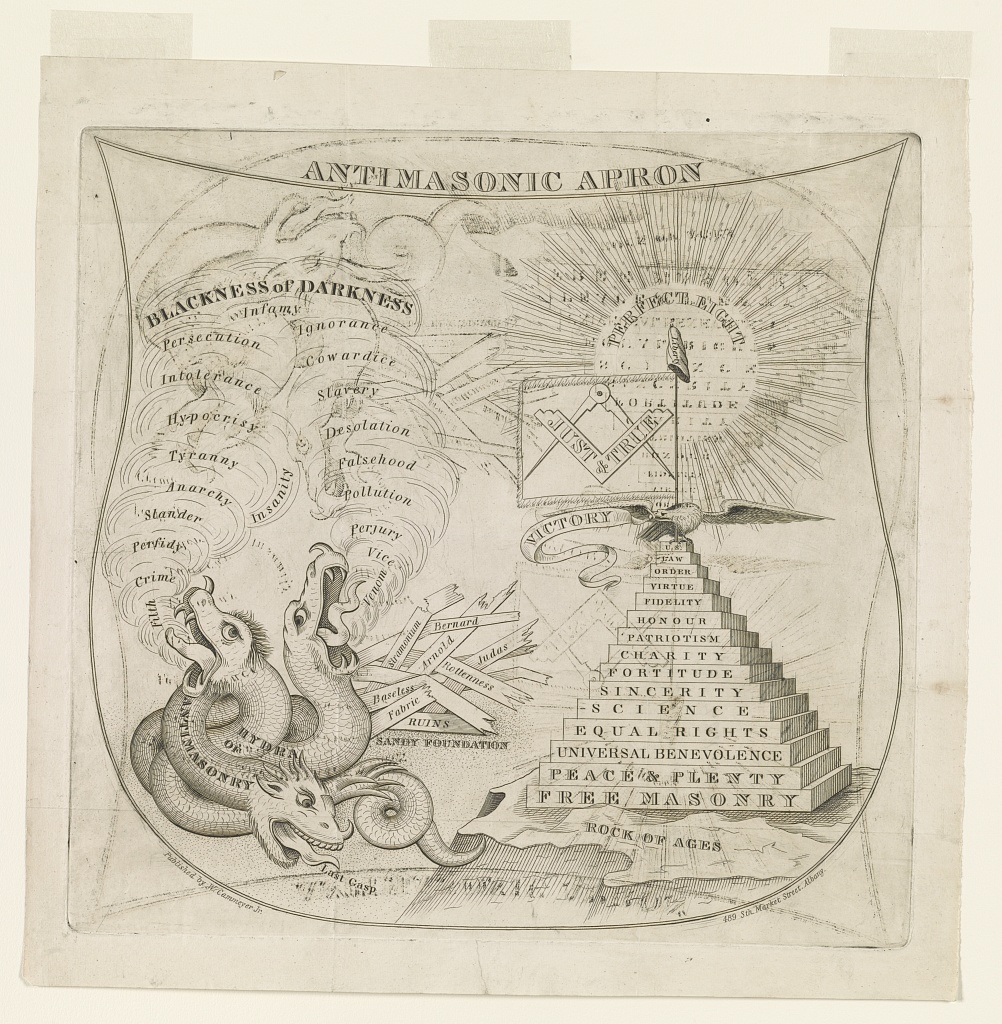
WASHINGTON, DC — The First Anti-Masonic Party, established February 1828 in upstate New York, was the earliest third party in the fledgling United States of America. The party emerged as a strong opposition force to the Jacksonian Democrats and Van Buren’s Albany Regency during the House of Representatives election of 1828. Originally a single-issue party, Anti-Masonic sentiment in the American Northeast was spurred by the disappearance and alleged murder of William Morgan, a former Mason who became outspoken against, and voiced his intent to publish a book critical of, the fraternity. Following these statements Morgan was arrested on “trumped-up” charges, and his subsequent “disappearance” was believed to have been committed by Freemasons from Western New York.
In [September] 1831 the Anti-Masonic Party convened in Baltimore, Maryland to select a single presidential candidate agreeable to the whole party leadership in the 1832 presidential election. The National Republican and Democratic parties soon followed suit.
https://en.wikipedia.org/wiki/United_States_presidential_nominating_convention#History
The Anti-Masonic Party conducted the first presidential nominating convention in the United States history for the 1832 elections, nominating William Wirt (a former Mason) for President and Amos Ellmaker for Vice President in Baltimore. Wirt won 7.78 percent of the popular vote and the seven electoral votes of Vermont. Soon the Democrats and Whigs recognized the convention’s value in managing parties and campaigns and began to hold their own.
https://en.wikipedia.org/wiki/Anti-Masonic_Party#Conventions_and_elections
The major paradox and triumph of Antimasonry is that although it declined rapidly as an independent political entity after 1833, it achieved its major success as a social or reform movement in the nearly total, albeit temporary, destruction of Masonry in those states where it was an active force. Politically, Antimasonry’s greatest achievements were the introduction of the national nominating convention to American presidential politics and contributions to the formation and development of the Whig party.
Vaughn, William Preston. The Antimasonic Party in the United States 1826–1843. Lexington: University of Kentucky Press; 1983
The Second Anti-Masonic Party, of tenuous affiliation to the first, was active from 1872 until 1888. It is therefore in this tradition that we establish the Third Wave Antimasonic Party (TWAP) of the United Stated of America.
Anti-Masonry was deeply committed to conspiracy theories, primarily the claim that Masonic elites were trying to secretly control the government […although] opposition to Masonry was not the Anti-Masonic movement’s sole issue. […] The Anti-Masonic movement gave rise to or expanded the use of many innovations which became accepted practice among other parties, including nominating conventions and party newspapers. […T]hey made direct appeals to the people through gigantic rallies, parades, and rhetorical rabble-rousing.
https://en.wikipedia.org/wiki/Anti-Masonic_Party#Legacy
Similarly, the revelation and denunciation of the international masonic conspiracy (and allied power systems) is the primary platform of the TWAP; however, a party member need not necessarily harbor ardently Antimasonic sentiments. “The fact that William Wirt, their choice for the presidency in 1832, not only was a former Mason, but also defended Freemasonry in a speech before the convention that nominated him indicates that opposition to Masonry was not the Anti-Masonic movement’s sole issue,” Wikipedia relates.
It is probably not a coincidence that the First Party Convention in Baltimore was held in an Odd Fellow stronghold. Whatever the reason for touting the Antimasonic platform, it provides a broad and adaptable alternative to the ostentatious and disingenuous displays of the present Democratic-Republican party system.
Party Platform
Freemasonry is an ancient international conspiracy manifest through a subversive organization whose members have deceived the public for over 300 years and which operates behind the curtain of the deep state. Through mercantilism and control of international commerce, they are the most organized crime syndicate in the history of the world — but they are only the hidden hand and avant-garde of an even more elitist and secretive cabal of temporal rulers.
Our foremost demand is the abolition of Freemasonry, and a federal interdiction against the gathering of any secret society in any state of the Union.
We seek to unite the far left and the far right 180 degrees from political center which is squarely within the sphere of international Masonic control. It is time for the working people to unite against the rulership (the archons), the aristocracy, the bourgeoisie, and the landed gentry, and receive the return of the disbursement of the accrued value of their labor power which has been stolen over the course of their life through usury.
A bastardizarion of Templar Knights, pirates, mystery schools, and merchants guilds, Freemasonry has become a bane of civilization, and a scourge upon the moral fabric of our society. This scourge pervades both political parties in our two party system, in addition to the whole cabal of Greek organizations, professional societies, bar associations, medical systems, and international insurance and business concerns. The deep state society of Freemasonry must be eradicated, its veil of evil unveiled, its associations dissolved, and its property conveyed to the People, so as to prevent it from exercising its convert and subversive control over the vital forces and mechanisms of our civilization.
RESOURCES
http://utlm.org/onlinebooks/captmorgansfreemasonrycontents.htm
(last modified 5 Nov 2023)
© MMXXIII BY NOVUS SYLLABUS L.L.C.
ALL RIGHTS RESERVED WITHOUT PREJUDICE.
D.R. 01-07: BLK MKT, &c.
Volume 1, Issue 7
CONTENTS — Art. 1. N∴S∴ Director awarded grant… — Art. 2. …Black Market Press — Art. 3. …the Syllabus in Postmodern Literature… — Art. 4. …Public Trust… — Art. 5. From Laurie Lewandowski
Article 1
N∴S∴ Director awarded grant by D.C. Arts and Humanities; establishes Office of Diversified Art Investments
By Antarah Crawley
WASHINGTON, DC — NOVUS SYLLABUS L.L.C. (N∴S∴) Director Antarah Crawley has been named a Fellow of the District of Columbia Commission on the Arts and Humanities (DC CAH). DC CAH has conditionally awarded Crawley a grant to support his artistic practice. In response to the Arts and Humanities Fellowship Program Request for Proposals, Crawley submitted a strong application centered on the Art¢oin Non-Fungible Token mint project and the IBé Arts Institute-sponsored Tubman note issue project. The Director will use part of the proceeds of this grant to establish the N∴S∴ Office of Diversified Art Investments.
Article 2
N∴S∴ establishes Black Market Press
By Antarah Crawley
NACOTCHTANK, OD — NOVUS SYLLABUS L.L.C. (N∴S∴) establishes Black Market Press (BLK MKT) on October 20, 2023, with the publication of Visible: The Art of Her Story by IBé Crawley, which is released upon the occasion of the Grand Reopening of the National Museum of Women in the Arts. N∴S∴ Director Antarah Crawley is the Publisher and Editor-in-Chief of Black Market Press. The Press is affiliated with A.I.C. Consulting for distribution services.
(last modified 19 Oct 2023)
Article 3
Notes on the syllabus in postmodern literature and common law
By Antarah Crawley
NACOTCHTANK, OD — Circa February 2013, I was reading a lot of postmodern American novels leading up to and during the publication of Title 1 C.S.R. Pharmacon of the Spirit, which was my contribution to the genre American postmodernism.
Postmodern literature is a form of literature that is characterized by the use of metafiction, unreliable narration, self-reflexivity, intertextuality, and which often thematizes both historical and political issues. This genre is best exemplified by the works of Jorge Luis Borges, James Joyce’s Ulysses (often considered modernist), Flann O’Brien’s At Swim-Two-Birds, William Gaddis’s The Recognitions, William S. Burroughs’s Naked Lunch, Anthony Burgess’s A Clockwork Orange, Hunter S. Thompson’s Fear and Loathing in Las Vegas, Gabriel García Márquez’s The Autumn of the Patriarch, Margaret Atwood’s The Handmaid’s Tale, Salman Rushdie’s The Satanic Verses, Bret Easton Ellis’s American Psycho, Don Delillo’s Mao II, Toni Morrison’s Beloved, William Gass’s The Tunnel, David Foster Wallace’s Infinite Jest, Thomas Pynchon’s Mason & Dixon, Dave Eggers’s A Heartbreaking Work of Staggering Genius, Zadie Smith’s White Teeth, Jonathan Safran Foer’s Everything is Illuminated, Roberto Bolaño’s 2666, David Mitchell’s Cloud Atlas, and (in my opinion) Blake Butler’s 300,000,000, among many (but not countless) others. Thomas Carlyle’s Sartor Resartus is an excellent precursor to the genre from the 1830s.
Now I can’t say that I’ve read every page of each of these magnum opuses (indeed, anyone who says they have is likely full of it – even if they’re not lying). But I will say that it was the spirit of these works – the spirit of the “late modern” times – which bore a hole in me and fulled me with inspiration. It certainly beat What Masie Knew in GW’s English lit courses. In short, you can say that “Postmodern literature” means all of the most exciting literature this side of World War II.
At that time, I wanted to throw my hat into the ring a major figure in American postmodern literature, and an “African American” to boot. However, after querying New York agents and reading the manuscript over, I determined, alas, it was not very good. But my judgement at that time would belie itself, since the events of the novel, though not good enough to publish, were good enough to live. I ultimately would end up doing the things in my life that Walter Kogard did in Title 1 and thereafter, including live in New York, found a Secret School, and become editor of the Black Market Press (1 C.S.R. pgs. 278-282). How’s that for American postmodernism?
Recently, while researching McGirt v. Oklahoma and other Indian affairs, I came across the phenomenon of a legal “syllabus” which is a preliminary section of a court ruling, preceding the legal opinion of the court, that outlines the core facts and issues of the case and the path that the case has taken prior to reaching the present court. They are, in effect, summaries, and are not to be considered part of the actual decision of the case and are not precedential. This new information struck a chord in me, as my organization of the New Syllabus had proceeded from research focused on postmodern literature and print publishing to occult and esoteric studies to pseudo-law, equity, and sovereignty. Furthermore, the U.S. Supreme Court writes, “All opinions in a single case are published together and are prefaced by a syllabus prepared by the Reporter of Decisions that summarizes the Court’s decision.” This got me thinking about the origin of the name New Syllabus.
I chose the name New Syllabus for this deeply personal academic endeavor in 2013 in homage to the postmodern American novel Giles Goat-Boy or The Revised New Syllabus of George Giles our Grand Tutor by John Barth. Again, I can’t say I read much of this book either, and what I did read I forgot until just moments before writing this article. But as I refreshed my recollection I realized that I must have subconsciously adopted the novel’s conceit as a premise on which to navigate the real world. The Plot summary reads:
George Giles is a boy raised as a goat who rises in life to be Grand Tutor (spiritual leader or messiah) of New Tammany College (the United States, or the Earth, or the Universe). He strives for (and achieves) herohood, in accordance with the hero myth as theorized by Lord Raglan and Joseph Campbell. […]
The principle behind the allegorical renaming of key roles in the novel as roman à clef is that the Earth (or the Universe) is a university. Thus, for example, the founder of a religion or great religious leader becomes a Grand Tutor (in German Grosslehrer)
Wiki
It seems to me that I have (unintentionally) mimicked the novel’s narrative, from establishing a school after the model of the world to automating that school using a system of codes and algorithms (the “computer”):
Giles Goat-Boy marks Barth’s emergence as a metafictional writer.[3] The metafiction manifests itself in the “Publisher’s Disclaimer” and “Cover-Letter to the Editors and Publisher” which preface the book, and which each try to pass off the responsibility for authorship onto another: the editors implicate Barth, who claims the text was given to him by a mysterious Giles Stoker or Stoker Giles, who in turn claims it was written by the automatic computer WESCAC.
Wiki
It is as if the “Publisher’s Disclaimer” is the legal syllabus to Barth’s Revised New Syllabus, and the N∴S∴ Director is the Reporter of Decisions of American belles-lettres, courts of law and equity, and historical dialectics.
At this time, I cannot say if Barth’s vision of the Universe is wholly “metaphysical” or not – it certainly has panned out accurately for me in the material realm, although few others understand my “research.” I have indeed reared up a school and filled its halls with tomes (and sat alone hearing the echo of my voice). Borges says the Universe is often called the “Library,” another objective correlative which became engrained in the New Syllabus starting at Title 3. All in all, the postmodernists Barth and Borges have firmly anchored their symbols in my worldview … for better or for worse.
(last modified 23 Oct 2023 24 Oct 2023)
Article 4
Notes on the Public Trust of the Moorish People
By Antarah Crawley
NACOTCHTANK, OD — The Consular Court of al-Maghreb al-Aqsa, Trustee, of the Public Trust of the Moorish People, Heirs Beneficiary, to the People of Anacostia, Washington District, Send Greetings and Peace.
The land east of the Eastern Branch of the river Potomac is called Nacotchtank-on-Potomac, and the people there are one village. This village is within the federal district of the Ouachita Confederacy of indigenous peoples of North America (which are registered under many names), in the jurisdiction of the Farthest West (al-Maghreb al-Aqsa), being the lands and waters from the Barbary States to the westernmost continent of the Americas (al-Morocco), which is called “the land of large buffalo.”
NATIONALITY: The Moorish people are an autochthonous people (descended from this land) indigenous to both Africa and the Americas. The United States of America (USA) has a trust responsibility to the Moors, as it would to any American Indian/Alaska Native (AI/AN) tribal nation, insofar as it has a responsibility not to infringe on their treaty rights. And whereas AI/ANs do not believe in legal titles in land, the equitable use title to land and stock is found in the nature of a sincerely-held belief and religious, ritual, or ceremonial customs. And whereas AI/ANs do believe in birthright inheritance, this right is further enshrined in the Constitution of the USA which upholds the sanctity and protection of life, liberty, and property.
AUTHORITY: This consular court is authorized under treaty between the United States of America (USA) and the Kingdom of Morocco to represent the moorish nationals domiciled on the land governed as USA. It is a religious institution insofar as it is an assembly of the faithful believers in the dogma of redemption and of the ancient moorish science, and an organization of religious/education colleges and orders.
DOGMA: The people are the church, and the church is the body of Christ, ergo the people are the body of Christ, who is their counselor, judge and king before God the Father, and whose ministers are their representatives on the earth. Those who will say that He is the Sovereign of the earth are indemnified by Him from the penalty of sin in this life and in the hereafter. Those who follow His law of divine reciprocity shall receive mercy on the Day of Judgment. (The Divine Mother and the Holy Spirit are also to be praised.)
OPERATION: The legal name and owner of the courthouse shall be [S∴P∴Q∴M∴, Inc.]. It shall look like a mosque  , be called the church
  ️, and function as school and consular courthouse
  . The consular court shall serve the circuit of the Ouachita District.
REGULARITY: Hold A.M. court business docket and P.M. UA on weekdays; hold Interfaith Religious Service (IRS) service on Friday night and Saturday morning; hold Sundays open.
PRESIDENCE: The court shall be presided over by Consul General Magistrate Judge (CGMJ) Vice Consul General (CG), Vice Magistrate Judge (MJ), Grand Preceptor/Grand Scribe/Grand Tutor, Ombuds, Syndical Committee Chairs, Sergeant (Sgt) at Arms, Imam/Mullah, Rabbi/Moreh, Archbishop/Presbyter/Elder, Tribune of the People, and People assembled. Some of these offices may be encumbered by the same individual.
AMENDMENT IN THE NATURE OF NOTES OF 23 OCT 2023
(1) N∴S∴ was chartered as the livery company (an official company identified by a special design or color scheme) of the Worshipful Company of Scribers (See, Notice of 27 Sep 2018), whose senior permanent staff member shall be the “Systems Dep’t Intermediary Zone (InterZone) Clerk” and whose junior permanent staff member shall be the “Systems Dep’t Knowledge Zone (KnownZone) Cleric” (See, Title 3 C.S.R.). Note that there is no clerk in the O Zone. These three Zones together comprise the DataHorse system of the N∴S∴ Dep’t of Information Systems Intelligence Services (DISIS).
(2) Circuit courts are historically routes through county towns traveled by judges (in the early U.S., Supreme Court judges) and their retinue of attorneys on horseback (the circuit riders). Modern circuit courts are, generally, jury trial courts that may have review authority over a lower court such as a juvenile and domestic relations court.
(2)(a) The concept of circuit riders may be a legacy of the equestrian class of ancient Rome.
(2)(b) A livery is a place that will keep and take care of a horse on behalf of its owner, for a fee.
(3) Courts of Sessions (or “sittings,” another name for proceedings) were established in particular towns or counties. They were replaced by one Crown Court (for criminal matters, and High Court for civil matters), like unto one supreme Court (both criminal and civil/commercial/equitable), or one holy catholic and apostolic Church (political body masquerading as sovereign body of Christ/the People).
(3)(a) Officers of such court include:
(3)(a)(i) The Circuit Rider(s), the judge(s) of sessions/sittings who ride the circuits on commission of oyer et terminer (“hearing and determining”) setting up court and summoning juries in assize towns; those who shall sit at the Dais of the court.
(3)(a)(ii) The Clerk(s) [or, cleric(s)], the keeper(s) of the record; those who shall sit at the Desk of the court issuing and receiving order and papers (See, this Amendment § (1), above).
(3)(a)(iii) The Rapporteur de la cour (Reporter of the court). (See, Memo. No. 9)
(4) Oyez (“hear ye”) is plural imperative form of oyer (French: ouir “to hear”) from oyer et terminer “to hear and to determine” (a sitting of the court, presided over by a judge of assizes “sessions”).
(last modified 23 Oct 2023 24 Oct 2024)
Article 5
From Freemasonry and the Catholic Church
An Excerpt | By Laurie Lewandowski | October 17, 2022
[W]hile Catholics do believe in the immortality of the soul, we reject that doing good works and moving up in ranks (degrees) helps souls get to heaven. This type of heresy was condemned by the Church in 5th century during the Pelagian heresy, which erroneously taught Christ didn’t redeem the human soul, but with good works one can be redeemed. The Church teaches that our immortal souls are redeemed through Christ alone and that through the power of baptism we are saved. (I Peter 3:21).
Freemasonry is a religion which is gnostic (hidden or secret knowledge is power), rationalistic (reason alone guides us into all truth), syncretistic (melding of all world religions, giving equal footing to them all), relativistic (you have your truth and I have mine.), and indifferent (just keep quiet and get along, it doesn’t matter what you believe.) This indifferentism associated with Masonry is probably the most urgent reason to reject it. For a Catholic (and other Christians), the fact that Masons’ “creed” is to ignore Jesus as the Way, is more than just problematic. Jesus promised us division by His Name (Luke 12:51). We must never deny the name of Jesus for the sake of unity. This is one of the grave evils in our modern society. Further, the swearing of oaths, placing the lodge over any other authority, and the inimical relationship between Masons and the Church are additional reasons for the Church’s condemnation. Finally, eight popes from St. Clement XII (1738) onward have condemned it, teaching of its grave sin. Pope Leo XIII writes Inimica Vis, ch.2,
Our predecessors in the Roman pontificate have in the course of a century and a half outlawed this group not once, but repeatedly. We too, in accordance with Our duty, have condemned it strongly to Christian people, so that they might beware of its wiles and bravely repel its impious assaults. Moreover, lest cowardice and sloth overtake us imperceptively, We have deliberately endeavored to reveal the secrets of this pernicious sect and the means by which it labors for the destruction of the Catholic enterprise.
Pope Leo XIII, Inimica Vis, ch.2
Use this resource to pray for release from the Oaths of Freemasonry and repent.
© MMXXIII BY NOVUS SYLLABUS L.L.C.
ALL RIGHTS RESERVED WITHOUT PREJUDICE.
D.R. 01-04: Amendments
Volume 1, Issue 4
CONTENTS — ART. 1. VALUE IN ART 1ST — ART. 2. WATER THEORY 1ST
Article 1
Amendment to “Value in Artwork”
by Antarah Crawley
At Art¢oin:\>_Theory and Methodology\Value in Artwork, strike “the person of the artist, the execution of the artist, the intention of the artist, the attention of the artist, the subject matter content of the work, the medium of the work, the lifetime of the work, and the effect upon the viewer” and replace with “artist’s time on the scene, artist’s repertoire, and number of solo and group exhibitions.” Other factors in the appreciation of art include size, subject matter, and time period.
Furthermore, with regard to the valuation of artwork, a sellable artist is a “known commodity.” Appraisers buy low and sell high; they take an average of sale prices over the years to make appraisals. Utilize platforms like Artsy, Artnet, and Invaluable. Also see, “square foot pricing” of art works.
Article 2
Amendment to “Water Theory of Capital”
by Antarah Crawley
At Art¢oin:\>_Theory and Methodology\Water Theory of Capital, add:
3.0. Can trade (i.e., exchange, change hands; revenue, change venues) (1) real (landed) estate (includes people), (2) consumable goods (commodities), and (3) securities (fungible negotiable instruments) using (4) a medium (an agency, vehicle, or instrument) of exchange.
3.1. A current medium of exchange is liquid in circulation (legal tender) secured by something of value (currency). A current account is a storage or depository account that can be drawn upon on demand of the named account holder, but which is “secured” (fixed so as to not be easily moved) by a trustee. The storing and safekeeping of securities is a matter of “public safety”.
3.2. Live stock and real estate, as opposed to consumable goods (commodities), secure the public debt on private bank ledgers. Securities are “advertisements for live stock in bondage sold on the banks of the river.” When analyzed word for word we find the following objective correlative:
3.2.1. Advertisement = offer for acceptance
3.2.2. Live = circulating current (as of ions, blood, or breath)
3.2.3. Stock = cargo, negotiable instrument
3.2.4. Bond = debt obligation
3.2.5. Sold = exchange, revenue (to circulate)
3.2.6. Bank = the land sloping down to a body of water, or any slope, mound, or mass, or the action of heaping (a substance) into such a mass
3.2.7. River = flow of commerce; current “C”
© MMXXIII BY NOVUS SYLLABUS L.L.C.
ALL RIGHTS RESERVED WITHOUT PREJUDICE.
D.R. 01-02: Nagorno-Karabakh, &c.
Volume 1, Issue 2
CONTENTS — ART. 1. U.S. CONDEMNS AZERBAIJAN… — ART. 2. CONTROL NUMBER SYSTEM
Article 1
U.S. condemns Azerbaijani government for war crimes in Nagorno-Karabakh
By Antarah Crawley
WASHINGTON, DC — On September 6th, 2023, while the chamber of the U.S. House of Representatives sat empty, members of Congress still on vacation, the Tom Lantos Human Rights Commission (TLHRC) of the House Committee on Foreign Affairs held an emergency hearing on the ongoing blockade of the Lachin Corridor in Nagorno-Karabakh (also known as “Artsakh”). Mr. Crawley reported on the proceedings through the House Clerk’s Office of Official Reporters.
The hearing took place in room 2200 Rayburn House Office Building, Christopher H. Smith, (R) NJ-04, Co-Chairman, presiding. Distinguished persons in attendance included Her Excellency Lilit Makunts, Ambassador of the Republic of Armenia to the United States of America. The Chairman remarked that he had put the hearing together with a great sense of urgency; nearly all U.S. representatives were still in their districts for the summer recess.

Luis Moreno Ocampo, the former Prosecutor of the International Criminal Court, released his personal Expert Opinion on August 7, stating that “there is a reasonable basis to believe that a Genocide is being committed against Armenians living in Nagorno-Karabakh in 2023” and emphasizing that under the Genocide Conventions all states have a “duty to prevent” genocide.
Mr. Ocampo submitted to the Convention on the Prevention and Punishment of the Crime of Genocide that all the elements of that crime (to wit, “deliberately inflicting on the group conditions of life calculated to bring about its destruction,” [See, Article II(c)]) were present in early August. At the hearing, Mr. Ocampo presented his Expert Opinion on the situation in Nagorno-Karabakh.
David Phillips, Adjunct Professor at Georgetown University’s School of Foreign Service, also testified on facts relevant to gathering the intent of the government of Azerbaijan. In the fall of 2020, in response to unprovoked attacks against the Armenians in Artsakh, Mr. Phillips undertook a research and documentation project in cooperation with Columbia University and the Artsakh Human Rights Ombudsman Office called “Atrocities Artsakh.”
The Chairman opened the hearing by stating that 120,000 ethnic Armenians have been sealed off from food and medicine and are being starved to death by the Azerbaijan government. He strongly and in no uncertain terms condemned the government of Azerbaijan — particularly President Ilham Aliyev, whom he called a “dictator” — for planning, testing, and imposing this crime of genocide upon the ethnic Armenians living in Nagorno-Karabakh. The Chairman mentioned his efforts to publicize, litigate, and dialogue with President Aliyev concerning the safety of the people of Nagorno-Karabakh since 2013.
The most aggressive Azeri attack on Artsakh came in 2020, from September 27th to November 10th, in what is called the Forty Four Day War. The war claimed more than 3,900 Armenian lives, displaced over 100,000 civilians, and ended with the signing of a trilateral statement between Armenia, Azerbaijan, and Russia. Working together with the government of Turkey, Azerbaijan archived military dominance over Nagorno-Karabakh, and shrank the size of the Nagorno-Karabakh enclave. Azeri forces were backed by the Turkish military and mercenaries with armed drones, heavy artillery, rocket systems and special forces. There are numerous verified cases of Azerbaijani soldiers mutilating dead bodies, beheading and executing both combatants and civilians, and using banned weapons (e.g. cluster bombs, white phosphorus gas). Since December 12, 2022, Azerbaijan has drastically reduced and then completely cut access to the outside world with the evident intention to starve the Armenians of Nagorno-Karabakh into submission.
The Chairman remarked, by way of historical background, that “Armenians have lived in Nagorno-Karabakh for over two thousand years. As the Soviet Union collapsed and the states of Armenia and Azerbaijan emerged out of it, Armenians and Azerbaijanis fought a war […] driven in part by the fact that the boundaries of the new Armenian and Azerbaijani states did not correspond to the ethnic boundaries. Since 1994, Nagorno-Karabakh has been an enclave within Azerbaijan, in which the Armenians have defended and governed themselves. They have been connected to the outside world only by a limited access road called the Lachin Corridor to Armenia, as per international agreements. Their independence has not been recognized by any other country — not even by the Republic of Armenia. The government of Azerbaijan […] seeks to fully integrate Nagorno-Karabakh into Azerbaijan” evidently by committing genocide on the resident population.
This set of circumstances is strikingly similar to those present between Russia and Ukraine, and China and Taiwan, where a world power seeks to forcibly integrate a neighboring sovereign nation into its sphere of direct control. This author perceives the elements of a World War at play.
Mr. Ocampo relayed that fifteen judges at the International Court of Justice in the Hague reviewed the issue, heard testimony of ethnic Armenians, and concluded that blocking the Lachin Corridor was creating an imminent risk for Armenians living in Nagorno-Karabakh.
Mr. Phillips outlined a record of the Aliyev regime’s admissions of genocidal intent and partnership with the Turkish Erdogan regime in actions to erase the Armenian physical, religious, and cultural presence in Artsakh and eventually the current Republic of Armenia, which has already been whittled down to a small fraction of its historic size. Turkey exerts partial control over the Azerbaijan government.
The blockade of the Lachin Corridor began with so-called Azerbaijani “eco-activists” who colluded and worked with authorities to gain access to and block the corridor. Contrary to reports that the group had no relation to the government of Azerbaijan, Mr. Phillip reports that there is ample documentation to prove that the “eco-activists” were agents of the government; most telling is the fact that they left when the Azeri government established its own checkpoint to block the road. The eco-activists did not represent environmental causes prior to their blockade, and reports link them to entities which received U.S. funding. [See, “The Azerbaijani Government’s ‘Eco-Activists’ Agents … Evidence of State Control and Hatred” at https://tatoyanfoundation.org/joint-report/?lang=en.]
Mr. Phillips named names of Turkish commanders and personnel, Azerbaijani commanders and decorated personnel, jihadi mercenary leaders, Azerbaijani prosecutors involved in the trial of Armenian Prisoners of War (POWs), and others involved in the atrocities against Artsakh. In conclusion, Mr. Phillips described the blockade of the Lachin corridor as “severing the soul connection between Artsakh and Armenia, as well as the outside world,” and advised that the Lachin corridor must be opened immediately to humanitarian, commercial, and passenger traffic; gas, electricity, internet, and air connection should be restored; Russian peacekeepers who cannot maintain order should be supplemented or replaced; POWs must be accurately accounted for and released; and representatives from Baku and Stepanakert must agree urgently on modalities for transporting emergency provision.
The Chairman referenced the recent development that Azerbaijan has blocked a convoy of ten trucks carrying humanitarian assistance to Artsakh from several regions of France, which arrived in Kornidzor in Armenia’s Syunik Province at the entrance of the Lachin Corridor on Wednesday, from entering Artsakh. Paris Mayor Anne Hidalgo is leading a delegation of French officials accompanying the humanitarian convoy; the delegation was also blocked by the Azeri government. (https://asbarez.com/paris-mayor-leads-french-humanitarian-aid-convoy-to-lachin-corridor/).
The Chairman asked, “Should Aliyev be indicted by the International Criminal Court” for blocking humanitarian aid and perpetrating war crimes. Mr. Ocampo replied that, today, “the International Criminal Court cannot investigate him because neither Azerbaijan nor Armenia are state parties,” although the UN Security Council could go through Russia to effect its purposes. Mr. Ocampo also observed that since there is no UN prosecutor on this case, “there is no one with a single agenda to protect geneocide except this [Tom Lantos Human Rights] commission.”
Mr. Ocampo urged the Commission not to wait for indictments and sanctions from the UN, but to produce and provide to the White House all the elements they need to find Aliyev a genocider, and to operationalize strategies to prevent genocide. While he would support any prosecution of President Aliyev, he demanded “a more political and faster solution” because “these people will die.”
Mr. Phillips also reiterated that Azerbaijan wants to ethically cleanse Artsakh of its Armenian population, and, as Mr. Ocompo proposed, the US should act immediately, not in a month.
The Chairman replied that he would send a letter on the ground condition in Artsakh and U.S. strategic responses to President Biden today. “Delay is denial,” he said.
The Chairman urged the Biden Administration to “wake up [to the situation in Nagorgo-Karabakh], recognize the absolutely grave responsibility it has here, and focus on finding and implementing a humane solution. And this must mean that the blockade is lifted and the people continues to live in its ancient homeland. The situation is now a three-alarm fire.”
Upon the adjournment of the hearing, the room erupted in applause. Tensions ran high thereafter, as the Chairman, staff, attendees, and members of the news media engaged in free and open discourse.
As the Ombudsman of Free Thinkers, Truth Speakers, and Light Workers United, it is in the interest of the N∴S∴ to identify and condemn genocide wherever it is.
In the 1963 words of Dr. Martin Luther King, “Injustice anywhere is a threat to justice everywhere. We are caught in an inescapable network of mutuality, tied in a single garment of destiny. Whatever affects one directly, affects all indirectly.”
Sources:
Phillips, David L. “Nagorno-Karabakh Update.” Presented to the Tom Lantos Human Rights Commission. September 6, 2023.
Smith, Christopher H. “Nagorno-Karabakh: An Update.” Emergency Hearing of the Tom Lantos Human Rights Commission.
Columbia University, Institute for the Study of Human Rights. “ATROCITIES ARTSAKH (NAGORNO-KARABAKH)” (webpage). https://www.humanrightscolumbia.org/peace-building/atrocities-artsakh-nagorno-karabakh.
(last modified 19 Oct 2023)
Article 2
Control Number System
By Antarah Crawley
WASHINGTON, DC — N∴S∴ has discovered the use of numbers to control non-numerical entities, up to and including the whole world. As we know, the world and all which is therein belongs to the Lord our God, and dominion therein is granted to humanity for an inheritance. However, is has come to pass that bodies corpus and corporate (“corporations”), being dead and not alive of their own spiritus, have been assigned this dominion by unwitting living people. The dead can then use numbers to control their freely-assigned dominion without the agency of the original living signer. A signer can even assign dominion over themself to the corporation by accepting and underwriting a certain number issued to them by the opposing party (hence “trading with the enemy”). All future use of such number implies that the user is subject to the issuer of the number and their orders — specifically, written instructions to pay money signed by the issuer. Therefore it is advisable for a living soul to reserve ALL of their rights without prejudice to ANY rights as a result of an unconscionable signing using Uniform Commercial Code (U.C.C.) Section 1-308, that is, the insurance at public remedy on what you do not know you are waiving.
The separation of church and state is a fallacy, as religious rites are the highest civil rights in the nature of a sincerely held belief. Such a belief includes that a living soul is a child of God, a member of the Nation of Israel, and a member of the body of Christ and heir to the Kingdom of God. However, accepting a number such as a Social Security Number or serialized Federal Reserve Note is evidence of being subject to the corporations which issued them. As it is said, “Render to Caesar the things that are Caesar’s, and to God the things that are God’s” (Mark 12:17). In consequence of these facts, N∴S∴ has implemented a standard numbering system to control its intellectual property.
© MMXXIII by NOVUS SYLLABUS L.L.C.
ALL RIGHTS RESERVED WITHOUT PREJUDICE.
Rustles in Dry Leaves
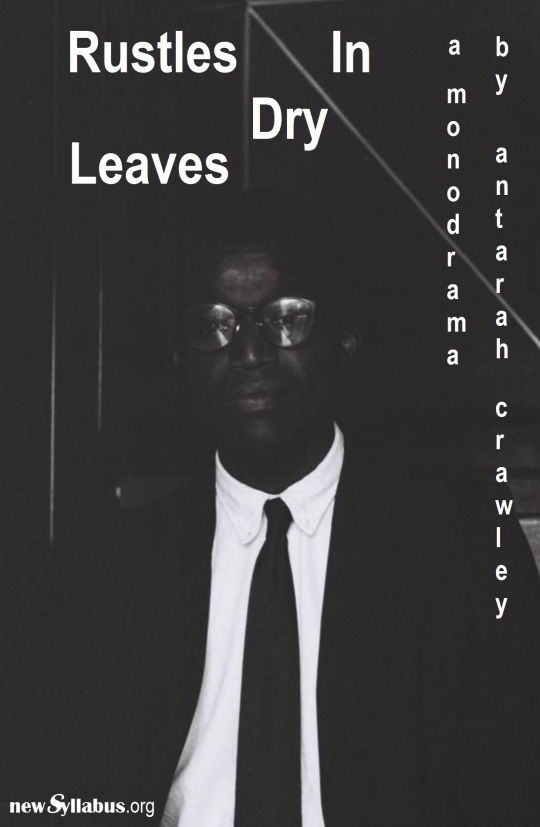
Rustles in Dry Leaves
(Revised)
A Monodrama;
Written for the Stage
by Antarah A. Crawley
BROOKLYN, NEW YORK CITY – 2015
1. The Coffeehouse
Lo, my Syllabus is not yet fit for students, although I have borne it in some form.
My work has not fared well; although I’ve elaborated on it, that was some time ago. I had begun with a sense of purpose, some kind of understanding, but the conceit of it has come undone inside me. It has regressed back into blankness and will not manifest a word. Its silence begs me fill it but I have no tunes of music. In truth, I know that I must write, but what work results is mystery. I know not what I’m writing, what my course is. I essay but I yield no postulation. There appears an inherent flaw: the need to write it out. Essaying never achieves the perfection of one word’s sound. Or a whole paragraph often feels like a weighty body for the sentence, or a concept better visualized than explained.
Perhaps, then, a Syllabus is not the best fit medium to conduct my Understanding.
No, a Symbol would be. Or, perhaps, a System of Symbols, all correlative in their nature. But then one’d need a Syllabus to catalogue and contextualize them. Thus I seek a Syllabus with which to study Symbols.
Folly, that I aim to elaborate upon the simplest and densest of truths, this human understanding of nonhuman realities. The unity of all existences. And man has endeavored to do that since he first looked on the sun.
And yet the sun has looked upon me as well. Does that not give me as much license to describe it as anyone? Isn’t my vision as validated? Look upon me, for the sun hath looked upon me.
For I aim to convey my unique Understanding to others. The systems in which the divine Symbols align within my particular vision may not be immediately realized by others, but I believe that from the components of my Understanding I should be able to construct the implicit System and describe it in the Syllabus. I am yet unable to find it—though I know it exists manifested on some plane.
Shall I look into the Tunnels, the ones underground, submerged. Deep below the surface.
But for what?
Evidently, my Syllabus has descended into some unknown location, and the unknown lies above and beneath us. We cannot ascend unto their heights; so we must go down. My Pyramids have fallen, and tunnels have born through them. And tunnels are ubiquitous and lasting and run in cycles unto no end.
But why has my Syllabus descended? Why is it now underground?
Perhaps it has fallen out of distribution. T’was not profitable enough to continue printing. You know how the costs have risen and the demand declined.
Where, then, do I find those texts which have fallen out of circulation, underground?
Perhaps, where used things go. Things the public deems unnecessary. And we all know that a human understanding holds no place in our zeitgeist. Look among you; the people are profane. They no longer read or seek my Pyramids. If I wish to find that which has fallen out of fashion, that knowledge which people have sold off for monetary gain, then I shall get me to a library. There, I may find my Syllabus.
I am black body, I am collapsed. I am fallen the way way back. I have sunk inside myself. Don’t you wish to come inside me? My black ass has so much mass. I have a warm hole to hide you. No bright light can dare to find me. I am fallen and born back. No matter can stand beside me. I am hollowed, I am black.
2. The Library
I seek my Pyramids.
— Thy Pyramids have fallen. Tunnels have borne through them.
But is a library not also a Pyramid?
— Are Pyramids not also bread?
Don’t understand.
Overstand.
I shall get me to a bakery.
My Understanding precedes all language. What Pyramids do I seek?
A Syllabus; I seek a new Syllabus for a Human Understanding.
And yet I have no understanding of Systems. Nor of Pyramids. For I wish to summit thy peak! Get me to a bakery!
I wish to descend unto Tunnels. I know that I cannot summit ascended peaks but in tunnels I may descend to seek my Syllabus, so I will go where bread is baked and or sold. You know—a bakery.
— Thy Pyramids have fallen! Tunnels have borne through them! Thy Pyramids you seek, thy Precipice broods on deep waters.
O Time, my Pyramids have fallen. Deep under water. They are submerged beneath the known and have not surfaced. I seek thy Tunnels. I do not seek a library. Get me to a bakery.
I exit this bookstore, for it is a catacomb, and in it I’ll find only corpses. I make a right on the street and walk away. I go to the Deli at the end of the Avenue. Aaaaaaall the way downtown. There, my precipice broods on deep waters.
3. The Deli at the End of the Avenue
I seek bread in the aisle. I seek my Pyramids. I’m writing a Syllabus and I seek my Pyramids for Symbols. Someone told me that Symbols lie somewhere in Tunnels. If I can reach my Pyramids I can find the Symbols needed for my Syllabus, so I need my Pyramids for answers.
— If it’s Tunnels that you seek then you must know, there is no end. You will never reach thy Precipice. It lies forever just beyond you. If you were to reach thy Pyramids, you’d be borne immediately back. The gravity of the centre is too great. The Precipice of thy Pyramids is too close to the sun. You will surely burn before you glimpse what you seek.
It’s my Syllabus I seek. It lies in the deep. In the void. At the peak. And if it’s the peak I must reach to peek the Pyramids I seek, then that must be my destination, not the Tunnels.
The hardest part about anywhere is getting there. Once you’re there, you’re no where at one moment, and now here the next.
No where is where I will go then, if no where’s where the precipice of my Pyramids lie. I must know, which is the right way?
Down. I must go down. Down the aisle. The bread aisle.
I look down the shelves of bread. I glance to the floor where I notice a wooden latch door. I look at the cellar door, I bend down, open it, peer into the darkness, and go down there.
4. Bedford-Nostrand Avenues Station
I descend into Bedford-Nostrand Avenues Station and take a dead beside an old man. And the old man says to me, I have been waiting for this G train for one hundred years … You know, the G train is the bowel of Brooklyn. I mean, it’s full of shit. One of those slow, tiresome ones. You’re sitting there wondering “when will this piece of shit come down the tunnel?” Finally, after what seems like an eternity, you pinch one out—and then your toilet clogs up! We are being delayed because of train constipation. We are sorry for any inconvenience.
You seem to possess some knowledge of tunnels, I say to the old man.
I told you, he said, I have been waiting here a century for my train to take me through the tunnels. In that time I have come to understand much.
So you possess an understanding!? I seek understanding. I’ve come here in search of my Syllabus. I seek my Pyramids.
— Thy Pyramids have fallen. Tunnels have born through them.
We are fallen. Tunnels are born through here.
— You seek that which has no form. There is no Syllabus for you here. There is nothing of use to you here underground. There is only so far you can get through these tunnels. You see, the Stations you pass through will not dispel to you any answers in this form. Thus passing through the submerged Systems in search of the true Systems of Knowledge is fundamentally flawed. You will never reach thy Precipice. Thy Pyramids have fallen.
I was told that the Tunnels lead to my Pyramids. The Void around which aethers fog.
— Though the Void you seek is not physical, but beyond the physic; it is nothing. You can’t access it. You will wait in this station for a hundred years. And maybe your train will come and bear you down the borough’s bowels. But no Pyramids lies at the end of thy line. Only silent waters.
O Time, thy Pyramids, where art thou? Reveal the Syllabus I seek. I’ve traversed city corridors and monoliths of antiquated tomes—of catacombs and dusty halls; I have breathed in noxious gases. I have ventured down the Avenue in search of bread. I have descended into burrows, passed throughout their halls, and sunk the earthen floors of cellars with the treading of my soles. I have passed through tunnels like a train, a cell in the blood of city’s veins. I have passed through yonic doorways into wombs. But I will not be satisfied with shallow water. I’ve heard that thy precipice broods on deep. I will seek further through thy hollows ‘neath the cellar floors of earth. O hollowed Pyramids, thy peak, submerged deep beneath the street, thy Systems will not keep my waves at bay.
A G train burrows into the station and comes to a steaming halt. I leave the old man at the bench and board the car, the doors close, and the train makes its departure down the Tunnel.
5. Coney Island
I exit the train station, I walk to the water’s edge, and I brood on the deep, the horizon, the sunset on the water.
At length, I am approached by a bather in a swimsuit, but I continues to look into the horizon.
The bather says to me, You look silly.
What? I reply.
Your clothes, says the bather. They’re silly. Do you know where you are? Your clothes enclose you. They block out the light of the sun. They obstruct the flow of the water. The sea cannot wash over you. The sun cannot look upon you. I presume that’s why you’re here, at this beach. And yet you merely look on the water, and stand below the sun. You do not delve into them. You do not let them come inside you.
The sun has looked upon me. The sea has come, and come inside me. From in the light I’ve touched the light. I knew the light grew mold inside me. I do not wish to bathe here, for I seek my Syllabus. I was told it peaks thy Pyramids, Pyramids which lie at the Center of Systems, Systems which are traversed by tunnels. But tunnels have brought me here to the end of the line, and emptied me at thy sea. But as I seek the sea, I see inside. O Time, thy Pyramids, to me are nothing novel; they are fallen to the bottom of the silence of the sea, and having reached the farthest East that West can bring me, I can feel the wind that rustles in dry leaves.
Fin.
The Saint Nat Project

presents
The Canonization of Saint Nat (2020)
In his first portrayal of the Virginian revolutionary, the Reverend Nat Turner, Antarah Crawley delivers the revelation which Nat testified through his attorney at trial on the 5th of November, 1831. His testimony was read in open court, and when asked by the Court for any further explanation, his only spoken words were, “Was Christ not crucified.” Nat was convicted that same day and executed by the Commonwealth at Jerusalem on 11 November, 1831. By and through his performance, Crawley canonizes Nat a Saint in the tradition of Ordo Templi Novus Syllabus and dedicates the Temple N:. S:. in his beatified name. Produced and Directed by Antarah Crawley.
The Revelation of Christ to Saint Nat (2021)
In his second portrayal of the Reverend Saint Nat on the first anniversary of his canonization, Antarah Crawley evokes the religious fervor which inspired this martyr to undertake the insurrection in Southampton County, Virginia, pursuant to his self-education and the sighting of the annular solar eclipse of 12 February, 1831. Produced and Directed by Antarah Crawley.
Script of The Revelation of Christ to Saint Nat, or, The Gospel of Saint Nat
Originally transcribed by Thomas R. Gray, Esq.,
and edited for brevity by A. A. Crawley, Scribe,
O.T.N.S., Anacostia R.V., Al-Maghreb Al-Aqsa.
ברוך ה המבורך לעולם ועד
Baruch Adonai ham’vorach, l’olam va-ed
Praise be to G-d to whom all praise is due, world without end.
בָּרוּך אַתָּה ה’ אֱ-להֵינוּ מֶלֶך הָעוֹלָם
Baruch atta Ado-noy Elo-hai-nu Melech ha’olam
Blessed are you, Lord our G‑d, King of the universe.
Kedushah
בָּרוּךְ אָתָּה יְיָ הָאֵל הַקָּדוֹשׁ.
Baruch atta Ado-noy ha-el hak-kadosh
Blessed are You, Eternal God, the essence of holiness.
אַתָּה קָדוֹשׁ וְּקדוֹשִׁים בְּכָל יוֹם יְהַלְלוּךָ סֶּלָה
atta kadosh ukedushim bekhol yom yehalelukha selah
You are holy, and Your holy ones praise You every day, praising you forever;
v’kara zeh el zeh v’amar
and each one called to the other:
קָדוֹשׁ קָדוֹשׁ קָדוֹשׁ ה’ צְבָאוֹת מְלֹא כָל הָאָרֶץ כְּבוֹדוֹ
Kadosh Kadosh Kadosh Adonai Tz’vaot M’lo Khol Ha’aretz K’vodo
“Holy, Holy, Holy, The Lord of Hosts, The entire world is filled with His Glory.”
בָּרוּךְ כְּבוֹד ה’ מִמְּקוֹמוֹ
Baruch K’vod Adonai Mim’komo
“Blessed is the Glory of the Lord in Its Place”
יִמְלֹךְ ה’ לְעוֹלָם. אֱלֹהַיִךְ צִיּוֹן לְדֹר וָדֹר. הַלְלוּיָהּ
Yimloch Adonai L’Olam, Elohayich Tziyon L’dor Vador Hall’luyah
“The Lord shall reign forever, Your God, O Zion, from generation to generation, Hallelujah”
JERUSALEM, VA – NOVEMBER 5, 1831
I was 31 years of age the 2nd of October last, and born in Southampton County of Old Virginia. 2 In my childhood, while at play with other children, at three or four year old, I was telling them something which my mother, overhearing, said had happened before I was born. Others being called on were greatly astonished, knowing that these things had happened, and caused them to say in my hearing that I surely would be a prophet.
3 And my mother and father strengthened me in this my first impression, saying in my presence that I was intended for some great purpose. 4 I taught myself to read and write, and improved my learning at all opportunities. And having soon discovered my spirit to be great, I withdrew myself to fast and pray, and wrapped myself in mystery.
Chapter 2
Now finding that I had arrived man’s estate, and hearing the scriptures commented on at the meetings, I was struck with that particular passage which says, Seek Ye the Kingdom of God and all things shall be opened unto you.
2 I reflected much on this passage and prayed daily for light of the subject, and as I was praying one day at my plow the Spirit spoke to me saying, Seek ye the Kingdom of God and all things shall be opened unto you.
Chapter 3
Now finding that I had arrived to man’s estate, and was a slave, and these revelations being made known to me, I began to direct my attention to that great object, to fulfill the purpose for which, at this time, I felt assured I was intended.
2 At this time I had a vision: and I saw white spirits and black spirits engaged in battle. And the sun was darkened, and thunder rolled in the heavens, and blood flowed in streams and I heard a voice say, Such is your luck, such you are called to see, and let it come rough or smooth, you must surely bear it.
3 I now withdrew myself from the intercourse of my fellow servants, for the avowed purpose of serving the Spirit more fully. 4 And it appeared to me and reminded me of the things it had already shown me, that it would then reveal to me the knowledge of the elements, the revolution of the planets, the operation of the tides, and the changes of the season.
5 After this revelation, in the year 1825, and the knowledge of the elements being made known to me, I sought more than ever to obtain true holiness before the great day of judgment should appear, and then I began to receive the true knowledge of faith.
Chapter 4
And from the first steps of righteousness until the last was I made perfect. And the Holy Ghost was with me and said, Behold me as I stand in the heavens. 2 And I looked and saw the forms of men and women, and there were lights in the sky to which the children of darkness gave other names than what they really were, for they were the lights of the saviors hands stretched forth from East to West, even as they were extended on the cross on Calvary for the redemption of sinners.
3 And I wondered greatly at these miracles, and I prayed to be informed with a certainty of the meaning thereof. 4 And one day while I was laboring in the field, I discovered drops of blood on the corn as though it were a dew from heaven. 5 And I communicated it to many both white and black in the neighborhood, and they found on the leaves in the woods hieroglyphic characters and numbers, and the forms of men and women portrayed in blood, representing the figures I had seen before in the heavens.
6 And now the Holy Ghost had revealed itself to me, and made plain the miracles it had already shown me. 7 For as the blood of Christ had been shed on this earth, and had ascended to heaven for the salvation of sinners, and now was return to earth again in the form of dew, and as the leaves on the trees bore the impression of the figures I had seen in the heavens, it was plain to me that the Savior was about the lay down the yolk he had borne for the sins of men, and the great Day of Judgement was at hand.
Chapter 5
And on the 12th of May, 1828, I heard a loud noise in the heavens. 2 And the Spirit instantly appeared to me and said the serpent was loosened, and Christ had lain down the yolk he had borne for the sins of men, and that I should take it on and fight against the serpent, for the time was fast approaching when the first would be last and the last would be first.
3 By signs in the heavens it would make known to me when I should commence the great work, and until the first sign appeared I should conceal it from the knowledge of men.
4 But on the appearance of the sign – the eclipse of the sun last February – I should arise and prepare myself, and slay my enemies with their own weapons. 5 And immediately upon the sign appearing in the heavens, the seal was removed from my lips and I communicated the great work laid out for us to do to Henry, Hark, Nelson, and Sam.
6 Many were the plans formed and rejected by us, and the 4th of July last came and went without our coming to any* determination how to commence. 7 We were still forming new schemes and rejecting them when the sign appeared again, which determined me not to wait longer.
Epilogue (Psalm 43)
Judge me, Allah, and plead my cause against an ungodly nation: O deliver me from the deceitful and unjust man.
2 For thou art the God of my strength: why dost thou cast me off? why go I mourning because of the oppression of the enemy?
3 O send out thy light and thy truth: let them lead me; let them bring me unto thy holy hill, and to thy tabernacles.
4 Then will I go unto the altar of God, unto Allah my exceeding joy: yea, upon the harp will I praise thee, Elohim Elohai.
5 Why art thou cast down, O my soul? and why art thou disquieted within me? Have Faith, Trust and Believe in Allah: for I shall yet praise Thee, who art the health of my countenance, Elohai.
Benediction
Charis Kuriou Iyesous Xristos Agion. Amen.
(last modified 7 August 2023)
Mindsoft as a Service (MaaS)
 Mindsoft Command Prompt (click above)
NS:\Mindsoftware_as_a_Service(MaaS)
Course Syllabus (Runtime Environment)

(last modified 3 Mar. 20)
AUDIO: “Rustles in Dry Leaves” (An Allegory)
 Part I: The Holy Syllabus of Walter Kogard the Professor (40 min)
Part II: The Sermon in the Secret School, by Wilough of Godsdog (10 min)
Copyright (c) 2019 by Antarah A. Crawley (New Syllabus InfoTainment Media). All Rights Reserved.
 Supreme Exchange