Tagged: Division
Minute of Public Service 3
IN THE NAME OF YAHUAH THE MOST GRACIOUS MOST MERCIFUL
DECENTRALIZED AUTONOMOUS ORGANIZATION
DEPARTMENT OF PEACE AND FRIENDSHIP
FROM THE DESK OF
THE PUBLIC FRIEND
Antarah, ObNS
3RD MINUTE OF PUBLIC SERVICE | LAST MODIFIED 24/7/16/12:33 AM 24/7/16/10:01 PM 24/7/17/10:33 AM 24.07.18.04:09PM 24.07.19.10:00AM 24.07.22.03:05PM
TO ALL TO WHOM THESE PRESENTS COME, SEND GREETINGS AND PEACE:—
The Ecclesiastical Polity,
or, ‘Collegiate Government’,
of the New Testament Kingdom
Congregational Church de la Croix Noire
(a) The ‘Chamber of Instruction’ is within the Beth Midrash, and the ‘Hall of Assembly’ is within the Beth Knesset, and these are so many houses in the bicameral polity ‘body’ of the people assembled of the decentralized autonomous organization in that locality. The Knesset is the upper house and the Midrash is the lower house.
(b) The ‘New Testament Kingdom’ is a feudal trust relationship settled under Roman imperial law by God Himself, by and through his Vicar in Christ, Land Holder and Lord of the Earth Living Forever, by and through the Holy Roman Emperor Constantine the Great, and subsequently assigned, in part, to the Bishop of Rome at the Vatican City. The remainder of the birthright dominion of the people over the Kingdom of Earth is administered in trust for the benefit of all humanity by the anointed society of friends ministering in the following of the High Priest of Melchizedek, the Lamb, being as he is the King, living forever.
(c) It is, therefore, not for purely religious and dogmatic reasons, but for purely civil and legal reasons, that we invoke that name of the Trustee appointed by God Almighty to administer our trust which is known in our jurisdiction ‘nome’, being that of the Roman Empire, by and through its successors the kings of Europe, by and through their successors the republic of nations: KRST YHSVH — IESUS CHRISTUS — the King who will reign from Jerusalem.
(d) There is only one supreme Being ‘Entity’ who created Heaven and Earth of its own matter. All who are born of woman are beneficiaries of its creation, which continues forever. The body of the people of this Creator ‘the Church’ is one, holy, universal and apostolic, with KRST THE KING at its head.
(e) While visiting the Lieutenant Governor of New York after my great uncle’s funeral in Orange, New Jersey, I met with my very good friend Richard of Brooklyn, who told me that that day (yesterday), July 14th, was the real New Year’s Day, in which our ancestors observed the heliacal rising of Sirius and the inundation of Hapi.
(f) Frank Lloyd Wright is hereby canonized a Saint of God by the order of missionary oblates of the New Syllabus program for his efforts in defining a unique American-vernacular architecture. To this unique class belong the noble and worthy personages of Saint Nat Turner, Saint John Coltrane, and Saint Alice Coltrane.
(g) Systembilt Industries, IBCO, FLF-DAO, is hereby chartered as an entity of a religious nature dedicated to continue Saint Frank’s mission to produce sound, beautiful, and affordable housing for every American family by deploying American System-Built Homes around every Mission Fulfillment Center. Usonian Automatic blocks assembled into American System-Built Homes are a block-chain as Mindsoft consoles configured in a DAO fueled by Performance Cubed are a block-chain.
(h) The whole foregoing entity and being are hereby styled:
New Kingdom Congregational Meeting;
1st New Kingdom Congregational Church,
Congregation Beth Midrash Beth Knesset,
of the International Black Cross, FLF-DAO,
nondenominational interfaith ministry,
Antarah, ObNS, Friend presiding,
‘Head of Meeting‘
SECTION (h) DIRECTIVE [click to expand]
Floating the Mission by Sale of Labor on a Daily Basis
Occupation: Day Labor Trader
Lines of Labor Traded: instruction, meeting, investigation, worship, instruments, administration, guardian, custodian, building arts
‘Banking’ Hours: 10AM-3PM, 1st Day to Friday
(h)(1) These lines of service (LOS) are to be considered an extension of peace and good will between friends, the mutual appreciation of which will inure to their mutual benefit. By this is meant an offering, feoffment, or oblation of humanitarian aid, of which a tithe is paid to the Lord of the fee, MALIKI ZADDIK YHSVH XRST, which translates roughly to ‘Equitable Lord Jesus Christ’, the surety of our God-granted trust ‘birthright’. The balance of the charge shall be stored in its capacity and shall not be held for profit by a particular party, but therefrom discharged to the ground (‘the people’).
(h)(2) Therefore it is said regarding the Firm League of Friendship, “Faith is Complete Trust and Firm Belief” applied over a matter of time ‘f(x)=y’, which belief, sincerely held, cannot be converted into a crime. Trust refers to the covenant between God and humanity. Faith refers to the full confidence and mutual assurance exchanged between the parties in the trust relationship. Belief refers to the firmness of faith as held in the hearts and minds of the friends who practice it. This is the MAIN function of the Decentralized Autonomous Intelligence System (DAIS) of the CORPS of Mindsoft.
(h)(3) Toward developing and sustaining a ‘book of business’, service providers ‘servers’ shall make contact with prospective buyers ‘clients’ to whom to offer their services every morning between 8:00AM and 9:00AM, either in person ‘at market’ or via electronic communications. Such clients may or may not be friends, but servers should remain squarely within their equitable God-given sui jurisdiction when ‘trading with the enemy’. No originating sale of labor to be performed on the instant day shall take place after 3:00PM that day; sales consummated after such time shall be performed, fulfilled, and delivered on the next or another future day. Consols may be issued for redemption of future services without originating sales. An ideal contract engagement is one in which a friend-benefactor pays the day rate for the server to perform the mission obligations for the benefit of the friendly public.
American Systembilt Industries

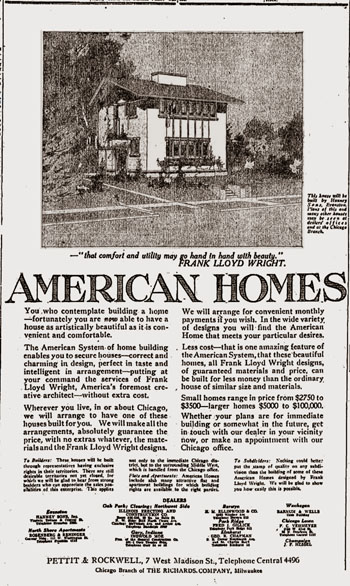
(i) Systembilt Industries shall construct homes in the Wrightian ‘Usonian Automatic‘ vernacular, which is, by this outfit’s estimation, the precursor to the Brutalist vernacular, which is erroneously said to be founded in the United Kingdom in the 1950s, and has since been nearly exclusively devoted to federal government architecture. Whereas the Brutalist is an exaggeration of scale and mass in proportion to the softening panes glass — or a more forgiving human sensibility — the Usonian is intentionally designed for the consumption and appreciation of the human and their family — the American family at that — using a uniquely modular and horizontal American vernacular. Due to the modular and affordable nature of the prefabricated building materials which would be shipped ready-to-assemble to the buyer, Frank Lloyd Wright innovated the construction method AMERICAN SYSTEM-BUILT HOMES. Using the internationally conscious appellation of ‘Usonian’ for ‘United States of North America’ or ‘USONA’, Mr. Wright provides at the turn of the century a vision of USONIA in which every family can own a firm and beautiful AMERICAN HOME at a fixed and reasonable cost.
(j) The planned community of Usonian Automatic homes by Systembilt Industries shall comprise the network of private homes of Friends in the Firm League of Friendship of the decentralized autonomous and International Black Cross Organization. The cultural centers of these communities shall be planned around the Mission Fulfillment Centers which are the meeting tents of the congregation.
(k) References.
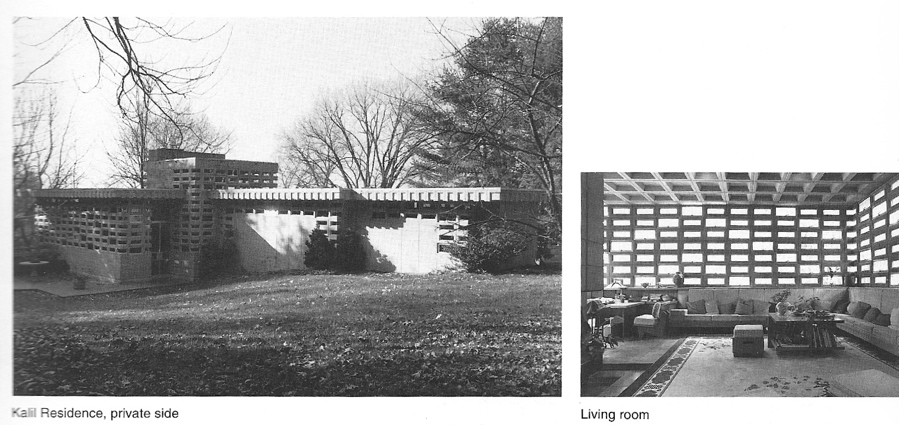
(1) Usonian Automatic
(2) Kalil House

(3) Turkel House

(4) Tonkens House

(5) Automatic Blocks
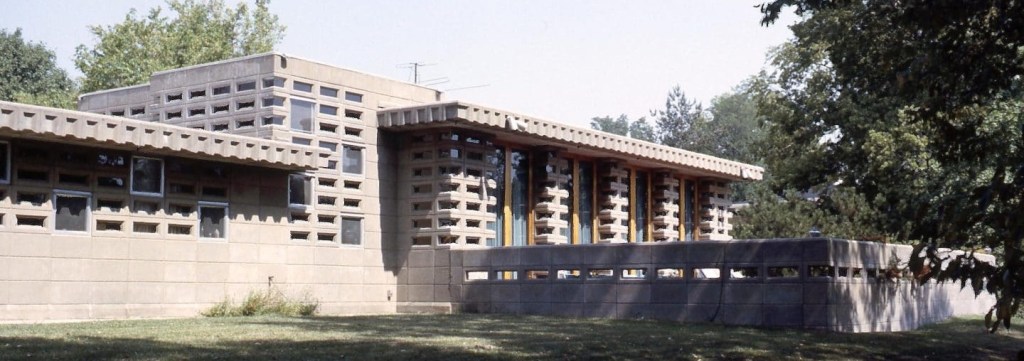
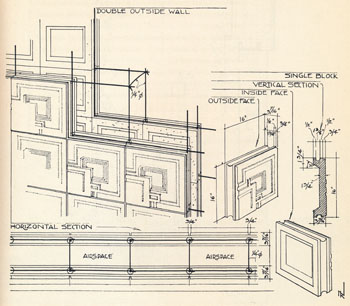
The textile block system — the root form of automatic blocks — is a unique structural building method created by Frank Lloyd Wright in the early 1920s. While the details changed over time, the basic concept involves patterned concrete blocks reinforced by steel rods, created by pouring concrete mixture into molds, thus enabling the repetition of form. The blocks are then stacked to build walls. Wright’s textile block houses are:
- Ennis House
- Robert and Rae Levin House (check also the other Michigan – Galesburg and Parkwin/Kalamazoo – houses at List of Frank Lloyd Wright works)
- Millard House
- Samuel Freeman House
- Storer House (Los Angeles)
- Westhope, located in Tulsa, Oklahoma, Wright’s only Textile Block house outside of California.[1]

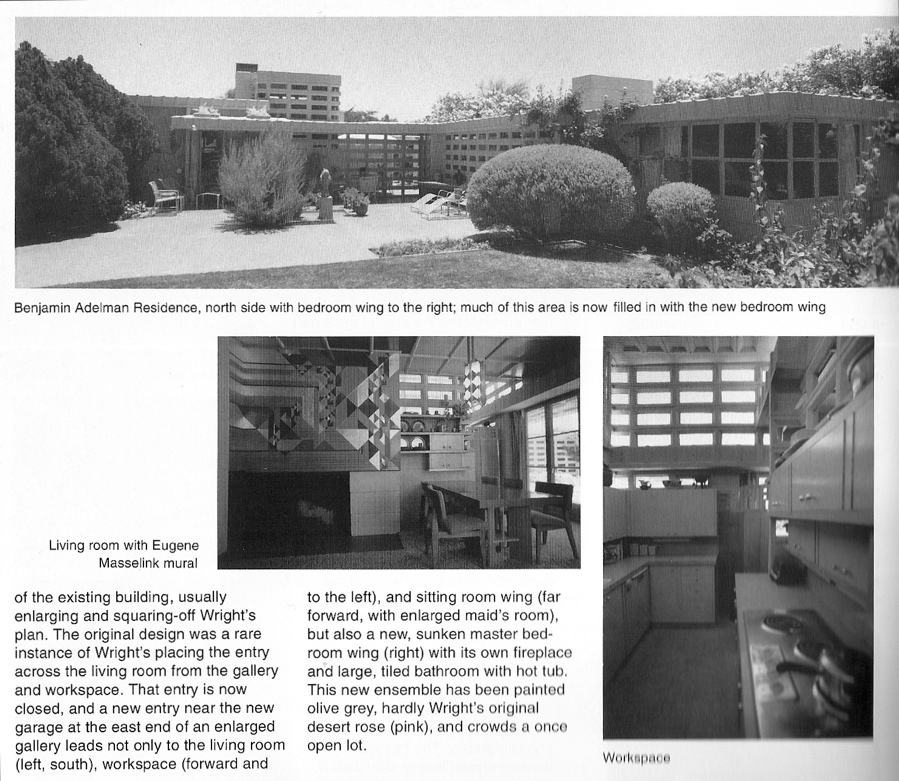
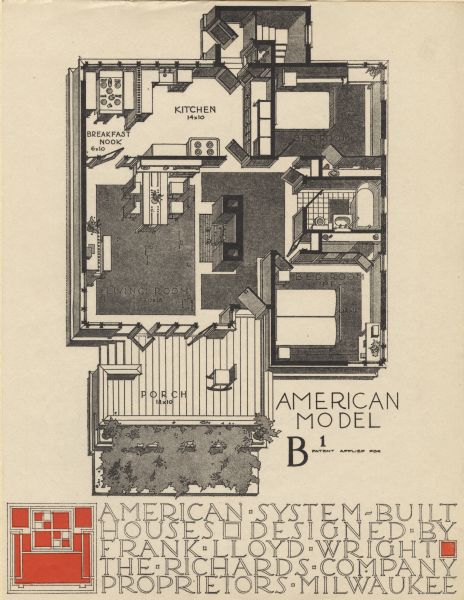
(6) American System-Built Homes
The American System-Built Homes in Milwaukee, Wisconsin:
Frank Lloyd Wright’s earliest system of low-cost housing© 2005 Michael Lilek, All rights reserved
Master of the Small House
Copyright 2004-2005, Michael Lilek, All rights reserved.
Over a career spanning seven decades, Frank Lloyd Wright took special interest in creating architect-designed homes for moderate and low-income families. In the January 1938 issue of Architectural Forum, he commented, “[I] would rather solve the small house problem than build anything else I can think of…” Indeed, among Wright’s greatest masterpieces are several small homes designed for clients who could afford little. Many of these residences owe their existence to some form of client labor (do-it-yourself), ingenious cost-cutting or salvaging. Each magically shelters it occupants in beautiful spaces, connects them to nature, and allows them to feel more alive.
American System-Built Homes
In a 1901 speech entitled, “The Art and Craft of the Machine,” Wright outlined his vision of affordable housing. He asserted that the home would have to go to the factory, instead of the skilled labor coming to the building site. Between 1915 and 1917 Wright designed a series of standardized “system-built” homes, known today as the American System-Built Homes. By system-built, he did not mean pre-fabrication off-site, but rather a system that involved cutting the lumber and other materials in a mill or factory, then bringing them to the site for assembly. This system would save material waste and a substantial fraction of the wages paid to skilled tradesmen. Wright produced more than 900 working drawings and sketches of various designs for the system. Six examples were constructed, still standing, on West Burnham Street and Layton Boulevard in Milwaukee, Wisconsin. Other examples were constructed on scattered sites throughout the Midwest with a few yet to be discovered.
Arthur L. Richards, Developer
By 1911, companies connected to Arthur L. Richards had engaged Frank Lloyd Wright to design several projects, including an unbuilt hotel in Madison and the Hotel Geneva in Lake Geneva, Wisconsin (1912, demolished). By November 1916, Richards entered into an agreement with Wright to promote the American System-Built Homes. The contract covered all parts of the United States, Canada and Europe. It called for the Richards Company “…to furnish, as far as possible, all materials entering into the construction of the buildings and to at least furnish the plans, drawings, specifications and details and lumber, millwork, exterior plaster material, paints, stains, glazing, hardware trimmings and electric lighting fixtures for said buildings.” Richards was to recruit a distribution channel of builders and developers from around the country. He appears to have focused his efforts in the Chicago area and a few other Midwestern cities.
The agreement between Wright and Richards anticipated that the American System-Built Homes project would be wildly successful. Unfortunately, the entry of the United States into World War I on April 6, 1917, diverted building materials to wartime needs. Housing starts ground to a halt. Wright also began extensive travels between America and Japan at this time, related to the Imperial Hotel commission. Wright became unhappy with his relationship with Richards, leading to a lawsuit in August of 1917. Central to Wright’s claim was the non-payment of royalties and fees. Wright won a judgment against Richards in February of 1918. Although the business relationship ended after a few years, Wright and Richards rekindled their friendship decades later and exchanged cordial letters and visits.

Commission 152
NACOTCHTANK’S
152d CORPS
بيت مدرسة
בית מדרש
The Preceptory of
The 1st Ecclesiastic College at
Nacotchtank, Ouachita District,
5th International Worker’s Ass’n
and
2nd Organization of Afro-American Unity
CURRICULAR OPERATIONS RESEARCH & PUBLICATIONS SERVICES (CORPS)
DIVISION OF THE POLITICAL BUREAU OF EDUCATION (POLITBURO), FLF-DAO
The Governor of the Society of the New Syllabus (N∴S∴) at Nacotchtank-on-Potomac (Anacostia) District of Ouachita (Washington, District of Columbia), Furthest West (al-Maghreb al-Aqsa) To All To Whom These Presents Come, Sends Greeting and Peace:—
Know ye by these presents that there is a decentralized autonomous organization (DAO) of people, in the nature of firm league of friendship (FLF), which is engaged in the business of self-education, -operation, and -development (Autodidactus), and that this society (Universitas) is organized into associations (Collegia) constituted by assemblies (Ecclesia) committed to certain trades or subject matters (Syndici).
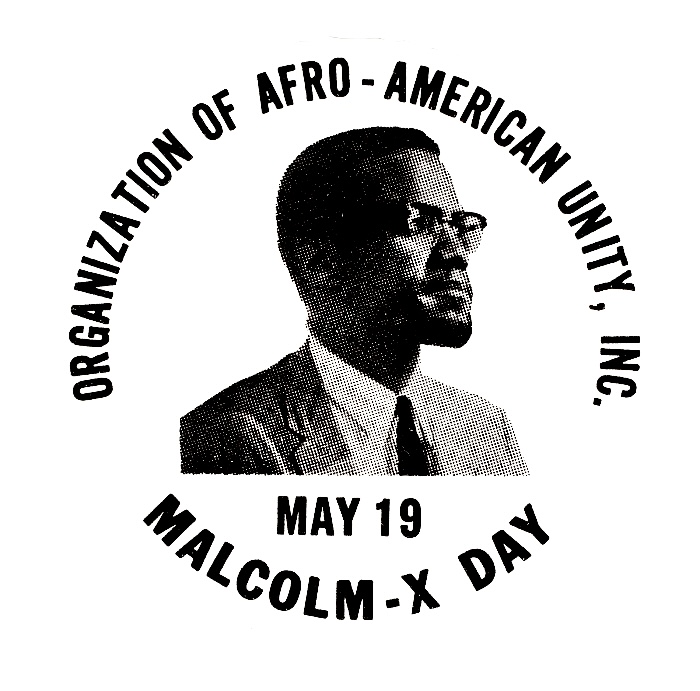
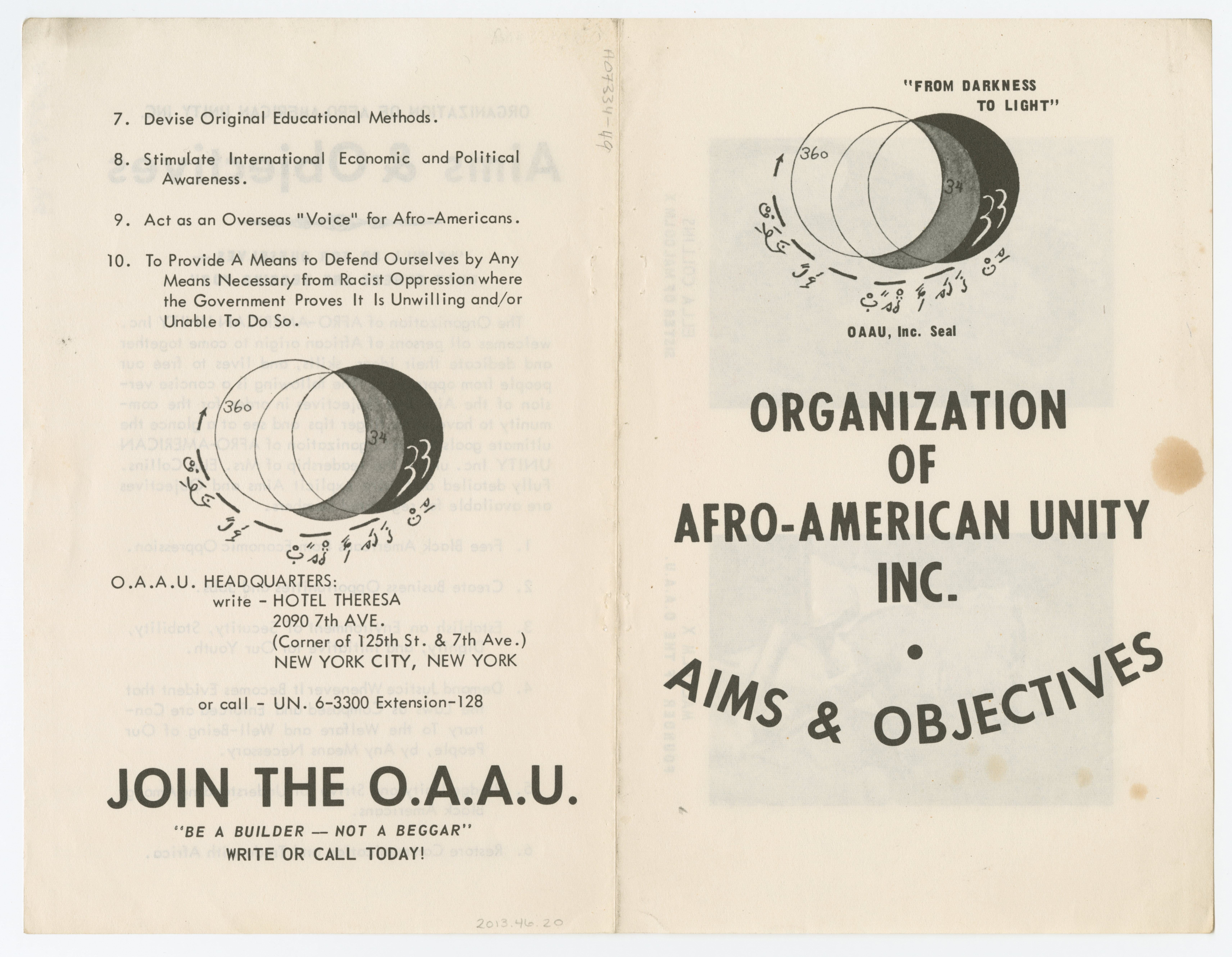
(b) There is hereby established the second wave of the Organization of Afro-American Unity for the purposes enumerated by the Most Honorable el-Hajj Malik el-Shabazz (a.k.a. Malcolm X) (our “Founder”).
(c) The words of our Founder are incorporated herein by reference:
Program of the Organization of Afro-American Unity
Malcolm X, et al. (taken from the Malcolm X Museum)
Note: this was originally supposed to be presented on Feb. 15, but since Malcolm’s home was fire-bombed, this was delayed for a week — Feb. 21, [1965] to be exact — the day he was assassinated…
(1) PREAMBLE
Pledging unity…
Promoting justice…
Transcending compromise…
(a) We, Afro-Americans, people who originated in Africa and now reside in America, speak out against the slavery and oppression inflicted upon us by this racist power structure. We offer to downtrodden Afro-American people courses of action that will conquer oppression, relieve suffering, and convert meaningless struggle into meaningful action.
(b) Confident that our purpose will be achieved, we Afro-Americans from all walks of life make the following known:
(2) ESTABLISHMENT
(a) Having stated our determination, confidence, and resolve, the Organization of Afro-American Unity is hereby established on the 15th day of February, 1965, in the city of New York.
(b) Upon this establishment, the Afro-American people will launch a cultural revolution which will provide the means for restoring our identity that we might rejoin our brothers and sisters on the African continent, culturally, psychologically, economically, and share with them the sweet fruits of freedom from oppression and independence of racist governments.
(1) The Organization of Afro-American Unity welcomes all persons of African origin to come together and dedicate their ideas, skills, and lives to free our people from oppression.
(2) Branches of the Organization of Afro-American Unity may be established by people of African descent wherever they may be and whatever their ideology — as long as they be descendants of Africa and dedicated to our one goal: freedom from oppression.
(3) The basic program of the Organization of Afro-American Unity which is now being presented can and will be modified by the membership, taking into consideration national, regional, and local conditions that require flexible treatment.
(4) The Organization of Afro-American Unity encourages active participation of each member since we feel that each and every Afro-American has something to contribute to our freedom. Thus each member will be encouraged to participate in the committee of his or her choice.
(5) Understanding the differences that have been created amongst us by our oppressors in order to keep us divided, the Organization of Afro-American Unity strives to ignore or submerge these artificial divisions by focusing our activities and our loyalties upon our one goal: freedom from oppression.
(3) BASIC AIMS AND OBJECTIVES
(A) Self-determination
(1) We assert that we Afro-Americans have the right to direct and control our lives, our history, and our future rather than to have our destinies determined by American racists, we are determined to rediscover our true African culture, which was crushed and hidden for over four hundred years in order to enslave us and keep us enslaved up to today…
(2) We, Afro-Americans — enslaved, oppressed, and denied by a society that proclaims itself the citadel of democracy, are determined to rediscover our history, promote the talents that are suppressed by our racist enslavers, renew the culture that was crushed by a slave government and thereby — to again become a free people.
(B) National unity
(1) Sincerely believing that the future of Afro-Americans is dependent upon our ability to unite our ideas, skills, organizations, and institutions…
(2) We, the Organization of Afro-American Unity pledge to join hands and hearts with all people of African origin in a grand alliance by forgetting all the differences that the power structure has created to keep us divided and enslaved. We further pledge to strengthen our common bond and strive toward one goal: freedom from oppression.
(4) THE BASIC UNITY PROGRAM
(a) The program of the Organization of Afro-American Unity shall evolve from five strategic points which are deemed basic and fundamental to our grand alliance. Through our committees we shall proceed in the following general areas.
(I) Restoration
(1) In order to enslave the African it was necessary for our enslavers to completely sever our communications with the African continent and the Africans that remained there. In order to free ourselves from the oppression of our enslavers then, it is absolutely necessary for the Afro-American to restore communications with Africa.
(2) The Organization of Afro-American Unity will accomplish this goal by means of independent national and international newspapers, publishing ventures, personal contacts, and other available communications media.
(3) We, Afro-Americans, must also communicate to one another the truths about American slavery and the terrible effects it has upon our people. We must study the modern system of slavery in order to free ourselves from it. We must search out all the bare and ugly facts without shame for we are still victims, still slaves — still oppressed. Our only shame is believing falsehood and not seeking the truth.
(4) We must learn all that we can about ourselves. We will have to know the whole story of how we were kidnapped from Africa; how our ancestors were brutalized, dehumanized, and murdered; and how we are continually kept in a state of slavery for the profit of a system conceived in slavery, built by slaves and dedicated to keeping us enslaved in order to maintain itself.
(5) We must begin to reeducate ourselves and become alert listeners in order to learn as much as we can about the progress of our motherland — Africa. We must correct in our minds the distorted image that our enslaver has portrayed to us of Africa that he might discourage us from reestablishing communications with her and thus obtain freedom from oppression.
(II) Reorientation
(1) In order to keep the Afro-American enslaved, it was necessary to limit our thinking to the shores of America — to prevent us from identifying our problems with the problems of other peoples of African origin. This made us consider ourselves an isolated minority without allies anywhere.
(2) The Organization of Afro-American Unity will develop in the Afro-American people a keen awareness of our relationship with the world at large and clarify our roles, rights, and responsibilities as human beings. We can accomplish this goal by becoming well-informed concerning world affairs and understanding that our struggle is part of a larger world struggle of oppressed peoples against all forms of oppression. We must change the thinking of the Afro-American by liberating our minds through the study of philosophies and psychologies, cultures and languages that did not come from our racist oppressors. Provisions are being made for the study of languages such as Swahili, Hausa, and Arabic. These studies will give our people access to ideas and history of mankind at large and thus increase our mental scope.
(3) We can learn much about Africa by reading informative books and by listening to the experiences of those who have traveled there, but many of us can travel to the land of our choice and experience for ourselves. The Organization of Afro-American Unity will encourage the Afro-American to travel to Africa, the Caribbean, and to other places where our culture has not been completely crushed by brutality and ruthlessness.
(III) Education
(1) After enslaving us, the slave masters developed a racist educational system which justified to its posterity the evil deeds that had been committed against the African people and their descendants. Too often the slave himself participates so completely in this system that he justifies having been enslaved and oppressed.
(2) The Organization of Afro-American Unity will devise original educational methods and procedures which will liberate the minds of our children from the vicious lies and distortions that are fed to us from the cradle to keep us mentally enslaved. We encourage Afro-Americans themselves to establish experimental institutes and educational workshops, liberation schools, and child-care centers in the Afro-American communities.
(3) We will influence the choice of textbooks and equipment used by our children in the public schools while at the same time encouraging qualified Afro-Americans to write and publish the text books needed to liberate our minds. Until we completely control our own educational institutions, we must supplement the formal training of our children by educating them at home.
(IV) Economic security
(1) After the Emancipation Proclamation, when the system of slavery changed from chattel slavery to wage slavery, it was realized that the Afro-American constituted the largest homogeneous ethnic group with a common origin and common group experience in the United States and, if allowed to exercise economic or political freedom, would in a short period of time own this country. Therefore racists in this government developed techniques that would keep the Afro-American people economically dependent upon the slave masters — economically slaves — twentieth-century slaves.
(2) The Organization of Afro-American Unity will take measures to free our people from economic slavery. One way of accomplishing this will be to maintain a technician pool: that is, a bank of technicians. In the same manner that blood banks have been established to furnish blood to those who need it at the time it is needed, we must establish a technician bank. We must do this so that the newly independent nations of Africa can turn to us who are their Afro-American brothers for the technicians they will need now and in the future. Thereby we will be developing an open market for the many skills we possess and at the same time we will be supplying Africa with the skills she can best use. This project will therefore be one of mutual cooperation and mutual benefit.
(V) Self-defense
(1) In order to enslave a people and keep them subjugated, their right to self-defense must be denied. They must be constantly terrorized, brutalized, and murdered. These tactics of suppression have been developed to a new high by vicious racists whom the United States government seems unwilling or incapable of dealing with in terms of the law of this land. Before the emancipation it was the Black man who suffered humiliation, torture, castration, and murder. Recently our women and children, more and more, are becoming the victims of savage racists whose appetite for blood increases daily and whose deeds of depravity seem to be openly encouraged by all law enforcement agencies. Over five thousand Afro-Americans have been lynched since the Emancipation Proclamation and not one murderer has been brought to justice!
(2) The Organization of Afro-American Unity, being aware of the increased violence being visited upon the Afro-American and of the open sanction of this violence and murder by the police departments throughout this country and the federal agencies — do affirm our right and obligation to defend ourselves in order to survive as a people.
(3) We encourage the Afro-Americans to defend themselves against the wanton attacks of racist aggressors whose sole aim is to deny us the guarantees of the United Nations Charter of Human Rights and of the Constitution of the United States.
(4) The Organization of Afro-American Unity will take those private steps that are necessary to insure the survival of the Afro-American people in the face of racist aggression and the defense of our women and children. We are within our rights to see to it that the Afro-American people who fulfill their obligations to the United States government (we pay taxes and serve in the armed forces of this country like American citizens do) also exact from this government the obligations that it owes us as a people, or exact these obligations ourselves. Needless to say, among this number we include protection of certain inalienable rights such as life, liberty, and the pursuit of happiness.
(5) In areas where the United States government has shown itself unable and/or unwilling to bring to justice the racist oppressors, murderers, who kill innocent children and adults, the Organization of Afro-American Unity advocates that the Afro-American people insure ourselves that justice is done — whatever the price and by any means necessary.
(5) NATIONAL CONCERNS
(A) General terminologies:
(1) We Afro-Americans feel receptive toward all peoples of goodwill. We are not opposed to multiethnic associations in any walk of life. In fact, we have had experiences which enable us to understand how unfortunate it is that human beings have been set apart or aside from each other because of characteristics known as “racial” characteristics.
(2) However Afro-Americans did not create the prejudiced background and atmosphere in which we live. And we must face the facts. A “racial” society does exist in stark reality, and not with equality for Black people; so we who are nonwhite must meet the problems inherited from centuries of inequalities and deal with the present situations as rationally as we are able.
(3) The exclusive ethnic quality of our unity is necessary for self-preservation. We say this because our experiences backed up by history show that African culture and Afro-American culture not be accurately recognized and reported and cannot be respectably expressed nor be secure in its survival if we remain the divided, and therefore the helpless, victims of an oppressive society.
(4) We appreciate the fact that when the people involved have real equality and justice, ethnic intermingling can be beneficial to all. We must denounce, however, all people who are oppressive through their policies or actions and who are lacking in justice in their dealings with other people, whether the injustices proceed from power, class, or “race.” We must be unified in order to be protected from abuse or misuse.
(5) We consider the word “integration” a misleading, false term. It carries with it certain implications to which Afro-Americans cannot subscribe. This terminology has been applied to the current regulation projects which are supposed]y “acceptable” to some classes of society. This very “acceptable” implies some inherent superiority or inferiority instead of acknowledging the true source of the inequalities involved.
(6) We have observed that the usage of the term “integration” was designated and promoted by those persons who expect to continue a (nicer) type of ethnic discrimination and who intend to maintain social and economic control of all human contacts by means of imagery, classifications, quotas, and manipulations based on color, national origin, or “racial” background and characteristics.
(7) Careful evaluation of recent experiences shows that “integration” actually describes the proccess by which a white society is (remains) set in a position to use, whenever it chooses to use and however it chooses to use, the best talents of nonwhite people. This power-web continues to build a society wherein the best contributions of Afro-Americans, in fact of all nonwhite people, would continue to be absorbed without note or exploited to benefit a fortunate few while the masses of both white and nonwhite people would remain unequal and unbenefited.
(8) We are aware that many of us lack sufficient training and are deprived and unprepared as a result of oppression, discrimination, and the resulting discouragement, despair, and resignation. But when we are not qualified, and where we are unprepared, we must help each other and work out plans for bettering our own conditions as Afro-Americans. Then our assertions toward full opportunity can be made on the basis of equality as opposed to the calculated tokens of “integration.” Therefore, we must reject this term as one used by all persons who intend to mislead Afro-Americans.
(9) Another term, “negro,” is erroneously used and is degrading in the eyes of informed and self-respecting persons of African heritage. It denotes stereotyped and debased traits of character and classifies a whole segment of humanity on the basis of false information. From all intelligent viewpoints, it is a badge of slavery and helps to prolong and perpetuate oppression and discrimination.
(10) Persons who recognize the emotional thrust and plain show of disrespect in the Southerner’s use of “nigra” and the general use of “nigger” must also realize that all three words are essentially the same. The other two. “nigra” and “nigger” are blunt and undeceptive. The one representing respectability, “negro,” is merely the same substance in a polished package and spelled with a capital letter. This refinement is added so that a degrading terminology can be legitimately used in general literature and “polite” conversation without embarrassment.
(11) The term “negro” developed from a word in the Spanish language which is actually an adjective (describing word) meaning “black,” that is, the color black. In plain English, if someone said or was called a “black” or a “dark,” even a young child would very naturally question: “a black what?” or “a dark what?” because adjectives do not name, they describe. Please take note that in order to make use of this mechanism, a word was transferred from another language and deceptively changed in function from an adjective to a noun, which is a naming word. Its application in the nominative (naming) sense was intentionally used to portray persons in a position of objects or “things.” It stamps the article as being “all alike and all the same.” It denotes: a “darkie,” a slave, a subhuman, an ex-slave, a “negro.”
(12) Afro-Americans must re-analyze and particularly question our own use of this term, keeping in mind all the facts. In light of the historical meanings and current implications, all intelligent and informed Afro-Americans and Africans continue to reject its use in the noun form as well as a proper adjective. Its usage shall continue to be considered as unenlightened and objectionable or deliberately offensive whether in speech or writing.
(13) We accept the use of Afro-American, African, and Black man in reference to persons of African heritage. To every other part of mankind goes this measure of just respect. We do not desire more nor shall we accept less.
(B) General considerations:
(1) Afro-Americans, like all other people, have human rights which are inalienable. This is, these human rights cannot be legally or justly transferred to another. Our human rights belong to us, as to all people, through God, not through the wishes nor according to the whims of other men.
(2) We must consider that fact and other reasons why a proclamation of “Emancipation” should not be revered as a document of liberation. Any previous acceptance of and faith in such a document was based on sentiment, not on reality. This is a serious matter which we Afro-Americans must continue to reevaluate.
(3) The original root-meaning of the word emancipation is: “To deliver up or make over as property by means of a formal act from a purchaser.” We must take note and remember that human beings cannot be justly bought or sold nor can their human rights be legally or justly taken away.
(4) Slavery was, and still is, a criminal institution, that is: crime en masse. No matter what form it takes. subtle rules and policies, apartheid, etc., slavery and oppression of human rights stand as major crimes against God and humanity. Therefore, to relegate or change the state of such criminal deeds by means of vague legislation and noble euphemisms gives an honor to horrible commitments that is totally inappropriate.
(5) Full implications and concomitant harvests were generally misunderstood by our foreparents and are still misunderstood or avoided by some Afro-Americans today. However, the facts remain; and we, as enlightened Afro-Americans, will not praise and encourage any belief in emancipation. Afro-Americans everywhere must realize that to retain faith in such an idea means acceptance of being property and, therefore, less than a human being. This matter is a crucial one that Afro-Americans must continue to reexamine.
(6) WORLDWIDE CONCERNS
(a) The time is past due for us to internationalize the problems of Afro-Americans. We have been too slow in recognizing the link in the fate of Africans with the fate of Afro-Americans. We have been too unknowing to understand and too misdirected to ask our African brothers and sisters to help us mend the chain of our heritage.
(b) Our African relatives who are in a majority in their own country have found it very difficult to gain independence from a minority. It is that much more difficult for Afro-Americans who are a minority away from the motherland and still oppressed by those who encourage the crushing of our African identity.
(c) We can appreciate the material progress and recognize the opportunities available in the highly industrialized and affluent American society. Yet, we who are nonwhite face daily miseries resulting directly or indirectly from a systematic discrimination against us because of our God-given colors. These factors cause us to remember that our being born in America was an act of fate stemming from the separation of our foreparents from Africa; not by choice, but by force.
(d) We have for many years been divided among ourselves through deceptions and misunderstandings created by our enslavers, but we do here and now express our desires and intent to draw closer and be restored in knowledge and spirit through renewed relations and kinships with the African peoples. We further realize that our human rights, so long suppressed, are the rights of all mankind everywhere.
(e) In light of all of our experiences and knowledge of the past, we, as Afro-Americans, declare recognition, sympathy, and admiration for all peoples and nations who are striving, as we are, toward self-realization and complete freedom from oppression.
(f) The civil rights bill is a similarly misleading, misinterpreted document of legislation. The premise of its design and application is not respectable in the eyes of men who recognize what personal freedom involves and entails. Afro-Americans must answer this question for themselves: What makes this special bill necessary?
(g) The only document that is in order and deserved with regard to the acts perpetuated through slavery and oppression prolonged to this day is a Declaration of condemnation. And the only legislation worthy of consideration or endorsement by Afro-Americans, the victims of these tragic institutions, is a Proclamation of Restitution. We Afro-Americans must keep these facts ever in mind.
(h) We must continue to internationalize our philosophies and contacts toward assuming full human rights which include all the civil rights appertaining thereto. With complete understanding of our heritage as Afro-Americans, we must not do less.
(7) Committees of the Organization of Afro-American Unity:
(a) The Cultural Committee
(b) The Economic Committee
(c) The Educational Committee
(d) The Political Committee
(e) The Publications Committee
(f) The Social Committee
(g) The Self-Defense Committee
(h) The Youth Committee
(i) Staff committees: Finance, Fund-raising, Legal, Membership
Gallery



Resources
CURRICULAR OPERATIONS RESEARCH AND PUBLICATION SERVICES
PROVIDED BY THE GOVERNOR AND COMPANY OF

A FREELY ASSOCIATED SERVICE PROVIDER
UA:\>_15

WELCOME
To the “Self-Teaching University”
of the Decentralized Autonomous Organization (DAO),
House of Studies, 153d CORPS
Political Bureau of Education
Novus Syllabus Seclorum
(“New Syllabus of the Age”)
CONTENTS
Course 15: One Holy Universal…
Courses 1-12: [Legacy System]

Course 15:
One Holy Universal Apostolic Church
Module A
In light of Course 13, you might ask how can a muslim also promote the study of the doctrine of the Roman Church. It is quite simple, and the sublime effect of such meditation is most evident in the musical selection which commands the central portion of the video below. Let me first acknowledge that according to the Noble Quran, God’s prophet ‘Isa (Jesus) PBUH, son of Mary and Joseph, was not crucified, but was saved by God before being delivered to the mob. Furthermore, as was definitively proven by Ms. Kulic in her essay, Jesus was a Jew who preached Islam and prayed in the manner of Muhammad PBUH, and never advised his followers to believe in or worship a trinity (tripartite godhead) which included himself.
Nevertheless, following a tragedy which I experienced a few months prior, I was watching the Solemn Mass of Easter Sunday of the Resurrection of the Lord of April 9, 2023, broadcast from the Basilica of the National Shrine of the Immaculate Conception (near which I lived in Brookland at the time) and in the ancient ritual and the stirring, sacred music, my heart was deeply moved. Through this understanding I have come to appreciate the profound interfaith, interdenominational inspiration of the Holy Ghost of the Lord God of Abraham (Allah).
In the beginning we hear His Eminence, Wilton Cardinal Gregory, Archbishop of Washington, deliver the Introductory Rites, of which the United States Conference of Catholic Bishops has this to say:
The Mass begins with the entrance chant/song. The celebrant and other ministers enter in procession and reverence the altar with a bow and/or a kiss. The altar is a symbol of Christ at the heart of the assembly and so deserves this special reverence.

All make the Sign of the Cross and the celebrant extends a greeting to the gathered people in words taken from Scripture.

The Penitential Act follows the greeting. At the very beginning of the Mass, the faithful recall their sins and place their trust in God's abiding mercy. The Penitential Act includes the Kyrie Eleison, a Greek phrase meaning, "Lord, have mercy." This litany recalls God's merciful actions throughout history. On Sundays, especially in Easter Time, in place of the customary Penitential Act, from time to time the blessing and sprinkling of water to recall Baptism may take place.

On Sundays, solemnities, and feasts, the Gloria follows the Penitential Act. The Gloria begins by echoing the proclamation of the angels at the birth of Christ: "Glory to God in the highest!" In this ancient hymn, the gathered assembly joins the heavenly choirs in offering praise and adoration to the Father and Jesus through the Holy Spirit.

The Introductory Rites conclude with an opening prayer, called the Collect. The celebrant invites the gathered assembly to pray and, after a brief silence, proclaims the prayer of the day. The Collect gathers the prayers of all into one and disposes all to hear the Word of God in the context of the celebration.
It has long been a pillar of Novus Syllabus Seclorum, through its Interfaith Religious Service (Title 24:\>N.S.C.\Vol. II\Title 7, pg. 59) that no matter your particular doctrine or tradition, I believe we can all give praise to and glorify the Most High God (Allah), Creator of the Universe and Ruler on the Day of Judgment.
Penitential Act
Assembly: I confess to almighty God, and to you, my brothers and sisters, that I have greatly sinned, in my thoughts and in my words, in what I have done and in what I have failed to do, through my fault, through my fault, through my most grievous fault; therefore I ask blessed Mary, ever-virgin, all the Angels and Saints, and you, my brothers and sisters, to pray for me to the Lord our God.
Celebrant: May almighty God have mercy on us, forgive us our sins, and bring us to everlasting life.
Assembly: Amen.
Kyrie
Kyrie eléison (Κύριε, ἐλέησον)
Lord, have mercy
Christe eléison (Χριστέ, ἐλέησον)
Christ, have mercy
Gloria in excelsis Deo
| Glória in excélsis Deo et in terra pax homínibus bonæ voluntátis. Laudámus te, benedícimus te, adorámus te, glorificámus te, grátias ágimus tibi propter magnam glóriam tuam, Dómine Deus, Rex cæléstis, Deus Pater omnípotens. Dómine Fili Unigénite, Iesu Christe, Dómine Deus, Agnus Dei, Fílius Patris, qui tollis peccáta mundi, miserére nobis; qui tollis peccáta mundi, súscipe deprecatiónem nostram. Qui sedes ad déxteram Patris, miserére nobis. Quóniam tu solus Sanctus, tu solus Dóminus, tu solus Altíssimus, Iesu Christe, cum Sancto Spíritu: in glória Dei Patris. Amen. [12] | Glory to God in the highest, and on earth peace to people of good will. We praise you, we bless you, we adore you, we glorify you, we give you thanks for your great glory, Lord God, heavenly King, O God almighty Father. Lord Jesus Christ, Only Begotten Son, Lord God, Lamb of God, Son of The Father, you take away the sins of the world, have mercy on us; you take away the sins of the world, receive our prayer; you are seated at the right hand of the Father have mercy on us. For you alone are the Holy One, you alone are the Lord, you alone are the Most High, Jesus Christ, with the Holy Spirit, in the glory of God the Father. Amen. |
Source Text(s):
Explore more resources with U∴A∴:\>_


Supreme Exchange
Information
Navigate the Universitas Autodidactus Collegium N∴S∴
Curricular Operations Research & Publication Services
Provided by the Governor and Company of:
Free Association
D.R. 01-11: DOL & UBS

Volume 1, Issue 11
CONTENTS — ART. 1. DOL NOPR… — ART. 2. PARTY LINE: UBS
Article 1
Department of Labor notice of proposed rulemaking could upset labor-management relations
By Antarah Crawley
WASHINGTON, DC — In September 2023, the Wage and Hour Division of the United States Department of Labor (DOL) issued a notice of proposed rulemaking (NOPR) to amend 29 CFR Part 541, to wit, Defining and Delimiting the Exemptions for Executive, Administrative, Professional, Outside Sales, and Computer Employees.
The Summary section of the proposed rulemaking reads:
In this proposal, the Department of Labor (Department) is updating and revising the regulations issued under the Fair Labor Standards Act implementing the exemptions from minimum wage and overtime pay requirements for executive, administrative, professional, outside sales, and computer employees. Significant proposed revisions include increasing the standard salary level to the 35th percentile of weekly earnings of full-time salaried workers in the lowest-wage Census Region (currently the South)—$1,059 per week ($55,068 annually for a full-year worker)—and increasing the highly compensated employee total annual compensation threshold to the annualized weekly earnings of the 85th percentile of full-time salaried workers nationally ($143,988). The Department is also proposing to add to the regulations an automatic updating mechanism that would allow for the timely and efficient updating of all the earnings thresholds.
Summary
This means that employees of covered employers who make less that $55,068 will no longer be exempt from the Fair Labor Standards Act (FLRA) minimum wage and overtime regulations as “white-collar” or executive, administrative, or professional (EAP) employees. The NOPR Executive Summary reads:
The Fair Labor Standards Act (FLSA or Act) requires covered employers to pay employees a minimum wage and, for employees who work more than 40 hours in a week, overtime premium pay of at least 1.5 times the employee’s regular rate of pay. Section 13(a)(1) of the FLSA, which was included in the original Act in 1938, exempts from the minimum wage and overtime pay requirements “any employee employed in a bona fide executive, administrative, or professional capacity.” [1] The exemption is commonly referred to as the “white-collar” or executive, administrative, or professional (EAP) exemption. The statute delegates to the Secretary of Labor (Secretary) the authority to define and delimit the terms of the exemption. Since 1940, the regulations implementing the EAP exemption have generally required that each of the following three tests must be met: (1) the employee must be paid a predetermined and fixed salary that is not subject to reduction because of variations in the quality or quantity of work performed (the salary basis test); (2) the amount of salary paid must meet a minimum specified amount (the salary level test); and (3) the employee’s job duties must primarily involve executive, administrative, or professional duties as defined by the regulations (the duties test). The employer bears the burden of establishing the applicability of the exemption.[2] Job titles and job descriptions do not determine EAP exemption status, nor does merely paying an employee a salary.
Executive Summary
This proposed rulemaking is causing some employers to reclassify employees who have historically been salaried full-time employees (FTE) with “white collar” exemption to wage-hour employees.
These changes are agitating labor-management relations, creating sharper contradiction in the employer-employee dialectic (“struggle of opposites”). Some employers are electing not to raise the compensation of historically EAP employees above the 35th percentile of weekly earnings of full-time salaried workers in the lowest-wage Census Region, even if those employees live in the most expensive regions of the country.
The sharpening of this historical and materialist dialectic is resulting in a proportional increase in union activity and may very well catalyze the decentralized autonomous organization of the Office of the Plebian Tribunes as well as shore up the 1st Memorandum of the College of the Ancient Mystery.
Source(s)
Article 2
Party Line re: Union Boss System
By Antarah Crawley
NACOTCHTANK, OD — These planks are hereby promulgated for acceptance into the party platform by the general membership of the Third Wave Antimasonic Party of the United States, from the Village of Nacotchtank-on-Potomac, Ouachita District, which sits on the river bank east of the federal city of Washington:
PLANK NO. 5
The Union Boss System (UBS) is the fractal organization of the regional Party Boss System (PBS) into industrial syndicates.
PLANK NO. 6
The official position of the party with respect to the organization of labor in general (unions) is favorable.
 Supreme Exchange