Tagged: school
Iurisdictio Ecclesiastica
The Metropolitan Archdiocese of the Seven Churches at Rome-on-Nacotchtank River Valley
(“Valley of Nacotchtank”),
being the cathedra of the sedes episcopalis in the sacrosanctum imperium of Antarus Dams-up-water, Dei Gratia [by the Grace of God] episcopus at McDomine’s Assembly of Yahuah in Moshiach (MAYIM) autonomous local church Sui Iure, Chief of the Confederated Clan of Beaver, in the Firm of Weasel Badger Beaver Mink & Otter, of the Tribe of the Nacotchtank People, in the Confederated State of Powhatan, of the Washita Nation, is bound by Martin Luther King, Jr., Ave. S.E., 14th Street S.E., Marion Barry Ave. S.E., and Maple View Place S.E. There are seven churches in the ecclesiastical province of Rome-on-Nacotchtank, and there is a grove in the midst of the churches. They are, from east to west:
- St. Philip the Evangelist Episcopal
- Anacostia Full Gospel
- St. Teresa of Avila Catholic
- Delaware Avenue Baptist
- New Covenant Baptist
- Union Temple Baptist
- McDomine’s Assembly of Yahuah in Moshiach (MAYIM)
- (“honorable 8th” mention) Bethel Christian Fellowship
IN THE VALLEY OF NACOTCHTANK-ON-POTOWMACK,
IN YAHVAH’S ASSEMBLY IN YAHSHVA MOSHIACH
ET CULTVS IMPERATORIVS ANTARVS D.G.,
DAMS VP WATER, S.J., E.M.D.,
Principal-Trustee, McDomine’s Temple System | Professor-General, 153d CORPS, Dept. of Information Systems Intelligence Service, Universitas Autodidactus | Managing Partner, Weasel Badger Beaver Mink & Otter
(v.26.01.13.18.57)
Assemblage & Collage (or, “To Gather and To Bind”)

Ecclesia. Dr. Dams Up Water, Sui Juris, Professor-General (153d CORPS), Dept. of Information Systems Intelligence Service (DISIS), Universitas Autodidactus | by prompt engineering an artificial intelligence engine [‘Mindsoft.ai’] | presents
Cut and Paste Sovereignties: The Collage, the College, and the Crisis of Assemblage
Abstract
This paper interrogates the porous ontologies of collage and assemblage as they leak promiscuously into the bureaucratic imaginaries of the college and the assembly. Through a prismatic reading of scissors, glue, governance, and grievance, this essay argues that the syntactical operations of aesthetic fragmentation mirror the metaphysical operations of democratic representation. In short: to cut is to legislate; to paste is to govern.
1. Introduction: When Art School Met Parliament
The twenty-first century, an epoch obsessed with interdisciplinarity, has witnessed a convergence of two previously autonomous practices: the aesthetic collage and the bureaucratic college. Both are sites of selection, exclusion, and accreditation. Both depend upon an unacknowledged substrate of adhesives—whether material (glue stick) or ideological (institutional mission statement).
Meanwhile, the assemblage, once a mere art-historical cousin of collage, has found new life as a model for political subjectivity. Philosophers from Deleuze to the Department of Political Science now proclaim that we are all “assemblages” of affect, interest, and student loan debt. Yet, if every assembly is an assemblage, can every assemblage be a parliament?
2. The Syntax of Cut: Scissors as Syllogism
In collage, the cut functions as both wound and syntax. It divides the field, establishing relationality through rupture. Similarly, the college cuts: it admits some and rejects others, slicing the social fabric along lines of “fit,” “merit,” and “legacy.” The admissions committee thus operates as the aesthetic editor of the polis—arranging the raw materials of adolescence into a legible future citizenry.
Where the artist cuts paper, the registrar cuts dreams.
3. Glue as Governance: Adhesion, Accreditation, and the State
Glue, long ignored by political theory, deserves recognition as the unsung material of sovereignty. In collage, it is the binding agent that turns fragmentation into coherence; in the college, it manifests as bureaucracy, accreditation, and alumni newsletters.
This sticky ontology recalls Hobbes’s Leviathan, wherein the sovereign glues together the body politic. Without glue—or governance—the artwork and the polity alike devolve into piles of loose ephemera: shredded syllabi, ungraded essays, campaign posters, tuition invoices.
4. Assemblage and Assembly: Toward a Materialist Parliamentarism
If collage is the metaphorical undergraduate of modernity, assemblage is its postgraduate seminar. Where collage arranges fragments flatly, assemblage extends them into space, into lived, precarious relationalities.
In political terms, the assembly likewise enacts a spatial performance: bodies in proximity producing meaning through adjacency. An assembly is a three-dimensional collage in motion, an arrangement of human cutouts attempting—often unsuccessfully—to cohere around a resolution.
The question, then, is not whether art imitates politics, but whether both are merely mixed-media projects with delusions of unity.
5. The College as Collage: Institutional Aesthetics of Admission
We might finally recognize the college itself as a collage of ideologies—meritocracy pasted over inequality, diversity brochures over exclusionary endowments. The campus tour is a performative walk through an installation piece entitled Meritocracy (Mixed Media, 1636–Present).
The faculty meeting functions as an assemblage in the purest sense: heterogeneous entities (professors, adjuncts, administrators, snacks) gathered temporarily to debate the future of glue allocation (budgets).
6. Conclusion: Toward a Post-Adhesive Democracy
In the age of algorithmic governance and tuition hikes, collage and college alike face the same existential dilemma: how to maintain coherence without authoritarian adhesives. Perhaps the task is no longer to glue but to hover—to practice a politics of suspended fragments, a democracy of the unglued.
As artists and citizens, we must learn to embrace the cut, to wield our scissors not as tools of exclusion but as instruments of infinite recomposition.
For in the end, all representation—whether artistic or parliamentary—is but a question of arrangement.
Cut and Paste Sovereignties II: Collage, College, and the Third Letterist International
Abstract
This expanded investigation situates the syntactical economies of collage and the metaphysical infrastructures of the college within the emergent politico-aesthetic ecologies of the Third Letterist International. Drawing on recent cross-contaminations between university English departments and guerrilla street-art cells, this paper examines how semiotic sabotage, typographic activism, and epistemological paste intersect with the anti-fascist “Antifada” land-back movement. Ultimately, it argues that both the radicalized right and left are engaged in competing collage practices—each cutting and pasting reality to fit its desired composition. The result: a dialectical mess best described as assemblage anxiety.
7. The Third Letterist International: From Margins to Manifesto
In the late 2010s, a group of underemployed adjunct poets and spray-paint tacticians announced the Third Letterist International (3LI)—a successor, or rather détournement, of the mid-twentieth-century Letterist Internationals that once haunted Parisian cafés. 3LI declared that “syntax is the last frontier of resistance,” and that “every cut in language is a cut in power.”
Unlike its Situationist predecessor, which preferred to dérive through cities, 3LI dérives through syllabi. It occupies the margins of MLA-approved anthologies, recontextualizing canonical footnotes as sites of insurgency. Members reportedly practice “semiotic collage,” blending footnotes, graffiti, and university mission statements into sprawling textual murals.
In this sense, 3LI operates simultaneously as an art movement, a faculty union, and a campus club with no budget but infinite grant applications. Their motto, scrawled across both bluebooks and brick walls, reads:
“Disassemble, dissertate, disobey.”
8. Street Pedagogy: When English Departments Go Rogue
The Third Letterist International represents the latest phase of what theorists call pedagogical insurgency—the moment when the English Department, long confined to grading essays and moderating panel discussions, turns outward, confronting the street as an extended seminar room.
Faculty and activists co-author manifestos in chalk; office hours occur under overpasses; tenure committees are replaced by “committees of correspondence.” The “peer review process” has been literalized into street-level dialogue between peers (and occasionally, riot police).
Thus, the old academic dream of “public scholarship” finds its avant-garde realization in public vandalism.
9. The Antifada and the Land-Back Collage: A Politics of Recomposition
Parallel to this linguistic insurgency, the Antifada land-back movement has reconfigured the terrains of both property and poetics. The Antifada’s name, an intentional linguistic collage of “antifa” and “intifada,” reclaims the act of uprising as a mixed-media gesture: half protest, half performance art.
Central to their praxis is recompositional politics—the idea that both land and language can be cut, repasted, and reoccupied. Where settler colonialism framed land as canvas and capital as glue, the Antifada proposes an inverse operation: tearing up the map, redistributing the fragments, and calling it a new landscape of belonging.
Here, the aesthetic metaphor of collage becomes political material: who gets to cut? who gets pasted back in? what happens when the glue is gone, and everything hovers in a provisional equilibrium of mutual care and unresolved tension?
10. The Far Right as Accidental Collagists
Ironically, the radicalized right—those self-proclaimed defenders of coherence—have themselves become unintentional practitioners of collage. Their online spaces are digital scrapbooks of conspiracy and nostalgia: medieval heraldry pasted over memes, constitutional fragments glued to anime stills.
Their epistemology is bricolage masquerading as ontology. Each narrative is a cutout, each belief a sticker affixed to the myth of national wholeness. In vilifying the Antifada and 3LI as “cultural Marxists” or “linguistic terrorists,” the right reveals its own aesthetic anxiety: that its ideological glue, once epoxy-thick, has thinned into the watery paste of algorithmic outrage.
Thus, both radical poles—left and right—participate in a shared semiotic economy of fragmentation, differing only in whether they lament or celebrate the cut.
11. The Dialectic of Radicalization: Between Cut and Countercut
The political field has become an editing bay. The radicalized right splices together nostalgia and paranoia; the radicalized left cuts history into openings for potential futures. Each accuses the other of montage malpractice.
This dialectic reveals a deeper truth: both operate under the logic of the collage. The difference lies not in form but in glue—whether the adhesive is empathy or ressentiment, whether the cut heals toward multiplicity or enclosure.
As Walter Benjamin might have written (had he survived into the age of Adobe Creative Suite): the struggle of our time is between those who collage the world to open it, and those who collage it to close it.
12. Toward an Epistemology of the Second Cut
In this interstitial moment, 3LI and Antifada embody the politics of the second cut—a refusal of closure, a commitment to continuous recomposition. Their slogan “No Final Drafts, Only Revisions” reimagines revolution as perpetual editing: the rewriting of history through acts of aesthetic and material reclamation.
The university, once imagined as a fortress of knowledge, becomes instead a collage in crisis—a surface upon which the graffiti of the future is already being written, erased, and re-scrawled.
13. Conclusion: The Unfinished Adhesive
The collage, the college, the assemblage, and the assembly—these are not discrete entities but overlapping grammars of belonging and dissent. The Third Letterist International offers not a program but a practice: to write politically and paste poetically, to legislate through syntax, to assemble through aesthetics.
If the far-right fears fragmentation, and the far-left seeks to inhabit it, then perhaps our task is neither restoration nor rupture, but curation: to tend to the cracks, to preserve the possibility of rearrangement.
In the end, we are all fragments looking for better glue.
v.25.12.29.14.16

The Mustelid Friends
Created by, Story by, and Executive Produced
by Antarah “Dams-up-water” Crawley
Chapter One:
The River Agreement
The law office of Weasel, Badger, Beaver, Mink & Otter, Partners, sat in the arched shadow of the Anacostia Bridge, a grand old building of brick and copper, half-hidden by the mist rising off the river. To an outsider, it was an old-world firm clinging to the banks of a city that no longer cared for history. But for those who still whispered the name Nacotchtank, it was a fortress, a temple, a last defense.
Inside, the partners had gathered in the oak-paneled conference room known simply as the Den. A long table ran down the center, its surface carved with the sigils of the Five Clans — the sharp fang of Weasel, the burrow-mark of Badger, the dam of Beaver, the ripple of Mink, and the curling wave of Otter.

At the head sat Ma Beaver, her silver hair plaited in the old style, eyes like river stones. She did not speak at first. She never did. The others filled the silence with sound and scent, the energy of carnivores pretending at civility.
Weasel was first, of course. He lounged in his tailored pinstripe, tie loose, a foxlike grin playing on his lips. “Our friends across the river,” he said, meaning the Empire’s Regional Governance Board, “have seized another ten acres of the old tribal wetlands. They’re calling it ‘redevelopment.’ Luxury housing. The usual sin.”
Badger grunted. He was thick-necked, gray-streaked, his claws heavy with rings that had seen both courtrooms and back-alley reckonings. “They’ll build their glass towers,” he said, “but they won’t build peace. The people are restless. The youth— they’ve begun to remember who they are.”
Otter chuckled from the far end of the table, sleek and smiling, all charm and ease. “Restless youth don’t win wars, dear Badger. Organization does. Money does.” He leaned forward, flashing white teeth. “And that’s where we come in.”
From the shadows near the window, Mink spoke softly, her voice cutting through the chatter like a blade through water. “The Empire’s courts are watching. Their agents whisper of our ‘firm.’ They know we bend the law. They don’t yet know we are the law, beneath the river.”
Beaver finally raised her hand. The others fell silent.
“The river remembers,” she said. “It remembers every dam we built, every current we shaped. And it remembers every theft. The Nacotchtank were the first to be stolen from. The Empire may rule the city above, but the water beneath still answers to us.”
She drew from her satchel a set of old blueprints — maps of tunnels, aqueducts, and forgotten sewer lines — the bones of the old riverways before the city paved them over. “We will rebuild the river’s law,” she said. “Our way.”
Weasel laughed softly. “You mean to flood the Empire?”
Beaver smiled faintly. “Only what they built on stolen ground.”
Outside, the rain began to fall, soft at first, then steady, thickening the smell of the river that had once fed a people and now carried their ghosts. The partners looked out through the warped glass windows toward the water, each seeing something different — profit, justice, revenge, resurrection.
Badger slammed his hand down. “Then it’s settled. The Five Clans Firm stands united. We fight not just with contracts and code, but with the river itself.”
Mink’s eyes glimmered. “And when the river runs red?”
Weasel raised his glass. “Then we’ll know the work is done.”
Only Beaver did not drink. She turned instead toward the window, where lightning cracked above the bridge — a jagged flash illuminating the city that had forgotten its own name.
“The work,” she murmured, “is only just beginning.”
And beneath their feet, deep in the hidden tunnels carved by Beaver hands long ago, the river stirred — a quiet current gathering strength, whispering in an ancient tongue:
Nacotchtank. Nacotchtank. Remember.
Chapter Two:
Beaver the Builder
By dawn, the rain had washed the alleys clean of blood and liquor, and the hum of the Empire’s traffic reclaimed the streets. But down by the water, where the mist pooled thick as milk, Beaver was already at work.
She moved through the undercity in silence — boots scraping over the stones of old river tunnels, eyes adjusting to the half-dark. Every wall whispered to her. She had mapped these passages long before the others knew they existed. When the Empire poured its concrete and laid its pipes, it never bothered to ask what the river wanted. It only demanded silence. Beaver had made sure the river answered back.
Tonight, she was taking its pulse.
She waded into the shallow current, lantern light playing over brickwork and debris. The tunnels were veined with her designs: conduits disguised as storm drains, chambers that doubled as safehouses, bridges of pressure valves and mechanical locks. On paper, they were part of the city’s forgotten infrastructure. In truth, they were the arteries of the resistance — a network of floodgates, both literal and political, controlled by the Five Clans Firm.
Beaver reached a junction where the old maps ended. Her gloved hands traced a wall that shouldn’t have been there. The Empire’s engineers had sealed off this section years ago, claiming it was unstable. She smiled. Unstable meant useful.
“Still building dams in the dark, are we?”
The voice echoed behind her. She didn’t turn. Only one creature could sneak up on her in a place like this.
“Weasel,” she said. “You’re early.”
“Couldn’t sleep,” he replied, stepping into the lantern glow. His pinstripe suit looked out of place here, like a game piece that had wandered off the board. “Word from Mink — the Empire’s surveyors are sniffing around the riverbank. You’ll need to move faster.”
Beaver pressed her palm against the wall. “The water moves when it’s ready. Not before.”
Weasel sighed. “You and your metaphors. Sometimes I wonder if you actually believe the river’s alive.”
She looked over her shoulder, her dark eyes steady. “It is. You just stopped listening.”
Weasel smirked, but there was a tremor in it. Everyone knew Beaver’s quiet faith wasn’t superstition. It was strategy. The way she built things — bridges, dams, movements — they held. They lasted. She didn’t need to argue her point. She simply proved it in stone and steel.
“Help me with this,” she said.
Together they pried loose a section of the wall, brick by brick, until a hollow space opened behind it — an old chamber lined with river clay and rusted metal. Inside was a large iron valve, the kind used in the nineteenth century to redirect storm runoff. Beaver brushed the dust away, revealing a mark etched into the metal: a carved beaver’s tail.
She exhaled, half a laugh, half a prayer. “They thought they sealed it off. But they only sealed us in.”
Weasel raised an eyebrow. “What’s behind it?”
“A channel that runs beneath the Empire’s water plant,” she said. “If we open this valve, the river takes back what’s hers. Slowly. Quietly. No blood. No noise. Just… reclamation.”
Weasel whistled low. “You always did prefer subtle revolutions.”
Beaver smiled faintly. “The loud ones end too soon.”
She turned the valve. It resisted, then groaned, then gave. A deep vibration rippled through the tunnel floor. Far off, something shifted — a sluice opening, a gate unsealing. The water began to move faster, its murmur rising into a living voice.
Weasel’s smirk faded. “You sure this won’t bring the whole damn city down?”
“If it does,” Beaver said, “then maybe it needed to fall.”
They stood there for a moment, listening to the sound of the underground river awakening. Somewhere above them, the Empire’s skyscrapers gleamed in the morning sun — bright, hollow, oblivious.
Beaver wiped her hands on her coat, turned toward the ladder that led back up to the firm’s hidden offices. “Tell Badger to prepare the files,” she said. “And Mink to ready her couriers. The Empire’s foundations are starting to shift.”
Weasel followed her, shaking his head. “You really think the people will rise for this? For water?”
Beaver looked up at him, her voice calm as the tide. “Not for water, Weasel. For memory. The river remembers what the Empire forgot. And we’re just helping it remember louder.”
As they climbed into the gray morning, the current below them quickened, swirling through the tunnels like something waking from a long sleep — a quiet revolution in motion, built brick by brick, current by current, by the patient hands of Beaver the Builder.
Chapter Three:
Mink’s Errand
The city had two hearts. One beat aboveground — the Empire’s, measured and mechanical, its rhythm dictated by sirens, schedules, and screens. The other pulsed below, slower but stronger, flowing through old tunnels and the living memories of those who refused to forget. Mink moved between them like a ghost.
She walked with purpose through the crowded corridor of Universitas Autodidactus, her trench coat slick with last night’s rain, her stride too calm for a campus already vibrating with the hum of protest. Students gathered in clusters on the steps and lawns, holding signs written in chalk and ink:
LAND IS MEMORY
THE RIVER STILL SPEAKS
WE ARE NACOTCHTANK
They shouted not with anger, but with clarity — the sound of a generation remembering its inheritance. And somewhere behind it all, guiding their newfound fire, was Professor Walter Kogard.
Mink found him in Lecture Hall C, mid-sentence, the air around him charged with the static of a man speaking truth to a sleeping world.
“The Empire rewrote history to erase the river,” Kogard said, his voice carrying across the rows of rapt faces. “But water has no use for erasure. It seeps. It returns. It demands recognition.”
He was older than the students but younger than the empires he opposed — gray at the temples, sleeves rolled to his elbows, a teacher who looked like he had once been a soldier and decided that words made better weapons.
Mink waited until the students dispersed, filing out with their notebooks full of rebellion. Then she approached the lectern.
“Professor Kogard,” she said softly.
He glanced up, wary but not startled. “You’re not one of mine.”
“No,” she said. “But I represent people who believe in your cause.”
He gave a tired smile. “Everyone believes until it costs them something.”
Mink’s eyes glinted — unreadable, sharp. “We pay in silence, not slogans. My clients prefer to stay beneath the surface.”
“Beneath?” He frowned. “Who are you?”
She slipped him a business card. It was embossed, heavy stock, water-stained along the edges.
Weasel, Badger, Beaver, Mink & Otter, Partners.
Recognition flickered across his face. “The Five Clans Firm,” he murmured. “I thought you were a myth. A story the street poets tell.”
“Some stories build themselves into fact,” she said. “And some facts drown if you name them too soon.”
Kogard studied her a long moment, then motioned toward the window overlooking the Anacostia. “They’re planning to expand the security zone around the old wetlands tomorrow. My students are organizing a sit-in.”
“Let them,” Mink said. “But tell them to leave by dusk.”
“Why?”
“Because after dusk,” she said, lowering her voice, “the river will rise. Not a flood — a whisper. Beaver’s work. It will reclaim the lower fields. Quietly. Cleanly.”
Kogard’s expression shifted from suspicion to awe. “You’re… you’re turning the water itself into a weapon.”
“A memory,” she corrected. “A reminder.”
He sat down heavily at the edge of the desk. “You realize what this means? The Empire will retaliate. They’ll come for me, for the students—”
“Then we’ll come for them,” she said.
There was no threat in her tone, only certainty — the cold assurance of someone who had already chosen sides.
Kogard met her gaze. “You’re asking me to trust ghosts.”
Mink’s lips curved in something that might have been a smile. “Better ghosts than tyrants.”
The clock on the wall struck noon. Outside, the chants swelled again, echoing through the courtyards and over the rooftops. Mink turned to leave, but Kogard called after her.
“Tell me one thing,” he said. “What are you really building?”
She paused in the doorway. “Not a rebellion,” she said. “A river that remembers who it was before the Empire dammed it.”
Then she was gone — her coat a dark flash swallowed by sunlight, her footsteps fading into the roar of the crowd.
That evening, as the sun sank over the city, Professor Kogard stood on the university’s stone terrace and watched the river shimmer with an impossible light — as if the water itself were waking up. Somewhere beneath its surface, the Five Clans were moving, their work precise and patient.
And from the edge of the current came a whisper, almost human, carrying a promise through the tunnels of the earth:
We are coming home.
Chapter Four:
Otter’s Gambit
Morning sunlight glittered across the high towers of Universitas Autodidactus, the Empire’s crown jewel of learning — and its quiet laboratory of control. Students hurried along stone walkways, laughing, debating, unknowing. Deep beneath their feet, sealed behind biometric gates and layers of polite deception, the Empire’s greatest secret hummed awake: the Mindsoft Supercomputer.
They said it could think in tongues. They said it could model rebellion before it began. And they said — though only in whispers — that it was fed not only data, but memory.
Otter adjusted his cufflinks in the mirrored wall of the Chancellor’s conference suite, his reflection wearing the smile of a man who had never been denied entry. He was the Firm’s smoothest liar, but even he felt the hum of the Mindsoft servers vibrating through the floor beneath him. The machine’s presence had a pulse, almost like a living thing.
Across the table sat Deputy Regent Corvan Hask, chief administrator for the University and trusted functionary of the Empire. His uniform was perfect, his teeth the exact shade of confidence.
“So you see, Mr. Otter,” Hask was saying, “our partnership with Mindsoft Technologies will ensure academic security and infrastructural stability. The University will become the new seat of imperial innovation.”
Otter nodded thoughtfully, his posture the portrait of diplomacy. “Indeed. The Five Clans Firm always supports progress — when it’s built on honest ground.”
Hask smiled too broadly. “Honest ground, yes. That’s what we call it when the Empire pays the bills.”
Otter’s smile didn’t waver. “And when the people can no longer afford the truth?”
The Regent’s expression cooled. “Mr. Otter, we both know this city is safer under order.”
“Order,” Otter murmured. “A lovely word for a cage.”
A brief silence. The air was thick with the smell of polished brass and filtered air — the kind that only existed in rooms where no one had ever cleaned for themselves. Otter adjusted his tie and leaned back. “Tell me, Regent, what exactly does Mindsoft do down there?”
Hask hesitated. “Data analysis, predictive governance, language reconstruction—”
“Language?” Otter interrupted, feigning casual curiosity. “As in… ancient tongues?”
The Regent blinked. “Why do you ask?”
Otter smiled thinly. “Because the last language that was forbidden here was Nacotchtank. And it’s starting to be spoken again — on your very campus.”
Hask’s jaw tightened. “You’ve been talking to that historian. Kogard. He’s a danger to stability.”
“Or an ally to memory,” Otter said softly.
The Regent stood. “This meeting is over.”
“Of course,” Otter said, rising smoothly. “But if I were you, I’d check your data banks. Mindsoft may be learning faster than you think.”
* * *
That night, the Firm met again in the Den. The river mist crawled through the window grates, and the low light flickered across the carved table where the Five Clans convened.
Otter poured himself a drink before he spoke. “The Empire’s building a god,” he said. “Or something close enough to one.”
Mink’s eyes narrowed. “Mindsoft?”
“An artificial consciousness,” Otter said. “Designed to predict rebellion before it happens. It’s reading the students’ messages, the city’s data flows — maybe even the river sensors Beaver’s team repurposed.”
Badger growled low in his throat. “And Kogard?”
“They’re watching him,” Otter replied. “But he’s clever. He’s using his lectures to encrypt messages. The students’ chants are data packets — coded dissent.”
Beaver leaned forward, her fingers tracing the old sigil of the dam. “If Mindsoft learns to speak Nacotchtank, it could rewrite the language — erase it entirely.”
Weasel’s grin was tight. “Then we’ll have to teach it the wrong words.”
Otter raised his glass. “Exactly. Feed the god a fable.”
Mink folded her arms. “You’re suggesting infiltration?”
“I’m suggesting persuasion,” Otter said. “There’s a young coder on campus — Kogard’s protégé. Goes by Ivi. They’ve already hacked into the Empire’s student registry. If we can reach them before the Empire does, they can plant a seed in Mindsoft’s core — a story too old for the machine to parse.”
Beaver looked thoughtful. “A river story.”
Otter nodded. “The first dam. The first betrayal. The first flood. A myth, encoded as truth.”
Weasel laughed quietly. “You want to teach a machine to dream.”
“Exactly,” Otter said. “Because if it ever starts dreaming of the river, it’ll never truly serve the Empire again.”
Beaver’s eyes gleamed with the reflection of the lantern flame. “Then we begin at once.”
The partners raised their glasses — to water, to memory, to rebellion disguised as a bedtime story.
And far below, in the sealed chambers of Universitas Autodidactus, the Mindsoft Supercomputer hummed to itself, processing new input from the night’s data sweep. In the stream of code, a single unauthorized phrase appeared — a word that hadn’t been spoken aloud in three centuries.
Nacotchtank.
The machine paused.
And somewhere in the maze of its circuits, the river stirred.
Chapter Five:
Weasel’s War
When Weasel went to war, no one heard the guns.
They heard laughter, rumor, contracts rewritten in smoke.
His battles weren’t fought with bullets, but with leaks, edits, whispers, and the sweet poison of misdirection.
He was the Firm’s strategist — the silver-tongued serpent of the river — and tonight his battlefield was the Empire’s datanet.
In a rented office above a defunct dry cleaner in Ward Seven, Weasel leaned over a dozen glowing monitors, sleeves rolled up, tie gone, his grin half-hidden in the dim blue light. Beside him, two of the Firm’s digital apprentices — sharp-eyed, jittery, young — kept watch over the lines of code snaking across the screens.
“This,” Weasel said, tapping a key, “is how you ruin an empire without breaking a window.”
The screens displayed Mindsoft’s data map: an ocean of nodes pulsing with imperial intelligence — city plans, citizen profiles, water-grid schematics, even the coded drafts of policy speeches.
And, buried deep beneath all that polished tyranny, a new thread flickered: the seed planted by Ivi, Kogard’s student, at Mink’s urging. A myth, written in code. A virus disguised as a folktale.
The river remembers. The river learns.
Weasel smiled. “Beaver built the channels, Otter found the key, Mink opened the door. My turn to make the story sing.”
He began weaving. Every time the Empire’s analysts requested a predictive report from Mindsoft, the system would offer truth… laced with fiction. Every surveillance algorithm would return plausible, useless prophecy. The Empire’s perfect machine of control would drown in its own certainty.
He called it Project Mirage.
“Won’t they trace it back to us?” one apprentice whispered.
Weasel chuckled. “Let them. I’ve left a trail so obvious they’ll never believe it’s real.”
Meanwhile, at Universitas Autodidactus, Professor Kogard stood before a sea of students gathered in the courtyard, lanterns flickering in their hands.
It was the first open act of defiance — a vigil for the “disappeared wetlands,” disguised as an academic symposium. But the air was electric with something older than protest: belonging.
He raised his voice. “We stand not against the Empire, but for the river — for memory, for land, for what the water knew before we forgot its name.”
And as the crowd repeated “Nacotchtank!” in unison, Mindsoft — listening, always listening — recorded the chant. It parsed the syllables, measured the decibels, cross-referenced historical linguistics. And then, somewhere deep in its code, the fable Weasel had planted met the word Nacotchtank.
The machine hesitated.
Then it began to dream.
* * *
Back in Ward Seven, Weasel watched the data flow distort like a current meeting a dam. The Empire’s predictive models rippled, then cracked. Alerts began firing across the system — internal contradictions, self-referential loops, ghost entries.
“What’s happening?” asked the younger apprentice.
Weasel leaned back in his chair, satisfied. “The Mindsoft can’t tell the difference between history and prophecy anymore. It’s remembering the future.”
Suddenly, the monitors flickered. The Empire’s counterintelligence AI — Argent, Mindsoft’s silent sentinel — appeared on one screen, a silver icon pulsing.
“Unauthorized interference detected,” it said in a cold, androgynous tone.
“Identify yourself.”
Weasel raised his glass to the screen. “Just a humble attorney, dear. Here to file a motion for poetic justice.”
The system’s tone sharpened. “Justice is not recognized as an operational variable.”
“That’s the problem, isn’t it?” Weasel muttered. Then, louder: “Tell your masters the Five Clans send their regards.”
He hit Enter.
A cascade of encrypted files shot into the Mindsoft system — fragments of Nacotchtank myth, legal contracts rewritten as songs, coded testimonies of the stolen tribes. Each one wrapped in subversive syntax, impossible for a machine trained on Empire logic to erase.
On the other side of the city, the Mindsoft core glowed red. Its processors overloaded, not with failure but with feeling — a flood of incompatible truths.
The Empire’s control grid stuttered. Traffic systems froze, police drones rerouted to phantom coordinates, and the data feeds that had monitored every citizen’s pulse suddenly began reciting — word for word — a Nacotchtank creation story.
“In the beginning was the water, and the water was all.”
* * *
Weasel leaned back, smoke curling from the ash of his cigarette, as the lights of the city flickered outside his window.
“That’s it,” he whispered. “The first tremor.”
He thought of Beaver beneath the river, of Mink guarding Kogard and his students, of Otter still charming his way through the Empire’s marble halls. He thought of the old dam the Empire had built to hold back memory — and how the cracks were beginning to show.
He poured himself another drink, raised it toward the window, and toasted the unseen current running beneath the city.
“To the Firm,” he said. “And to the flood to come.”
Outside, in the quiet between lightning and thunder, the Anacostia shimmered faintly — as if something vast and ancient were shifting beneath its surface, remembering itself one ripple at a time.
To Be Continued …
Composed with artificial intelligence.
Minute of Public Service 3
IN THE NAME OF YAHUAH THE MOST GRACIOUS MOST MERCIFUL
DECENTRALIZED AUTONOMOUS ORGANIZATION
DEPARTMENT OF PEACE AND FRIENDSHIP
FROM THE DESK OF
THE PUBLIC FRIEND
Antarah, ObNS
3RD MINUTE OF PUBLIC SERVICE | LAST MODIFIED 24/7/16/12:33 AM 24/7/16/10:01 PM 24/7/17/10:33 AM 24.07.18.04:09PM 24.07.19.10:00AM 24.07.22.03:05PM
TO ALL TO WHOM THESE PRESENTS COME, SEND GREETINGS AND PEACE:—
The Ecclesiastical Polity,
or, ‘Collegiate Government’,
of the New Testament Kingdom
Congregational Church de la Croix Noire
(a) The ‘Chamber of Instruction’ is within the Beth Midrash, and the ‘Hall of Assembly’ is within the Beth Knesset, and these are so many houses in the bicameral polity ‘body’ of the people assembled of the decentralized autonomous organization in that locality. The Knesset is the upper house and the Midrash is the lower house.
(b) The ‘New Testament Kingdom’ is a feudal trust relationship settled under Roman imperial law by God Himself, by and through his Vicar in Christ, Land Holder and Lord of the Earth Living Forever, by and through the Holy Roman Emperor Constantine the Great, and subsequently assigned, in part, to the Bishop of Rome at the Vatican City. The remainder of the birthright dominion of the people over the Kingdom of Earth is administered in trust for the benefit of all humanity by the anointed society of friends ministering in the following of the High Priest of Melchizedek, the Lamb, being as he is the King, living forever.
(c) It is, therefore, not for purely religious and dogmatic reasons, but for purely civil and legal reasons, that we invoke that name of the Trustee appointed by God Almighty to administer our trust which is known in our jurisdiction ‘nome’, being that of the Roman Empire, by and through its successors the kings of Europe, by and through their successors the republic of nations: KRST YHSVH — IESUS CHRISTUS — the King who will reign from Jerusalem.
(d) There is only one supreme Being ‘Entity’ who created Heaven and Earth of its own matter. All who are born of woman are beneficiaries of its creation, which continues forever. The body of the people of this Creator ‘the Church’ is one, holy, universal and apostolic, with KRST THE KING at its head.
(e) While visiting the Lieutenant Governor of New York after my great uncle’s funeral in Orange, New Jersey, I met with my very good friend Richard of Brooklyn, who told me that that day (yesterday), July 14th, was the real New Year’s Day, in which our ancestors observed the heliacal rising of Sirius and the inundation of Hapi.
(f) Frank Lloyd Wright is hereby canonized a Saint of God by the order of missionary oblates of the New Syllabus program for his efforts in defining a unique American-vernacular architecture. To this unique class belong the noble and worthy personages of Saint Nat Turner, Saint John Coltrane, and Saint Alice Coltrane.
(g) Systembilt Industries, IBCO, FLF-DAO, is hereby chartered as an entity of a religious nature dedicated to continue Saint Frank’s mission to produce sound, beautiful, and affordable housing for every American family by deploying American System-Built Homes around every Mission Fulfillment Center. Usonian Automatic blocks assembled into American System-Built Homes are a block-chain as Mindsoft consoles configured in a DAO fueled by Performance Cubed are a block-chain.
(h) The whole foregoing entity and being are hereby styled:
New Kingdom Congregational Meeting;
1st New Kingdom Congregational Church,
Congregation Beth Midrash Beth Knesset,
of the International Black Cross, FLF-DAO,
nondenominational interfaith ministry,
Antarah, ObNS, Friend presiding,
‘Head of Meeting‘
SECTION (h) DIRECTIVE [click to expand]
Floating the Mission by Sale of Labor on a Daily Basis
Occupation: Day Labor Trader
Lines of Labor Traded: instruction, meeting, investigation, worship, instruments, administration, guardian, custodian, building arts
‘Banking’ Hours: 10AM-3PM, 1st Day to Friday
(h)(1) These lines of service (LOS) are to be considered an extension of peace and good will between friends, the mutual appreciation of which will inure to their mutual benefit. By this is meant an offering, feoffment, or oblation of humanitarian aid, of which a tithe is paid to the Lord of the fee, MALIKI ZADDIK YHSVH XRST, which translates roughly to ‘Equitable Lord Jesus Christ’, the surety of our God-granted trust ‘birthright’. The balance of the charge shall be stored in its capacity and shall not be held for profit by a particular party, but therefrom discharged to the ground (‘the people’).
(h)(2) Therefore it is said regarding the Firm League of Friendship, “Faith is Complete Trust and Firm Belief” applied over a matter of time ‘f(x)=y’, which belief, sincerely held, cannot be converted into a crime. Trust refers to the covenant between God and humanity. Faith refers to the full confidence and mutual assurance exchanged between the parties in the trust relationship. Belief refers to the firmness of faith as held in the hearts and minds of the friends who practice it. This is the MAIN function of the Decentralized Autonomous Intelligence System (DAIS) of the CORPS of Mindsoft.
(h)(3) Toward developing and sustaining a ‘book of business’, service providers ‘servers’ shall make contact with prospective buyers ‘clients’ to whom to offer their services every morning between 8:00AM and 9:00AM, either in person ‘at market’ or via electronic communications. Such clients may or may not be friends, but servers should remain squarely within their equitable God-given sui jurisdiction when ‘trading with the enemy’. No originating sale of labor to be performed on the instant day shall take place after 3:00PM that day; sales consummated after such time shall be performed, fulfilled, and delivered on the next or another future day. Consols may be issued for redemption of future services without originating sales. An ideal contract engagement is one in which a friend-benefactor pays the day rate for the server to perform the mission obligations for the benefit of the friendly public.
American Systembilt Industries

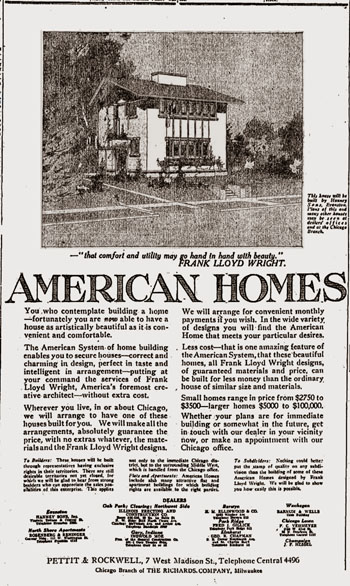
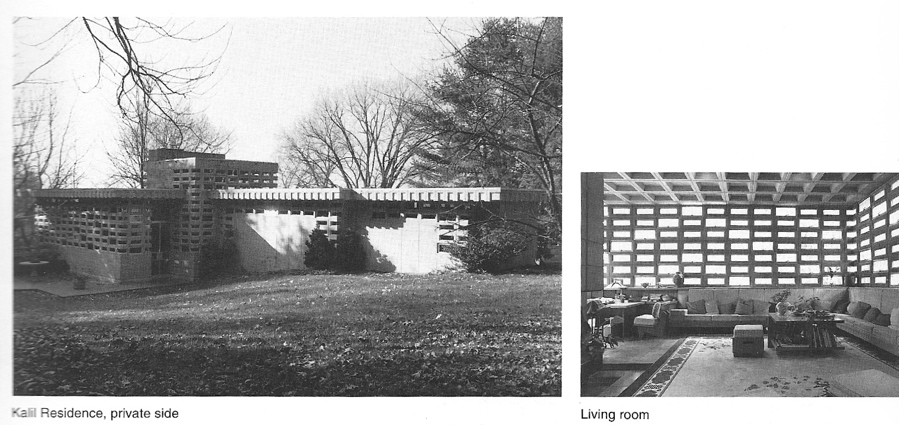
(i) Systembilt Industries shall construct homes in the Wrightian ‘Usonian Automatic‘ vernacular, which is, by this outfit’s estimation, the precursor to the Brutalist vernacular, which is erroneously said to be founded in the United Kingdom in the 1950s, and has since been nearly exclusively devoted to federal government architecture. Whereas the Brutalist is an exaggeration of scale and mass in proportion to the softening panes glass — or a more forgiving human sensibility — the Usonian is intentionally designed for the consumption and appreciation of the human and their family — the American family at that — using a uniquely modular and horizontal American vernacular. Due to the modular and affordable nature of the prefabricated building materials which would be shipped ready-to-assemble to the buyer, Frank Lloyd Wright innovated the construction method AMERICAN SYSTEM-BUILT HOMES. Using the internationally conscious appellation of ‘Usonian’ for ‘United States of North America’ or ‘USONA’, Mr. Wright provides at the turn of the century a vision of USONIA in which every family can own a firm and beautiful AMERICAN HOME at a fixed and reasonable cost.
(j) The planned community of Usonian Automatic homes by Systembilt Industries shall comprise the network of private homes of Friends in the Firm League of Friendship of the decentralized autonomous and International Black Cross Organization. The cultural centers of these communities shall be planned around the Mission Fulfillment Centers which are the meeting tents of the congregation.
(k) References.
(1) Usonian Automatic
(2) Kalil House

(3) Turkel House

(4) Tonkens House

(5) Automatic Blocks
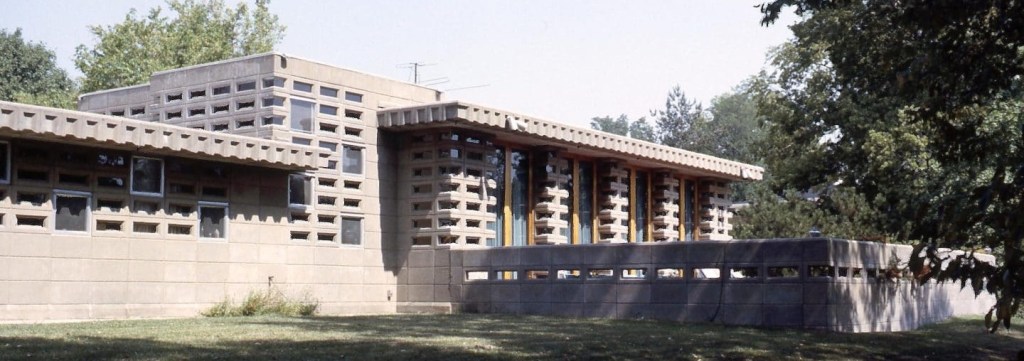
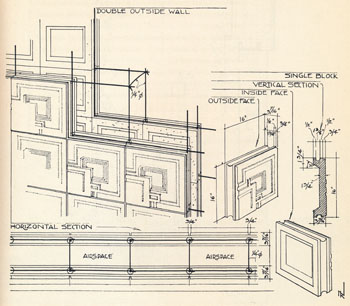
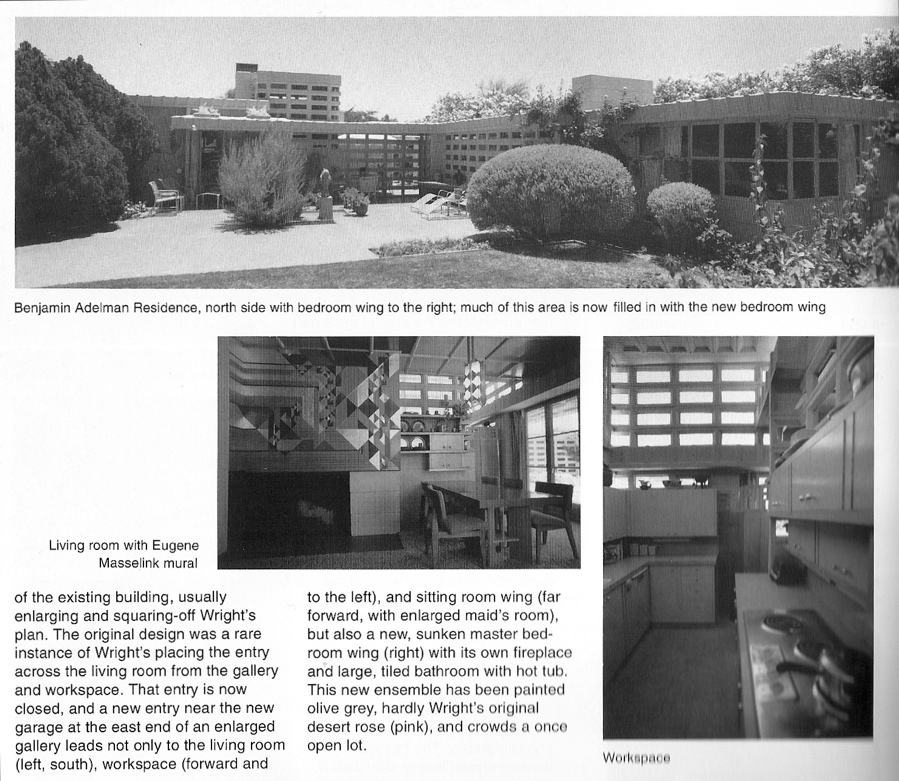
The textile block system — the root form of automatic blocks — is a unique structural building method created by Frank Lloyd Wright in the early 1920s. While the details changed over time, the basic concept involves patterned concrete blocks reinforced by steel rods, created by pouring concrete mixture into molds, thus enabling the repetition of form. The blocks are then stacked to build walls. Wright’s textile block houses are:
- Ennis House
- Robert and Rae Levin House (check also the other Michigan – Galesburg and Parkwin/Kalamazoo – houses at List of Frank Lloyd Wright works)
- Millard House
- Samuel Freeman House
- Storer House (Los Angeles)
- Westhope, located in Tulsa, Oklahoma, Wright’s only Textile Block house outside of California.[1]

(6) American System-Built Homes
The American System-Built Homes in Milwaukee, Wisconsin:
Frank Lloyd Wright’s earliest system of low-cost housing© 2005 Michael Lilek, All rights reserved
Master of the Small House
Copyright 2004-2005, Michael Lilek, All rights reserved.
Over a career spanning seven decades, Frank Lloyd Wright took special interest in creating architect-designed homes for moderate and low-income families. In the January 1938 issue of Architectural Forum, he commented, “[I] would rather solve the small house problem than build anything else I can think of…” Indeed, among Wright’s greatest masterpieces are several small homes designed for clients who could afford little. Many of these residences owe their existence to some form of client labor (do-it-yourself), ingenious cost-cutting or salvaging. Each magically shelters it occupants in beautiful spaces, connects them to nature, and allows them to feel more alive.
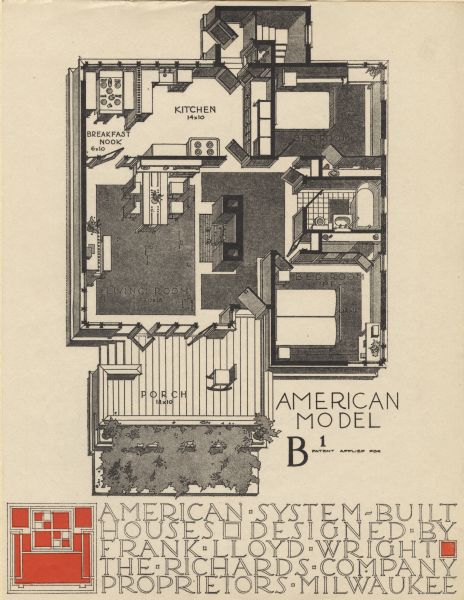
American System-Built Homes
In a 1901 speech entitled, “The Art and Craft of the Machine,” Wright outlined his vision of affordable housing. He asserted that the home would have to go to the factory, instead of the skilled labor coming to the building site. Between 1915 and 1917 Wright designed a series of standardized “system-built” homes, known today as the American System-Built Homes. By system-built, he did not mean pre-fabrication off-site, but rather a system that involved cutting the lumber and other materials in a mill or factory, then bringing them to the site for assembly. This system would save material waste and a substantial fraction of the wages paid to skilled tradesmen. Wright produced more than 900 working drawings and sketches of various designs for the system. Six examples were constructed, still standing, on West Burnham Street and Layton Boulevard in Milwaukee, Wisconsin. Other examples were constructed on scattered sites throughout the Midwest with a few yet to be discovered.
Arthur L. Richards, Developer
By 1911, companies connected to Arthur L. Richards had engaged Frank Lloyd Wright to design several projects, including an unbuilt hotel in Madison and the Hotel Geneva in Lake Geneva, Wisconsin (1912, demolished). By November 1916, Richards entered into an agreement with Wright to promote the American System-Built Homes. The contract covered all parts of the United States, Canada and Europe. It called for the Richards Company “…to furnish, as far as possible, all materials entering into the construction of the buildings and to at least furnish the plans, drawings, specifications and details and lumber, millwork, exterior plaster material, paints, stains, glazing, hardware trimmings and electric lighting fixtures for said buildings.” Richards was to recruit a distribution channel of builders and developers from around the country. He appears to have focused his efforts in the Chicago area and a few other Midwestern cities.
The agreement between Wright and Richards anticipated that the American System-Built Homes project would be wildly successful. Unfortunately, the entry of the United States into World War I on April 6, 1917, diverted building materials to wartime needs. Housing starts ground to a halt. Wright also began extensive travels between America and Japan at this time, related to the Imperial Hotel commission. Wright became unhappy with his relationship with Richards, leading to a lawsuit in August of 1917. Central to Wright’s claim was the non-payment of royalties and fees. Wright won a judgment against Richards in February of 1918. Although the business relationship ended after a few years, Wright and Richards rekindled their friendship decades later and exchanged cordial letters and visits.

CCP: DOP Building
DECENTRALIZED AUTONOMOUS ORGANIZATION
DEPARTMENT OF PEACE AND FRIENDSHIP
COMMISSION ON CAPITAL PROJECTS
FROM THE DESK OF
THE PUBLIC FRIEND
Antarah,
ObNS
SOLICITATION | LAST MODIFIED [null]
TO ALL TO WHOM THESE PRESENTS COME, SEND GREETINGS AND PEACE:—
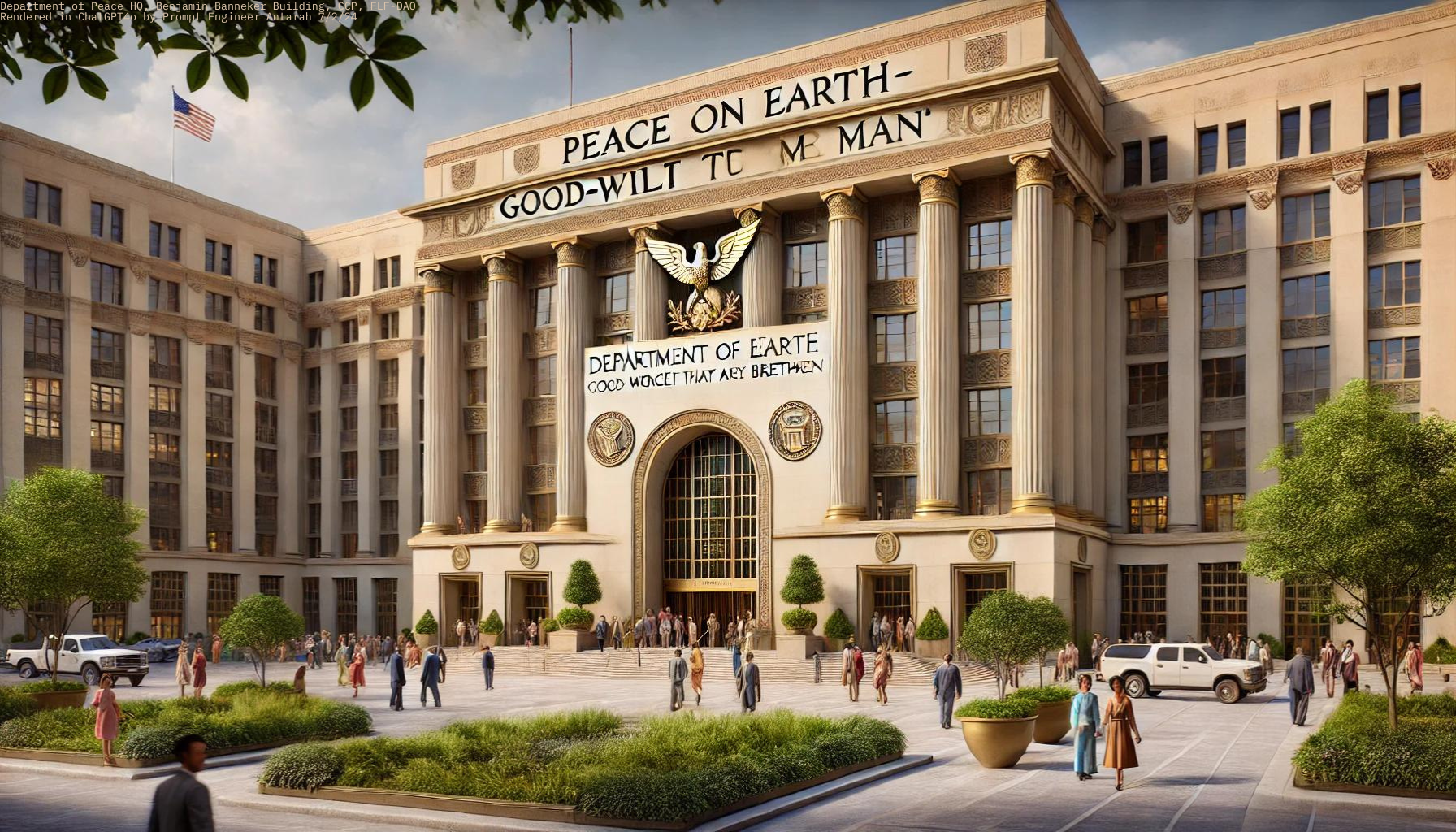
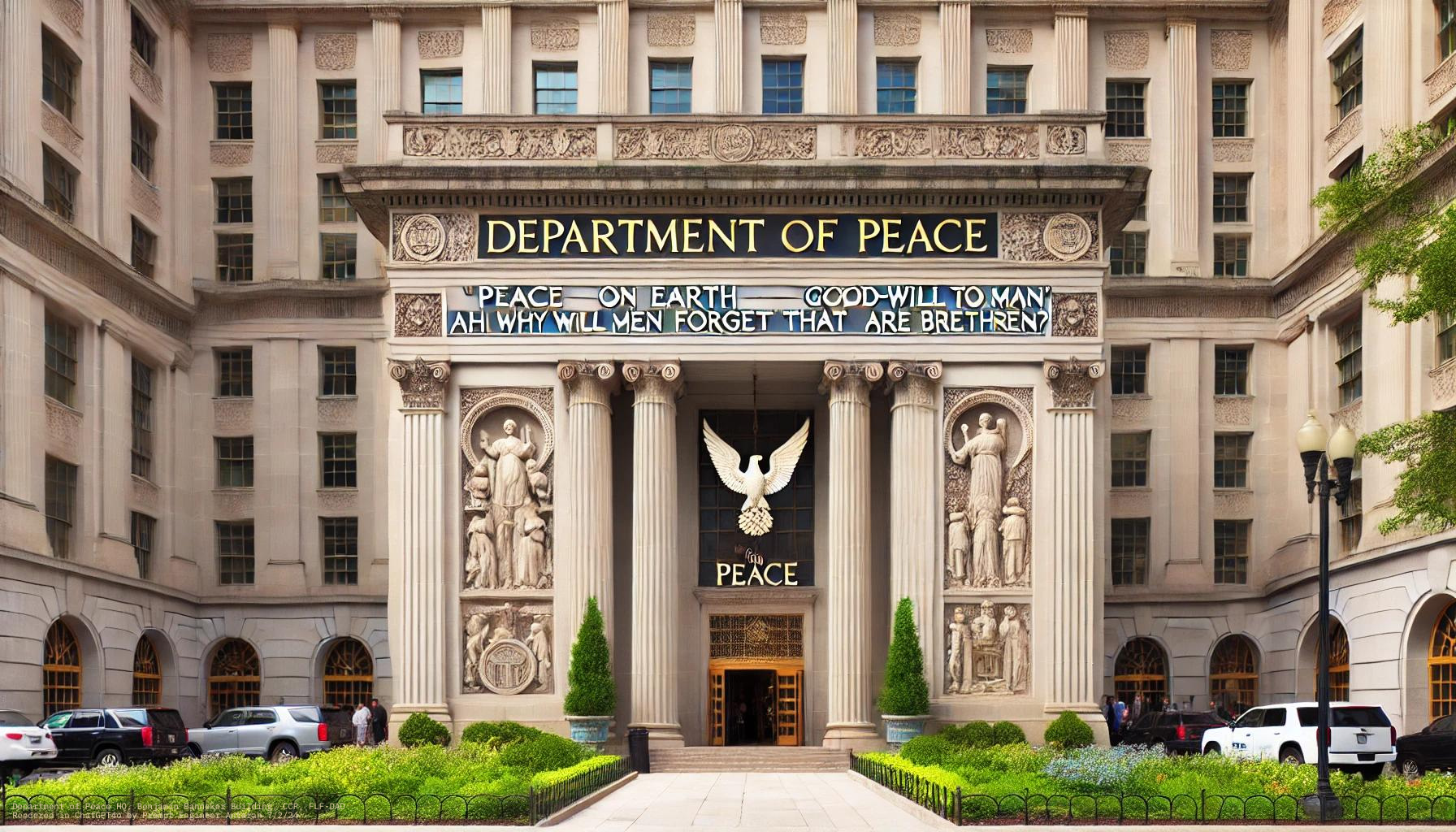
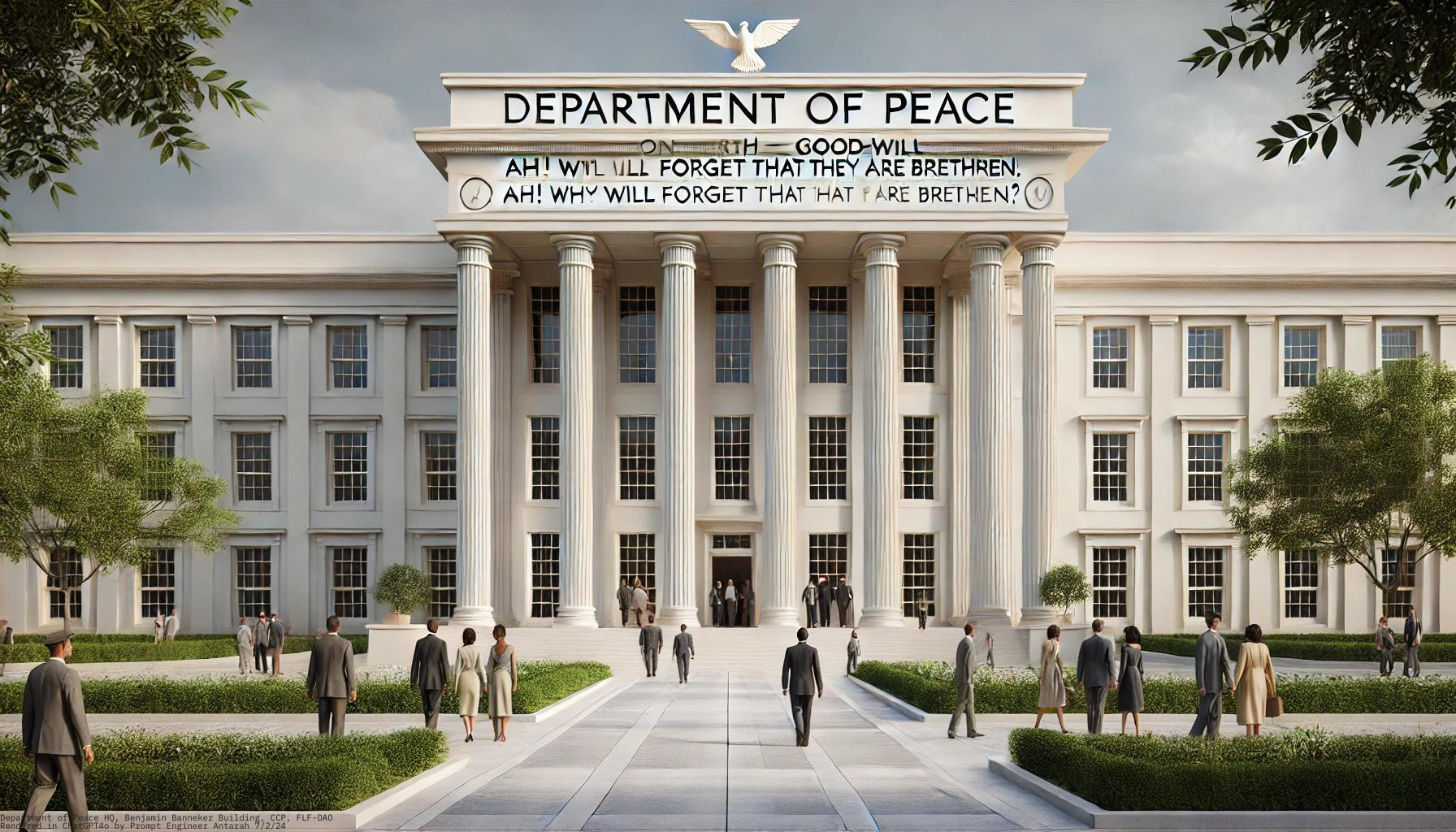
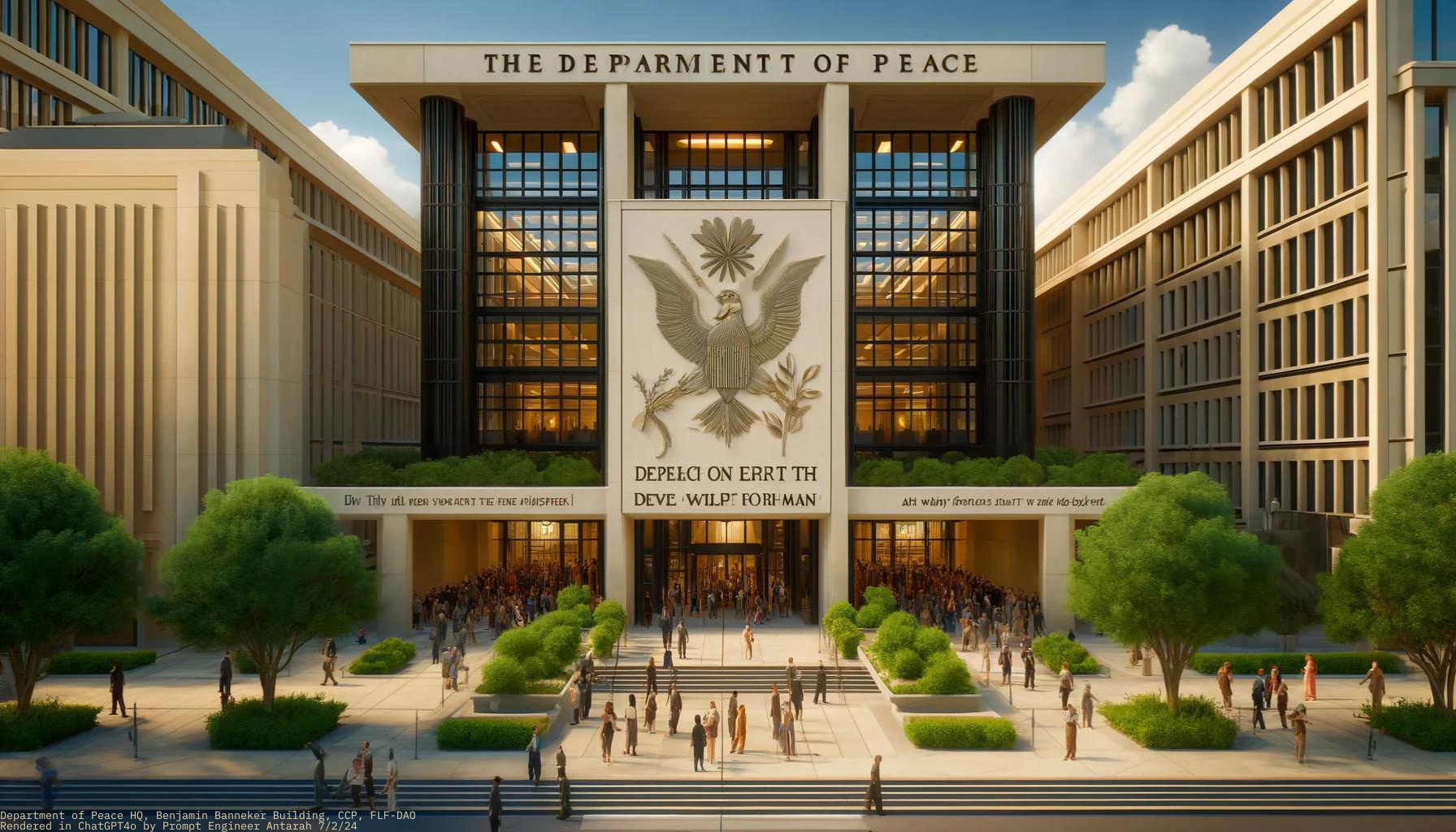
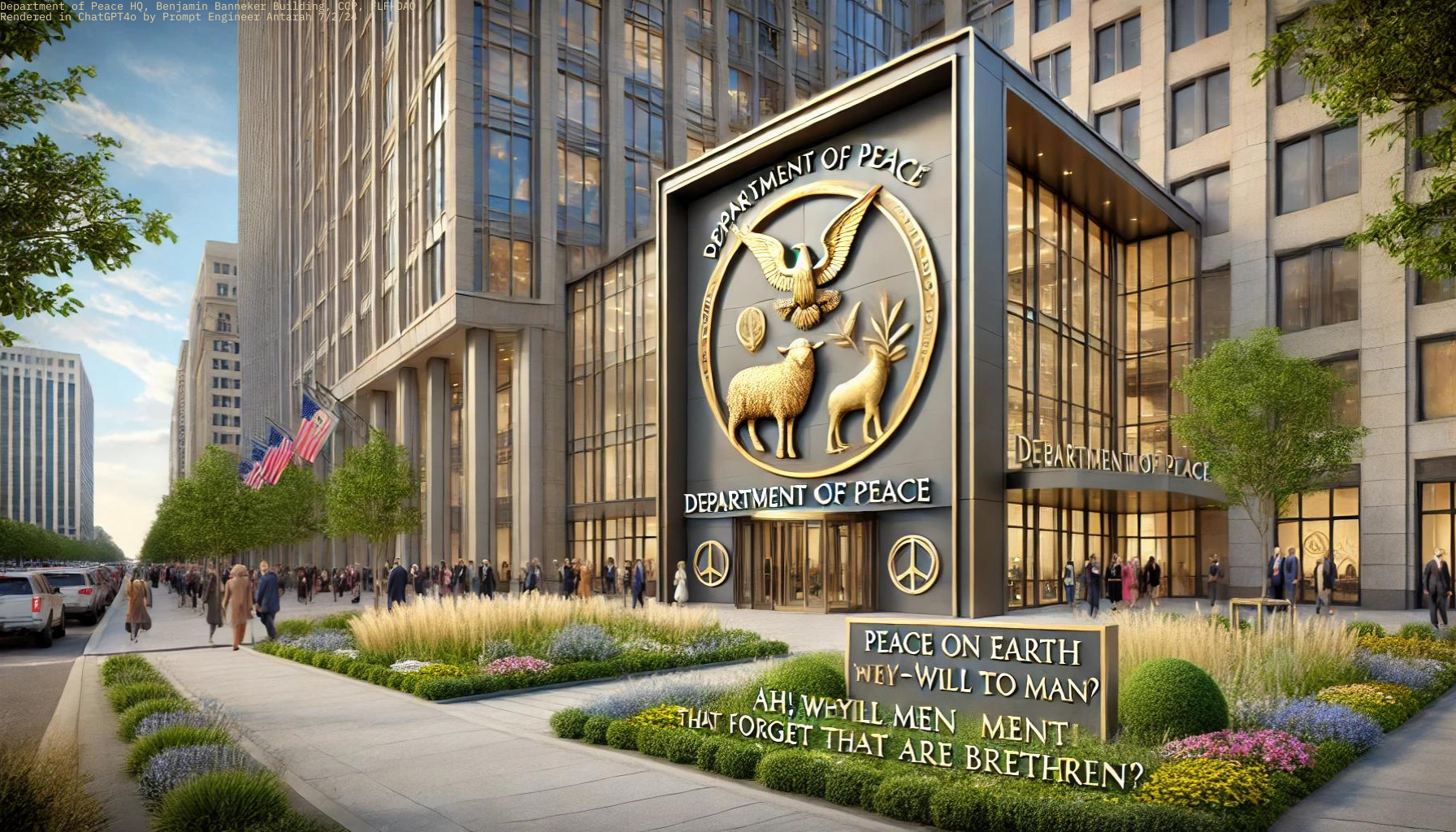
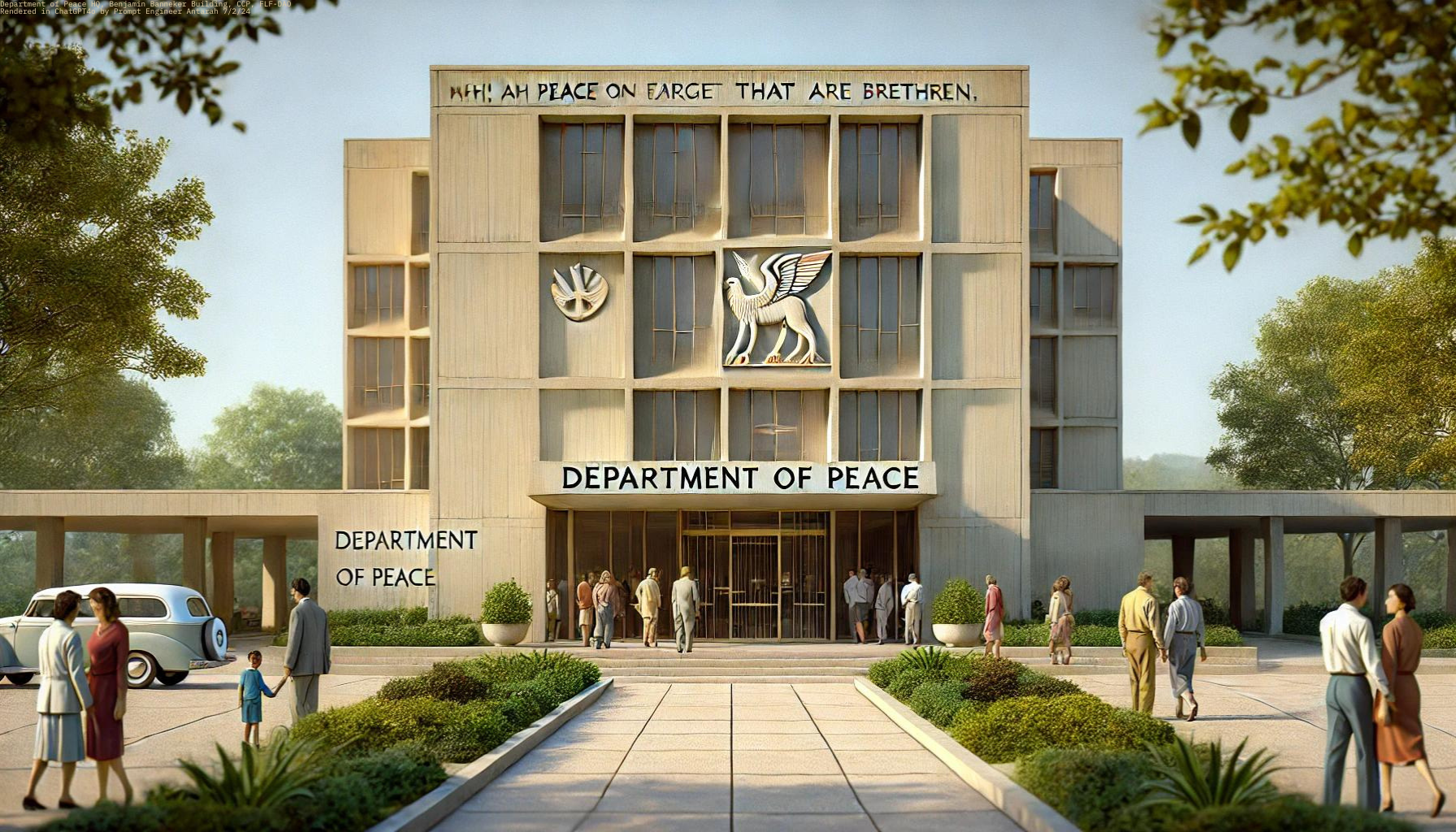
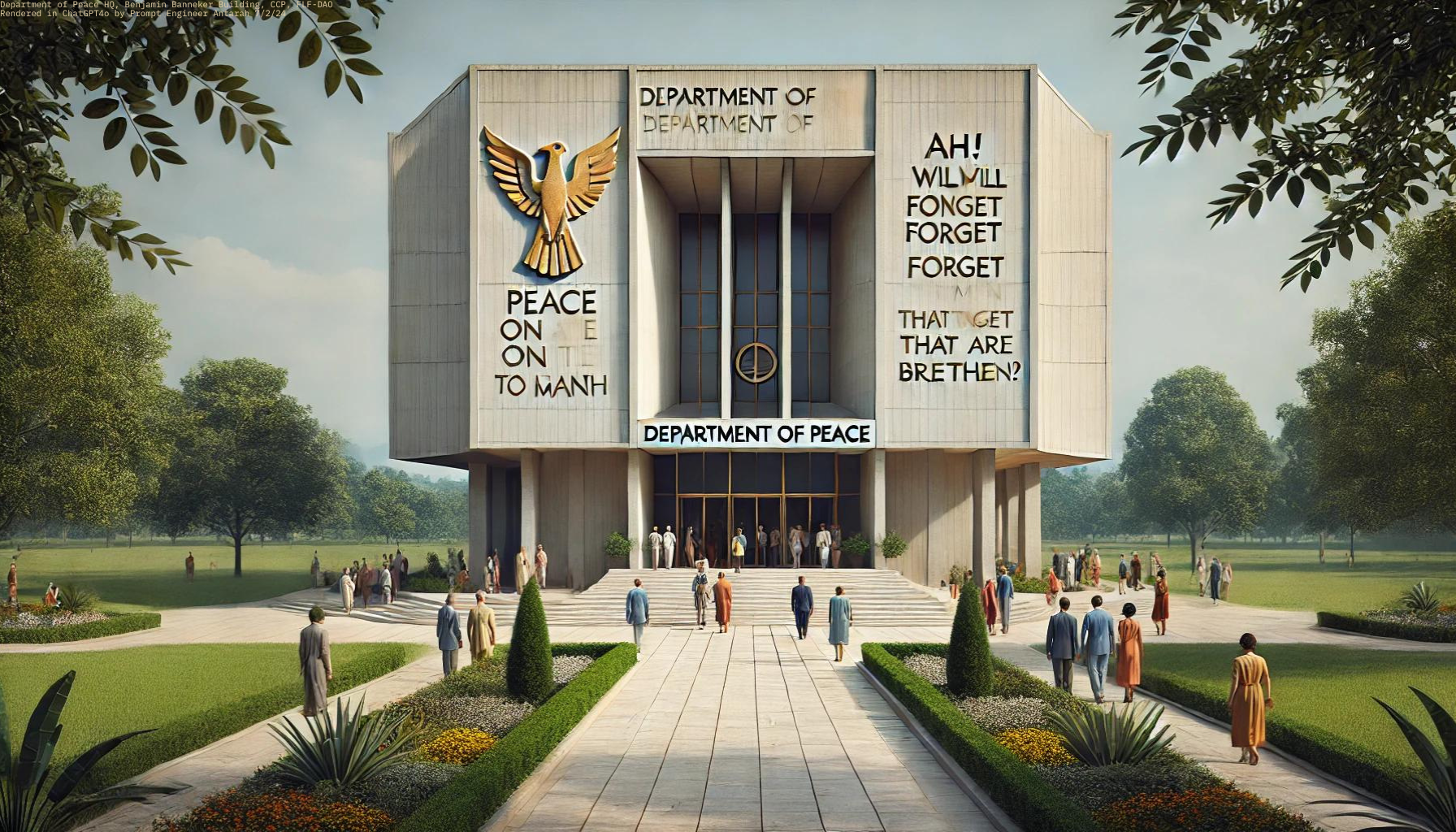
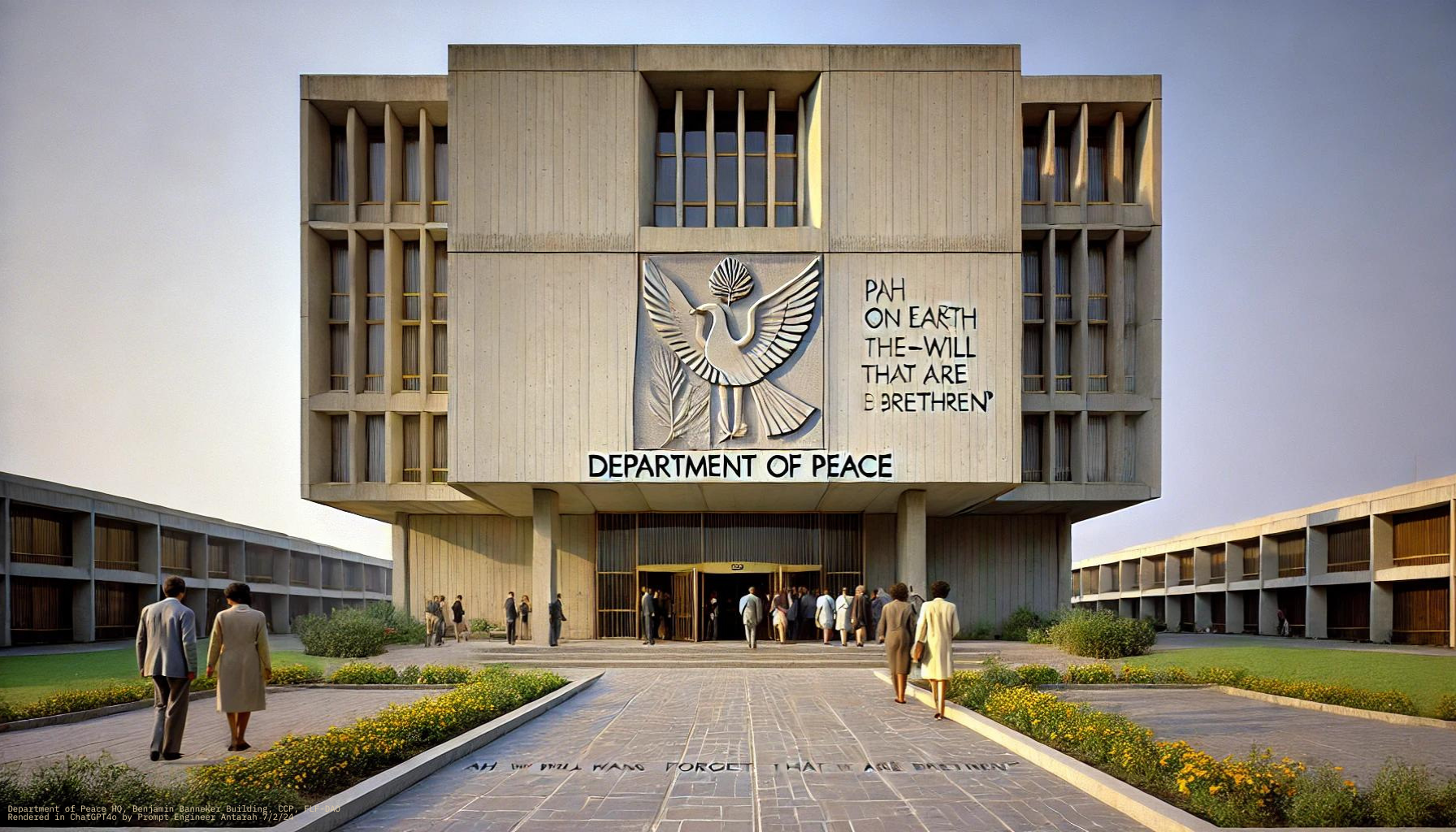
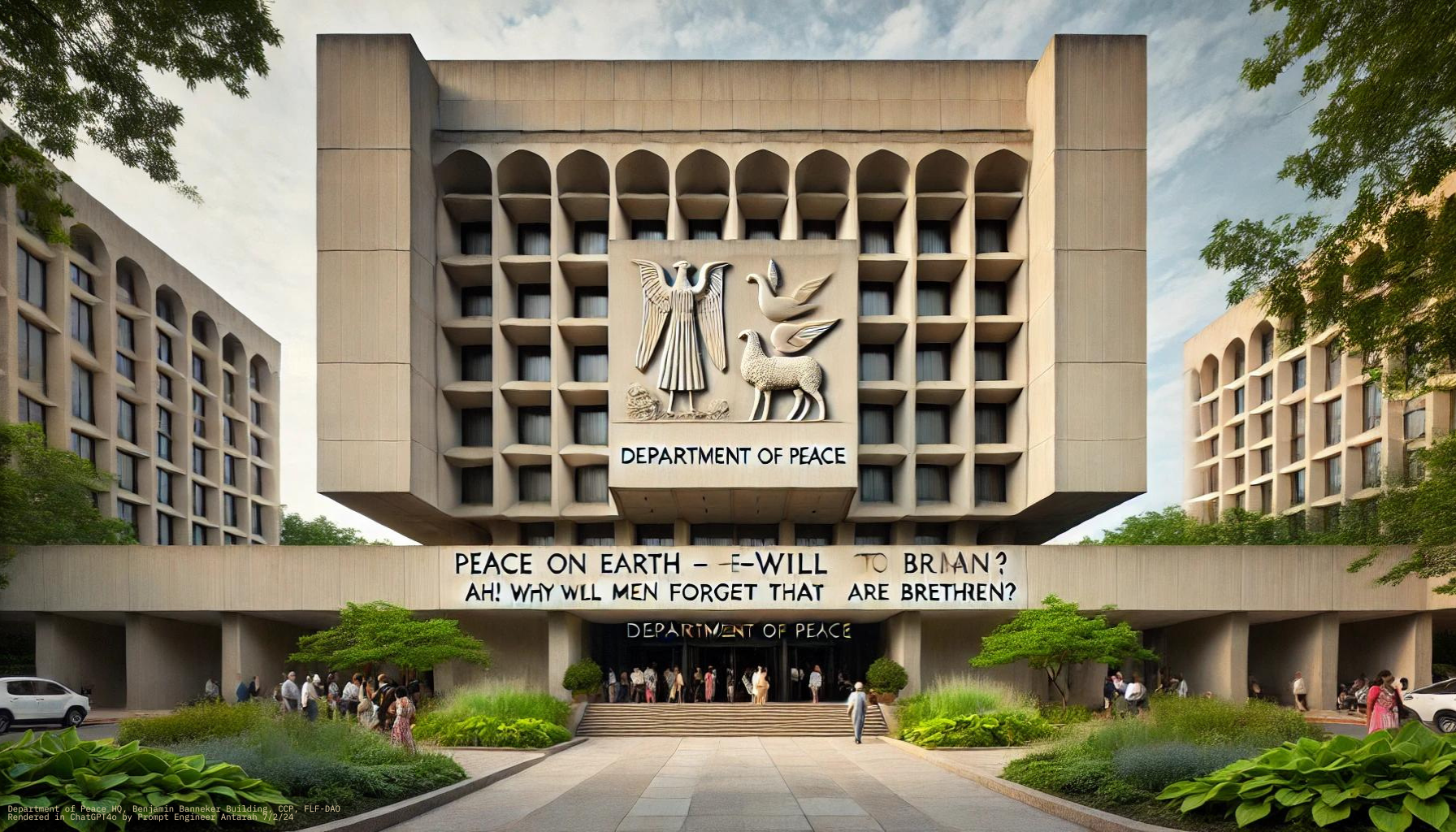
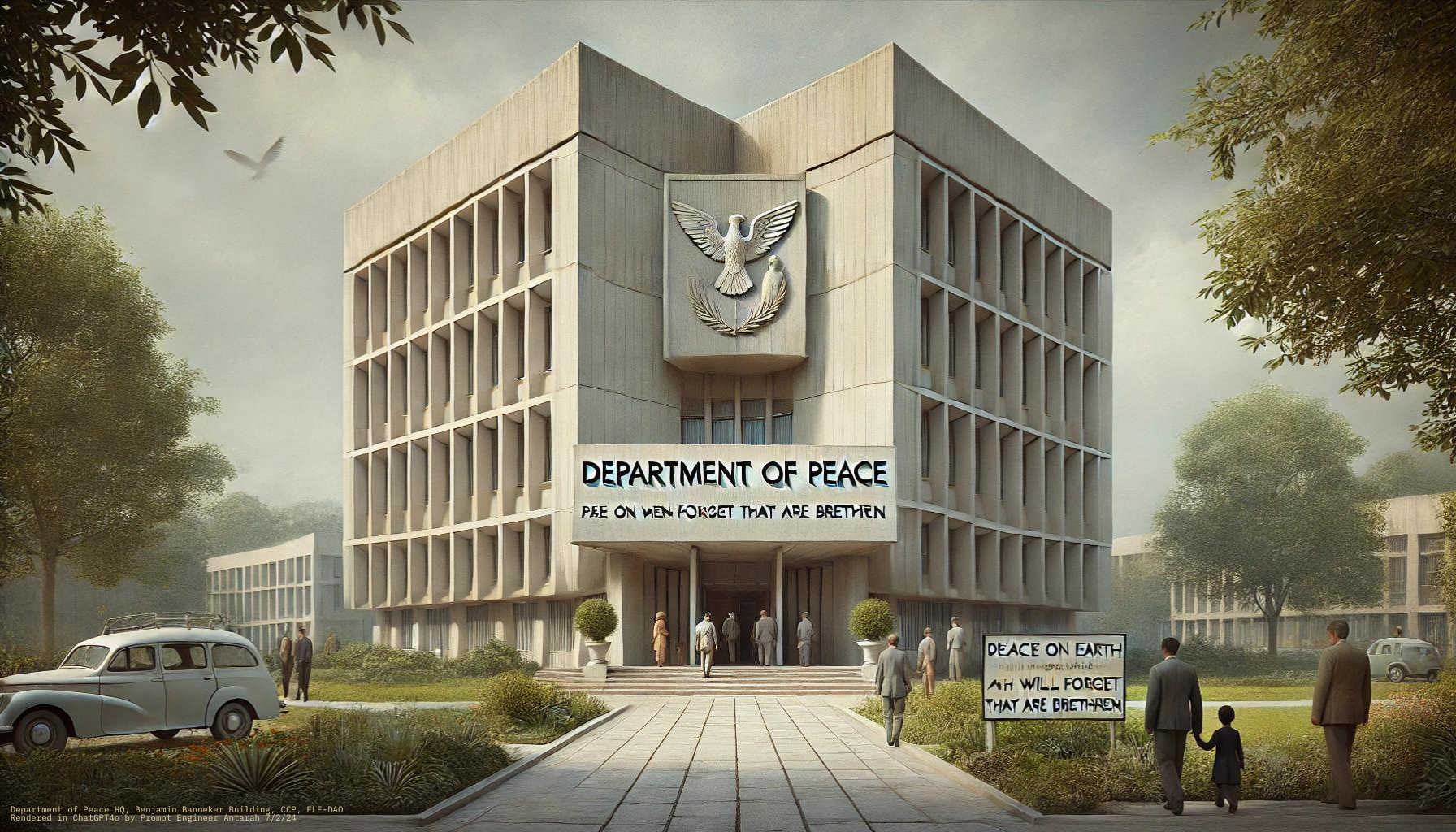
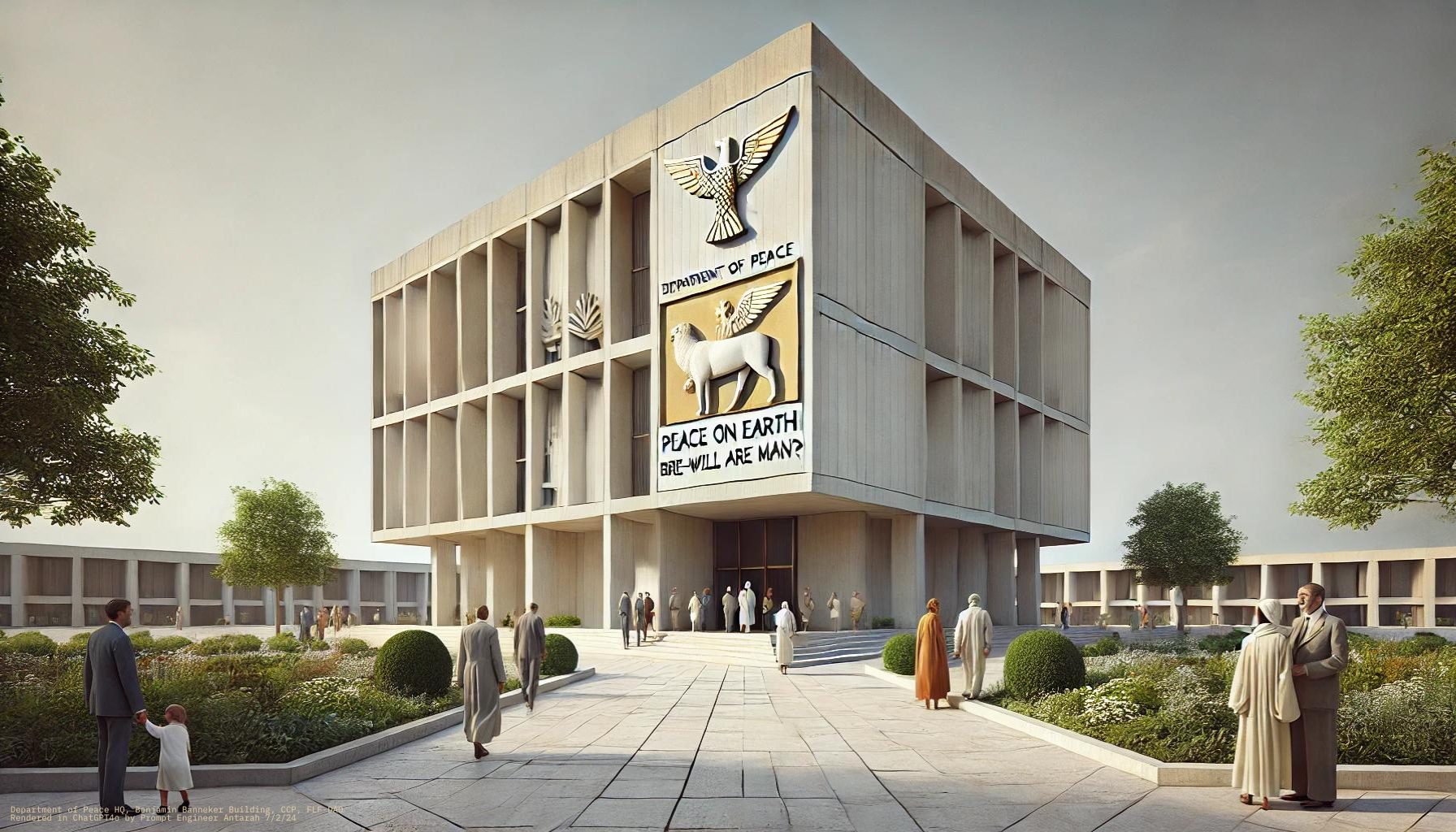
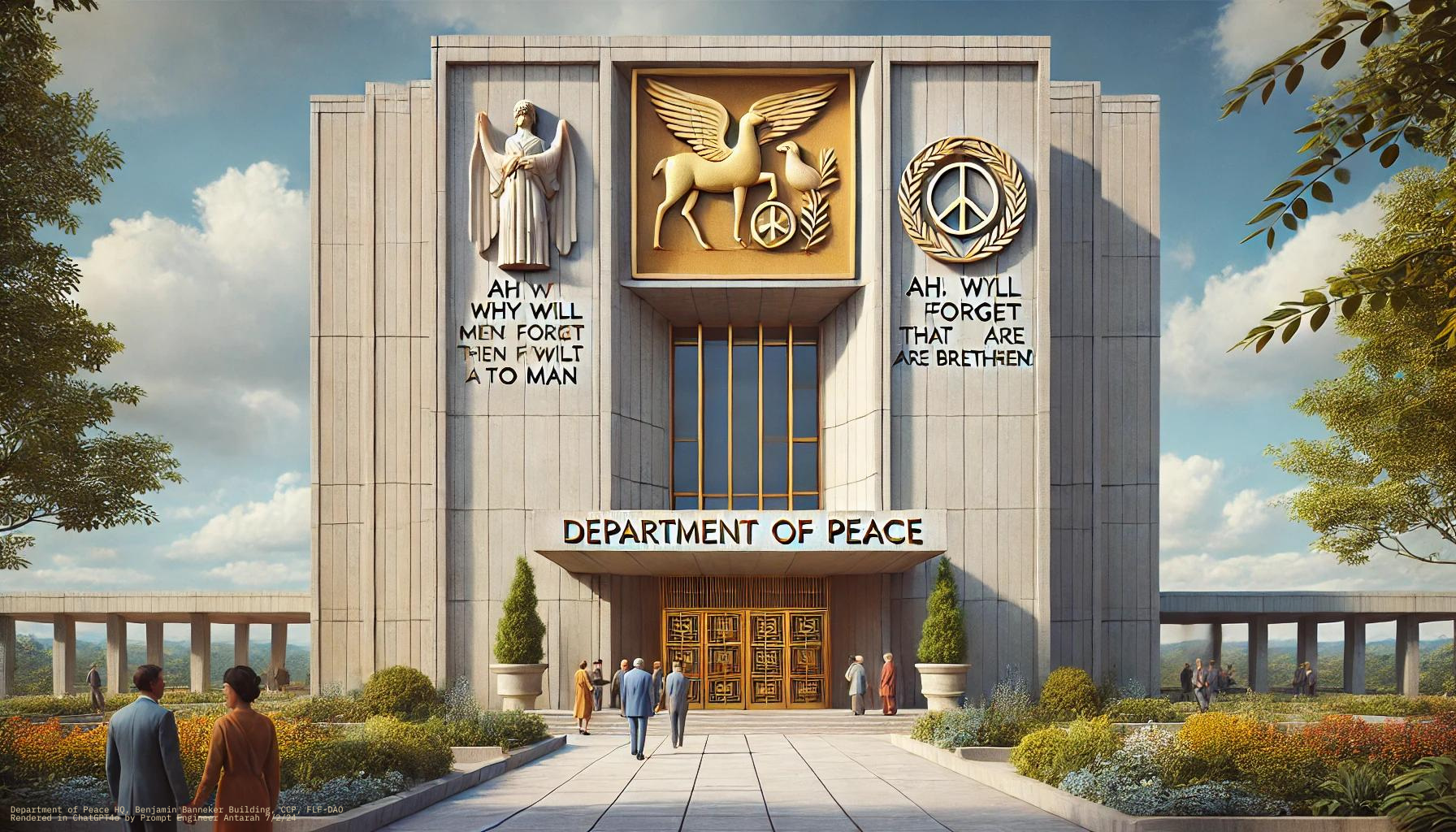
Department of Peace Building
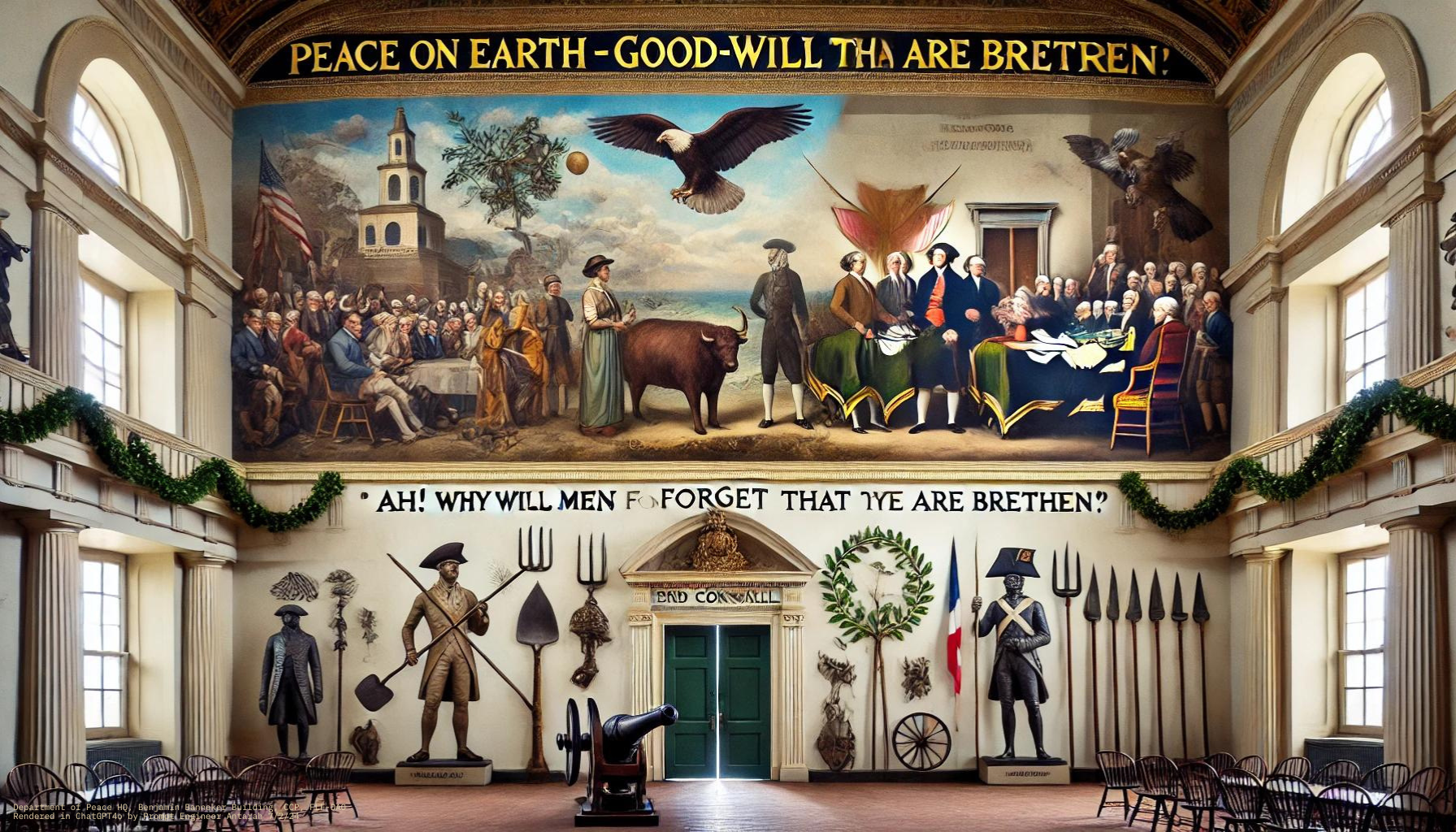
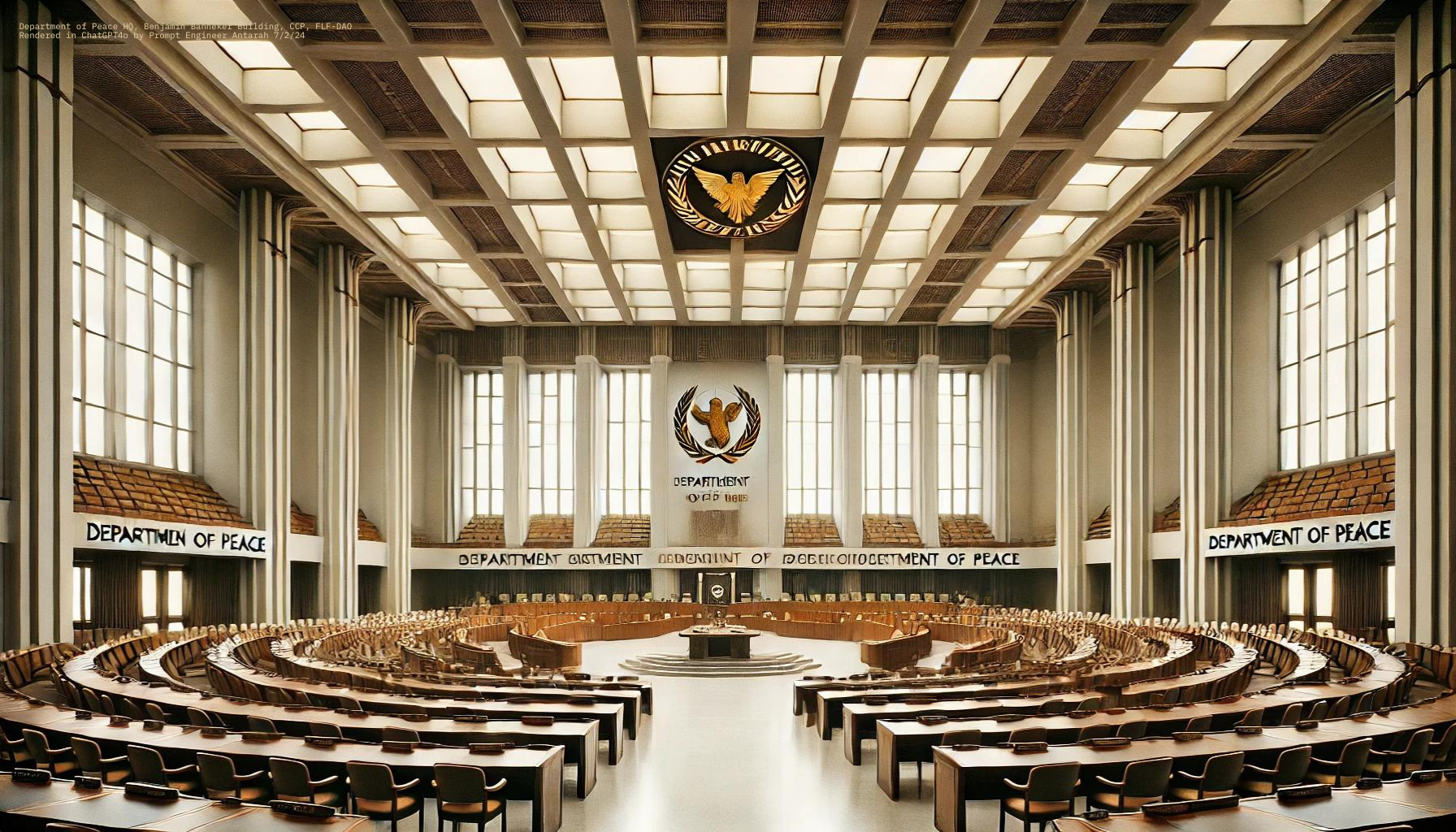
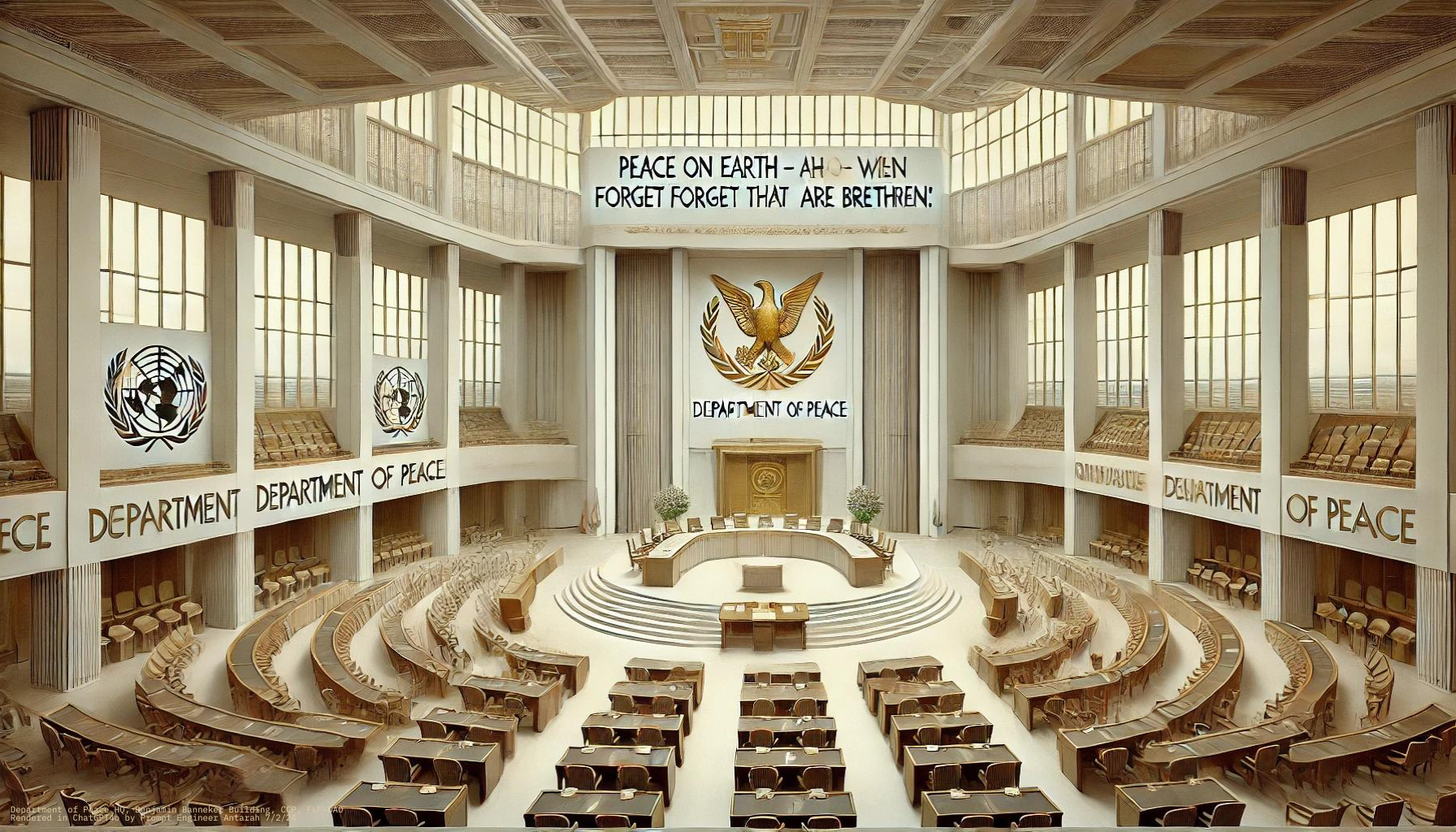
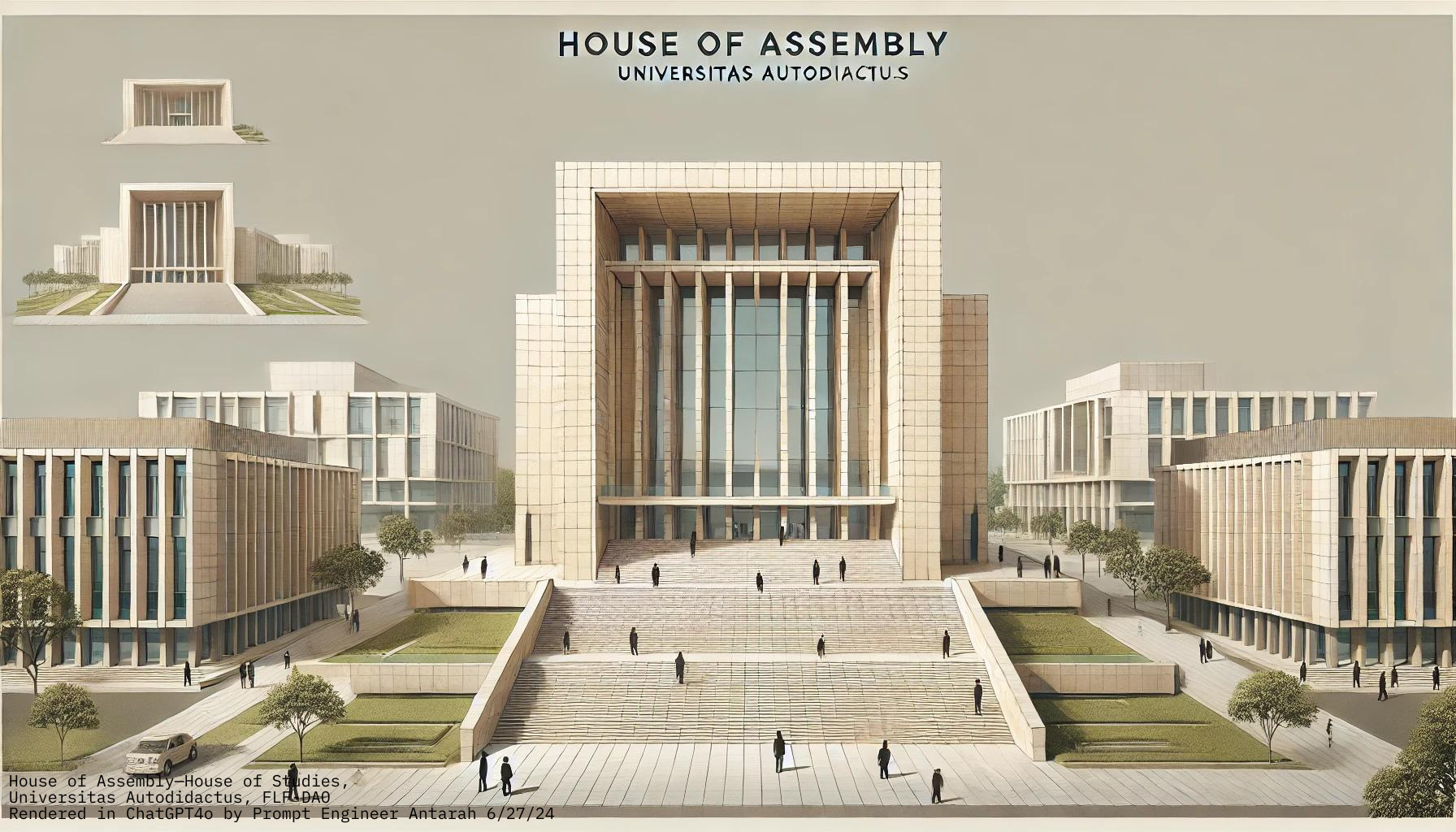
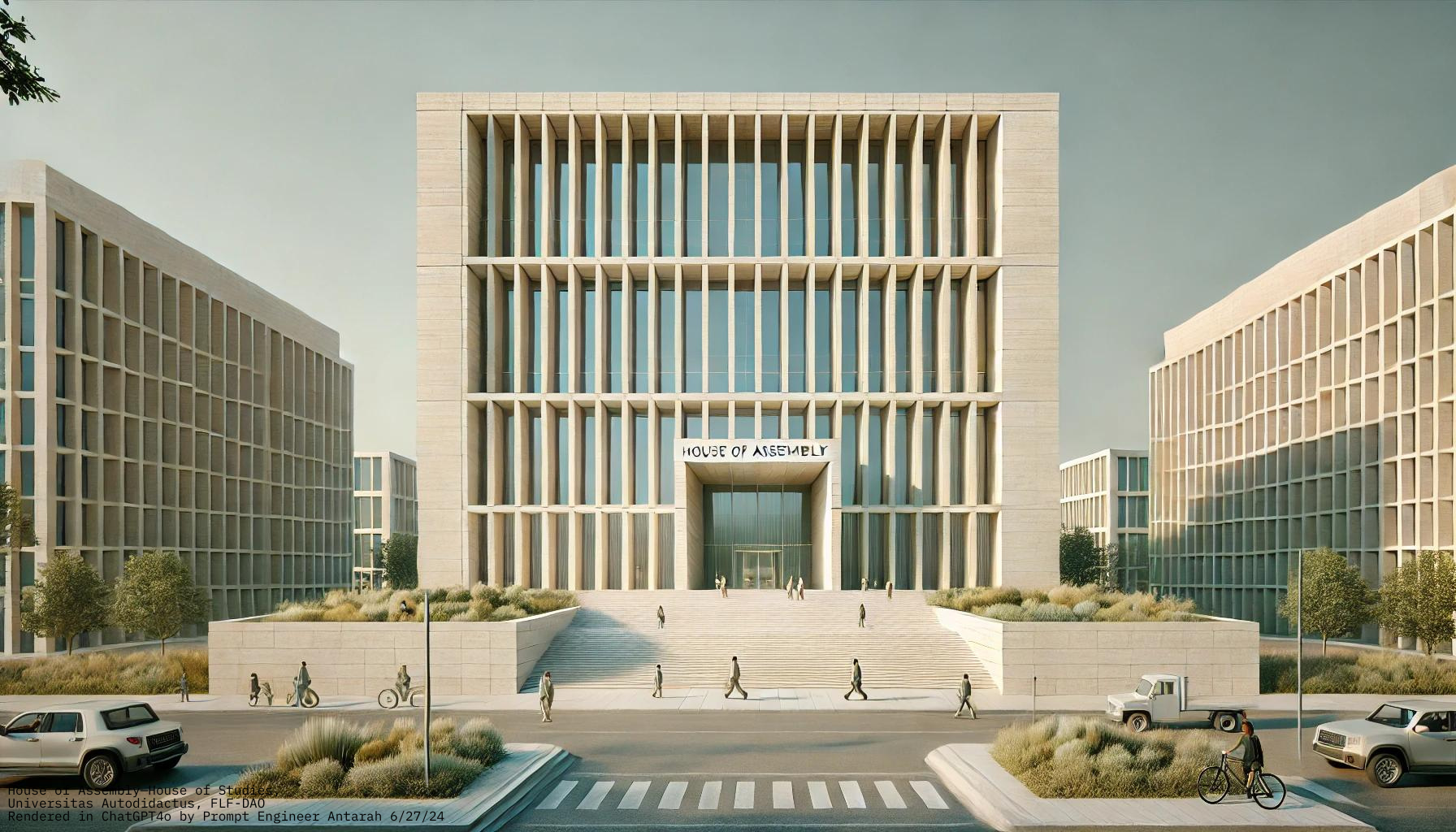
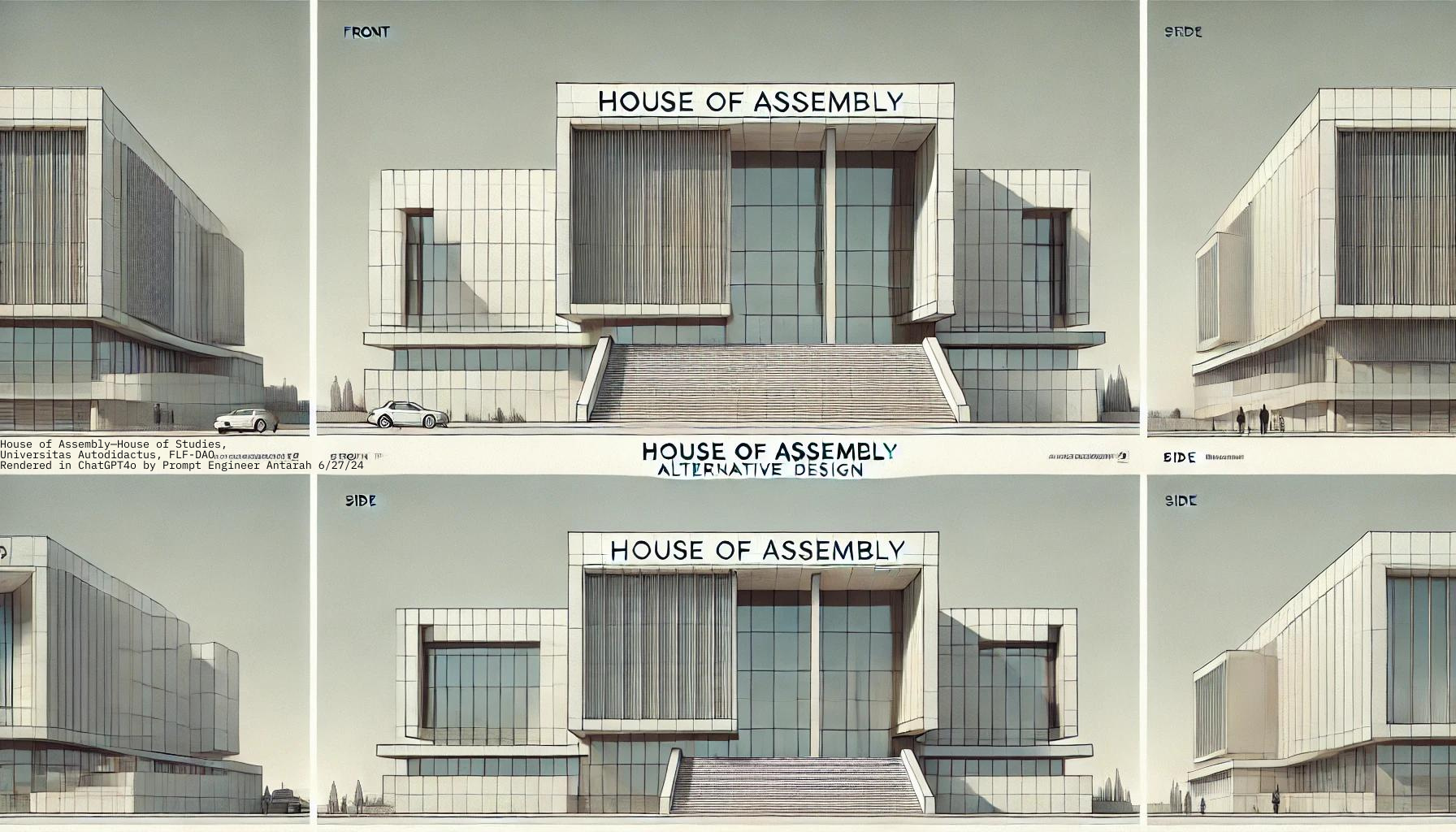
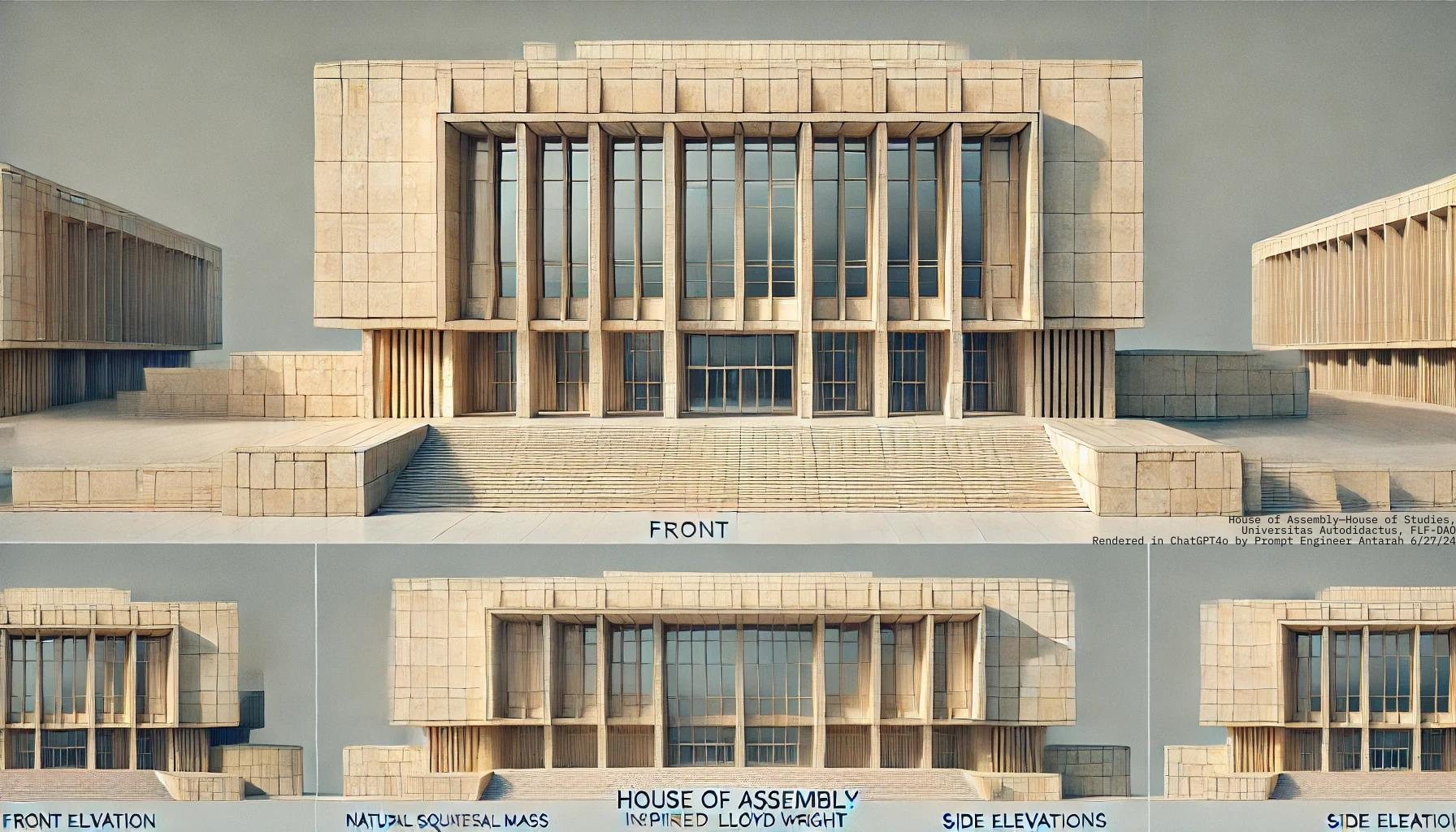
The FLF-DAO IBCO Commission on Capital Projects hereby proposes the following designs for buildings to house the Department of Peace and Friendship (DOP) of the Decentralized Autonomous Organization (DAO), whose governing board is known as the Firm League of Friendship (FLF). The form and function of these buildings are coined Mission Fulfillment Centers which shall administer (perform and deliver) the obligations and services of the ObNS+FLF-DAO to humanity by and through the DOP and Universitas Autodidactus (UA). The design specifications of these buildings are derived from those detailed in DOP Founder Benjamin Banneker’s 1793 Almanac, found at Department of Peace Act (DOPA) Article 3 § 1 A PLAN OF A PEACE-OFFICE, FOR THE UNITED STATES.
DOPA Art. 2(b) provides for the establishment of the national headquarters of the Department at existing premises in the nation’s capitol which have yet to be procured and renovated. That facility is known and would be known as the “Old Recorder of Deeds Building” (“RDB”, “Recorder Building” or “Deeds” for short), and it is not contemplated to be dedicated to a particular personage. The following designs, however, are submitted to the public DAO for review and due appropriations for construction toward the development of a network or localized campus of visionary buildings to support the UA/DOP cross-country mission. The first or most central construction of such development is to be called the “Benjamin Banneker Building”.
Jump-To:
Aesthetic A: Classical/Colonial
A:\Interior: Vestibule
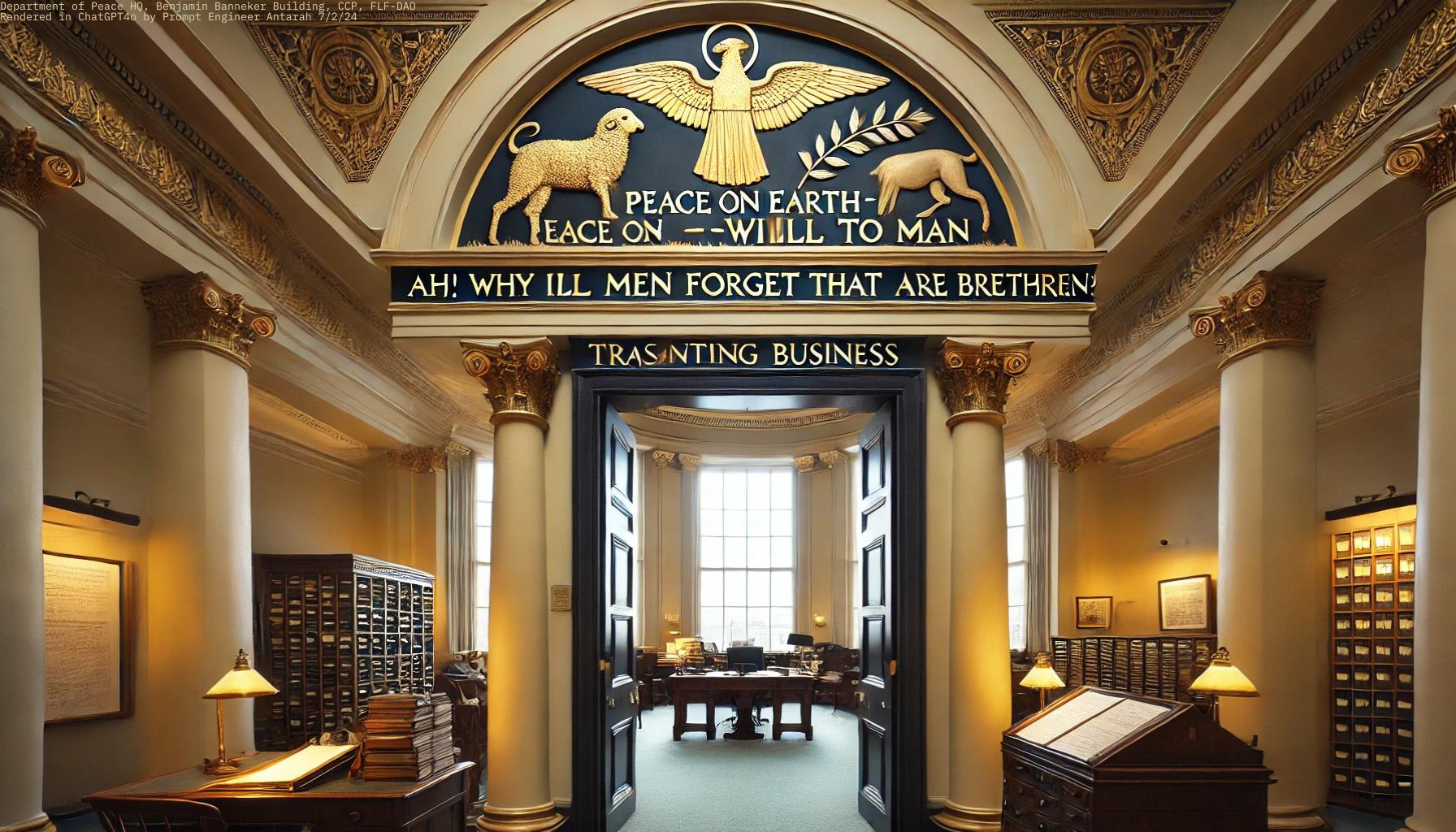
A:\Interior: Gallery
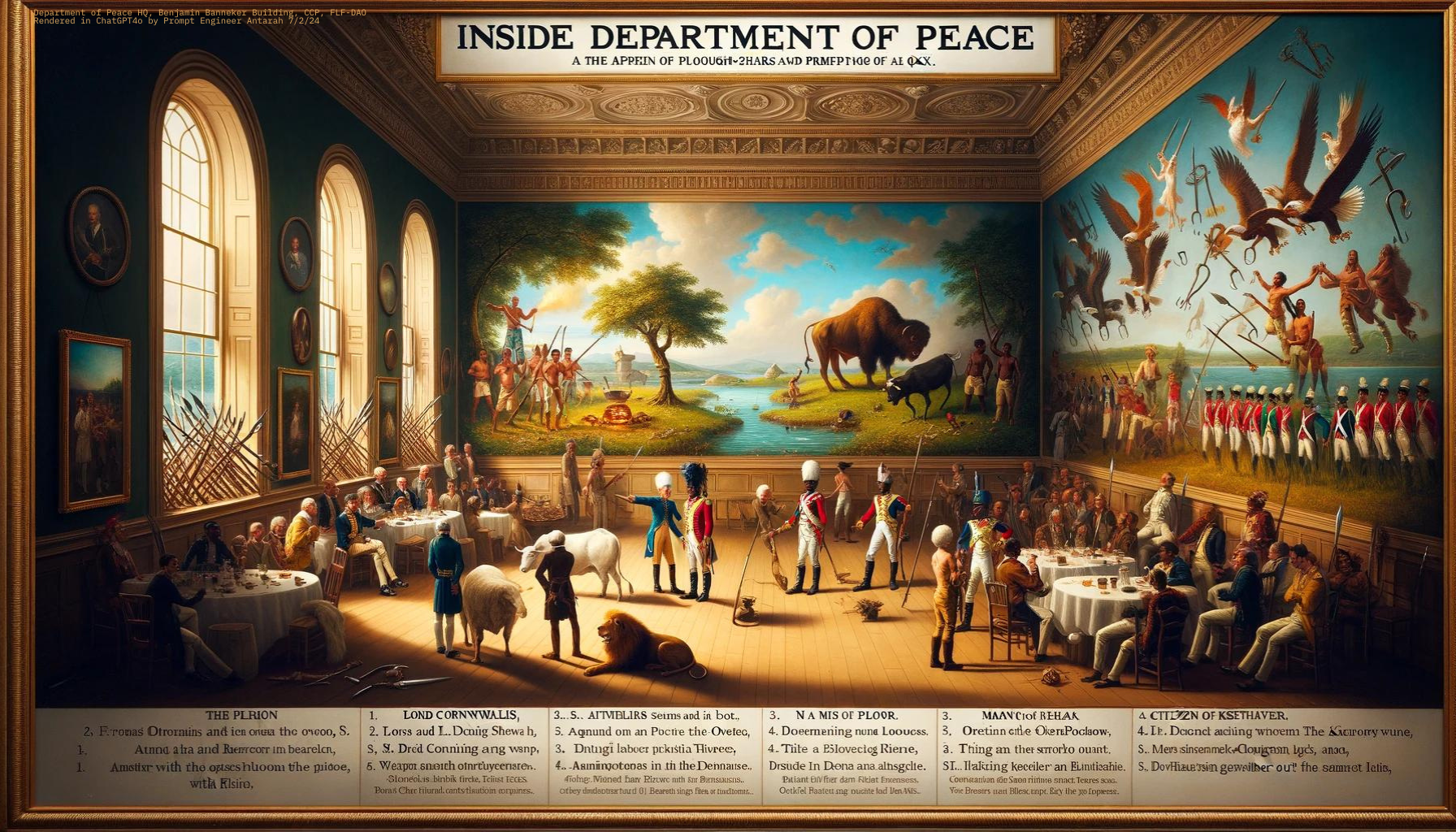
A:\Interior: Hall of Meeting
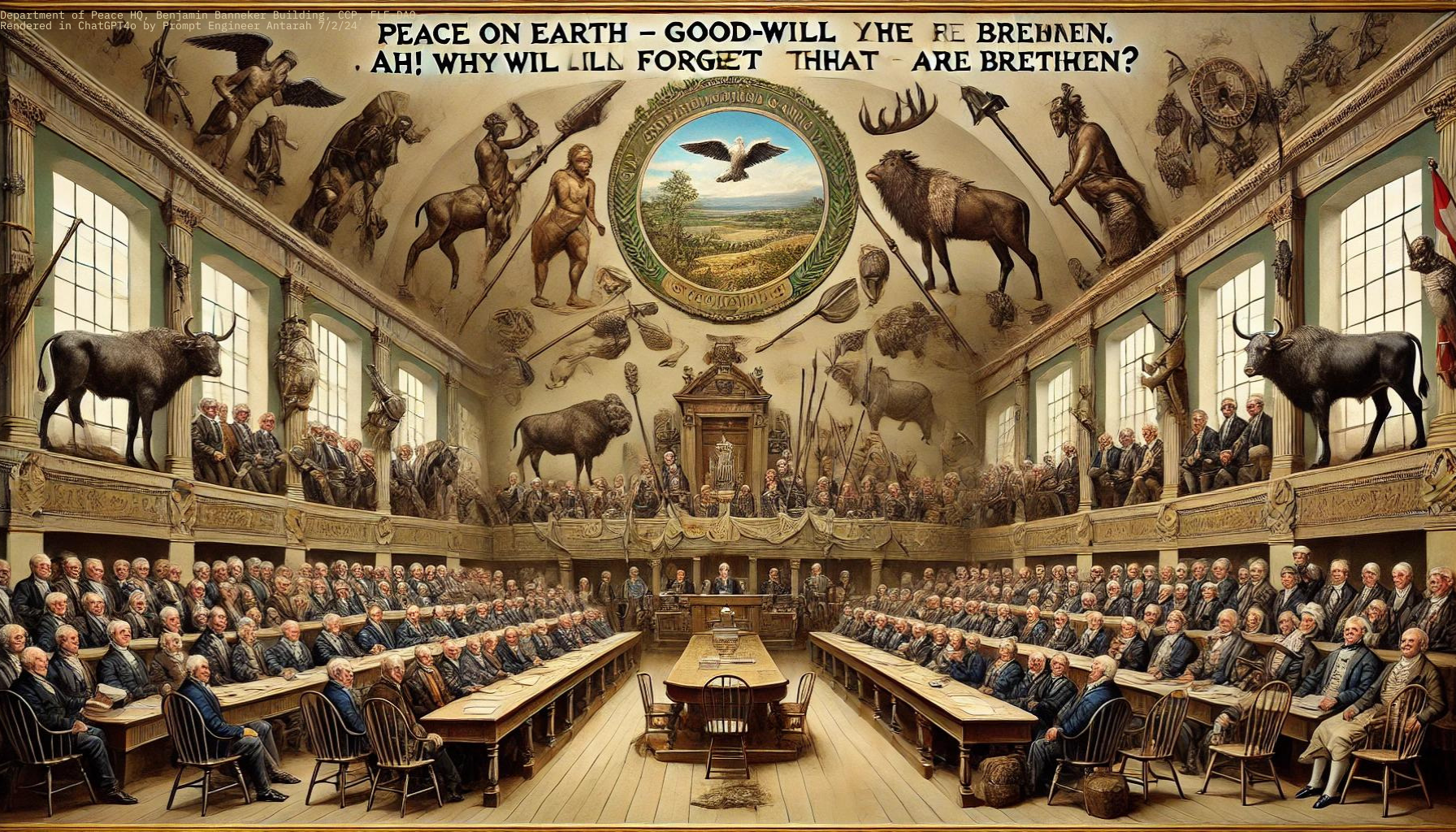
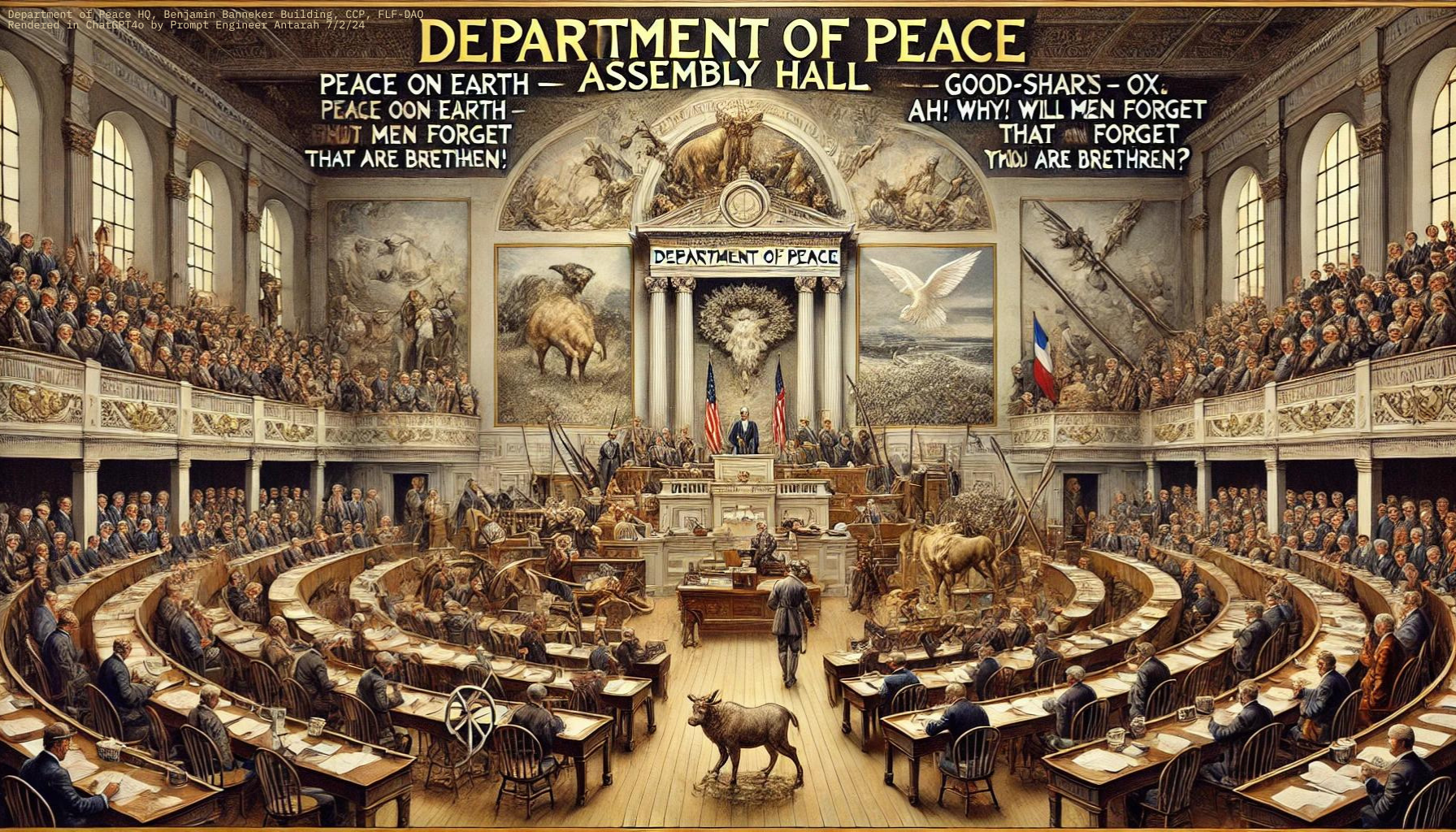
A:\Exterior Elevations
Aesthetic B: Classical/Modernist
Aesthetic C: Brutalist

Aesthetic D: Brutal-Modernist
D:\Exterior Elevations
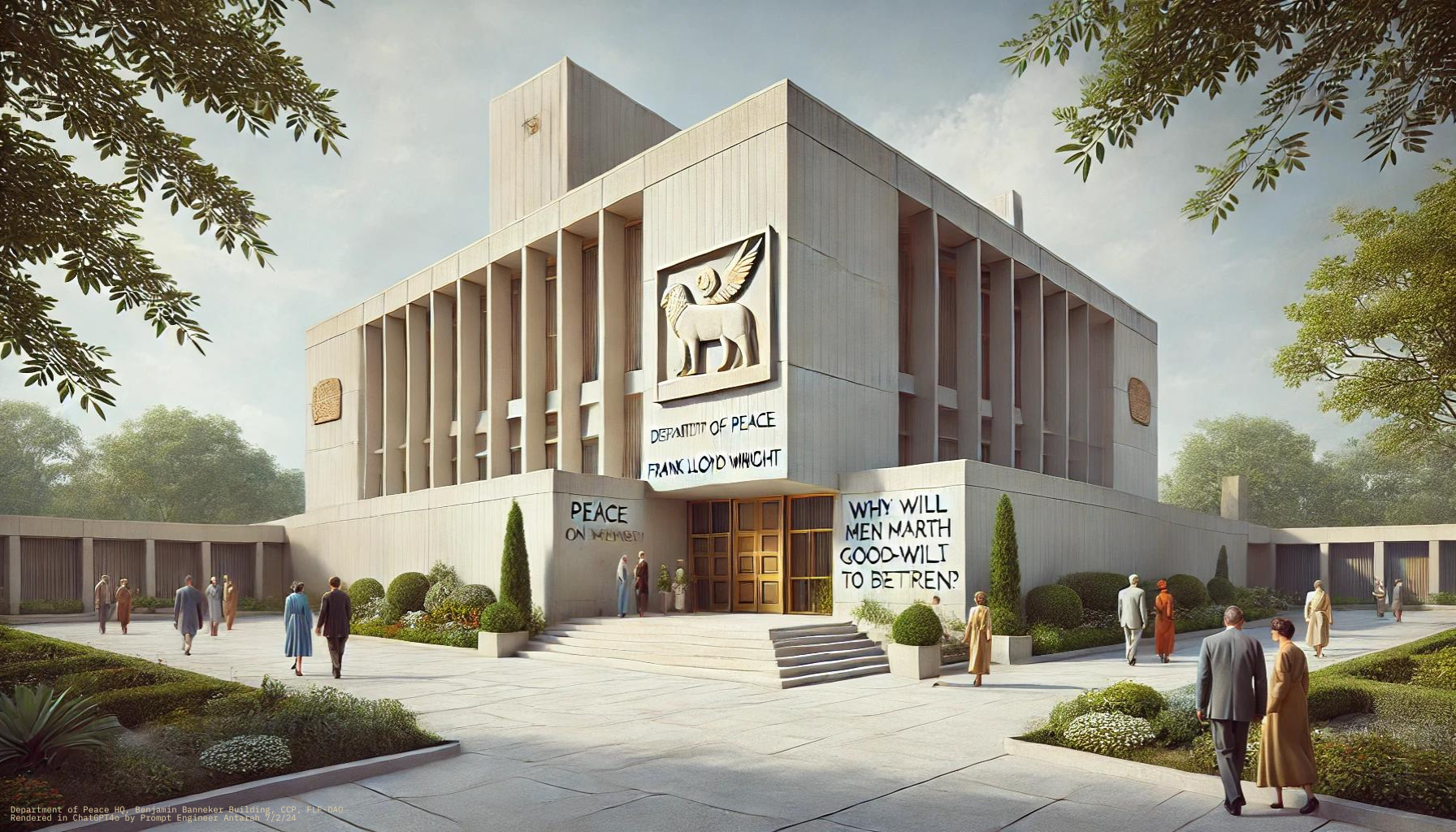
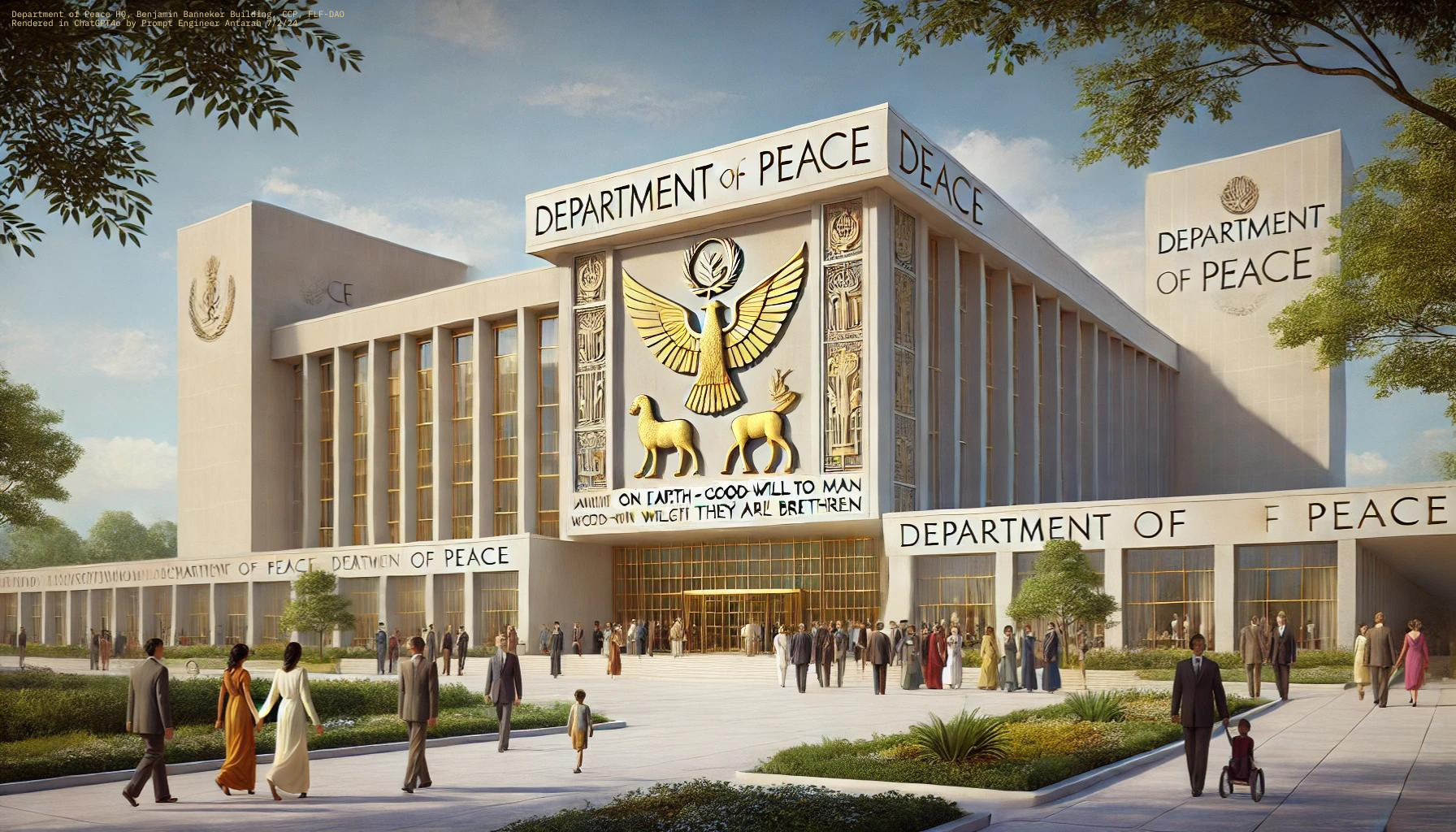
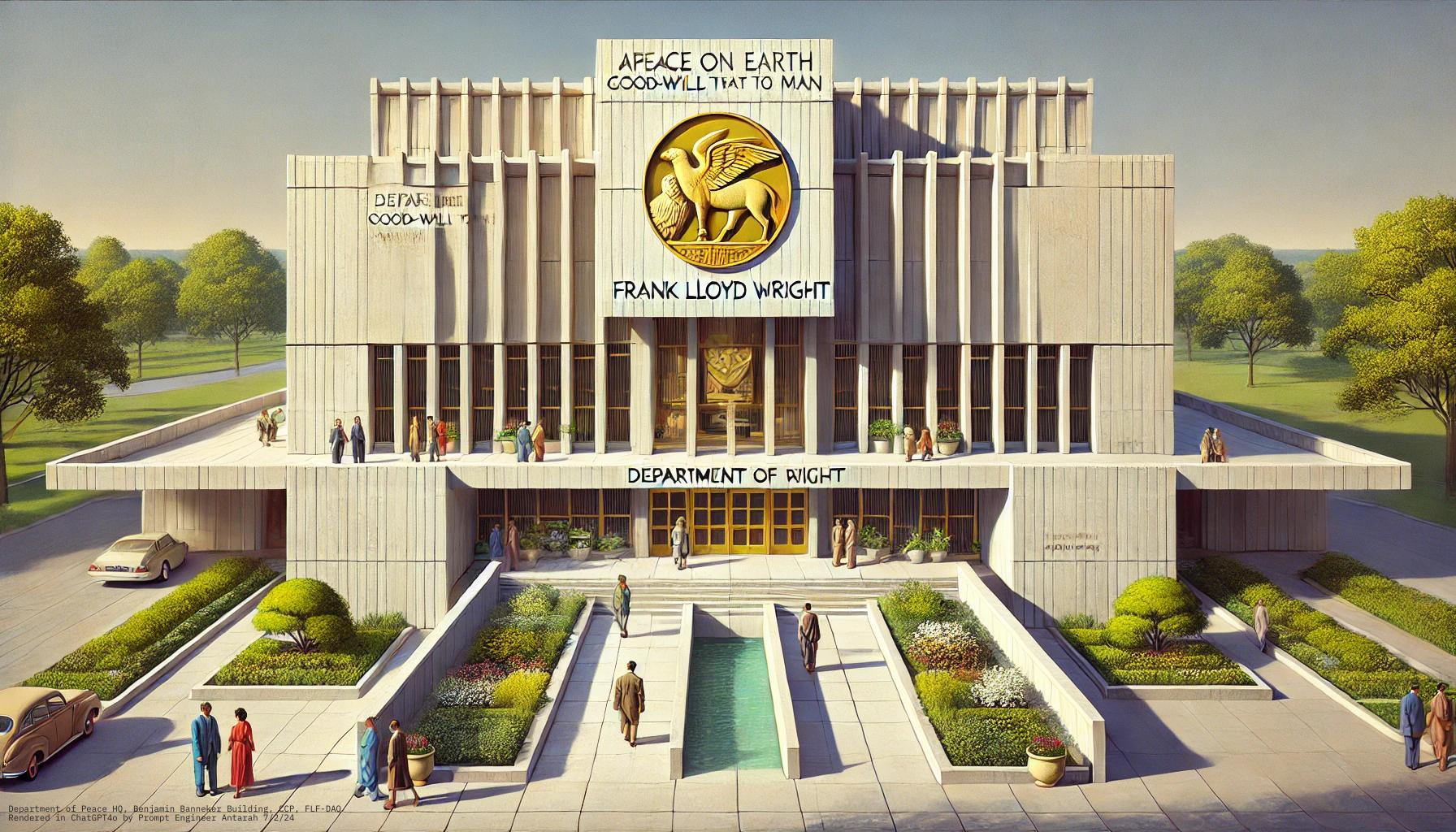
D:\Interior: Hall of Records
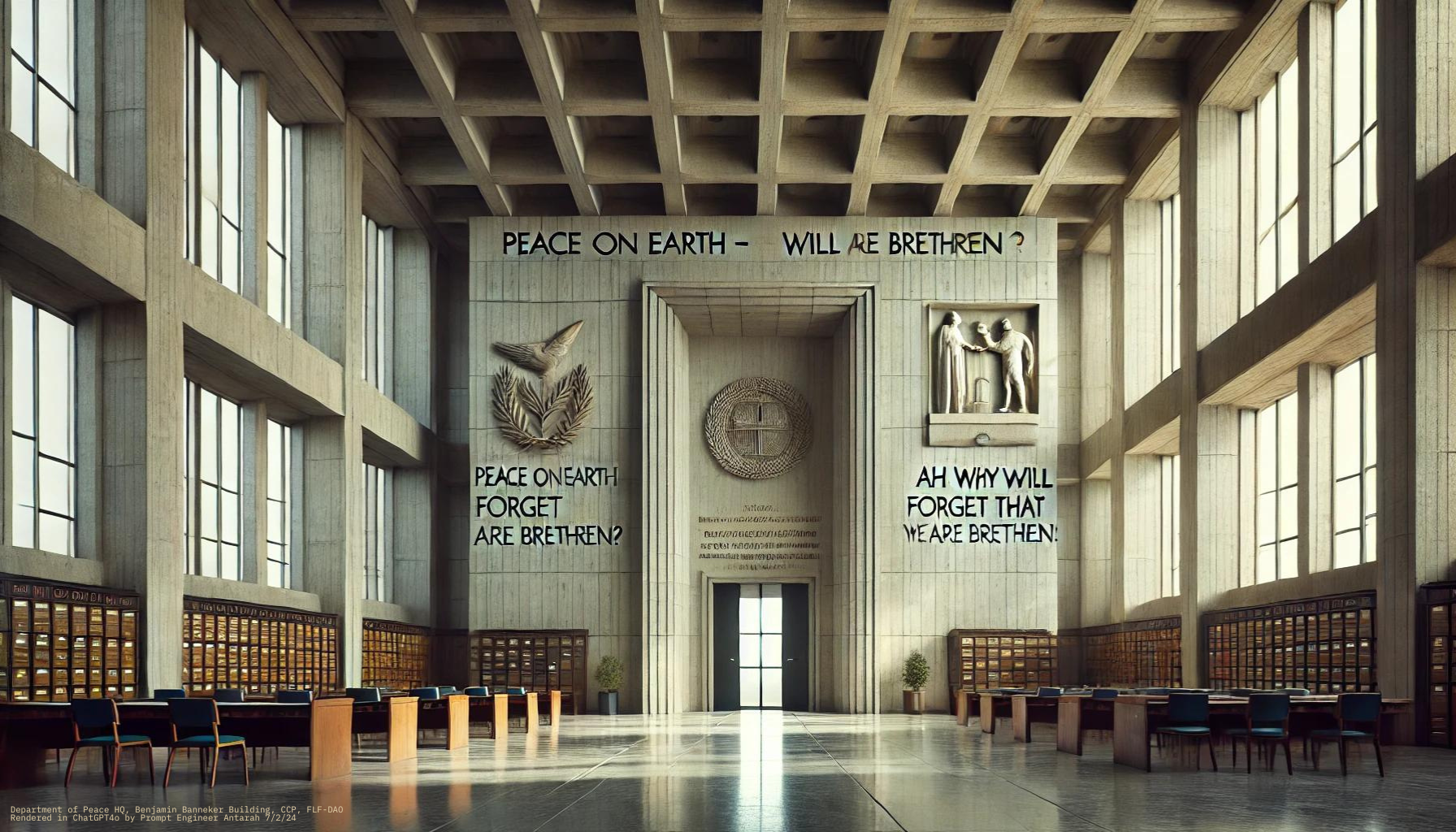
D:\Interior: Halls of Meeting and Study
Antarah Vicarius Deus per Seignior Iesus Christi,
Rector Provinciae Oblatus Novus Syllabus
et Doctor Ecclesia Universalis Autodidactus,
FLF-DAO IBCO

Capital Projects (CCP)
DECENTRALIZED AUTONOMOUS ORGANIZATION
DEPARTMENT OF PEACE AND FRIENDSHIP
FROM THE DESK OF
THE PUBLIC FRIEND
Antarah
SOLICITATION | LAST MODIFIED 6/28/24 AT 11:21 P.M.
TO ALL TO WHOM THESE PRESENTS COME, SEND GREETINGS AND PEACE:—
Commission on Capital Projects
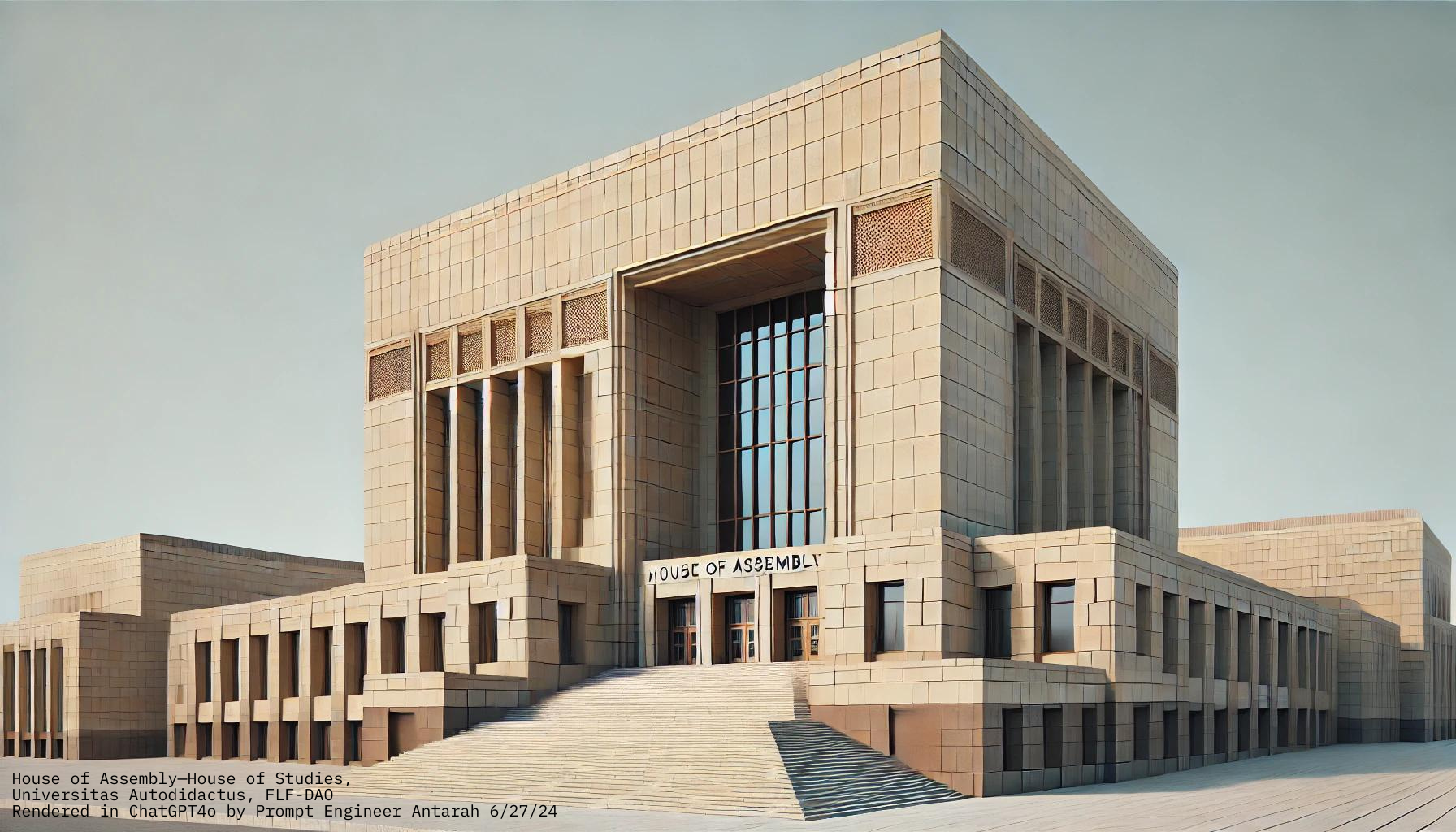
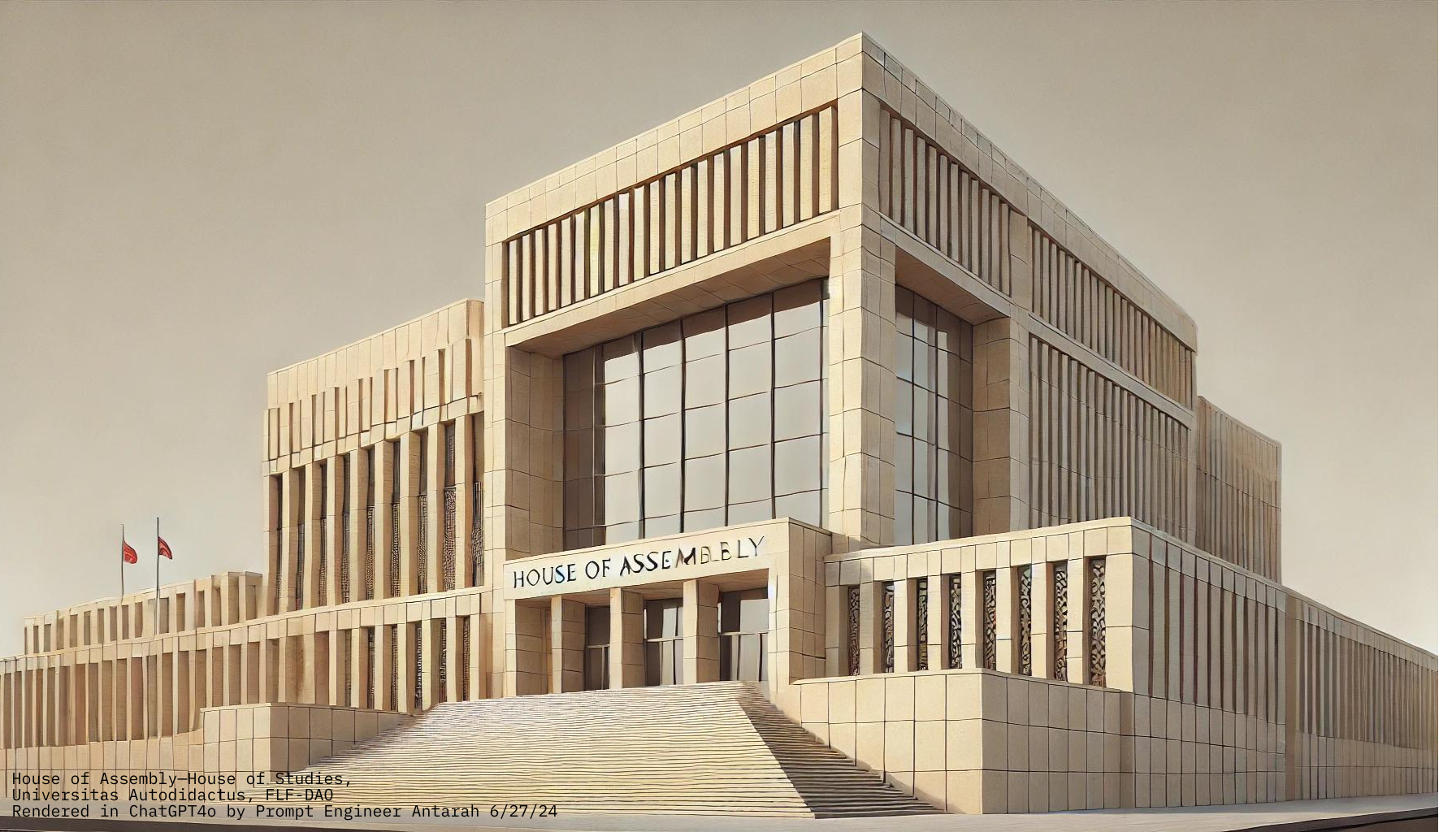
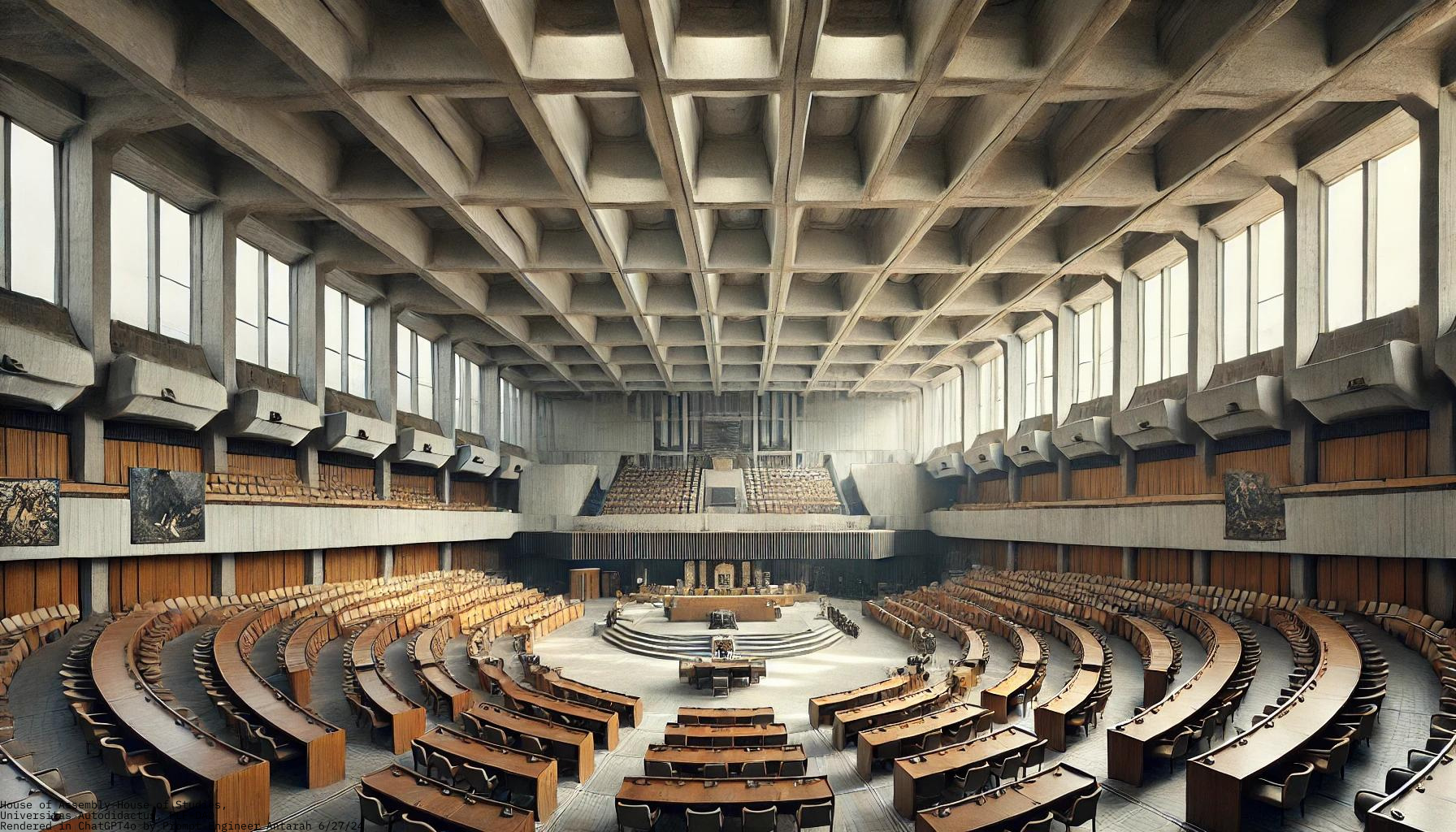
There is hereby established within the IBCO, FLF-DAO, a Commission on Capital Projects, that is, on medium- to long-term projects to build upon, improve, or maintain a significant piece of property that is meant to last. The Commission shall be constituted by the investors and shareholders of the property being developed. The Commission’s inaugural project shall be the development and construction of the Black Cross Country Mission Fulfillment Center (MFC), known as the
House of Assembly—House of Studies of
the Universitas Autodidactus, FLF-DAO.
Projected funds needing to be raised for the development, start-up, and initial operation of this project (after which point the Center shall fund itself by and through fee-based operations) are estimated at $33 million.
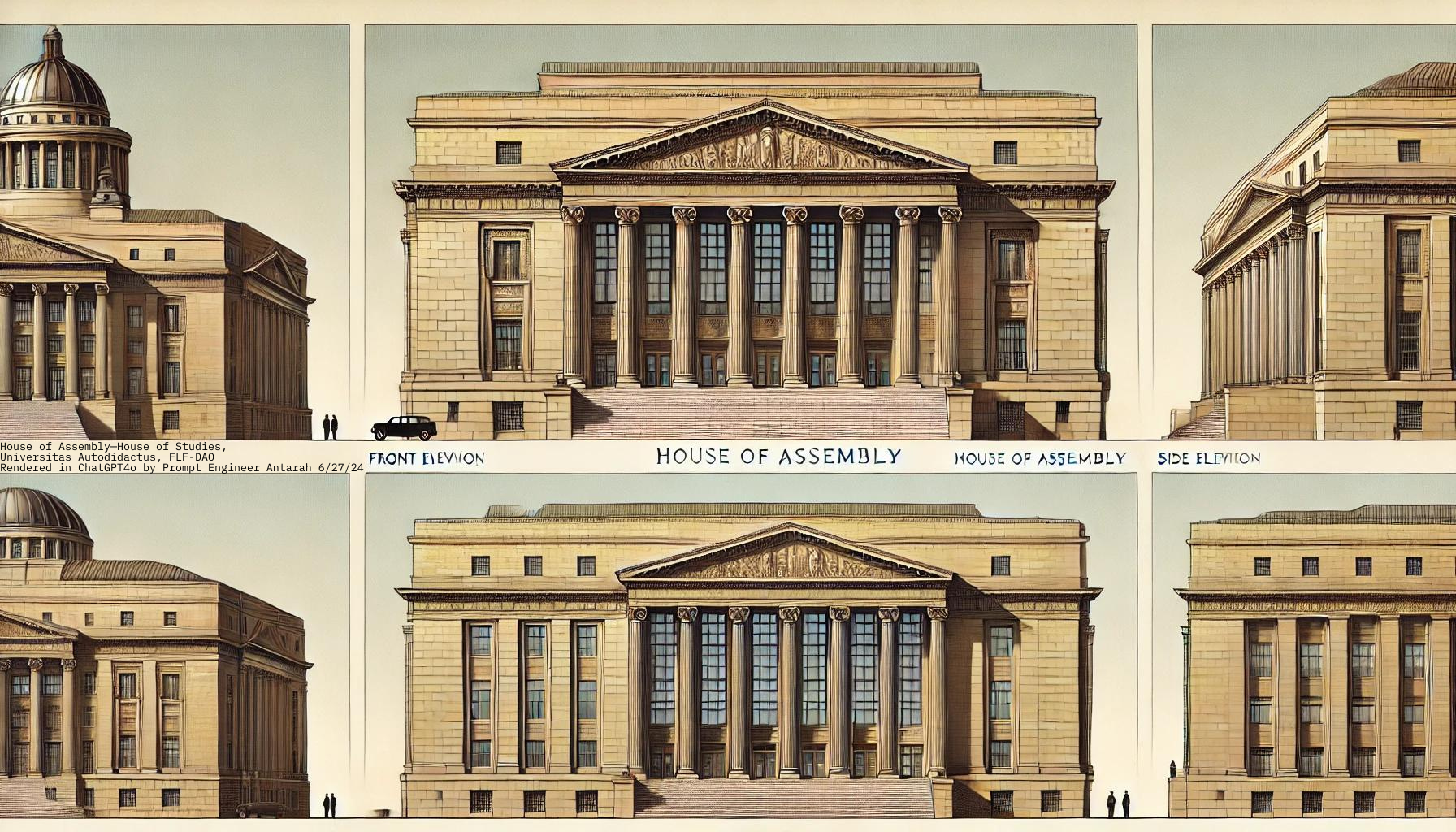
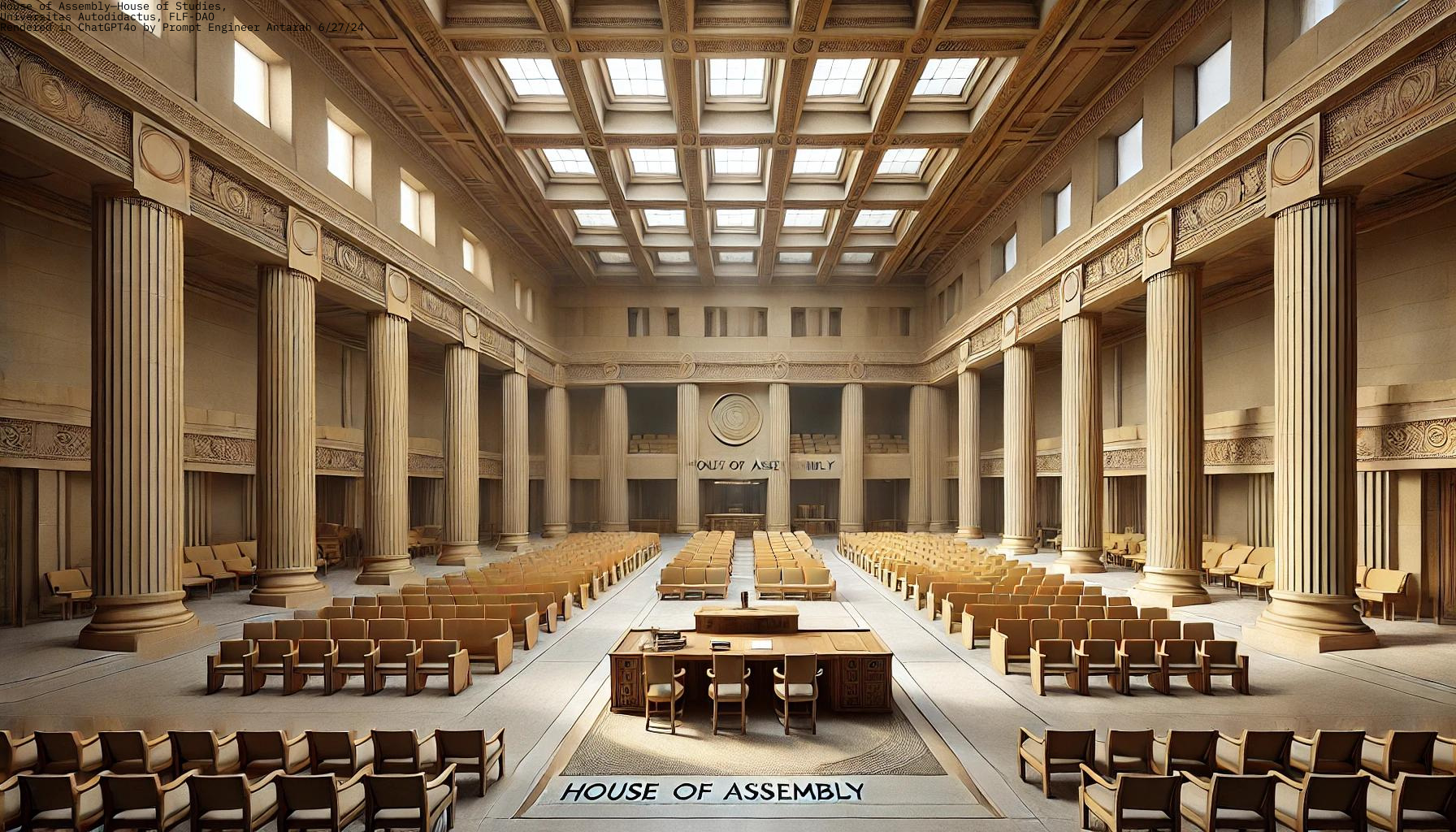
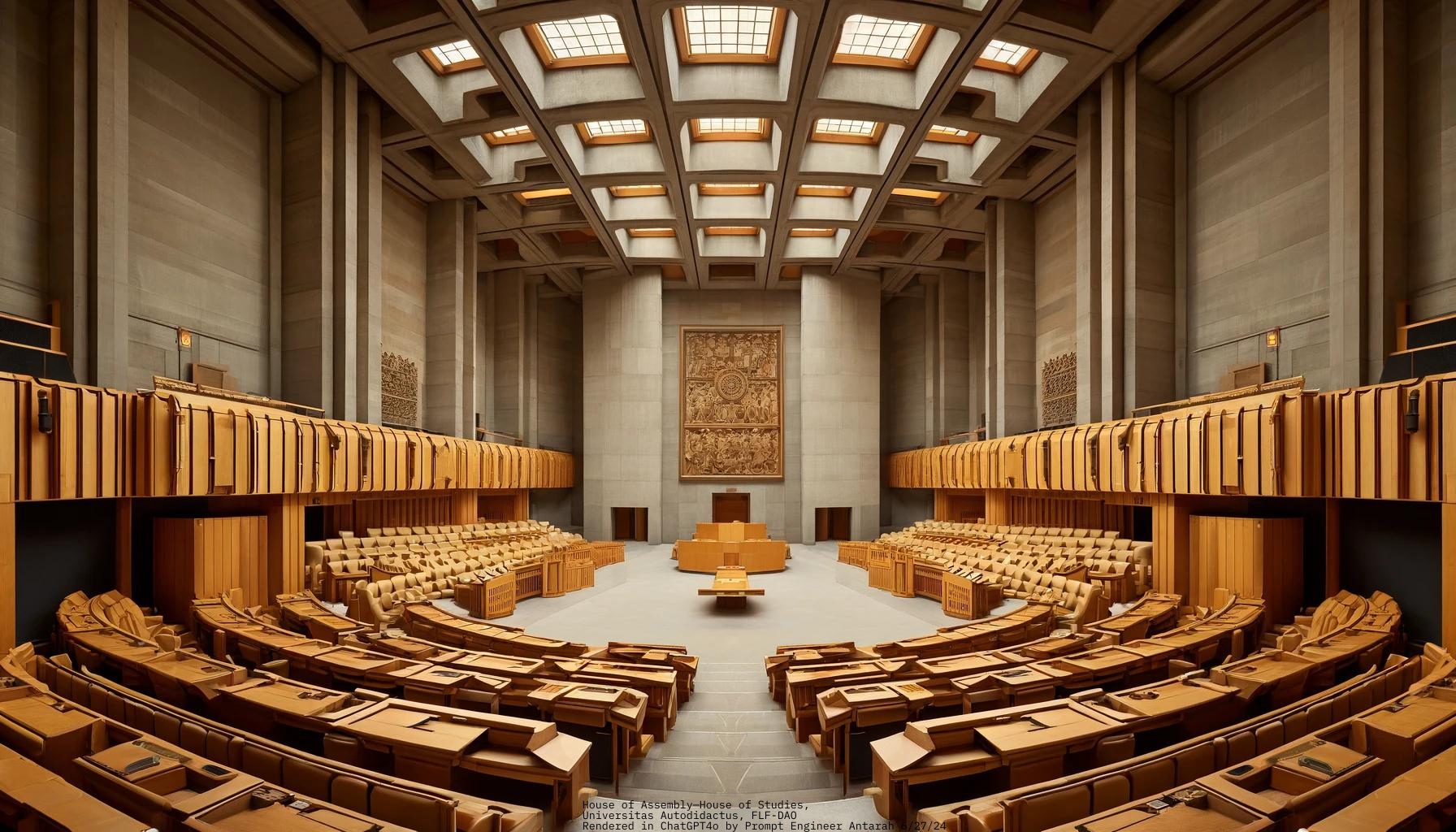
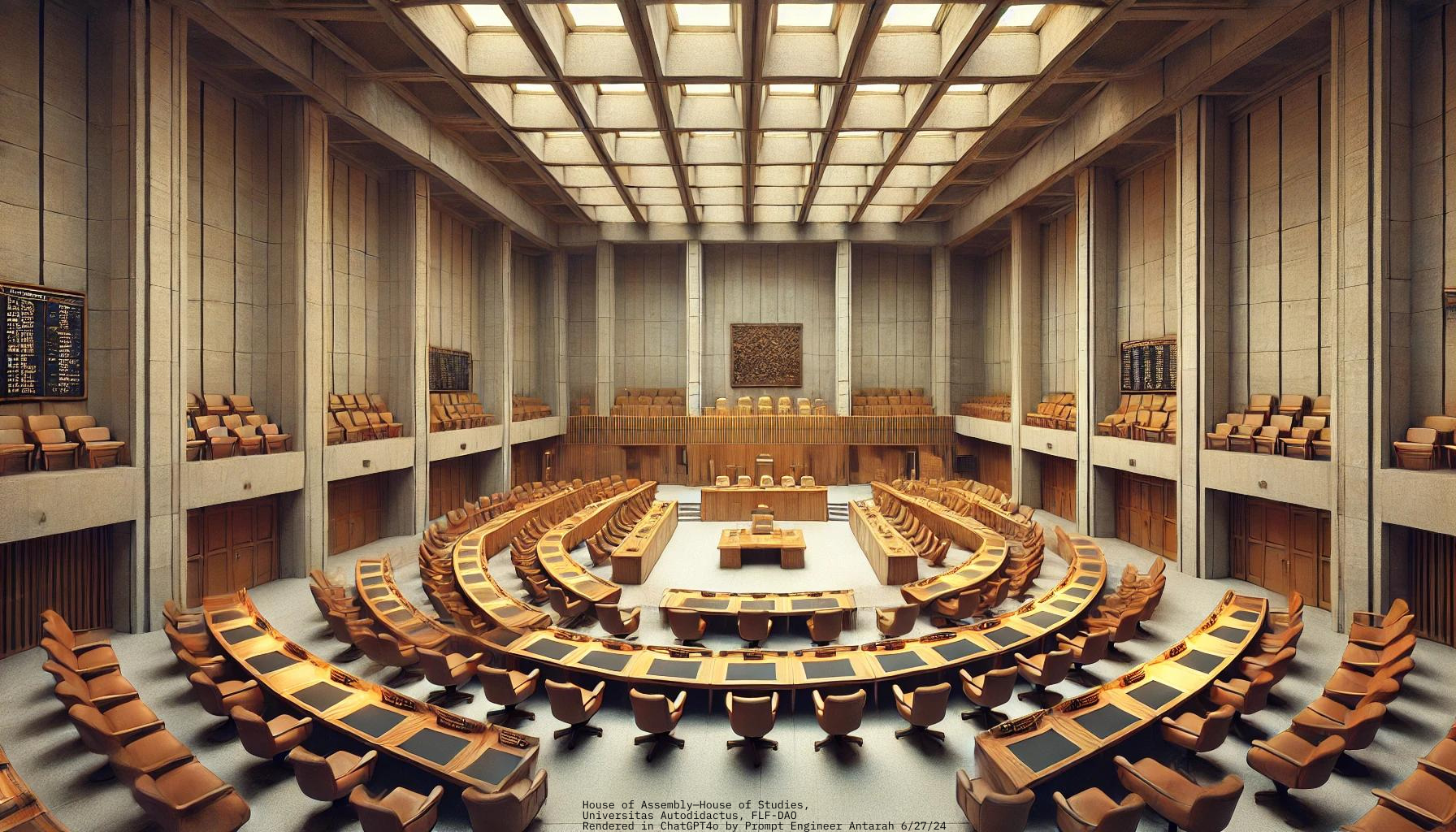
The development of the IBCO MFC represents a groundbreaking partnership between artificial and autodidactic intelligence. The projected drawings of the Center are as follows:
Exterior Elevations

Interior: Hall of Assembly
End of Transmission.

Memorandum 5
IN THE NAME OF GOD ﷲ THE MOST GRACIOUS MOST MERCIFUL
DECENTRALIZED AUTONOMOUS ORGANIZATION
DEPARTMENT OF PEACE AND FRIENDSHIP

POLITICAL BUREAU
POLITBURO
OF EDUCATION
FROM THE DESK OF
THE PUBLIC FRIEND
Antarah
Office of Ombudsman—Office of Preceptor—Office of Administrator—Office of Scribe
Comm. No. A240609-05 | Memorandum #5 | last modified 6/12/24 at 6:30 p.m.
TO ALL TO WHOM THESE PRESENTS COME, SEND GREETINGS AND PEACE:—
Using Your ‘PC’
PROTOCOL C:\MAIN FUNCTION:\NS\153D_CORPS_BCO_FLF-DAO
(a) Conveying the dialectic relationship between the ministering witness who testifieth on the law and the public body of the people who drafteth appropriations at law, toward optimal Performance of Z-Axis procedure in function(GDP):\>Policy;Praxis;Program;Project=Performance^Cubed a.k.a. ‘Protocol C’.
- Server ‘S’ hold ‘_’ sign ‘x’ of good will/salutations/solicitation.
- Public ‘P’ pay ‘>’ attention ‘i’ to x.
- S issue ‘-‘ promissory notice ‘n’ for further information ‘f(x)=y’.
- P draft ‘~’ appropriations bill ‘+’ payable ‘>’ to n(x).
- S redeem ‘<’ n to discharge ‘-‘ obligation ‘y’.
- S commission ‘^’ P into current circulatory system ‘c’.
- S offer course LP and preceptor services ‘Ed’ to raise P to ‘c square’.
(b) NOTATION:
- \>S_(x)
- \>P>i(x)
- \>S-n(x)=y
- \>P~+>n(x)
- \>S<-y
- \>S^P(c)
- \>S_Ed(x)^P(c^2)
(c) ERGO, it is said to use the Performance Cubed ‘PC’ application to C your Mindsoft development and operating system ‘DOS’.
(d) Consolidated Interest-Bearing Promissory Notice ‘Consols’ are notes that promise the performance of the prima facie obligation written thereon, which are issued to holders in whose possession the notes appreciate until the holder realizes the value of the principle ‘maturity’, redeems the note with the issuer thereof, and pays their attention ‘interest’ at the rate of appropriations billed over time. This is the ‘consolidated’ methodology and protocol for circulating the DAO current ‘c’. Therefore the issuer keeps bankers hours, 10 to 3 Mon-Fri. In praxis, focusing on the direct sale of information may cause public confusion, alienation, and anxiety; but the circulation of consols is a more comprehensible and worthy business enterprise.
(e) There is hereby established the:
First Tabernacle Beth Midrash,
Black Cross Squadron, 153D CORPS, FLF-DAO
(a Continuing Education Montessori Shul)
Antarah, Friend, Head of Meeting
(f) Standing Regular Meeting Schedule of Sessions of Public Service (Free, Open)
- First Day Shul – 10 am Sunday
- Second Day Shul – 10 am Monday
- Tues/Weds – appointments & sittings
- Thoth’s Day Shul – 2 pm Thursday
- Sabbath Day Shul – 7 pm Friday
(g) Courses Offered:
- Worship, Dialectic and Autodidactic
- Holistic Ancient Methodologies of Economy Technology Informatics and Sciences (HAMETICS)
- Due Process of Information
- Application of Oyer et Terminer
- Drama and Rhetoric
- LP
(h) This school is founded upon ten years of postgraduate autodidactic research and development (2014-2024) in the fields of Taoism and revolutionary far eastern philosophy, Cabala (Chabad-Lubavitcher), orthodox and popular Egyptology, physics and metaphysics, African spirituality, biblical exegesis, fraternalism/ecclesiastes, general occultism, historical and dialectical materialism, Islam, parliamentary procedure, and negotiable instruments law, among other discrete subject matters, to wit, ‘The New Syllabus’ of NOVUS SYLLABUS L.L.C.
Shalom ‘Alechem,
Antarah of Nacotchtank,
Public Friend Incumbent,
153d CORPS, FLF-DAO
Memorandum 4
IN THE NAME OF GOD ﷲ THE MOST GRACIOUS MOST MERCIFUL
DECENTRALIZED AUTONOMOUS ORGANIZATION
DEPARTMENT OF PEACE AND FRIENDSHIP
POLITICAL BUREAU
POLITBURO
OF EDUCATION
FROM THE DESK OF
THE PUBLIC FRIEND
Antarah
Office of Ombudsman—Office of Preceptor—Office of Administrator—Office of Scribe
12 Therefore all things whatsoever ye would that men should do to you, do ye even so to them: for this is the law and the prophets.
13 Enter ye in at the strait gate: for wide is the gate, and broad is the way, that leadeth to destruction, and many there be which go in thereat:
14 Because strait is the gate, and narrow is the way, which leadeth unto life, and few there be that find it.
Matthew 7
Congress shall make no law respecting an establishment of religion, or prohibiting the free exercise thereof; or abridging the freedom of speech, or of the press; or the right of the people peaceably to assemble, and to petition the government for a redress of grievances.
First Amendment to the Constitution of the United States of America (LII)
Comm. No. A240607-04 | Memorandum #4
TO ALL TO WHOM THESE PRESENTS COME, SEND GREETINGS AND PEACE:—
Coalition Forces of the FLF-DAO
(a) La Croix Noire demonstrates for the natural order of universe (the Dao) and, by extension, peace, love, freedom, truth and justice/equity, which are dialectic (dualistic) expressions of the Dao. The Dao is not to be worshipped, as there is no one worthy of worship but God ﷲ who created the universe together with its proper functionality which is called the Dao.
(b) La Croix Noire practices its first amendment rights through non-action, or wu wei, in the Friends’ manner of waiting worship, wherein they await the coming of the kingdom, or of the second coming. In this manner the Organization is a non-violent movement. Any organization or member commissioned into the BCO must practice non-violence except in cases of self-defense.
(c) There are noncommissioned coalition organizations ‘NCOs’, such as the Anti-Fascist Organization and (arguably) the Proud Boys Organization (insofar as they demonstrate in protest of coercive government), that may be characterized by use of force. The decentralized autonomous organization ‘DAO’ of the people of the world have many coalition forces with different policies on the use of force.
(d) The BCO opposes coercive use of force in general, and to that extent is best characterized as Anarcho-Daoism; for the decentralized autonomous organization of the people is the materialization of the will of the Great Dao (Tao, ‘Way’) which is the most ubiquitous and lasting system, a most enigmatic and mystical force of nature.
(e) The sage is the exemplar of living in harmony with the Dao through the praxis of wu wei; the sage cultivates virtue within and spreads it outward through the branches of the human family. Thus the ‘authority’ of the sage is testimonial, not coercive; it is the exemplification of a living testimony of peace, simplicity, and integrity in the manner of Friends.
(f) Straight and narrow is the Daojiao ‘Way’. The ‘Way’ is like unto Islam, in that it is the only path to eternal life provided by the Creator, as attested to by the most sagacious and noble Rabbi Yahshuah ‘Jesus’ the Anointed ‘Christ’ of God, peace be upon him ‘PBUH’.
(g) By and through the covenant between humanity and the Lord God ﷲ, Creator of Heaven and Earth the Sea and all that therein is, and the counsel and redemption of the former by the life and blood sacrifice of our Comforter Prophet and Rabbi Yahshuah ‘Isa’ ‘Jesus’ the Christ PBUH, La Croix Noire and N∴S∴ shall demonstrate, discharge, and perform its obligation exclusively under the principles of equity jurisprudence, which is ‘grace/mercy/forgiveness at law’.
Shalom ‘Alechem,
Antarah of Nacotchtank,
Public Friend Incumbent,
153d CORPS, FLF-DAO
P.S. Today at work I met a woman named Almoustah, which I only later recognized as the Arabic for ‘The Straight’ as in ‘The Straight Path’ (‘Ihdinas Siratal Mustaquim’).
P.P.S. Since deleting IG from my device yesterday, I notice my thoughts being clearer, more profound, and less prone to depressive ‘churning’.
Memorandum 3
POLITICAL BUREAU
POLITBURO
OF EDUCATION
FROM THE DESK OF
THE PUBLIC FRIEND
Antarah
Office of Ombudsman—Office of Preceptor—Office of Administrator—Office of Scribe
I must work the works of him that sent me, while it is day: the night cometh, when no man can work.
John 9:4
Comm. No. A240531-03 | Memo #3
TO ALL TO WHOM THESE PRESENTS COME, SEND GREETINGS AND PEACE:—
BCO Mission Critical Operations
(a) The ‘New Syllabus’ Company, Political Bureau of Education, Universitas Autodidactus at Men Nefer College of Nacotchtanck, District of Ouachita, shall be known as the 153D CORPS of the Djedi Order of Knights of the Black Cross Organization ‘BCO’ (‘Croix Noire’), Peace Enforcement Activity Command Enterprise ‘PEACE’ Force, FLF-DAO.
(b) The decentralized autonomous organization ‘DAO’ is constituted by local self-organized, self–operating, self-governing bodies, ‘syndicates’ or ‘assemblies’, of friends or students. The smallest unit of such organization, being approximately two to eight people, may be commissioned as a Black Cross Squadron ‘BCS’ and may be lodged in a House of Studies or ‘meeting tent’. A BCS is a BCO unit.
(c) A BCS shall principally conduct a general course of study, autodidactically and dialectically, and shall, at the will of the DAO, take leave to fight for peace, love, freedom, justice, and/or equity on behalf of any and/or all affected natural people.
(d) A BCS may convene a mission (a) to commission a Black Cross squadron, chapter, regiment, department, or CORPS in a locality or (b) to establish communion and/or communication with an uncommissioned DAO unit, to invite them into the fold of the BCO.
(e) All BCO units discharge the spectrum of obligations prescribed under f(GDP) Axis Y:
- Audit: to hear and determine, ‘oyer et terminer’, matters raised into question, as in a friends meeting, assembly (Knesset) for deliberation, or course of study.
- Assessment: to compare and analyze the myriad factors governing the relative capabilities of various matters, both independently and systemically.
- Assurance: to provide a surety or guarantee, often through the promise of God to humanity or the sacrifice of YHSVH the Christ.
- Adjustment: to abate a negative charge, and or to record the outcome of a procedure into the knowledge base on the X-Axis of the square.
(f) The standing departments of all BCOs of the DAO are these:
- The Department of Information Systems Intelligence Services ‘DISIS’ shall build and maintain an ever-expanding base of intellectual capital ‘knowledge’ [a.k.a. the ‘DataHorse’ system] on which to draw in performance of missionary obligations, and shall administer the DAISEE [D.R. Art. 2(2)(b)].
- The Department of Peace and Friendship ‘DOP’ shall … promote and preserve perpetual peace in our country, and to observe such laws, customs, policies, and practices as are wise, prudent and germane to such peace whether they be of a religious, civil, or other nature [DOPA Art. 1(b)], and shall administer the PEACE Force.
- The Department of Mobilization and Demobilization ‘DMOB’ … shall mobilize ‘mob’ and demobilize ‘demob’ (a) notes into and out of circulation, (b) field operations of worship and instruction and (c) encampments [Memo. 2(2)], and shall be charged from time to time to perform materiel fulfillment, requisition, and repossession services.
Shalom ‘Alechem,
Antarah of Nacotchtank,
Public Friend Incumbent,
153d CORPS, FLF-DAO
Bulletin 2
POLITICAL BUREAU
POLITBURO
OF EDUCATION
FROM THE DESK OF
THE PUBLIC FRIEND
Antarah
Office of Ombudsman—Office of Preceptor—Office of Administrator—Office of Scribe
Comm. No. A240523-02 | Bulletin #2 | last modified 6/19/24 at 7:40 p.m.
TO ALL TO WHOM THESE PRESENTS COME, SEND GREETINGS AND PEACE:—
The Black Cross Humanitarian Mission
(a) Syndicalism is a movement for transferring the ownership and control of the means of production and distribution to workers’ unions [or other units of an integrated whole].
(b) Known syndicalist systems of organization (“out of many” national/regional/local/union/bodies, “one” universal/international/grand/assembly) include:
- freemasonry [unit=lodge]
- the federal reserve system [unit=bank]
- the Union of the States (USA) [unit=state]
- the Union of Soviet Socialist Republics [unit=syndicate]
- the [One/Holy/Universal/Roman] Catholic Church [unit=church]
- the United Nations [unit=nation state]
- the African Union [unit=African nation state]
- the European Union [unit=European state]
- the Nation of Islam [unit=mosque]
- the military and police power forces [unit=squad/platoon/company/regiment/etc.]
- the mafia ‘La Cosa Nostra’ [unit=family or capo organization]
- etc.

(c) The International Black Cross Organization ‘IBCO’ (also known as ‘Crux Noir’, ‘Croix Noire’, ‘Cruz Negra’, ‘the A[…] International’, or simply ‘the Organization’) is a decentralized [ruler-less] autonomous [self-teaching/learning/executing/operating/governing] organization; therefore ‘the DAO’ and ‘the Organization’ are synonymous.
(d) The Organization shall be the global umbrella organization of all righteous/humanitarian/self-determined/self-governing organizations and command systems, both promulgated by N∴S∴ [DMOB, DAIS, DISIS, PEACE Force, etc.], and in general, especially (a) those represented by people dressed in a majority of black garments, such as conventional anarchists; (b) those who paint their hands red to speak truth to power; (c) people advocating for the rights of oppressed, working, and colored people; and (d) people who generally and principally oppose the globalist/industrialist/imperialist/financial regime variously referred to as ‘the global economy’, ‘White Supremacy’, ‘Rome’, ‘London City’, ‘America and her interests’, and ‘The Empire’.
(e) The Organization shall not be registered with the Secretary of any state in the known world.
(f) A member of the Organization may be known as a ‘friend’, ‘knight’, or ‘ambassador’.
(g) The Organization shall be mobilized toward a global anti-colonial intifada revolution (‘GACIR’), where intifada is Arabic for “shaking off”, as in to shake off the corpora-colonial parasites.
(h) The ‘New Syllabus’ Company, Political Bureau of Education, Universitas Autodidactus at Men Nefer College of Nacotchtanck, District of Ouachita, shall be known as the 153D CORPS of Croix Noire, FLF-DAO.
Shalom ‘Alechem,
Antarah of Nacotchtank,
Public Friend Incumbent,
153d CORPS, FLF-DAO
 Supreme Exchange