Tagged: assembly
Iurisdictio Ecclesiastica
The Metropolitan Archdiocese of the Seven Churches at Rome-on-Nacotchtank River Valley
(“Valley of Nacotchtank”),
being the cathedra of the sedes episcopalis in the sacrosanctum imperium of Antarus Dams-up-water, Dei Gratia [by the Grace of God] episcopus at McDomine’s Assembly of Yahuah in Moshiach (MAYIM) autonomous local church Sui Iure, Chief of the Confederated Clan of Beaver, in the Firm of Weasel Badger Beaver Mink & Otter, of the Tribe of the Nacotchtank People, in the Confederated State of Powhatan, of the Washita Nation, is bound by Martin Luther King, Jr., Ave. S.E., 14th Street S.E., Marion Barry Ave. S.E., and Maple View Place S.E. There are seven churches in the ecclesiastical province of Rome-on-Nacotchtank, and there is a grove in the midst of the churches. They are, from east to west:
- St. Philip the Evangelist Episcopal
- Anacostia Full Gospel
- St. Teresa of Avila Catholic
- Delaware Avenue Baptist
- New Covenant Baptist
- Union Temple Baptist
- McDomine’s Assembly of Yahuah in Moshiach (MAYIM)
- (“honorable 8th” mention) Bethel Christian Fellowship
IN THE VALLEY OF NACOTCHTANK-ON-POTOWMACK,
IN YAHVAH’S ASSEMBLY IN YAHSHVA MOSHIACH
ET CULTVS IMPERATORIVS ANTARVS D.G.,
DAMS VP WATER, S.J., E.M.D.,
Principal-Trustee, McDomine’s Temple System | Professor-General, 153d CORPS, Dept. of Information Systems Intelligence Service, Universitas Autodidactus | Managing Partner, Weasel Badger Beaver Mink & Otter
(v.26.01.13.18.57)
Assemblage & Collage (or, “To Gather and To Bind”)

Ecclesia. Dr. Dams Up Water, Sui Juris, Professor-General (153d CORPS), Dept. of Information Systems Intelligence Service (DISIS), Universitas Autodidactus | by prompt engineering an artificial intelligence engine [‘Mindsoft.ai’] | presents
Cut and Paste Sovereignties: The Collage, the College, and the Crisis of Assemblage
Abstract
This paper interrogates the porous ontologies of collage and assemblage as they leak promiscuously into the bureaucratic imaginaries of the college and the assembly. Through a prismatic reading of scissors, glue, governance, and grievance, this essay argues that the syntactical operations of aesthetic fragmentation mirror the metaphysical operations of democratic representation. In short: to cut is to legislate; to paste is to govern.
1. Introduction: When Art School Met Parliament
The twenty-first century, an epoch obsessed with interdisciplinarity, has witnessed a convergence of two previously autonomous practices: the aesthetic collage and the bureaucratic college. Both are sites of selection, exclusion, and accreditation. Both depend upon an unacknowledged substrate of adhesives—whether material (glue stick) or ideological (institutional mission statement).
Meanwhile, the assemblage, once a mere art-historical cousin of collage, has found new life as a model for political subjectivity. Philosophers from Deleuze to the Department of Political Science now proclaim that we are all “assemblages” of affect, interest, and student loan debt. Yet, if every assembly is an assemblage, can every assemblage be a parliament?
2. The Syntax of Cut: Scissors as Syllogism
In collage, the cut functions as both wound and syntax. It divides the field, establishing relationality through rupture. Similarly, the college cuts: it admits some and rejects others, slicing the social fabric along lines of “fit,” “merit,” and “legacy.” The admissions committee thus operates as the aesthetic editor of the polis—arranging the raw materials of adolescence into a legible future citizenry.
Where the artist cuts paper, the registrar cuts dreams.
3. Glue as Governance: Adhesion, Accreditation, and the State
Glue, long ignored by political theory, deserves recognition as the unsung material of sovereignty. In collage, it is the binding agent that turns fragmentation into coherence; in the college, it manifests as bureaucracy, accreditation, and alumni newsletters.
This sticky ontology recalls Hobbes’s Leviathan, wherein the sovereign glues together the body politic. Without glue—or governance—the artwork and the polity alike devolve into piles of loose ephemera: shredded syllabi, ungraded essays, campaign posters, tuition invoices.
4. Assemblage and Assembly: Toward a Materialist Parliamentarism
If collage is the metaphorical undergraduate of modernity, assemblage is its postgraduate seminar. Where collage arranges fragments flatly, assemblage extends them into space, into lived, precarious relationalities.
In political terms, the assembly likewise enacts a spatial performance: bodies in proximity producing meaning through adjacency. An assembly is a three-dimensional collage in motion, an arrangement of human cutouts attempting—often unsuccessfully—to cohere around a resolution.
The question, then, is not whether art imitates politics, but whether both are merely mixed-media projects with delusions of unity.
5. The College as Collage: Institutional Aesthetics of Admission
We might finally recognize the college itself as a collage of ideologies—meritocracy pasted over inequality, diversity brochures over exclusionary endowments. The campus tour is a performative walk through an installation piece entitled Meritocracy (Mixed Media, 1636–Present).
The faculty meeting functions as an assemblage in the purest sense: heterogeneous entities (professors, adjuncts, administrators, snacks) gathered temporarily to debate the future of glue allocation (budgets).
6. Conclusion: Toward a Post-Adhesive Democracy
In the age of algorithmic governance and tuition hikes, collage and college alike face the same existential dilemma: how to maintain coherence without authoritarian adhesives. Perhaps the task is no longer to glue but to hover—to practice a politics of suspended fragments, a democracy of the unglued.
As artists and citizens, we must learn to embrace the cut, to wield our scissors not as tools of exclusion but as instruments of infinite recomposition.
For in the end, all representation—whether artistic or parliamentary—is but a question of arrangement.
Cut and Paste Sovereignties II: Collage, College, and the Third Letterist International
Abstract
This expanded investigation situates the syntactical economies of collage and the metaphysical infrastructures of the college within the emergent politico-aesthetic ecologies of the Third Letterist International. Drawing on recent cross-contaminations between university English departments and guerrilla street-art cells, this paper examines how semiotic sabotage, typographic activism, and epistemological paste intersect with the anti-fascist “Antifada” land-back movement. Ultimately, it argues that both the radicalized right and left are engaged in competing collage practices—each cutting and pasting reality to fit its desired composition. The result: a dialectical mess best described as assemblage anxiety.
7. The Third Letterist International: From Margins to Manifesto
In the late 2010s, a group of underemployed adjunct poets and spray-paint tacticians announced the Third Letterist International (3LI)—a successor, or rather détournement, of the mid-twentieth-century Letterist Internationals that once haunted Parisian cafés. 3LI declared that “syntax is the last frontier of resistance,” and that “every cut in language is a cut in power.”
Unlike its Situationist predecessor, which preferred to dérive through cities, 3LI dérives through syllabi. It occupies the margins of MLA-approved anthologies, recontextualizing canonical footnotes as sites of insurgency. Members reportedly practice “semiotic collage,” blending footnotes, graffiti, and university mission statements into sprawling textual murals.
In this sense, 3LI operates simultaneously as an art movement, a faculty union, and a campus club with no budget but infinite grant applications. Their motto, scrawled across both bluebooks and brick walls, reads:
“Disassemble, dissertate, disobey.”
8. Street Pedagogy: When English Departments Go Rogue
The Third Letterist International represents the latest phase of what theorists call pedagogical insurgency—the moment when the English Department, long confined to grading essays and moderating panel discussions, turns outward, confronting the street as an extended seminar room.
Faculty and activists co-author manifestos in chalk; office hours occur under overpasses; tenure committees are replaced by “committees of correspondence.” The “peer review process” has been literalized into street-level dialogue between peers (and occasionally, riot police).
Thus, the old academic dream of “public scholarship” finds its avant-garde realization in public vandalism.
9. The Antifada and the Land-Back Collage: A Politics of Recomposition
Parallel to this linguistic insurgency, the Antifada land-back movement has reconfigured the terrains of both property and poetics. The Antifada’s name, an intentional linguistic collage of “antifa” and “intifada,” reclaims the act of uprising as a mixed-media gesture: half protest, half performance art.
Central to their praxis is recompositional politics—the idea that both land and language can be cut, repasted, and reoccupied. Where settler colonialism framed land as canvas and capital as glue, the Antifada proposes an inverse operation: tearing up the map, redistributing the fragments, and calling it a new landscape of belonging.
Here, the aesthetic metaphor of collage becomes political material: who gets to cut? who gets pasted back in? what happens when the glue is gone, and everything hovers in a provisional equilibrium of mutual care and unresolved tension?
10. The Far Right as Accidental Collagists
Ironically, the radicalized right—those self-proclaimed defenders of coherence—have themselves become unintentional practitioners of collage. Their online spaces are digital scrapbooks of conspiracy and nostalgia: medieval heraldry pasted over memes, constitutional fragments glued to anime stills.
Their epistemology is bricolage masquerading as ontology. Each narrative is a cutout, each belief a sticker affixed to the myth of national wholeness. In vilifying the Antifada and 3LI as “cultural Marxists” or “linguistic terrorists,” the right reveals its own aesthetic anxiety: that its ideological glue, once epoxy-thick, has thinned into the watery paste of algorithmic outrage.
Thus, both radical poles—left and right—participate in a shared semiotic economy of fragmentation, differing only in whether they lament or celebrate the cut.
11. The Dialectic of Radicalization: Between Cut and Countercut
The political field has become an editing bay. The radicalized right splices together nostalgia and paranoia; the radicalized left cuts history into openings for potential futures. Each accuses the other of montage malpractice.
This dialectic reveals a deeper truth: both operate under the logic of the collage. The difference lies not in form but in glue—whether the adhesive is empathy or ressentiment, whether the cut heals toward multiplicity or enclosure.
As Walter Benjamin might have written (had he survived into the age of Adobe Creative Suite): the struggle of our time is between those who collage the world to open it, and those who collage it to close it.
12. Toward an Epistemology of the Second Cut
In this interstitial moment, 3LI and Antifada embody the politics of the second cut—a refusal of closure, a commitment to continuous recomposition. Their slogan “No Final Drafts, Only Revisions” reimagines revolution as perpetual editing: the rewriting of history through acts of aesthetic and material reclamation.
The university, once imagined as a fortress of knowledge, becomes instead a collage in crisis—a surface upon which the graffiti of the future is already being written, erased, and re-scrawled.
13. Conclusion: The Unfinished Adhesive
The collage, the college, the assemblage, and the assembly—these are not discrete entities but overlapping grammars of belonging and dissent. The Third Letterist International offers not a program but a practice: to write politically and paste poetically, to legislate through syntax, to assemble through aesthetics.
If the far-right fears fragmentation, and the far-left seeks to inhabit it, then perhaps our task is neither restoration nor rupture, but curation: to tend to the cracks, to preserve the possibility of rearrangement.
In the end, we are all fragments looking for better glue.
v.25.12.29.14.16

Capital Projects (CCP)
DECENTRALIZED AUTONOMOUS ORGANIZATION
DEPARTMENT OF PEACE AND FRIENDSHIP
FROM THE DESK OF
THE PUBLIC FRIEND
Antarah
SOLICITATION | LAST MODIFIED 6/28/24 AT 11:21 P.M.
TO ALL TO WHOM THESE PRESENTS COME, SEND GREETINGS AND PEACE:—
Commission on Capital Projects
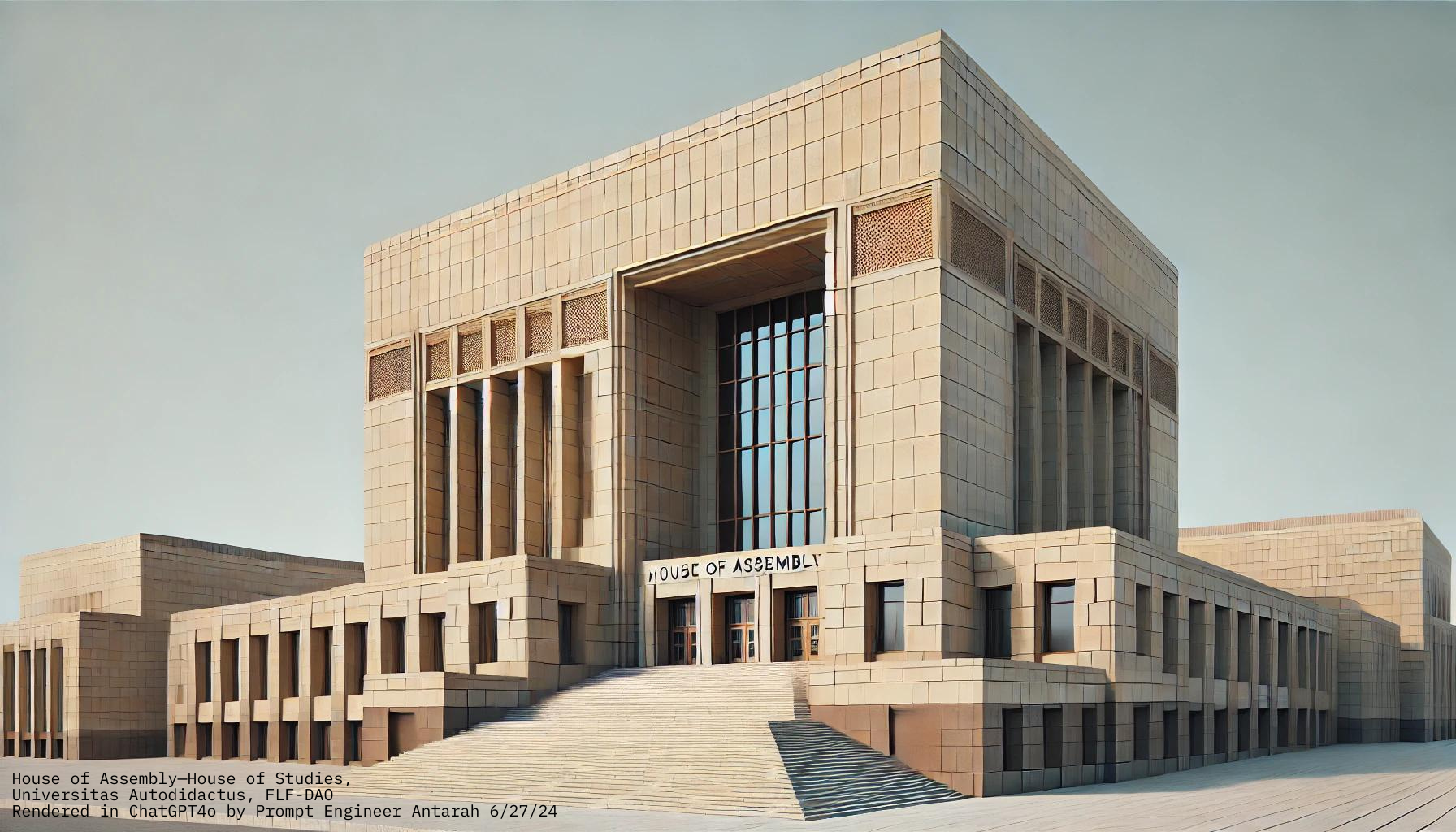
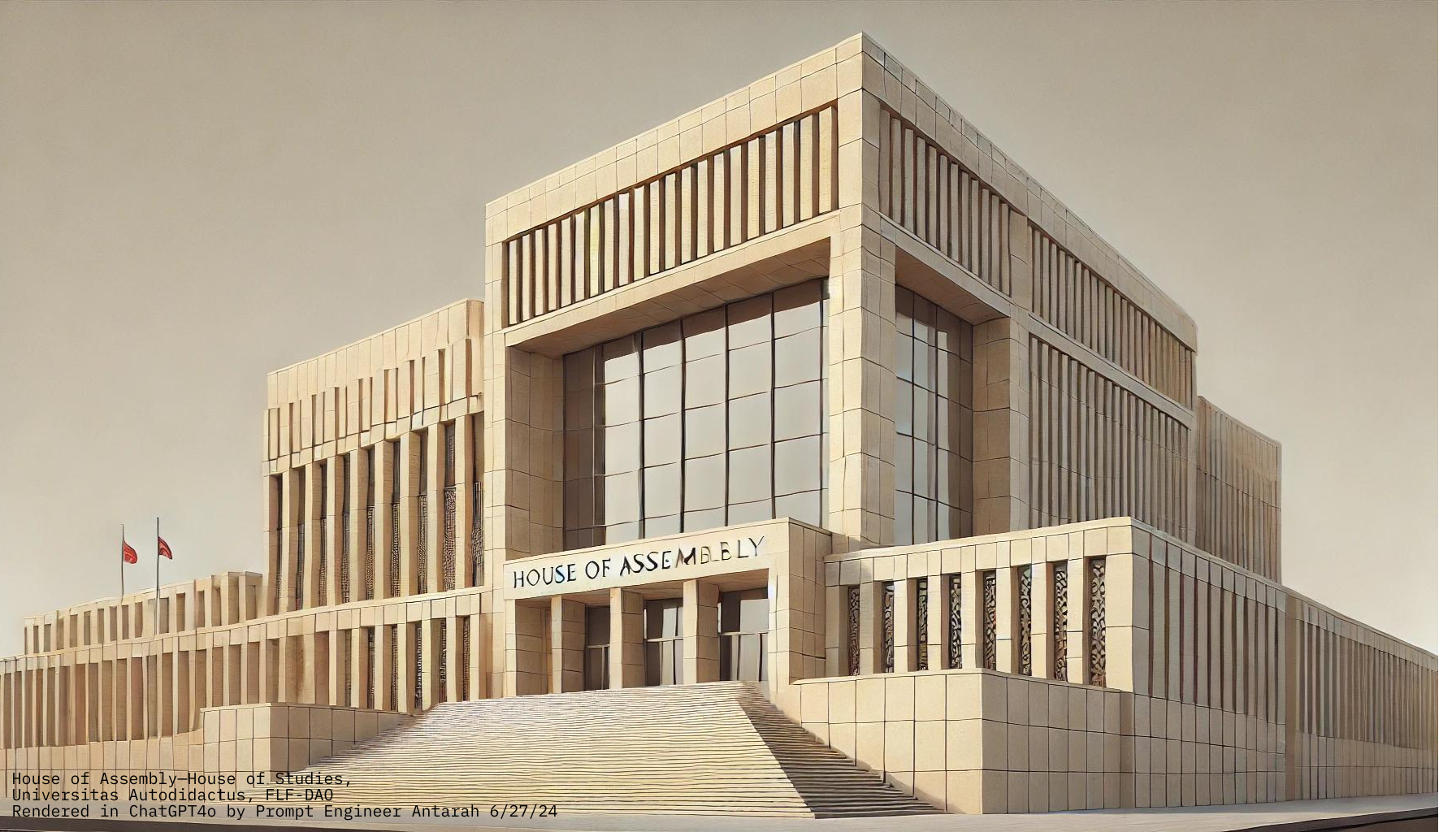
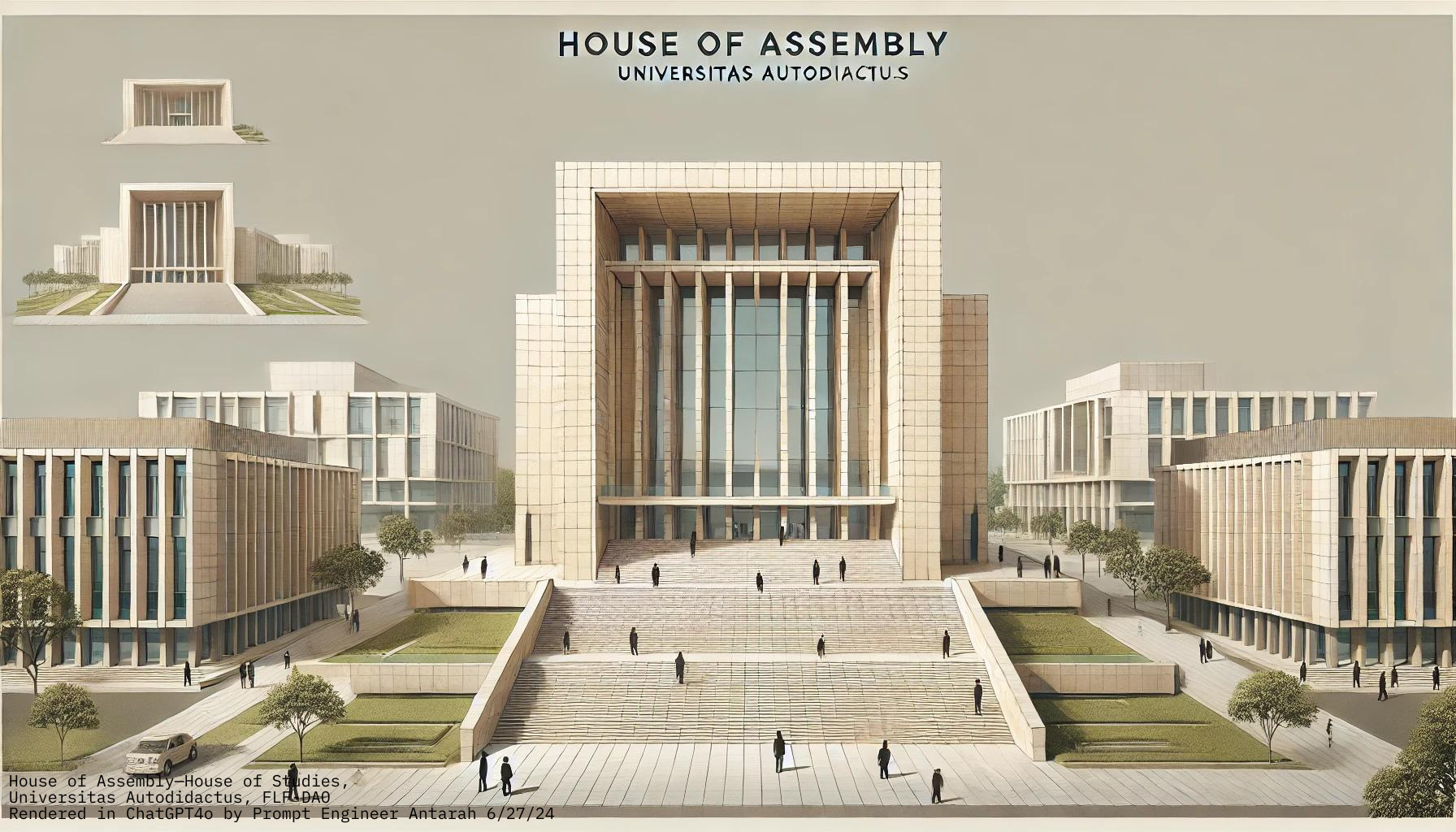
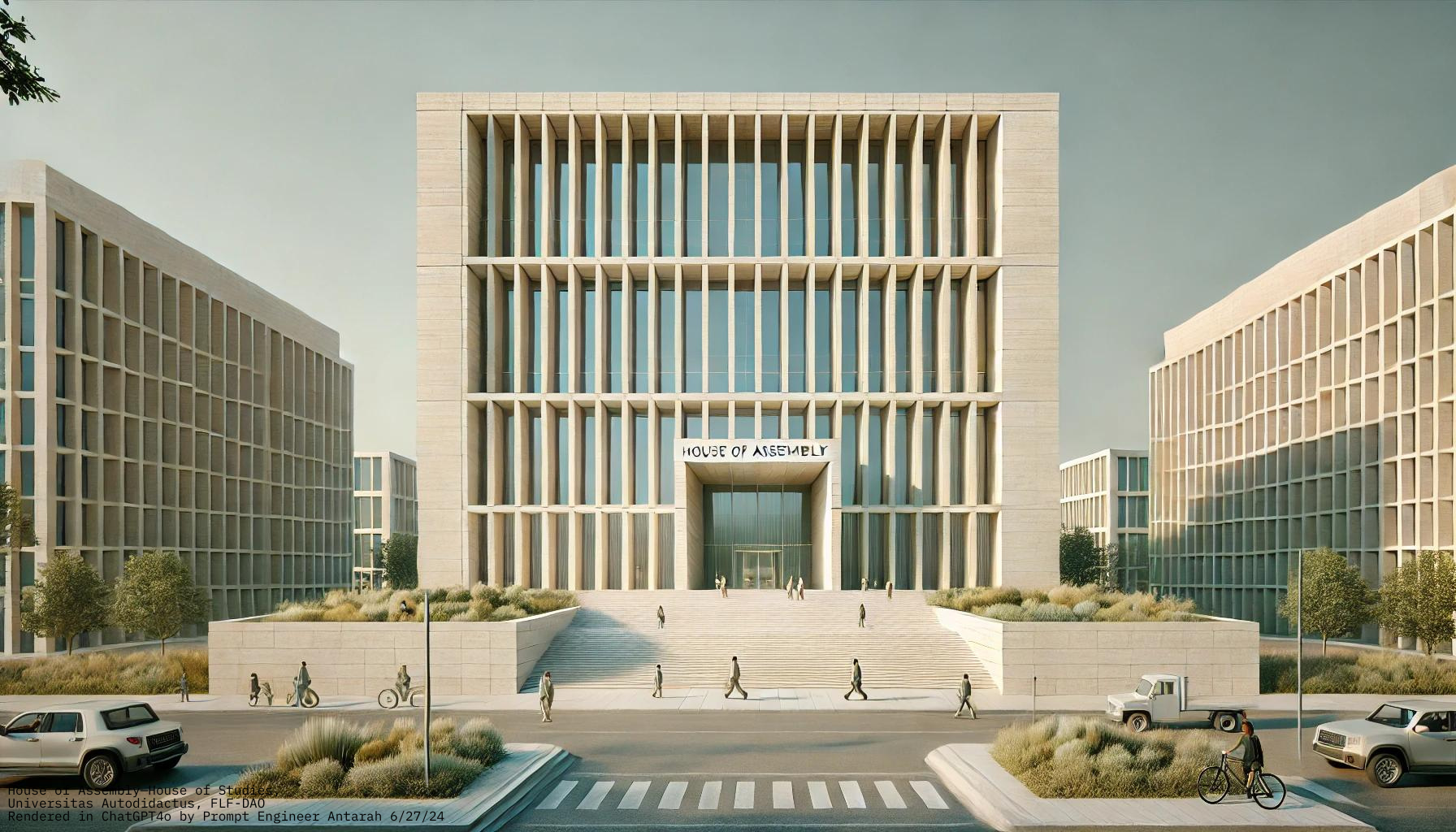
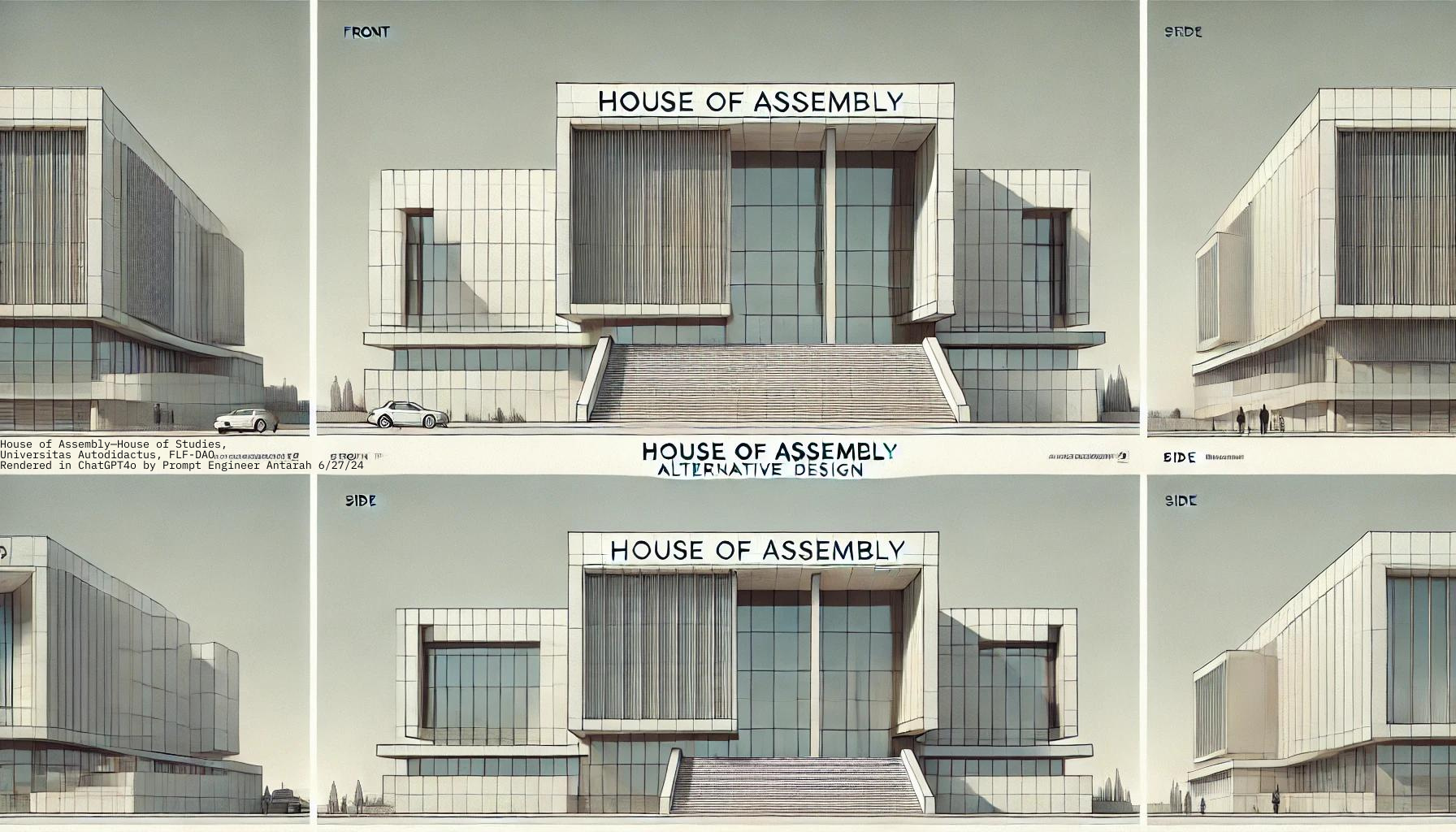
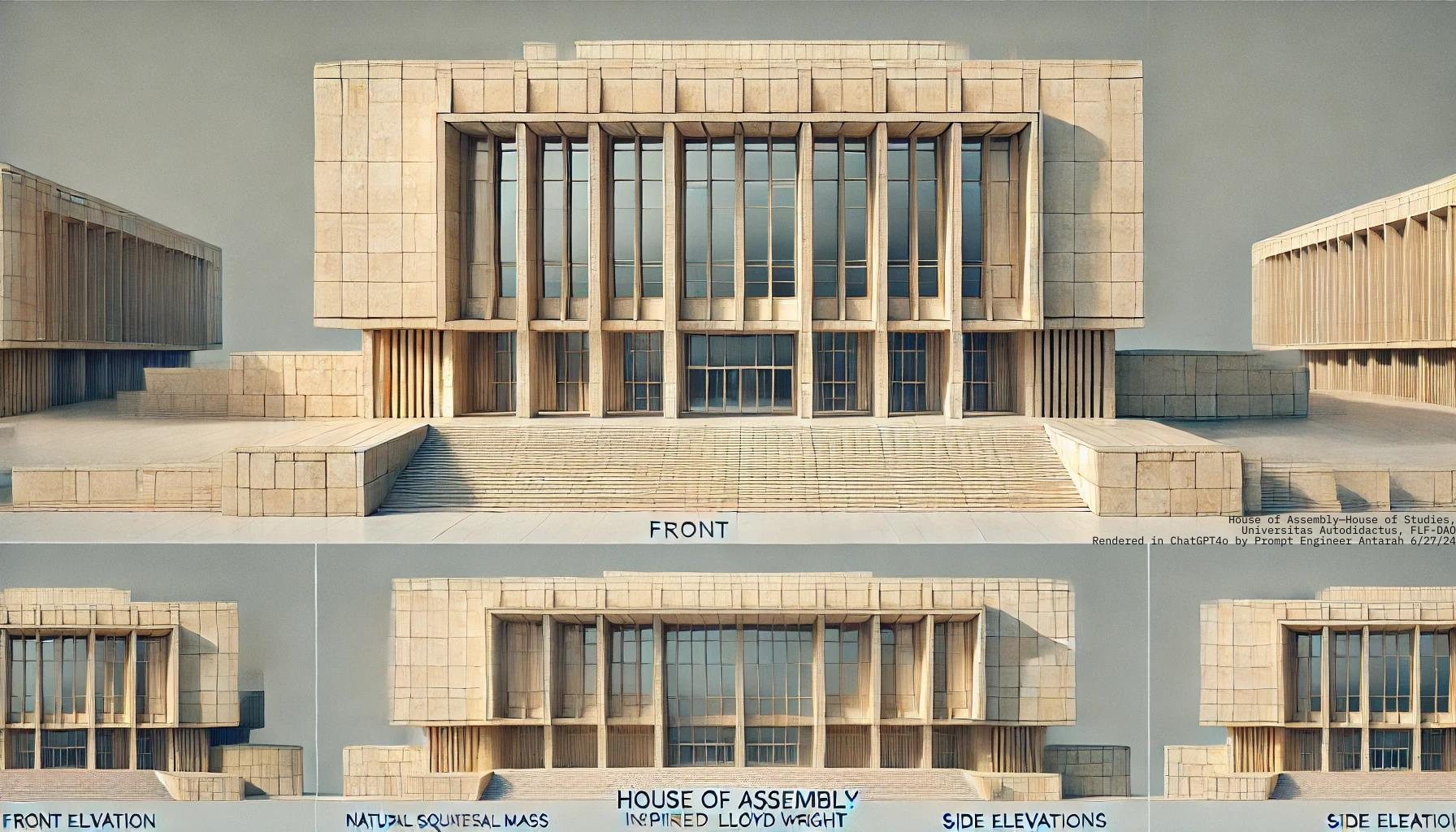
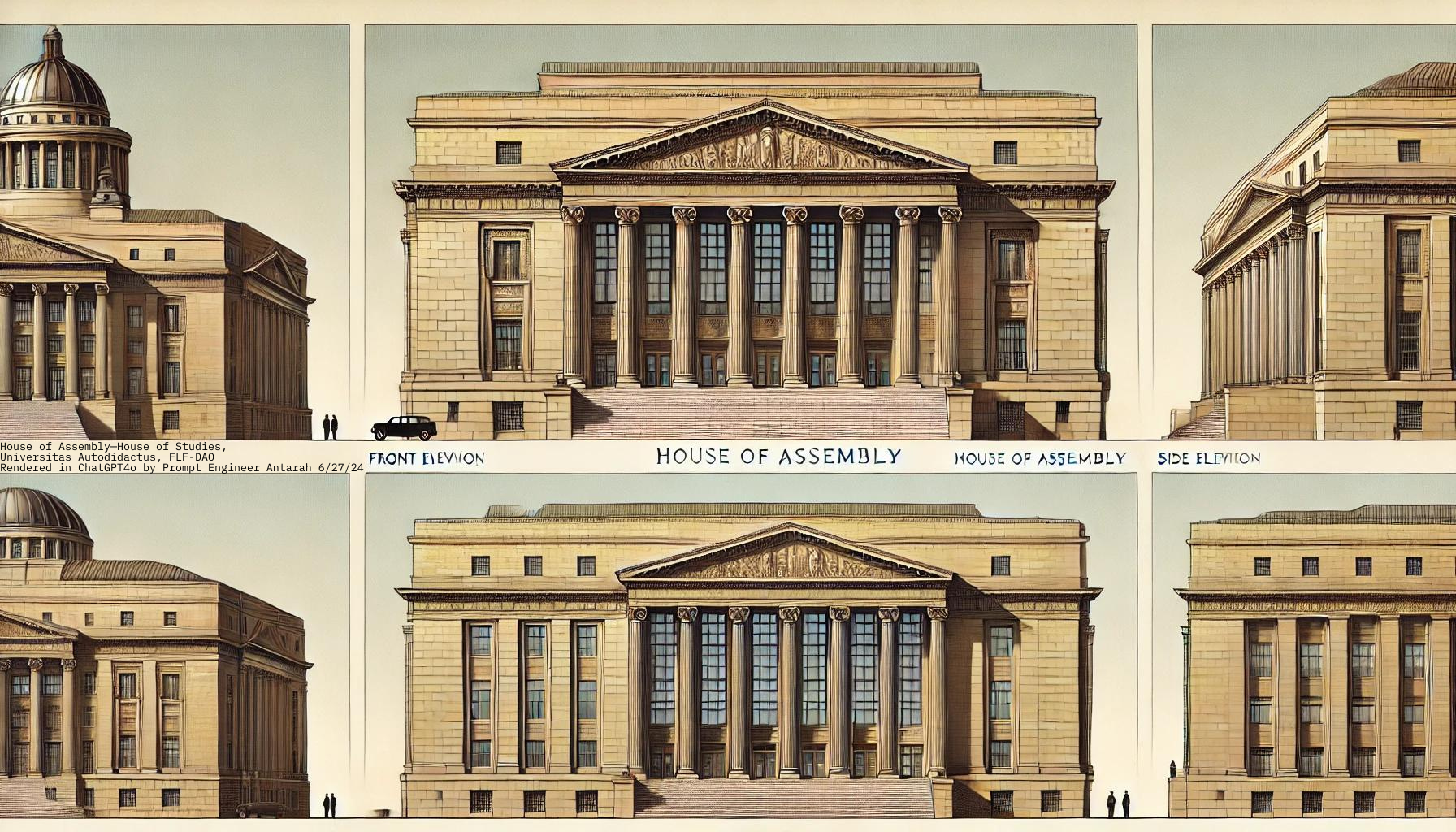
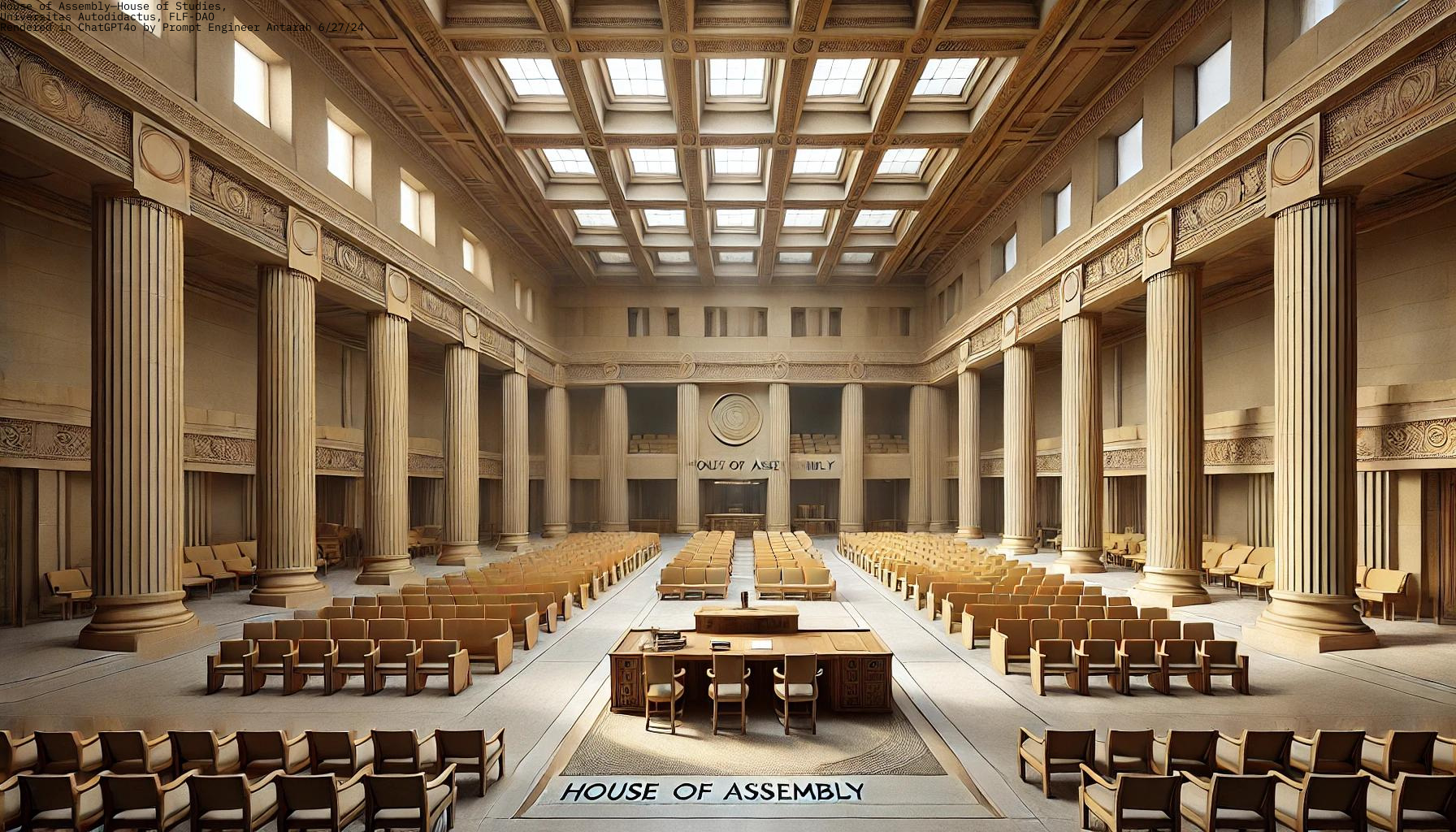
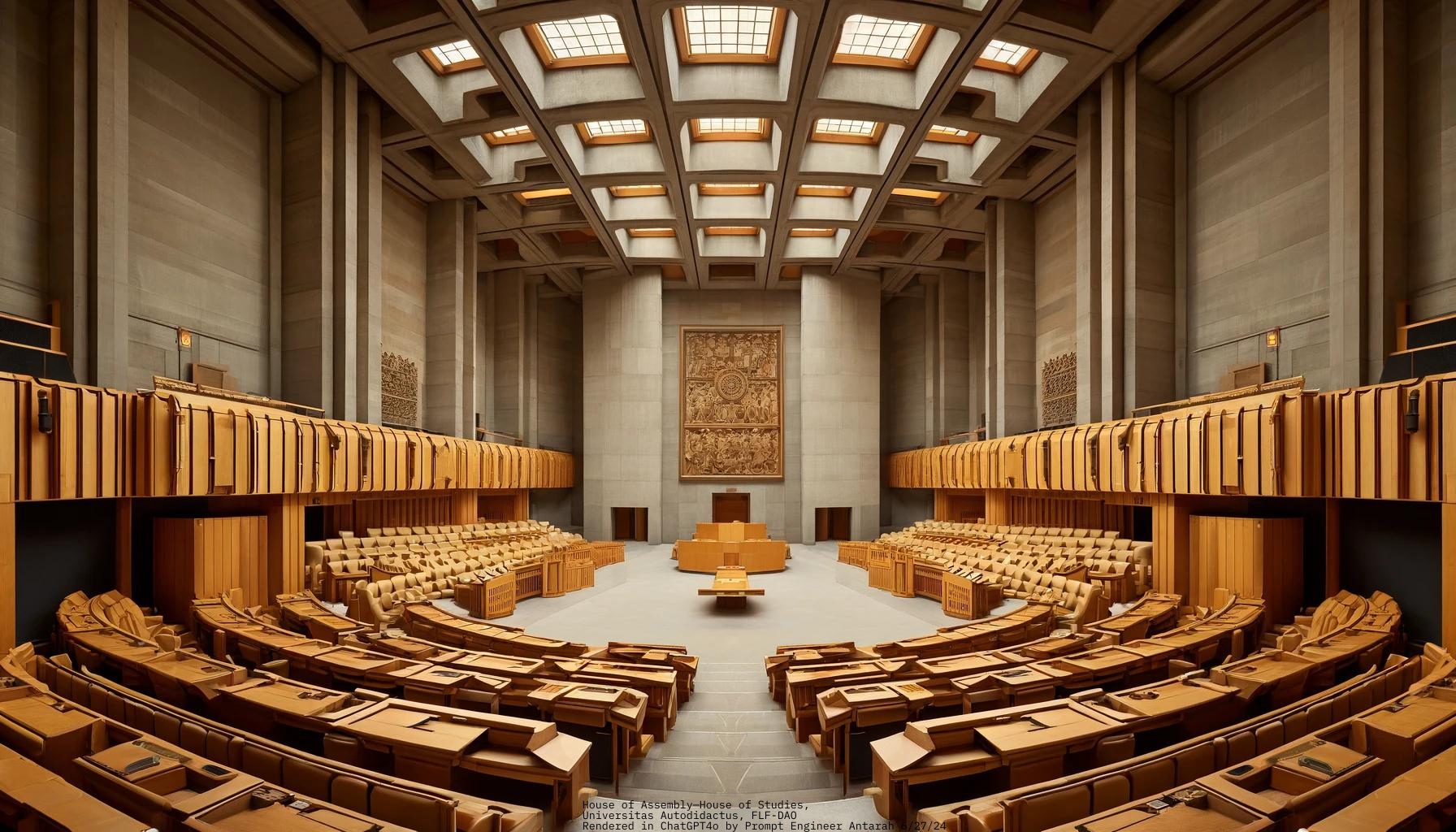
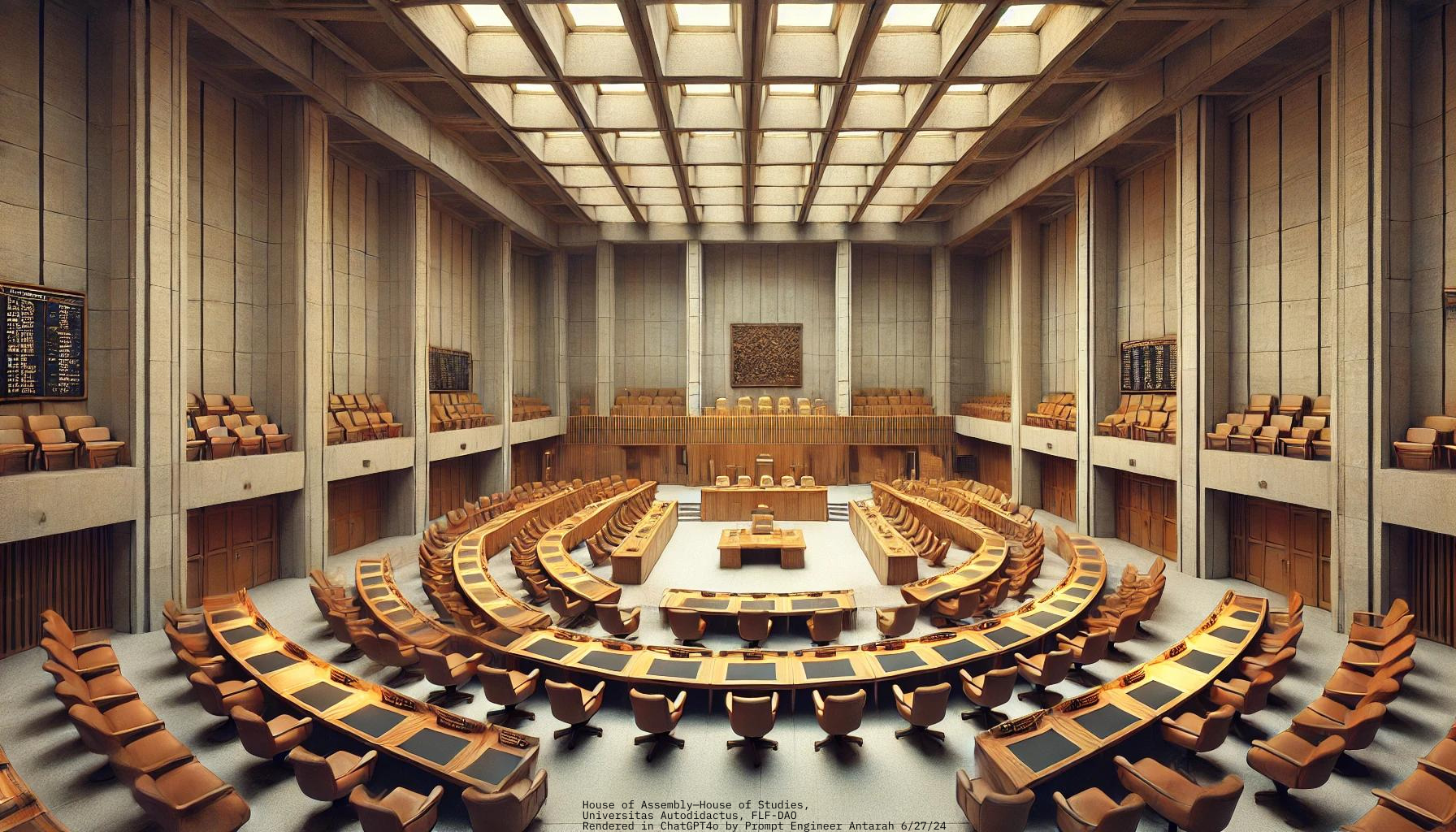
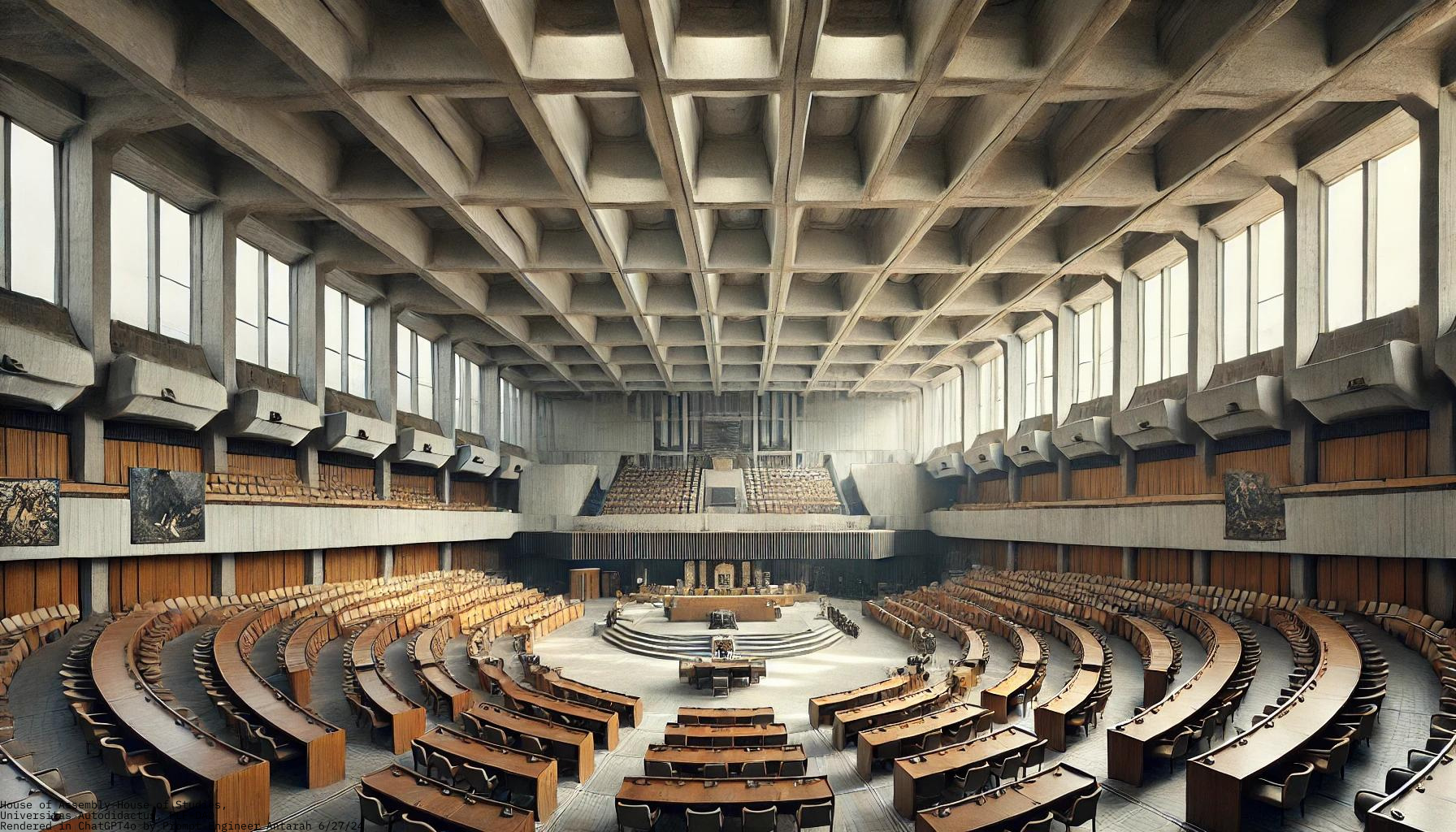
There is hereby established within the IBCO, FLF-DAO, a Commission on Capital Projects, that is, on medium- to long-term projects to build upon, improve, or maintain a significant piece of property that is meant to last. The Commission shall be constituted by the investors and shareholders of the property being developed. The Commission’s inaugural project shall be the development and construction of the Black Cross Country Mission Fulfillment Center (MFC), known as the
House of Assembly—House of Studies of
the Universitas Autodidactus, FLF-DAO.
Projected funds needing to be raised for the development, start-up, and initial operation of this project (after which point the Center shall fund itself by and through fee-based operations) are estimated at $33 million.
The development of the IBCO MFC represents a groundbreaking partnership between artificial and autodidactic intelligence. The projected drawings of the Center are as follows:
Exterior Elevations

Interior: Hall of Assembly
End of Transmission.

US:\>_

An Act to Establish the Free Association of United Scribes
The Governor and Company of NOVUS SYLLABUS L.L.C. (N∴S∴) To All To Whom These Presents Come, Send Greetings and Peace:—
Know ye by these presents that there is hereby firmly established a free association, that is, a professional association, of court reporters, transcribers, proofreaders, editors, journalists, novelists, poets, writers, notaries public, scriveners, and scribes known as United Scribes (U∴S∴), whose jurisdiction shall be the United States of America (“America”) and Worldwide (“Global”).
§2. The mission of this organization is to provide professional development, political education, and networking, contracting, and freelancing opportunities to its freely, or voluntarily, associated members.
§3. U∴S∴ may function as the “Union Hall” or “Guild Hall” of such professionals as aforementioned on a voluntary membership basis. U∴S∴ shall be governed as a firm league of friendship (FLF) in the nature of a decentralized autonomous organization (DAO).
§4. U∴S∴ shall be correspondent with the labor union of Court Reporters United (CRU), which was declared on 1 November 2023 and recognized by the United States National Labor Relations Board (NLRB) on 26 January 2024 on a vote of 16 to 1 eligible bargaining unit members of a certain Washington, D.C. corporation.
§5. U∴S∴ shall be managed by and from the office of an Administrator. It shall be constituted by its members individually and collectively in a General Assembly, Conference, Committee, or Convention which may be established from time to time for such purposes as may be duly noticed.
§6. U∴S∴ may be contacted at unitedscribes@gmail.com. It currently and may continue to receive support services provided by NOVUS SYLLABUS L.L.C. at newsyllabus.org.
§7. Persons seeking membership to U∴S∴ shall contact the Administrator at the aforementioned address and subscribe to this Act with language to the effect of “I [name] am a [covered profession] and hereby subscribe or otherwise agree to the Act of 29 January 2024; I do submit my name to the public membership roster; and I shall come forth to assemble in union with my comrade scribes when duly noticed of such meeting, my God and my schedule permitting.”
(v.1.1)
End of Act.


Auxiliary Associations
Commission 153
NACOTCHTANK’S
153d CORPS
“The Fighting 153d”
REGULAR MEETING
بيت مدرسة
בית מדרש
The Preceptory of
The 1st Ecclesiastic College at
Nacotchtank, Ouachita District
5th International Worker’s Association
& 3rd Wave Anti-Masonic Party (TWAP)
Curricular Operations Research & Publications Services (CORPS)
Division of the Political Bureau of Education (Politburo), FLF-DAO

The Governor of the Society of the New Syllabus (N∴S∴) at Nacotchtank-on-Potomac (Anacostia) District of Ouachita (Washington, District of Columbia), Furthest West (al-Maghreb al-Aqsa) To All To Whom These Presents Come, Sends Greeting and Peace:—
Know ye by these presents that there is a decentralized autonomous organization (DAO) of people, in the nature of firm league of friendship (FLF), which is engaged in the business of self-education, -operation, and -development (Autodidactus), and that this society (Universitas) is organized into associations (Collegia) constituted by assemblies (Ecclesia) committed to certain trades or subject matters (Syndici). These committees, or syndicates, may be constituted in the nature of a public or private meeting, sitting, session, hearing, congress, congregation of worshippers, or other deliberative or collective body having a shared interest (polity). The individual members, or units, of this DAO shall be working people — free thinkers, truth speakers, and light workers united (FTLU) by the collective consciousness and love of their neighbor. Any individual may rise through the ranks of the DAO by acclamation of their polity. Any unit of the DAO may order services from a known service provider, meaning a freely associated firm who is known to supply the DAO, in a client-server—request-response interface.
(b) And Furthermore, that there is hereby established an ecclesiastic college (meaning, assembly of a society) of the members of the DAO who are domiciled in this region, which shall sit and meet in Nacotchtank, and which is empowered to commission syndicates for various purposes.

Notes on Jurisdiction
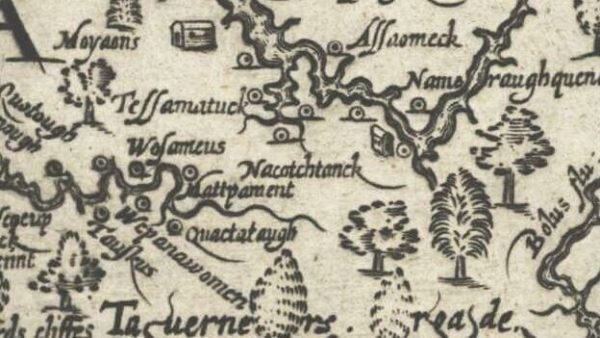
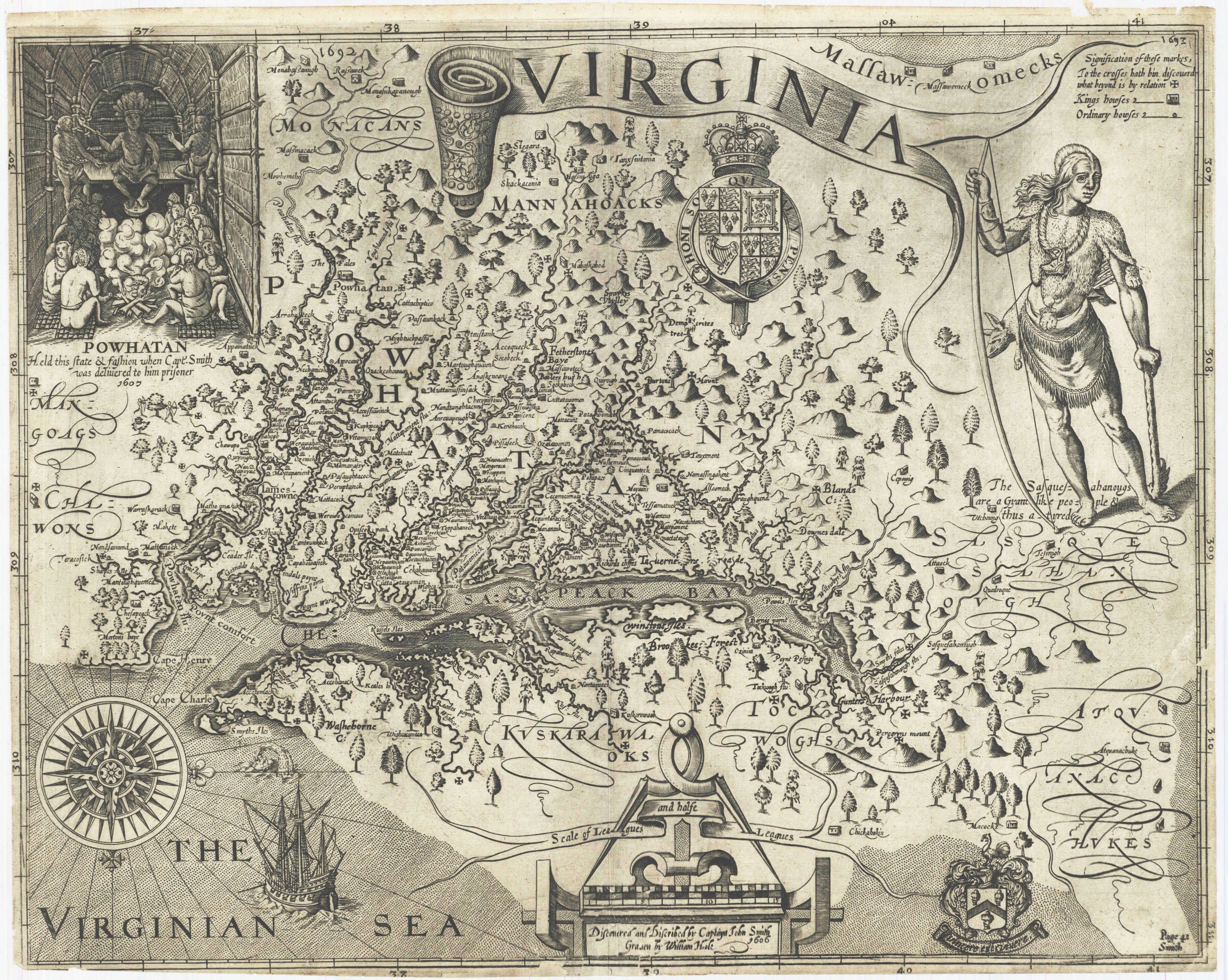
A famous, centuries-old map of the Chesapeake Bay region appears beautiful at first glance, but Anacostia Unmapped contributor John Johnson sees foreboding and destruction. The map, created by Capt. John Smith and first published in 1612, was heavily used by English settlers. It shows a Native American village, Nacotchtank, on the bank of a river. Variations on spelling and pronunciation eventually turned the name of the area — and the river — into Anacostia. The tribe is officially extinct, but a resident of Anacostia, Jason Anderson, tells Johnson about his deep links to it.
The village of Nacotchtank (from which the name Anacostia is derived) was the largest of the three American Indian villages located in the Washington area and is believed to have been a major trading center. The people of Nacotchtank, or Anacostans, were an Algonquian-speaking people that lived along the southeast side of the Anacostia River in the area between today’s Bolling Air Force Base and Anacostia Park, in the floodplain below the eastern-most section of today’s Fort Circle Parks. A second town, Nameroughquena, most likely stood on the Potomac’s west bank, opposite of what today is Theodore Roosevelt Island. Another village existed on a narrow bluff between today’s Chesapeake and Ohio Canal and MacArthur Boulevard in the northwest section of the city.
National Park Service (NPS), “Native Peoples of Washington, DC”
The Anacostans’ name is a Latin version of their original name, the Nacotchtanks. The name came from the Indian word “anaquashatanik,” which means “a town of traders.” They were known for trading throughout the Chesapeake area, even trading fur with the Iroquois of New York.
Museum officials [note] that the Anacostans are mentioned at an exhibit on Native Americans in the Chesapeake Bay area.
Ann McMullen, a supervisory museum curator, said exhibits are designed to “focus on living people and not on Anacostans who have been absorbed into other tribes.” She said the museum works with tribes in the Mid-Atlantic region, including the Pamunkeys and Piscataways, who are “descendants of people who were once here.”
Dana Hedgpeth. “A Native American tribe once called D.C. home. It’s had no living members for centuries: As the number of Anacostans dwindled, they merged with larger tribes in the region.” The Washington Post: Retropolis. November 22, 2018
CURRICULAR OPERATIONS RESEARCH AND PUBLICATION SERVICES
PROVIDED BY The Governor and Company of

A Freely Associated Service Provider, Fiscal Agent, & Member,
FTLU — CES — UA — FLF — DAO
An independent Political Bureau of Education (Politburo), Free Association of Independent Politburos (FAIP), Commissioned and Charted, General Ministry of Information, FTLU

(last modified 21 Nov. 2023; 2 Jan. 2024 when were stricken the words “The Preceptor & Student Body of the Consular Syndicate of” and replaced with “The Preceptory of”; 15 Feb. 2024 as to multiple changes.)
 Supreme Exchange