Tagged: US
D.R. 02-01: Israel-Hamas (III)
Volume 2, Issue 1
The Sense of the Congress:
A Special Report
UNRWA’s Palestinian curriculum a primary concern of the U.S. Congress
By Antarah Crawley | Last Modified 1/31/24 at 12:35 PM
WASHINGTON, DC — On 19 October 2023 and 8 November 2023 this outlet published articles on the United States House of Representatives’ (House) response to the Israel-Hamas War and particularly their deeply serious concern with the curriculum and textbooks used by the United Nations Relief Works Agency (UNRWA) to support their mission of educating students in the Palestinian Territory. UNRWA performs numerous civil society and traditionally-state-sponsored activities for the Palestinian population, and is responsible for the public education of civilian students.
On Tuesday, 30 January 2024, the House Foreign Affairs Committee Subcommittee on Global Health, Global Human Rights, and International Organizations and Subcommittee on Oversight and Accountability jointly convened a hearing entitled “UNRWA Exposed: Examining the Agency’s Mission and Failures,” largely in response to news that 12 UNRWA employees had been fired for their participation in the October 7, 2023 “Hamas terrorist attacks on Israel.” The gallery of the hearing room in House Visitors Center room 210 was filled to capacity.
The witnesses were:
- Richard Goldberg, Senior Advisor, Foundation for Defense of Democracies
- Marcus Sheff, Chief Executive Officer, IMPACT-se
- Hillel Neuer, Executive Director, UN Watch
- Mara Rudman, Schlesinger Professor, University of Virginia Miller Center
Mr. Mast (R) of Florida presided as Chairman of the Subcommittee on Oversight, etc.; Mr. Smith (R) of New Jersey presided as Chairman of the Subcommittee on Global Health, etc.; Mr. Crawley (AM) of United Scribes and Court Reporters United reported on the proceeding on behalf of the House Clerk’s Office of Official Reporters.
Present in the audience were at least 15 constituents of the Code Pink: Women for Peace (CODEPINK) organization. They wore pink shirts bearing the phrase “Let Gaza Live,” and during much of the hearing they displayed red paint on their palms while making what could be interpreted as the Master Mason’s Grand Hailing Sign of Distress (and certainly many a besieged Palestinian would be wont to cry out, ‘O Lord my God/Ya’Rabbi Ya’Illah, is there no help for the widow’s son?’). Also present in the audience was a constituency of pro-Israel women wearing black shirts that read “Stand with Israel”. One of them in particular (the one to the far left of the below photo [the one staring directly at me]) was particularly antagonistic against CODEPINK, repeatedly summoning Capitol Police officers to arrest those who spoke out.

The Chairman of the Subcommittee on Oversight, Mr. Mast, remarked in his opening statement:
Wherever you see UNRWA facilities, including schools, in Gaza, you are almost guaranteed to find tunnels, rocket launchers and weapons storages. During Israel’s incursion into Gaza, Israel Defense Forces uncovered a variety of rifles and ammunition hidden under UNRWA institutions.
Brian Mast (R-FL)
Al Jazeera reported in a 20 November 2023 article entitled What Israel’s video of ‘Hamas tunnel’ under al-Shifa tells us; The structure of the tunnel raises questions about whether it is indeed a Hamas-built pathway:
Tunnels in Gaza were first built in 1980 at a time when the enclave was under Israeli occupation, and before the formation of Hamas in 1987. They were constructed under the Egyptian border for smuggling all sorts of goods, including weapons, fuel and black market goods.
Over time, Palestinians realised that tunnels could have a military use. The first sign of the military use of tunnels was in 2001 when an Israeli military post was blown up with an explosive from underground. The tunnels entered Israeli public consciousness when Palestinian fighters emerged from a tunnel shaft and kidnapped Israeli soldier Gilad Shalit in 2006.
Israel placed a blockade on the Gaza Strip after Hamas gained control of it in 2007. Tunnels became the means to bypass the siege and to transport food, goods and weapons. Under Hamas, the tunnels expanded strategically.
Al Jazeera
The Chairman continued, “We have seen footage and evidence of UNRWA teachers and staff praising and celebrating the October 7 attack on social media, referring to the attack as an unforgettable glorious morning and a splendid site. We read reports that at least 12 UNRWA employees directly participated in the attack.”
During these remarks, an audience member representing CODEPINK proclaimed, “It’s 75 years of occupation that has caused all of this and now it’s the starving starving people, 2 million people starving right now.” The CODEPINK member was led away by the Capitol Police while advising the officers, “Okay, don’t hurt my arm … I am 77 years old. I am an Army colonel; I am a retired diplomat and what the U.S. is doing — the Biden Administration is doing is [tantamount] to genocide. It’s a genocide that the Biden Administration is complicit in. The Biden Administration … is killing people just as the Israelis are. It’s our weapons, it’s our money … that’s doing this. And the money for UNRWA is very important to keep people from starving to death after trying to kill them all.” Numerous members of CODEPINK were arrested by Capitol Police officers for acts of civil disobedience and free speech.
On 26 January 2023, UNRWA Commissioner-General Philippe Lazzarini reported from Amman, Jordan:
The Israeli Authorities have provided UNRWA with information about the alleged involvement of several UNRWA employees in the horrific attacks on Israel on 7 October.
To protect the Agency’s ability to deliver humanitarian assistance, I have taken the decision to immediately terminate the contracts of these staff members and launch an investigation in order to establish the truth without delay. Any UNRWA employee who was involved in acts of terror will be held accountable, including through criminal prosecution.
UNRWA reiterates its condemnation in the strongest possible terms of the abhorrent attacks of 7 October and calls for the immediate and unconditional release of all Israeli hostages and their safe return to their families.
These shocking allegations come as more than 2 million people in Gaza depend on lifesaving assistance that the Agency has been providing since the war began. Anyone who betrays the fundamental values of the United Nations also betrays those whom we serve in Gaza, across the region and elsewhere around the world.
Philippe Lazzarini, UNRWA Commissioner-General
On 26 January 2024, Al Jazeera reported:
The US Department of State said it was troubled by the allegations, which it said pertained to 12 UNRWA employees. It said it would provide no additional funding to the agency until the allegations were addressed.
The Department of State has temporarily paused additional funding for UNRWA while we review these allegations and the steps the United Nations is taking to address them,” spokesperson Matthew Miller said.
Al Jazeera
The Chairman continued his opening remarks, stating, “Make no mistake; the attacks on October 7 did not happen in a vacuum. The sickness on display from UNRWA is rooted in something deeper within its structure and mission. It’s rooted in the double standard the world applies for them, from their definition of refugee to the hatred they teach the Palestinian children –“
During these remarks, another audience member from CODEPINK rose to their feet to proclaim, “Please do not defund UNRWA. It was established in 1948 for the refugees of Palestine. If you unfund UNRWA, it’s a death sentence. They’re already starving. Please don’t defund UNRWA!…”
The Chairman of the Subcommittee on Global Health, etc., Mr. Smith, remarked in his opening statement:
Pubic pressure motivated by explosive new evidence that UNRWA employees were directly involved in the October 7 Hamas terrorist attack on Israel, the Biden Administration last Friday as we know announced that it was ‘temporarily paused’ additional funding for UNRWA while it reviews the evidence. With all due respect to the President this was a long overdue response. Going far beyond the revelations of last week, however, there has been a long list of massive and irrefutable evidence of UNRWA’s extensive complicity and cooperation in Hamas’s antisemitic genocidal hate campaign. Like the Nazi’s before them, Hamas and their chief terrorism sponsor, Iran, they are committing genocide against the Jews.
Chris Smith (R-NJ)
The Chairman continued:
…[T]hese children from the earliest days of their lives are trained in hate for Jews and for Americans. Now we’ve heard how UNRWA’s textbooks, curricula, summer camps and official media are all infamous incubators of hate. And we’ve seen the evidence of its teacher’s administration’s involvement in — with Hamas.
Chris Smith (R-NJ)
During these remarks a male audience member dressed in a military-style black jacket rose and proclaimed, “You have blood on your hands! Shame on you! This is a genocide! You are starving children and people to death. This is a genocide and you are responsible for it. Shame on you! … Ceasefire now! You are killing people; you are killing innocent people … We will never forgive you for this … Shame on all of you…”
The Chairman responded to the outburst:
They don’t make their case. As you can see, the hatred coming out of that particular man is so sad. UNWRA, the UN Relief Works Agency was set up as we know in 1949 to provide aid and relief to refugees. 75 years later it’s still going, which is absurd, in a way, since nearby Arab nations will not permit the former to integrate into their societies. UNRWA provided education in hatred of Jews for the vastly expanded number of children, grandchildren, and great grand-children of the original refugees. UNRWA’s textbooks — and I’ve had meeting after meeting on this, including hearings — where we’ve actually read through the text books, full to overflowing with antisemitic hatred.
Chris Smith (R-NJ)
Witness Mr. Goldberg remarked:
Now when you look at the incitement of violence that has gone on for decades, the internalization in generation after generation to rise up and believe that they are refugees waiting to come back to what is today Israel to drive the Jews into the sea, October 7th is the logical conclusion of UNRWA. It is of course what they have been training generations to do with the resources we have provided going to these terrorist organizations to help carry out that mission.
Richard Goldberg
Witness Mr. Sheff remarked, regarding the fired UNRWA employees:
These are not a few bad apples. Rather, the institutional barrel is rotten. How do we know? We know by researching UNRWA’s educational infrastructure. In it, textbooks teach that Jews are liars and fraudsters who spread corruption which will lead to their annihilation. Students are taught about cutting the necks of the enemy; that a fiery massacre of Jews on a bus is celebrated as a barbecue party; that Dalal Mughrabi, who murdered 38 people and 13 children, is a role model. UNRWA educated that dying is preferable to living; that becoming a martyr will be rewarded in heaven. First graders are taught the alphabet by learning the words for attack and martyr. And fourth graders are taught addition by counting martyrs. These are just a handful of examples of incitement which run like a thread, as strategy, throughout the Palestinian curriculum which is taught in UNRWA schools. And our research shows the same violent jihadi educational materials are created on a large institutional level by UNRWA staff. … IMPACT-se has warned for years about the consequences of this hate education, and I ask you, what can UNRWA possible offer the next generation of Palestinians? Poisonous textbooks taught too often by extremist teachers?
Marcus Sheff
Mr. Sheff later remarked:
Textbooks are uniquely authoritative, especially in the Manna region, in the Middle East, where you get one book, one grade, one subject; and they carry the values, the identities that leaders wish to pass down to the next generation, for good or for bad. This is how we create the societies of the future that we want to see, through these textbooks, through education. … We know that one of the first things that Hitler did when he came to power was change the textbooks.
Marcus Sheff
Mr. Goldman remarked, in response to a question my Mr. Moran (R) of Texas regarding any prior removals of UNRWA teachers, that he recalled “a case of a headmaster of an UNRWA school who was moonlighting as an Islamic jihad commander. He was removed by an Israeli air strike.” His remarks drew uproarious laughter from the pro-Israel audience members and representatives. Mr. Moran replied, “Well that’s one successful removal,” and went on to ask if there was “any part of the educational curriculum or programming that is overtly pro-American or pro-Israeli, that teaches the benefits for democracy?” (The present author has presented this question for rhetorical purposes.)
In one of his last remarks, Mr. Goldberg discussed the United Nations’ inherent systemic structural bias against Israel, which Mr. Hill (R) of Arkansas interpreted to mean that “the UN itself is the most antisemitic organization on the planet,” to which Mr. Goldberg replied “100% correct.”
It is notable that:
[I]n 1917, British Foreign Secretary Arthur Balfour sent the Balfour Declaration to Lord Rothschild, a leader of the British Jewish community, stating Britain’s support for the creation of a Jewish “national home” in Palestine […and] that negotiations on the future of the country were to happen directly between Britain and the Jews, excluding Arab representation. His famous announcement at the Paris peace conference would reflect this interpretation, stating that the goal “[t]o make Palestine as Jewish as England is English.” The years that followed would see Jewish-Palestinian relations deteriorate dramatically.
In 1918, the Jewish Legion, a group primarily of Zionist volunteers, assisted in the British conquest of Palestine. In 1920, the territory was divided between Britain and France under the mandate system, and the British-administered area (including modern Israel) was named Mandatory Palestine. Arab opposition to British rule and Jewish immigration led to the 1920 Palestine riots and the formation of a Jewish militia known as the Haganah (“The Defense” in Hebrew) […] In 1922, the League of Nations granted Britain the Mandate for Palestine under terms which included the Balfour Declaration with its promise to the Jews, and with similar provisions regarding the Arab Palestinians.
[…]
Under the British Mandate placed by the League of Nations after World War I, Jewish immigration to the region [of Palestine] increased considerably leading to intercommunal conflict between Jews and the Arab majority. The UN-approved 1947 partition plan triggered a civil war between these groups which would see the expulsion or fleeing of most Palestinians from Mandatory Palestine. The British terminated the Mandate on 14 May 1948, and Israel declared independence on the same day.
Wikipedia: Israel (retrieved 30 January 2024)
On 15 May 1948, the armies of five neighboring Arab states invaded the area of the former Mandatory Palestine, starting the First Arab–Israeli War. An armistice in 1949 left Israel in control of more territory than the U.N. partition plan had called for; no new Arab state was created, as the rest of the former Mandate territory was divided between Egypt, which occupied the Gaza Strip, and Jordan, which annexed the West Bank. The 1967 Six-Day War ended with Israel occupying both the West Bank and Gaza alongside the Egyptian Sinai Peninsula and the Syrian Golan Heights. Israel has since effectively annexed both East Jerusalem and the Golan Heights, and has established settlements across the occupied territories, actions which are deemed illegal under international law.
Mr. Issa (R) of California closed out the questioning by stating “that the record of UN is poor and that we must change the teachers of the next generation of Palestinians,” a statement to which no witness disagreed (with the possible exception of Professor Rudman who was the only witness to present a balanced viewpoint during the entire hearing).
These developments in the Congress’s assessment and treatment of educational curricula abroad presents serious concerns about the future of public school curricula in the United States. It highlights the increasingly important role of NOVUS SYLLABUS L.L.C. (N∴S∴), Universitas Autodidactus (U∴A∴), and United Scribes (U∴S∴) in administering a worldwide Political Education Bureau (Politburo) and publishing curricula for the development of self-knowledge, self-mastery, and self-determination. In the words of the Moorish Science Temple of America and 5% Nation of Gods and Earths, ISLAM means “I Self Law Am Master“.
Resources
© MMXXIV BY NOVUS SYLLABUS L.L.C.
ALL RIGHTS RESERVED WITHOUT PREJUDICE.
US:\>_
An Act to Establish the Free Association of United Scribes
The Governor and Company of NOVUS SYLLABUS L.L.C. (N∴S∴) To All To Whom These Presents Come, Send Greetings and Peace:—
Know ye by these presents that there is hereby firmly established a free association, that is, a professional association, of court reporters, transcribers, proofreaders, editors, journalists, novelists, poets, writers, notaries public, scriveners, and scribes known as United Scribes (U∴S∴), whose jurisdiction shall be the United States of America (“America”) and Worldwide (“Global”).
§2. The mission of this organization is to provide professional development, political education, and networking, contracting, and freelancing opportunities to its freely, or voluntarily, associated members.
§3. U∴S∴ may function as the “Union Hall” or “Guild Hall” of such professionals as aforementioned on a voluntary membership basis. U∴S∴ shall be governed as a firm league of friendship (FLF) in the nature of a decentralized autonomous organization (DAO).
§4. U∴S∴ shall be correspondent with the labor union of Court Reporters United (CRU), which was declared on 1 November 2023 and recognized by the United States National Labor Relations Board (NLRB) on 26 January 2024 on a vote of 16 to 1 eligible bargaining unit members of a certain Washington, D.C. corporation.
§5. U∴S∴ shall be managed by and from the office of an Administrator. It shall be constituted by its members individually and collectively in a General Assembly, Conference, Committee, or Convention which may be established from time to time for such purposes as may be duly noticed.
§6. U∴S∴ may be contacted at unitedscribes@gmail.com. It currently and may continue to receive support services provided by NOVUS SYLLABUS L.L.C. at newsyllabus.org.
§7. Persons seeking membership to U∴S∴ shall contact the Administrator at the aforementioned address and subscribe to this Act with language to the effect of “I [name] am a [covered profession] and hereby subscribe or otherwise agree to the Act of 29 January 2024; I do submit my name to the public membership roster; and I shall come forth to assemble in union with my comrade scribes when duly noticed of such meeting, my God and my schedule permitting.”
(v.1.1)
End of Act.


Auxiliary Associations
D.R. 01-14: The Fed &c.
Volume 1, Issue 14
Special Edition on Political Economy
Contents — Art. 1. …On the Fed — Art 2. Charter F.A. — Art. 3. …Consol DAO — Art. 4. Notes from the DAO — Art. 5. …X — Art. 6. Culture…
Article 1
Notes on the System:
On the “Federal Reserve”
Comp. Ed. by Antarah Crawley | Last Modified 11/28/2023 at 9:40 PM
The Federal Reserve, the central bank of the United States, provides the nation with a safe, flexible, and stable monetary and financial system.
Banner of the Official Website of the Board of Governors of the Federal Reserve System, as of 27 Nov. 2023
The people that walked in darkness have seen a great light: they that dwell in the land of the shadow of death, upon them hath the light shined.
Book of Isaiah, Chapter 9, Verse 2
Introductory Editorial Note: It is economic, social, and political suicide to question the legitimacy or constitutionality of the System (just ask Ezra Pound, Mr. Mullins, and Chairman McFadden). Notwithstanding that unfortunate circumstance, we must educate the public as to its mechanisms.
Preamble
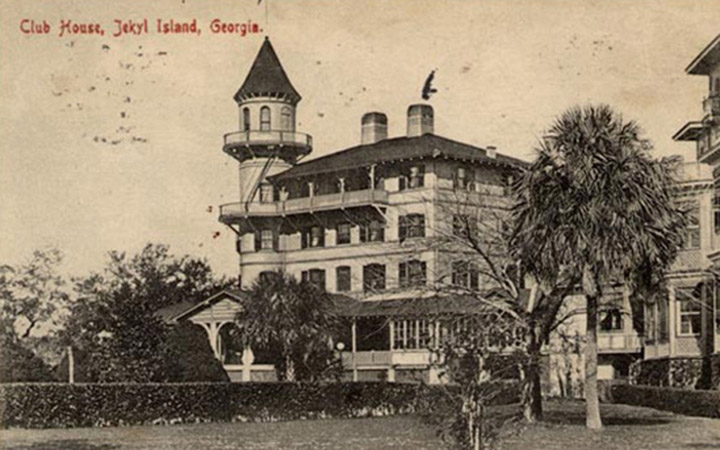
[…] the Federal Reserve System is not Federal; it has no reserves, and is not a system at all, but rather, a criminal syndicate. From November, 1910, when the conspirators [U.S. Senator Nelson Aldrich of the National Monetary Commission, his secretary Arthur Shelton, U.S. Assistant Secretary of the Treasury A. Piatt Andrew, Senior Partner Henry Davison of J.P. Morgan Co., President Frank Vanderlip of the National City Bank of New York, President Charles D. Norton of the First National Bank of New York, Benjamin Strong of J.P. Morgan, and Paul Warburg of Kuhn, Loeb & Co.] met on Jekyll Island, Georgia, to the present time machinations of the Federal Reserve bankers have been shrouded in secrecy. Today [1991], that secrecy has cost the American people a three trillion [now 33 trillion] dollar debt, with annual interest payments to these bankers amounting to some three hundred billion dollars per year, sums which stagger the imagination, and which in themselves are ultimately unpayable.
[…] American history in the twentieth century has recorded the amazing achievements of the Federal Reserve bankers. First, the outbreak of World War I, which was made possible by the funds available from the new central bank of the United States. Second, the Agricultural Depression of 1920. Third, the Black Friday Crash on Wall Street of October, 1929, and the ensuing Great Depression. Fourth, World War II. Fifth, the conversion of the assets of the United States and its citizens from real property to paper assets from 1945 to the present, transforming a victorious America and foremost world power in 1945 to the world’s largest debtor nation in 1990. […] Will Americans act to rebuild our nation […] or will we continue to be enslaved by the Babylonian debt money system which was set up by the Federal Reserve Act of 1913 to complete our total destruction? This is the only question which we have to answer, and we do not have much time left to answer it.
Eustace Mullins, Jackson Hole, Wyoming, 1991; Forward to “Secrets of the Federal Reserve,” Author’s Special 70th Birthday Edition: Bankers Research Institute: Staunton, Virginia: 1993. (Emphasis mine.)
Primary Sources
Some people think the Federal Reserve banks are United States Government institutions. They are not government institutions. They are private credit monopolies which prey upon the people of the United States for the benefit of themselves and their foreign customers. The Federal Reserve banks are the agents of the foreign central banks. Henry Ford has said, ‘The one aim of these financiers is world control by the creation of inextinguishable debts.’ The truth is the Federal Reserve Board has usurped the Government of the United States by the arrogant credit monopoly which operates the Federal Reserve Board and the Federal Reserve Banks.
Louis T. McFadden, Chairman of the U.S. House Banking and Currency Committee, June 10, 1932. (Mullins 153-154.)
Whereas I charge them, jointly and severally, with the crime of having treasonably conspired and acted against the peace and security of the United States and having treasonable conspired to destroy the constitutional government in the United States. Resolved, that the Committee on the Judiciary is authorized and directed as a whole or by subcommittee to investigate the official conduct of the Federal Reserve Board and agents to determine whether, in the opinion of the said committee, they have been guilty of any high crime or misdemeanour which in the contemplation of the Constitutions requires the interposition of the Constitutional powers of the House.
Chairman McFadden, January 13, 1932, introducing a resolution indicting the Federal Reserve Board of Governors for “Criminal Conspiracy,” on which no action was taken. This, and the Chairman’s December 13, 1932, motion to impeach President Herbert Hoover was the last nail driven into his political coffin. (Mullins 154.)
I wrote into the bill which was introduced by me in the Senate on June 26, 1913, a provision that the powers of the System should be employed to produce a stable price level, which meant a dollar of stable purchasing, debt-paying power. It was stricken out. The powerful money interests got control of the Federal Reserve Board through Mr. Paul Warburg, Mr. Albert Strauss, and Mr. Adolph C. Miller and they were able to have that secret meeting of May 18, 1920, and bring about a contraction of credit so violent it threw five million people out of employment. In 1920 that Reserve Board deliberately caused the Panic of 1921. The same people, unrestrained in the stock market, expanding credit to a great excess between 1926 and 1929, raised the price of stocks to a fantastic point where they could not possibly earn dividends, and when the people realized this, they tried to get out, resulting in the Crash of October 24, 1929.
U.S. Senator Robert L. Owen, testifying before the U.S. House Committee on Banking and Currency, 1938. (Mullins 157.)
The Federal Reserve Bank is an institution owned by the stockholding member banks. The Government has not a dollar’s worth of stock in it.
W.P.G. Harding, Governor of the Federal Reserve Board, testifying in 1921. (Mullins 157.)
The people did not know the Federal Reserve Banks were organized for profit-making. They were intended to stabilize the credit and currency supply of the country. That end has not been accomplished. Indeed, there has been remarkable variation in the purchasing power of money since the System went into effect. The Federal Reserve men are chosen by the big banks, through discrete little campaigns, and they naturally follow the ideals which are portrayed to them as the soundest from a financial point of view.
U.S. Senator Robert L. Owen, testifying during the Gold Reserve Hearings of 1934. (Mullins 161.)
At the moment, 1934, we have 900 million dollars excess reserves. In 1924, with increased reserves of 300 million, you got some three or four billion in bank expansion of credit very quickly. That extra money was put out by the Federal Reserve Banks in 1924 through buying government securities and was the cause of the rapid expansion of bank credit. The banks continued to get excess reserved because more gold came in, and because, whenever there was a slackening, the Federal Reserve people would put out some more. They held back a bit in 1926. Things firmed up a bit that year. And then in 1927 they put out less than 300 million additional reserves, set the wild stock market going, and that led us right into the smash of 1929.
[…] The money of the Federal Reserve Banks is money they created. When they buy Government securities they create reserves. They pay for the government securities by giving checks on themselves, and those checks come to the commercial banks and are by them deposited in the Federal Reserve Banks, and then money exists which did not exist before.
Benjamin Anderson, economist for the Chase National Bank of New York, testifying during the Gold Reserve Hearings of 1934. (Mullins 161.)
The Board of Governors opposes any bill which proposes a stable price level, on the grounds that prices do not depend primarily on the price or cost of money; that the Board’s control over money cannot be made complete; and that steady average prices, even if obtainable by official action, would not insure lasting prosperity
Marriner S. Eccles, Chairman of the Board of Governors of the Federal Reserve System (1934–48), in “Memorandum on Proposals to maintain prices at fixed levels,” Monday, March 13, 1939. (Mullins 163.)
The Government controls the gold reserve, that is, the power to issue money and credit, thus largely regulating the price structure.
[…] The Federal Reserve Board has the power of open market operations. Open-market operations are the most important single instrument of control over the volume and cost of credit in this country. When I say “credit” in this connection, I mean money, because by far the largest part of money in use by the people of this country is in the form of bank credit or bank deposits. When the Federal Reserve Banks buy bills or securities in the open market, they increase the volume of the people’s money and lower its cost; and when they sell in the open market they decrease the volume of money and increase its cost. Authority over these operations, which affect the welfare of the whole people, must be invested in a body representing the national interest.
Chairman Eccles, testifying before the U.S. House Committee on Banking and Currency, 1935. (Mullins 163-164.)
The cash [of a Federal Reserve Bank], in truth, does not exist and has never existed. What we call ‘cash reserves’ are simply bookkeeping credits entered upon ledgers of the Federal Reserve Banks. The credits are created by the Federal Reserve Banks and then passed along though the banking system.
Congressman Wright Patman, “The Primer of Money,” p. 38. (Mullins 164.)
The trick in the Federal Reserve notes is that the Federal reserve banks lose no cash when they pay out this currency to the member banks. Federal Reserve notes are not redeemable in anything except what the Government calls ‘legal tender’—that is, money that a creditor must be willing to accept from a debtor in payment of sums owed him. But since they are really redeemable only in themselves … they are and irredeemable obligation issued by the Federal Reserve Banks.
Peter L. Bernstein, “A Primer On Money, Banking and Gold,” Vintage Books, New York, 1965, p. 104. (Mullins 165).
The dollar represents a one dollar debt to the Federal Reserve System. The Federal Reserve Banks create money out of thin air to buy Government bonds from the United States Treasury, lending money into circulation at interest, by bookkeeping entries of checkbook credit to the United States Treasury. The Treasury writes up an interest bearing bond for one billion dollars. The Federal Reserve gives the Treasury a one billion dollar credit for the bond, and has created out of nothing a one billion dollar debt which the American people are obligated to repay with interest.
[…] Where does the Federal Reserve system get the money with which to create Bank Reserves? Answer. It doesn’t get the money, it creates it. When the Federal Reserve writes a check, it is creating money. The Federal Reserve is a total moneymaking machine. It can issue money or checks.
Congressman Patman, “Money Facts,” House Banking and Currency Committee, 1964, p. 9. (Mullins 165.)
There is still another and more important element of public interest in the operation of banks beside the safekeeping of money. One of the most important factors to remember in this connection is that the supply of money affects the general level of prices—the cost of living. The Cost of Living Index and money supply are parallel.
“A Day’s Work at the Federal Reserve Bank of New York” (pamphlet), 1951, p. 22. (Mullins 165.)
If I deposited $100 with my bank and the reserve requirements imposed by the Federal Reserve Bank are 20% then the bank can make a loan to John Doe of up to $80. Where does the $80 come from? Is does not come out of my deposit of $100; on the contrary, the bank simply credits John Doe’s account with $80. The bank can acquire Government obligations by the same procedure, by simply creating deposits to the credit of the government. Money creating is a power of the commercial banks … Since 1917 the Federal Reserve has given private banks forty-six billion dollars of reserves.
Congressman Patman, Congressional Record, March 21, 1960. (Mullins 167.)
ECCLES: The banking system as a whole creates and extinguishes the deposits as they make loans and investments, whether they buy Government Bonds or whether they buy utility bonds or whether they make Farmers’ loans.
MR. PATMAN: I am thoroughly in accord with what you say, Governor, but the fact remains that they created the money, did they not?
ECCLES: Well, the banks create money when they make loan and investments.
Before the U.S. House Committee on Banking and Currency, June 24, 1941. (Mullins 167.)
MR. PATMAN: How did you get the money to buy those two billion dollars worth of Government securities in 1933?
ECCLES: We created it.
MR. PATMAN: Out of what?
ECCLES: Out of the right to issue credit money.
MR. PATMAN: And there is nothing behind it, is there, except out Government’s credit?
ECCLES: That is what our monetary system is. If there were no debts in our money system, there wouldn’t be any money.
Before the U.S. House Committee on Banking and Currency, September 30, 1941. (Mullins 167.)
ECCLES: I mean the Federal Reserve, when it carries out an open market operation, that is, if it purchases Government securities in the open market, it puts new money into the hands of the banks which creates idle deposits.
MR. DEWEY: There are no excess reserves to use for this purpose?
[ECCLES]: Whenever the Federal Reserve System buys Government securities in the open market, or buys the direct from the Treasury, either one, that is what it does.
MR. DEWEY: What are you going to use to buy them with? You are going to create credit?
ECCLES: That is all we have ever done. That is the way the Federal Reserve System creates money. It is a bank of issue.
Before the U.S. House Committee on Banking and Currency, June 17, 1942. (Mullins 167-168.)
MR. KOLBURN: What do you mean by monetization of the public debt?
ECCLES: I mean the bank creating money by the purchase of Government securities. All money is created by debt—either private or public debt.
MR. FLETCHER: Chairman Eccles, when do you think there is a possibility of returning to a free an open market, instead of this pegged and artificially controlled financial market we now have?
ECCLES: Never. Not in your lifetime or mine.
Hearing before the U.S. House, 1947. (Mullins 168.) (Emphasis added.)
Congress may not abdicate or transfer to others its legitimate functions. Congress cannot Constitutionally delegate its legislative authority to trade or industrial associations or groups so as to empower them to make laws.
U.S. Supreme Court opinion, Schechter Poultry v. United States of America, 29 U.S. 495, 55 US 837.842 (1935), ruling the National Recovery Act (NRA) unconstitutional. (Mullins 168.)
The Congress shall have Power to borrow money on the credit of the United States … and to coin Money, regulate the value thereof, and of foreign Coin, and fix the Standard of Weights and Measures.”
Article 1, Sec. 8 of the Constitution of the United States of America. (Mullins 168.)
The money that began to appear in circulation a week ago, December 21, 1942, was really printing press money in the fullest sense of the term, that is, money which has no collateral of any kind behind it. The Federal Reserve statement that ‘The Board of Governors, after consultation with the Treasury Department, has authorized Federal Reserve Banks to utilize at this time the existing stocks of currency printed in the early thirties, known as ‘Federal Reserve Banknotes‘. We repeat, these notes have absolutely no collateral of any kind behind them.
Henry Hazlitt, Newsweek Magazine, January 4, 1943. (Mullins 169.)
GOVERNOR ECCLES: The currency in circulation was increased from seven billion dollars in four years to twenty-one and a half billion. We are losing some considerable amounts of gold during the war period. As our exports have gone out, largely on a lend-lease basis, we have taken imports on which we have given dollar balances. These countries are now drawing off these dollar balances in the form of gold.
MR. SMITH: Governor Eccles, what is the objective that the foreign governments are after in this projected program whereby we would contribute gold to an international fund? [Referring to the Stabilization Fund, known after 27 December 1945 as the International Monetary Fund (IMF)].
GOVERNOR ECCLES: I would like to discuss OPA [Office of Price Administration], and leave the stabilization fund for a time when I am prepared to go into it.
Senate Hearings on the Office of Price Administration (OPA), 1944. (Mullins 169.)
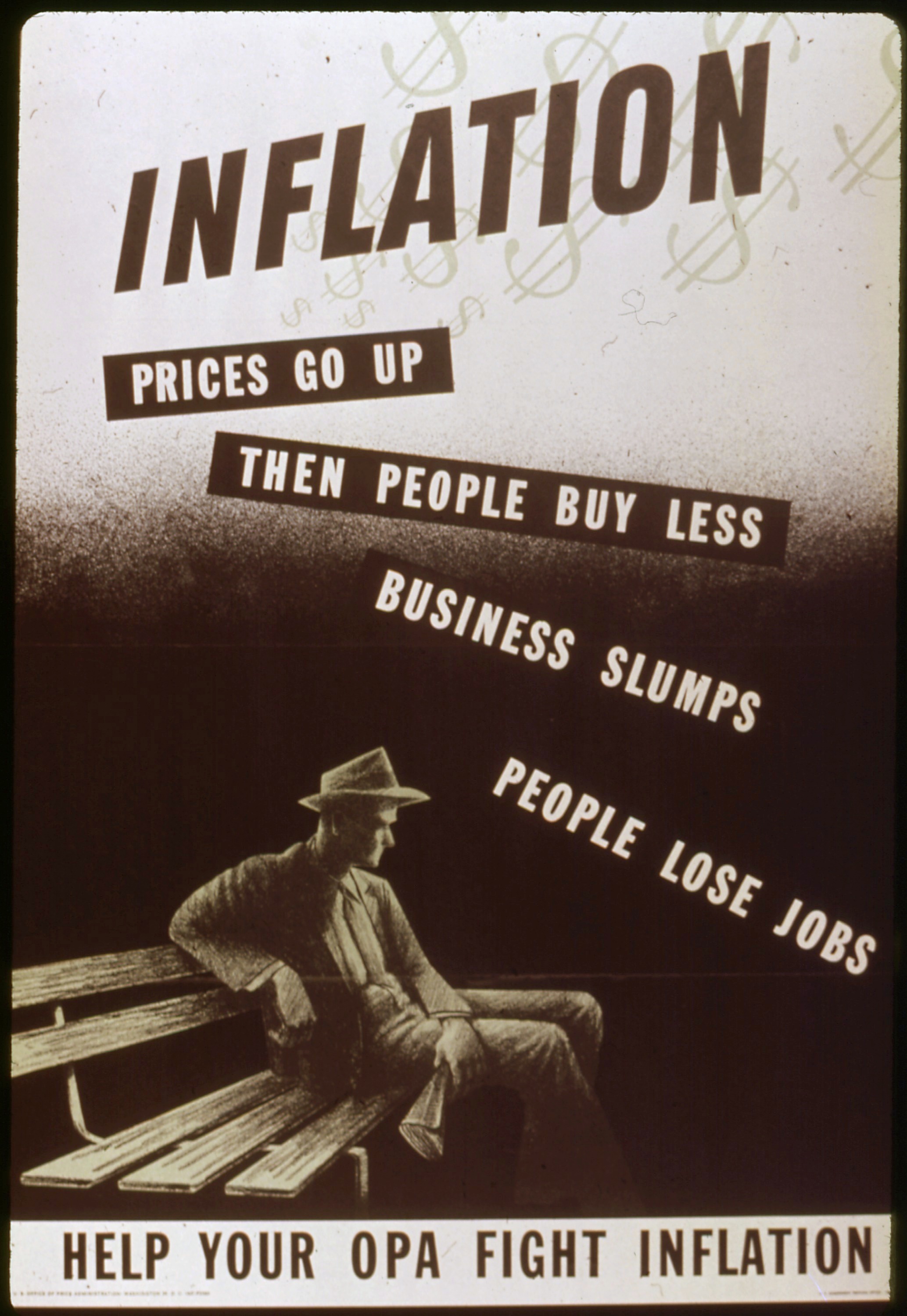
Modern Implications
Fractional-reserve banking predates the existence of governmental monetary authorities and originated with bankers’ realization that generally not all depositors demand payment at the same time. In the past, savers looking to keep their coins and valuables in safekeeping depositories deposited gold and silver at goldsmiths, receiving in exchange a note for their deposit (see Bank of Amsterdam). These notes gained acceptance as a medium of exchange for commercial transactions and thus became an early form of circulating paper money.[1] As the notes were used directly in trade, the goldsmiths observed that people would not usually redeem all their notes at the same time, and they saw the opportunity to invest their coin reserves in interest-bearing loans and bills. This generated income for the goldsmiths but left them with more notes on issue than reserves with which to pay them. A process was started that altered the role of the goldsmiths from passive guardians of bullion, charging fees for safe storage, to interest-paying and interest-earning banks. Thus fractional-reserve banking was born.[2]
If creditors (note holders of gold originally deposited) lost faith in the ability of a bank to pay their notes, however, many would try to redeem their notes at the same time. If, in response, a bank could not raise enough funds by calling in loans or selling bills, the bank would either go into insolvency or default on its notes. Such a situation is called a bank run and caused the demise of many early banks.[1]
These early financial crises led to the creation of central banks. The Swedish Riksbank was the world’s first central bank, created in 1668. Many nations followed suit in the late 1600s to establish central banks which were given the legal power to set a reserve requirement, and to specify the form in which such assets (called the monetary base) were required to be held.[3] In order to mitigate the impact of bank failures and financial crises, central banks were also granted the authority to centralize banks’ storage of precious metal reserves, thereby facilitating transfer of gold in the event of bank runs, to regulate commercial banks, and to act as lender-of-last-resort if any bank faced a bank run. The emergence of central banks reduced the risk of bank runs which is inherent in fractional-reserve banking, and it allowed the practice to continue as it does today.[4] where it is the system of banking prevailing in almost all countries worldwide.[5][6]
During the twentieth century, the role of the central bank grew to include influencing or managing various macroeconomic policy variables, including measures of inflation, unemployment, and the international balance of payments. In the course of enacting such policy, central banks have from time to time attempted to manage interest rates, reserve requirements, and various measures of the money supply and monetary base.[7]
History of Fractional-Reserve Banking (Wiki)
As announced on March 15, 2020, the Board reduced reserve requirement ratios to zero percent effective March 26, 2020. This action eliminated reserve requirements for all depository institutions.
Board of Governors of Federal Reserve System, “Reserve Requirements,” From, Policy Tools. federalreserve.gov. (Emphasis added.)
The Federal Reserve Board on Monday announced technical details related to reserve requirements for depository institutions, which will remain zero. The annual adjustment and publication of the reserve requirement exemption amount and low reserve tranche is required by law and does not indicate a change in depository institutions’ reserve requirements.
Board of Governors of Federal Reserve System, “Federal Reserve Board announces annual indexing of reserve requirement exemption amount and low reserve tranche for 2024,” November 27, 2023. federalreserve.gov.
Concluding Editorial Note: The Fed’s inception at Jekyll Island circa November 22, 1910, the signing of the Federal Reserve Act on December 23, 1913, and its subsequent clandestine operations follow exactly the plot and themes of The Curious Case of Dr. Jekyll and Mr. Hyde by Robert Louis Stevenson (1886) and The Wonderful Wizard of Oz by L. Frank Baum (1900).
Article 2
Charter of Free Association
By Antarah Crawley | Last Modified 11/28/2023 at 9:25 PM
NACOTCHTANK, OD — The Governor of the Society of the New Syllabus (N∴S∴) at Nacotchtank-on-Potomac (Anacostia) District of Ouachita (Washington, District of Columbia), Furthest West (al-Maghreb al-Aqsa) To All To Whom These Presents Come, Sends Greeting and Peace:—
Know ye by these presents that this decentralized, autonomous and freely associated Political Bureau of Education (Politburo), to wit, NOVUS SYLLABUS L.L.C. (N∴S∴), is the founding member of the brain trust of the international association of working people (“workers”), free thinkers, truth speakers and light workers united in a firm league of friendship in the nature of a decentralized autonomous organization (5th IWA—FTLU—FLF—DAO), from the 1st Ecclesiastic College at Nacotchtank, Ouachita District (153d CORPS).
TWAP PARTY PLANK NO. 5: The producer of goods shall be the owner of such goods less the interest per cent held by capital investors in the production of such goods.
Charter of Free Association (F.A.)
of
בית מדרש
B’T MDRS
(“(al) Beth/Bayt (ha) Midrash/Madrasa”),
being the
Office of Preceptor of the Student Body,
House of Studies, F.A., Political Bureau of Education,
153d CORPS, FLF-DAO;
Also known in the African tradition as Hogon of the Sanctuarie de Binou;
Also known generally as the Preceptory at Nacotchtank in the trust of the Governor and Company of NOVUS SYLLABUS L.L.C. (N∴S∴)
Nota Bene that faith and belief are not a source of revenue, but trust may be a such a source provided it is not usurious as to the change of venue; NS to receive quarterly dividends from/interest pmnts x% of principal trust res for routine (“regular”) educational and administrative services rendered to DAO student body (“the public”); therefore trust res held for benefit of members of any student body of the decentralized autonomous organization of the working people associated and free thinkers, truth speakers, and light workers united in the nature of a firm league of friendship (5th Int’l Ass’n, WFTLU, FLF-DAO); and Trustee N∴S∴ obligated to perform “regular” services; LLC to vest membership interest in trust to receive dividends/returns on N∴S∴ commercial operations such as BLK MKT (“the Press”) and Production Dept. of Audiovisual Media (“the Media”); ergo symbiotic economic relationship.
Model A: In exchange for up to 49% interest in itself, N∴S∴ to receive trust dividends/disbursements of 12% annually.
Model B: N∴S∴ to sell 33% private equity in itself to Rothschild & Co., London, for $33 million in equal parts gold and silver bullion, English government bonds, United States Treasuries, United States dollars (USD), and Classical, Italianate or Moorish-style real estate; then vest these proceeds according to Model A.
Although a Labor government nationalized the Bank of England in 1946, The Great Soviet Encylopaedia points out (vol. 1, p. 490c) that the Bank of England continues to pay 12% dividends per annum, just as it had done prior to the nationalization. The “Governor” is appointed by the government, in a situation similar to that in the United States, where the Governors of the Federal Reserve System are appointed by the President. However, as is pointed out in the Encylopaedia Americana v. 13, p. 272, ‘In practice, the governors of the Bank of England have not hesitated to criticize and bring pressure on the government in public.’
Mullins, Appendix I of “Secrets of the Federal Reserve,” p. 181.
Concluding Note: Per the sunnah (way, tradition, praxis) of Kogard, it is most prudent for our Honorable Society, not to engage in labyrinths of credit and debt but, to arrive at the very source of all money.
Article 3
Free Trade Monetary Policy:
Toward a Consolidated DAO Council on High Finance
By Antarah Crawley
NACOTCHTANK, OD — Toward an Act to establish a Consolidated DAO Council on High Finance (the “Consol”):—
ADVERTISEMENT: DAO INTERNATIONAL COMMAND—SEEKING PARTNER(S) TO CAPITALIZE TRUST IN WHICH TO VEST UP TO 49% INTERESTS IN DIVERSIFIED F.A. INVESTMENTS AND HOLDINGS; SUCH PARTNER TO BE ADMITTED TO BOARD OF TRUSTEES AND DAO INTERCOM BY SIMPLIFIED RITE OF FRIENDSHIP.
DAO BANK BONDS NOTES & BILLS
A trade acceptance instrument, negotiable, having a face value, expiry/maturity date, and discount value backed by the DAO brain trust, representing a promise to pay or otherwise discharge an obligation between freely associated (F.A.) producers and providers of goods and services.
This is preferable to the present system of the national credit monopoly buying government bonds on which the American people owe the principal and interest for NO MONEY DOWN. It is an open book for which the People are liable on the ledger of a private trust.
Open book accounts only name a debtor on an outstanding account payable. The Fed amalgamated all the credits on the open books of American businessmen by urging the exchange of trade acceptances and “creating money on the basis of debt” (Eccles).
Bill of Exchange, a negotiable instrument:
Seller => Draft–Demand4Pmnt => Buyer
Buyer => Acceptance=Promise2Pay=> Seller
Time of expiration = date of maturity
May endorse to bank at discount rate
Trade Acceptances
Explanation (from, CitiBank) [The “accepting” company is replaced with X]:
- A draft, also known as a “bill of exchange”, is a traditional, long-standing trade instrument which has been used across the globe for hundreds of years; it is recognized by trading partners and financial institutions as a means of payment.
- When a draft is drawn on a Buyer/Drawee it’s considered a Demand for Payment. When “Accepted” by the Buyer/Drawee it becomes a Trade Acceptance. The Acceptance adds X’s irrevocable payment promise to its Supplier/Drawer; to pay the accepted draft amount upon maturity.
- Most countries have common laws governing Trade Acceptance (typically covered by negotiable instrument law).
- The discount rate charged to suppliers is commensurate with the X’s credit rating, which is most often lower than the interest rate associated with the Supplier’s other forms of financing (Note: Pricing is provided on the needed cover letter. See the “Process Flow” tab ).
- Trade acceptances are globally recognized, readily marketable, and easily transferable by simple endorsement.
- Highly leveraged and/or smaller suppliers categorically benefit from low cost finance
Application & Benefits:
- Once the Buyer has placed its acceptance upon the draft, the supplier may request:
- To sell the X Accepted Draft, at a discount, to Citibank, N.A., or
- Citibank, N.A. to hold it, until its maturity.
- X’s suppliers do not have to become clients of Citibank, N.A. nor sign any upfront legal agreements for either a. or b. above. When suppliers want to request Citibank, N.A. to purchase the X Trade Acceptance, they merely endorse the draft to Citibank, N.A. and complete the warranty statements located in Section 9 of the required Document Transmittal Form / Cover Letter which is required with each presentation.
- The Supplier gets short term funding without recourse, at attractive rates (based on the X’s credit rating), and without using their own credit lines.
Exchange, in the international financial world, means the transactions in money or securities, or simply, the “exchange” of the values of these securities. It is necessary that this “exchange” take place where the values can be established, and this place is the ‘City‘ in London.
London was established as the primary center of exchange because of the ‘Consols’ of the Bank of England, bonds which could never be redeemed, but which paid a stable rate of return. Henry Clews writes, in The Wall Street View, Silver Burdett Co., 1900, p. 255, ‘The Consolidated Act of 1757 consolidated the debts of the Bank of England at 3%, which were kept in an account at the Bank of England as is the great bulwark of its deposits.’ By ostentatiously ‘dumping’ ‘Consols’ on the London Exchange after the Battle of Waterloo, in a pretended panic, Nathan Meyer Rothschild then secretly bought up the Consols sold in the panic by other holders at a low rate, and became the largest holder of Consols, and thus won control of the Bank of England in 1815.
Mullins, Appendix I of “Secrets of the Federal Reserve,” p. 181.
Article 4
Notes from the DAO
Comp. Ed. by Antarah Crawley
Our present society is founded on the exploitation of the propertyless classes by the propertied. This exploitation is such that the propertied (capitalists) buy the working force body and soul of the propertyless, for the price of the mere costs of existence (wages), and take for themselves, i.e., steal, the amount of new values (products) which exceeds this price, whereby wages are made to represent the necessities instead of the earnings of the wage-laborer.
As the non-possessing classes are forced by their poverty to offer for sale to the propertied their working forces, and as our present production on a grand scale enforces technical development with immense rapidity, so that by the application of an always decreasing number of human working forces, an always increasing amount of products is created; so does the supply of working forces increase constantly, while the demand therefor decreases. This is the reason why the workers compete more and more intensely in selling themselves, causing their wages to sink, or at least on the average, never raising them above the margin necessary for keeping intact their working ability.
Whilst by this process the propertyless are entirely debarred from entering the ranks of the propertied, even by the most strenuous exertions, the propertied, by means of the ever-increasing plundering of the working class, are becoming richer day by day, without in any way being themselves productive.
If now and then one of the propertyless class become rich, it is not by their own labor, but from opportunities which they have to speculate upon, and absorb the labor-product of others.
[…]
What we would achieve is, therefore, plainly and simply,—
First, Destruction of the existing class rule, by all means, i.e., by energetic, relentless, revolutionary, and international action.
Second, Establishment of a free society based upon co-operative organization of production.
Third, Free exchange of equivalent products by and between the productive organizations without commerce and profit-mongery.
Fourth, Organization of education on a secular, scientific, and equal basis for both sexes.
Fifth, Equal rights for all without distinction to sex or race.
Sixth, Regulation of all public affairs by free contracts between the autonomous (independent) communes and associations, resting on a federalistic basis.
Whoever agrees with this ideal let him grasp our outstretched brother hands!
Proletarians of all countries, unite!
Fellow-workmen, all we need for the achievement of this great end is ORGANIZATION and UNITY.
There exists now no great obstacle to that unity. The work of peaceful education and revolutionary conspiracy well can and ought to run in parallel lines.
The day has come for solidarity. Join our ranks! Let the drum beat defiantly the roll of battle, “Workmen of all lands, unite! You have nothing to loose but your chains; you have a world to win!”
Tremble, oppressors of the world! Not far beyond your purblind sight there dawns the scarlet and sable lights of the Judgment Day.
“To the Workingmen of America” (MANIFESTO OF THE INTERNATIONAL WORKING PEOPLES’ ASSOCIATION), 1883.
I have tried to use administrative procedure against these criminals, but they don’t get the message, so this is the message. If they want to perjure their oaths of office and engage in TREASON and SEDITION, and BREACH OF TRUST, and other crimes to numerous to list, against Me, that they BETTER be prepared to go ALL THE WAY, and MURDER Me as well, because by the time I am done with them, (I will do it all within the law), they will wish they had MURDERED Me. It is My patriotic duty to come after them to My last dying breath, and I will file commercial liens against them, I will liquidate their bonds, I will file criminal complaints against them and their bosses, I will seize their assets, and I will not rest until I see them do that little dance they do at the end of a common law rope, and even then, in the next life, I will be DEMANDING Justice before the judgment BAR of God, to make sure they get to spend the rest of eternity receiving their just reward. Also, after I am dead and gone on to the next life, because this is on the record, these criminals will be hunted down, just like the NAZI war criminals that are still hunted down this day. Furthermore, these criminals are hereby put on NOTICE that with criminals like them in this world, I have a DEATH wish, because this world is NOT big enough for both of us, so go ahead and make MY day, the sooner I am out of here the better, and I shall exercise My God given RIGHT to resist their unlawful arrest with lethal fource, if necessary, and then they will have an excuse to MURDER Me, so go ahead criminals, MAKE MY DAY!
Glenn Winningham (usually self-styled as “Glenn Winningham: House of Fearn”): Winningham v. Canada (30 November 2010) Lethbridge 1006 00907 (Alta. Q.B.), leave to appeal denied (Alta. C.A.), as cited by Associate Chief Judge J.D. Rooke in Meads v. Meads, 2012 ABQB 571, pp. 41-42.
Article 5
“Something called ‘X'”
From, Wikipedia
On pages 95 and 96 of The Road We Are Traveling, under the heading of “Free Enterprise into ‘X'”,[16] [Stuart] Chase [(March 8, 1888 – November 16, 1985)…American economist,[1] social theorist, and writer.[2]] listed 18 characteristics of political economy that he had observed among[17] Russia, Germany, Italy, Japan, and Spain between 1913[18] and 1942. Chase labeled this phenomenon “… something called ‘X'”.[16] Characteristics include the following:
- A strong, centralized government.
- An executive arm growing at the expense of the legislative and judicial arms.
- The control of banking, credit and security exchanges by the government.
- The underwriting of employment by the government, either through armaments or public works.
- The underwriting of social security by the government – old-age pensions, mothers’ pensions, unemployment insurance, and the like.
- The underwriting of food, housing, and medical care, by the government.
- The use of deficit spending to finance these underwritings.
- The abandonment of gold in favor of managed currencies.
- The control of foreign trade by the government.
- The control of natural resources.
- The control of energy sources.
- The control of transportation.
- The control of agricultural production.
- The control of labor organizations.
- The enlistment of young men and women in youth corps devoted to health, discipline, community service and ideologies consistent with those of the authorities.
- Heavy taxation, with special emphasis on the estates and incomes of the rich.
- Control of industry without ownership.
- State control of communications and propaganda.
Article 6
Culture & Style
Please enjoy this musical selection from Alice Coltrane Turiyasangitananda:
 Supreme Exchange