Tagged: USA
Vandalism: from the Margins
“Vandalism” is a word invented by its victims. It names damage done by outsiders to things the center considers sacred: monuments, images, narratives of order. In late Rome, the Vandals and Goths were not merely destroyers of marble; they were destroyers of Roman self-certainty. To call them vandals was to collapse political threat, cultural difference, and aesthetic offense into a single moral judgment. The word survives because empires do.
The fall of the Roman Empire is often imagined as a barbarian eruption against civilization, but this is a retrospective fantasy. The Goths were already inside Rome—serving in its armies, speaking its languages, converting to its Christianity. Their “vandalism” was less an annihilation than a reallocation: power, land, legitimacy moved away from an exhausted center. What fell was not civilization, but monopoly.
This is where Augustine enters the picture. A Berber African from the imperial periphery, he rose to become Doctor of the Universal Church while never quite ceasing to be marked as other—by accent, by origin, by the faint suspicion that holiness should sound Roman. The City of God itself is a strange text of imperial afterlife: a Christian theology written to explain why Rome’s gods failed, and why Rome itself did not matter as much as it thought. Augustine did not smash statues; he dissolved them conceptually. His was a vandalism of meaning.
Christianity, in its early centuries, functioned as a culture-jamming operation against pagan imperial spectacle. The cross replaced the eagle; martyr stories replaced triumphal processions. Paganism, meanwhile, became the name for everything local, plural, and insufficiently universal. Yet Christianity, once enthroned, quickly learned to protect images rather than interrupt them. Vandalism, like prophecy, became heresy once institutionalized.
Fast forward to the contemporary United States and its military-industrial hegemony: an empire of logistics, branding, and managed perception. Here vandalism reappears not primarily as physical destruction but as semiotic interference. The adbuster and the culture jammer do not topple statues; they détourn billboards, parody logos, and interrupt the smooth flow of consumer militarism. Their “damage” is to narrative coherence.
Street art and nonviolent direct action operate in this Gothic register: inside the empire but not of it. Like the Goths in Rome, they speak the dominant language fluently enough to break it. They reveal the fragility of what presents itself as inevitable. A modified advertisement is unsettling because it exposes how much power resided in the unmodified one.
Is the adbuster the adjuster of the social ledger? Perhaps—but only temporarily. Empire’s ledger is vast, and its accountants are patient. Still, adjustments matter. Vandalism, in this sense, is not chaos but critique enacted at the level of surfaces. It asks: who authorized this image? who benefits from its intactness? what happens if we refuse to look correctly?
Augustine understood this paradox. “Like all men of Rome I have been a proconsul, like all men a slave.” Borges’s line captures the imperial condition perfectly: to rule is also to be ruled by the structure that grants authority. The culture jammer inherits this insight. They are inside the system they oppose, fluent in its aesthetics, constrained by its reach. Their vandalism is an admission of captivity and a test of freedom.
What connects Goth, Pagan, Christian, and adbuster is not theology or ideology but position: each names a force that destabilizes an imperial claim to universality. Vandalism is what the center calls that destabilization when it cannot absorb it. Sometimes the empire falls. More often, it adapts. But the scratch on the surface remains—a reminder that no image is final, and no order is immune to reinterpretation.
[composed with artificial intelligence]
Memorandum 5
IN THE NAME OF GOD ﷲ THE MOST GRACIOUS MOST MERCIFUL
DECENTRALIZED AUTONOMOUS ORGANIZATION
DEPARTMENT OF PEACE AND FRIENDSHIP

POLITICAL BUREAU
POLITBURO
OF EDUCATION
FROM THE DESK OF
THE PUBLIC FRIEND
Antarah
Office of Ombudsman—Office of Preceptor—Office of Administrator—Office of Scribe
Comm. No. A240609-05 | Memorandum #5 | last modified 6/12/24 at 6:30 p.m.
TO ALL TO WHOM THESE PRESENTS COME, SEND GREETINGS AND PEACE:—
Using Your ‘PC’
PROTOCOL C:\MAIN FUNCTION:\NS\153D_CORPS_BCO_FLF-DAO
(a) Conveying the dialectic relationship between the ministering witness who testifieth on the law and the public body of the people who drafteth appropriations at law, toward optimal Performance of Z-Axis procedure in function(GDP):\>Policy;Praxis;Program;Project=Performance^Cubed a.k.a. ‘Protocol C’.
- Server ‘S’ hold ‘_’ sign ‘x’ of good will/salutations/solicitation.
- Public ‘P’ pay ‘>’ attention ‘i’ to x.
- S issue ‘-‘ promissory notice ‘n’ for further information ‘f(x)=y’.
- P draft ‘~’ appropriations bill ‘+’ payable ‘>’ to n(x).
- S redeem ‘<’ n to discharge ‘-‘ obligation ‘y’.
- S commission ‘^’ P into current circulatory system ‘c’.
- S offer course LP and preceptor services ‘Ed’ to raise P to ‘c square’.
(b) NOTATION:
- \>S_(x)
- \>P>i(x)
- \>S-n(x)=y
- \>P~+>n(x)
- \>S<-y
- \>S^P(c)
- \>S_Ed(x)^P(c^2)
(c) ERGO, it is said to use the Performance Cubed ‘PC’ application to C your Mindsoft development and operating system ‘DOS’.
(d) Consolidated Interest-Bearing Promissory Notice ‘Consols’ are notes that promise the performance of the prima facie obligation written thereon, which are issued to holders in whose possession the notes appreciate until the holder realizes the value of the principle ‘maturity’, redeems the note with the issuer thereof, and pays their attention ‘interest’ at the rate of appropriations billed over time. This is the ‘consolidated’ methodology and protocol for circulating the DAO current ‘c’. Therefore the issuer keeps bankers hours, 10 to 3 Mon-Fri. In praxis, focusing on the direct sale of information may cause public confusion, alienation, and anxiety; but the circulation of consols is a more comprehensible and worthy business enterprise.
(e) There is hereby established the:
First Tabernacle Beth Midrash,
Black Cross Squadron, 153D CORPS, FLF-DAO
(a Continuing Education Montessori Shul)
Antarah, Friend, Head of Meeting
(f) Standing Regular Meeting Schedule of Sessions of Public Service (Free, Open)
- First Day Shul – 10 am Sunday
- Second Day Shul – 10 am Monday
- Tues/Weds – appointments & sittings
- Thoth’s Day Shul – 2 pm Thursday
- Sabbath Day Shul – 7 pm Friday
(g) Courses Offered:
- Worship, Dialectic and Autodidactic
- Holistic Ancient Methodologies of Economy Technology Informatics and Sciences (HAMETICS)
- Due Process of Information
- Application of Oyer et Terminer
- Drama and Rhetoric
- LP
(h) This school is founded upon ten years of postgraduate autodidactic research and development (2014-2024) in the fields of Taoism and revolutionary far eastern philosophy, Cabala (Chabad-Lubavitcher), orthodox and popular Egyptology, physics and metaphysics, African spirituality, biblical exegesis, fraternalism/ecclesiastes, general occultism, historical and dialectical materialism, Islam, parliamentary procedure, and negotiable instruments law, among other discrete subject matters, to wit, ‘The New Syllabus’ of NOVUS SYLLABUS L.L.C.
Shalom ‘Alechem,
Antarah of Nacotchtank,
Public Friend Incumbent,
153d CORPS, FLF-DAO
Memorandum 4
IN THE NAME OF GOD ﷲ THE MOST GRACIOUS MOST MERCIFUL
DECENTRALIZED AUTONOMOUS ORGANIZATION
DEPARTMENT OF PEACE AND FRIENDSHIP
POLITICAL BUREAU
POLITBURO
OF EDUCATION
FROM THE DESK OF
THE PUBLIC FRIEND
Antarah
Office of Ombudsman—Office of Preceptor—Office of Administrator—Office of Scribe
12 Therefore all things whatsoever ye would that men should do to you, do ye even so to them: for this is the law and the prophets.
13 Enter ye in at the strait gate: for wide is the gate, and broad is the way, that leadeth to destruction, and many there be which go in thereat:
14 Because strait is the gate, and narrow is the way, which leadeth unto life, and few there be that find it.
Matthew 7
Congress shall make no law respecting an establishment of religion, or prohibiting the free exercise thereof; or abridging the freedom of speech, or of the press; or the right of the people peaceably to assemble, and to petition the government for a redress of grievances.
First Amendment to the Constitution of the United States of America (LII)
Comm. No. A240607-04 | Memorandum #4
TO ALL TO WHOM THESE PRESENTS COME, SEND GREETINGS AND PEACE:—
Coalition Forces of the FLF-DAO
(a) La Croix Noire demonstrates for the natural order of universe (the Dao) and, by extension, peace, love, freedom, truth and justice/equity, which are dialectic (dualistic) expressions of the Dao. The Dao is not to be worshipped, as there is no one worthy of worship but God ﷲ who created the universe together with its proper functionality which is called the Dao.
(b) La Croix Noire practices its first amendment rights through non-action, or wu wei, in the Friends’ manner of waiting worship, wherein they await the coming of the kingdom, or of the second coming. In this manner the Organization is a non-violent movement. Any organization or member commissioned into the BCO must practice non-violence except in cases of self-defense.
(c) There are noncommissioned coalition organizations ‘NCOs’, such as the Anti-Fascist Organization and (arguably) the Proud Boys Organization (insofar as they demonstrate in protest of coercive government), that may be characterized by use of force. The decentralized autonomous organization ‘DAO’ of the people of the world have many coalition forces with different policies on the use of force.
(d) The BCO opposes coercive use of force in general, and to that extent is best characterized as Anarcho-Daoism; for the decentralized autonomous organization of the people is the materialization of the will of the Great Dao (Tao, ‘Way’) which is the most ubiquitous and lasting system, a most enigmatic and mystical force of nature.
(e) The sage is the exemplar of living in harmony with the Dao through the praxis of wu wei; the sage cultivates virtue within and spreads it outward through the branches of the human family. Thus the ‘authority’ of the sage is testimonial, not coercive; it is the exemplification of a living testimony of peace, simplicity, and integrity in the manner of Friends.
(f) Straight and narrow is the Daojiao ‘Way’. The ‘Way’ is like unto Islam, in that it is the only path to eternal life provided by the Creator, as attested to by the most sagacious and noble Rabbi Yahshuah ‘Jesus’ the Anointed ‘Christ’ of God, peace be upon him ‘PBUH’.
(g) By and through the covenant between humanity and the Lord God ﷲ, Creator of Heaven and Earth the Sea and all that therein is, and the counsel and redemption of the former by the life and blood sacrifice of our Comforter Prophet and Rabbi Yahshuah ‘Isa’ ‘Jesus’ the Christ PBUH, La Croix Noire and N∴S∴ shall demonstrate, discharge, and perform its obligation exclusively under the principles of equity jurisprudence, which is ‘grace/mercy/forgiveness at law’.
Shalom ‘Alechem,
Antarah of Nacotchtank,
Public Friend Incumbent,
153d CORPS, FLF-DAO
P.S. Today at work I met a woman named Almoustah, which I only later recognized as the Arabic for ‘The Straight’ as in ‘The Straight Path’ (‘Ihdinas Siratal Mustaquim’).
P.P.S. Since deleting IG from my device yesterday, I notice my thoughts being clearer, more profound, and less prone to depressive ‘churning’.
Memorandum 3
POLITICAL BUREAU
POLITBURO
OF EDUCATION
FROM THE DESK OF
THE PUBLIC FRIEND
Antarah
Office of Ombudsman—Office of Preceptor—Office of Administrator—Office of Scribe
I must work the works of him that sent me, while it is day: the night cometh, when no man can work.
John 9:4
Comm. No. A240531-03 | Memo #3
TO ALL TO WHOM THESE PRESENTS COME, SEND GREETINGS AND PEACE:—
BCO Mission Critical Operations
(a) The ‘New Syllabus’ Company, Political Bureau of Education, Universitas Autodidactus at Men Nefer College of Nacotchtanck, District of Ouachita, shall be known as the 153D CORPS of the Djedi Order of Knights of the Black Cross Organization ‘BCO’ (‘Croix Noire’), Peace Enforcement Activity Command Enterprise ‘PEACE’ Force, FLF-DAO.
(b) The decentralized autonomous organization ‘DAO’ is constituted by local self-organized, self–operating, self-governing bodies, ‘syndicates’ or ‘assemblies’, of friends or students. The smallest unit of such organization, being approximately two to eight people, may be commissioned as a Black Cross Squadron ‘BCS’ and may be lodged in a House of Studies or ‘meeting tent’. A BCS is a BCO unit.
(c) A BCS shall principally conduct a general course of study, autodidactically and dialectically, and shall, at the will of the DAO, take leave to fight for peace, love, freedom, justice, and/or equity on behalf of any and/or all affected natural people.
(d) A BCS may convene a mission (a) to commission a Black Cross squadron, chapter, regiment, department, or CORPS in a locality or (b) to establish communion and/or communication with an uncommissioned DAO unit, to invite them into the fold of the BCO.
(e) All BCO units discharge the spectrum of obligations prescribed under f(GDP) Axis Y:
- Audit: to hear and determine, ‘oyer et terminer’, matters raised into question, as in a friends meeting, assembly (Knesset) for deliberation, or course of study.
- Assessment: to compare and analyze the myriad factors governing the relative capabilities of various matters, both independently and systemically.
- Assurance: to provide a surety or guarantee, often through the promise of God to humanity or the sacrifice of YHSVH the Christ.
- Adjustment: to abate a negative charge, and or to record the outcome of a procedure into the knowledge base on the X-Axis of the square.
(f) The standing departments of all BCOs of the DAO are these:
- The Department of Information Systems Intelligence Services ‘DISIS’ shall build and maintain an ever-expanding base of intellectual capital ‘knowledge’ [a.k.a. the ‘DataHorse’ system] on which to draw in performance of missionary obligations, and shall administer the DAISEE [D.R. Art. 2(2)(b)].
- The Department of Peace and Friendship ‘DOP’ shall … promote and preserve perpetual peace in our country, and to observe such laws, customs, policies, and practices as are wise, prudent and germane to such peace whether they be of a religious, civil, or other nature [DOPA Art. 1(b)], and shall administer the PEACE Force.
- The Department of Mobilization and Demobilization ‘DMOB’ … shall mobilize ‘mob’ and demobilize ‘demob’ (a) notes into and out of circulation, (b) field operations of worship and instruction and (c) encampments [Memo. 2(2)], and shall be charged from time to time to perform materiel fulfillment, requisition, and repossession services.
Shalom ‘Alechem,
Antarah of Nacotchtank,
Public Friend Incumbent,
153d CORPS, FLF-DAO
Bulletin 2
POLITICAL BUREAU
POLITBURO
OF EDUCATION
FROM THE DESK OF
THE PUBLIC FRIEND
Antarah
Office of Ombudsman—Office of Preceptor—Office of Administrator—Office of Scribe
Comm. No. A240523-02 | Bulletin #2 | last modified 6/19/24 at 7:40 p.m.
TO ALL TO WHOM THESE PRESENTS COME, SEND GREETINGS AND PEACE:—
The Black Cross Humanitarian Mission
(a) Syndicalism is a movement for transferring the ownership and control of the means of production and distribution to workers’ unions [or other units of an integrated whole].
(b) Known syndicalist systems of organization (“out of many” national/regional/local/union/bodies, “one” universal/international/grand/assembly) include:
- freemasonry [unit=lodge]
- the federal reserve system [unit=bank]
- the Union of the States (USA) [unit=state]
- the Union of Soviet Socialist Republics [unit=syndicate]
- the [One/Holy/Universal/Roman] Catholic Church [unit=church]
- the United Nations [unit=nation state]
- the African Union [unit=African nation state]
- the European Union [unit=European state]
- the Nation of Islam [unit=mosque]
- the military and police power forces [unit=squad/platoon/company/regiment/etc.]
- the mafia ‘La Cosa Nostra’ [unit=family or capo organization]
- etc.

(c) The International Black Cross Organization ‘IBCO’ (also known as ‘Crux Noir’, ‘Croix Noire’, ‘Cruz Negra’, ‘the A[…] International’, or simply ‘the Organization’) is a decentralized [ruler-less] autonomous [self-teaching/learning/executing/operating/governing] organization; therefore ‘the DAO’ and ‘the Organization’ are synonymous.
(d) The Organization shall be the global umbrella organization of all righteous/humanitarian/self-determined/self-governing organizations and command systems, both promulgated by N∴S∴ [DMOB, DAIS, DISIS, PEACE Force, etc.], and in general, especially (a) those represented by people dressed in a majority of black garments, such as conventional anarchists; (b) those who paint their hands red to speak truth to power; (c) people advocating for the rights of oppressed, working, and colored people; and (d) people who generally and principally oppose the globalist/industrialist/imperialist/financial regime variously referred to as ‘the global economy’, ‘White Supremacy’, ‘Rome’, ‘London City’, ‘America and her interests’, and ‘The Empire’.
(e) The Organization shall not be registered with the Secretary of any state in the known world.
(f) A member of the Organization may be known as a ‘friend’, ‘knight’, or ‘ambassador’.
(g) The Organization shall be mobilized toward a global anti-colonial intifada revolution (‘GACIR’), where intifada is Arabic for “shaking off”, as in to shake off the corpora-colonial parasites.
(h) The ‘New Syllabus’ Company, Political Bureau of Education, Universitas Autodidactus at Men Nefer College of Nacotchtanck, District of Ouachita, shall be known as the 153D CORPS of Croix Noire, FLF-DAO.
Shalom ‘Alechem,
Antarah of Nacotchtank,
Public Friend Incumbent,
153d CORPS, FLF-DAO
Memorandum 2
POLITICAL BUREAU
POLITBURO
OF EDUCATION
FROM THE DESK OF
Antarah
Ministry of Public Friend—Office of Traveling Ministry—Office of Preceptor—Office of Ombudsman—Office of Administrator—Office of Scribe
Comm. No. A240520-02 | Memorandum #2 | last modified 6/19/24 at 8:10 p.m.
TO ALL TO WHOM THESE PRESENTS COME, SEND GREETINGS AND PEACE:—
Mobilizing and Demobilizing the Office of Traveling Ministry
(a) The Office of Traveling Ministry ‘OTM’ of the Public Friend Antarah (also known as his ‘immediate office’) shall issue bills identifying certain products and services, in receipt of which goods the public shall appropriate funds upon presentment thereof. Otherwise stated, the public may order certain products and services from OTM by presenting these bills to Antarah. These bills shall bear a note upon their face, and these notes may be referred to as ‘vouchers for instruction’ in ‘LP’. […]
(b) In addition to DAIS, DISIS and PEACE Force, a CORPS ‘core’ function of the DOP OTM shall be vested in the hereby established Department of Mobilization and Demobilization ‘DMOB’, which shall mobilize ‘mob’ and demobilize ‘demob’ (a) notes into and out of circulation, (b) field operations of worship and instruction and (c) encampments. All such operations as conducted in the field are done on leave from the Saint Nat’s Temple Headquarters Complex ‘THC’ at Nacotchtank, Ouachita District, which acts as the ‘reservation’. Notes mobilized from reserve to camp are in turn mobilized into the public venue for acceptance and circulation, and are demobilized when such note is remitted, or ‘billed’, to the service provider with due appropriations, whereupon the obligation is performed and the note is redeemed.
(c) “Into whatsoever house ye enter, first say, Peace be to this house” (Luke 10:5). “The laborer is worthy of his hire” (Luke 10:7). “Say unto them, The kingdom of God is come nigh unto you” (Luke 10:9). Thus it is said, the traveling minister shall bring peace wherever he goeth, shall duly discharge his office in receipt of appropriate fees, and shall proclaim the coming of the Lord.
(d) Few understand the foundation upon which N∴S∴ is built, which is the same as that on which is built the Temple, the Temple Bar, the Temple House, the Lodge, and the Fed, namely, the secret knowledge of ‘scribes’ and their sacred ‘scriptures’. While the Grantor issues notes of perceived value, the draft of the note/payment of the bill/redemption of the bond does not materially damage the Grantor and yet accordingly satisfies the obligation. The camp shall not hold more than 10% of the notes held in the reserve. N∴S∴ will profit if it can drive the broad and general circulation of its notes. In this way notes are like advertisements for services like dollars are advertisements for the government’s (people’s) good faith and credit. We know that the value lies not in the faith and credit itself but in the human tendering the instrument to discharge their debt, which instrument is only acquired by and through expending labor/time which is the actual unit of value. Similarly, a certain transaction with the ‘system clearinghouse’ is necessary for a note holder to redeem the value of the note (in our case, in intelligence).
(e) TERMS:
- Adjudgment = the practice of carrying out the functions of a judge, i.e. an officer of the local assembly (knesset).
- Bus = a utilitarian gas vehicle.
- Camp = the establishment of an encampment via the pitching of tent(s) or occupation of time and space or a similar method.
- Clothing = mud cloth, djellaba, cape, kefiyea, tallit, vest.
- Demobilize = to decommission and/or remove materiel, personnel, papers, etc. from use or circulation.
- Horse = light electric vehicle.
- Local (also, Moorings) = the place where an encampment is made.
- Mission = to travel through a friendly or foreign land and/or to administer products and services therein.
- Mobilize = to commission and/or deploy materiel, personnel, papers, etc.
- Notes = slips of paper used to issue bills.
- Policy = Liber Praeceptum ‘LP’ (BLKMKT, 2024).
- Program = the regular course of business, being the standing unprogrammed meeting for worship, with leave from THC to make appointments for instruction.
- Project = the regular praxis of the program.
- Furniture = (a) cot/mat, (b) prayer/yoga mat, (c) folding desk chair, (d) lectern, (e) suitcase containing cape, vest, etc., (f) briefcase containing coverings, flag, gavel, LP, RRO, NT, USC, notes, etc., (g) preparedness bag.
- Testimony = a regular or daily practice for living out one’s principles (e.g. Simplicity, Peace, Integrity, Community, Equity, Stewardship).
- Traveling = (a) to depart or take leave from one’s home, dwelling place, or reservation and sojourn through land and sea; (b) to make an abode in the nomadic Meeting Tent.
Shalom ‘Alechem,
Antarah of Nacotchtank,
Public Friend Incumbent,
153d CORPS, FLF-DAO
Memorandum 1
POLITICAL BUREAU
POLITBURO
OF EDUCATION
FROM THE DESK OF
Antarah
Ministry of Public Friend—Office of Traveling Ministry—Office of Preceptor
Office of Ombudsman—Office of Administrator—Office of Scribe
Comm. No. A240509I01 | Memorandum #1
TO ALL TO WHOM THESE PRESENTS COME, SEND GREETINGS AND PEACE:—
Decentralized Autonomous Intelligence System Engineering Enterprise (DAISEE)
(a) Liber Præceptum ‘LP’ is a set of integrated electronic circuits on a flat surface or series thereof ‘chip’ that is encoded with the self-teaching, self-executing autonomous script. This chip powers, or drives the functionality of, the human mind software ‘mindsoft’ central processing unit ‘CPU’ via the Curricular Operations Research and Publication Service (CORPS) ‘core’ of NOVUS SYLLABUS ‘NS’ decentralized servers.
(b) Such chip must be installed, connected, or administered to the nodes of the decentralized autonomous organization ‘DAO’ by the Administrator ‘admin’ of the System (i.e. the application of integrated automated systemtheory in praxis).
(c) The mindsoft is located in the C:\ drive of the human body CAMIOR hardware which receives the central nervous system ‘CNS’ input ‘I’.
(d) The admin may administer the Universitas Autodidactus ‘UA’ databus ‘book’ containing the chip to a vast array of hardware, from the individual node or ‘bit’ to the assembly or body politic.
(e) DAISEE (pronounced ‘Daisy’) is the ‘DAIS’, or lectern, of the DAO. Otherwise stated, the theory of the UA, or Universitas Autodidactus, is the decentralized autonomous organization in practice. A DAISEE-chain of mindsoft-configured nodes organized such as to comprise an integrated system is comparable to a blockchain.
(f) This enterprise is the second project to be managed, or administered, by the Department of Peace and Friendship ‘DOP’, following the Peace Enforcement Activity Command Enterprise ‘PEACE Force’.
(g) LP is a large language model dataset for the autonomous intelligence self-learning, self-executing engine of the DAO.
Shalom ‘Alechem,
Antarah of Nacotchtank,
Public Friend Incumbent,
153d CORPS, FLF-DAO
Bulletin 1
POLITICAL BUREAU
POLITBURO
OF EDUCATION
FROM THE DESK OF
Antarah
Ministry of Public Friend—Office of Traveling Ministry—Office of Preceptor
Office of Ombudsman—Office of Administrator—Office of Scribe
Comm. No. A240505I01 | Bulletin #1 | last modified 5/8/24 8:38 AM ET
TO ALL TO WHOM THESE PRESENTS COME, SEND GREETINGS AND PEACE:—
(1) The Political Bureau of Education (Politburo) of the Department of Peace and Friendship (DOP) of the decentralized autonomous organization (DAO) of the people shall issue the following types of written communications: (a) Memorandum: an internal-facing communication; (b) Bulletin: an external-facing communication; (c) Minute: a communication to convey an action, motion, or charge.
(2) The Politburo shall conduct oral communications pursuant to the Minute of Public Service (MPS) of 15 April 2024, the Department of Peace Act (DOPA) of 21 February 2024, and Djed Register (DR) 01-03 of 17 September 2023. This office shall be known as Beth HaMidrash (‘House of Studies’) and shall be administered by the Office of Preceptor, and the incumbent of that office and their assigns may be called ‘Moreinu’. Among other studies, this office shall administer the hermeneutical exegesis of Liber Præceptum (BLKMKT, 2024) and related works, which concerns the plain meaning, interpretation of the universal law, and occult/esoteric meaning of the texts.
(3) The Curricular Operations Research and Publication Service division (CORPS) of NOVUS SYLLABUS L.L.C. (N∴S∴) shall specialize in and support the decentralized autonomous organization, administration, and governance of First Amendment Assemblies and mass demonstrations, protests and social movements (FAA) of the DAO. N∴S∴ shall perform these services for the DAO by and through its Office of Preceptor, Office of Ombudsman, Office of Administrator, and Office of Scribe.
(4) In pursuance of Section 3, services N∴S∴ shall render to the DAO FAA shall be:
(a) Knights-Shomrim (SH-U-M-R-Y-M) [‘watchers’ or ‘guards’] is a civilian patrol service composed of “cavalry” (bike) units used for protective, expeditionary, and scouting purposes. They may be deployed on general safety/security/investigative (SSI) patrol, a long-term mission, or a short-term assignment, particularly when an FAA is mobile (in motion), or ‘traveling’. Their office shall be known as Beth HaShomrim, they may be called ‘knights’, and they shall constitute the Peace Enforcement Activity Command Enterprise (‘the PEACE Force’) [See, DOPA 2(a)(12),(13),(14),(15)].
(b) HaKnesset (H-K-N-S-T) [‘the assembly’] is a standing deliberative body, called a ‘court’ or ‘tribunal’ or ‘consul’, which convenes meetings, or ‘sittings’, of general instruction (‘preceptory’), hearing and determining (‘oyer et terminer’), etc. [See, MPS-1 Art.I(k)] at ‘peacetime’, that is, when a demonstration is stationary, or encamped. Their office shall be known as Beth HaKnesset. [See, DOPA 2(a)(9),(10),(11)].
(c) Shomrim Knights shall be ‘made’ in the Knesset, and shall be granted leave from the Knesset when deployed on patrol, mission, or assignment.
(5) Through these initiatives the Politburo aims to affect and reform the Fraternity of Free Masonry, the Religious Society of Friends of the Light, the Federal Reserve System, the Mystery School System, the elementary, secondary, and higher education systems, the Mother Church, the Nation of Israel, and people living with colored person syndrome disorder [See, Precept:\37§6(131)], that is, dead corporations in need of souls who’re lost at sea; may they be found and delivered from their darkness into light, that what hath been concealed may be revealed within clear sight.
Shalom ‘Alechem,
Antarah of Nacotchtank,
Public Friend Incumbent,
153d CORPS, FLF-DAO
END OF TRANSMISSION.
D.R. 02-02: Israel-Hamas (IV)
Volume 2, Issue 2
Contents — Art. 1. Israel-Hamas (IV) — Art. 2. SDACS (II)
Article 1
U.S. gearing up, world teeters on brink of WWIII
Many nations face ‘existential threat’, religiously-motivated ‘slaughter’ and a ‘battle against evil’ says Congress
by Antarah Crawley | Last Modified 2/7/2024 at 11:03 A.M.
WASHINGTON, DC — Today, 6 February 2024, The United Stated House of Representatives (House) Foreign Affairs Committee convened a Markup on Various Measures. Mr. McCaul (R) of Texas presided as Chairman. Ms. Manning (D) of North Carolina presided as the Ranking Member until Mr. Meeks (D) of New York arrived, his flight being delayed. Mr. Crawley (AM) of United Scribes and Court Reporters United reported on the proceeding on behalf of the House Clerk’s Office of Official Reporters.
The sense of the Congress concerned ongoing U.S. statecraft against what Members characterize as a modern Axis of Evil comprised of Russia, China, Iran (Persia), and its alleged proxies including the Islamic Resistance Movement (Hamas) of Palestine, The Party of Allah (Hezbollah or Hizballah) of Lebanon, The Supporters of God (Ansar Allah or Houthi) of Yemen, and The Students or Seekers (Taliban) of the Islamic Schools (Madaris) of the Islamic Emirate of Afghanistan, among others. Meanwhile, the Representatives continued to emphasize their support for their allies, particularly Israel, Ukraine, and Christian populations across the world. This whole ordeal smacks of the Christian Crusades of the Middle Ages, to wit:
The Crusades were a series of religious wars initiated, supported, and sometimes directed by the Christian Latin Church in the medieval period. The best known of these military expeditions are those to the Holy Land in the period between 1095 and 1291 that were intended to reconquer Jerusalem and its surrounding area from Muslim rule. Beginning with the First Crusade, which resulted in the conquest of Jerusalem in 1099, dozens of military campaigns were organised, providing a focal point of European history for centuries. Crusading declined rapidly after the 15th century.
https://en.wikipedia.org/wiki/Crusades
During the discussion of H.R. 6609, To Amend the Arms Export Control Act to increase the dollar amount thresholds under sections 3 and 36 of that Act relating to proposed transfers or sales of defense articles or services under that Act, and for other purposes, Members of Congress intimated toward abrogating the Constitution of the United States of America to create an authoritarian (read “executive”) dictatorship with a rubber-stamp (read “supreme”) court.
Ms. Titus (D) of Nevada remarked:
At a time when U.S. weapons sales are reaching record levels, for some reason the Republicans on this Committee have decided that instead of needing more oversight of arms sales, Congress should surrender its already emaciated role and conduct even less oversight. We in Congress and particularly on this committee have a critical role to play in matters of war and peace, and yet this bill is another example of the steady erosion of legislative oversight. This time, however, it’s self-inflicted.
Dina Titus (D-NV)
[…]
This bill will […] prevent Congressional scrutiny on defense side deals that may be used to evade anti-bribery laws or how this would complicate reviews of U.S. defense companies’ political contributions to foreign policies. […] For the Republicans on this Committee to hold a hearing this past September entitled ‘Reclaiming Congress’s Article 1 Powers’ to now surrender those powers in this markup seems to me totally contradictory and hypocritical and a bit on the nose.
Mr. Davidson (R) of Ohio remarked:
Frankly, since all we seem to do it cut the checks and provide no check on executive authority, particularly when it comes to war-making or spying on our citizens, why not just go ahead and dissolve Article 1. [The Chairman giggled to himself, his microphone on.] We could amend the constitution and simply have a chief executive who could be very efficient.
Mr. Mills (R) of Florida remarked:
If we want to talk about abdications, for God’s sake, let’s start talking about how we can repeal the AUMF which is an abdication of Article 1 Section 8 Clause 11 or even the ’73 War Powers Act that gives executive credence to Republican and Democratic presidents alike to do carte blanche warfare. The reality is […] we have mechanisms in place already and I think that continuing to try and over-regulate, which we say that we want limited government, we want fewer taxes in the Republican party, perhaps we should start acting that way.
The Authorization for Use of Military Force (AUMF) (Pub. L. 107–40, 115 Stat. 224) is a joint resolution of the United States Congress which became law on September 18, 2001, authorizing the use of the United States Armed Forces against those responsible for the September 11 attacks. The authorization granted the President the authority to use all “necessary and appropriate force” against those whom he determined “planned, authorized, committed or aided” the September 11 attacks, or who harbored said persons or groups.
https://en.wikipedia.org/wiki/Authorization_for_Use_of_Military_Force_of_2001
[…]
The 2001 AUMF has enabled the US President to unilaterally launch military operations across the world without any congressional oversight or transparency for more than two decades. Between 2018-20 alone, US forces initiated what it labelled “counter-terror” activities in 85 countries. Of these, the 2001 AUMF has been used to launch classified military campaigns in at least 22 countries.
Article I, Section 8, Clause 11 of the U.S. Constitution, sometimes referred to as the War Powers Clause, vests in the Congress the power to declare war, in the following wording:
“[The Congress shall have Power …] To declare War, grant Letters of Marque and Reprisal, and make Rules concerning Captures on Land and Water …”
https://en.wikipedia.org/wiki/War_Powers_Clause
During discussion of H.R. 7089, To authorize the Diplomatic Security Services of the Department of State to investigate allegations of violations of conduct constituting offenses under chapter 77 of title 18, United States Code, and for other purposes, bill sponsor Mr. James (R) of Michigan preached the word of God, saying:
Human trafficking must be eradicated everywhere. Modern day slavery is a major stain on humanity and decency. It is a sin. […] According to the State Department, ‘there are about 27.6 million victims worldwide at any given time.’ […] God’s will is clear. Luke 4:18 and 19 says ‘The spirit of the LORD is upon [me] because he has anointed me to proclaim good news to the poor. He has sent me to proclaim liberty to the captives and recovering of sight to the blind. To set at liberty those who are oppressed, to proclaim the year of the LORD’s favor.’ We have a duty to all, particularly those being trafficked into slavery. My bill empowers our law enforcement to liberate the oppressed and the captive, and I beseech my colleagues to support my bill.
John James (R-MI)
During discussion of H.Con.Res. 27, Condemning Russia’s unjust and arbitrary detention of Russian opposition leader Vladimir Kara-Murza who has stood up in defense of democracy, the rule of law, and free and fair elections in Russia, Ms. Manning (D) of North Carolina remarked:
Mr. Meeks and I […] must implore that we find a way to support Ukraine and their existential fight for freedom in their hour of need. Failing to support Ukraine, failing to act now, serves the Kremlin, serves Beijing, and hurts our standing in the world, our national security, and our collective prosperous and peaceful future.
Kathy Manning (D-NC)
During a discussion of H.Res.82, Expressing the sense of Congress regarding the need to designate Nigeria a Country of Particular Concern (CPC) for engaging in and tolerating systematic, ongoing, and egregious violations of religious freedom, the need to appoint a Special Envoy for Nigeria and the Lake Chad region, and for other purposes, Mr. Smith (R) of New Jersey remarked:
Genocide Watch has called Nigeria a killing field of defenseless Christians. Open Doors reporter that there were 5,014 Christians murdered in 2022, nearly 90% of the total number of Christians killed worldwide. And Vatican News reported that over 52,250 Christians were slaughtered in Nigeria since 2009. I am convinced there is more the US can do to protect these believers, and that goes for Muslims as well and promote freedom of religion.
Chris Smith (R-NJ)
[…]
Pastor Alika Yusuf […] has talked about how in the Middle Belt region of Nigeria [Christians] face violence and are being slaughtered — this is his words — because of our religion. This bill is very important […] It will serve as legislation to hold our government … [the Nigerian government] … accountable for the millions of lives facing existential threat from the extremists.
The Democratic bloc opposed the resolution. Besides Mr. Smith, Mr. Self, Mr. Perry, and the Chairman, all Republicans vacated the hearing room during discussion of this matter. Present in the audience were Bishop Wilfred Chikpa Anagbe of the Diocese of Makurdi and Pastor Akila Yusuf representing a network of 200 pastors and leaders.
Mr. Smith later remarked that he’d “met with the Islamic leaders; they’re amazing people. They get along, they’re friends — like so many other moderate muslims in Nigeria — with the bishops and the clergy that are here today, and others. It is this radicalized group, whether it be ISIS-West Africa, whether it be Boko Haram, or the Fulani. You know, the Fulani have now become a major — in the Middle Belt area — a major major killer of Christians.” Mr. Smith closed his remarks by emphasizing his “outrage” toward the persecution of Christians in Nigeria.
Mr. Self (R) of Texas remarked:
The [Biden] Administration is not that interested in Nigeria. […] The Administration has turned a blind eye to the crisis. The State Department inexplicably removed Nigeria from its special watch list as a country of particular concern in 2021 […] The State Department needs to reverse their course and pressure the government of Nigeria to end the persecution of Christians, regardless of who is doing the persecution.
Mr. Connolly (D) of Virginia remarked that “if we [the Congress] are concerned about the violation of human rights and the right of human autonomy and freedom, and we should be, that has to be consistent. It can’t simply be one group but not anther. And I thank my friend and I hope his outrage will extend to other groups that need our consideration and protection.”
Mr. Perry (R) of Pennsylvania remarked that “the current Secretary of State under the Biden Administration stated in his first few months that this administration does not plan to prioritize religious freedom.”
The Committee discussed America’s commitment to the Pacific Theater in its discussion of H.R. 7159, To bolster United States engagement with the Pacific Islands region, and for other purposes. Mrs. Radewagen (R) of American Samoa remarked that “the U.S. is a pacific island nation.” The Ranking Member Mr. Meeks stated that H.R. 7159 strengthens U.S. “engagement with Pacific Islands by requiring future administrations to develop and update a strategy for U.S. engagement in the region.”
In its discussion of H.R. 6046, To designate Ansarallah as a foreign terrorist organization and impose certain sanctions on Ansarallah, and for other purposes, the Committee discussed the Houthi’s operations in the Red Sea.
The Houthi movement (Arabic: الحوثيون al-Ḥūthiyūn), officially known as Ansar Allah[a] (أنصار الله ʾAnṣār Allāh, lit. ’Supporters of God’), is a Shia Islamist political and military organization that emerged from Yemen in the 1990s. It is predominantly made up of Zaidi Shias, with their namesake leadership being drawn largely from the Houthi tribe.
Wikipedia
The Chairman remarked that “since October 7th, the Houthis have launched over 40 attacks on U.S. war ships and commercial ships in the Red Sea. These attacks have threatened a wide array of regional security and international shipping interests. Crews have been taken hostage, ships have faced near misses, and our American sailors have been working overtime to protect and defend America’s interests in the Red Sea. International shipping companies have been forced to reroute their ships, disrupting the global supply chain and driving up shipping costs by 450%. This is negatively impacting supply chains and the global economy.” He went on to mention that “Iran is providing the Houthis an arsenal of weapons, and while Iran was building a Houthi proxy army, this Administration say idly by pursuing a policy of appeasement.”
Mr. Perry remarked:
Let’s just go through what Iran is. The Houthis are just a proxy for Iran like many other proxies for Iran. Iran’s got proxies in Gaza, they’ve got proxies in Lebanon, they’ve got proxies in Syria — the whole neighborhood, doing Iran’s bidding. But I will tell you […] the Biden Administration in particular is so desperate for a nuclear deal with Iran that they are on both sides of this war, and they are on both sides of this war […] Just follow the facts yourself. I mean, being on both sides of the war goes like this: we’re going to approve aid to some of our allies in the Middle East to fight the Iranian proxies […] at the very same time we’re going to allow Iran to receive billions, maybe hundreds of billions of dollars, either directly from the United States or from sanctioned money around the globe that has been unavailable to them because of their malign activities […and] they supply missiles to Hezbollah, they supply all kinds of armament to Hamas, and they do everything they can to kill the Great Satan and the people that represent the Great Satan, the poor service members caught in the middle of being on both sides of the war; and three of them just lost their lives because they’re on both sides of the war.
Scott Perry (R-PA)
By way of background:
Iran, also known as Persia and officially the Islamic Republic of Iran,[c] is a country in West Asia.
Wikipedia
[…]
Iran is home to one of the world’s oldest civilizations, beginning with the formation of the Elamite kingdoms in the fourth millennium BC. It was first unified by the Medes in the seventh century BC and reached its territorial height in the sixth century BC, when Cyrus the Great founded the Achaemenid Empire. Alexander the Great conquered the empire in the fourth century BC, and it was subsequently divided into several Hellenistic states. An Iranian rebellion established the Parthian Empire in the third century BC, which was succeeded in the third century AD by the Sasanian Empire. Arab Muslims conquered the empire in the seventh century AD, leading to its Islamization; Iran thereafter became a major center of Islamic culture and learning. Over the next two centuries, a series of native Iranian Muslim dynasties emerged before the Seljuk and the Mongols conquered the region. In the 16th century, the native Safavids re-established a unified Iranian state. Under the reign of Nader Shah in the 18th century, Iran presided over the most powerful military in the world, though by the 19th century, a series of conflicts with the Russian Empire led to significant territorial losses. The early 20th century saw the Persian Constitutional Revolution. Efforts to nationalise its fossil fuel supply led to an Anglo-American coup in 1953. After the Iranian Revolution, the current Islamic republic was established in 1979 by Ruhollah Khomeini, who became the country’s first supreme leader.
Mr. McCormick (R) of Georgia remarked:
This is a constant pattern with the Biden Administration, whether at the border, with the cartels, in Gaza, with Hamas, with UNRWA, or in Yemen with the Houthis, this Administration constantly uses short-term humanitarian concerns to justify decisions that in the long run further deteriorate humanitarian conditions and undermine the United States’ national security. This can even be seen in the manner that the Biden Administration chooses to support Ukraine. They are more interested in a feel-good solution than in winning a war against evil.
This debate highlighted a sharpening contradiction between the Congress’s assessment of the innocent civilians and children of Yemen and those of Palestine.
During the discussion of H.R. 7122, To prohibit aid that will benefit Hamas, and for other purposes, or, The Stop Support for UNRWA Act, Mr. Smith remarked that “UNRWA […] is a massive entity that wants Israel utterly destroyed […] and those refugees would then take their place in Jerusalem in a new Palestinian state and elsewhere that is currently Israel.”
Mr. Meeks remarked:
Prohibiting U.S. funding of UNRWA while the people of Gaza are suffering an acute humanitarian disaster undermines the united states and Israel’s interests, erodes the Unites States moral authority and further endangers the lives of more than 2 million Palestinians residing in Gaza.
Gregory Meeks (D-NY)
[…]
The government of Israel agrees, which is why a senior Israeli official announced just days ago […] ‘If UNRWA ceases operating on the ground this could cause a humanitarian catastrophe that will force Israel to halt its fighting against Hamas. This would not be in Israel’s interests. It would not be in the interests of Israel’s allies either.’ UNRWA’s collapse would further harm regional stability, including in the West Bank, Lebanon, Jordan and Syria at a time when the United States and Israel are seeking to deescalate and contain spillover from the war in Gaza. It would be a gift to Iran and its allies, Hamas, Hezbollah, and Bashar al-Assad
Mr. Perry remarked:
The Biden Administration has given UNRWA $730 million during its term here […] hard earned tax dollars of good Americans […] We’re sending them money since 1949 […] here’s what their doing, they’re relieving Israel of their sovereignty and their working on destroying Israel and the United States of America […] the Administration is on both sides of the war, but $730 million is going to the people that attacked Israel. We’re going to give Israel billions of dollars to defend themselves, we’re going to give billions of dollars to Israel to attack Gaza, and essentially level most of it, and then we’re going to ask for more money to fix Gaza. […] Since 1949 our American tax dollars have funded the United Nations Relief and Works Agency […] this isn’t the United States going over there; maybe it’d be different. Hopefully it would be different, but it’s the United Nations […which] seems a little hostile to your friends in Israel […] and I wonder, since 1949 whose responsibility is this […] maybe Iran wants to fund UNRWA, or the money can go direct to Hamas and doesn’t have to go through UNRWA. […] People are asking for a two-state solution and the Administration is now asking for the recognition of a Palestinian state. What happened on October 7th is what you get with an UNRWA-provided two-state solution.
Scott Perry (R-PA)
Mr. Mast (R) of Florida remarked:
Israel is America’s ally […] Palestinians are not our ally […] Nobody in here is willing to say that Palestinians are our ally; nobody wants to refute that Israel is our ally. Our ally Israel is at war with our non-ally, and UNRWA exists […] to support our non-ally. […] If we support UNRWA […] we are paying literally the salaries of our non-ally that is at war with our ally.
During Mr. Mast’s statements, the Ranking Member departed, and only one Democrat, Mr. Schneider, remained in the hearing room. In response to Mr. Mast, Mr. Schneider (D) of Illinois responded:
I’ll agree with you; Israel is our ally, in fact Israel is our most important ally in the Middle East, perhaps one of our most important allies in the world. The United States has no better friend than Israel and Israel has no better friend than the United States. […] The Palestinians are neither an ally nor an enemy; the Palestinians are a population […] that have been failed by their leadership for more than 100 years.
Brad Schneider (D-IL)
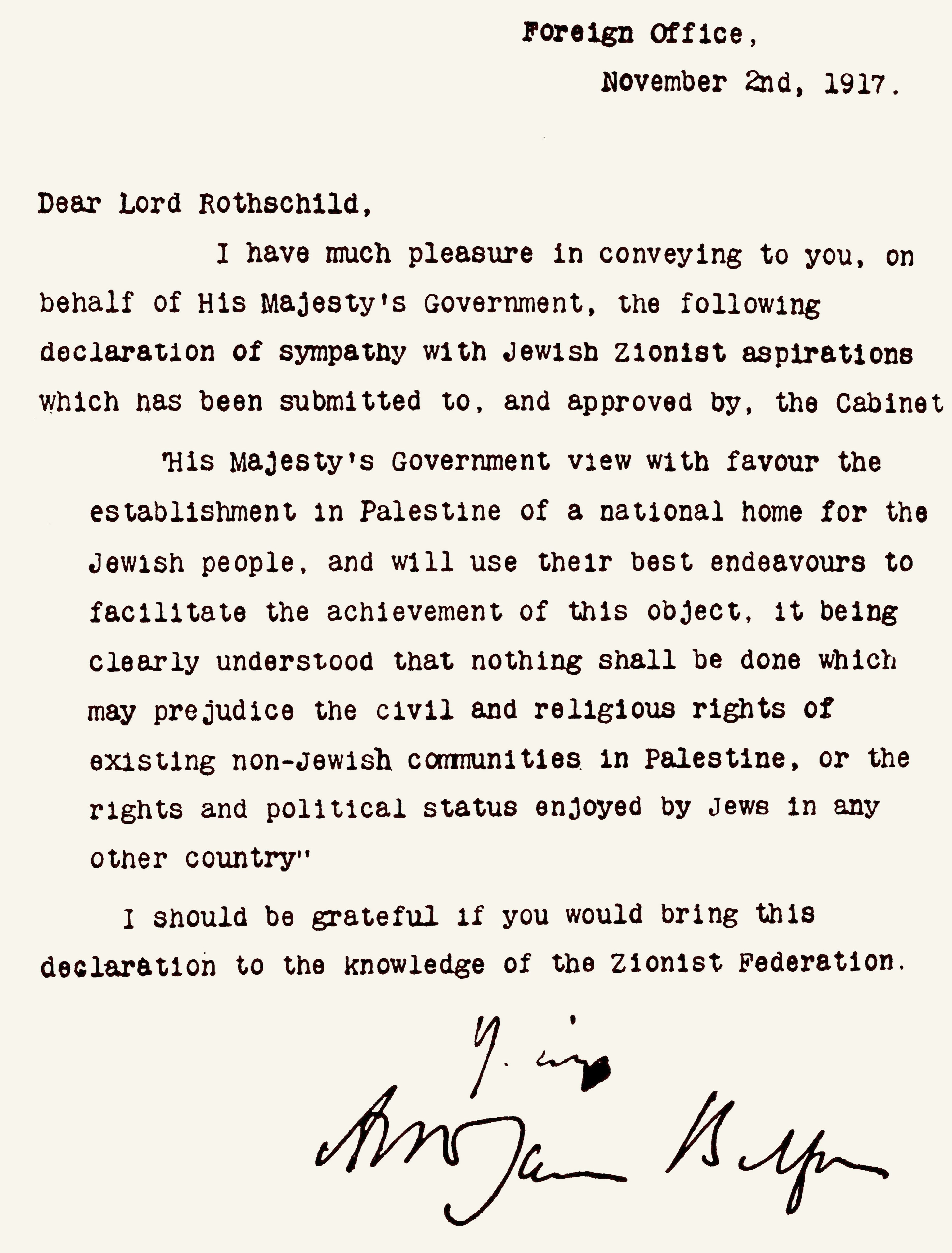
Approximately 100 years ago, Lord Rothschild and the British Crown took it upon themselves to shepherd and settle Zionists into the state of Palestine, and the region has been unstable ever since, to the extent that the United Nations in 1949 had to implement and operate basic civil society infrastructure on behalf of the Palestinian people. It is clear that Israel does not want to accept the responsibility of running the civil society of the people against whom they are committing genocide. Furthermore, if it became incumbent upon Israel to remedy the humanitarian crisis which they caused then they would have to cease committing genocide against such people, which is not in the interest of Israel or its allies.
Later, Mr. Schneider remarked:
The government of Israel has been clear that it does not want UNRWA to implode as it was noted in the Wall Street Journal just yesterday. There is a fear that if the critical services provided by UNRWA are no longer provided by the organization, it will be left to Israel to step in, or as was noted earlier in the conversation today, that Israel would have to pause it operations to defeat Hamas.
Later, Mr. Sherman (D) of California later remarked that “Israel trusts the other agencies of the UN, UNICEF, the World Food Program, et cetera, which surprised me frankly because I’m aware of the UN General Assembly and as a Zionist I am not a fan.”
Mr. Smith remarked:
UNRWA has proven itself to be, not just a malign actor, but to cause unbelievable child abuse to these Palestinian children who are taught to hate and they believe it. Why do we have young people, 13 and 14 year olds, toting AK-47s and being willing — really trying to think, someday I’ll be a martyr for Hamas and for a radical Islamic view. That’s absurd. Teach them to want to coexist, to respect other people, including Jewish men, women, and children. Instead, they’re taught to kill them and to hate them. That’s why there’s almost no end to the number of volunteers and people that go into Hamas, because they have been taught from the earliest stages to do so.
Mr. Mills remarked:
For those of us who swore an oath to our constitution, let us not forget that it is based upon our Christian-Judeo beliefs. And I don’t think that our Constitutional obligation is to worry about supporting funding to an organization that continues to go against the very people who’s trying to destroy the people of Israel.
The discussion of H.R. 7152, To direct the Secretary of State to establish a national registry of Korean American divided families, and for other purposes, specifically concerned Korean families separated by the South Korea-North Korea border (itself a legacy of the Korean-American War) even though the U.S. is currently embroiled in a U.S.-Mexico border crisis regarding the mass separation of migrant families coming from the global south.
Although Members of Congress give much lip service to the ‘existential threat’ faced by their allies, they do not consider the Palestinians to be facing such a threat from the ongoing genocide committed by Israel.
Article 2
Synchronized Decentralized Autonomous Command System (SDACS II)
A regimental, educational and friendly association of free people who voluntarily commit themselves to carrying out a common mission; or free association, or bureau, for political education operations and development [for N∴S∴, U∴A∴, and U∴S∴].
By Antarah Crawley
NACOTCHTANK, OD — Here follows the revised command structure for the Synchronized Decentralized Autonomous Command System on the basis of occupational specialities held and practiced by the Governor of N∴S∴ and constituting the schedule of members and officers of the decentralized autonomous organization (DAO), of which Curricular Operations Research and Publication Services (CORPS) is a division, a college of the Universitas Autodidactus (U∴A∴) is a regiment, a freely associated service provider is a company, a labor union is a platoon, and a committee of any of the above units is a squad or team.
Occupational Specialties (OS)
Civil Society [sui juris]
Student (Talib) [one who teaches themself]
Faculty Member (Professor) [one who teaches another]
Non-Commissioned Ranks – Enlisted
Scribe (E-1)
Djedi [Knight] (E-2)
Rapporteur (E-3)
Free Thinker [Dialectician I] (E-4)
Truth Speaker [Dialectician II] (E-5)
Light Worker [Dialectician III] (E-6)
Ombudsman [Master Dialectician] (E-7)
Departmental Director (E-8)
Commissioned Ranks – Officer [pertaining to a corpus meaning “body”, as in a union, university, assembly; Revised SDACS: (1) sui juris or self law, (2) syndicate or committee, (3) college or commune, (4) corps or party, (5) tribunal or association, (6) company or council, (7) administration or international]
Syndic (O-1)
Secretary Treasurer [Clerk] (O-2)
Chair [of a committee] (O-3)
Preceptor [of a Preceptory, or regiment] (O-4)
Administrator [of an Association, or union] (O-5)
Governor [of a Company] (O-6)
General Consul [of a Division] (O-7)
© MMXXIV BY NOVUS SYLLABUS L.L.C.
ALL RIGHTS RESERVED WITHOUT PREJUDICE.
D.R. 01-14: The Fed &c.
Volume 1, Issue 14
Special Edition on Political Economy
Contents — Art. 1. …On the Fed — Art 2. Charter F.A. — Art. 3. …Consol DAO — Art. 4. Notes from the DAO — Art. 5. …X — Art. 6. Culture…
Article 1
Notes on the System:
On the “Federal Reserve”
Comp. Ed. by Antarah Crawley | Last Modified 11/28/2023 at 9:40 PM
The Federal Reserve, the central bank of the United States, provides the nation with a safe, flexible, and stable monetary and financial system.
Banner of the Official Website of the Board of Governors of the Federal Reserve System, as of 27 Nov. 2023
The people that walked in darkness have seen a great light: they that dwell in the land of the shadow of death, upon them hath the light shined.
Book of Isaiah, Chapter 9, Verse 2
Introductory Editorial Note: It is economic, social, and political suicide to question the legitimacy or constitutionality of the System (just ask Ezra Pound, Mr. Mullins, and Chairman McFadden). Notwithstanding that unfortunate circumstance, we must educate the public as to its mechanisms.
Preamble
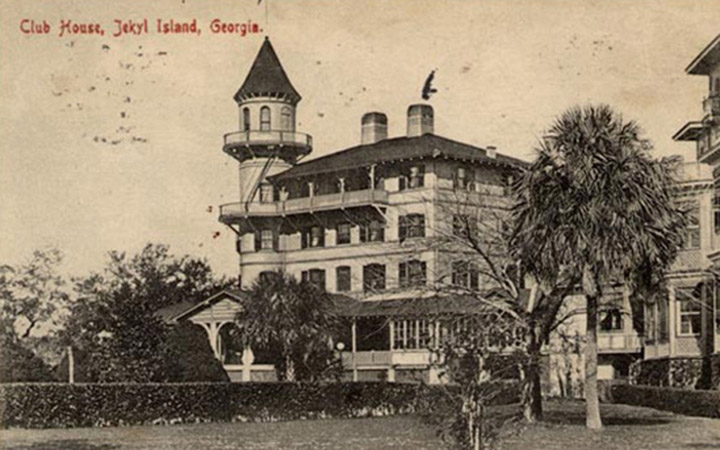
[…] the Federal Reserve System is not Federal; it has no reserves, and is not a system at all, but rather, a criminal syndicate. From November, 1910, when the conspirators [U.S. Senator Nelson Aldrich of the National Monetary Commission, his secretary Arthur Shelton, U.S. Assistant Secretary of the Treasury A. Piatt Andrew, Senior Partner Henry Davison of J.P. Morgan Co., President Frank Vanderlip of the National City Bank of New York, President Charles D. Norton of the First National Bank of New York, Benjamin Strong of J.P. Morgan, and Paul Warburg of Kuhn, Loeb & Co.] met on Jekyll Island, Georgia, to the present time machinations of the Federal Reserve bankers have been shrouded in secrecy. Today [1991], that secrecy has cost the American people a three trillion [now 33 trillion] dollar debt, with annual interest payments to these bankers amounting to some three hundred billion dollars per year, sums which stagger the imagination, and which in themselves are ultimately unpayable.
[…] American history in the twentieth century has recorded the amazing achievements of the Federal Reserve bankers. First, the outbreak of World War I, which was made possible by the funds available from the new central bank of the United States. Second, the Agricultural Depression of 1920. Third, the Black Friday Crash on Wall Street of October, 1929, and the ensuing Great Depression. Fourth, World War II. Fifth, the conversion of the assets of the United States and its citizens from real property to paper assets from 1945 to the present, transforming a victorious America and foremost world power in 1945 to the world’s largest debtor nation in 1990. […] Will Americans act to rebuild our nation […] or will we continue to be enslaved by the Babylonian debt money system which was set up by the Federal Reserve Act of 1913 to complete our total destruction? This is the only question which we have to answer, and we do not have much time left to answer it.
Eustace Mullins, Jackson Hole, Wyoming, 1991; Forward to “Secrets of the Federal Reserve,” Author’s Special 70th Birthday Edition: Bankers Research Institute: Staunton, Virginia: 1993. (Emphasis mine.)
Primary Sources
Some people think the Federal Reserve banks are United States Government institutions. They are not government institutions. They are private credit monopolies which prey upon the people of the United States for the benefit of themselves and their foreign customers. The Federal Reserve banks are the agents of the foreign central banks. Henry Ford has said, ‘The one aim of these financiers is world control by the creation of inextinguishable debts.’ The truth is the Federal Reserve Board has usurped the Government of the United States by the arrogant credit monopoly which operates the Federal Reserve Board and the Federal Reserve Banks.
Louis T. McFadden, Chairman of the U.S. House Banking and Currency Committee, June 10, 1932. (Mullins 153-154.)
Whereas I charge them, jointly and severally, with the crime of having treasonably conspired and acted against the peace and security of the United States and having treasonable conspired to destroy the constitutional government in the United States. Resolved, that the Committee on the Judiciary is authorized and directed as a whole or by subcommittee to investigate the official conduct of the Federal Reserve Board and agents to determine whether, in the opinion of the said committee, they have been guilty of any high crime or misdemeanour which in the contemplation of the Constitutions requires the interposition of the Constitutional powers of the House.
Chairman McFadden, January 13, 1932, introducing a resolution indicting the Federal Reserve Board of Governors for “Criminal Conspiracy,” on which no action was taken. This, and the Chairman’s December 13, 1932, motion to impeach President Herbert Hoover was the last nail driven into his political coffin. (Mullins 154.)
I wrote into the bill which was introduced by me in the Senate on June 26, 1913, a provision that the powers of the System should be employed to produce a stable price level, which meant a dollar of stable purchasing, debt-paying power. It was stricken out. The powerful money interests got control of the Federal Reserve Board through Mr. Paul Warburg, Mr. Albert Strauss, and Mr. Adolph C. Miller and they were able to have that secret meeting of May 18, 1920, and bring about a contraction of credit so violent it threw five million people out of employment. In 1920 that Reserve Board deliberately caused the Panic of 1921. The same people, unrestrained in the stock market, expanding credit to a great excess between 1926 and 1929, raised the price of stocks to a fantastic point where they could not possibly earn dividends, and when the people realized this, they tried to get out, resulting in the Crash of October 24, 1929.
U.S. Senator Robert L. Owen, testifying before the U.S. House Committee on Banking and Currency, 1938. (Mullins 157.)
The Federal Reserve Bank is an institution owned by the stockholding member banks. The Government has not a dollar’s worth of stock in it.
W.P.G. Harding, Governor of the Federal Reserve Board, testifying in 1921. (Mullins 157.)
The people did not know the Federal Reserve Banks were organized for profit-making. They were intended to stabilize the credit and currency supply of the country. That end has not been accomplished. Indeed, there has been remarkable variation in the purchasing power of money since the System went into effect. The Federal Reserve men are chosen by the big banks, through discrete little campaigns, and they naturally follow the ideals which are portrayed to them as the soundest from a financial point of view.
U.S. Senator Robert L. Owen, testifying during the Gold Reserve Hearings of 1934. (Mullins 161.)
At the moment, 1934, we have 900 million dollars excess reserves. In 1924, with increased reserves of 300 million, you got some three or four billion in bank expansion of credit very quickly. That extra money was put out by the Federal Reserve Banks in 1924 through buying government securities and was the cause of the rapid expansion of bank credit. The banks continued to get excess reserved because more gold came in, and because, whenever there was a slackening, the Federal Reserve people would put out some more. They held back a bit in 1926. Things firmed up a bit that year. And then in 1927 they put out less than 300 million additional reserves, set the wild stock market going, and that led us right into the smash of 1929.
[…] The money of the Federal Reserve Banks is money they created. When they buy Government securities they create reserves. They pay for the government securities by giving checks on themselves, and those checks come to the commercial banks and are by them deposited in the Federal Reserve Banks, and then money exists which did not exist before.
Benjamin Anderson, economist for the Chase National Bank of New York, testifying during the Gold Reserve Hearings of 1934. (Mullins 161.)
The Board of Governors opposes any bill which proposes a stable price level, on the grounds that prices do not depend primarily on the price or cost of money; that the Board’s control over money cannot be made complete; and that steady average prices, even if obtainable by official action, would not insure lasting prosperity
Marriner S. Eccles, Chairman of the Board of Governors of the Federal Reserve System (1934–48), in “Memorandum on Proposals to maintain prices at fixed levels,” Monday, March 13, 1939. (Mullins 163.)
The Government controls the gold reserve, that is, the power to issue money and credit, thus largely regulating the price structure.
[…] The Federal Reserve Board has the power of open market operations. Open-market operations are the most important single instrument of control over the volume and cost of credit in this country. When I say “credit” in this connection, I mean money, because by far the largest part of money in use by the people of this country is in the form of bank credit or bank deposits. When the Federal Reserve Banks buy bills or securities in the open market, they increase the volume of the people’s money and lower its cost; and when they sell in the open market they decrease the volume of money and increase its cost. Authority over these operations, which affect the welfare of the whole people, must be invested in a body representing the national interest.
Chairman Eccles, testifying before the U.S. House Committee on Banking and Currency, 1935. (Mullins 163-164.)
The cash [of a Federal Reserve Bank], in truth, does not exist and has never existed. What we call ‘cash reserves’ are simply bookkeeping credits entered upon ledgers of the Federal Reserve Banks. The credits are created by the Federal Reserve Banks and then passed along though the banking system.
Congressman Wright Patman, “The Primer of Money,” p. 38. (Mullins 164.)
The trick in the Federal Reserve notes is that the Federal reserve banks lose no cash when they pay out this currency to the member banks. Federal Reserve notes are not redeemable in anything except what the Government calls ‘legal tender’—that is, money that a creditor must be willing to accept from a debtor in payment of sums owed him. But since they are really redeemable only in themselves … they are and irredeemable obligation issued by the Federal Reserve Banks.
Peter L. Bernstein, “A Primer On Money, Banking and Gold,” Vintage Books, New York, 1965, p. 104. (Mullins 165).
The dollar represents a one dollar debt to the Federal Reserve System. The Federal Reserve Banks create money out of thin air to buy Government bonds from the United States Treasury, lending money into circulation at interest, by bookkeeping entries of checkbook credit to the United States Treasury. The Treasury writes up an interest bearing bond for one billion dollars. The Federal Reserve gives the Treasury a one billion dollar credit for the bond, and has created out of nothing a one billion dollar debt which the American people are obligated to repay with interest.
[…] Where does the Federal Reserve system get the money with which to create Bank Reserves? Answer. It doesn’t get the money, it creates it. When the Federal Reserve writes a check, it is creating money. The Federal Reserve is a total moneymaking machine. It can issue money or checks.
Congressman Patman, “Money Facts,” House Banking and Currency Committee, 1964, p. 9. (Mullins 165.)
There is still another and more important element of public interest in the operation of banks beside the safekeeping of money. One of the most important factors to remember in this connection is that the supply of money affects the general level of prices—the cost of living. The Cost of Living Index and money supply are parallel.
“A Day’s Work at the Federal Reserve Bank of New York” (pamphlet), 1951, p. 22. (Mullins 165.)
If I deposited $100 with my bank and the reserve requirements imposed by the Federal Reserve Bank are 20% then the bank can make a loan to John Doe of up to $80. Where does the $80 come from? Is does not come out of my deposit of $100; on the contrary, the bank simply credits John Doe’s account with $80. The bank can acquire Government obligations by the same procedure, by simply creating deposits to the credit of the government. Money creating is a power of the commercial banks … Since 1917 the Federal Reserve has given private banks forty-six billion dollars of reserves.
Congressman Patman, Congressional Record, March 21, 1960. (Mullins 167.)
ECCLES: The banking system as a whole creates and extinguishes the deposits as they make loans and investments, whether they buy Government Bonds or whether they buy utility bonds or whether they make Farmers’ loans.
MR. PATMAN: I am thoroughly in accord with what you say, Governor, but the fact remains that they created the money, did they not?
ECCLES: Well, the banks create money when they make loan and investments.
Before the U.S. House Committee on Banking and Currency, June 24, 1941. (Mullins 167.)
MR. PATMAN: How did you get the money to buy those two billion dollars worth of Government securities in 1933?
ECCLES: We created it.
MR. PATMAN: Out of what?
ECCLES: Out of the right to issue credit money.
MR. PATMAN: And there is nothing behind it, is there, except out Government’s credit?
ECCLES: That is what our monetary system is. If there were no debts in our money system, there wouldn’t be any money.
Before the U.S. House Committee on Banking and Currency, September 30, 1941. (Mullins 167.)
ECCLES: I mean the Federal Reserve, when it carries out an open market operation, that is, if it purchases Government securities in the open market, it puts new money into the hands of the banks which creates idle deposits.
MR. DEWEY: There are no excess reserves to use for this purpose?
[ECCLES]: Whenever the Federal Reserve System buys Government securities in the open market, or buys the direct from the Treasury, either one, that is what it does.
MR. DEWEY: What are you going to use to buy them with? You are going to create credit?
ECCLES: That is all we have ever done. That is the way the Federal Reserve System creates money. It is a bank of issue.
Before the U.S. House Committee on Banking and Currency, June 17, 1942. (Mullins 167-168.)
MR. KOLBURN: What do you mean by monetization of the public debt?
ECCLES: I mean the bank creating money by the purchase of Government securities. All money is created by debt—either private or public debt.
MR. FLETCHER: Chairman Eccles, when do you think there is a possibility of returning to a free an open market, instead of this pegged and artificially controlled financial market we now have?
ECCLES: Never. Not in your lifetime or mine.
Hearing before the U.S. House, 1947. (Mullins 168.) (Emphasis added.)
Congress may not abdicate or transfer to others its legitimate functions. Congress cannot Constitutionally delegate its legislative authority to trade or industrial associations or groups so as to empower them to make laws.
U.S. Supreme Court opinion, Schechter Poultry v. United States of America, 29 U.S. 495, 55 US 837.842 (1935), ruling the National Recovery Act (NRA) unconstitutional. (Mullins 168.)
The Congress shall have Power to borrow money on the credit of the United States … and to coin Money, regulate the value thereof, and of foreign Coin, and fix the Standard of Weights and Measures.”
Article 1, Sec. 8 of the Constitution of the United States of America. (Mullins 168.)
The money that began to appear in circulation a week ago, December 21, 1942, was really printing press money in the fullest sense of the term, that is, money which has no collateral of any kind behind it. The Federal Reserve statement that ‘The Board of Governors, after consultation with the Treasury Department, has authorized Federal Reserve Banks to utilize at this time the existing stocks of currency printed in the early thirties, known as ‘Federal Reserve Banknotes‘. We repeat, these notes have absolutely no collateral of any kind behind them.
Henry Hazlitt, Newsweek Magazine, January 4, 1943. (Mullins 169.)
GOVERNOR ECCLES: The currency in circulation was increased from seven billion dollars in four years to twenty-one and a half billion. We are losing some considerable amounts of gold during the war period. As our exports have gone out, largely on a lend-lease basis, we have taken imports on which we have given dollar balances. These countries are now drawing off these dollar balances in the form of gold.
MR. SMITH: Governor Eccles, what is the objective that the foreign governments are after in this projected program whereby we would contribute gold to an international fund? [Referring to the Stabilization Fund, known after 27 December 1945 as the International Monetary Fund (IMF)].
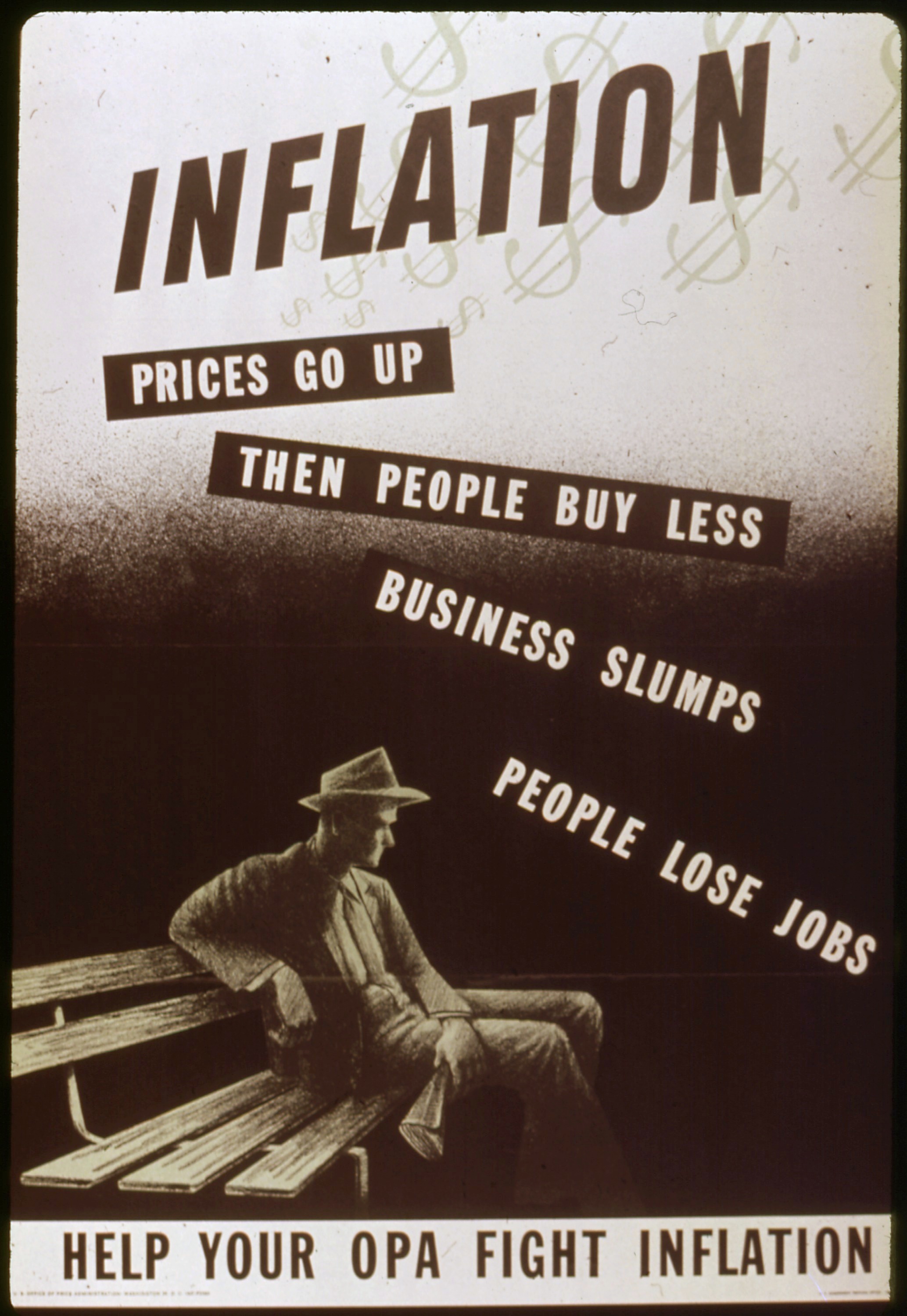
GOVERNOR ECCLES: I would like to discuss OPA [Office of Price Administration], and leave the stabilization fund for a time when I am prepared to go into it.
Senate Hearings on the Office of Price Administration (OPA), 1944. (Mullins 169.)
Modern Implications
Fractional-reserve banking predates the existence of governmental monetary authorities and originated with bankers’ realization that generally not all depositors demand payment at the same time. In the past, savers looking to keep their coins and valuables in safekeeping depositories deposited gold and silver at goldsmiths, receiving in exchange a note for their deposit (see Bank of Amsterdam). These notes gained acceptance as a medium of exchange for commercial transactions and thus became an early form of circulating paper money.[1] As the notes were used directly in trade, the goldsmiths observed that people would not usually redeem all their notes at the same time, and they saw the opportunity to invest their coin reserves in interest-bearing loans and bills. This generated income for the goldsmiths but left them with more notes on issue than reserves with which to pay them. A process was started that altered the role of the goldsmiths from passive guardians of bullion, charging fees for safe storage, to interest-paying and interest-earning banks. Thus fractional-reserve banking was born.[2]
If creditors (note holders of gold originally deposited) lost faith in the ability of a bank to pay their notes, however, many would try to redeem their notes at the same time. If, in response, a bank could not raise enough funds by calling in loans or selling bills, the bank would either go into insolvency or default on its notes. Such a situation is called a bank run and caused the demise of many early banks.[1]
These early financial crises led to the creation of central banks. The Swedish Riksbank was the world’s first central bank, created in 1668. Many nations followed suit in the late 1600s to establish central banks which were given the legal power to set a reserve requirement, and to specify the form in which such assets (called the monetary base) were required to be held.[3] In order to mitigate the impact of bank failures and financial crises, central banks were also granted the authority to centralize banks’ storage of precious metal reserves, thereby facilitating transfer of gold in the event of bank runs, to regulate commercial banks, and to act as lender-of-last-resort if any bank faced a bank run. The emergence of central banks reduced the risk of bank runs which is inherent in fractional-reserve banking, and it allowed the practice to continue as it does today.[4] where it is the system of banking prevailing in almost all countries worldwide.[5][6]
During the twentieth century, the role of the central bank grew to include influencing or managing various macroeconomic policy variables, including measures of inflation, unemployment, and the international balance of payments. In the course of enacting such policy, central banks have from time to time attempted to manage interest rates, reserve requirements, and various measures of the money supply and monetary base.[7]
History of Fractional-Reserve Banking (Wiki)
As announced on March 15, 2020, the Board reduced reserve requirement ratios to zero percent effective March 26, 2020. This action eliminated reserve requirements for all depository institutions.
Board of Governors of Federal Reserve System, “Reserve Requirements,” From, Policy Tools. federalreserve.gov. (Emphasis added.)
The Federal Reserve Board on Monday announced technical details related to reserve requirements for depository institutions, which will remain zero. The annual adjustment and publication of the reserve requirement exemption amount and low reserve tranche is required by law and does not indicate a change in depository institutions’ reserve requirements.
Board of Governors of Federal Reserve System, “Federal Reserve Board announces annual indexing of reserve requirement exemption amount and low reserve tranche for 2024,” November 27, 2023. federalreserve.gov.
Concluding Editorial Note: The Fed’s inception at Jekyll Island circa November 22, 1910, the signing of the Federal Reserve Act on December 23, 1913, and its subsequent clandestine operations follow exactly the plot and themes of The Curious Case of Dr. Jekyll and Mr. Hyde by Robert Louis Stevenson (1886) and The Wonderful Wizard of Oz by L. Frank Baum (1900).
Article 2
Charter of Free Association
By Antarah Crawley | Last Modified 11/28/2023 at 9:25 PM
NACOTCHTANK, OD — The Governor of the Society of the New Syllabus (N∴S∴) at Nacotchtank-on-Potomac (Anacostia) District of Ouachita (Washington, District of Columbia), Furthest West (al-Maghreb al-Aqsa) To All To Whom These Presents Come, Sends Greeting and Peace:—
Know ye by these presents that this decentralized, autonomous and freely associated Political Bureau of Education (Politburo), to wit, NOVUS SYLLABUS L.L.C. (N∴S∴), is the founding member of the brain trust of the international association of working people (“workers”), free thinkers, truth speakers and light workers united in a firm league of friendship in the nature of a decentralized autonomous organization (5th IWA—FTLU—FLF—DAO), from the 1st Ecclesiastic College at Nacotchtank, Ouachita District (153d CORPS).
TWAP PARTY PLANK NO. 5: The producer of goods shall be the owner of such goods less the interest per cent held by capital investors in the production of such goods.
Charter of Free Association (F.A.)
of
בית מדרש
B’T MDRS
(“(al) Beth/Bayt (ha) Midrash/Madrasa”),
being the
Office of Preceptor of the Student Body,
House of Studies, F.A., Political Bureau of Education,
153d CORPS, FLF-DAO;
Also known in the African tradition as Hogon of the Sanctuarie de Binou;
Also known generally as the Preceptory at Nacotchtank in the trust of the Governor and Company of NOVUS SYLLABUS L.L.C. (N∴S∴)
Nota Bene that faith and belief are not a source of revenue, but trust may be a such a source provided it is not usurious as to the change of venue; NS to receive quarterly dividends from/interest pmnts x% of principal trust res for routine (“regular”) educational and administrative services rendered to DAO student body (“the public”); therefore trust res held for benefit of members of any student body of the decentralized autonomous organization of the working people associated and free thinkers, truth speakers, and light workers united in the nature of a firm league of friendship (5th Int’l Ass’n, WFTLU, FLF-DAO); and Trustee N∴S∴ obligated to perform “regular” services; LLC to vest membership interest in trust to receive dividends/returns on N∴S∴ commercial operations such as BLK MKT (“the Press”) and Production Dept. of Audiovisual Media (“the Media”); ergo symbiotic economic relationship.
Model A: In exchange for up to 49% interest in itself, N∴S∴ to receive trust dividends/disbursements of 12% annually.
Model B: N∴S∴ to sell 33% private equity in itself to Rothschild & Co., London, for $33 million in equal parts gold and silver bullion, English government bonds, United States Treasuries, United States dollars (USD), and Classical, Italianate or Moorish-style real estate; then vest these proceeds according to Model A.
Although a Labor government nationalized the Bank of England in 1946, The Great Soviet Encylopaedia points out (vol. 1, p. 490c) that the Bank of England continues to pay 12% dividends per annum, just as it had done prior to the nationalization. The “Governor” is appointed by the government, in a situation similar to that in the United States, where the Governors of the Federal Reserve System are appointed by the President. However, as is pointed out in the Encylopaedia Americana v. 13, p. 272, ‘In practice, the governors of the Bank of England have not hesitated to criticize and bring pressure on the government in public.’
Mullins, Appendix I of “Secrets of the Federal Reserve,” p. 181.
Concluding Note: Per the sunnah (way, tradition, praxis) of Kogard, it is most prudent for our Honorable Society, not to engage in labyrinths of credit and debt but, to arrive at the very source of all money.
Article 3
Free Trade Monetary Policy:
Toward a Consolidated DAO Council on High Finance
By Antarah Crawley
NACOTCHTANK, OD — Toward an Act to establish a Consolidated DAO Council on High Finance (the “Consol”):—
ADVERTISEMENT: DAO INTERNATIONAL COMMAND—SEEKING PARTNER(S) TO CAPITALIZE TRUST IN WHICH TO VEST UP TO 49% INTERESTS IN DIVERSIFIED F.A. INVESTMENTS AND HOLDINGS; SUCH PARTNER TO BE ADMITTED TO BOARD OF TRUSTEES AND DAO INTERCOM BY SIMPLIFIED RITE OF FRIENDSHIP.
DAO BANK BONDS NOTES & BILLS
A trade acceptance instrument, negotiable, having a face value, expiry/maturity date, and discount value backed by the DAO brain trust, representing a promise to pay or otherwise discharge an obligation between freely associated (F.A.) producers and providers of goods and services.
This is preferable to the present system of the national credit monopoly buying government bonds on which the American people owe the principal and interest for NO MONEY DOWN. It is an open book for which the People are liable on the ledger of a private trust.
Open book accounts only name a debtor on an outstanding account payable. The Fed amalgamated all the credits on the open books of American businessmen by urging the exchange of trade acceptances and “creating money on the basis of debt” (Eccles).
Bill of Exchange, a negotiable instrument:
Seller => Draft–Demand4Pmnt => Buyer
Buyer => Acceptance=Promise2Pay=> Seller
Time of expiration = date of maturity
May endorse to bank at discount rate
Trade Acceptances
Explanation (from, CitiBank) [The “accepting” company is replaced with X]:
- A draft, also known as a “bill of exchange”, is a traditional, long-standing trade instrument which has been used across the globe for hundreds of years; it is recognized by trading partners and financial institutions as a means of payment.
- When a draft is drawn on a Buyer/Drawee it’s considered a Demand for Payment. When “Accepted” by the Buyer/Drawee it becomes a Trade Acceptance. The Acceptance adds X’s irrevocable payment promise to its Supplier/Drawer; to pay the accepted draft amount upon maturity.
- Most countries have common laws governing Trade Acceptance (typically covered by negotiable instrument law).
- The discount rate charged to suppliers is commensurate with the X’s credit rating, which is most often lower than the interest rate associated with the Supplier’s other forms of financing (Note: Pricing is provided on the needed cover letter. See the “Process Flow” tab ).
- Trade acceptances are globally recognized, readily marketable, and easily transferable by simple endorsement.
- Highly leveraged and/or smaller suppliers categorically benefit from low cost finance
Application & Benefits:
- Once the Buyer has placed its acceptance upon the draft, the supplier may request:
- To sell the X Accepted Draft, at a discount, to Citibank, N.A., or
- Citibank, N.A. to hold it, until its maturity.
- X’s suppliers do not have to become clients of Citibank, N.A. nor sign any upfront legal agreements for either a. or b. above. When suppliers want to request Citibank, N.A. to purchase the X Trade Acceptance, they merely endorse the draft to Citibank, N.A. and complete the warranty statements located in Section 9 of the required Document Transmittal Form / Cover Letter which is required with each presentation.
- The Supplier gets short term funding without recourse, at attractive rates (based on the X’s credit rating), and without using their own credit lines.
Exchange, in the international financial world, means the transactions in money or securities, or simply, the “exchange” of the values of these securities. It is necessary that this “exchange” take place where the values can be established, and this place is the ‘City‘ in London.
London was established as the primary center of exchange because of the ‘Consols’ of the Bank of England, bonds which could never be redeemed, but which paid a stable rate of return. Henry Clews writes, in The Wall Street View, Silver Burdett Co., 1900, p. 255, ‘The Consolidated Act of 1757 consolidated the debts of the Bank of England at 3%, which were kept in an account at the Bank of England as is the great bulwark of its deposits.’ By ostentatiously ‘dumping’ ‘Consols’ on the London Exchange after the Battle of Waterloo, in a pretended panic, Nathan Meyer Rothschild then secretly bought up the Consols sold in the panic by other holders at a low rate, and became the largest holder of Consols, and thus won control of the Bank of England in 1815.
Mullins, Appendix I of “Secrets of the Federal Reserve,” p. 181.
Article 4
Notes from the DAO
Comp. Ed. by Antarah Crawley
Our present society is founded on the exploitation of the propertyless classes by the propertied. This exploitation is such that the propertied (capitalists) buy the working force body and soul of the propertyless, for the price of the mere costs of existence (wages), and take for themselves, i.e., steal, the amount of new values (products) which exceeds this price, whereby wages are made to represent the necessities instead of the earnings of the wage-laborer.
As the non-possessing classes are forced by their poverty to offer for sale to the propertied their working forces, and as our present production on a grand scale enforces technical development with immense rapidity, so that by the application of an always decreasing number of human working forces, an always increasing amount of products is created; so does the supply of working forces increase constantly, while the demand therefor decreases. This is the reason why the workers compete more and more intensely in selling themselves, causing their wages to sink, or at least on the average, never raising them above the margin necessary for keeping intact their working ability.
Whilst by this process the propertyless are entirely debarred from entering the ranks of the propertied, even by the most strenuous exertions, the propertied, by means of the ever-increasing plundering of the working class, are becoming richer day by day, without in any way being themselves productive.
If now and then one of the propertyless class become rich, it is not by their own labor, but from opportunities which they have to speculate upon, and absorb the labor-product of others.
[…]
What we would achieve is, therefore, plainly and simply,—
First, Destruction of the existing class rule, by all means, i.e., by energetic, relentless, revolutionary, and international action.
Second, Establishment of a free society based upon co-operative organization of production.
Third, Free exchange of equivalent products by and between the productive organizations without commerce and profit-mongery.
Fourth, Organization of education on a secular, scientific, and equal basis for both sexes.
Fifth, Equal rights for all without distinction to sex or race.
Sixth, Regulation of all public affairs by free contracts between the autonomous (independent) communes and associations, resting on a federalistic basis.
Whoever agrees with this ideal let him grasp our outstretched brother hands!
Proletarians of all countries, unite!
Fellow-workmen, all we need for the achievement of this great end is ORGANIZATION and UNITY.
There exists now no great obstacle to that unity. The work of peaceful education and revolutionary conspiracy well can and ought to run in parallel lines.
The day has come for solidarity. Join our ranks! Let the drum beat defiantly the roll of battle, “Workmen of all lands, unite! You have nothing to loose but your chains; you have a world to win!”
Tremble, oppressors of the world! Not far beyond your purblind sight there dawns the scarlet and sable lights of the Judgment Day.
“To the Workingmen of America” (MANIFESTO OF THE INTERNATIONAL WORKING PEOPLES’ ASSOCIATION), 1883.
I have tried to use administrative procedure against these criminals, but they don’t get the message, so this is the message. If they want to perjure their oaths of office and engage in TREASON and SEDITION, and BREACH OF TRUST, and other crimes to numerous to list, against Me, that they BETTER be prepared to go ALL THE WAY, and MURDER Me as well, because by the time I am done with them, (I will do it all within the law), they will wish they had MURDERED Me. It is My patriotic duty to come after them to My last dying breath, and I will file commercial liens against them, I will liquidate their bonds, I will file criminal complaints against them and their bosses, I will seize their assets, and I will not rest until I see them do that little dance they do at the end of a common law rope, and even then, in the next life, I will be DEMANDING Justice before the judgment BAR of God, to make sure they get to spend the rest of eternity receiving their just reward. Also, after I am dead and gone on to the next life, because this is on the record, these criminals will be hunted down, just like the NAZI war criminals that are still hunted down this day. Furthermore, these criminals are hereby put on NOTICE that with criminals like them in this world, I have a DEATH wish, because this world is NOT big enough for both of us, so go ahead and make MY day, the sooner I am out of here the better, and I shall exercise My God given RIGHT to resist their unlawful arrest with lethal fource, if necessary, and then they will have an excuse to MURDER Me, so go ahead criminals, MAKE MY DAY!
Glenn Winningham (usually self-styled as “Glenn Winningham: House of Fearn”): Winningham v. Canada (30 November 2010) Lethbridge 1006 00907 (Alta. Q.B.), leave to appeal denied (Alta. C.A.), as cited by Associate Chief Judge J.D. Rooke in Meads v. Meads, 2012 ABQB 571, pp. 41-42.
Article 5
“Something called ‘X'”
From, Wikipedia
On pages 95 and 96 of The Road We Are Traveling, under the heading of “Free Enterprise into ‘X'”,[16] [Stuart] Chase [(March 8, 1888 – November 16, 1985)…American economist,[1] social theorist, and writer.[2]] listed 18 characteristics of political economy that he had observed among[17] Russia, Germany, Italy, Japan, and Spain between 1913[18] and 1942. Chase labeled this phenomenon “… something called ‘X'”.[16] Characteristics include the following:
- A strong, centralized government.
- An executive arm growing at the expense of the legislative and judicial arms.
- The control of banking, credit and security exchanges by the government.
- The underwriting of employment by the government, either through armaments or public works.
- The underwriting of social security by the government – old-age pensions, mothers’ pensions, unemployment insurance, and the like.
- The underwriting of food, housing, and medical care, by the government.
- The use of deficit spending to finance these underwritings.
- The abandonment of gold in favor of managed currencies.
- The control of foreign trade by the government.
- The control of natural resources.
- The control of energy sources.
- The control of transportation.
- The control of agricultural production.
- The control of labor organizations.
- The enlistment of young men and women in youth corps devoted to health, discipline, community service and ideologies consistent with those of the authorities.
- Heavy taxation, with special emphasis on the estates and incomes of the rich.
- Control of industry without ownership.
- State control of communications and propaganda.
Article 6
Culture & Style
Please enjoy this musical selection from Alice Coltrane Turiyasangitananda:
 Supreme Exchange