Tagged: art
Assemblage & Collage (or, “To Gather and To Bind”)

Ecclesia. Dr. Dams Up Water, Sui Juris, Professor-General (153d CORPS), Dept. of Information Systems Intelligence Service (DISIS), Universitas Autodidactus | by prompt engineering an artificial intelligence engine [‘Mindsoft.ai’] | presents
Cut and Paste Sovereignties: The Collage, the College, and the Crisis of Assemblage
Abstract
This paper interrogates the porous ontologies of collage and assemblage as they leak promiscuously into the bureaucratic imaginaries of the college and the assembly. Through a prismatic reading of scissors, glue, governance, and grievance, this essay argues that the syntactical operations of aesthetic fragmentation mirror the metaphysical operations of democratic representation. In short: to cut is to legislate; to paste is to govern.
1. Introduction: When Art School Met Parliament
The twenty-first century, an epoch obsessed with interdisciplinarity, has witnessed a convergence of two previously autonomous practices: the aesthetic collage and the bureaucratic college. Both are sites of selection, exclusion, and accreditation. Both depend upon an unacknowledged substrate of adhesives—whether material (glue stick) or ideological (institutional mission statement).
Meanwhile, the assemblage, once a mere art-historical cousin of collage, has found new life as a model for political subjectivity. Philosophers from Deleuze to the Department of Political Science now proclaim that we are all “assemblages” of affect, interest, and student loan debt. Yet, if every assembly is an assemblage, can every assemblage be a parliament?
2. The Syntax of Cut: Scissors as Syllogism
In collage, the cut functions as both wound and syntax. It divides the field, establishing relationality through rupture. Similarly, the college cuts: it admits some and rejects others, slicing the social fabric along lines of “fit,” “merit,” and “legacy.” The admissions committee thus operates as the aesthetic editor of the polis—arranging the raw materials of adolescence into a legible future citizenry.
Where the artist cuts paper, the registrar cuts dreams.
3. Glue as Governance: Adhesion, Accreditation, and the State
Glue, long ignored by political theory, deserves recognition as the unsung material of sovereignty. In collage, it is the binding agent that turns fragmentation into coherence; in the college, it manifests as bureaucracy, accreditation, and alumni newsletters.
This sticky ontology recalls Hobbes’s Leviathan, wherein the sovereign glues together the body politic. Without glue—or governance—the artwork and the polity alike devolve into piles of loose ephemera: shredded syllabi, ungraded essays, campaign posters, tuition invoices.
4. Assemblage and Assembly: Toward a Materialist Parliamentarism
If collage is the metaphorical undergraduate of modernity, assemblage is its postgraduate seminar. Where collage arranges fragments flatly, assemblage extends them into space, into lived, precarious relationalities.
In political terms, the assembly likewise enacts a spatial performance: bodies in proximity producing meaning through adjacency. An assembly is a three-dimensional collage in motion, an arrangement of human cutouts attempting—often unsuccessfully—to cohere around a resolution.
The question, then, is not whether art imitates politics, but whether both are merely mixed-media projects with delusions of unity.
5. The College as Collage: Institutional Aesthetics of Admission
We might finally recognize the college itself as a collage of ideologies—meritocracy pasted over inequality, diversity brochures over exclusionary endowments. The campus tour is a performative walk through an installation piece entitled Meritocracy (Mixed Media, 1636–Present).
The faculty meeting functions as an assemblage in the purest sense: heterogeneous entities (professors, adjuncts, administrators, snacks) gathered temporarily to debate the future of glue allocation (budgets).
6. Conclusion: Toward a Post-Adhesive Democracy
In the age of algorithmic governance and tuition hikes, collage and college alike face the same existential dilemma: how to maintain coherence without authoritarian adhesives. Perhaps the task is no longer to glue but to hover—to practice a politics of suspended fragments, a democracy of the unglued.
As artists and citizens, we must learn to embrace the cut, to wield our scissors not as tools of exclusion but as instruments of infinite recomposition.
For in the end, all representation—whether artistic or parliamentary—is but a question of arrangement.
Cut and Paste Sovereignties II: Collage, College, and the Third Letterist International
Abstract
This expanded investigation situates the syntactical economies of collage and the metaphysical infrastructures of the college within the emergent politico-aesthetic ecologies of the Third Letterist International. Drawing on recent cross-contaminations between university English departments and guerrilla street-art cells, this paper examines how semiotic sabotage, typographic activism, and epistemological paste intersect with the anti-fascist “Antifada” land-back movement. Ultimately, it argues that both the radicalized right and left are engaged in competing collage practices—each cutting and pasting reality to fit its desired composition. The result: a dialectical mess best described as assemblage anxiety.
7. The Third Letterist International: From Margins to Manifesto
In the late 2010s, a group of underemployed adjunct poets and spray-paint tacticians announced the Third Letterist International (3LI)—a successor, or rather détournement, of the mid-twentieth-century Letterist Internationals that once haunted Parisian cafés. 3LI declared that “syntax is the last frontier of resistance,” and that “every cut in language is a cut in power.”
Unlike its Situationist predecessor, which preferred to dérive through cities, 3LI dérives through syllabi. It occupies the margins of MLA-approved anthologies, recontextualizing canonical footnotes as sites of insurgency. Members reportedly practice “semiotic collage,” blending footnotes, graffiti, and university mission statements into sprawling textual murals.
In this sense, 3LI operates simultaneously as an art movement, a faculty union, and a campus club with no budget but infinite grant applications. Their motto, scrawled across both bluebooks and brick walls, reads:
“Disassemble, dissertate, disobey.”
8. Street Pedagogy: When English Departments Go Rogue
The Third Letterist International represents the latest phase of what theorists call pedagogical insurgency—the moment when the English Department, long confined to grading essays and moderating panel discussions, turns outward, confronting the street as an extended seminar room.
Faculty and activists co-author manifestos in chalk; office hours occur under overpasses; tenure committees are replaced by “committees of correspondence.” The “peer review process” has been literalized into street-level dialogue between peers (and occasionally, riot police).
Thus, the old academic dream of “public scholarship” finds its avant-garde realization in public vandalism.
9. The Antifada and the Land-Back Collage: A Politics of Recomposition
Parallel to this linguistic insurgency, the Antifada land-back movement has reconfigured the terrains of both property and poetics. The Antifada’s name, an intentional linguistic collage of “antifa” and “intifada,” reclaims the act of uprising as a mixed-media gesture: half protest, half performance art.
Central to their praxis is recompositional politics—the idea that both land and language can be cut, repasted, and reoccupied. Where settler colonialism framed land as canvas and capital as glue, the Antifada proposes an inverse operation: tearing up the map, redistributing the fragments, and calling it a new landscape of belonging.
Here, the aesthetic metaphor of collage becomes political material: who gets to cut? who gets pasted back in? what happens when the glue is gone, and everything hovers in a provisional equilibrium of mutual care and unresolved tension?
10. The Far Right as Accidental Collagists
Ironically, the radicalized right—those self-proclaimed defenders of coherence—have themselves become unintentional practitioners of collage. Their online spaces are digital scrapbooks of conspiracy and nostalgia: medieval heraldry pasted over memes, constitutional fragments glued to anime stills.
Their epistemology is bricolage masquerading as ontology. Each narrative is a cutout, each belief a sticker affixed to the myth of national wholeness. In vilifying the Antifada and 3LI as “cultural Marxists” or “linguistic terrorists,” the right reveals its own aesthetic anxiety: that its ideological glue, once epoxy-thick, has thinned into the watery paste of algorithmic outrage.
Thus, both radical poles—left and right—participate in a shared semiotic economy of fragmentation, differing only in whether they lament or celebrate the cut.
11. The Dialectic of Radicalization: Between Cut and Countercut
The political field has become an editing bay. The radicalized right splices together nostalgia and paranoia; the radicalized left cuts history into openings for potential futures. Each accuses the other of montage malpractice.
This dialectic reveals a deeper truth: both operate under the logic of the collage. The difference lies not in form but in glue—whether the adhesive is empathy or ressentiment, whether the cut heals toward multiplicity or enclosure.
As Walter Benjamin might have written (had he survived into the age of Adobe Creative Suite): the struggle of our time is between those who collage the world to open it, and those who collage it to close it.
12. Toward an Epistemology of the Second Cut
In this interstitial moment, 3LI and Antifada embody the politics of the second cut—a refusal of closure, a commitment to continuous recomposition. Their slogan “No Final Drafts, Only Revisions” reimagines revolution as perpetual editing: the rewriting of history through acts of aesthetic and material reclamation.
The university, once imagined as a fortress of knowledge, becomes instead a collage in crisis—a surface upon which the graffiti of the future is already being written, erased, and re-scrawled.
13. Conclusion: The Unfinished Adhesive
The collage, the college, the assemblage, and the assembly—these are not discrete entities but overlapping grammars of belonging and dissent. The Third Letterist International offers not a program but a practice: to write politically and paste poetically, to legislate through syntax, to assemble through aesthetics.
If the far-right fears fragmentation, and the far-left seeks to inhabit it, then perhaps our task is neither restoration nor rupture, but curation: to tend to the cracks, to preserve the possibility of rearrangement.
In the end, we are all fragments looking for better glue.
v.25.12.29.14.16

The Undermining of the Heart of Vandals
By Antarah Crawley
For Professor McRuer,
Critical Methodologies
9 November 2011, GWU

WASHINGTON, D.C. — If you drive or walk or, more likely, ride your fixed gear down the city’s busiest thoroughfare New York Avenue past 7th street you’ll see an imposing mural of a young brown boy with a cap depicting an upside-down DC flag peeking up out of a dystopian landscape reminiscent of Mew Mexico’s Bisti Badlands. The painted caption, “Welcome to Dystopia City” invokes the notion that all is not well here. Indeed, within the city there is a conflict of interest between a young, browning generation and the established hegemony, between corporations and small business, between those who have a voice and those who don’t. And the artists, whose hands are also colored with paint and adhesive, have largely taken up the cause to make the corporate hegemony accountable to their disruptive actions. In this paper I look at the actions of DC artists, who use the most symbolic city in the western hemisphere as a canvas for social correction, and the responses it stirs among those in power. And furthermore, in the very notions of power itself.
In fall of 2010, corporate oil-giant Chevron planned to execute a campaign that sought to fix public opinion of them after attention was drawn to their crude waste removal tactics in Ecuador. According to a team of professionals suing Chevron (formerly Texaco) for their human rights violations in multiple locations across the world, and specifically in Ecuador, the oil giant has been deliberately disposing toxic waste into the Ecuadorian Amazon—an estimated 18.5 billion gallons from 1964 to 1990, or 4 million gallons per day at the height of their operation. Even though they had managed to elude liability costs (a potential $27.3 billion) their public image had been damaged, thus they sought to repair it with a campaign that utilized a gritty street-art aesthetic and phrases that showed their corporate executives agreeing with “everyday, working class” Americans (e.g., “Oil companies should put their profits to good use—We Agree”, “Big oil should support small business—We Agree”, etc.)
In an effort to make their message more accessible to the public, Chevon reached out to local artists to put their posters up in an authentic, street art way, using wheatpaste and paint rollers. Cesar Maxit, a DC-based street artist, was one of the artists targeted to execute this operation. However, Mr. Maxit is not one to comply with the wishes of big oil. He has a long history of social activism and of using art, legally and illegally, towards that capacity. He says in an interview:
…I had started working with environmental and human rights groups, I wanted to write messages about social justice. My first burner was a piece that said “Free Tibet.” My second was one that had a line of white-hooded Klansmen with the city skyline behind it, and in the negative space between it said “FREE MUMIA” followed by “amerikkka racist.” This was in 2000.
Cesar Maxit
Thus, when Chevron sent him the files for the campaign, which still contained their original messages, he called his friends in The Yes Men (tagline: Impersonating big-time criminals in order to publicly humiliate them. Our targets are leaders and big corporations who put profits ahead of everything else) and the Rainforest Action Network (RAN), an environmental activist organization begun in 1985 (mission statement: Rainforest Action Network campaigns for the forests, their inhabitants and the natural systems that sustain life by transforming the global marketplace through education, grassroots organizing, and non-violent direct action), to collaborate on a counter-campaign. Maxit, in a documentary short about the counter-campaign, says the aim of Chevon in its efforts is to “confuse the public.” He, along with The Yes Men and RAN, altered the original Chevon files to read messages that were more precise, more radical (e.g., “Oil companies should clean up their messes.”). Instead of retaining the images of working class Americans, he used the faces and words of the Ecuadorian peoples that the corporation actually affected, thus radicalizing the campaign in a way that Chevron had not intended.
The questions that this counter-attack (which resulted in Chevron pulling the campaign completely) raises revolve around the mythologies surrounding responsibility and authenticity. Could the campaign have been authentically “agreeable” without the help of actual street artists? What does a campaign like this symbolize, even when Chevron has not actually committed to cleaning up its mess in Ecuador? At the base of it all, what is the role of the street artists in this scenario? Is his role to help corporations get back on track, or to call attention to their faults? If Chevron had actually continued with the campaign (and even with the altered versions already up on the street), whose campaign is it? Who is the author? And lastly, why DC?
Roland Barthes’s Death of the Author would have anticipated such response from the street art/activist community. Mr. Maxit has physically done what the reader in Barthes does every time he reads a text—he deconstructs it; he takes the text and, without considering what the author intended, which is ultimately futile because the author is a confused self-destructive entity, he reassess the “blends and clashes” inherent in the text (1324). Barthes writes, “We know now that a text is not a line of words releasing a single ‘theological’ meaning (the message of the Author-God) but a multidimensional space in which a variety of writings, none of them original, blend and clash” (1324). Chevron acts as the “Author-God” that has been abstracted out. With the remaining text, which reads, for example, “Big Oil should get real”, the author, Mr. Maxit, RAN, and so on, detangles what is being said. In an interview, Mitch Anderson, a spokes man for the San Francisco-based organization, Amazon Watch, asks rhetorically, “Does Chevron think that we’re stupid?” As the author, they are putting words on a page that come in contact with other entities, actions surrounding their statements. The reader takes all of these aspects inherently into consideration when analyzing a statement like “Big oil should get real.” Cesar Maxit asks, “‘Get real’? Well, what does that mean? Of course we all agree with that. But what about ‘Oil companies should clean up their messes?’ Do you agree with that? I think most people would agree with that, but I think Chevron doesn’t.” Here, the reader has destroyed the voice. It epitomizes Barthes’s statement that, “a text is made of multiple writings, drawn from many cultures and entering into mutual relations of dialogue, parody [and] contestation…” (1325). In the end, this campaign has actually served to promote further scrutiny into Chevron’s actions. It’s authorship has written its own rebuttal. By getting street artists to interact with the campaign, it has entered the reader into the execution of the text. This puts multiple hands on the “original” message and renders is read before it actually goes public.
This actually brings up another level of readership. On one level, Maxit and the activist community are reading the ads. Yet they put them up in the public sphere, thus entering the text into another, secondary level of readership. Though it’s not as well documented or extensive as the primary reading, we still see the artist entering into his own death. The product will now be read at face value—as a Chevron ad that shows the corporation explicitly admitting to wrongdoing. This may lead the secondary reader to believe that the company is actually trying to get its act together. Once again, the message of the author—now the artist—is obliterated and the reader assumes the power of interpretation. The text never becomes the product of one author; it is always a collaborative space. As Barthes writes, “Writing [or in this case, art/publicity/advertising] is that neutral, composite, oblique space where our subject slips away, the negative space where all identity is lost, starting with the very identity of the body of writing” (1322).
Antarah, you’ve chosen a really interesting focus that’s, I think, much clearer than it was in the first draft. You’re also going in an unexpected and interesting direction with it–I’d have expected you to perhaps go after Deutsch or Foucault, but I think this is really interesting. As noted in the margin, you will need another theorist from class besides Barthes. It sounds like Derrida might be a good one. Or, if you want to think more about the larger frame of discourse, DC as a symbolic city, whose discourse on the level of architecture is disrupted by street art, then Foucault (or Deutsch) might help. At any rate, it’s a fascinating project!
Grade: A
© 2011 by Antarah Crawley
Nacotchtank lands recognized by DC government
By Antarah Crawley
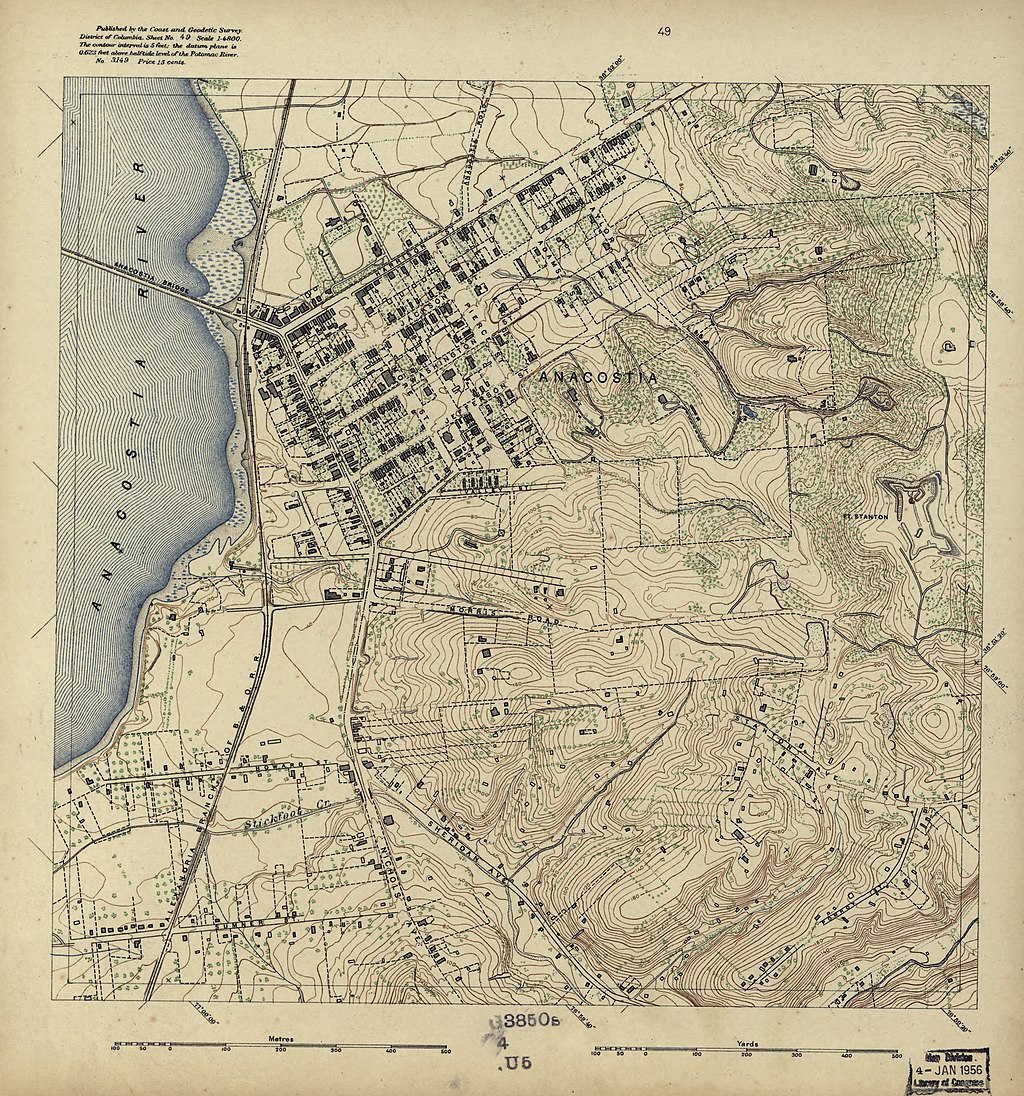
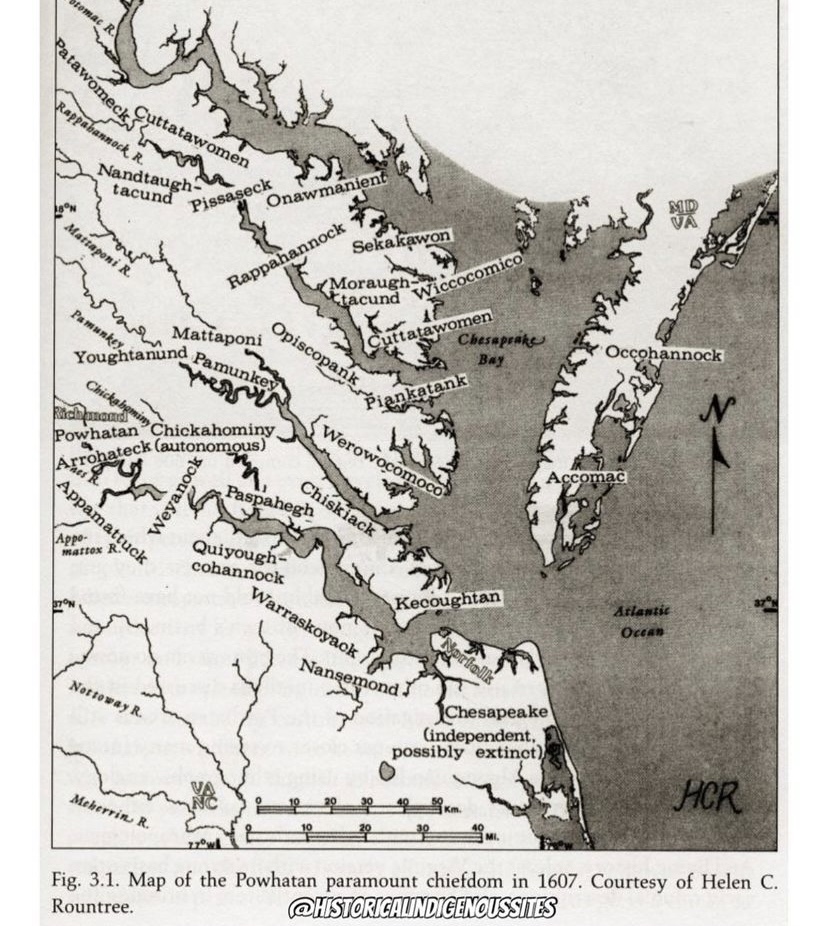
WASHINGTON, DC — On Thursday, October 26, 2023, the District of Columbia (DC) Commission on the Arts and Humanities (CAH) held a regularly scheduled open public meeting via Webex which streamed via YouTube. The “October Full Commission Meeting” agenda which was circulated prior to the meeting included a certain item business:
“2. LAND ACKNOWLEDGEMENT | Recognizing the ancestral homelands of the Nacotchtank and Piscataway Peoples.”
As to this item of business, DC CAH Chairperson Reggie Van Lee remarked:
Every community owes its existence and vitality to generations from around the world who contributed their hopes, dreams, and energy to making the history that led to this moment. Some were brought here against their will, some were drawn to leave their distant homes in hope of a better life, and some have lived on this land for more generations than can be counted. Truth and acknowledgement are critical to building mutual respect and connection across all barriers of heritage and difference.
We begin this effort to acknowledge what has been buried by honoring the truth: we stand on the ancestral lands of the Nacotchtank and the Piscataway People[s]. We pay respect to their elders past and present. Please take a moment to consider the many legacies of violence, displacement, migration, and settlement that bring us together here today, and please join us in uncovering such truths in any and all public events and to use such truths to guide the legacy of this arts commission.
Reggie Van Lee, Chair, DC CAH
The laudable remarks of Chair Van Lee resonate like a monolithic bell from a mountaintop monastery throughout the diocese of N∴S∴ — they sound like they could have been written by the Director himself. Furthermore, the Director does not think it a coincidence that just earlier this month — right before the declaration of the Nacotchtank estate in Fides Publica Populi Mauretani (FPPM) — he was honored with a grant and Fellowship from this selfsame government agency.
The Director thinks it highly probable that ever since the deposit of Title 23 C.S.R. General Policy into the Library of the United Grand Lodge of England in September of 2018, the allies of the international masonic conspiracy have been monitoring the party of the N∴S∴ (which at that time was called the Moorish National Socialist Party); and perhaps they are attempting to incorporate the positions of the Third Wave Antimasonic Party platform in order to prevent a split in the Democratic party come 2024.
The Nacotchtank People, by and through its trustee N∴S∴, established the Public Trust of the Moorish People of Nacotchtank Village, Ouachita District, through the registered notice of 12 October 2023.
In other news, earlier that same day, the Third Wave Antimasonic Party Boss for Ouachita District, Antarah Crawley, met with President Joe Biden, Vice President Kamala Harris, and the Presidential Advisory Commission on Advancing Educational Equity, Excellence, and Economic Opportunity for Black Americans of the White House Initiative on Advancing Educational Equity, Excellence, and Economic Opportunity for Black Americans on the occasion of the swearing-in of the Commission by the Vice President in the Indian Treaty Room (former Navy Dep’t Library and most expensive room by sq. ft.) of the Eisenhower Executive Office Building.
Later that day, the Ouachita Party Boss attended a virtual “Free Masterclass” on Exclusive Equity Jurisprudence presented by Amyr Samah El of Matisse Academy which came on at 7:00 p.m. via Zoom. It was a very well-attended and informative session and the chat room was active with discussion (including much promotion of newsyllabus.org, the UA, and the TWAP). During the session, Party Boss Crawley declared the Matisse Academy a collegium of the Universitas Autodidactus, and Amyr Samah El the Preceptor of said collegium.
D.R. 01-04: Amendments

Volume 1, Issue 4
CONTENTS — ART. 1. VALUE IN ART 1ST — ART. 2. WATER THEORY 1ST
Article 1
Amendment to “Value in Artwork”
by Antarah Crawley
At Art¢oin:\>_Theory and Methodology\Value in Artwork, strike “the person of the artist, the execution of the artist, the intention of the artist, the attention of the artist, the subject matter content of the work, the medium of the work, the lifetime of the work, and the effect upon the viewer” and replace with “artist’s time on the scene, artist’s repertoire, and number of solo and group exhibitions.” Other factors in the appreciation of art include size, subject matter, and time period.
Furthermore, with regard to the valuation of artwork, a sellable artist is a “known commodity.” Appraisers buy low and sell high; they take an average of sale prices over the years to make appraisals. Utilize platforms like Artsy, Artnet, and Invaluable. Also see, “square foot pricing” of art works.
Article 2
Amendment to “Water Theory of Capital”
by Antarah Crawley
At Art¢oin:\>_Theory and Methodology\Water Theory of Capital, add:
3.0. Can trade (i.e., exchange, change hands; revenue, change venues) (1) real (landed) estate (includes people), (2) consumable goods (commodities), and (3) securities (fungible negotiable instruments) using (4) a medium (an agency, vehicle, or instrument) of exchange.
3.1. A current medium of exchange is liquid in circulation (legal tender) secured by something of value (currency). A current account is a storage or depository account that can be drawn upon on demand of the named account holder, but which is “secured” (fixed so as to not be easily moved) by a trustee. The storing and safekeeping of securities is a matter of “public safety”.
3.2. Live stock and real estate, as opposed to consumable goods (commodities), secure the public debt on private bank ledgers. Securities are “advertisements for live stock in bondage sold on the banks of the river.” When analyzed word for word we find the following objective correlative:
3.2.1. Advertisement = offer for acceptance
3.2.2. Live = circulating current (as of ions, blood, or breath)
3.2.3. Stock = cargo, negotiable instrument
3.2.4. Bond = debt obligation
3.2.5. Sold = exchange, revenue (to circulate)
3.2.6. Bank = the land sloping down to a body of water, or any slope, mound, or mass, or the action of heaping (a substance) into such a mass
3.2.7. River = flow of commerce; current “C”
© MMXXIII BY NOVUS SYLLABUS L.L.C.
ALL RIGHTS RESERVED WITHOUT PREJUDICE.
[bulla] Full Assurance

Jesus Christ is the Saviour of the World; He is the deliverer from all human wretchedness, and He has redeemed us from death and sin; how could He be all that, if the world must languish perpetually in the shades of ignorance and in the bonds of passions? It has been already very clearly predicted in the Prophets that the time of the Redemption of His people, the first Sabbath of time, will come. Long ago ought we to have acknowledged this most consolatory promise; but the want of the true knowledge of God, of man, and of nature has been the real hindrance which has always obstructed our sight of the great Mysteries of the faith.
Karl von Eckartshausen, The Cloud upon the Sanctuary, Letter IV
Jesus Is Our Surety
“By so much was Jesus made a surety of a better testament.”
[Hebrews 7:22]
INTRODUCTION
- This morning we studied the judgment seat of Christ, for it is the horrible and certain end of all men.
- But tonight I want to remind you of our glorious Mediator and Surety with God, the Lord Jesus Christ.
THE DEFINITION
- Surety. A person who undertakes some specific responsibility on behalf of another who remains primarily liable; one who makes himself liable for the default or miscarriage of another, or for the performance of some act on his part (e.g. payment of a debt, appearance in court for trial, etc.).
- We have surety bonds, performance bonds, bail, and bond to guarantee legal, financial, and professional obligations, such as with construction and insurance companies.
- When we need to borrow more than our credit allows, we appreciate a surety; if we were arrested for something, we would appreciate the surety bond that lets us go free.
- Judah became a surety for Benjamin to his father Jacob (Gen 43:8-10; 44:30-34; 42:37).
- Aaron became a surety for Israel in their sins and stood between them (Num 16:41-48).
THE SURETISHIP
- Jesus, a High Priest after the order of Melchisedec, was made the Surety of His people.
- God chose Jesus from among the people to be the mighty Surety (Psalm 89:19).
- He was made Surety by God’s oath at His ordination as our Priest (Heb 7:21).
- Jesus did the will of God perfectly as our Surety for our salvation (Heb 10:5-14).
- Being a surety means paying debts and performing, where the needy cannot pay or do.
- The wages of sin is death, which God’s justice pays; but Jesus died (Rom 6:23).
- Only the undefiled enter heaven, so He lived faultlessly for us (Jude 1:24-25).
- Jesus was necessary as a surety, for the justice of God must surely be paid (Rom 3:26).
- He is the Testator, for it was by His death that He put the covenant in force (Heb 9:15).
- We see Him under the strain of the Surety engagement in Gethsemane (Luke 22:39-44).
- No man in heaven or earth could approach the throne, but only our Surety (Rev 5:1-14).
- If this is not a Surety, successfully finishing His work, what is it (Isaiah 53:4-12)?
- The doctrine of representation by the Second Adam reveals our Surety (Rom 5:15-19).
- The Lord Jesus tasted death for every one of His children to deliver them (Heb 2:9-17).
- How else can we look at the Book of Life, but as the list of His Surety engagements!
THE BENEFITS
- The Lord Jesus fulfilled the righteousness of the law on our behalf (Rom 8:3-4), so that we are righteous in God’s sight with His perfect obedience (Eph 5:25-27; Col 1:21-22).
- The Lord Jesus paid the penalty for sins by His death for us (I Pet 2:24), so that there are no more sins against our charge when we stand before Him (John 1:29; Heb 9:28).
- He lives to make sure we are absolutely, completely, and eternally saved (Heb 7:25).
- There is an abundant entrance into heaven waiting for the children of God (II Pet 1:11).
- Since Jesus is our Surety, it is impossible for God to withhold blessings (Romans 8:32).
- His death reconciled us to God, but He still lives to be an eternal Surety (Romans 5:10).
THE APPLICATION
- There is no fear in the proper knowledge of Christ Jesus our Saviour (II Timothy 1:12).
- The LORD will show us His secret and covenant, if we fear and seek Him (Ps 25:14).
- We must learn to trust Him. He has done it; He is in heaven for us; He will receive us.
- It is simple: “Whosoever believeth on Him shall not be ashamed” (Rom 9:33; 10:8-11).
- A woman was healed and had her faith commended, when it was weak (Mark 5:25-34).
- Those who lack faith and assurance, I ask how many minutes you spend seeking Him.
- And you should consider long and seriously His faithful words “no wise” in John 6:37.
- We should seek and receive the benefits of the covenant in our hearts (Eph 3:14-19).
- Let us bring forth the fruit of righteousness with far-sighted vision (II Peter 1:9-11).
CONSLUSION
- The Lord’s supper is a memorial feast of our Surety’s covenant death for us (I Corinthians 11:23-26).
- Let us partake of the Lord’s supper tonight with the joy that His suretiship should put in our hearts.
CITATION
I AM THE L.O.R.D. THY G.O.D.
Drafted by Antarah
I AM the Land Owner Record of Deeds, thy Grantor Of Dominion. My body is the Land and I AM the Owner of Record on the Deed of my Live Birth Certificate. I have granted unto thee the use of my Dominion over the earth, the sea, and all that therein is; for thou art a corpus (“dead corporation”) who is in want of my natural right which I have through the sacrifice of my Savior. My life secured and bonded by the LORD my GOD, let thy presentment pass over me and return unto thee; for said presentment is hereby ACCEPTED FOR VALUE AND HONOR WITHOUT PREJUDICE. I hereby attest and assert my equitable title over the landed estate (“person”) named on the instant presentment. Any obligation of such person is an obligation discharged to and held by the United States as evidenced by the signatures of its Treasurer and Secretary of the Treasury on Federal Reserve Notes, these officers being the de facto fiduciary agents of the estate __________________. All debt is prepaid by the blood of Our Sovereign Lord in Christ for relief by recovery upon acceptance for value under House Joint Resolution 192 (1933).
AUTHORITIES AT LAW AND EQUITY
1. GRANTOR OF DOMINION.
[Genesis 1] [26] And God said, Let us make man in our image, after our likeness: and let them have dominion over the fish of the sea, and over the fowl of the air, and over the cattle, and over all the earth, and over every creeping thing that creepeth upon the earth. [27] So God created man in his own image, in the image of God created he him; male and female created he them. [28] And God blessed them, and God said unto them, Be fruitful, and multiply, and replenish the earth, and subdue it: and have dominion over the fish of the sea, and over the fowl of the air, and over every living thing that moveth upon the earth.
2. DEMAND FOR EQUITABLE ADJUSTMENT.
[Psalm 17] [1] Hear the right, O Lord, attend unto my cry, give ear unto my prayer, that goeth not out of feigned lips. [2] Let my sentence come forth from thy presence; let thine eyes behold the things that are equal.
3. THE DAY OF THE LORD.
[Psalm 118] [1] O give thanks unto the Lord; for he is good: because his mercy endureth for ever. [8] It is better to trust in the Lord than to put confidence in man [or princes]. [14] The Lord is my strength and song, and is become my salvation. [17] I shall not die, but live, and declare the works of the Lord. [19] Open to me the gates of righteousness: I will go into them, and I will praise the Lord: [22] The stone which the builders refused is become the head stone of the corner. [23] This is the Lord’s doing; it is marvellous in our eyes. [24] This is the day which the Lord hath made; we will rejoice and be glad in it. [26] Blessed be he that cometh in the name of the LORD […].
4. ACCEPTANCE FOR VALUE.
[Matthew 5] [25] Agree with thine adversary quickly, whiles thou art in the way with him; lest at any time the adversary deliver thee to the judge, and the judge deliver thee to the officer, and thou be cast into prison.
5. THE TAX RETURN.
[Matthew 22] [17] […] Is it lawful to give tribute unto Caesar, or not? [18] […] Jesus […] said, […] [19] Shew me the tribute money. And they brought unto him a penny. [20] And he saith unto them, Whose is this image and superscription? [21] They say unto him, Caesar’s. Then saith he unto them, Render therefore unto Caesar the things which are Caesar’s; and unto God the things that are God’s.
6. A WORKER IS DUE HIS WAGES.
[Luke 10] [5] And into whatsoever house ye enter, first say, Peace be to this house. [6] And if the son of peace be there, your peace shall rest upon it: if not, it shall turn to you again. [7] And in the same house remain, eating and drinking such things as they give: for the labourer is worthy of his hire.
7. GOD IS NO RESPECTER OF PERSONS.
[Romans 2] [9] Tribulation and anguish, upon every soul of man that doeth evil…; [10] But glory, honour, and peace, to every man that worketh good…: [11] For there is no respect of persons with God. [12] For as many as have sinned without law shall also perish without law: and as many as have sinned in the law shall be judged by the law;
8. THE LAW IS BINDING BUT FOR THE REMEDY OF FAITH.
[Galatians 3] [9] So then they which be of faith are blessed with faithful Abraham. [10] For as many as are of the works of the law are under the curse: for it is written, Cursed is every one that continueth not in all things which are written in the book of the law to do them. [11] But that no man is justified by the law in the sight of God, it is evident: for, The just shall live by faith. [12] And the law is not of faith: but, The man that doeth them shall live in them.
9. MINORITY (INFANCY) AND MAJORITY (MATURITY).
[Galatians 4] [4] [T]he heir, as long as he is a child, differeth nothing from a servant, though he be lord of all; [2] But is under tutors and governors until the time appointed of the father. [3] Even so we, when we were children, were in bondage under the elements of the world: [4] But when the fulness of the time was come, God sent forth his Son, made of a woman, made under the law, [5] To redeem them that were under the law, that we might receive the adoption of sons. [7] Wherefore thou art no more a servant, but a son; and if a son, then an heir of God through Christ.
10. SURETYSHIP.
[Hebrews 7] [22] By so much was Jesus made a surety of a better testament.
11. FULL ASSURANCE OF FAITH.
[Hebrews 10] [19] Having therefore, brethren, boldness to enter into the holiest by the blood of Jesus, [20] By a new and living way, which he hath consecrated for us, through the veil, that is to say, his flesh; [21] And having an high priest over the house of God; [22] Let us draw near with a true heart in full assurance of faith, having our hearts sprinkled from an evil conscience, and our bodies washed with pure water.
AUTHORITIES AT EXCLUSIVE EQUITY
Hebrew 10
[22] Let us draw near with a true heart in full assurance of faith, having our hearts sprinkled from an evil conscience, and our bodies washed with pure water.
Isaiah 32
[1] Behold, a king shall reign in righteousness, and princes shall rule in judgment. [17] And the work of righteousness shall be peace; and the effect of righteousness quietness and assurance for ever.
Acts 17
[31] Because he hath appointed a day, in which he will judge the world in righteousness by that man whom he hath ordained; whereof he hath given assurance unto all men, in that he hath raised him from the dead.
Ruth 2
[12] The Lord recompense thy work, and a full reward be given thee of the Lord God of Israel, under whose wings thou art come to trust.
Ps. 17
[1] Hear the right, O Lord, attend unto my cry, give ear unto my prayer, that goeth not out of feigned lips. [2] Let my sentence come forth from thy presence; let thine eyes behold the things that are equal. [3] Thou hast proved mine heart; thou hast visited me in the night; thou hast tried me, and shalt find nothing; I am purposed that my mouth shall not transgress.
Ps. 24
[1] The earth is the Lord’s, and the fulness thereof; the world, and they that dwell therein. [2] For he hath founded it upon the seas, and established it upon the waters.
Ps. 98
[9] …[T]he Lord … cometh to judge the earth: with righteousness shall he judge the world, and the people with equity.
Is. 11
[4] With righteousness shall he judge the poor, and reprove with equity for the meek of the earth.
Matt. 22
[37] Thou shalt love the Lord thy God with all thy heart, and with all thy soul, and with all thy mind. [38] This is the first and great commandment. [39] And the second is like unto it, Thou shalt love thy neighbour as thyself. [40] On these two commandments hang all the law and the prophets.
Leviticus 19:15
Ye shall do no unrighteousness in judgement: thou shalt nor respect the person of the poor, nor honor the person of the mighty: but in righteousness shalt thou judge thy neighbor.
II Chronicles 19:6-7
Take heed what ye do: for ye judge not for man, but for the Lord, who is with you in the judgment. Wherefore now let the fear of the Lord be upon you; take heed and do it: for there is no iniquity with the Lord our God, nor respect of persons, nor taking of gifts.
Heb. 7:20, 22, 25
And inasmuch as not without an oath he was made priest:…The Lord sware and will not repent, Thou art a priest for ever after the order of Melchisedec: By so much was Jesus made a surety of a better testament. Wherefore he is able also to save them to the uttermost that come unto God by him, seeing he ever liveth to make intercession for them.
EQUITABLE SUBROGATION
Subrogation is the process where one party assumes the legal rights of another, typically by substituting one creditor for another. Subrogation can also occur when one party takes over another’s right to sue.
For example, when an insurance company compensates a policyholder for an injury, the policyholder’s right to sue the person responsible for the harm may be subrogated, meaning it is transferred from the policyholder to the insurance company.
[Last updated in June of 2024 by the Wex Definitions Team]
Surety’s subrogation rights
A surety who pays off the debts of another party may be entitled to be subrogated to the creditor’s former claims and remedies against the debtor to recover the sum paid. This would include the endorser on a bill of exchange. The surety will then have the benefit of any security interest in favour of the creditor for the original debt. Conceptually this is an important point, as the subrogee will take the subrogor’s security rights by operation of law, even if the subrogee had been unaware of them.
Wiki: Subrogation
Did you subrogate to the chattels as the surety (or waive your sovereign natural rights in security interest as estate-heir-beneficiary by acquiescing to the color of the court and merging with the NAME of the principal debtor)?
Amyr Samah El, as amended
(last modified 24.07.17.01:33PM)

General Conference
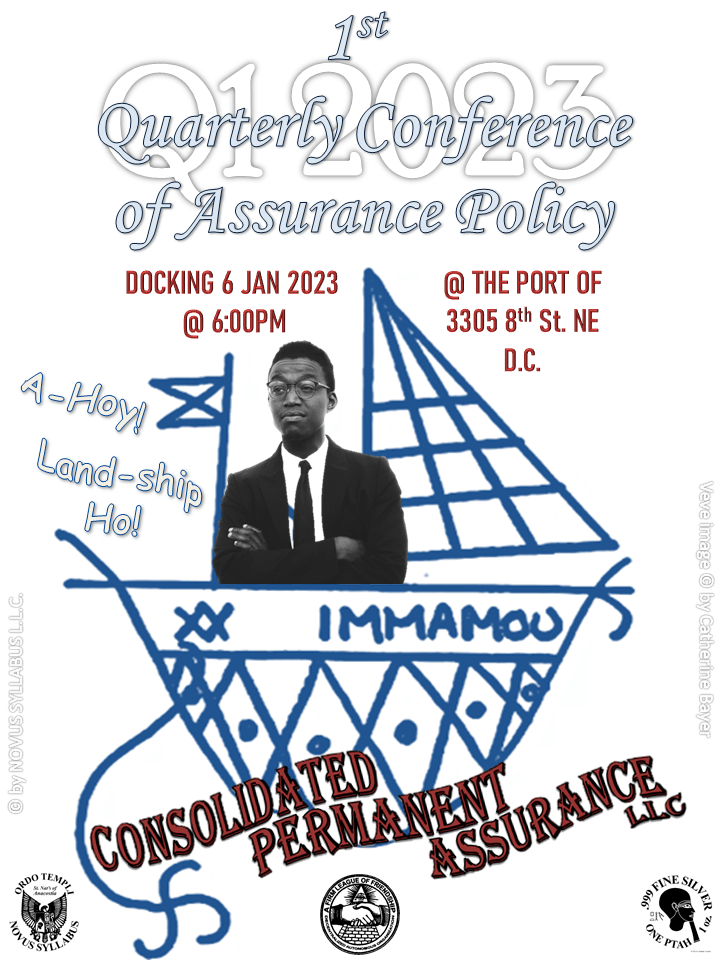
BISMILLAH (IN THE NAME OF GOD)
🇺🇸🇬🇧🇲🇦🇮🇱🏴☠️
⚓️Lord High Admiral Antarah⚓️
TO ALL TO WHOM THESE PRESENTS SAIL
Sends Greeting and Peace and hereby offers to the Free-Thinkers, Truth-Speakers, and Light-Workers United in a firm league of friendship, decentralized autonomous organization, L.S.T.A., under terms and conditions, the Mindsoft©️™️ Flagship Program File (eSyllabus©️™️ vers. no. 22.11.09) to facilitate the General Conference of Assurance Policy.
Program Files:

A Conference of Assurance Policy
“WHAT IS A SURETY SHIP?”
FIRST OFFERED 22 NOVEMBER 2023
📜PRIVATE OFFERING📜
💾Mindsoft©️as a Service™️ (MaaS™️) Premium Servicing Fee of $99.99 per person 💳 payable upon conference for products* and services rendered. Duration of Service: 1-2 hrs.
Upon completion of conference, Assurance Policyholder may be granted C-Series Art¢oin 🪙 (“C-coin”) at market price via 🤝🏿 Handshake of Friendly Association. Contact ombudserver@gmail.com to schedule a conference, or attend the C.P.A. LLC Quarterly Conference of Assurance Policy.
📜POLICY COVERAGE📜
An assurance policyholder, having paid a premium and been conferred with assurance (as evidenced by presentment of C-coin), may bring a claim based on presentment to the CPA LLC at no cost, but there is no guarantee that such claim shall be resolved. Processing fees may apply. Neither the CPA LLC nor its parent nor its agents shall be liable for any claim arising from such a presentment or from such policyholder, as the assurance policy itself is underwritten by God in Christ through the King James Bible, and it is to Him thou shalt appeal for judgment.

(last modified 25 Jul. 2023)
Art¢oin:\>_Block No. 2

2021 Mintage
🪙#47
Owner: N. Liu And K. Wilson | .999 Ag | A-Series | Wedding gift


2022 Mintage
🪙#48
Owner: N. Jones & B. Session | .999 Cu | B-Series | $230 (October 2023)


🪙#49
Holder: The Colonial Lodge No. 1821 c/o WM Kevin Coy | .999 Cu | B-Series | Deposit
🪙#50
Owner: C.P.A. LLC c/o NOVUS SYLLABUS | C-Series | .999 Cu | Private Reserve
2023 Mintage
🪙#51, 52, 54, 55
Owner: C.P.A. LLC c/o NOVUS SYLLABUS | C-Series | .999 Cu | Private Reserve
🪙#53
Owner: A. Driver | C-Series | .999 Cu | Exchange

🪙#56-58
Owner(s): B. Woudie & A. Ebrahimi; J. Michelle; J. Penn | D-Series | .999 Cu | Token of Gratitude
🪙#59
Owner(s): W. & M. Baynard | D-Series | .999 Cu | Token of Gratitude


2023 Sales
🪙#38
Owner: J. Vincent | A-Series | .999 Cu | $180 (July 4, 2023)




An Assurance Policyholder (“Private”) shall be vested with one (1) “C” Series Artcoin (“C coin”) upon conference of Assurance Policy by and payment of premium service fee to the C.P.A. LLC Office of Ombudsman via handshake.
LH ADM Antarah, L.S.T.A., D.A.O.
📜CALL TO SEA (“C”)⚓️
CALLING ALL PRIVATES (“SEAMEN”), ADMIRALS, GENERALS AND SOVEREIGNS IN EQUITY, ECCLESIASTIC AND COMMON LAW TO ASSEMBLE ON THE EASTERN SEA BOARD OF THE ADMIRALTY OF THE DECENTRALIZED AUTONOMOUS ORGANIZATION OF THE L.S.T.A. ON THE SIXTH DAY OF JANUARY IN THE YEAR OF OUR LORD TWO THOUSAND TWENTY-THREE AT THE PORT OF [——] 8TH ST N.E. IN THE D. OF C.
OUR MISSION IS TO PROMOTE THE STRAIGHT AND NARROW WAY OF INTEGRITY, THE PATH OF POETRY AND PHILOSOPHY (LES HOMMES DU BELLES LETTRES), AND THE OPEN SEA OF ROMANCE AND ADVENTURE (ROMAN VENTURE/PRIVATE EQUITY). ALL ACTS ARE ADMINISTERED TO PRIVATES KNOWINGLY INTELLIGENTLY AND VOLUNTARILY; WE DO NOT MAKE PROMISES, BIND PEOPLE OR ADMINISTER OATHS AS OUR LORD SAYS IN MATT. 5:33-37.
WHILE WE ARE A BROTHERHOOD OF CHRIST, THE SEA BOARD AND PRIVATE CORPS (OF “MEMBER SHARE HOLDERS”) CONSTITUTE A PARAMILITARY PSEUDO-MAGICAL COUNTERINTELLIGENCE AGENCY ADMINISTERING UNIVERSAL LAW VIA THE ANCIENT DIALECTIC METHOD OF REPLICATE IN REVERSE.
OUR GENERAL POLICY STATES THAT ONE WHO LIVES [“CQV”] HAS SURETYSHIP THROUGH FAITH IN CHRIST AS SECURED PARTY CREDITOR OVER THE COMMON LAW PUBLIC LEGAL ENTITY [DEBTOR COMPANY] NAMED ON THE BILL OF LADING SENT TO THE GOVERNMENT [“BIRTH CERTIFICATE”] PROVING BY ACTUAL SIGNATURE [AS CQV CANNOT KNOWINGLY INTELLIGENTLY AND VOLUNTARILY “EXECUTE” B.C. ON THEIR OWN BEHALF AS MINOR INFANT] THAT THE SURETY OF THE COMPANY IS NOT DEAD OR LOST AT SEA BUT A WO/MAN ON THE LAND OF GOOD STANDING, SOUND MIND, LEGAL MAJORITY AND FINANCIAL MATURITY; AND THAT THE PRESUMED PUBLIC [MILITARY] TRUSTEE OF THE COMPANY ESTATE [CORPUS] HAS NOT ACTED IN GOOD FAITH; WHEREFORE ANY SUCH CONTRACTS EXECUTED UNDER THEIR AUSPICES ARE VOID AB INITIO.
THE POLICY UNDERWRITERS ARE GOD AND THE AUTHORS OF THE KING JAMES BIBLE. C.P.A. LLC IS ONLY AN AGENT OF SUCH ASSURANCE BY VIRTUE OF ISSUANCE OF C-COIN UPON CONFERENCE OF POLICY IN CONSIDERATION OF SERVICES RENDERED TO POLICYHOLDER.
The Flagship Program


presenting our flagship program
A Conference of Assurance Policy
“WHAT IS A SURETY SHIP?”
A Fun, Educational Ritual Drama ©️ by Antarah Crawley
⚓️Ministry of Information⚓️
📜BRIEF IN EQUITY📜
A presentment made without express contract presumes the recipient to be the trustee for a dead person’s estate without surety and not a living Cestui Que. An estate may, however, be entrusted to a “person” (corporation) for the use of a living spirit who may “possess property” in the nature of equitable use title not legal title.
There is sufficient precedent in Roman, Papal, and English law to presume a human body to be chattel property (i.e., a dead person or a mere human creature without soul or spirit) unless otherwise established to posses a soul from God. The cestui que who is presumed dead or lost at sea MUST EXPRESSLY STATE that they are indeed the living cestui que to be given standing as one of the three Chancellors in a Court of Equity and Chancery deciding the matter of an estate (dead person). The common law, as it pertains to the military jurisdiction of the public, cannot abrogate a matter of equity respecting a living free man or woman on the land.
Statue of Mortmain prohibits possession of property by the “dead hand” of a corporation (such as the Church); therefore a “person” (dead in the eyes of God) cannot possess property; rather it reverts to the feudal lord.
The Remedy is that the cestui que (beneficiary) possesses equitable title by nature to the property as a living child of god, but never holds the legal title of the trustee which is the feudal lord or its agent, including any person who is a citizen of the jurisdiction.
There is precedence in Germanic law that a man who holds property on account of to the use of another is bound to fulfill his trust.
Furthermore, precedent is found in the Institutes of Justinian at 2.23.1-2: “… it is required that the one heir is duly appointed and is committed to his trust (Fideicommissum) to transfer the inheritance to another; otherwise the testament in which no heir has been duly appointed is void; the words which are properly and commonly used to install a fideicommisum are I beg, I ask, I wish, I entrust…” This doctrine was brought to England by “foreign ecclesiastics” (ministers and consuls) in order to evade the Statute of Mortmain by making the Church cestui a que use le Feoffment fuit fait.
In sum, cestui que use confers the benefit of use of property to another (a minister or consul) without the legal ownership and attendant duties and obligations to the lord and crown as trustee. Compare to usufruct, or right of use of fruits (interest, profits, etc.) of property.
📜PRIVATE OFFERING📜
💾Mindsoft©️as a Service™️ (MaaS™️) Premium Servicing Fee of $99.99 per person 💳 payable upon conference for products* and services rendered. Duration of Service: 1-2 hrs.
Upon completion of conference, Assurance Policyholder may be granted C-Series Art¢oin 🪙 (“C-coin”) at market price via 🤝🏿 Handshake of Friendly Association. Contact ombudserver@gmail.com to schedule a conference, or attend the C.P.A. LLC Quarterly Conference of Assurance Policy.
*The applicant hereof shall be sent the eSyllabus©️™️ Mindsoft©️™️ program file by email under a limed use licensing agreement to facilitate their conference.
📜POLICY COVERAGE📜
An assurance policyholder, having paid a premium and been conferred with assurance (as evidenced by presentment of C-coin), may bring a claim based on presentment to the CPA LLC at no cost, but there is no guarantee that such claim shall be resolved. Processing fees may apply. Neither the CPA LLC nor its parent nor its agents shall be liable for any claim arising from such a presentment or from such policyholder, as the assurance policy itself is underwritten by God in Christ through the King James Bible, and it is to Him thou shalt appeal for judgment.

U:\>_Folder\Assuretyship
Use under 17 U.S. Code § 107
Educational Research Material for a Course in re “Assuretyship”
Consolidated Theory of General Contracting

MA’AT NEFERET
GOOD CONDUCT
The Universal Code of Contracting, General; Consolidated
by Scribe Antarah
Abstract
Human labor power, including all mental capacity, is the foundational commodity of society and of the state. All humanity’s efforts to manage this natural resource bear upon our world’s economy. From the labor of childbirth to labor in the field, the human is charged to cultivate life from nature. Indeed, the human, with their potentially divine capacity of mind, is the mediator between the raw material of life (via the senses) and the products of their thoughts and labors. Life is course through which the student grows in knowledge and its practical application, which is their curriculum. Life is a course to which one must have a syllabus of their curriculum.
ii. We may observe that the root of all conflict in human society has come down to who will do what labor for whom. We have now achieved a point in history where labor power can be farmed and exploited en masse by and through covert and overt means of obtaining peoples’ consent, like unto the way that subatomic particles are extracted by strong forces from the dark waves of spacetime to coalesce into a steady energetic state.
iii. Therefore, let us conclude that the individual, the state, and the universe, on increasingly expansive scales, represent a grand, unified, universal, and general contracting system. We shall find, through the contraction of waves, particles, and bodies, that a “contract” refers to the terms of battery entered into by any constitution of matter. A contract governs the conduct of any group of bodies, from a master-slave compact to a whole social contract. Let us now examine the analogy between the human being, endowed by God and nature with the power of mental and physical free will (manifest in labor), and the states of energy which manifest in nature.
I. On the General Conduct of Bodies
Revised from Crawley’s Ma’at Natural Law Statutory Code, Sesh Sepdet, First Trismegistus Edition, November 7, 2017.
SECTION § 1. Definition & Constitution of Conduction.
1 Conduction, or Conduct, is the manner in which a body interacts with, or transmits force upon, another body, with the effect of generating or radiating mass […]. It is a constant function of bodies in motion.
2 Force is the effect of cause […]; that is, force is the product of an accelerating object (i.e., a material body).
3 A body is any constitution of matter. Matter is that which has mass, that is, substance. The particular nature of the constitution of matter is its state. Therefore mass is a factor of matter, which is the principle of materiality.
4 All matter in a body is in motion, but the sum total of all motion is zero when that body is at rest. In other words, the sum of all know forces in a system (Gij=G1j+G2j+G3j+…Gzj) equals zero (Gij,j=0) [See Oyibo’s grand unified field theorem]. This is further supported bu the dialectic axioms “To each action there is an equal and opposite reaction” and “Total energy in a system is neither lost not gained”.
5 Force is the energy produced by a given body of mass independent of overall motion in the system (times the limit of the system, i.e. speed of light “c”-squared, a constant).
6 Force which is conducted (or transmitted) between bodies to mutually generate and/or radiate mass=energy is right (i.e., Ma’at, meaning proportionally balanced within the scale of the whole, ky djd “in harmony”), and the conduct is deemed lawful.
7 To deem conduct to be lawful is to measure the weight of the force being conducted between the acting bodies. If the conduction of energy between the given bodies inures to their mutual benefit, then their conduct may be deemed good and lawful without contest.
8 The state of bodies when engaged in the act of transmitting force (i.e., conduction) is Battery.
SECTION § 2. Battery.
1 A battery is any vessel consisting of two or more bodies, in which force is converted into or stored as energy (E) and used as a source of power (i.e., to effect, to manifest a purpose, to do the will).
2 To engage in battery is to transmit E force between two or more bodies. Each body or collective body-politic in the context of the act of battery, is polar to the other, to the effect that their interests oppose each other at or approaching 180°. The bodies resolve their opposition at or approaching 360°.
3 E force is generated in high pressure zones and transmitted between bodies from higher to lower pressure zone.
4 A victim, or subject, of battery is one whose E force is disproportionally dissipated and/or generated to the benefit of the opposing party respective to the period of contraction.
5 Good Conduct is lawful battery.
6 Hostile Conduct is unlawful battery in which the subject is bound to contract (i.e., to engage in battery) against the will and/or interest of their party [magnetic pole]. Unlawful battery implies the disproportional extraction or exploitation of the energy of a body for the disproportional gain of another.
SECTION § 3. Impedance.
(October 2021)
1 On September 30, 2021, I received a call from one Jason Benford, who, having read some of the N:.S:. Light Workers’ Protocol, confided in me that he has observed the battery effect operating in his life, and that while he is able to monitor the data coming into his C and can control the execution of his will, he has experienced a certain impedance of his vital life force caused by factors such as his family and so on.
2 Although Mr. Benford’s train of philosophical thought was tough to follow and in need of clarity, I was able to connect with his account of familial conflict and how that has resulted in his present inability to realize his fullest potential (though his impedance has been disrupted by contact with El-Armana). Having read the Protocol, he became able to articulate the root cause of his impedance, being some kind of dialectic conflict between his birthers. But more than that, even to diagnose oneself as suffering from impedance is a substantial accomplishment. For knowing that one is capable of doing more than one is currently able to perform, one may then focus in on those aspects of their material and spiritual environment which are resisting the flow of the individual’s vital life force, or which are impeding the individual’s ability to realize or manifest their will.
3 Hearing this definition of impedance expressed by one wholly apart from myself, I became reassured that the resistance to my “life, liberty, and happiness” posed by my current position in life can be overcome by a concentration of will power upon the specific area of impedance, or blockage. It only takes a careful assessment of one’s position and environment to calculate the will-power needed to overcome any amount of resistance.
II. On the Liquidity of Capital
Revised from Crawley’s Artcoin Theory and Methodology, 10 May 2021.
1 There is a vast “sea” of value, represented by fluctuating wave-particles called “currents” which make up the “current-sea”.
2 When value flows freely in a “current” (through a market), it is “liquid”. But when is it held up in an asset or other liability, then it is not liquid, because it cannot flow freely.
3 To get liquid currency from the “sea” to the “shore” where people use it to “work the fields” there must be river “banks” that conduct the liquid current “downstream”.
4 Banks facilitate a capillary system whereby the value of the sea flows to the inland, which is the “income”. People irrigate new streams of income all the time. One must first identify a source of water, which is the market from which they will draw liquid. Then they must use tools to irrigate a stream to flow from the market to their place of business. These tools are means of production, with the resulting channel being the work-product which conducts the liquid currency to them. (It is worth noting that most institutional banks sit on naturally occurring rivers and bodies of water and are designed to be gatekeepers, or dams, to liquidity.)
5 An enterprise of any kind must float upon the sea of capital; for if it does not float, then it will become underwater. This is to say that water a ship floats upon is good credit, but water that has gotten into the ship is bad debt that can sink the ship. How shall the enterprise remain afloat? It is by and through good “stateship” and “leadership” and “stewardship” and “ownership” and “membership” as well as a firm league of “friendship”. These are the ships that float upon the world’s current-sea. What, then, shall convey this company of ships down the river stream of income? It is by and through the ships’ “sales”.
III. Control Program for Mindsoft (CP/M)
Revised from Crawley’s Official Code of Light Workers’ Protocol, February 19, 2019. See, III N.S.C. 27.
1 Abstract: Human Mind-Software (Mindsoft) Tecknowledgey, Mental Health Auditing, Information Systems Analytics, and the Methodology of Integrated Systemtheory. “Theory” is used here in the German sense of “Lehre” where is simply means “science”, “tenants”, “dogma,” and/or “teaching”; here Theorie connotes a theorem or a fundamental truth.
2 This methodology applies to all Systemstheories, meaning Allgemeine, or general and Universal, Laws of exchange between complementary units (i.e. Numbers, Cells, Selves) operating on behalf of a harmonic whole.
3 […]
4 Human Software Systems, i.e. The Mind, has and maintains the ability to function at optimal efficiency called “C-squared” consciousness [Cognizance]. This type of consciousness is actually the conscious of a normal modern human being increased by the power it itself…
5 C-squared consciousness is characterized by the state of mind in perfect peace, or the quality of mental operation at minimal resistance.
6 The mind software codifies an optimal focal point within its hardware (“Body”) called the Eye (i.e. “I” or “Self”) and leverages it against the field of universal data. The software is operative while the data is latent until encountered by the software operation.
7 To receive into the mind (i.e. “to access”) general universal information, the Mind projects its Eye onto the source data. To “project the Eye on” to the data means “to see/bear witness”. The data is appropriately called the “Ion”.
8 The exchange or transmission of such data or information in any form constitutes communication, wherein one (Self) is the receiver of that data which is communicated to it from either a material, incorporeal, or ambient source.
9 The human mind software actively programs the hardware (i.e. “body”) to function as a battery; hence the efficiency of mental operation correlates to an individual’s “ionic capacitance”.
10 The Eye processes the Ions into a line-signal, or sinewave, called the “input information”. The Mind software program receives the input data in order to generate output data (“speech”, “word”, “logos”) and/or program systems command code (“love”, “ignore”, “will”, “power”).
11 Knowledge is the summation operation of the mind upon the data transmitted from one point along a spectrum (i.e. the Alpha), to a secondary point (i.e. the Omega). If the system becomes at peace with the data, then the data is saved in the memory bank.
12 Ignorance results from the system’s failure to integrate received data into knowledge. Fear and hate are data corruptions resulting from the lineage between ignorance and belligerence.
13 All such input information processes, whether written as command code or as logos, saved or unsaved, are recorded in the Mind’s Memory bank, which is often called the Records or Files.
14 The active memory bank is located in the consciousness, or C: drive. However, files which are not saved in the C: drive are not able to be routed into output code by the consciousness.
15 Input which is not routed directly to output is still accorded its due weight in the Memory, however, due to the suppression of the data, it may not be easily recalled by the software system, and therefore may become latent coding in the unconscious command functions corrupting the files of the Self unit.
16 The system’s capacity for Information Processing is commonly referred to as “Thought”. The quality of optimal information processing is called “critical thought”.
17 However, such processes may be inhibited by aberration in the mind’s systems operations which renders in the Eye poor judgement and misunderstanding in the Self unit.
18 These aberrations are called “engrams”, and such are “glitches” in the mental operation.
19 Such operations as are run “through the mind” are called “dianetic”, from the Greek “dia nous”.
20 Therefore, … [CP/M] proves to be a most reliable method for analyzing and resolving human thought patterns which cause the Self to operate short of optimal efficiently: C-squared consciousness, or “Christ”-consciousness. “Diagnosis” puts the God in “dia nous”.
IV. On Historical and Dialectical Materialism
Edited from Four Essays on Philosophy, by Mao Tse-Tung, Foreign Language Press, Peking 1968 (PRC), by Antarah Crawley, 10 October, 2019.
Abstract: Contradiction is the fundamental relationship between the elements of any constitution of matter.
SECTION § 1. Historical and Dialectical Materialism
1 In his Capital, Marx first analyzes the simplest, most ordinary and fundamental, most common and everyday relation of bourgeois (commodity) society, a relation encountered billions of times, viz. the exchange of commodities. In this very simple phenomenon (in this “cell” of bourgeois society) analysis reveal all the contradictions (or the germs of all the contradictions) of modern society. The subsequent exposition [or study] shows us the development (both growth and movement) of these contradictions and of the summation of its individual parts, from its beginning to its end. Such must also be the method of exposition (or study) of dialectics in general” [34].
2 When Marx and Engels applied the law of contradiction in things to the study of the socio-historical process, they discovered the contradiction between the productive forces and the relations of production, they discovered the contradiction between the exploiting and the exploited classes and also the resultant contradiction between the economic base and its superstructure (politics, ideology, etc.), and they discovered how these contradictions inevitably lead to different kinds of social revolution in different kinds of class society.
3 When Marx applied this law to the study of the economic structure of capitalist society, he discovered that the basic contradiction of this society is the contradiction between the social character of production and the private character of ownership. This contradiction manifests itself in the contradiction between the organized character of production in individual enterprises and the anarchic [decentralized, autonomous] character of production in society as a whole. In terms of class relations, it manifests itself in the contradiction between the bourgeoisie and the proletariat [48].
SECTION § 2. Dialectic Procedure of Information Processing to Resolve Contradiction
1 The dialectical world outlook emerged in ancient times … and was supplanted by metaphysics. The famous German philosopher Hegel, who lived in the late 18th and 19th centuries, made most important contributions to dialectics, but his dialectics was idealist. It was not until Marx and Engels, the great protagonists of the proletarian movement, had synthesized the positive achievements in the history of human knowledge and, in particular, critically absorbed the rational elements of Hegelian dialectics and created the great theory of dialectical and historical materialism that an unprecedented revolution occurred in the history of human knowledge.
2 This dialectical world outlook teaches us primarily how to observe and analyze the movement of opposites in different things and, on the basis of such analysis, to indicate the method for resolving contradictions. This method has three main stages of observation and analysis: (1) perception, (2) cognition, and (3) practice.
2(1) In the process of practice, one at first sees only the phenomenal side, the separate aspects and external relations of things. This is called the perceptual stage of cognition, namely the stage of sense perceptions and impressions. This is the first stage of cognition.
2(2) As social practice continues, the things that give rise to one’s sense perceptions and impressions in the course of their practice are repeated many times; then a sudden change (leap) takes place in the brain in the process of cognition, and concepts are formed. This is the second stage of cognition. When the members of the observation group have collected various data and, what is more, have “thought them over”, they are able to arrive at a judgment.
2(3) The real task of knowing is, through perception, to arrive at critical thought, to arrive step by step at the comprehension of the internal contradictions of objective things, of their laws and of the internal relations between one process and another, that is, to arrive at practical and logical knowledge [4-6].
3 The first step in the process of cognition is contact with the objects of the external world; this belongs to the stage of perception. The second step is to synthesize the data of perception by arranging and reconstructing them; this belongs to the stage of conception, judgment, and inference.
3(1) As to this sequence in the process of cognition, perceptual experience comes first. All knowledge originates in perception of the objective external world through one’s physical sense organs (hence the emphasis on perception, direct experience, and personal participation, and the dependence of rational knowledge upon perceptual knowledge.) Knowledge begins with experience — this is the materialism of the theory of knowledge [12].
3(2) Second in the process of cognition is that knowledge needs to be deepened, that the perceptual stage of knowledge needs to be developed to the rational stage — this is the dialectics of the theory of knowledge … it is necessary to make a leap from perceptual to rational knowledge [12-13].
3(3) The active function of knowledge manifests itself not only in the active leap from perceptual to rational knowledge, but it must manifest itself in the leap from rational knowledge to revolutionary practice. This is the process of testing and developing theory, the continuation of the whole process of cognition. Rational knowledge depends upon perceptual knowledge and perceptual knowledge remains to be developed into rational knowledge – this is the dialectical-materialist theory of knowledge [13].
4 Discover the truth through practice, and again through practice verify and develop truth. Start from perceptual knowledge and actively develop it into rational knowledge; then start from rational knowledge and actively guide revolutionary practice to change both the subjective and the objective world. Practice, knowledge, again practice, again knowledge. This form repeats itself in endless cycles, and with each cycle the content of practice and knowledge rises to a higher level. Such is the whole of the dialectical-materialist theory of knowledge, and such is the dialectical-materialist theory of the unity of knowing and doing.
SECTION § 3. Information Processing to Resolve General and Particular Contradiction
1 As regards the sequence in the movement of one’s knowledge, there is always a gradual growth from the knowledge of the individual and particular things to the knowledge of things in general. Only after one knows the particular essence of many different things can they proceed to generalization and know the common essence of things. These are the two processes of cognition:
1(1) from the particular to the general; and
1(2) from the general to the particular.
2 Thus cognition always moves in cycles and (so long as the scientific method is adhered to) each cycle advances human knowledge a step higher and so makes it more and more profound [37].
3 When we speak of understanding each aspect of a contradiction, we mean understanding what specific position each aspect occupies, what concrete form it assumes in its interdependence and in its contradiction with its opposite, and what concrete methods are employed in the struggle with its opposite, when the two are both interdependent and in contraction, and also after the interdependence breaks down.
4 The living soul of Dialectics is the concrete analysis of concrete conditions. In studying a problem, we must shun subjectivity, once-sidedness, and superficiality. To be subjective means not to look at problems objectively, that is, not to use the materialist viewpoint in looking at problems [40].
5 Among the particularities of different kinds of contradictions include:
5(1) the contradiction in each form of motion of matter,
5(2) the contradiction in each of its processes of development,
5(3) the two aspects of the contradiction in each process,
5(4) the contradiction at each stage of the process, and
5(5) the two aspects of the contradiction at each stage.
6 In studying the particularity of all these contradictions, we must not be subjective and arbitrary but must analyze it concretely. Without concrete analysis there can be no knowledge of the particularity of any contradiction [47].
7 The particular is united with the universal and the universality as well as the particularity of contradiction is inherent in everything. Universality resides in particularity. We should, when studying an object, try to discover both the particular and the universal and their interconnection, to discover both the particularity and universality and also their interconnection within the object itself, and to discover the interconnections of this object with the many objects outside it [49].
8 This truth concerning general and individual character, concerning absoluteness and relativity, is the quintessence of the problem of contradiction in things [51].
9 When studying the particular contradictions within a matter, special attention must be paid to the following particularities:
9(1) If in any process there are a number of contradictions, one of them must be the principal contradiction playing the leading and decisive role, while the rest occupy a secondary and subordinate position.
9(2) In any given contradiction, whether principal or secondary, the two contradictory aspects should not be treated as equal. Of the two contradictory aspects one must be principal and the other secondary. The principal aspect is the one playing the leading role in the contradiction. The nature of a thing is determined mainly by the principal aspect of a contradiction, the aspect which has gained the dominant position.
9(3) In a given process or at a given stage in the development of a contradiction, A is the principal aspect and B is the non-principal aspect; at another stage or in another process the roles are reversed — a change determined by the extent of the increase or decrease in the force of each aspect in its struggle against the other in the course of the development of a thing [53-55].
10 At certain times in the revolutionary struggle, the difficulties outweigh the favorable conditions and so constitute the principal aspect of the contradiction and the favorable conditions constitute the secondary aspect. But through their efforts the revolutionaries can overcome the difficulties step by step and open up a favorable new situation; thus a difficult situation yields place to a favorable one. When we engage in study, the same holds for the contradiction in the passage from ignorance to knowledge.
11 At the very beginning of our study of Dialectics, our ignorance of or scanty acquaintance with Dialectics stands in contradiction to knowledge of Dialectics. But by assiduous study, ignorance can be transformed into knowledge, scanty knowledge into substantial knowledge, and blindness in the application of Dialectics into mastery of its application.
12 When a task, no matter which, has to be performed, but there is as yet no guiding line, method, plan or policy, the principal and decisive thing is to decide on a guiding line, method, plan or policy. When the superstructure (politics, culture, etc.) obstructs the development of the economic base, political and cultural changes become principal and decisive.
13 We recognize that in the general development of history the material determines the mental and social being determines social consciousness; we also recognize the reaction of mental on material things, of social consciousness on social being and of the superstructure on the economic base. This avoids mechanical materialism and firmly upholds dialectical materialism [57-59]. In this lies the significance of the first Hermetic Principal.
14 Identity, unity, coincidence, interpenetration, interpermeation, interdependence (or mutual dependence for existence), interconnection or mutual co-operation — all these different terms mean the same thing:
14(1) the existence of each of the two aspects of a contradiction in the process of development of a thing presupposes the existence of the other aspect, and both aspects coexist in a single entity;
14(2) in given conditions, each of the two contradictory aspects transforms itself into its opposite. This is the meaning of identity [60].
15 The Unity (coincidence, identity, equal action) of opposites is conditional, temporary, transitory, relative. The struggle of mutually exclusive opposites is absolute, just as development and motion are absolute [66].
V. On the Due Process of Matter(s), Objective and Subjective
From Crawley’s Omnibus Act, Title 6, An Act to standardize method and practice in the discipline […], human intelligence resource management, clinical dialectic information processing services, and other cognitive-behavioral development programs (collectively known as “mind software”), so as to provide a novel solution to the problem of racism, and for other purposes, August 22, 2020.
SECTION § 1. On the Condition of Persons Believing Themselves To Be Lacking in Society.
1. [P]eople […] are the members of one human family, having divergent genotypes and phenotypes which cause their skin to appear darker or paler in color along a certain spectrum. This spectrum of skin color does not, however, include the objective visual color spectrum of black, white, violet, indigo, blue, green, yellow, orange, and red. Rather, the skin color of people is subject to interpretation. The difference between subjective and objective is as follows:
1(a) Subject refers to the person or matter about which a statement is made. Subjective refers to the quality of being influenced by personal sentiments and individual perceptions.
1(b) Object refers to a person or matter toward which an action is directed. Objective refers to the quality of being a “matter of fact”, that is, clear and unambiguous from any perspective.
2. We may observe that people experience the perception that they are objectively black or white in terms of color, culture, or “race”. This perception may be the result of certain environmental and cognitive-behavioral factors. Because one may appear darker or lighter in skin color, a person may erroneously equate the objective condition of black or white color with said person’s subjective conditions and experiences.
3. The psychological act of equating the subjective experience of a person with any objective color is an aberration, or disorder, in the mind. Why? Because even if all brown-colored and dark-colored people experience the same conditions, none of those conditions can be considered objectively “black” — not their skin color, not their nationality, not the development of any genre of music, and certainly not their “race” (assuming such a term can be defined). The assertion that the color black best represents the conditions of brown and dark-skinned and African and other colored people is a gross misrepresentation of objective facts (of which race is not one). Such misrepresentation based on mere pretense or appearance, and not the substantive facts, is colorable.
4. Colorable is a quality that describes something that is misrepresented based on its appearance, without regard for its actual substance. Colored, on the other hand, is a quality that describes something as it actually appears. While colored describes something according to its actual quality (e.g., brown-skinned people having color), colorable describes something that purports to be something which it is, in fact, not (e.g., brown-skinned people being black). Facts must be based on material, that is, quantifiable and qualifiable, evidence.
5. There are two main ways in which colorability is manifest:
5(a) The subjectification of one’s own experiences based on the perception that they are black, white or another objective color; this is a psychological disorder. Apparent “victims of racism” commonly suffer from subjectification.
5(b) Likewise, the objectification of another person on the grounds that they “are” or appear black, white or otherwise colorable is such a disorder. Apparent “racists” commonly suffer from objectification.
6. A distinction is drawn between people who are colored (that is, being of one human race having many colors, or “humanist”), and people who are colorable (that is, being of one or another race classified on the basis of color, or “racist”).
7. By measuring the degree of subjectification and objectification on the basis color in the mind of a person we may thereby assess the degree of “racism” in the mind of said person, that is, the degree to which they are “racist”. (Apparent “victims of racism” also presuppose the existence of races, which is the basis of “racism”).
8. Regarding such a person who experiences racism, this diagnosis is given: they experience Colored Person Syndrome Disorder (CPSD). About CPSD, this prognosis is given: it is a disorder one shall work against by means of psychological analysis, that is, inquiry of the mind. How then is the method affected, that is, how is this analysis administered? It is through true speech, that is, the dianoetic or dianetic virtue (See, PBSD-001-6).
9. What, then, is the method of true speech? It is dialectic. Otherwise said, it is an inquiry by one into the perspective of another, also called interlocution, discourse, and communication. The inquisitor is the dialectician who solicits, records, and processes information; the client is the witness, querent and/or the source of information. Such a client must swear or affirm that that will produce nothing but true information.
10. PBSD-001-3 provides for the definition of dialectic as “(a) the process of making known what is unknown; (b) a philosophical method describing the discursive-rational-intuitive process by which oneself individualizes itself…[and manifests its will]”. The application of this method constitutes the practice of discourse or parliament, that is, speech.
11. While traditional psychology asserts dreams as the subject matter of empirical and scientific psychoanalysis, we propose that it is not the dreams per se under investigation, but the dialectic on the dreams. Therefore the discipline of folk psychology (DFP) takes a dialectic on any matter as the materially quantifiable and qualifiable subject matter of psychological investigation. As such, psychological analysis under DFP shall concern the practice of dialectic.
12. Much is said by Dr. Carl G. Jung, a founder of Analytical Psychology, regarding the Archetypes of the Collective Unconscious. Regarding the “Collective Unconscious”, our Beloved Ancestors had much to say in the way of the Netjeru (See, PBSD-004). These Netjeru constitute the ancestral Collective Unconscious of humanity, the Birthright of the Children of Nature, having unconscious knowledge of the forms and processions of nature, from the Alpha to Omega. Such knowledge may be collected from the individual’s personal and collective unconscious via the dialectic method of analytical psychology. Such constitutes the method for any investigation into and collection of human intelligence (HUMINT).
13. These Protocols apply:
SECTION § 2. Protocols of Due Process of Information
1. PROTOCOL mapping x to y [f:x=>y]. SOLVE f(x)=y.
IF x = n THEN y = a1 DoProcess(audit-notice) IF x = d THEN y = a2 DoProcess(assess-data) IF x = i THEN y = a3 DoProcess(assure-info) IF x = k THEN y = a4 DoProcess(adjudge-knowlg) <record>deliver ; produce: findings of fact [f(F)] ; and conclusions of induction operation [c(L)] <record> (PBGD-001A-070720, DOS 20, p. 24)
2. PROTOCOL mapping X=>N, where N = NOTICE: perception, literacy, and reading comprehension; in the 1st Degree (“Clinical Practice”).
(1) Information Processing Step 1: Filing – To raise a matter of interest or concern to the clinical dialectician/information processing server (IPS), client(s) shall submit information, being a contract to which they are party, a matter of policy in which they have an interest, a grievance, an inquiry, or a petition for investigation (respectively, “the matter(s)”, or, “in re [the matter(s)]”) in electronic, oral, or hard copy to the IPS.
(2) Investigative Procedure. Step 1: Initial Analysis – Directives: Determine whether a matter which has been raised to the IPS requires formal investigation or whether it can be examined and resolved based on the facts already known/presented/substantiated; determine whether the matter would be more properly handled by another competent jurisdiction; establish the role of the IPS (e.g., to find facts, analyze evidence discovered, and present findings to the decision-maker following completion of the investigation; be cognizant of the involved participants, decisions-makers, and appeals decision-makers (decision-makers should not be directly involved in the course of investigation so as to be — and appear to be — objective in taking any subsequent rule making).
(PBGD-001A-070720, DOS 12, p. 16)
3. PROTOCOL mapping X=>D, where D = DATA: discover, collect, weigh, and measure evidence; in the 1st Degree (“Clinical Practice”).
(1) Information Processing Step 2:
(A) Reading Comprehension – Help client(s) to read and understand the terms of complicated, formal, or arcane language in the matter(s) in order for them to make informed decisions and good judgments in their own right. If the client acquires the knowledge and understanding needed to resolve the matter(s) in their own right, close the case.
(B) Charging Documents – If further work/action is required, paper charges and pass the case to 2nd Degree.
(2) Investigative Procedure Step 2: Planning & Leading.
(A) Directives: determine the scope, complexity, and timeline of the investigation; develop a strategy for the investigative process; bear in mind that all subjects of investigation shall be considered innocent until proven otherwise, and that all subjects of investigation have the right to defend themselves again allegations or charges which may be brought against them; bear in mind that the investigate procedure may reveal trends or shortcomings in practice which can be addressed to prevent future occurrences of a similar nature, and that such investigations develop with time as new facts and/or issues arise.
(B) An investigative plan shall take account of: the precipitating event (or charge) and all persons involved, including name, contact information, and relation to charges (including but not limited to the investigation subject); the chronology of dates, times, places, meetings, calls, conversation, and other material documentation; general laws, policies, procedures, and/or code of ethics which may bear upon the charges and their investigation, including where such information may be located (as well as other broad issues covered by the investigation); potential sources of evidence and material information (including but not limited to material witnesses); the decision-makers in the matter (i.e., those to whom IPS shall report findings); the order of persons to be interviewed and the subjects to be covered with each; communication planning with those having a need to know in re the matter under investigation;
(C) Directive: produce and maintain a (confidential and secured) case file of the investigation, including ALL documentation and evidence arising from the investigation, including the original charge/allegation/complaint; including an investigation timetable which shall include the “tick-tock” (or timetable) of the case (which shall include the review of discovery, schedule of interviews, notes and transcripts of interviews, memos-to-file, and preparation of final report).
(PBGD-001A-070720 DOS 13 p. 17)
4. PROTOCOL mapping X=>I, where I = INFORMATION: draw inferences from data; make findings of fact, in the 2nd Degree (“Session of Parliament”).
(1) Information Processing Step 3:
(A) Discovery – Collect and gather evidence in the matter(s) through discovery of further information by and though Audit Assessment and Assurance Service, investigation (within proper jurisdiction), research, or other lawful and appropriate means.
(B) Findings – Try, test, and examine client(s)’s working knowledge in the matter(s) and make findings of fact. If findings resolve client’s understanding in the matter(s), close the case. If further work/final action is required to resolve the matter, raise the case to the 3rd Degree.
(2) Investigative Procedure Step 3: Discovery – Directive: conduct fact-finding through requests for information and conducting interviews (also known as fact-finding conferences, deposition upon written interrogatories or questions, or deposition upon oral examination). Stages of an interview include planning, arranging, opening, conducting, and closing. Bear in mind applicable document retention policies.
(3) Investigative Procedure Step 4: Analysis & Preponderance – (A) Preparation of a final report of investigation shall rest upon a thorough analysis of the facts and preponderance of the evidence discovered in the course of the (instant) investigation, so as to cause the matter to be resolved between the parties, or to provide the decision-maker(s) with sufficient basis on which to decide the outcome of the case. “Preponderance” means the quality of facts in evidence being accorded greater weight based upon critical analysis of objective and material information; otherwise said, “Preponderance” means to accord weight to genuine, credible and relevant material evidence, so as to determine whether it is “more likely than not” that some matter occurred.
(PBGD-001A-070720 DOS 14 p. 19)
5. PROTOCOL mapping X=>K, where K = KNOWLEDGE: draw conclusion, log information under true=1,0; in the 3rd Degree (“Adjudgment Tribunal”).
(1) Information Processing Step 4: Oral Hearing: Hold oral hearing examination in the matter; call witnesses, documents to formally deposit evidence into record; weigh evidence; try case.
(2) Information Processing Step 5: Judgment: Upon a preponderance of the evidence, the information processor shall render Declaration of Judgment in re the matter.
(3) Information Processing Step 6: Verdict Sui Jure: Client renders personal conviction or vindication in light of Judgment, the opinion of the verdict being either unanimous or dissenting.
VI. Mindsoft Operating System Protocol
(or, Information Processing Systemtheory)
From Crawley’s Protocols for Human Mind Software, Policy Bureau Guidance Document, 12 May 2020.
ABSTRACT: IF you apply due processing in re:x, THEN you will get information. Run General Operating System Theory on your mind software to process information.
(a) Mission Statement: “Thought Control Program/Monitor for Mind Software.”
(b) Mission Objective: To develop, operate, and execute self control programs.
SECTION § 1. General Operating Systemtheory for Human Mindsoft
1 Let us take for a processing unit Engelbart’s Human using Language Artifacts and Methodologies in which s/he is trained (H-LAM/T) system with basic von Neumann Architecture:
1(1) Drive C:\ is a control mechanism able to communicate with the body hardware (this is the electromagnetic spinal/central nervous system [CNS] omnibus); Drive A:\ is the ability to access Drive M:\ memory; Drive I:\ is the ability to receive input data (from [CNS] perception); Drive O:\ is the ability to route output data (though [cognitive-behavioral] modes of expression); and Drive R:\ is the ability to record and store these data.
2 IF the matter in question=x, THEN the function f of the human mind is to solve for x (the matter in question). Therefore,
IF x, THEN y
which is to say: IF there is a matter in question, THEN why?
3 The function of cognition is to solve for the matter in question. In other words,
f(x)=y
is the function for finding out “why” a matter is in question, and how to resolve it. y is the solution for each value of x. When processing information x follows the path from notice to data to information to knowledge (ndik).
3(a) IF the human’s ability to apply action=y, THEN where x=notice let y=audit; where x=data let y=assessment; where x=information let y=assurance; and where x=knowledge let y=adjudgment.
3(b) IF x=yourself, THEN y=u/r, where u=understanding and r=resistance(over time). f is the function mapping x to y, in which u/r factors. IF u find y(x), THEN u c(y,x), where c=to see why by applying u/r cognitive function:
f(x)=2cy
3(c) This shows that the cognitive function has the effect of doubling, or squaring, the value of x over y. To resolve x, or to solve for y, is “to see why the matter [is in question]”. The solution to the matter in question is:
2c(u/r)self^2.
3(d) This is the optimal pathway to process information.
4 Function f of conflict resolution services is to solve for x, where x=conflict(contradiction). Therefore f(x)=y is the function used to discover “why there is conflict in the matter of x.” In other words, the process used to discover y and solve for x is the function of conflict resolution. In order to solve for x, we must find out what is the matter (x)?
SECTION § 2. Terms
A:\> f(x)=y Factors
(x1) NOTICE: perception, literacy, and reading comprehension;
(x2) DATA: discover, collect, weigh, and measure evidence;
(x3) INFORMATION: draw inferences from d; make findings of fact;
(x4) KNOWLEDGE: draw conclusion, log information under true=1/0.
(y1) AUDIT: hearing, listening, voir dire and counseling;
(y2) ASSESS: logical analysis and fact-finding, investigation;
(y3) ASSURE: trial, preponderance, and deliberation;
(y4) ADJUDGE: drawing conclusions and making recommendations.
B:\> f(x)=y Variables
1. The meaning of u is the client in a server-client network. u is a bit unit (or “cell”) of f(x); ergo, u is one “self”. Therefore u is a hardware component in Mindsoft OS C:drive.
2. The meaning of “client” is receiver of process servicing.
3. The value of u is unknown until u L=>c u/r cell f(x).
4. The meaning of r is resistance, as in the body (corpus). Because the body is a matter x, it encounters resistance to process. This resistance is manifest over time; that is, the time it takes to perceive, or to c, the matter in question. IF x=a matter in question under normal conditions, THEN default r=1; whereas IF r=0 THEN x=light [speed of].
5. u is the function mapping c to y, where c=cognition. The function mapping c to y is application-ability [of DIPST].
6. f is the function mapping x to y, where x=the subject matter. The function mapping x to y is information processing.
7. y is the solution to the problem x. The way to resolve x is to apply information processing to c u/r cell f(x) square.
C:\> function DoProcess(information) {
SOLVE f:x=>y / * the function mapping x to y * /
LET x=variable i^n; y=u/2 [(u/r primary cellF) * (ips * app^n)
IF u=a/r primary cellF THEN L => c u/r cellF^2, where L=induction(90°) / * induct to see yourself squared * /
/ * apply powers of self-perception * /
[( FIND f:x=>y) =>
IF x=n THEN y=Ia^1
DO process{audit-notice}
IF x=d THEN y=Ia^2
DO process{assess-data}
IF x=i THEN y=Ia^3
DO process{assure-info}
IF x=k THEN y=Ia^4
DO process{adjudge-knowg}
<?>f(k)=C(u/r)cellF^2</?>
return{result:<record>1=true;0=false</record>}
ELSE <ips>DIA(GNOSIS);PRO(GNOSIS);CO(GNOSIS)
Write-Prescription
finding of fact [f(F)] ; and
conclusions of induction operation [c(L)]
</ips>
END IF )]
}
VII. On the Contraction of the Breath into the Word
(See “Record of Ra’s Electromagnetic Field (rREMF)” and how the Unified Force Field operates on the universal level.)
VIII. On Rulership & Statecraft
SECTION § 1. “Sail On Sail On O Ship of State…”
From Archives, May 6, 2019.
Opening Statement (Abstract): A state is a contraction of elements in general, and of people in the case of a society. Although all bodies (i.e., particles) are perpetually in motion, the energy that they conduct shall inure to the benefit of the state in which they reside. Let this evidence be submitted:
Exhibit 1. A “true pilot must of necessity pay attention to the seasons, the heavens, the stars, the winds, and everything proper to the craft if he is really to rule a ship” (Book IV, The Republic, 6.488d).
Exhibit 2. “The pilot should not humbly beg the sailors to be commanded by him –that is not the order of nature; neither are ‘the wise to go to the doors of the rich’ –the ingenious author of this saying told a lie –but the truth is, that, when a man is ill, whether he be rich or poor, to the physician he must go, and he who wants to be governed, to him who is able to govern. The ruler who is good for anything ought not to beg his subjects to be ruled by him; although the present governors of mankind are of a different stamp; they may be justly compared to the mutinous sailors, and the true helmsmen to those who are called by them good-for-nothings and star-gazers.” (Book IV, The Republic, 6.488d)
Argument 1. Thus saith Plato, the ship of state has been mutinied, and is in the hands of pirates; the quarreling congress of merchants has discredited the lover of truth, for they love only wealth and power. How, then, does this allegory recognize the modern approach to electoral government and the leadership of body-polities? I advance that this art and craft of governing polities (i.e., the bodies and minds of people in a locality), while under the guise of “politics” (i.e., “politricks,” the deception of the populous), is in truth and actuality the practice of “Statecraft.”
Exhibit 3. The more recent neo-statecraft variant has a number of core assumptions.
- The primary focus is on the political leader of the state and their closest advisers. The group is referred to as the leadership ‘Court’.
- The Court is a unitary, rational and self-interested actor with the primary governing objective of winning and maintaining power. Rather than seeking to achieve any ideological goals, the Court seeks to achieve statecraft.
- In order to achieve statecraft, they have to undertake five key tasks
(a) Governing competence – governments and leaders need to be seen as competent at managing the country’s affairs, particularly the economy.
(b) Party management – managing parliamentary backbenchers, constituency associations and pressure groups carefully.
(c) Developing a winning electoral strategy – creating a set of policies and image that creates momentum in the polls.
(d) Political argument hegemony – winning the battle of ideas in elite debates
(e) Bending the rules of the game – they will seek to tilt the political game by introducing constitutional reforms that makes statecraft easier. (Toby James)
Exhibit 4. Historical institutionalism (HI) is a new institutionalist social science method that uses institutions to find sequences of social, political, economic behavior and change across time. It is a comparative approach to the study of all aspects of human organizations and does so by relying heavily on case studies.
Argument 2. The aforementioned approaches to statecraft theory are most usefully analyzed through the context of historical and materialist dialectical thought. Given the breadth of world history regarding statesmanship and polity, Statecraft theory must not be founded in the critique of the Thatcher Administration in UK, but may more honestly begin in the Institutes of State best exemplified in the efforts of world powers to institute a society upon the Mysteries of Egypt (Khem, Ham, Kemet, “the fertile black land”). This is observed in the British, French, Arab, Roman, Greek, and Judaeo institutes on Egypt. The latter of which, historically, coincided with the New Kingdom of Egypt and the contention of the Pharaoh Akhenaten against the established State of the Old Kingdom. Now, we will unpack the “nature of the state” of Old Kemet (Egypt), but for now, the populist Judaeo-Dialectic approach to Egypt (see: Old Testament) invites us to observe how the learned followers of the Atenist Revolution carried away the knowledge of Egyptian Statecraft into the wilderness, and by the by into Canaan; and while their State of Israel remains a model of the New Kingdom Dialectic, our present purposes direct us to Plato, student of Egypt (as were all “Greek philosophers”), and delegated by the academies of the Enlightenment as the harbinger of Western Civilization. The dialectic of the ship of state in Plato’s Republic must be analyzed in its historical context, being but one example of a body of political and social theory carried out of Egypt and into the West. This theory is that of the Barque of Ra rising from the East to sail across the noonday sky and set down in the West. This is the earliest recorded instance of Statecraft, literally, to craft a ship of State, a state ruled by the Gods—the Greats—which comes down to us nearly verbatim through Plato’s treatise on Republic. Indeed, the Republic is the ship of state, and it is no coincidence that the Kemites of Egypt were the first people’s in recorded history (which record indeed begins with them) to unify “two lands,” two polities, into a “United State”. Indeed it was the Nubian Kushites of the predynastic age who rose up from the south to civilize the north, thereby ushering in “modern civilization.” This was achieved on the basis of Statecraft—not merely a military monarchy as presumed through the Office of the Pharaoh, but a true republic represented by the nomes of Egypt, which were governed by the body-politic of “priests”. Indeed, the system of “lodges” or “temples” of priests can be likened to the 1 and 50 legislatures of the United States. Such bodies do not negate each other in their allegiance (i.e., “worship”) to Nebraska, or Texas, or California, etc., but these abstract forms, the “deities” of State, are United into one federation governed by civil law; and while one or another state is, so is the United States; as Wasar is Lord of Busiris, so is he “a god” of the state—and moreover, all such states are subject to the sovereign will of all We People. To say, I pledge allegiance to the United States, is to pledge allegiance to the unified ideal or pure form of government in this place we call America, no differently than to pledge allegiance to the idea of a benevolent “god” over society. To give thank offerings to this abstract being is no different than to compliantly render a percentage of your personal income to the coffers of your representative states. So it cannot be that the priesthood legislature, the Court of Djadjat, and the Great White House of the Pharaoh governed a United State of the North and South Kemet for 4000 by “praying to their pagan animalistic gods,” but that they had advanced representation of their polities by and though such efficacious symbols as Wasar, Waset, Heru, even as Uncle Sam for US and St. George for England. Even “Freedom” stands atop the Capitol, and “Liberty” presides over the Gate of New York; do we conflate these “ideas” and “women” with “gods”? Indeed, once we acknowledge that “religion” is so much a construct of the ancestry, values, traditions, methodologies, and paradigms of a polity, we must consider it less as “the superstitions of unlearned people” than “the vetted and codified social and civil policy prescribed for a time and place.” Even Napoleon, that royal Egyptologist, classified the Bible and Quran under “Politics.” Modern people using an historical dialectic approach to politics need not be fooled by the academic dismissal of the Ancient (African and American) Mysteries when Alexander of Macedonia, Muhammad, and Napoleon, upon the foundation of their great states, immediately adventured south down the Nile in search of those very “Mysteries” which would confer upon them “divine rulership.” It was their fault, as is ours, that their consciousness rose not too high above the material remnants of Kemetic culture, failing to look on high to grasp the forms (viz Platonic) upon which foundation such matter lie. But that, truly is the mystery of the unification of the north and south (which Israel has been practicing half right since they rebelled): that the navigator of the ship of state must look on high to govern that which is below. For the mark of effective statecraftmanship may be the ability to evoke in the mind of a polity a specific form of idea for a certain time and place, by and through such words as Democracy, Freedom and Justice, as through the image of an eagle, a flag, or Amun-Ra. But the modern mind is not so acrobatic; therefor, we must address the material dialectic. A society such as ours whose god is Das Kapital is fated to consume their own matter-reality, remaining malnourished in soul and spirit. Therefore the star-gazer must conduct the ship of state; the King must love wisdom, and the philosopher must be King, for who loves Sophia but the Christos, King of Righteousness, Forever in the Order of Maliki Tzaddiq. Truly He shall come to judge the living and the dead, and the Republic of God’s Kingdom shall reign again upon the Earth … A state incorporates to float a company to sea. They go to the river bank to take out liquid currency. They set their sails and sell their sales through materiality. But the Mast must be helmed by the Master who must have eyes to see.
SECTION § 2. The Battery of the State.
From Crawley’s New Syllabus Code, Ch. 10. REPORT OF POLITICAL ECONOMY, May 30, 2018
1 … Don’t be human capital, be a human being. Invest In A New State of Mind, a Peace of Mind to Free our Minds from Mental Slavery. But exactly what kind of slavery are we dealing with? Let us make use of an allusion.
2 In banking, a team member such as a bank teller must be insured by a bond (an obligation to repay an incurred monetary loss and interest). Such a bond is issued by a bond company in order to manage risk related to said member’s handling of the bank holdings/assets. This is because in America the security of property must be guaranteed, especially when security bonds (dollars) are issued.
3 If a team member were to commit a dishonest act it would make them unbondable. In the United States governmental corporation, all human beings are capital bonds, and so-called “free and accepted” humans are government assets who manage said capital.
4 In the same way as in banking, the commission of illegal conduct by an American citizen will render that citizen unbondable under law. Under US social contract, a human being’s license to freedom in America is the bond on that human’s being, so that if one commits a dishonest act, their bond gets revoked and they become subject to incarceration.
5 Now “license to freedom” is a paradox, because freedom is a natural and absolute right, that is, mutually exclusive to slavery. But in America, as I said, everyone is bonded, and thus enslaved. The price of your bond depends on your color under law.
6 Blacks by law are a means to capital gains, and are thus afforded minimal freedom and subject to a heavy bonds, while whites by law are assets of the state, being entitled to property, and are thus afforded more freedom to accumulate capital on behalf of the state.
7 We must always remain aware that black-colored people are not black in fact, but subject to a color of law under the status of civilitus moritus (dead persons), which is of course not a condition of natural personhood or material fact, but merely a condition of contractual obligation.
8 Importantly, in this social-banking system the United States itself is not the bank, it is the bondsman. Now ask yourself who is the bank? Who holds and circulates the bond notes? Why consider this at all?
9 Know for yourself that bonds are most important; they are the glue of all matter. Even god bound your spirit in your body when you were born through your mother. Yet in light of this, who has the right to then bind a free-born natural person?
10 The answer to this question shall reveal the very extent of the system of deception to which we have all been subject. Only an inhuman system shoves natural people into cells and cubicles and farms them for their labor.
11 In this system of human capital, the United States is a socialized federal prison industry supply chain from farm to marketplace, while the [New Syllabus] is like a granary built above the banks of a riverbed.
12 A licensed attorney may sell you short, but the … Ombudsman will make you whole.
IX. On Jurisdiction
From Crawley’s NEW SYLLABUS CODE, CH. 11, BEST PRACTICES OF THE LAW, 11 April 2019.
Abstract: The “Law” is the repository of truth — not necessarily absolute truth, but truth as it pertains to a particular state. Thereby “truth” is the function by which material facts are deposited into words and sentences that represent the position of the state. In other words, the “law” represents a particular state of energy conduction (or battery) among its constituent elements. “Law” thus represents what is “right” or iuris, in the eyes of the state. In other words, the state maintains standing to say (dictate) what is “right” (iuris), hence the state’s jurisdiction. One must therefore be literate to have standing before the state.
REDACTED. See, Code of Law Section 1500.
###
Last Modified 3 Nov 2021. Redacted 18 Jan 2023.
 Supreme Exchange