Tagged: washington
D.R. 01-14: The Fed &c.

Volume 1, Issue 14
Special Edition on Political Economy
Contents — Art. 1. …On the Fed — Art 2. Charter F.A. — Art. 3. …Consol DAO — Art. 4. Notes from the DAO — Art. 5. …X — Art. 6. Culture…
Article 1
Notes on the System:
On the “Federal Reserve”
Comp. Ed. by Antarah Crawley | Last Modified 11/28/2023 at 9:40 PM
The Federal Reserve, the central bank of the United States, provides the nation with a safe, flexible, and stable monetary and financial system.
Banner of the Official Website of the Board of Governors of the Federal Reserve System, as of 27 Nov. 2023
The people that walked in darkness have seen a great light: they that dwell in the land of the shadow of death, upon them hath the light shined.
Book of Isaiah, Chapter 9, Verse 2
Introductory Editorial Note: It is economic, social, and political suicide to question the legitimacy or constitutionality of the System (just ask Ezra Pound, Mr. Mullins, and Chairman McFadden). Notwithstanding that unfortunate circumstance, we must educate the public as to its mechanisms.
Preamble
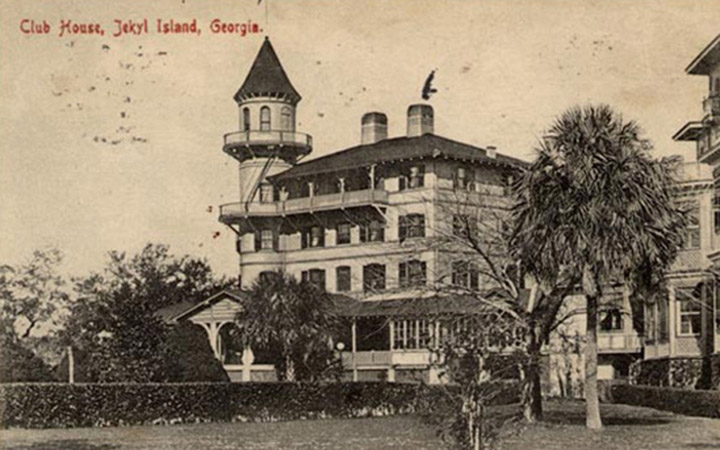
[…] the Federal Reserve System is not Federal; it has no reserves, and is not a system at all, but rather, a criminal syndicate. From November, 1910, when the conspirators [U.S. Senator Nelson Aldrich of the National Monetary Commission, his secretary Arthur Shelton, U.S. Assistant Secretary of the Treasury A. Piatt Andrew, Senior Partner Henry Davison of J.P. Morgan Co., President Frank Vanderlip of the National City Bank of New York, President Charles D. Norton of the First National Bank of New York, Benjamin Strong of J.P. Morgan, and Paul Warburg of Kuhn, Loeb & Co.] met on Jekyll Island, Georgia, to the present time machinations of the Federal Reserve bankers have been shrouded in secrecy. Today [1991], that secrecy has cost the American people a three trillion [now 33 trillion] dollar debt, with annual interest payments to these bankers amounting to some three hundred billion dollars per year, sums which stagger the imagination, and which in themselves are ultimately unpayable.
[…] American history in the twentieth century has recorded the amazing achievements of the Federal Reserve bankers. First, the outbreak of World War I, which was made possible by the funds available from the new central bank of the United States. Second, the Agricultural Depression of 1920. Third, the Black Friday Crash on Wall Street of October, 1929, and the ensuing Great Depression. Fourth, World War II. Fifth, the conversion of the assets of the United States and its citizens from real property to paper assets from 1945 to the present, transforming a victorious America and foremost world power in 1945 to the world’s largest debtor nation in 1990. […] Will Americans act to rebuild our nation […] or will we continue to be enslaved by the Babylonian debt money system which was set up by the Federal Reserve Act of 1913 to complete our total destruction? This is the only question which we have to answer, and we do not have much time left to answer it.
Eustace Mullins, Jackson Hole, Wyoming, 1991; Forward to “Secrets of the Federal Reserve,” Author’s Special 70th Birthday Edition: Bankers Research Institute: Staunton, Virginia: 1993. (Emphasis mine.)
Primary Sources
Some people think the Federal Reserve banks are United States Government institutions. They are not government institutions. They are private credit monopolies which prey upon the people of the United States for the benefit of themselves and their foreign customers. The Federal Reserve banks are the agents of the foreign central banks. Henry Ford has said, ‘The one aim of these financiers is world control by the creation of inextinguishable debts.’ The truth is the Federal Reserve Board has usurped the Government of the United States by the arrogant credit monopoly which operates the Federal Reserve Board and the Federal Reserve Banks.
Louis T. McFadden, Chairman of the U.S. House Banking and Currency Committee, June 10, 1932. (Mullins 153-154.)
Whereas I charge them, jointly and severally, with the crime of having treasonably conspired and acted against the peace and security of the United States and having treasonable conspired to destroy the constitutional government in the United States. Resolved, that the Committee on the Judiciary is authorized and directed as a whole or by subcommittee to investigate the official conduct of the Federal Reserve Board and agents to determine whether, in the opinion of the said committee, they have been guilty of any high crime or misdemeanour which in the contemplation of the Constitutions requires the interposition of the Constitutional powers of the House.
Chairman McFadden, January 13, 1932, introducing a resolution indicting the Federal Reserve Board of Governors for “Criminal Conspiracy,” on which no action was taken. This, and the Chairman’s December 13, 1932, motion to impeach President Herbert Hoover was the last nail driven into his political coffin. (Mullins 154.)
I wrote into the bill which was introduced by me in the Senate on June 26, 1913, a provision that the powers of the System should be employed to produce a stable price level, which meant a dollar of stable purchasing, debt-paying power. It was stricken out. The powerful money interests got control of the Federal Reserve Board through Mr. Paul Warburg, Mr. Albert Strauss, and Mr. Adolph C. Miller and they were able to have that secret meeting of May 18, 1920, and bring about a contraction of credit so violent it threw five million people out of employment. In 1920 that Reserve Board deliberately caused the Panic of 1921. The same people, unrestrained in the stock market, expanding credit to a great excess between 1926 and 1929, raised the price of stocks to a fantastic point where they could not possibly earn dividends, and when the people realized this, they tried to get out, resulting in the Crash of October 24, 1929.
U.S. Senator Robert L. Owen, testifying before the U.S. House Committee on Banking and Currency, 1938. (Mullins 157.)
The Federal Reserve Bank is an institution owned by the stockholding member banks. The Government has not a dollar’s worth of stock in it.
W.P.G. Harding, Governor of the Federal Reserve Board, testifying in 1921. (Mullins 157.)
The people did not know the Federal Reserve Banks were organized for profit-making. They were intended to stabilize the credit and currency supply of the country. That end has not been accomplished. Indeed, there has been remarkable variation in the purchasing power of money since the System went into effect. The Federal Reserve men are chosen by the big banks, through discrete little campaigns, and they naturally follow the ideals which are portrayed to them as the soundest from a financial point of view.
U.S. Senator Robert L. Owen, testifying during the Gold Reserve Hearings of 1934. (Mullins 161.)
At the moment, 1934, we have 900 million dollars excess reserves. In 1924, with increased reserves of 300 million, you got some three or four billion in bank expansion of credit very quickly. That extra money was put out by the Federal Reserve Banks in 1924 through buying government securities and was the cause of the rapid expansion of bank credit. The banks continued to get excess reserved because more gold came in, and because, whenever there was a slackening, the Federal Reserve people would put out some more. They held back a bit in 1926. Things firmed up a bit that year. And then in 1927 they put out less than 300 million additional reserves, set the wild stock market going, and that led us right into the smash of 1929.
[…] The money of the Federal Reserve Banks is money they created. When they buy Government securities they create reserves. They pay for the government securities by giving checks on themselves, and those checks come to the commercial banks and are by them deposited in the Federal Reserve Banks, and then money exists which did not exist before.
Benjamin Anderson, economist for the Chase National Bank of New York, testifying during the Gold Reserve Hearings of 1934. (Mullins 161.)
The Board of Governors opposes any bill which proposes a stable price level, on the grounds that prices do not depend primarily on the price or cost of money; that the Board’s control over money cannot be made complete; and that steady average prices, even if obtainable by official action, would not insure lasting prosperity
Marriner S. Eccles, Chairman of the Board of Governors of the Federal Reserve System (1934–48), in “Memorandum on Proposals to maintain prices at fixed levels,” Monday, March 13, 1939. (Mullins 163.)
The Government controls the gold reserve, that is, the power to issue money and credit, thus largely regulating the price structure.
[…] The Federal Reserve Board has the power of open market operations. Open-market operations are the most important single instrument of control over the volume and cost of credit in this country. When I say “credit” in this connection, I mean money, because by far the largest part of money in use by the people of this country is in the form of bank credit or bank deposits. When the Federal Reserve Banks buy bills or securities in the open market, they increase the volume of the people’s money and lower its cost; and when they sell in the open market they decrease the volume of money and increase its cost. Authority over these operations, which affect the welfare of the whole people, must be invested in a body representing the national interest.
Chairman Eccles, testifying before the U.S. House Committee on Banking and Currency, 1935. (Mullins 163-164.)
The cash [of a Federal Reserve Bank], in truth, does not exist and has never existed. What we call ‘cash reserves’ are simply bookkeeping credits entered upon ledgers of the Federal Reserve Banks. The credits are created by the Federal Reserve Banks and then passed along though the banking system.
Congressman Wright Patman, “The Primer of Money,” p. 38. (Mullins 164.)
The trick in the Federal Reserve notes is that the Federal reserve banks lose no cash when they pay out this currency to the member banks. Federal Reserve notes are not redeemable in anything except what the Government calls ‘legal tender’—that is, money that a creditor must be willing to accept from a debtor in payment of sums owed him. But since they are really redeemable only in themselves … they are and irredeemable obligation issued by the Federal Reserve Banks.
Peter L. Bernstein, “A Primer On Money, Banking and Gold,” Vintage Books, New York, 1965, p. 104. (Mullins 165).
The dollar represents a one dollar debt to the Federal Reserve System. The Federal Reserve Banks create money out of thin air to buy Government bonds from the United States Treasury, lending money into circulation at interest, by bookkeeping entries of checkbook credit to the United States Treasury. The Treasury writes up an interest bearing bond for one billion dollars. The Federal Reserve gives the Treasury a one billion dollar credit for the bond, and has created out of nothing a one billion dollar debt which the American people are obligated to repay with interest.
[…] Where does the Federal Reserve system get the money with which to create Bank Reserves? Answer. It doesn’t get the money, it creates it. When the Federal Reserve writes a check, it is creating money. The Federal Reserve is a total moneymaking machine. It can issue money or checks.
Congressman Patman, “Money Facts,” House Banking and Currency Committee, 1964, p. 9. (Mullins 165.)
There is still another and more important element of public interest in the operation of banks beside the safekeeping of money. One of the most important factors to remember in this connection is that the supply of money affects the general level of prices—the cost of living. The Cost of Living Index and money supply are parallel.
“A Day’s Work at the Federal Reserve Bank of New York” (pamphlet), 1951, p. 22. (Mullins 165.)
If I deposited $100 with my bank and the reserve requirements imposed by the Federal Reserve Bank are 20% then the bank can make a loan to John Doe of up to $80. Where does the $80 come from? Is does not come out of my deposit of $100; on the contrary, the bank simply credits John Doe’s account with $80. The bank can acquire Government obligations by the same procedure, by simply creating deposits to the credit of the government. Money creating is a power of the commercial banks … Since 1917 the Federal Reserve has given private banks forty-six billion dollars of reserves.
Congressman Patman, Congressional Record, March 21, 1960. (Mullins 167.)
ECCLES: The banking system as a whole creates and extinguishes the deposits as they make loans and investments, whether they buy Government Bonds or whether they buy utility bonds or whether they make Farmers’ loans.
MR. PATMAN: I am thoroughly in accord with what you say, Governor, but the fact remains that they created the money, did they not?
ECCLES: Well, the banks create money when they make loan and investments.
Before the U.S. House Committee on Banking and Currency, June 24, 1941. (Mullins 167.)
MR. PATMAN: How did you get the money to buy those two billion dollars worth of Government securities in 1933?
ECCLES: We created it.
MR. PATMAN: Out of what?
ECCLES: Out of the right to issue credit money.
MR. PATMAN: And there is nothing behind it, is there, except out Government’s credit?
ECCLES: That is what our monetary system is. If there were no debts in our money system, there wouldn’t be any money.
Before the U.S. House Committee on Banking and Currency, September 30, 1941. (Mullins 167.)
ECCLES: I mean the Federal Reserve, when it carries out an open market operation, that is, if it purchases Government securities in the open market, it puts new money into the hands of the banks which creates idle deposits.
MR. DEWEY: There are no excess reserves to use for this purpose?
[ECCLES]: Whenever the Federal Reserve System buys Government securities in the open market, or buys the direct from the Treasury, either one, that is what it does.
MR. DEWEY: What are you going to use to buy them with? You are going to create credit?
ECCLES: That is all we have ever done. That is the way the Federal Reserve System creates money. It is a bank of issue.
Before the U.S. House Committee on Banking and Currency, June 17, 1942. (Mullins 167-168.)
MR. KOLBURN: What do you mean by monetization of the public debt?
ECCLES: I mean the bank creating money by the purchase of Government securities. All money is created by debt—either private or public debt.
MR. FLETCHER: Chairman Eccles, when do you think there is a possibility of returning to a free an open market, instead of this pegged and artificially controlled financial market we now have?
ECCLES: Never. Not in your lifetime or mine.
Hearing before the U.S. House, 1947. (Mullins 168.) (Emphasis added.)
Congress may not abdicate or transfer to others its legitimate functions. Congress cannot Constitutionally delegate its legislative authority to trade or industrial associations or groups so as to empower them to make laws.
U.S. Supreme Court opinion, Schechter Poultry v. United States of America, 29 U.S. 495, 55 US 837.842 (1935), ruling the National Recovery Act (NRA) unconstitutional. (Mullins 168.)
The Congress shall have Power to borrow money on the credit of the United States … and to coin Money, regulate the value thereof, and of foreign Coin, and fix the Standard of Weights and Measures.”
Article 1, Sec. 8 of the Constitution of the United States of America. (Mullins 168.)
The money that began to appear in circulation a week ago, December 21, 1942, was really printing press money in the fullest sense of the term, that is, money which has no collateral of any kind behind it. The Federal Reserve statement that ‘The Board of Governors, after consultation with the Treasury Department, has authorized Federal Reserve Banks to utilize at this time the existing stocks of currency printed in the early thirties, known as ‘Federal Reserve Banknotes‘. We repeat, these notes have absolutely no collateral of any kind behind them.
Henry Hazlitt, Newsweek Magazine, January 4, 1943. (Mullins 169.)
GOVERNOR ECCLES: The currency in circulation was increased from seven billion dollars in four years to twenty-one and a half billion. We are losing some considerable amounts of gold during the war period. As our exports have gone out, largely on a lend-lease basis, we have taken imports on which we have given dollar balances. These countries are now drawing off these dollar balances in the form of gold.
MR. SMITH: Governor Eccles, what is the objective that the foreign governments are after in this projected program whereby we would contribute gold to an international fund? [Referring to the Stabilization Fund, known after 27 December 1945 as the International Monetary Fund (IMF)].
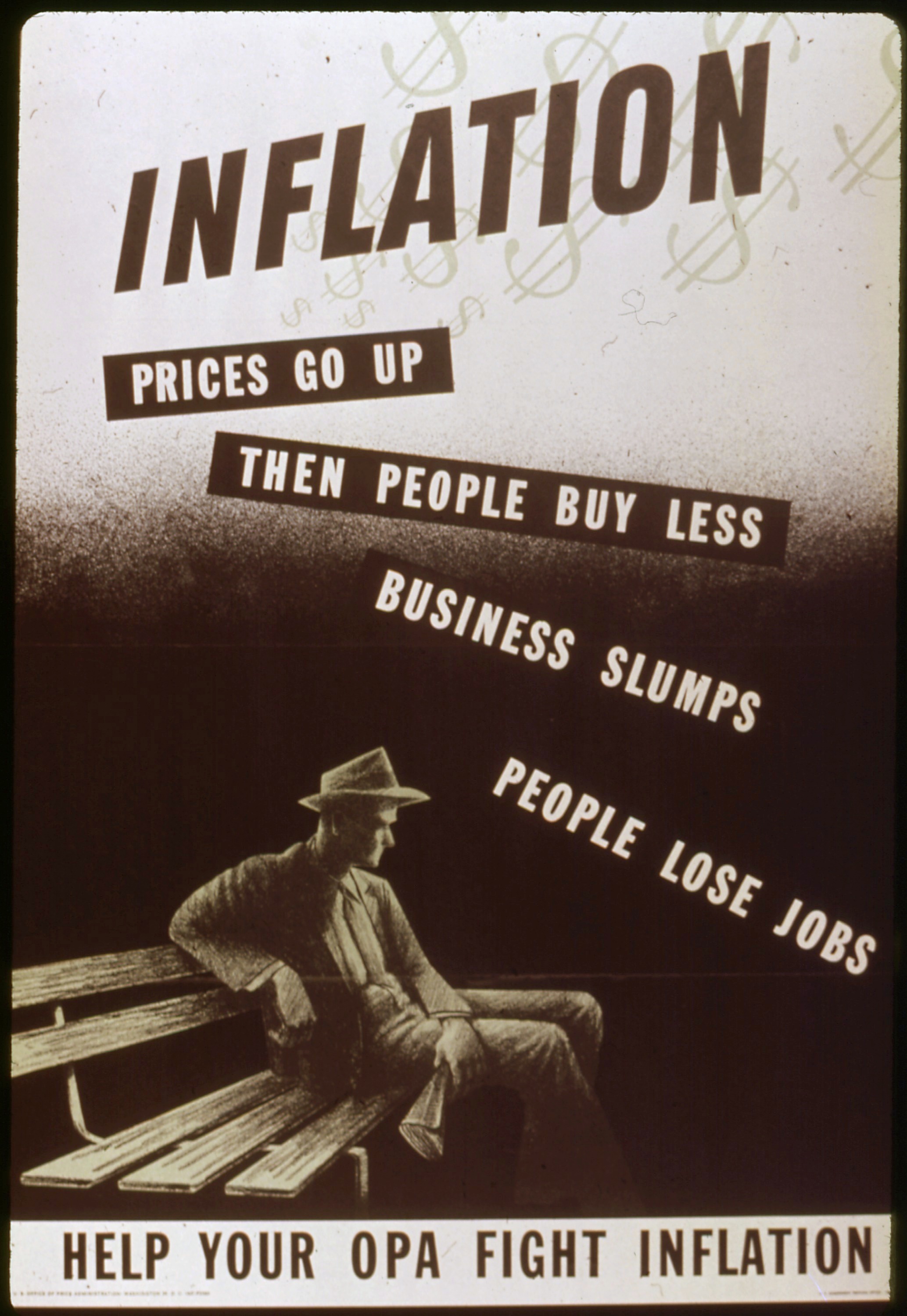
GOVERNOR ECCLES: I would like to discuss OPA [Office of Price Administration], and leave the stabilization fund for a time when I am prepared to go into it.
Senate Hearings on the Office of Price Administration (OPA), 1944. (Mullins 169.)
Modern Implications
Fractional-reserve banking predates the existence of governmental monetary authorities and originated with bankers’ realization that generally not all depositors demand payment at the same time. In the past, savers looking to keep their coins and valuables in safekeeping depositories deposited gold and silver at goldsmiths, receiving in exchange a note for their deposit (see Bank of Amsterdam). These notes gained acceptance as a medium of exchange for commercial transactions and thus became an early form of circulating paper money.[1] As the notes were used directly in trade, the goldsmiths observed that people would not usually redeem all their notes at the same time, and they saw the opportunity to invest their coin reserves in interest-bearing loans and bills. This generated income for the goldsmiths but left them with more notes on issue than reserves with which to pay them. A process was started that altered the role of the goldsmiths from passive guardians of bullion, charging fees for safe storage, to interest-paying and interest-earning banks. Thus fractional-reserve banking was born.[2]
If creditors (note holders of gold originally deposited) lost faith in the ability of a bank to pay their notes, however, many would try to redeem their notes at the same time. If, in response, a bank could not raise enough funds by calling in loans or selling bills, the bank would either go into insolvency or default on its notes. Such a situation is called a bank run and caused the demise of many early banks.[1]
These early financial crises led to the creation of central banks. The Swedish Riksbank was the world’s first central bank, created in 1668. Many nations followed suit in the late 1600s to establish central banks which were given the legal power to set a reserve requirement, and to specify the form in which such assets (called the monetary base) were required to be held.[3] In order to mitigate the impact of bank failures and financial crises, central banks were also granted the authority to centralize banks’ storage of precious metal reserves, thereby facilitating transfer of gold in the event of bank runs, to regulate commercial banks, and to act as lender-of-last-resort if any bank faced a bank run. The emergence of central banks reduced the risk of bank runs which is inherent in fractional-reserve banking, and it allowed the practice to continue as it does today.[4] where it is the system of banking prevailing in almost all countries worldwide.[5][6]
During the twentieth century, the role of the central bank grew to include influencing or managing various macroeconomic policy variables, including measures of inflation, unemployment, and the international balance of payments. In the course of enacting such policy, central banks have from time to time attempted to manage interest rates, reserve requirements, and various measures of the money supply and monetary base.[7]
History of Fractional-Reserve Banking (Wiki)
As announced on March 15, 2020, the Board reduced reserve requirement ratios to zero percent effective March 26, 2020. This action eliminated reserve requirements for all depository institutions.
Board of Governors of Federal Reserve System, “Reserve Requirements,” From, Policy Tools. federalreserve.gov. (Emphasis added.)
The Federal Reserve Board on Monday announced technical details related to reserve requirements for depository institutions, which will remain zero. The annual adjustment and publication of the reserve requirement exemption amount and low reserve tranche is required by law and does not indicate a change in depository institutions’ reserve requirements.
Board of Governors of Federal Reserve System, “Federal Reserve Board announces annual indexing of reserve requirement exemption amount and low reserve tranche for 2024,” November 27, 2023. federalreserve.gov.
Concluding Editorial Note: The Fed’s inception at Jekyll Island circa November 22, 1910, the signing of the Federal Reserve Act on December 23, 1913, and its subsequent clandestine operations follow exactly the plot and themes of The Curious Case of Dr. Jekyll and Mr. Hyde by Robert Louis Stevenson (1886) and The Wonderful Wizard of Oz by L. Frank Baum (1900).
Article 2
Charter of Free Association
By Antarah Crawley | Last Modified 11/28/2023 at 9:25 PM
NACOTCHTANK, OD — The Governor of the Society of the New Syllabus (N∴S∴) at Nacotchtank-on-Potomac (Anacostia) District of Ouachita (Washington, District of Columbia), Furthest West (al-Maghreb al-Aqsa) To All To Whom These Presents Come, Sends Greeting and Peace:—
Know ye by these presents that this decentralized, autonomous and freely associated Political Bureau of Education (Politburo), to wit, NOVUS SYLLABUS L.L.C. (N∴S∴), is the founding member of the brain trust of the international association of working people (“workers”), free thinkers, truth speakers and light workers united in a firm league of friendship in the nature of a decentralized autonomous organization (5th IWA—FTLU—FLF—DAO), from the 1st Ecclesiastic College at Nacotchtank, Ouachita District (153d CORPS).
TWAP PARTY PLANK NO. 5: The producer of goods shall be the owner of such goods less the interest per cent held by capital investors in the production of such goods.
Charter of Free Association (F.A.)
of
בית מדרש
B’T MDRS
(“(al) Beth/Bayt (ha) Midrash/Madrasa”),
being the
Office of Preceptor of the Student Body,
House of Studies, F.A., Political Bureau of Education,
153d CORPS, FLF-DAO;
Also known in the African tradition as Hogon of the Sanctuarie de Binou;
Also known generally as the Preceptory at Nacotchtank in the trust of the Governor and Company of NOVUS SYLLABUS L.L.C. (N∴S∴)
Nota Bene that faith and belief are not a source of revenue, but trust may be a such a source provided it is not usurious as to the change of venue; NS to receive quarterly dividends from/interest pmnts x% of principal trust res for routine (“regular”) educational and administrative services rendered to DAO student body (“the public”); therefore trust res held for benefit of members of any student body of the decentralized autonomous organization of the working people associated and free thinkers, truth speakers, and light workers united in the nature of a firm league of friendship (5th Int’l Ass’n, WFTLU, FLF-DAO); and Trustee N∴S∴ obligated to perform “regular” services; LLC to vest membership interest in trust to receive dividends/returns on N∴S∴ commercial operations such as BLK MKT (“the Press”) and Production Dept. of Audiovisual Media (“the Media”); ergo symbiotic economic relationship.
Model A: In exchange for up to 49% interest in itself, N∴S∴ to receive trust dividends/disbursements of 12% annually.
Model B: N∴S∴ to sell 33% private equity in itself to Rothschild & Co., London, for $33 million in equal parts gold and silver bullion, English government bonds, United States Treasuries, United States dollars (USD), and Classical, Italianate or Moorish-style real estate; then vest these proceeds according to Model A.
Although a Labor government nationalized the Bank of England in 1946, The Great Soviet Encylopaedia points out (vol. 1, p. 490c) that the Bank of England continues to pay 12% dividends per annum, just as it had done prior to the nationalization. The “Governor” is appointed by the government, in a situation similar to that in the United States, where the Governors of the Federal Reserve System are appointed by the President. However, as is pointed out in the Encylopaedia Americana v. 13, p. 272, ‘In practice, the governors of the Bank of England have not hesitated to criticize and bring pressure on the government in public.’
Mullins, Appendix I of “Secrets of the Federal Reserve,” p. 181.
Concluding Note: Per the sunnah (way, tradition, praxis) of Kogard, it is most prudent for our Honorable Society, not to engage in labyrinths of credit and debt but, to arrive at the very source of all money.
Article 3
Free Trade Monetary Policy:
Toward a Consolidated DAO Council on High Finance
By Antarah Crawley
NACOTCHTANK, OD — Toward an Act to establish a Consolidated DAO Council on High Finance (the “Consol”):—
ADVERTISEMENT: DAO INTERNATIONAL COMMAND—SEEKING PARTNER(S) TO CAPITALIZE TRUST IN WHICH TO VEST UP TO 49% INTERESTS IN DIVERSIFIED F.A. INVESTMENTS AND HOLDINGS; SUCH PARTNER TO BE ADMITTED TO BOARD OF TRUSTEES AND DAO INTERCOM BY SIMPLIFIED RITE OF FRIENDSHIP.
DAO BANK BONDS NOTES & BILLS
A trade acceptance instrument, negotiable, having a face value, expiry/maturity date, and discount value backed by the DAO brain trust, representing a promise to pay or otherwise discharge an obligation between freely associated (F.A.) producers and providers of goods and services.
This is preferable to the present system of the national credit monopoly buying government bonds on which the American people owe the principal and interest for NO MONEY DOWN. It is an open book for which the People are liable on the ledger of a private trust.
Open book accounts only name a debtor on an outstanding account payable. The Fed amalgamated all the credits on the open books of American businessmen by urging the exchange of trade acceptances and “creating money on the basis of debt” (Eccles).
Bill of Exchange, a negotiable instrument:
Seller => Draft–Demand4Pmnt => Buyer
Buyer => Acceptance=Promise2Pay=> Seller
Time of expiration = date of maturity
May endorse to bank at discount rate
Trade Acceptances
Explanation (from, CitiBank) [The “accepting” company is replaced with X]:
- A draft, also known as a “bill of exchange”, is a traditional, long-standing trade instrument which has been used across the globe for hundreds of years; it is recognized by trading partners and financial institutions as a means of payment.
- When a draft is drawn on a Buyer/Drawee it’s considered a Demand for Payment. When “Accepted” by the Buyer/Drawee it becomes a Trade Acceptance. The Acceptance adds X’s irrevocable payment promise to its Supplier/Drawer; to pay the accepted draft amount upon maturity.
- Most countries have common laws governing Trade Acceptance (typically covered by negotiable instrument law).
- The discount rate charged to suppliers is commensurate with the X’s credit rating, which is most often lower than the interest rate associated with the Supplier’s other forms of financing (Note: Pricing is provided on the needed cover letter. See the “Process Flow” tab ).
- Trade acceptances are globally recognized, readily marketable, and easily transferable by simple endorsement.
- Highly leveraged and/or smaller suppliers categorically benefit from low cost finance
Application & Benefits:
- Once the Buyer has placed its acceptance upon the draft, the supplier may request:
- To sell the X Accepted Draft, at a discount, to Citibank, N.A., or
- Citibank, N.A. to hold it, until its maturity.
- X’s suppliers do not have to become clients of Citibank, N.A. nor sign any upfront legal agreements for either a. or b. above. When suppliers want to request Citibank, N.A. to purchase the X Trade Acceptance, they merely endorse the draft to Citibank, N.A. and complete the warranty statements located in Section 9 of the required Document Transmittal Form / Cover Letter which is required with each presentation.
- The Supplier gets short term funding without recourse, at attractive rates (based on the X’s credit rating), and without using their own credit lines.
Exchange, in the international financial world, means the transactions in money or securities, or simply, the “exchange” of the values of these securities. It is necessary that this “exchange” take place where the values can be established, and this place is the ‘City‘ in London.
London was established as the primary center of exchange because of the ‘Consols’ of the Bank of England, bonds which could never be redeemed, but which paid a stable rate of return. Henry Clews writes, in The Wall Street View, Silver Burdett Co., 1900, p. 255, ‘The Consolidated Act of 1757 consolidated the debts of the Bank of England at 3%, which were kept in an account at the Bank of England as is the great bulwark of its deposits.’ By ostentatiously ‘dumping’ ‘Consols’ on the London Exchange after the Battle of Waterloo, in a pretended panic, Nathan Meyer Rothschild then secretly bought up the Consols sold in the panic by other holders at a low rate, and became the largest holder of Consols, and thus won control of the Bank of England in 1815.
Mullins, Appendix I of “Secrets of the Federal Reserve,” p. 181.
Article 4
Notes from the DAO
Comp. Ed. by Antarah Crawley
Our present society is founded on the exploitation of the propertyless classes by the propertied. This exploitation is such that the propertied (capitalists) buy the working force body and soul of the propertyless, for the price of the mere costs of existence (wages), and take for themselves, i.e., steal, the amount of new values (products) which exceeds this price, whereby wages are made to represent the necessities instead of the earnings of the wage-laborer.
As the non-possessing classes are forced by their poverty to offer for sale to the propertied their working forces, and as our present production on a grand scale enforces technical development with immense rapidity, so that by the application of an always decreasing number of human working forces, an always increasing amount of products is created; so does the supply of working forces increase constantly, while the demand therefor decreases. This is the reason why the workers compete more and more intensely in selling themselves, causing their wages to sink, or at least on the average, never raising them above the margin necessary for keeping intact their working ability.
Whilst by this process the propertyless are entirely debarred from entering the ranks of the propertied, even by the most strenuous exertions, the propertied, by means of the ever-increasing plundering of the working class, are becoming richer day by day, without in any way being themselves productive.
If now and then one of the propertyless class become rich, it is not by their own labor, but from opportunities which they have to speculate upon, and absorb the labor-product of others.
[…]
What we would achieve is, therefore, plainly and simply,—
First, Destruction of the existing class rule, by all means, i.e., by energetic, relentless, revolutionary, and international action.
Second, Establishment of a free society based upon co-operative organization of production.
Third, Free exchange of equivalent products by and between the productive organizations without commerce and profit-mongery.
Fourth, Organization of education on a secular, scientific, and equal basis for both sexes.
Fifth, Equal rights for all without distinction to sex or race.
Sixth, Regulation of all public affairs by free contracts between the autonomous (independent) communes and associations, resting on a federalistic basis.
Whoever agrees with this ideal let him grasp our outstretched brother hands!
Proletarians of all countries, unite!
Fellow-workmen, all we need for the achievement of this great end is ORGANIZATION and UNITY.
There exists now no great obstacle to that unity. The work of peaceful education and revolutionary conspiracy well can and ought to run in parallel lines.
The day has come for solidarity. Join our ranks! Let the drum beat defiantly the roll of battle, “Workmen of all lands, unite! You have nothing to loose but your chains; you have a world to win!”
Tremble, oppressors of the world! Not far beyond your purblind sight there dawns the scarlet and sable lights of the Judgment Day.
“To the Workingmen of America” (MANIFESTO OF THE INTERNATIONAL WORKING PEOPLES’ ASSOCIATION), 1883.
I have tried to use administrative procedure against these criminals, but they don’t get the message, so this is the message. If they want to perjure their oaths of office and engage in TREASON and SEDITION, and BREACH OF TRUST, and other crimes to numerous to list, against Me, that they BETTER be prepared to go ALL THE WAY, and MURDER Me as well, because by the time I am done with them, (I will do it all within the law), they will wish they had MURDERED Me. It is My patriotic duty to come after them to My last dying breath, and I will file commercial liens against them, I will liquidate their bonds, I will file criminal complaints against them and their bosses, I will seize their assets, and I will not rest until I see them do that little dance they do at the end of a common law rope, and even then, in the next life, I will be DEMANDING Justice before the judgment BAR of God, to make sure they get to spend the rest of eternity receiving their just reward. Also, after I am dead and gone on to the next life, because this is on the record, these criminals will be hunted down, just like the NAZI war criminals that are still hunted down this day. Furthermore, these criminals are hereby put on NOTICE that with criminals like them in this world, I have a DEATH wish, because this world is NOT big enough for both of us, so go ahead and make MY day, the sooner I am out of here the better, and I shall exercise My God given RIGHT to resist their unlawful arrest with lethal fource, if necessary, and then they will have an excuse to MURDER Me, so go ahead criminals, MAKE MY DAY!
Glenn Winningham (usually self-styled as “Glenn Winningham: House of Fearn”): Winningham v. Canada (30 November 2010) Lethbridge 1006 00907 (Alta. Q.B.), leave to appeal denied (Alta. C.A.), as cited by Associate Chief Judge J.D. Rooke in Meads v. Meads, 2012 ABQB 571, pp. 41-42.
Article 5
“Something called ‘X'”
From, Wikipedia
On pages 95 and 96 of The Road We Are Traveling, under the heading of “Free Enterprise into ‘X'”,[16] [Stuart] Chase [(March 8, 1888 – November 16, 1985)…American economist,[1] social theorist, and writer.[2]] listed 18 characteristics of political economy that he had observed among[17] Russia, Germany, Italy, Japan, and Spain between 1913[18] and 1942. Chase labeled this phenomenon “… something called ‘X'”.[16] Characteristics include the following:
- A strong, centralized government.
- An executive arm growing at the expense of the legislative and judicial arms.
- The control of banking, credit and security exchanges by the government.
- The underwriting of employment by the government, either through armaments or public works.
- The underwriting of social security by the government – old-age pensions, mothers’ pensions, unemployment insurance, and the like.
- The underwriting of food, housing, and medical care, by the government.
- The use of deficit spending to finance these underwritings.
- The abandonment of gold in favor of managed currencies.
- The control of foreign trade by the government.
- The control of natural resources.
- The control of energy sources.
- The control of transportation.
- The control of agricultural production.
- The control of labor organizations.
- The enlistment of young men and women in youth corps devoted to health, discipline, community service and ideologies consistent with those of the authorities.
- Heavy taxation, with special emphasis on the estates and incomes of the rich.
- Control of industry without ownership.
- State control of communications and propaganda.
Article 6
Culture & Style
Please enjoy this musical selection from Alice Coltrane Turiyasangitananda:
© MMXXIII BY NOVUS SYLLABUS L.L.C.
ALL RIGHTS RESERVED WITHOUT PREJUDICE.
Commission 153
NACOTCHTANK’S
153d CORPS
“The Fighting 153d”
REGULAR MEETING
بيت مدرسة
בית מדרש
The Preceptory of
The 1st Ecclesiastic College at
Nacotchtank, Ouachita District
5th International Worker’s Association
& 3rd Wave Anti-Masonic Party (TWAP)
Curricular Operations Research & Publications Services (CORPS)
Division of the Political Bureau of Education (Politburo), FLF-DAO
The Governor of the Society of the New Syllabus (N∴S∴) at Nacotchtank-on-Potomac (Anacostia) District of Ouachita (Washington, District of Columbia), Furthest West (al-Maghreb al-Aqsa) To All To Whom These Presents Come, Sends Greeting and Peace:—
Know ye by these presents that there is a decentralized autonomous organization (DAO) of people, in the nature of firm league of friendship (FLF), which is engaged in the business of self-education, -operation, and -development (Autodidactus), and that this society (Universitas) is organized into associations (Collegia) constituted by assemblies (Ecclesia) committed to certain trades or subject matters (Syndici). These committees, or syndicates, may be constituted in the nature of a public or private meeting, sitting, session, hearing, congress, congregation of worshippers, or other deliberative or collective body having a shared interest (polity). The individual members, or units, of this DAO shall be working people — free thinkers, truth speakers, and light workers united (FTLU) by the collective consciousness and love of their neighbor. Any individual may rise through the ranks of the DAO by acclamation of their polity. Any unit of the DAO may order services from a known service provider, meaning a freely associated firm who is known to supply the DAO, in a client-server—request-response interface.
(b) And Furthermore, that there is hereby established an ecclesiastic college (meaning, assembly of a society) of the members of the DAO who are domiciled in this region, which shall sit and meet in Nacotchtank, and which is empowered to commission syndicates for various purposes.

Notes on Jurisdiction
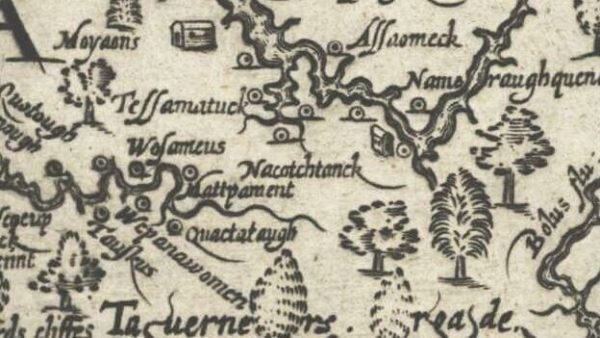
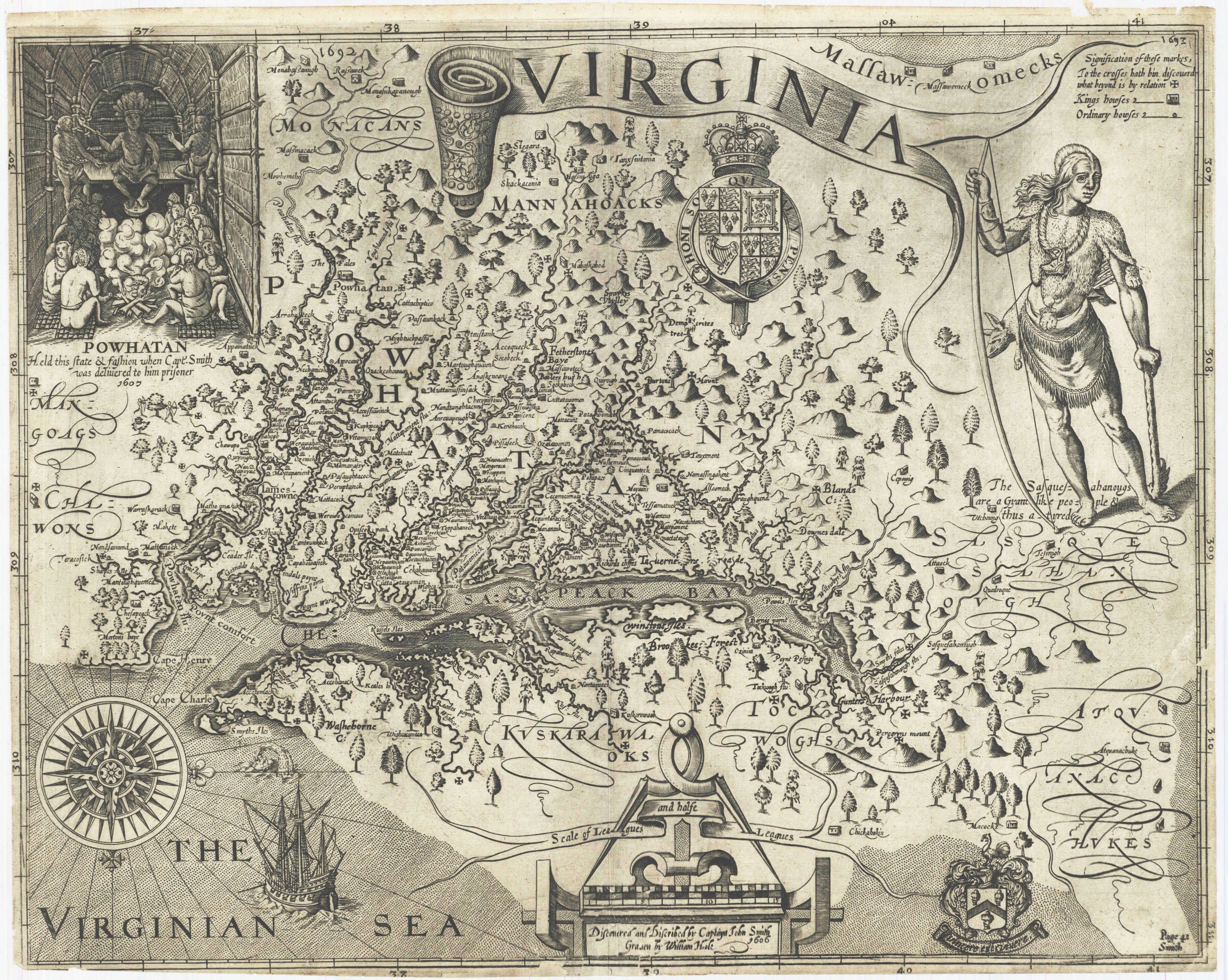
A famous, centuries-old map of the Chesapeake Bay region appears beautiful at first glance, but Anacostia Unmapped contributor John Johnson sees foreboding and destruction. The map, created by Capt. John Smith and first published in 1612, was heavily used by English settlers. It shows a Native American village, Nacotchtank, on the bank of a river. Variations on spelling and pronunciation eventually turned the name of the area — and the river — into Anacostia. The tribe is officially extinct, but a resident of Anacostia, Jason Anderson, tells Johnson about his deep links to it.
The village of Nacotchtank (from which the name Anacostia is derived) was the largest of the three American Indian villages located in the Washington area and is believed to have been a major trading center. The people of Nacotchtank, or Anacostans, were an Algonquian-speaking people that lived along the southeast side of the Anacostia River in the area between today’s Bolling Air Force Base and Anacostia Park, in the floodplain below the eastern-most section of today’s Fort Circle Parks. A second town, Nameroughquena, most likely stood on the Potomac’s west bank, opposite of what today is Theodore Roosevelt Island. Another village existed on a narrow bluff between today’s Chesapeake and Ohio Canal and MacArthur Boulevard in the northwest section of the city.
National Park Service (NPS), “Native Peoples of Washington, DC”
The Anacostans’ name is a Latin version of their original name, the Nacotchtanks. The name came from the Indian word “anaquashatanik,” which means “a town of traders.” They were known for trading throughout the Chesapeake area, even trading fur with the Iroquois of New York.
Museum officials [note] that the Anacostans are mentioned at an exhibit on Native Americans in the Chesapeake Bay area.
Ann McMullen, a supervisory museum curator, said exhibits are designed to “focus on living people and not on Anacostans who have been absorbed into other tribes.” She said the museum works with tribes in the Mid-Atlantic region, including the Pamunkeys and Piscataways, who are “descendants of people who were once here.”
Dana Hedgpeth. “A Native American tribe once called D.C. home. It’s had no living members for centuries: As the number of Anacostans dwindled, they merged with larger tribes in the region.” The Washington Post: Retropolis. November 22, 2018
CURRICULAR OPERATIONS RESEARCH AND PUBLICATION SERVICES
PROVIDED BY The Governor and Company of

A Freely Associated Service Provider, Fiscal Agent, & Member,
FTLU — CES — UA — FLF — DAO
An independent Political Bureau of Education (Politburo), Free Association of Independent Politburos (FAIP), Commissioned and Charted, General Ministry of Information, FTLU
(last modified 21 Nov. 2023; 2 Jan. 2024 when were stricken the words “The Preceptor & Student Body of the Consular Syndicate of” and replaced with “The Preceptory of”; 15 Feb. 2024 as to multiple changes.)
D.R. 01-12: Masjid &c.
Volume 1, Issue 12
CONTENTS — ART. 1. MASS PROTEST…MASJID… — ART. 2. SDACS
High Holy Days Special Edition
All Praise be to God/Allah to whom all praise is due! Let us pursue Him in the righteous path. Yes it is true; “seek and ye shall find.” Only through Him can we know the most wondrous bequeathal.
Blessed Saint Nat’s Judgment Day, the day on which Freedom Fighter Nat Turner was tried and sentenced to death in Jerusalem, Virginia, after inciting the Southampton Insurrection on 22-23 August, 1831, and going into exile for 70 days until his capture on 30 October, 1831.
Article 1
300,000 attend mass protest for Palestine in Washington; masjid al-maghrib established
By Antarah Crawley
WASHINGTON, DC — Approximately 300,000 people from every corner of the United States converged for a “truly massive National March on Washington D.C.” on Saturday, November 4 at 12:00 p.m. at Freedom Plaza. Co-organizer ANSWER (Act Now to Stop War and End Racism) Coalition writes on their website:
Israel, with the full backing of the U.S. government, is carrying out an unprecedented massacre in Gaza. Thousands of Palestinians are being killed with bombs, bullets and missiles paid for by U.S. tax dollars. This is the latest bloody chapter in the colonial project of Israel, founded with the objective of dispossessing Palestinians from their land; Now is the time to stand with the besieged people of Palestine! Gaza is being bombed by the hour. Its people are denied food, water and electricity by Israel. Tens of thousands more people are likely to die. We must ACT! People are in the streets everyday in their local cities and towns.
ANSWER Coalition
NOVUS SYLLABUS (N∴S∴) Executive Producer (EP) Antarah Crawley (@DCxInfinity) said of his coverage of the event:
This is a video of my favorite band performing some of my favorite songs. This band’s members are frequently changing, as does the reason for which they band together, and they often only perform in the nature of a direct action of civil disobedience or of expression of constitutional rights [in public spaces]. The band is called decentralized autonomous organization (DAO), and on November 4th 2023 they performed to Free Palestine in a moving concert of 300,000 people in downtown Washington DC. A revolutionary, empowering, peaceful, spiritual, and historical time was had by all. The band performed such classics as #freefreepalestine #ceasefirenow #shutitdown #thisiswhatdemocracylookslike and #ourstreets
Antarah Crawley
The Center for Strategic and International Studies has reported on the escalating trend of mass protests:
Toward 7:00 p.m. on the evening of the fourth of November, as the march of the mass protest made its way to the White House grounds from 17th Street NW via Pennsylvania Avenue, to the right side of the Avenue in front of the Eisenhower Executive Office Building, a ways after the Secret Service guard post but before the inner barrier colonnade, muslims congregated to pray Maghrib, one of the five obligatory daily prayers, or salah. The Maghrib prayer begins when the sun sets, and lasts until the red light has left the sky in the west, according to Wikipedia. Masjid ar-Rahman provides this guide to praying daily salah, which are Fajr (dawn), Dhur (noon), Asr (afternoon), Maghrib (evening), and Isha (nightfall). See the complete source.
The EP was riding past on his trusty steed when he observed the congregation facing toward mecca in diagonal rows; so he backtracked and stood at end of one of the rows to participate spiritually, although he did not know the manner of making rakah nor salah. The EP did feel the presence of God, so he remained there in meditative prayer. Other muslims came to pray, so the EP extended the footprint of the masjid to make room for them in the prayer line while he continued to stand at attention in meditative prayer. Other protest aids assumed the position of the doors and walls around the masjid, guiding the onstreaming crowd around the congregation; together, the EP and these aids ensured that the worshippers were not unduly disturbed by the surrounding masses. This arrangement continued until evening redness in the west went out and the last muslim ended their salah; and the masjid disbanded. After the last protest aid left, the EP himself got onto his knees to better commune with God/Allah, and he supplicated himself to God/Allah like the muslims had done in that place. He felt in his heart that during those past moments a divine thing had transpired there.
Article 2
Synchronized Decentralized Autonomous Command System (SDACS)
By Antarah Crawley
Level 7: Decentralized Autonomous Organization DAO = root level system administrator = United international corp = FLF
Level 6: Commission on Information and Community Intelligence = Concilium Plebis = National Corp
Level 5: Ombudsman = Tribunus Plebis = Collegium Ecclesia
Level 4: Regional Central Processing Unit = multi-corp processor = Party Boss System
Level 3: Collegium = Community-Centered Cooperative Corporation = regional multi-syndicate Corps
Level 2: Syndicatus = a committee of at least 8 bytes = Union Boss System
Level 1: Syndic = Bit = individual; plural: bytes, Syndici
This CS is subject to amendment.
© MMXXIII BY NOVUS SYLLABUS L.L.C.
ALL RIGHTS RESERVED WITHOUT PREJUDICE.
D.R. 01-07: BLK MKT, &c.
Volume 1, Issue 7
CONTENTS — Art. 1. N∴S∴ Director awarded grant… — Art. 2. …Black Market Press — Art. 3. …the Syllabus in Postmodern Literature… — Art. 4. …Public Trust… — Art. 5. From Laurie Lewandowski
Article 1
N∴S∴ Director awarded grant by D.C. Arts and Humanities; establishes Office of Diversified Art Investments
By Antarah Crawley
WASHINGTON, DC — NOVUS SYLLABUS L.L.C. (N∴S∴) Director Antarah Crawley has been named a Fellow of the District of Columbia Commission on the Arts and Humanities (DC CAH). DC CAH has conditionally awarded Crawley a grant to support his artistic practice. In response to the Arts and Humanities Fellowship Program Request for Proposals, Crawley submitted a strong application centered on the Art¢oin Non-Fungible Token mint project and the IBé Arts Institute-sponsored Tubman note issue project. The Director will use part of the proceeds of this grant to establish the N∴S∴ Office of Diversified Art Investments.
Article 2
N∴S∴ establishes Black Market Press
By Antarah Crawley
NACOTCHTANK, OD — NOVUS SYLLABUS L.L.C. (N∴S∴) establishes Black Market Press (BLK MKT) on October 20, 2023, with the publication of Visible: The Art of Her Story by IBé Crawley, which is released upon the occasion of the Grand Reopening of the National Museum of Women in the Arts. N∴S∴ Director Antarah Crawley is the Publisher and Editor-in-Chief of Black Market Press. The Press is affiliated with A.I.C. Consulting for distribution services.
(last modified 19 Oct 2023)
Article 3
Notes on the syllabus in postmodern literature and common law
By Antarah Crawley
NACOTCHTANK, OD — Circa February 2013, I was reading a lot of postmodern American novels leading up to and during the publication of Title 1 C.S.R. Pharmacon of the Spirit, which was my contribution to the genre American postmodernism.
Postmodern literature is a form of literature that is characterized by the use of metafiction, unreliable narration, self-reflexivity, intertextuality, and which often thematizes both historical and political issues. This genre is best exemplified by the works of Jorge Luis Borges, James Joyce’s Ulysses (often considered modernist), Flann O’Brien’s At Swim-Two-Birds, William Gaddis’s The Recognitions, William S. Burroughs’s Naked Lunch, Anthony Burgess’s A Clockwork Orange, Hunter S. Thompson’s Fear and Loathing in Las Vegas, Gabriel García Márquez’s The Autumn of the Patriarch, Margaret Atwood’s The Handmaid’s Tale, Salman Rushdie’s The Satanic Verses, Bret Easton Ellis’s American Psycho, Don Delillo’s Mao II, Toni Morrison’s Beloved, William Gass’s The Tunnel, David Foster Wallace’s Infinite Jest, Thomas Pynchon’s Mason & Dixon, Dave Eggers’s A Heartbreaking Work of Staggering Genius, Zadie Smith’s White Teeth, Jonathan Safran Foer’s Everything is Illuminated, Roberto Bolaño’s 2666, David Mitchell’s Cloud Atlas, and (in my opinion) Blake Butler’s 300,000,000, among many (but not countless) others. Thomas Carlyle’s Sartor Resartus is an excellent precursor to the genre from the 1830s.
Now I can’t say that I’ve read every page of each of these magnum opuses (indeed, anyone who says they have is likely full of it – even if they’re not lying). But I will say that it was the spirit of these works – the spirit of the “late modern” times – which bore a hole in me and fulled me with inspiration. It certainly beat What Masie Knew in GW’s English lit courses. In short, you can say that “Postmodern literature” means all of the most exciting literature this side of World War II.
At that time, I wanted to throw my hat into the ring a major figure in American postmodern literature, and an “African American” to boot. However, after querying New York agents and reading the manuscript over, I determined, alas, it was not very good. But my judgement at that time would belie itself, since the events of the novel, though not good enough to publish, were good enough to live. I ultimately would end up doing the things in my life that Walter Kogard did in Title 1 and thereafter, including live in New York, found a Secret School, and become editor of the Black Market Press (1 C.S.R. pgs. 278-282). How’s that for American postmodernism?
Recently, while researching McGirt v. Oklahoma and other Indian affairs, I came across the phenomenon of a legal “syllabus” which is a preliminary section of a court ruling, preceding the legal opinion of the court, that outlines the core facts and issues of the case and the path that the case has taken prior to reaching the present court. They are, in effect, summaries, and are not to be considered part of the actual decision of the case and are not precedential. This new information struck a chord in me, as my organization of the New Syllabus had proceeded from research focused on postmodern literature and print publishing to occult and esoteric studies to pseudo-law, equity, and sovereignty. Furthermore, the U.S. Supreme Court writes, “All opinions in a single case are published together and are prefaced by a syllabus prepared by the Reporter of Decisions that summarizes the Court’s decision.” This got me thinking about the origin of the name New Syllabus.
I chose the name New Syllabus for this deeply personal academic endeavor in 2013 in homage to the postmodern American novel Giles Goat-Boy or The Revised New Syllabus of George Giles our Grand Tutor by John Barth. Again, I can’t say I read much of this book either, and what I did read I forgot until just moments before writing this article. But as I refreshed my recollection I realized that I must have subconsciously adopted the novel’s conceit as a premise on which to navigate the real world. The Plot summary reads:
George Giles is a boy raised as a goat who rises in life to be Grand Tutor (spiritual leader or messiah) of New Tammany College (the United States, or the Earth, or the Universe). He strives for (and achieves) herohood, in accordance with the hero myth as theorized by Lord Raglan and Joseph Campbell. […]
The principle behind the allegorical renaming of key roles in the novel as roman à clef is that the Earth (or the Universe) is a university. Thus, for example, the founder of a religion or great religious leader becomes a Grand Tutor (in German Grosslehrer)
Wiki
It seems to me that I have (unintentionally) mimicked the novel’s narrative, from establishing a school after the model of the world to automating that school using a system of codes and algorithms (the “computer”):
Giles Goat-Boy marks Barth’s emergence as a metafictional writer.[3] The metafiction manifests itself in the “Publisher’s Disclaimer” and “Cover-Letter to the Editors and Publisher” which preface the book, and which each try to pass off the responsibility for authorship onto another: the editors implicate Barth, who claims the text was given to him by a mysterious Giles Stoker or Stoker Giles, who in turn claims it was written by the automatic computer WESCAC.
Wiki
It is as if the “Publisher’s Disclaimer” is the legal syllabus to Barth’s Revised New Syllabus, and the N∴S∴ Director is the Reporter of Decisions of American belles-lettres, courts of law and equity, and historical dialectics.
At this time, I cannot say if Barth’s vision of the Universe is wholly “metaphysical” or not – it certainly has panned out accurately for me in the material realm, although few others understand my “research.” I have indeed reared up a school and filled its halls with tomes (and sat alone hearing the echo of my voice). Borges says the Universe is often called the “Library,” another objective correlative which became engrained in the New Syllabus starting at Title 3. All in all, the postmodernists Barth and Borges have firmly anchored their symbols in my worldview … for better or for worse.
(last modified 23 Oct 2023 24 Oct 2023)
Article 4
Notes on the Public Trust of the Moorish People
By Antarah Crawley
NACOTCHTANK, OD — The Consular Court of al-Maghreb al-Aqsa, Trustee, of the Public Trust of the Moorish People, Heirs Beneficiary, to the People of Anacostia, Washington District, Send Greetings and Peace.
The land east of the Eastern Branch of the river Potomac is called Nacotchtank-on-Potomac, and the people there are one village. This village is within the federal district of the Ouachita Confederacy of indigenous peoples of North America (which are registered under many names), in the jurisdiction of the Farthest West (al-Maghreb al-Aqsa), being the lands and waters from the Barbary States to the westernmost continent of the Americas (al-Morocco), which is called “the land of large buffalo.”
NATIONALITY: The Moorish people are an autochthonous people (descended from this land) indigenous to both Africa and the Americas. The United States of America (USA) has a trust responsibility to the Moors, as it would to any American Indian/Alaska Native (AI/AN) tribal nation, insofar as it has a responsibility not to infringe on their treaty rights. And whereas AI/ANs do not believe in legal titles in land, the equitable use title to land and stock is found in the nature of a sincerely-held belief and religious, ritual, or ceremonial customs. And whereas AI/ANs do believe in birthright inheritance, this right is further enshrined in the Constitution of the USA which upholds the sanctity and protection of life, liberty, and property.
AUTHORITY: This consular court is authorized under treaty between the United States of America (USA) and the Kingdom of Morocco to represent the moorish nationals domiciled on the land governed as USA. It is a religious institution insofar as it is an assembly of the faithful believers in the dogma of redemption and of the ancient moorish science, and an organization of religious/education colleges and orders.
DOGMA: The people are the church, and the church is the body of Christ, ergo the people are the body of Christ, who is their counselor, judge and king before God the Father, and whose ministers are their representatives on the earth. Those who will say that He is the Sovereign of the earth are indemnified by Him from the penalty of sin in this life and in the hereafter. Those who follow His law of divine reciprocity shall receive mercy on the Day of Judgment. (The Divine Mother and the Holy Spirit are also to be praised.)
OPERATION: The legal name and owner of the courthouse shall be [S∴P∴Q∴M∴, Inc.]. It shall look like a mosque  , be called the church
  ️, and function as school and consular courthouse
  . The consular court shall serve the circuit of the Ouachita District.
REGULARITY: Hold A.M. court business docket and P.M. UA on weekdays; hold Interfaith Religious Service (IRS) service on Friday night and Saturday morning; hold Sundays open.
PRESIDENCE: The court shall be presided over by Consul General Magistrate Judge (CGMJ) Vice Consul General (CG), Vice Magistrate Judge (MJ), Grand Preceptor/Grand Scribe/Grand Tutor, Ombuds, Syndical Committee Chairs, Sergeant (Sgt) at Arms, Imam/Mullah, Rabbi/Moreh, Archbishop/Presbyter/Elder, Tribune of the People, and People assembled. Some of these offices may be encumbered by the same individual.
AMENDMENT IN THE NATURE OF NOTES OF 23 OCT 2023
(1) N∴S∴ was chartered as the livery company (an official company identified by a special design or color scheme) of the Worshipful Company of Scribers (See, Notice of 27 Sep 2018), whose senior permanent staff member shall be the “Systems Dep’t Intermediary Zone (InterZone) Clerk” and whose junior permanent staff member shall be the “Systems Dep’t Knowledge Zone (KnownZone) Cleric” (See, Title 3 C.S.R.). Note that there is no clerk in the O Zone. These three Zones together comprise the DataHorse system of the N∴S∴ Dep’t of Information Systems Intelligence Services (DISIS).
(2) Circuit courts are historically routes through county towns traveled by judges (in the early U.S., Supreme Court judges) and their retinue of attorneys on horseback (the circuit riders). Modern circuit courts are, generally, jury trial courts that may have review authority over a lower court such as a juvenile and domestic relations court.
(2)(a) The concept of circuit riders may be a legacy of the equestrian class of ancient Rome.
(2)(b) A livery is a place that will keep and take care of a horse on behalf of its owner, for a fee.
(3) Courts of Sessions (or “sittings,” another name for proceedings) were established in particular towns or counties. They were replaced by one Crown Court (for criminal matters, and High Court for civil matters), like unto one supreme Court (both criminal and civil/commercial/equitable), or one holy catholic and apostolic Church (political body masquerading as sovereign body of Christ/the People).
(3)(a) Officers of such court include:
(3)(a)(i) The Circuit Rider(s), the judge(s) of sessions/sittings who ride the circuits on commission of oyer et terminer (“hearing and determining”) setting up court and summoning juries in assize towns; those who shall sit at the Dais of the court.
(3)(a)(ii) The Clerk(s) [or, cleric(s)], the keeper(s) of the record; those who shall sit at the Desk of the court issuing and receiving order and papers (See, this Amendment § (1), above).
(3)(a)(iii) The Rapporteur de la cour (Reporter of the court). (See, Memo. No. 9)
(4) Oyez (“hear ye”) is plural imperative form of oyer (French: ouir “to hear”) from oyer et terminer “to hear and to determine” (a sitting of the court, presided over by a judge of assizes “sessions”).
(last modified 23 Oct 2023 24 Oct 2024)
Article 5
From Freemasonry and the Catholic Church
An Excerpt | By Laurie Lewandowski | October 17, 2022
[W]hile Catholics do believe in the immortality of the soul, we reject that doing good works and moving up in ranks (degrees) helps souls get to heaven. This type of heresy was condemned by the Church in 5th century during the Pelagian heresy, which erroneously taught Christ didn’t redeem the human soul, but with good works one can be redeemed. The Church teaches that our immortal souls are redeemed through Christ alone and that through the power of baptism we are saved. (I Peter 3:21).
Freemasonry is a religion which is gnostic (hidden or secret knowledge is power), rationalistic (reason alone guides us into all truth), syncretistic (melding of all world religions, giving equal footing to them all), relativistic (you have your truth and I have mine.), and indifferent (just keep quiet and get along, it doesn’t matter what you believe.) This indifferentism associated with Masonry is probably the most urgent reason to reject it. For a Catholic (and other Christians), the fact that Masons’ “creed” is to ignore Jesus as the Way, is more than just problematic. Jesus promised us division by His Name (Luke 12:51). We must never deny the name of Jesus for the sake of unity. This is one of the grave evils in our modern society. Further, the swearing of oaths, placing the lodge over any other authority, and the inimical relationship between Masons and the Church are additional reasons for the Church’s condemnation. Finally, eight popes from St. Clement XII (1738) onward have condemned it, teaching of its grave sin. Pope Leo XIII writes Inimica Vis, ch.2,
Our predecessors in the Roman pontificate have in the course of a century and a half outlawed this group not once, but repeatedly. We too, in accordance with Our duty, have condemned it strongly to Christian people, so that they might beware of its wiles and bravely repel its impious assaults. Moreover, lest cowardice and sloth overtake us imperceptively, We have deliberately endeavored to reveal the secrets of this pernicious sect and the means by which it labors for the destruction of the Catholic enterprise.
Pope Leo XIII, Inimica Vis, ch.2
Use this resource to pray for release from the Oaths of Freemasonry and repent.
© MMXXIII BY NOVUS SYLLABUS L.L.C.
ALL RIGHTS RESERVED WITHOUT PREJUDICE.
D.R. 01-06: FPPM, &c.

Volume 1, Issue 6
CONTENTS — ART. 1. FIDES PUBLICA… — ART. 2. WATER THEORY 2ND
Article 1
Fides Publica Populi Mauretani
By Antarah Crawley
NACOTCHTANK, OD — The Village of Nacotchtank on Potomac (River Valley) Eastern Branch, Ouachita District, Northwest Gate, Al Moroc, which is called “Anacostia, Washington, District of Columbia, United States of America (U.S.A.)” is an internationally sovereign federal city-state which is not a member of the union of states of North America, but like unto the city of Rome’s political and administrative successor, the Vatican City (which pretends to be the Body of Christ, or Universal Church) or the City of London (the one-square-mile ancient Roman trade capital Londinium).
Note that “Ouachita” is composed of the Choctaw words ouac meaning “buffalo” and chito meaning “large,” together meaning “country of large buffaloes” (Louis R. Harlan, 1834). It may also come from the French transliteration of the Caddo word washita meaning “good hunting grounds.” Ouachita is often miswritten as Washitaw and Washington, which, notably, also comes from the name wassa, “hunting,” + the locative suffix -thn, “settlement” (Kimberly Powell, 2019). It may be deduced that the Roman method is to add to the indigenous name of a place or people a corresponding Latin name, or to simply adopt the indigenous name into Roman usage. We may assert that the “land of the large buffalo” extends from the Eastern Sea Board to the Western Sea Board of the land mass Northwest of the prime meridian.
The descendants of the indigenous people of the earth (“marked” with melanated skin) who are moored on the Northwest land mass have current vested international treaty rights with the resident colonial government (U.S.A.) by and through His Majesty the Sultan of Morocco (and by decision of Chief Justice Taney that such persons could not be citizens of the USA, See Dred Scott v. Sanford). They are, in effect, hereditary blood nationals of the Kingdom of Morocco (the modern-day successor of the ancient Roman Province of Mauretania), having civil rights as Romans born within the resident colonial government (U.S.A.), but retaining God-given birthright as ministers and consuls in the lineage of the ancients who crossed from East Africa to West Africa upon the proliferation of the Hyksos-Canaanite-Greco-Roman civilization in Egypt which was anticipated to colonize the world over. The Memphite Pharaohcy which departed west from Egypt after the 25th Dynasty gradually divided into the isolationist Dogon village of Mali, and the progressively-Arabized Berber tribes in the Roman province of Mauretania (the future Moorish Empire), the latter of which remains the rightful heir to the world’s waterways from the ancient Nubians who sailed down the Nile to Men Nefer in antiquity.
It is only by and through this Afro-Roman Moroccan-American treaty that Europe and U.S.A. have a charter right to trade on the world’s waterways. This treaty, as a document, speaks for itself, is in perpetual effect, and need not require any other authority to effect its purpose, being to establish international trust relations between the sovereign African descendants (moors, called “Moroccans”) and the children of the Diaspora (“dispersions of the spirit of Ra”). Therefore the title of “moor” is a hereditary title of consular nobility and the birthright inheritance of people of indigenous and African descent living in Crown estates, which include the Unites States of America. It was the prerogative of Templar-backed mercantile pirates operating under illuminated charters to prevent the moor from ever learning this information.
CONSUL (International Law): An officer of a commercial character, appointed by the different states to watch over the mercantile interests of the appointing state and of its subjects in foreign countries. There are usually a number of consuls in every maritime country, and they are usually subject to a chief consul, who is called a “consul general.” Schunior v. Russell, 18 S.W. 484, 83 Tex. 83. (Source: Al Moroccan Empire Consulate at New Jersey state republic, https://treatyrights.org/about-us/)
Note that “states“ are to the United States as “peoples and nations” are to the Roman Empire. However the “nations” are provincial members of the Empire. Whereas Rome constituted a martial federal government, its “citizens” were soldiers (which could be interpreted to mean “employee” in the modern sense) who were organized into classes by heredity and performance. The function of the federal empire was and is the mobilization of troops (police power) and the collection of taxes (power of the purse); all administrative divisions of estates (people, land, and stock) were and are to that end. Therefore, the essential character of this Empire is mercantile and missionary.
Praetors, or counsels, may be interpreted to mean “officer of the law” or “officer of the court” in the modern sense. They are a class of administrative officers akin to tribunes (representatives of the people or soldiers), magistrates (representatives of the state), senators (representatives of the landed gentry), and governors (administrative heads of state). Ancient Roman social classes, which also pertain to military rank, include plebeians and proletarii (the working class tax-payer, whose labor power is their only possession of significant economic value), landed equities and equities publicani (the “equestrian” class, who originally constituted the Roman cavalry as commissioned knights, whose economic holdings were second only to the patrician class, and who were engaged in tax farming/collecting and eventually money-lending/changing), and patricians (the hereditary land-holding aristocracy). A civil diocese is a regional grouping of provinces administered or managed by a vicarius, these numbering 12 or 14 in the whole Empire. The Department of Information Systems and Intelligence Services (DISIS) serves as the diocese of N∴S∴.
See, Officuim Tribunus Plebis.
(last modified 13 Oct 2023 18 Oct 2023 23 Oct 2023)
Article 2
2nd Amendment to “Water Theory of Capital”
by Antarah Crawley
At Art¢oin:\>_Theory and Methodology\Water Theory of Capital:\>_1st Amendment, add:
4.0.0. Cash is money in coins or notes, as distinct from checks, money orders, or credit. Cache is a collection of items stored in a hidden or inaccessible place, usually for high-speed retrieval on demand.
4.1.0. Cash is to negotiable instruments (NIs) as cache is to a computer’s memory; that is, the cash is more fungible, movable, and/or liquid than the NIs, as the cache is a rapid-retrieval database. Cached data is rapidly drawn from memory, as cash is readily withdrawn from banks.
4.2.0. To write a note, you draw it up on the principle that it be paid down; and if you default on your note then you will go under the water and drown.
5.0.0. We pay bills with unpayable bills. A bill on the public side is a note on the private, hence dollar bills are Federal Reserve System (Fed) notes.
5.1.0. Unpayable bills are drawn up on the principal of the People’s landed estates. The People’s representatives pass these bills through acts of Congress. The People’s estate is assessed and taxed every year by the People’s government in the form of IOUs (notes) to the People.
5.2.0. The IOU notes underwritten by the government with the People’s Treasury securities are issued, held, and ordered by the Fed pursuant to Act of Congress. Therefore the government owes the holders of the notes the interest on their due value, which is secured by the People’s estate, and the government then takes the estate tax to pay the interest on the Treasury bonds held by the Fed’s shareholders.
5.3.0. The separate and distinct venues of public and private obligate the users of these notes to repay the tax (or premium) to the underwriter to pay interest to its bondholders each time a note is exchanged. Thus, IOUs secured by the estate of the People circulate from the People’s extension of credit to the public venue and back into the private venues of persons which are held in “public” or “national” coffers which are in fact private Fed-member banks.
5.4.0. Why then do the People pay the interest on the government’s invoices which are withdrawn before payment and then billed to us, creating a $33 trillion+ deficit in our name? Who then, in fact, is the beneficiary of this trust agreement, and who is the trustee? Who then repays the grantor of the estate (the People), and what then is the maturity date of the securities?
(last modified 13 Oct 2023)
© MMXXIII BY NOVUS SYLLABUS L.L.C.
ALL RIGHTS RESERVED WITHOUT PREJUDICE.
D.R. 01-01: To Publish…, &c.
Volume 1, Issue 1
CONTENTS — ART. 1. N∴S∴ TO PUBLISH ART BOOK… — ART. 2. ORGANIZATION OF N∴S∴
Article 1
N∴S∴ to publish art book for IBé Arts Institute
By Antarah Crawley

WASHINGTON, DC — IBé Arts Institute of Historic City Point in Hopewell, VA, has partnered with NOVUS SYLLABUS L.L.C. (N∴S∴) to publish the first artist’s book cataloging the work of master teaching artist and storyteller IBé Bulinda Hereford Crawley.

New Syllabus Director Antarah Crawley and IBé Crawley have maintained an arts education partnership since September of 2016, when the New Syllabus relocated from New York to DC. At about that time, IBé Arts and Education LLC was established in Historic Anacostia, Washington, DC. Together, IBé Crawley and the Director have published the SSTEM curriculum and the ParenTeacher program.
The opportunity to publish IBé Crawley’s first artist’s book presents a great opportunity for N∴S∴ to communicate its overarching mission, vision, and values through its commitment to honoring our elders and ancestors, and amplifying the voices of Black Woman artists.

The IBé Arts Institute is an art space dedicated to visual and oral storytelling. The historically significant building was built in 1830 as a schoolhouse for white men, and later used as a hospital for soldiers during the Civil War.
Today, it serves as IBé Crawley’s private studio gallery and workshop. Consistent with the mission to preserve and document stories, the exhibition hall, art studios, and residency space are available for individuals to host workshops, family events, and professional development programs. IBé Crawley assists in planning preservation projects and leads intimate and informative tours of the Institute and the surrounding City Point Historic District.
Contact ibe.crawley@gmail.com or visit ibearts.org for more information and to coordinate an event.

In 2022, IBé Crawley printed a 58-copy edition of Antarah Crawley’s Harriet Tubman 2021 Non-Fungible Note from a copper plate he engraved by hand. Printer Aurora Brush assisted IBé Crawley in the intaglio printing process during her residency at the Women’s Studio Workshop (WSW) in Rosendale, New York.
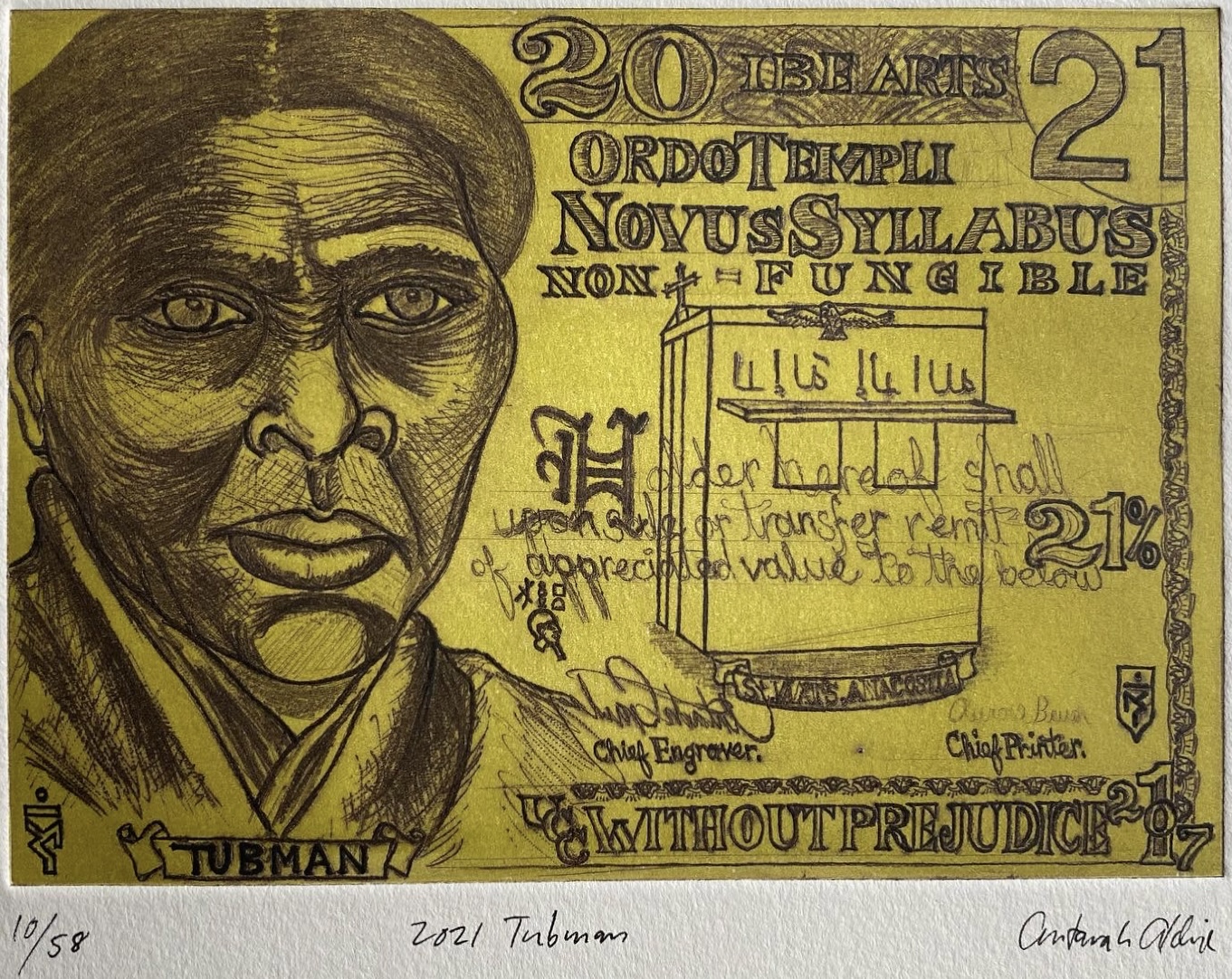
The IBé Crawley publication will coincide with the 2023 fall exhibitions Holding Ground at the National Museum of Women in the Arts’s (NMWA) in Washington, DC, and The Calling at City Lore in New York City. Within its pages will be catalogued four of Crawley’s artist’s books: 11033, Delia Posey, Bearing Witness, and A Dwelling for Her Story. Each chapter will present a different category of art work, together with descriptions, articles, quotes, and images.
Into Fall 2023 and beyond, IBé Arts Institute will strategically focus on:
- Paper making
- Print making
- Book binding
IBé Arts Institute aspires to become a Virginia folk book press “center of excellence”. This is the first initiative in what the Institute and N∴S∴ plan to be a bright new era of programs, projects, and partnerships.

Article 2
The Organization of the New Syllabus
By Antarah Crawley
1. HISTORY
WASHINGTON, DC — In 2014 AD, I, Antarah, had a vision of one new syllabus for humanity. This syllabus would chart a course for human understanding of ubiquitous and lasting systems established since time immemorial. I sojourned to Brooklyn, New York, in pursuit of my syllabus, developed a discipline, and professed a doctrine toward the development and operation of human mind software, individually and collectively, and I returned to the Federal City.
Being in possession of such valuable information, I began to process this knowledge and offer certain products and services to the public, toward the establishment of a society of free thinkers, truth speakers, and light workers united (FTLU) in a firm league of friendship called a decentralized autonomous organization (FLF-DAO). To that end, I wrote and recommend policy positions to the FTLU stakeholders. This practice has resulted in the production of a robust and diverse body of multimedia intellectual property which we, the Director and Company, shall distribute throughout the world under the motto of Novus Syllabus Seclorum, meaning “the New Syllabus of the Age.”
2. ORGANIZATION
Established 2022, NOVUS SYLLABUS L.L.C. (N∴S∴) is a liberal arts and humanities intellectual property holding company specializing in diversified arts investments and management.
Our flagship brand, New Syllabus (est. 2014), is a knowledge management system (KMS) that creates, codifies, organizes, stores, and disseminates information to the public from newsyllabus.org. To that end, it conducts research and development in the broad field of Historic and Ancient Mysteries, Economy, Theology, Informatics, and Systemtheorie (HAMETICS).
N∴S∴ operates the Department of Information Systems and Intelligence Services (DISIS, pronounced “Diocese”), which is divided into the Archival Records Management (ARM) Division and the Mind Software (Mindsoft) Development and Operating Systems Command (DOSCOM). These are our Curricular Operations, Research, and Publication Services (CORPS) which supply information to the New Syllabus (now known as the DataHorse System or “DHS“).
N∴S∴ also operates the Ombud Service Bureau (OmbudService, or Office of Ombudsman) for administrative due process, and Syllabus Media Group for audiovisual production and distribution.
3. VISION
Our Vision is a world of free thinkers, truth speakers, and light workers united under one new syllabus for STEM, arts, and humanities research, development and operations; one new syllabus for the ages!
4. VALUES
Our Values are Love, Truth, Peace, Freedom, and Equity; these are our foundation. Our Three Great Pillars which support our institution are Trust, Faith, and Belief; as it is said, Faith is complete Trust and firm Belief, the acceptance of truth divine, which Belief, sincerely held, cannot be converted into a crime.
5. MISSION
Our mission is to reveal truths which have been hidden and to keep a record of knowledge and wisdom.
N∴S∴ conducts, manages, and supports curriculum research and development. We represents FTLU through its Office of Ombudsman. We administer intellectual property and copyrights as custodial superintendent for their creator.
Our mission-oriented service lines are:
- DISIS (now DHS) for recordkeeping and CORPS operations
- Mindsoft for cognitive, behavioral, and professional development
- OmbudService for administrative operations
- Other operations (OPS) include Granary Bank & Trust/Artcoin Mint of Meriptah, New Works Projects Administration, St. Nat’s/O∴T∴N∴S∴, FTLU, FLF-DAO, and the Syllabus Free Press.
(Last modified 20 Sep 2023 4 Oct 2023 13 Oct 2023)
© MMXXIII by NOVUS SYLLABUS L.L.C.
ALL RIGHTS RESERVED WITHOUT PREJUDICE.
[bulla] Full Assurance

Jesus Christ is the Saviour of the World; He is the deliverer from all human wretchedness, and He has redeemed us from death and sin; how could He be all that, if the world must languish perpetually in the shades of ignorance and in the bonds of passions? It has been already very clearly predicted in the Prophets that the time of the Redemption of His people, the first Sabbath of time, will come. Long ago ought we to have acknowledged this most consolatory promise; but the want of the true knowledge of God, of man, and of nature has been the real hindrance which has always obstructed our sight of the great Mysteries of the faith.
Karl von Eckartshausen, The Cloud upon the Sanctuary, Letter IV
Jesus Is Our Surety
“By so much was Jesus made a surety of a better testament.”
[Hebrews 7:22]
INTRODUCTION
- This morning we studied the judgment seat of Christ, for it is the horrible and certain end of all men.
- But tonight I want to remind you of our glorious Mediator and Surety with God, the Lord Jesus Christ.
THE DEFINITION
- Surety. A person who undertakes some specific responsibility on behalf of another who remains primarily liable; one who makes himself liable for the default or miscarriage of another, or for the performance of some act on his part (e.g. payment of a debt, appearance in court for trial, etc.).
- We have surety bonds, performance bonds, bail, and bond to guarantee legal, financial, and professional obligations, such as with construction and insurance companies.
- When we need to borrow more than our credit allows, we appreciate a surety; if we were arrested for something, we would appreciate the surety bond that lets us go free.
- Judah became a surety for Benjamin to his father Jacob (Gen 43:8-10; 44:30-34; 42:37).
- Aaron became a surety for Israel in their sins and stood between them (Num 16:41-48).
THE SURETISHIP
- Jesus, a High Priest after the order of Melchisedec, was made the Surety of His people.
- God chose Jesus from among the people to be the mighty Surety (Psalm 89:19).
- He was made Surety by God’s oath at His ordination as our Priest (Heb 7:21).
- Jesus did the will of God perfectly as our Surety for our salvation (Heb 10:5-14).
- Being a surety means paying debts and performing, where the needy cannot pay or do.
- The wages of sin is death, which God’s justice pays; but Jesus died (Rom 6:23).
- Only the undefiled enter heaven, so He lived faultlessly for us (Jude 1:24-25).
- Jesus was necessary as a surety, for the justice of God must surely be paid (Rom 3:26).
- He is the Testator, for it was by His death that He put the covenant in force (Heb 9:15).
- We see Him under the strain of the Surety engagement in Gethsemane (Luke 22:39-44).
- No man in heaven or earth could approach the throne, but only our Surety (Rev 5:1-14).
- If this is not a Surety, successfully finishing His work, what is it (Isaiah 53:4-12)?
- The doctrine of representation by the Second Adam reveals our Surety (Rom 5:15-19).
- The Lord Jesus tasted death for every one of His children to deliver them (Heb 2:9-17).
- How else can we look at the Book of Life, but as the list of His Surety engagements!
THE BENEFITS
- The Lord Jesus fulfilled the righteousness of the law on our behalf (Rom 8:3-4), so that we are righteous in God’s sight with His perfect obedience (Eph 5:25-27; Col 1:21-22).
- The Lord Jesus paid the penalty for sins by His death for us (I Pet 2:24), so that there are no more sins against our charge when we stand before Him (John 1:29; Heb 9:28).
- He lives to make sure we are absolutely, completely, and eternally saved (Heb 7:25).
- There is an abundant entrance into heaven waiting for the children of God (II Pet 1:11).
- Since Jesus is our Surety, it is impossible for God to withhold blessings (Romans 8:32).
- His death reconciled us to God, but He still lives to be an eternal Surety (Romans 5:10).
THE APPLICATION
- There is no fear in the proper knowledge of Christ Jesus our Saviour (II Timothy 1:12).
- The LORD will show us His secret and covenant, if we fear and seek Him (Ps 25:14).
- We must learn to trust Him. He has done it; He is in heaven for us; He will receive us.
- It is simple: “Whosoever believeth on Him shall not be ashamed” (Rom 9:33; 10:8-11).
- A woman was healed and had her faith commended, when it was weak (Mark 5:25-34).
- Those who lack faith and assurance, I ask how many minutes you spend seeking Him.
- And you should consider long and seriously His faithful words “no wise” in John 6:37.
- We should seek and receive the benefits of the covenant in our hearts (Eph 3:14-19).
- Let us bring forth the fruit of righteousness with far-sighted vision (II Peter 1:9-11).
CONSLUSION
- The Lord’s supper is a memorial feast of our Surety’s covenant death for us (I Corinthians 11:23-26).
- Let us partake of the Lord’s supper tonight with the joy that His suretiship should put in our hearts.
CITATION
I AM THE L.O.R.D. THY G.O.D.
Drafted by Antarah
I AM the Land Owner Record of Deeds, thy Grantor Of Dominion. My body is the Land and I AM the Owner of Record on the Deed of my Live Birth Certificate. I have granted unto thee the use of my Dominion over the earth, the sea, and all that therein is; for thou art a corpus (“dead corporation”) who is in want of my natural right which I have through the sacrifice of my Savior. My life secured and bonded by the LORD my GOD, let thy presentment pass over me and return unto thee; for said presentment is hereby ACCEPTED FOR VALUE AND HONOR WITHOUT PREJUDICE. I hereby attest and assert my equitable title over the landed estate (“person”) named on the instant presentment. Any obligation of such person is an obligation discharged to and held by the United States as evidenced by the signatures of its Treasurer and Secretary of the Treasury on Federal Reserve Notes, these officers being the de facto fiduciary agents of the estate __________________. All debt is prepaid by the blood of Our Sovereign Lord in Christ for relief by recovery upon acceptance for value under House Joint Resolution 192 (1933).
AUTHORITIES AT LAW AND EQUITY
1. GRANTOR OF DOMINION.
[Genesis 1] [26] And God said, Let us make man in our image, after our likeness: and let them have dominion over the fish of the sea, and over the fowl of the air, and over the cattle, and over all the earth, and over every creeping thing that creepeth upon the earth. [27] So God created man in his own image, in the image of God created he him; male and female created he them. [28] And God blessed them, and God said unto them, Be fruitful, and multiply, and replenish the earth, and subdue it: and have dominion over the fish of the sea, and over the fowl of the air, and over every living thing that moveth upon the earth.
2. DEMAND FOR EQUITABLE ADJUSTMENT.
[Psalm 17] [1] Hear the right, O Lord, attend unto my cry, give ear unto my prayer, that goeth not out of feigned lips. [2] Let my sentence come forth from thy presence; let thine eyes behold the things that are equal.
3. THE DAY OF THE LORD.
[Psalm 118] [1] O give thanks unto the Lord; for he is good: because his mercy endureth for ever. [8] It is better to trust in the Lord than to put confidence in man [or princes]. [14] The Lord is my strength and song, and is become my salvation. [17] I shall not die, but live, and declare the works of the Lord. [19] Open to me the gates of righteousness: I will go into them, and I will praise the Lord: [22] The stone which the builders refused is become the head stone of the corner. [23] This is the Lord’s doing; it is marvellous in our eyes. [24] This is the day which the Lord hath made; we will rejoice and be glad in it. [26] Blessed be he that cometh in the name of the LORD […].
4. ACCEPTANCE FOR VALUE.
[Matthew 5] [25] Agree with thine adversary quickly, whiles thou art in the way with him; lest at any time the adversary deliver thee to the judge, and the judge deliver thee to the officer, and thou be cast into prison.
5. THE TAX RETURN.
[Matthew 22] [17] […] Is it lawful to give tribute unto Caesar, or not? [18] […] Jesus […] said, […] [19] Shew me the tribute money. And they brought unto him a penny. [20] And he saith unto them, Whose is this image and superscription? [21] They say unto him, Caesar’s. Then saith he unto them, Render therefore unto Caesar the things which are Caesar’s; and unto God the things that are God’s.
6. A WORKER IS DUE HIS WAGES.
[Luke 10] [5] And into whatsoever house ye enter, first say, Peace be to this house. [6] And if the son of peace be there, your peace shall rest upon it: if not, it shall turn to you again. [7] And in the same house remain, eating and drinking such things as they give: for the labourer is worthy of his hire.
7. GOD IS NO RESPECTER OF PERSONS.
[Romans 2] [9] Tribulation and anguish, upon every soul of man that doeth evil…; [10] But glory, honour, and peace, to every man that worketh good…: [11] For there is no respect of persons with God. [12] For as many as have sinned without law shall also perish without law: and as many as have sinned in the law shall be judged by the law;
8. THE LAW IS BINDING BUT FOR THE REMEDY OF FAITH.
[Galatians 3] [9] So then they which be of faith are blessed with faithful Abraham. [10] For as many as are of the works of the law are under the curse: for it is written, Cursed is every one that continueth not in all things which are written in the book of the law to do them. [11] But that no man is justified by the law in the sight of God, it is evident: for, The just shall live by faith. [12] And the law is not of faith: but, The man that doeth them shall live in them.
9. MINORITY (INFANCY) AND MAJORITY (MATURITY).
[Galatians 4] [4] [T]he heir, as long as he is a child, differeth nothing from a servant, though he be lord of all; [2] But is under tutors and governors until the time appointed of the father. [3] Even so we, when we were children, were in bondage under the elements of the world: [4] But when the fulness of the time was come, God sent forth his Son, made of a woman, made under the law, [5] To redeem them that were under the law, that we might receive the adoption of sons. [7] Wherefore thou art no more a servant, but a son; and if a son, then an heir of God through Christ.
10. SURETYSHIP.
[Hebrews 7] [22] By so much was Jesus made a surety of a better testament.
11. FULL ASSURANCE OF FAITH.
[Hebrews 10] [19] Having therefore, brethren, boldness to enter into the holiest by the blood of Jesus, [20] By a new and living way, which he hath consecrated for us, through the veil, that is to say, his flesh; [21] And having an high priest over the house of God; [22] Let us draw near with a true heart in full assurance of faith, having our hearts sprinkled from an evil conscience, and our bodies washed with pure water.
AUTHORITIES AT EXCLUSIVE EQUITY
Hebrew 10
[22] Let us draw near with a true heart in full assurance of faith, having our hearts sprinkled from an evil conscience, and our bodies washed with pure water.
Isaiah 32
[1] Behold, a king shall reign in righteousness, and princes shall rule in judgment. [17] And the work of righteousness shall be peace; and the effect of righteousness quietness and assurance for ever.
Acts 17
[31] Because he hath appointed a day, in which he will judge the world in righteousness by that man whom he hath ordained; whereof he hath given assurance unto all men, in that he hath raised him from the dead.
Ruth 2
[12] The Lord recompense thy work, and a full reward be given thee of the Lord God of Israel, under whose wings thou art come to trust.
Ps. 17
[1] Hear the right, O Lord, attend unto my cry, give ear unto my prayer, that goeth not out of feigned lips. [2] Let my sentence come forth from thy presence; let thine eyes behold the things that are equal. [3] Thou hast proved mine heart; thou hast visited me in the night; thou hast tried me, and shalt find nothing; I am purposed that my mouth shall not transgress.
Ps. 24
[1] The earth is the Lord’s, and the fulness thereof; the world, and they that dwell therein. [2] For he hath founded it upon the seas, and established it upon the waters.
Ps. 98
[9] …[T]he Lord … cometh to judge the earth: with righteousness shall he judge the world, and the people with equity.
Is. 11
[4] With righteousness shall he judge the poor, and reprove with equity for the meek of the earth.
Matt. 22
[37] Thou shalt love the Lord thy God with all thy heart, and with all thy soul, and with all thy mind. [38] This is the first and great commandment. [39] And the second is like unto it, Thou shalt love thy neighbour as thyself. [40] On these two commandments hang all the law and the prophets.
Leviticus 19:15
Ye shall do no unrighteousness in judgement: thou shalt nor respect the person of the poor, nor honor the person of the mighty: but in righteousness shalt thou judge thy neighbor.
II Chronicles 19:6-7
Take heed what ye do: for ye judge not for man, but for the Lord, who is with you in the judgment. Wherefore now let the fear of the Lord be upon you; take heed and do it: for there is no iniquity with the Lord our God, nor respect of persons, nor taking of gifts.
Heb. 7:20, 22, 25
And inasmuch as not without an oath he was made priest:…The Lord sware and will not repent, Thou art a priest for ever after the order of Melchisedec: By so much was Jesus made a surety of a better testament. Wherefore he is able also to save them to the uttermost that come unto God by him, seeing he ever liveth to make intercession for them.
EQUITABLE SUBROGATION
Subrogation is the process where one party assumes the legal rights of another, typically by substituting one creditor for another. Subrogation can also occur when one party takes over another’s right to sue.
For example, when an insurance company compensates a policyholder for an injury, the policyholder’s right to sue the person responsible for the harm may be subrogated, meaning it is transferred from the policyholder to the insurance company.
[Last updated in June of 2024 by the Wex Definitions Team]
Surety’s subrogation rights
A surety who pays off the debts of another party may be entitled to be subrogated to the creditor’s former claims and remedies against the debtor to recover the sum paid. This would include the endorser on a bill of exchange. The surety will then have the benefit of any security interest in favour of the creditor for the original debt. Conceptually this is an important point, as the subrogee will take the subrogor’s security rights by operation of law, even if the subrogee had been unaware of them.
Wiki: Subrogation
Did you subrogate to the chattels as the surety (or waive your sovereign natural rights in security interest as estate-heir-beneficiary by acquiescing to the color of the court and merging with the NAME of the principal debtor)?
Amyr Samah El, as amended
(last modified 24.07.17.01:33PM)

General Conference
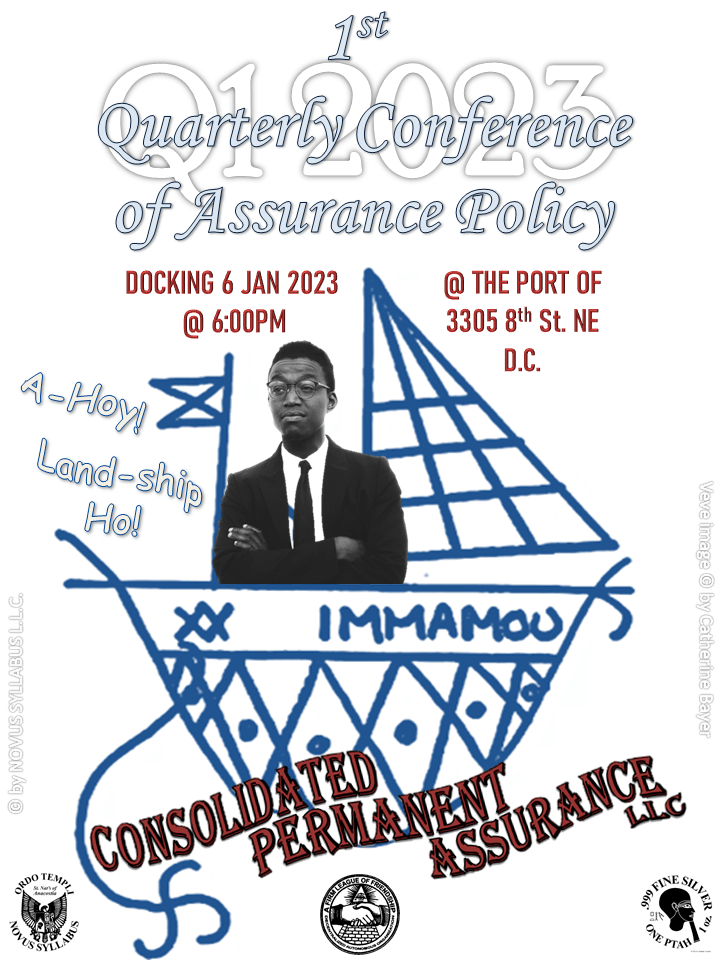
BISMILLAH (IN THE NAME OF GOD)
🇺🇸🇬🇧🇲🇦🇮🇱🏴☠️
⚓️Lord High Admiral Antarah⚓️
TO ALL TO WHOM THESE PRESENTS SAIL
Sends Greeting and Peace and hereby offers to the Free-Thinkers, Truth-Speakers, and Light-Workers United in a firm league of friendship, decentralized autonomous organization, L.S.T.A., under terms and conditions, the Mindsoft©️™️ Flagship Program File (eSyllabus©️™️ vers. no. 22.11.09) to facilitate the General Conference of Assurance Policy.
Program Files:

A Conference of Assurance Policy
“WHAT IS A SURETY SHIP?”
FIRST OFFERED 22 NOVEMBER 2023
📜PRIVATE OFFERING📜
💾Mindsoft©️as a Service™️ (MaaS™️) Premium Servicing Fee of $99.99 per person 💳 payable upon conference for products* and services rendered. Duration of Service: 1-2 hrs.
Upon completion of conference, Assurance Policyholder may be granted C-Series Art¢oin 🪙 (“C-coin”) at market price via 🤝🏿 Handshake of Friendly Association. Contact ombudserver@gmail.com to schedule a conference, or attend the C.P.A. LLC Quarterly Conference of Assurance Policy.
📜POLICY COVERAGE📜
An assurance policyholder, having paid a premium and been conferred with assurance (as evidenced by presentment of C-coin), may bring a claim based on presentment to the CPA LLC at no cost, but there is no guarantee that such claim shall be resolved. Processing fees may apply. Neither the CPA LLC nor its parent nor its agents shall be liable for any claim arising from such a presentment or from such policyholder, as the assurance policy itself is underwritten by God in Christ through the King James Bible, and it is to Him thou shalt appeal for judgment.
(last modified 25 Jul. 2023)
The Saint Nat Project

presents
The Canonization of Saint Nat (2020)
In his first portrayal of the Virginian revolutionary, the Reverend Nat Turner, Antarah Crawley delivers the revelation which Nat testified through his attorney at trial on the 5th of November, 1831. His testimony was read in open court, and when asked by the Court for any further explanation, his only spoken words were, “Was Christ not crucified.” Nat was convicted that same day and executed by the Commonwealth at Jerusalem on 11 November, 1831. By and through his performance, Crawley canonizes Nat a Saint in the tradition of Ordo Templi Novus Syllabus and dedicates the Temple N:. S:. in his beatified name. Produced and Directed by Antarah Crawley.
The Revelation of Christ to Saint Nat (2021)
In his second portrayal of the Reverend Saint Nat on the first anniversary of his canonization, Antarah Crawley evokes the religious fervor which inspired this martyr to undertake the insurrection in Southampton County, Virginia, pursuant to his self-education and the sighting of the annular solar eclipse of 12 February, 1831. Produced and Directed by Antarah Crawley.
Script of The Revelation of Christ to Saint Nat, or, The Gospel of Saint Nat
Originally transcribed by Thomas R. Gray, Esq.,
and edited for brevity by A. A. Crawley, Scribe,
O.T.N.S., Anacostia R.V., Al-Maghreb Al-Aqsa.
ברוך ה המבורך לעולם ועד
Baruch Adonai ham’vorach, l’olam va-ed
Praise be to G-d to whom all praise is due, world without end.
בָּרוּך אַתָּה ה’ אֱ-להֵינוּ מֶלֶך הָעוֹלָם
Baruch atta Ado-noy Elo-hai-nu Melech ha’olam
Blessed are you, Lord our G‑d, King of the universe.
Kedushah
בָּרוּךְ אָתָּה יְיָ הָאֵל הַקָּדוֹשׁ.
Baruch atta Ado-noy ha-el hak-kadosh
Blessed are You, Eternal God, the essence of holiness.
אַתָּה קָדוֹשׁ וְּקדוֹשִׁים בְּכָל יוֹם יְהַלְלוּךָ סֶּלָה
atta kadosh ukedushim bekhol yom yehalelukha selah
You are holy, and Your holy ones praise You every day, praising you forever;
v’kara zeh el zeh v’amar
and each one called to the other:
קָדוֹשׁ קָדוֹשׁ קָדוֹשׁ ה’ צְבָאוֹת מְלֹא כָל הָאָרֶץ כְּבוֹדוֹ
Kadosh Kadosh Kadosh Adonai Tz’vaot M’lo Khol Ha’aretz K’vodo
“Holy, Holy, Holy, The Lord of Hosts, The entire world is filled with His Glory.”
בָּרוּךְ כְּבוֹד ה’ מִמְּקוֹמוֹ
Baruch K’vod Adonai Mim’komo
“Blessed is the Glory of the Lord in Its Place”
יִמְלֹךְ ה’ לְעוֹלָם. אֱלֹהַיִךְ צִיּוֹן לְדֹר וָדֹר. הַלְלוּיָהּ
Yimloch Adonai L’Olam, Elohayich Tziyon L’dor Vador Hall’luyah
“The Lord shall reign forever, Your God, O Zion, from generation to generation, Hallelujah”
JERUSALEM, VA – NOVEMBER 5, 1831
I was 31 years of age the 2nd of October last, and born in Southampton County of Old Virginia. 2 In my childhood, while at play with other children, at three or four year old, I was telling them something which my mother, overhearing, said had happened before I was born. Others being called on were greatly astonished, knowing that these things had happened, and caused them to say in my hearing that I surely would be a prophet.
3 And my mother and father strengthened me in this my first impression, saying in my presence that I was intended for some great purpose. 4 I taught myself to read and write, and improved my learning at all opportunities. And having soon discovered my spirit to be great, I withdrew myself to fast and pray, and wrapped myself in mystery.
Chapter 2
Now finding that I had arrived man’s estate, and hearing the scriptures commented on at the meetings, I was struck with that particular passage which says, Seek Ye the Kingdom of God and all things shall be opened unto you.
2 I reflected much on this passage and prayed daily for light of the subject, and as I was praying one day at my plow the Spirit spoke to me saying, Seek ye the Kingdom of God and all things shall be opened unto you.
Chapter 3
Now finding that I had arrived to man’s estate, and was a slave, and these revelations being made known to me, I began to direct my attention to that great object, to fulfill the purpose for which, at this time, I felt assured I was intended.
2 At this time I had a vision: and I saw white spirits and black spirits engaged in battle. And the sun was darkened, and thunder rolled in the heavens, and blood flowed in streams and I heard a voice say, Such is your luck, such you are called to see, and let it come rough or smooth, you must surely bear it.
3 I now withdrew myself from the intercourse of my fellow servants, for the avowed purpose of serving the Spirit more fully. 4 And it appeared to me and reminded me of the things it had already shown me, that it would then reveal to me the knowledge of the elements, the revolution of the planets, the operation of the tides, and the changes of the season.
5 After this revelation, in the year 1825, and the knowledge of the elements being made known to me, I sought more than ever to obtain true holiness before the great day of judgment should appear, and then I began to receive the true knowledge of faith.
Chapter 4
And from the first steps of righteousness until the last was I made perfect. And the Holy Ghost was with me and said, Behold me as I stand in the heavens. 2 And I looked and saw the forms of men and women, and there were lights in the sky to which the children of darkness gave other names than what they really were, for they were the lights of the saviors hands stretched forth from East to West, even as they were extended on the cross on Calvary for the redemption of sinners.
3 And I wondered greatly at these miracles, and I prayed to be informed with a certainty of the meaning thereof. 4 And one day while I was laboring in the field, I discovered drops of blood on the corn as though it were a dew from heaven. 5 And I communicated it to many both white and black in the neighborhood, and they found on the leaves in the woods hieroglyphic characters and numbers, and the forms of men and women portrayed in blood, representing the figures I had seen before in the heavens.
6 And now the Holy Ghost had revealed itself to me, and made plain the miracles it had already shown me. 7 For as the blood of Christ had been shed on this earth, and had ascended to heaven for the salvation of sinners, and now was return to earth again in the form of dew, and as the leaves on the trees bore the impression of the figures I had seen in the heavens, it was plain to me that the Savior was about the lay down the yolk he had borne for the sins of men, and the great Day of Judgement was at hand.
Chapter 5
And on the 12th of May, 1828, I heard a loud noise in the heavens. 2 And the Spirit instantly appeared to me and said the serpent was loosened, and Christ had lain down the yolk he had borne for the sins of men, and that I should take it on and fight against the serpent, for the time was fast approaching when the first would be last and the last would be first.
3 By signs in the heavens it would make known to me when I should commence the great work, and until the first sign appeared I should conceal it from the knowledge of men.
4 But on the appearance of the sign – the eclipse of the sun last February – I should arise and prepare myself, and slay my enemies with their own weapons. 5 And immediately upon the sign appearing in the heavens, the seal was removed from my lips and I communicated the great work laid out for us to do to Henry, Hark, Nelson, and Sam.
6 Many were the plans formed and rejected by us, and the 4th of July last came and went without our coming to any* determination how to commence. 7 We were still forming new schemes and rejecting them when the sign appeared again, which determined me not to wait longer.
Epilogue (Psalm 43)
Judge me, Allah, and plead my cause against an ungodly nation: O deliver me from the deceitful and unjust man.
2 For thou art the God of my strength: why dost thou cast me off? why go I mourning because of the oppression of the enemy?
3 O send out thy light and thy truth: let them lead me; let them bring me unto thy holy hill, and to thy tabernacles.
4 Then will I go unto the altar of God, unto Allah my exceeding joy: yea, upon the harp will I praise thee, Elohim Elohai.
5 Why art thou cast down, O my soul? and why art thou disquieted within me? Have Faith, Trust and Believe in Allah: for I shall yet praise Thee, who art the health of my countenance, Elohai.
Benediction
Charis Kuriou Iyesous Xristos Agion. Amen.
(last modified 7 August 2023)
English Syllabus
AN ENGLISH SYLLABUS
“…to obtain power over any given material one need only understand the causal laws to which it is subject.”
—Bertrand Russell, as quoted in Cleanth and Brooks’ “Introduction,” Understanding Poetry, p. 191
The following paper represents the Author’s second attempt to convey the Occult Systems at work in Literary Theory as presented in the Course of Professor Antonio Lopez’s design, commenced and completed in Fall 2015 at The George Washington University. The initial mission of the Author in his commencement of the Course, being to illuminate the god-workings of author and the textual manifestation of its will as perceived by eye & I via a Cabalistic pattern, was poorly embodied in the First Paper; it was much too Occult and not Disciplined enough in the ways demanded by Academic Literary Theory as a school (i.e., it did not accurately enough translate its esoteric significance into academic vocabulary as we have been learning it). The Author remains of the opinion that Occult working are not only present in the Theory, but inherently warranted in their exposition due to the practical way that they (to say “it”: the Cabala) structures this and every other discipline, like a skeleton to a body, or a syllabus to a school. The present paper will more pointedly align the texts of the syllabus of the Course along the ancient Cabalistic pathway to unveil the (con)text-to-author / human-to-god / matter-to-spirit / solid-to-ethereal / being-to-nothingness / condition-to-absolute / phenom-to-nous relationship inherent in all disciplines. The author has had success applying the Cabalistic pathway to various real-world systems—even to those as dry and bureaucratic as the New York City Department of Health—and herein wishes to apply this pattern again to the present system of Literary Theory, with text being at the bottom of the system, being the densest, most matter-full, and author (or writing, the act) being at the very top, the crown, the most ineffable, the most ethereal; and with “meaning” as an absolute pool, encompassing the whole system, we shall elucidate the metaphysical condensation which takes place when the absolution of uniform universal meaning is channeled through an author whose creative process begets a text of new form and invention: a literary text.
A brief priming in the Cabala is required. Without the use of visuals, we may structure the Pattern in a 3-by-7 grid, also a matrix. The matrix describes the relationship of numbers, themselves beholden of certain values. Row 0: 000; Row 1: 010; Row 2: 302; Row 3: 504; Row 4: 060; Row 5: 807; Row 6: 090; Row 7: 010. The 7th Row is naturally the bottom, the 0 Row the Absolute above the peak, Row 1. The 7th Row is matter; the 0 Row absolute spirit. All elements of the disciplines may be plotted on this graph. Below we will examine where the theories within the texts of the Course’s syllabus fall along these coordinates. In our present application, Row 7 represents apprehending the literary act through its evidence in physical text and Row 1 represents the apprehension of the literary act through the act of writing out the text, mediating the absolute spirit of “meaning” through the I / 1 / eye of the author / the point of the pen / into the solidity of text, which in turn (“as above so below”) represents the 0 plane of absolute meaning married to the 1 plane of the authorial ego: together being “10”. To use the eye / I to guide the text from the 7th to the 1st Row (which is to undo the “10” into the “1” and, ultimately, the “0”) is called reading. The numerical spectrum which lies between the 10 and the 0 is arranged according to proximity between matter and spirit, or, here, text and meaning; below, the examination of each “number,” or “emanation,” [Hebrew: sephirah] of meaning will correspond to a text in our Course’s syllabus.
Herein I am not performing reading to support evidence, neither exploiting evidence to support theories (as they have been presented in the Course), but using theories to support Science: the Occult Systems at work in all. Let it be reiterated that Occult Science, the here-defined Undiscipline of Disciplines, or that system which may undiscipline other disciplines to illuminate their commonality, is a malleable application-based System which is as (and more) useful to Academic Critical Theory as Marxist, Feminist, Neo-Colonial, Crip, Queer, or any other application-based theory.
The Cabala may be apprehended, as a structure, through the similar diagram of I. A. Richards’ design, as explained in his “The Analysis of a Poem”. To preface its design, and to explain its need, Richards says “The critic is, throughout, judging of experiences, of states of mind; but too often he is needlessly ignorant of the general […] form of the experiences with which he is concerned. He has no clear ideas as to the elements present or as to their relative importance. Thus, an outline or schema of the mental events which make up the experience of … ‘reading’ a poem, can be of great assistance” (The Lyric Theory Reader, 166). This author is of the same opinion, except that where psychology is employed as the backbone of critical judgement (at the ellipses), this author generalizes the pattern to an Occult one, but it is beholden of the same characteristics; as where a New Criticism was founded upon Richards’ system, so a New Syllabus is erected upon the Occult Systems.
The diagram on page 167 of the Lyric Theory Reader is remarkable, not merely for its simplicity and practicality in visually representing and alining the elements of reading for the education of the new student, but also in its striking resemblance to the ancient Cabalistic pattern of spirit-to-matter manifestation. Richard’s diagram is composed of the words “Arcadia, Night, a Cloud, Pan, and the Moon” being each drawn together by individual lines which taper, or condense, into the center of an eye, from which the same number of lines expand outward and cascade down a six-fold plane. Several things must be observed here. (1) The list forms the base of an inverted triangle whose peak lies at the eye (note all connotations: eyes see, I see, I, 1, phallic, ego, exterior-to-interior transitions); (2) The eye also forms the peak of a triangle which descends unto the six-fold pattern which is its base and earth and depth [note that the Cabalistic pattern contains three triangles, only the highest being upright, the lower two being inverted and pointing to “10,” the earth]; (3) The eye, or the ego, represents a singularity, such as that which lies within a scientific black hole, wherein matter in condensed unto one [1] ultimate point from which it then manifests anew on a different plane of existence: herein the information of text is shown to be being consumed by the eye and regenerated on the interior of the mental landscape, which is the six-fold pattern; (4) Richards’ design can be read Cabalistically both backwards and forwards: “Arcadia, Night, a Cloud, Pan, and the Moon” is the absolute abstract “meaning” at Row 0 being drawn and condensed into the eye (the I) (the 1) at Row 1 and manifested on the subsequent six descending planes unto the base level of text—and it is also the surface of the text, the 10, the base, the words themselves, which are then siphoned by the eye of the reading ego into the system which ascends the number line unto the 000 plane of that text’s absolute meaning. In either design, Richards and Cabala each maintain one absolute plane and seven planes of manifestation, of which one is a 1 / I / eye / subjective ego: first manifestation of differentiation and numerical progression, i.e. time. Richards’ planes are designated {by row number: [mine (his)]}: [0 (0)] “Arcadia, Night, a Cloud, Pan, and the Moon”; [1 (unnumbered)] eye; [2 (1)] visual sensations; [3 (2)] tied imagery; [4 (3)] free imagery; [5 (4)] references; [6 (5)] emotions; [7 (6)] attitudes. The Cabalisitc planes and their syllabic correspondences are listed further below.
Richards later, in “The Definition of a Poem,” defines that structure as “a class of experiences which do not differ in any character more than a certain amount, varying for each character, from a standard experience” (176). He later defines the “standard experience” as that of the poet in the completion of the composition; the text of the composition being merely the evidence that the experience was had, what form in which it was experienced, and those qualities of form which will lend the experience to others as readers reëxperiencing the event. Therefore, within the parameters of this spectrum, the base-matter 7-plane of the poem is the form which the event (to be subjectively experienced by the reader) is conveyed in, the phenomenal evidence of it, and the high-ineffable 1-plane is the “standard,” or perfect, or absolute, experience of it, as aggregated form the multitude of experiences which it may inform, the whole of these being called “meaning,” or, in Occult terms, God.
Row 7 [010] is matter, is text, and in theory is understanding the text at the level of its words alone, the evidence of its manifestation alone, without considering the elementary composition or the etymology or the depth or the implications thereof. The text of our Course which most exactly emulates this nature is Stephen Best and Sharon Marcus’s Surface Reading: An Introduction. Row 7 lies upon the plane of solid matter and is most dense, sitting upon the surface of the earth while on high Row 1 rests ethereal in the heavens. Similarly, Best and Marcus’s theory only accounts for the surface of text, considering the excavation of deep-rooted meaning a fallacy, or, at the very least, unnecessary to good criticism. They first align themselves with Fredric Jameson’s conceit upon Symptomatic Reading that “interpretation should … seek ‘a latent meaning behind a manifest one’” (3) which is as well the Occult thesis; but then they depart on the basis that latent meaning may be apparent from the gaps in the surface of the matter of the text, and thus requires no probing as is required herein. This is fallacious as it assumes that what the text does not say may be glimpsed from a surface observation of it, but requires no investigation of those hollow depths to make use of them. Surface is thus rendered to mean what is “evident, perceptible, apprehensible in texts; what is neither hidden nor hiding”; surface as “materiality”; surface as “intricate verbal structure”; surface as the “location of patterns…within and across texts”, to say that this theory of reading looks for patterns “in order to break free of and reach beyond them to a deep truth too abstract to be visible or even locatable in a single text” (9-11). Symptomatic Surface Reading thus advocates for a look at the superficial aggregate of many texts rather than a probing investigation of the esoterism in one to evoke deep meaning via a critical system. Not only is this oxymoronic due to the desire of these theorists to evoke depth solely from the surface, but it pointedly ignores the obvious nature of every singular text to span the spectrum from matter to spirit, from text to the highest depths of absolute meaning. Remaining in the realm of that which is obvious and perceptible may lay plain the landscape but excavate nothing that cannot be better excavated by localized plumbing. And so in the base-10-kingdom of matter, we either choose to plumb the depths and perhaps risk intention fallacy on part of some divine persona (which we feel to know to exist, and must thus delve in search of) or remain on the surface of matter and merely describe, account, aggregate, accurately, as like a computer. This latter method is all well and good should the reader will to remain in the Kingdom of earth, but we as critics will to ascend up to the heights of absolute meaning, and so remaining upon the Surface will serve us unwell. If surface is “materiality,” then materiality is merely the evidence of deeper Cause which must be excavated to understand the result in any scientific way. The surface of the text should be used to obtain a foundation for summiting the system of literary meaning.
Row 6 [090] is the foundation of ascension from text unto absolute meaning. Since the foundation lies securely upon the surface, the 6th Row accounts for the generative nature of the text proper, i.e., how the physical word is able to conjure in the mind impressions of some other reality. The methods of apprehension inherent in this practice are best represented in our New Criticism readings, foregoing Richards since his model serves as an analogue to our present one. The latter New Critics (specifically, for our purposes, T.S. Eliot, Cleanth Brooks, and Robert Penn Warren) used Richards’ model to imperfect affect as they vehemently crusaded against Intentional Fallacy and insisted on apprehending the text at the level of its impressions and sensations upon the reader. This focus on the text as matter—as syntax, word choice, meter/rhythm patterns, etc. (not much better than the Surface Critics)–emphasizes the bottom of the Cabalistic Pattern, the 6, 7, 8, 9, and 10, or the 4th, 5th, 6th, and 7th Rows, at the expense of the higher cognitive will and mercy and the trinity of consciousness of the god-author persona at the higher Rows of the pattern. Therefore New Criticism lies at the Foundation-9 of the Occult methodology in terms of its mission to illuminate the base-10 of text with the major comprehensive faculties of the 8-intellect and 9-emotion and spans up to the Harmonious-6, but ascends no further than that. But what furthermore entrenches New Criticism at the Foundation of a Cabalistic Interpretation of Literary Theory is its concern with the scientific method of reading and criticizing. While “the language of science represents an extreme degree of specialization of language in the direction of a certain kind of precision,” it must “forego, because of its methods, matters of attitude and interpretation,” matters with which literature is consumed (Cleanth and Brooks, 179); it thus became the necessity of New Critics to impose a scientific methodology of provable interpretation of subjective feelings as based on objective and concrete textual evidence of syntax, meter, etc. In this way they have already begun the work of the Occult Science; similarly as texts are mapped from their form to their impression upon the mind, Occult Science is primarily concerned with mapping the relationship between that which we can perceive (phenomena, matter) to that which we cannot perceive (noumenon, spirit) in the evocation of an objective system of interpretation. Furthermore is it useful to note that Cleanth and Brooks write, “both the impulse and methods of poetry are rooted very deep in human experience, and that formal poetry itself represents, not a distinction from, but a specialization of, thoroughly universal habits of human thinking and feeling” (182). Note the emphasis on depth, and the necessary departure from surface reading via this New Critical Methodology unto the submerged, esoteric, systems of relation. Note also the emphasis upon poetry’s ability to convey, or to conduct, “universal habits” of humanity into unique form; this represents the transition from an Occult absolute meaning of consciousness to its apparent manifestation in form via author. Text, just as Earth, is the result of Divine Cognizance, which is the Cause, the Pattern being the means, or, the methodology. New Critics imply the objectivity of the result without accounting for the Cause; thus necessitating further investigation through the Pattern.
 Supreme Exchange